
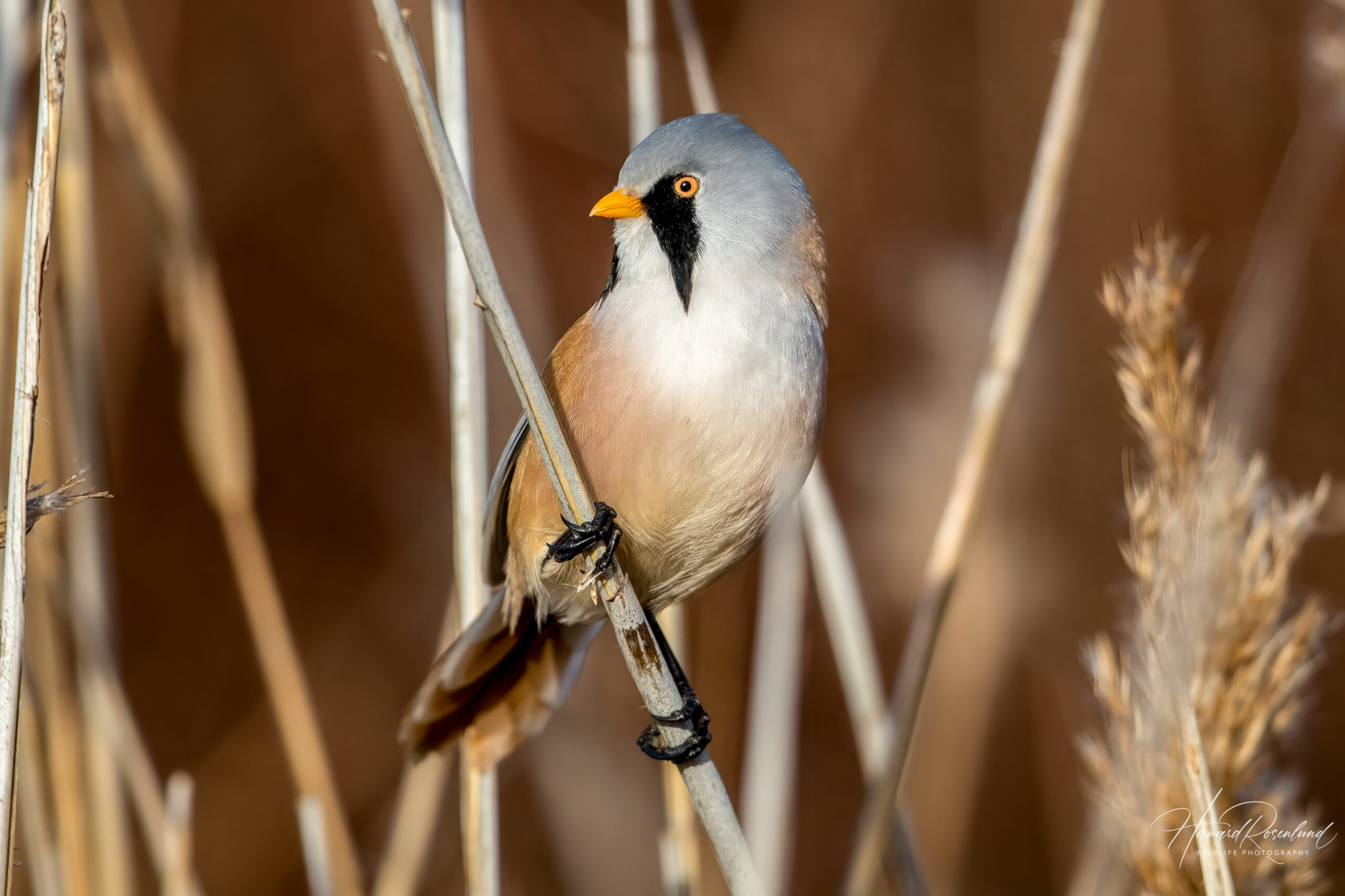
Bearded Reedling
Panurus biarmicus
At a glance
Habitat
- Extensive reedbeds and other dense wetland vegetation
Diet
- Invertebrates in spring and summer; mainly reed and other plant seeds in autumn and winter
Activity
- Diurnal
Size
- Length: about 14–16.5 cm Weight: about 13–17 g
Range
- Patchily distributed from western Europe across temperate Eurasia to eastern Asia
Description
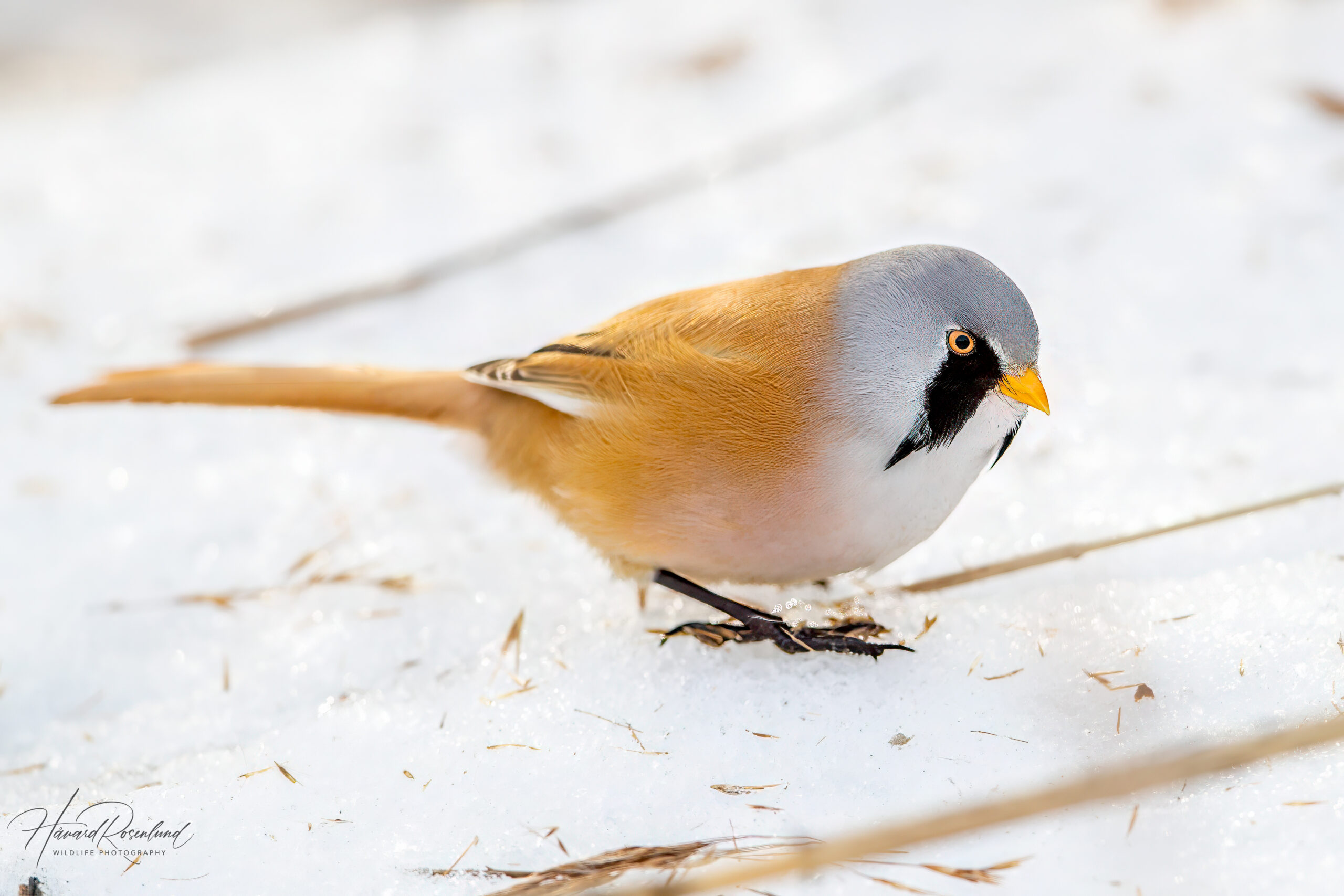
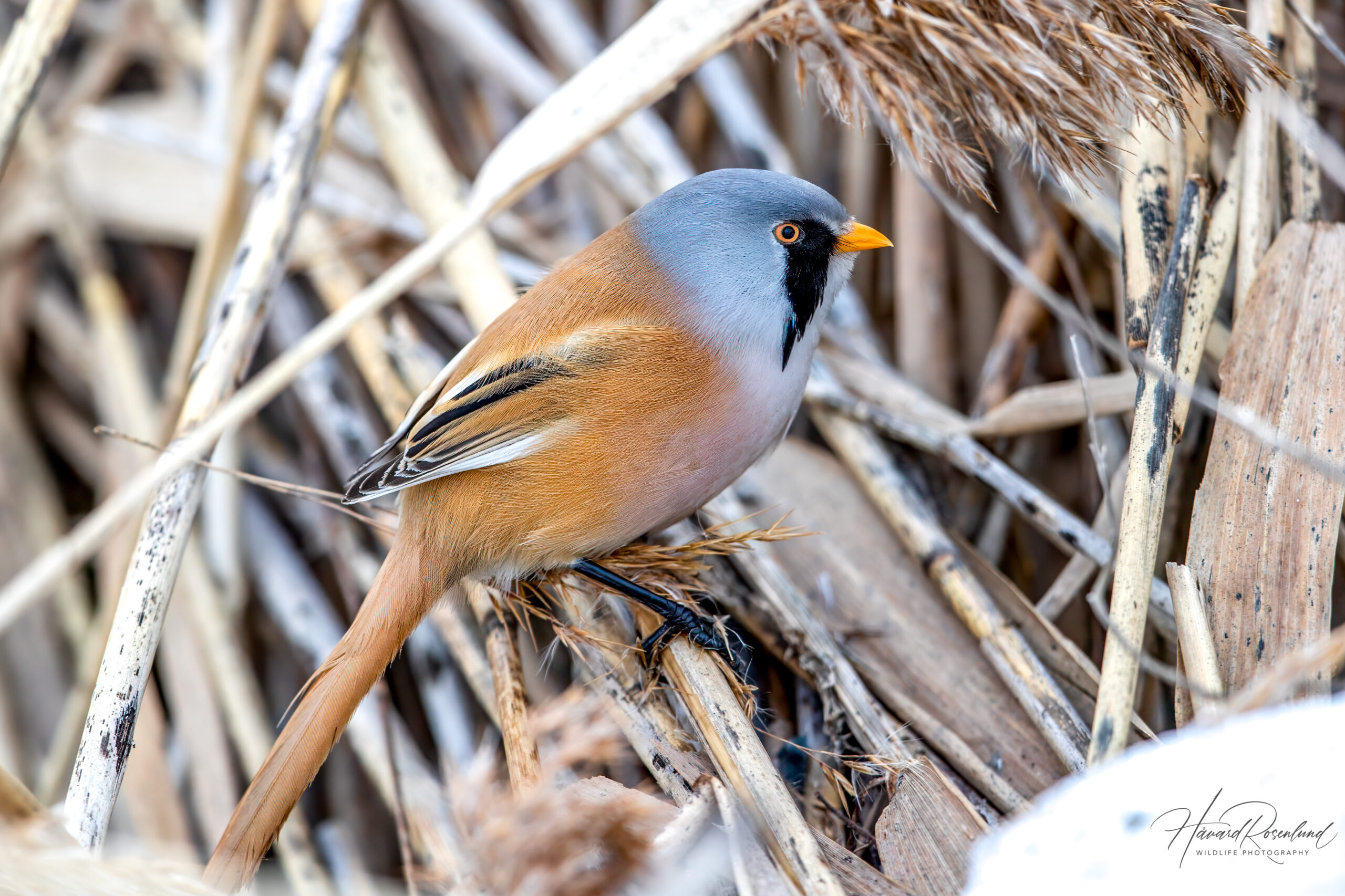
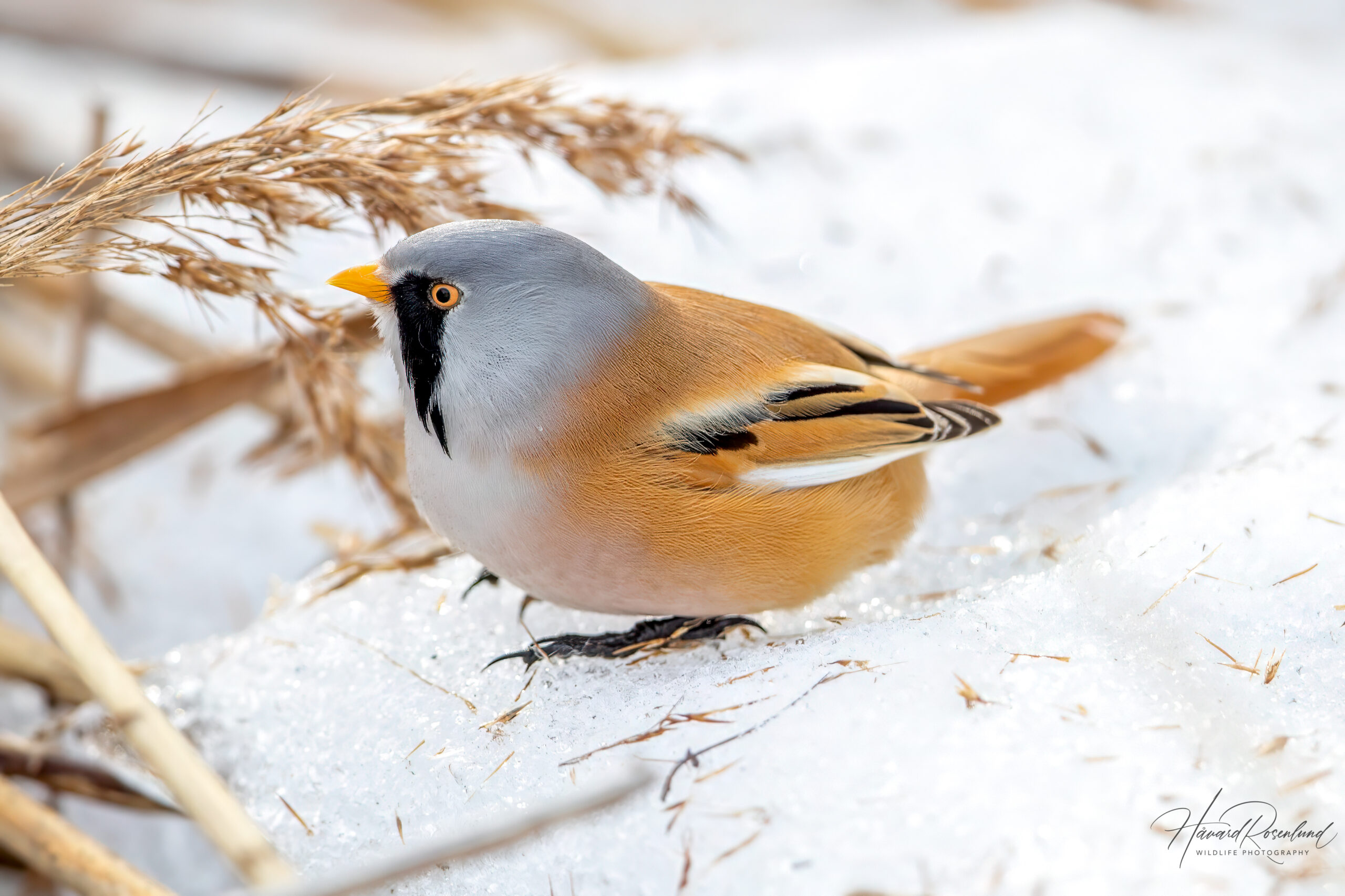
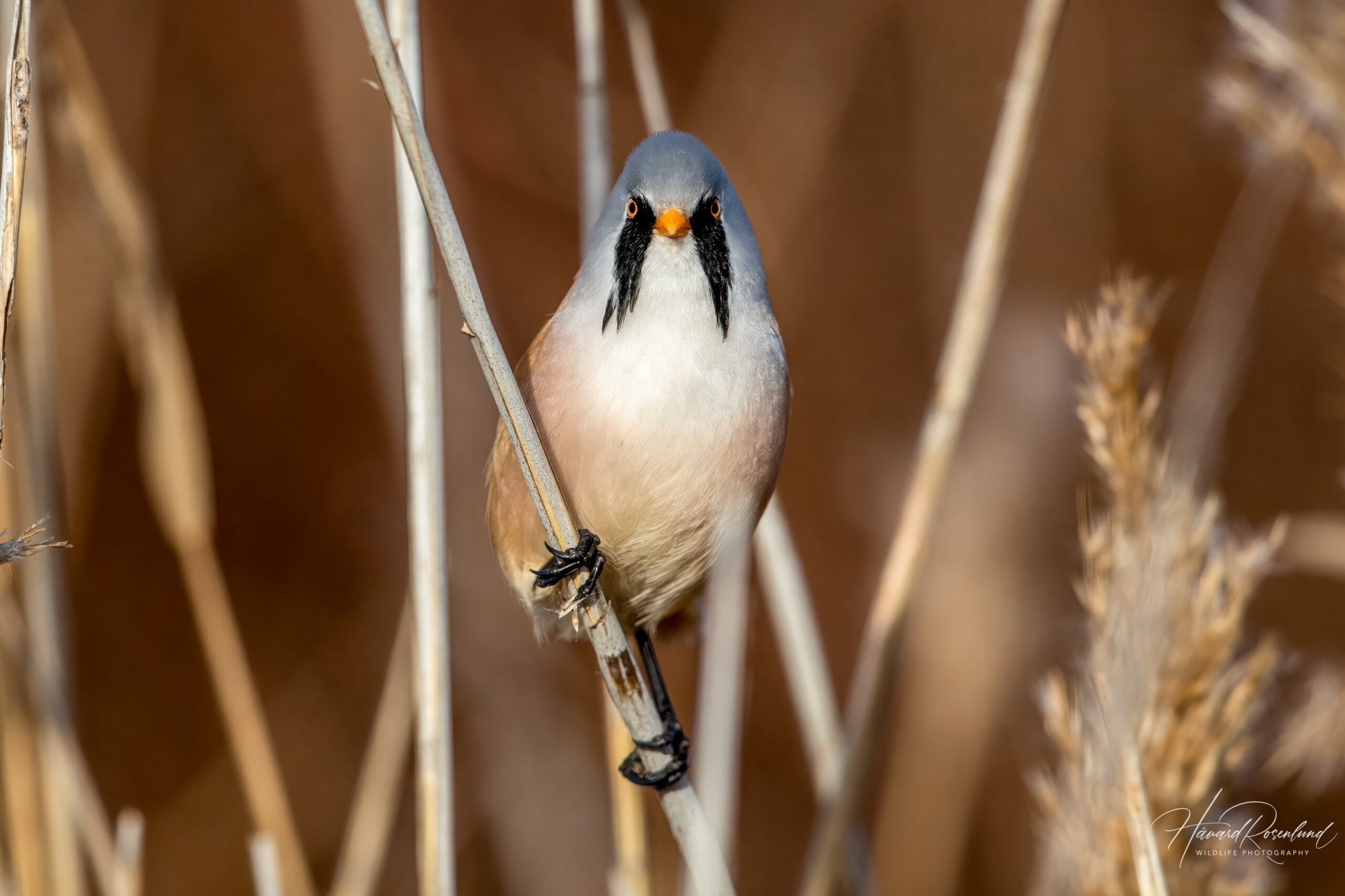
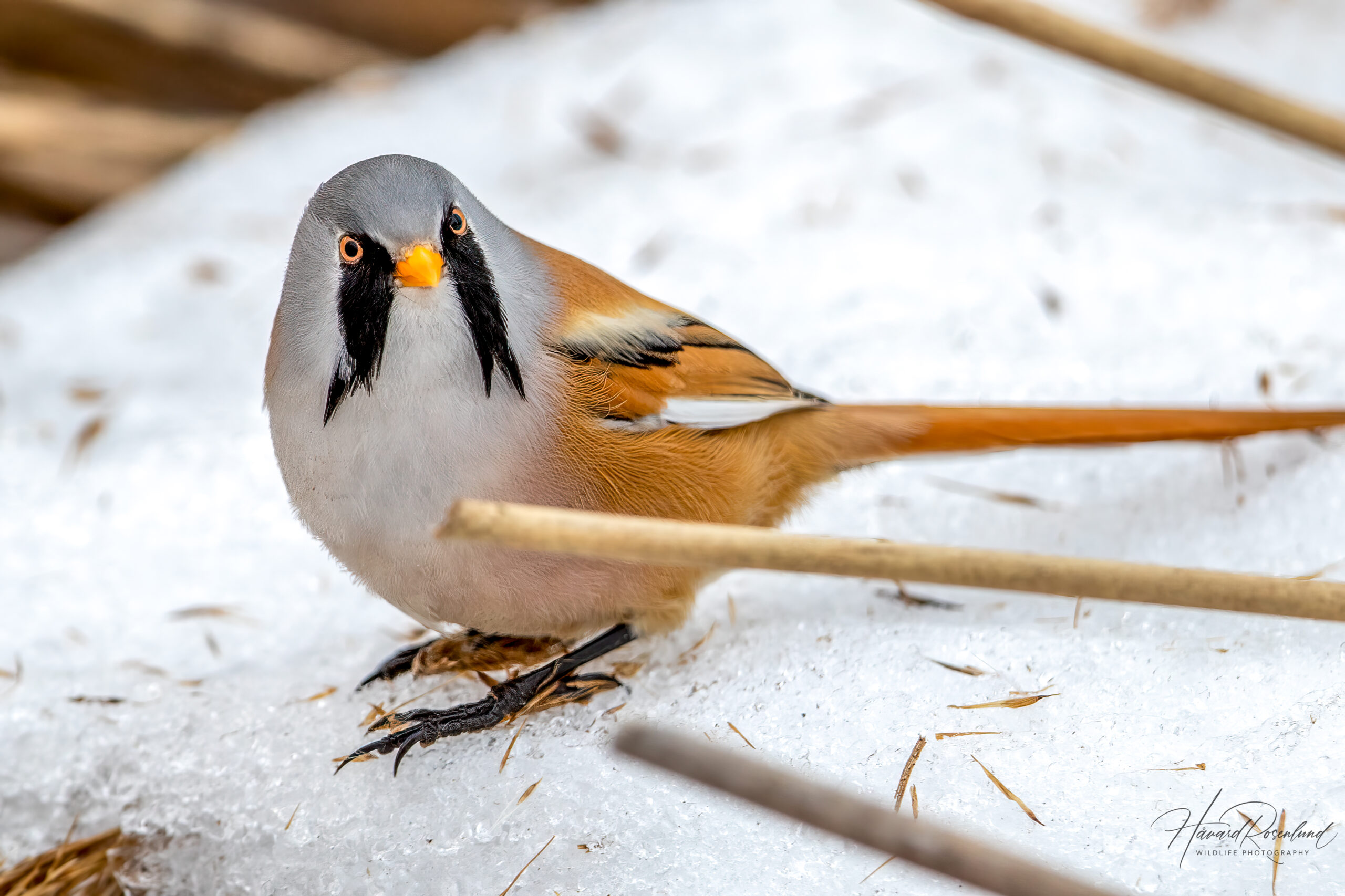
The bearded reedling (Panurus biarmicus), also widely known as the bearded tit, is a small, long-tailed passerine specialised for life in reedbeds. Adults are about 14–16.5 cm long and commonly weigh around 13–17 g. Both sexes have warm orange-brown plumage, but adult males are especially distinctive with a blue-grey head and broad black moustachial markings. Females have a brown head and lack the black facial patches.
Taxonomy
Despite the traditional English name “bearded tit”, the species is not a true tit. It is the only living species in the family Panuridae.
Modern phylogenetic studies place Panuridae within the sylvioid songbirds, with the lark family Alaudidae as its closest living family.
Habitat
Bearded reedlings are strongly associated with extensive reedbeds and other dense wetland vegetation. They forage, roost and breed among reed stems, and large areas containing a mixture of old and younger reed provide food and nesting sites through the year.
The strong dependence on large reedbeds explains the species' patchy distribution across Eurasia even though it can disperse over considerable distances.
Diet
The diet changes strongly through the year. During spring and summer, bearded reedlings feed mainly on insects and other small invertebrates. In autumn and winter they switch largely to seeds, especially those of common reed and other wetland plants.
Foraging
Foraging changes with the seasonal shift in diet. In spring and summer the birds move actively through reed stems and lower vegetation searching for invertebrates, and breeding adults may make repeated feeding flights between nesting areas and more open reed stands where insect prey is easier to find and reach.
A study published in 2010 at Oostvaardersplassen in the Netherlands found that older, denser reed stands were the main nesting areas, while younger, more open and flooded stands were particularly important for feeding. Chironomid midges were the most common prey brought to the chicks.
In autumn and winter the birds increasingly climb and balance on reed stems while picking seeds directly from seed heads, often feeding in flocks. This ability to exploit different parts and stages of the reedbed allows the species to remain in the same wetland habitat while switching from animal prey to seeds through the year.
Digestion
The seasonal change in diet is accompanied by a remarkable digestive adjustment. In autumn the birds deliberately swallow coarse sand and small stones, which remain as grit in the muscular gizzard and help grind the hard seed coats.
A study of gritting behaviour found that reed seed rose from about 31% of the diet in September to 78% by November and remained dominant into early February. Earlier examinations have found hundreds of small stones in individual gizzards. This behavioural and digestive shift allows a small songbird that feeds on insects in summer to remain in reedbeds through winter when animal prey is scarce.
Behaviour
Outside the breeding season, bearded reedlings often gather in flocks and maintain contact with distinctive ringing calls as they move through dense vegetation.
Many populations are largely resident, but the species can be highly dispersive. After productive breeding seasons, juveniles and adults may move considerable distances and rapidly colonise newly suitable wetlands. This combination of strong habitat specialisation and strong dispersal ability helps explain its patchy and sometimes rapidly changing distribution.
Breeding
Bearded reedlings form unusually early and persistent pair bonds. Pairs can form within juvenile flocks only weeks after fledging, well before the birds enter their first breeding season, and many pairs remain together for life. An experiment published in 2011 found that pairs that had been together longer before their first breeding season began laying earlier and had higher hatching and fledging success than pairs with shorter pair-bond periods.
In Europe breeding can begin as early as mid- or late March and continue through August. Both adults build a deep cup nest low among reed stems from reed leaves, grasses and other plant material. Clutches commonly contain four to eight eggs, which both parents incubate for roughly 10–14 days. The chicks leave the nest after around 12–13 days and remain dependent on their parents for a period afterwards. In favourable conditions pairs can raise two broods, and some pairs make several breeding attempts in the same season.
Status
The bearded reedling is globally classified as least concern on the IUCN Red List. Its Eurasian distribution is broad but highly fragmented because suitable large reedbeds are themselves patchily distributed. Populations can expand quickly after good breeding seasons, but severe winters and loss or degradation of reedbeds can cause sharp local declines.
Image gallery
Loading map and observations…
Have you seen this species?
Independent species archive
Did you find this species page useful?
Wildlife Vagabond is independently built and maintained. Voluntary support helps cover hosting, maps, data storage and continued improvements to the species archive.
Support Wildlife VagabondSpecies content will remain freely available.
References
Information about the species’ global distribution and status is based primarily on global Red List data. See the references below for details.
- Alström, P., Ericson, P. G., Olsson, U., & Sundberg, P. (2006). Phylogeny and classification of the avian superfamily Sylvioidea. Molecular Phylogenetics and Evolution, 38(2), 381-397. https://doi.org/10.1016/j.ympev.2005.05.015
- Artsdatabanken. (2021). Skjeggmeis Panurus biarmicus – Norsk rødliste for arter 2021. https://lister.artsdatabanken.no/rodlisteforarter/2021/28458
- Beemster, N., Troost, E., & Platteeuw, M. (2010). Early Successional Stages of ReedPhragmites australisVegetations and Its Importance for the Bearded ReedlingPanurus biarmicusin Oostvaardersplassen, The Netherlands. Ardea, 98(3), 339-354. https://doi.org/10.5253/078.098.0308
- BirdLife International. (n.d.). Bearded Reedling Panurus biarmicus species factsheet. https://datazone.birdlife.org/species/factsheet/bearded-reedling-panurus-biarmicus
- British Trust for Ornithology. (n.d.). Bearded Tit BirdFacts: breeding, movements and population trends. https://www.bto.org/learn/about-birds/birdfacts/bearded-tit
- Griggio, M., & Hoi, H. (2011). An experiment on the function of the long-term pair bond period in the socially monogamous bearded reedling. Animal Behaviour, 82(6), 1329-1335. https://doi.org/10.1016/j.anbehav.2011.09.016
- International Union for Conservation of Nature. (n.d.). Panurus biarmicus. The IUCN Red List of Threatened Species. https://www.iucnredlist.org/species/22716776/87767500
- Lovász, L., Fenyvesi, L., & Gyurácz, J. (2017). Contribution to the study of pair formation strategy of the Bearded Reedling. North-Western Journal of Zoology, 13(2), 297–302. https://biozoojournals.ro/nwjz/content/v13n2/nwjz_e161609_Lovasz.pdf
- Malzer, I., & Hansell, M. (2017). Nest timing, nest site selection and nest structure in a high latitude population of Bearded Reedlings Panurus biarmicus. Bird Study, 64(1), 51-61. https://doi.org/10.1080/00063657.2016.1271771
- Moyle, R. G., Andersen, M. J., Oliveros, C. H., Steinheimer, F. D., & Reddy, S. (2012). Phylogeny and Biogeography of the Core Babblers (Aves: Timaliidae). Systematic Biology, 61(4), 631-651. https://doi.org/10.1093/sysbio/sys027
- Wilson, J. (2014). The gritting behaviour of Bearded Tits <i>Panurus biarmicus</i>. Ringing & Migration, 29(1), 37–40. https://doi.org/10.1080/03078698.2013.869910