
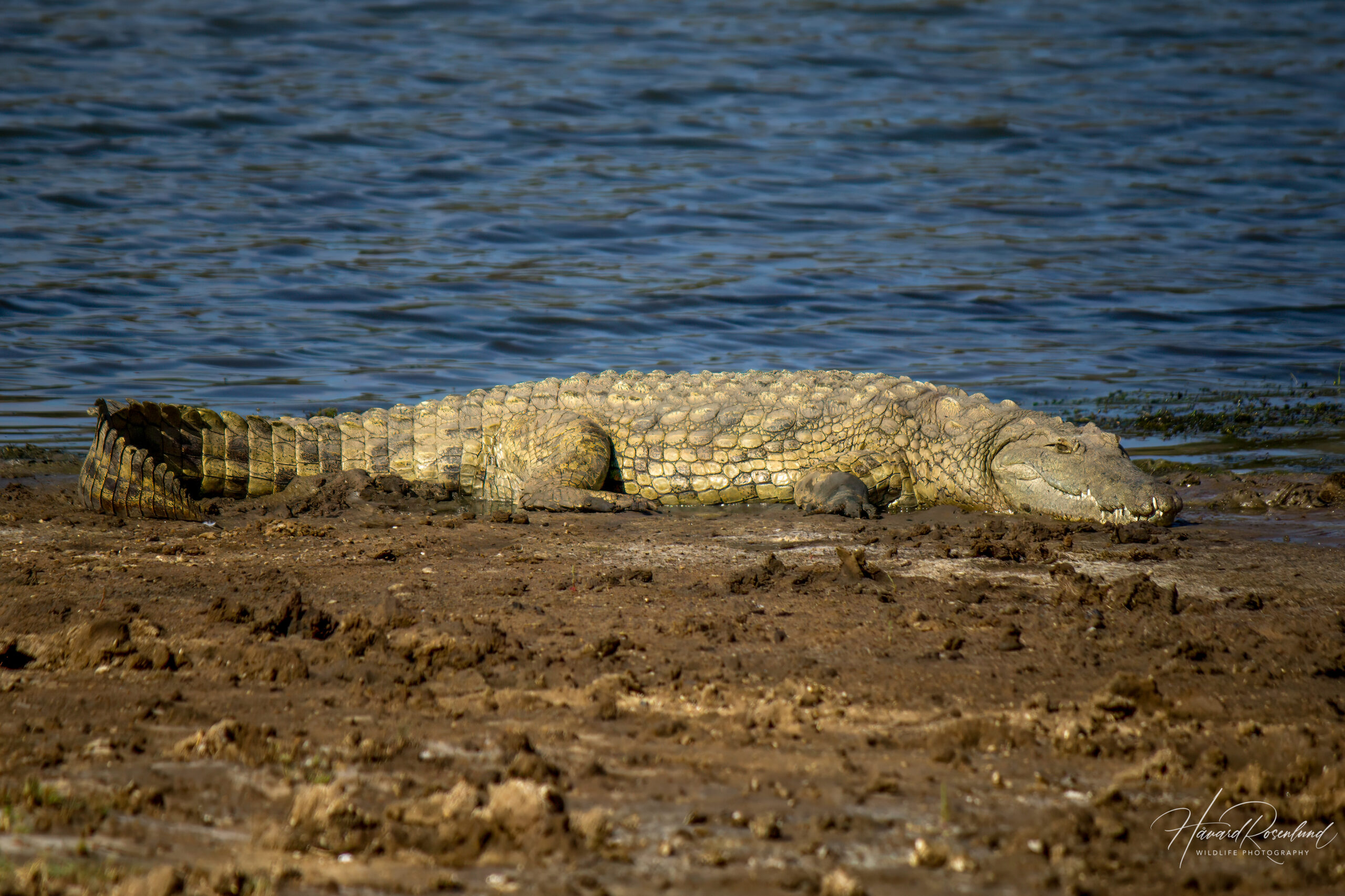
Nile Crocodile
Crocodylus niloticus
At a glance
Habitat
- Rivers, lakes, swamps, reservoirs and other wetlands
Diet
- Fish, reptiles, birds and mammals; prey size increases with age
Activity
- Basks by day and hunts opportunistically by day and night
Size
- Length: 2.4–5 m Weight: 100–750 kg
Range
- Eastern, central and southern Africa, with isolated populations along the Nile
Description
The Nile crocodile (Crocodylus niloticus) is Africa’s largest living reptile and one of the world’s largest crocodilians. Adult males commonly reach about 3.5–5 m, while females are usually smaller at roughly 2.4–3.8 m. Body mass varies greatly with sex, age and condition: adult females may weigh around 100–300 kg and large males 225–750 kg. Exceptional old males can exceed 5 m and approach 1,000 kg, but such animals are rare.
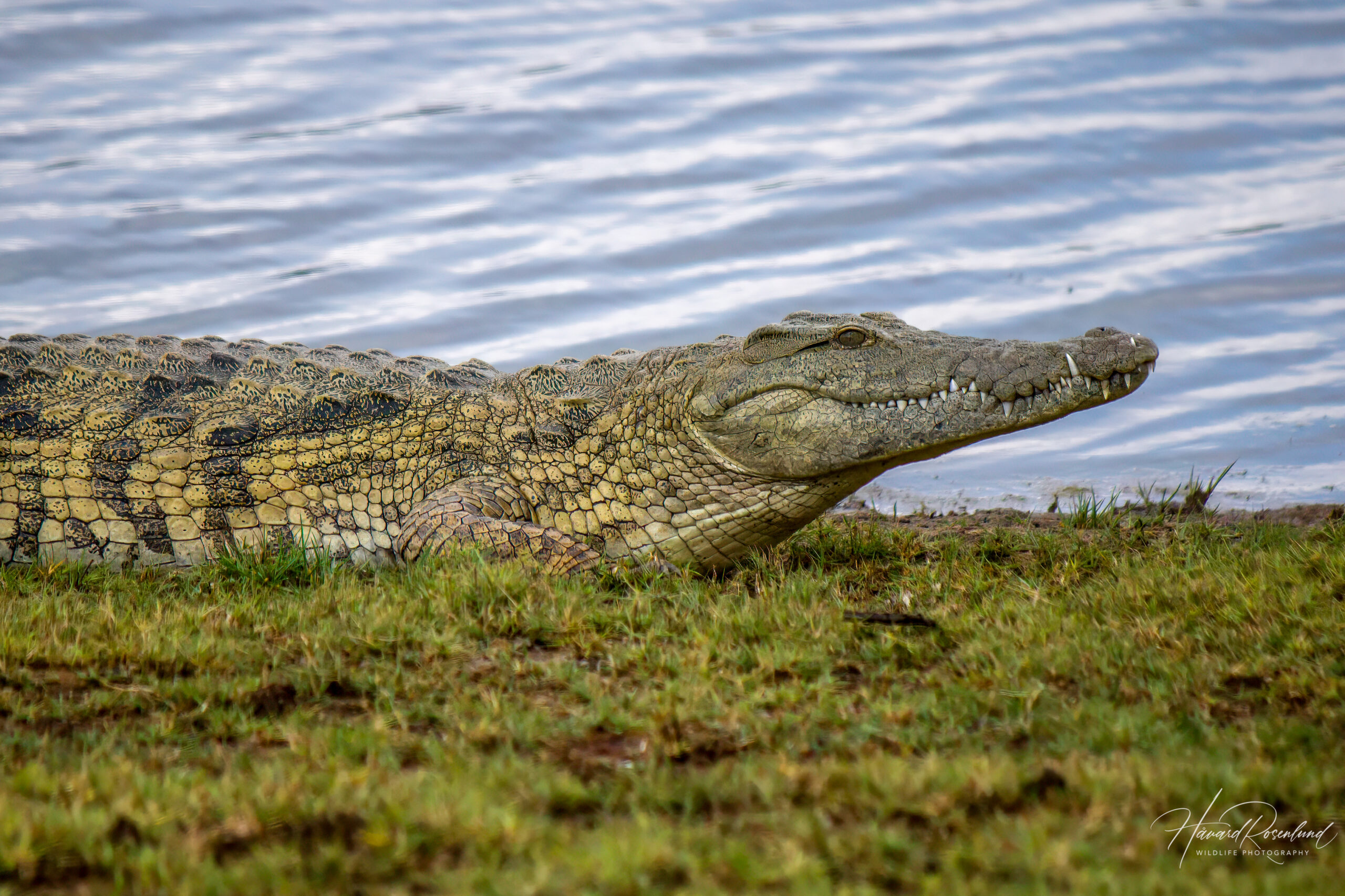
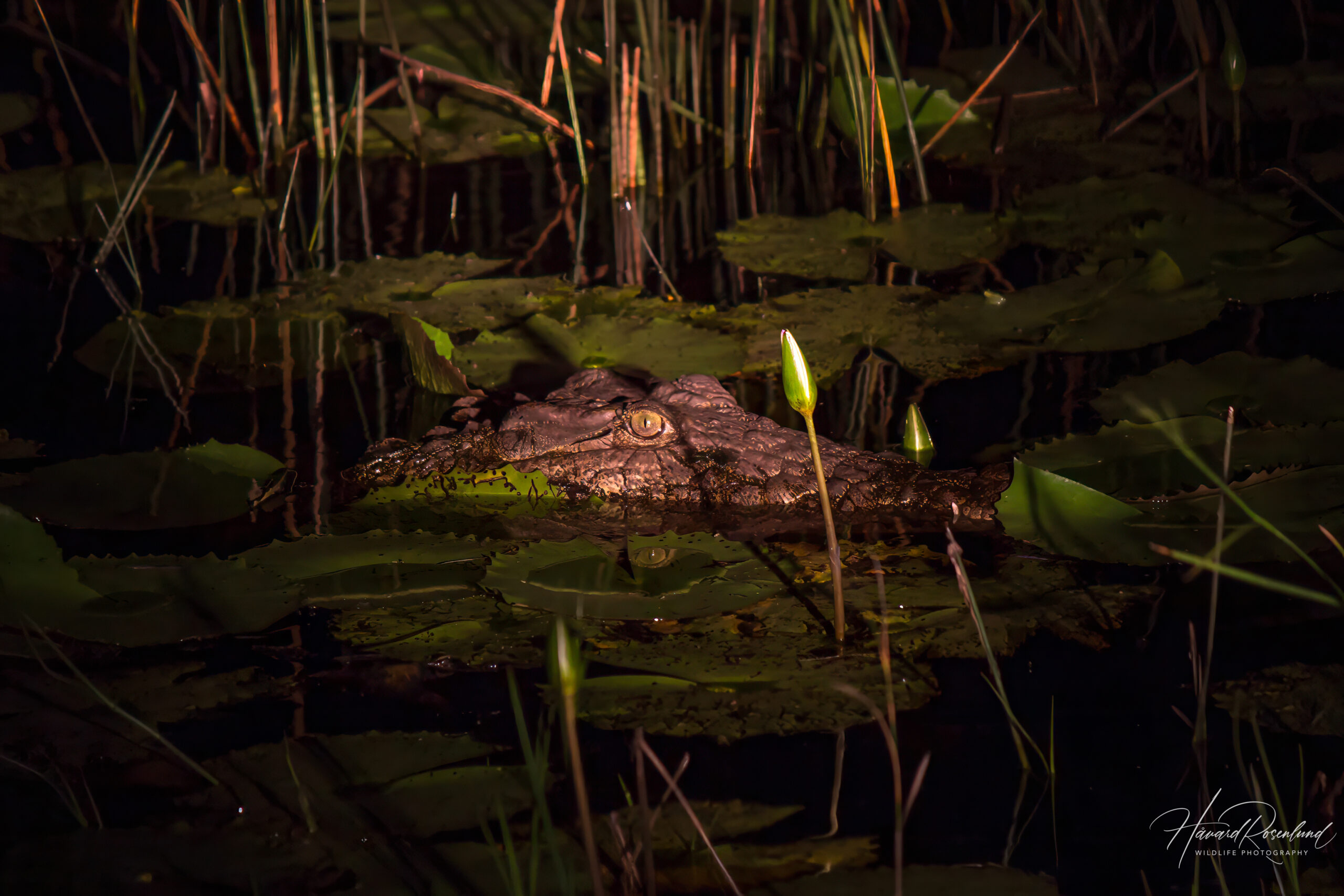
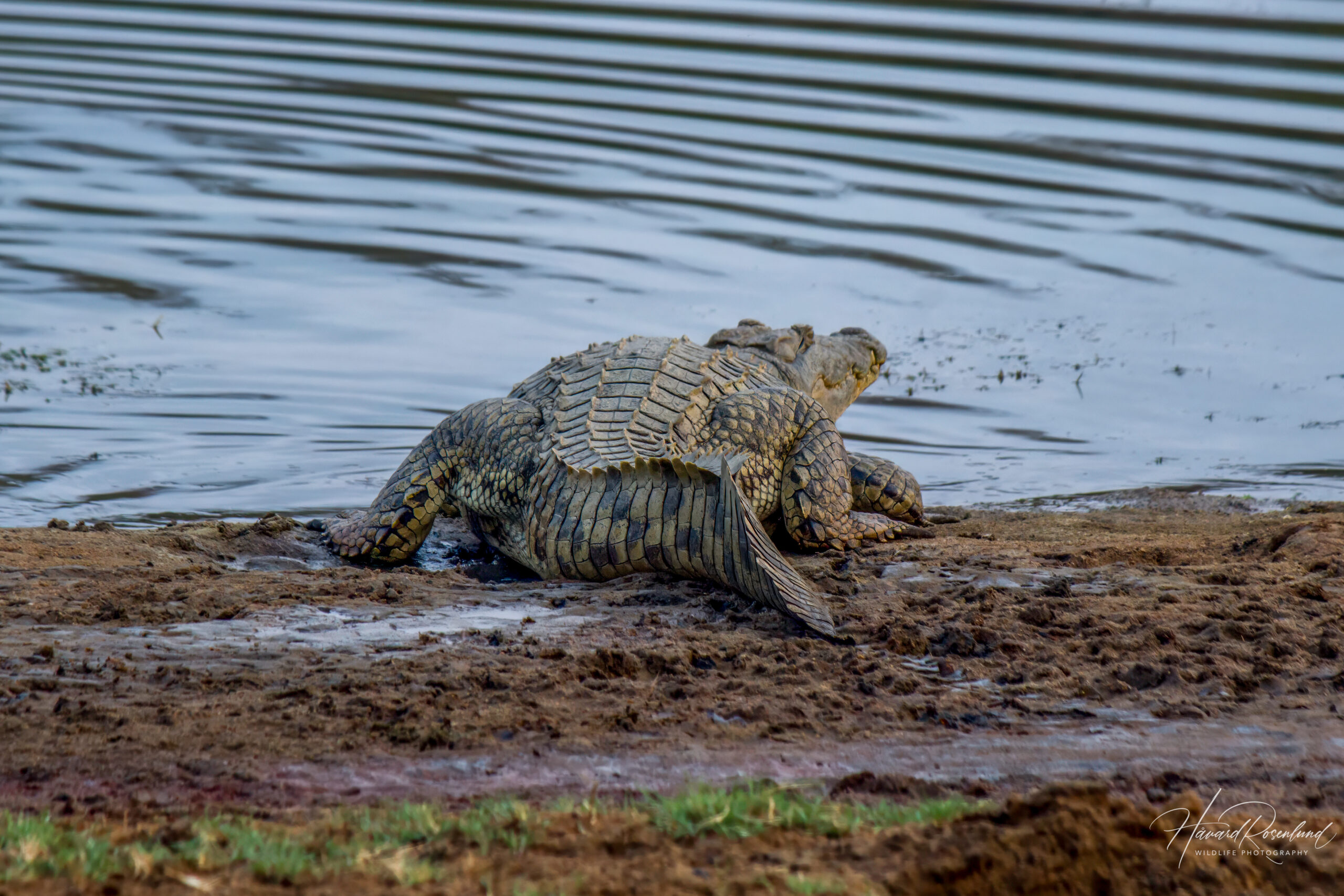
The eyes, ears and nostrils sit high on the head, allowing the animal to remain almost entirely submerged while watching the water’s edge. A powerful tail provides most propulsion in water, while bony plates reinforce the skin along the back. The limbs are comparatively short but strong enough for efficient movement over land.
Taxonomy
The name “Nile crocodile” once covered a broader set of African populations than it does today. Genetic work, including DNA from historical and mummified specimens, helped restore the West African crocodile (Crocodylus suchus) as a separate species in 2011. The Reptile Database continues to recognise C. niloticus and C. suchus separately.
Crocodylus suchus occurs widely in West Africa and parts of Central Africa, so many older records from those regions cannot simply be assumed to represent C. niloticus. The modern concept of the Nile crocodile is centred on eastern, central and southern Africa, with isolated populations extending northwards along the Nile.
Habitat
Nile crocodiles inhabit rivers, lakes, reservoirs, swamps, estuaries and other permanent or seasonal wetlands. They tolerate a wide range of freshwater conditions, can enter brackish water and occasionally reach coastal habitats.
The species depends on suitable banks for basking and nesting as well as access to water deep enough for refuge. Drought, changing river flow and the loss of natural shorelines can therefore affect a population even when some open water remains.
Diet
Diet changes strongly with body size. Hatchlings and small juveniles take insects, crustaceans, amphibians and small fish. Larger juveniles and adults consume fish, reptiles, birds and mammals. Antelopes are typical large prey, and exceptionally large crocodiles can also kill animals such as zebra and buffalo at the water’s edge. Because crocodiles rely on external heat to regulate body temperature, they have a relatively low metabolism and can survive long intervals between large meals.
The balance between fish and terrestrial prey varies greatly between regions. At Lake St Lucia in South Africa, research found that fish made up most of the diet of larger juveniles and adults, followed by crustaceans. In parts of East Africa, large mammals can be much more prominent in the diet. The contrast shows how flexible the species can be when local prey availability differs.
Hunting
The Nile crocodile is primarily an ambush predator. It waits with little more than the eyes and nostrils exposed, approaches silently and accelerates over the final short distance. Large prey is seized in the jaws and pulled into deeper water. Rotational body movements help crocodiles process large food items, and several animals may feed at the same carcass.
Fish are taken in several ways. Crocodiles can wait in currents, sweep sideways with the head, use the tail to drive fish within striking range of the jaws, exploit fish trapped in shallows or gather where fish migrate seasonally. Several animals may benefit from the same concentrated school without necessarily coordinating their actions as social predators do. On land, crocodiles may wait beside paths leading to water, but prolonged pursuit is unusual.
Behaviour
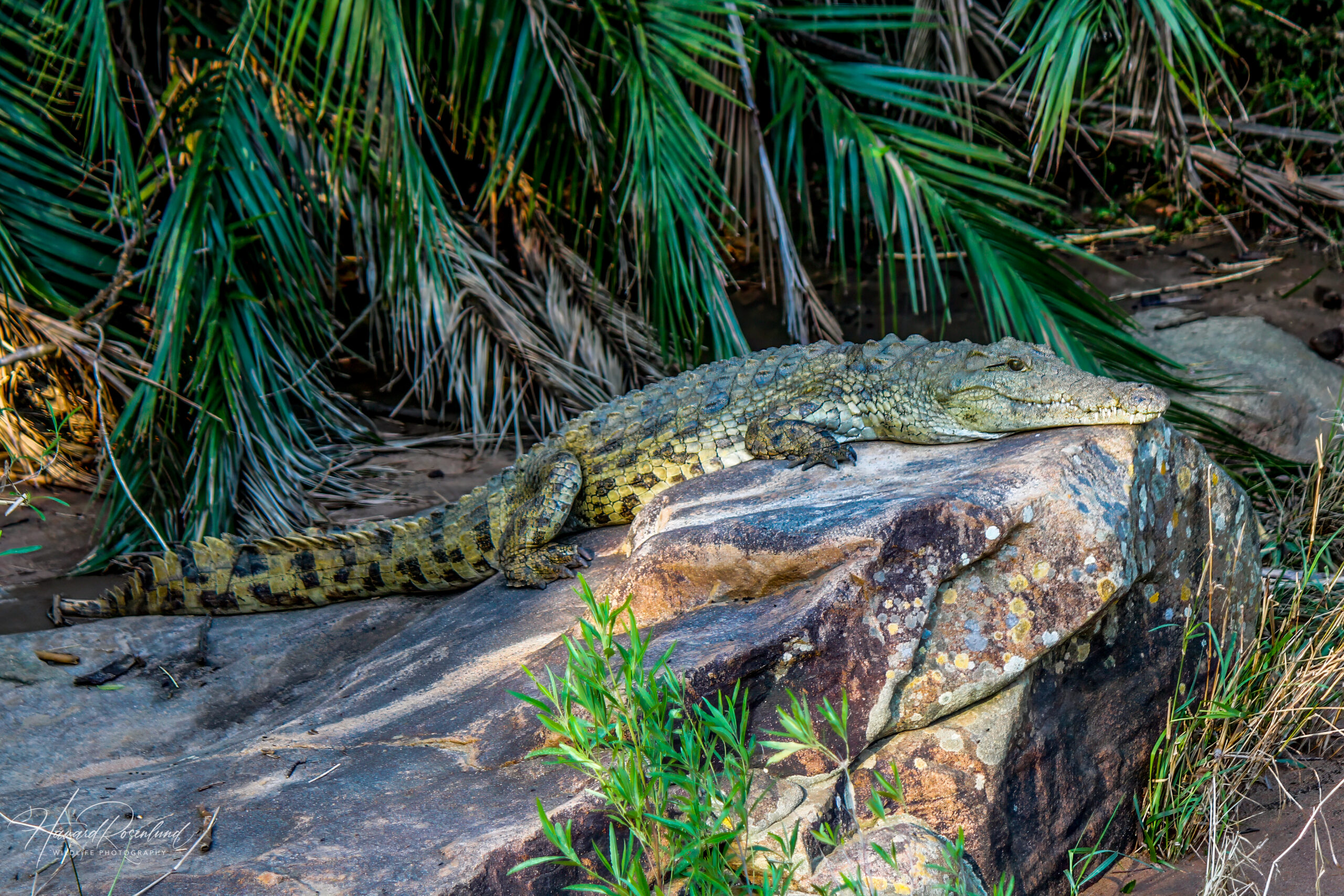
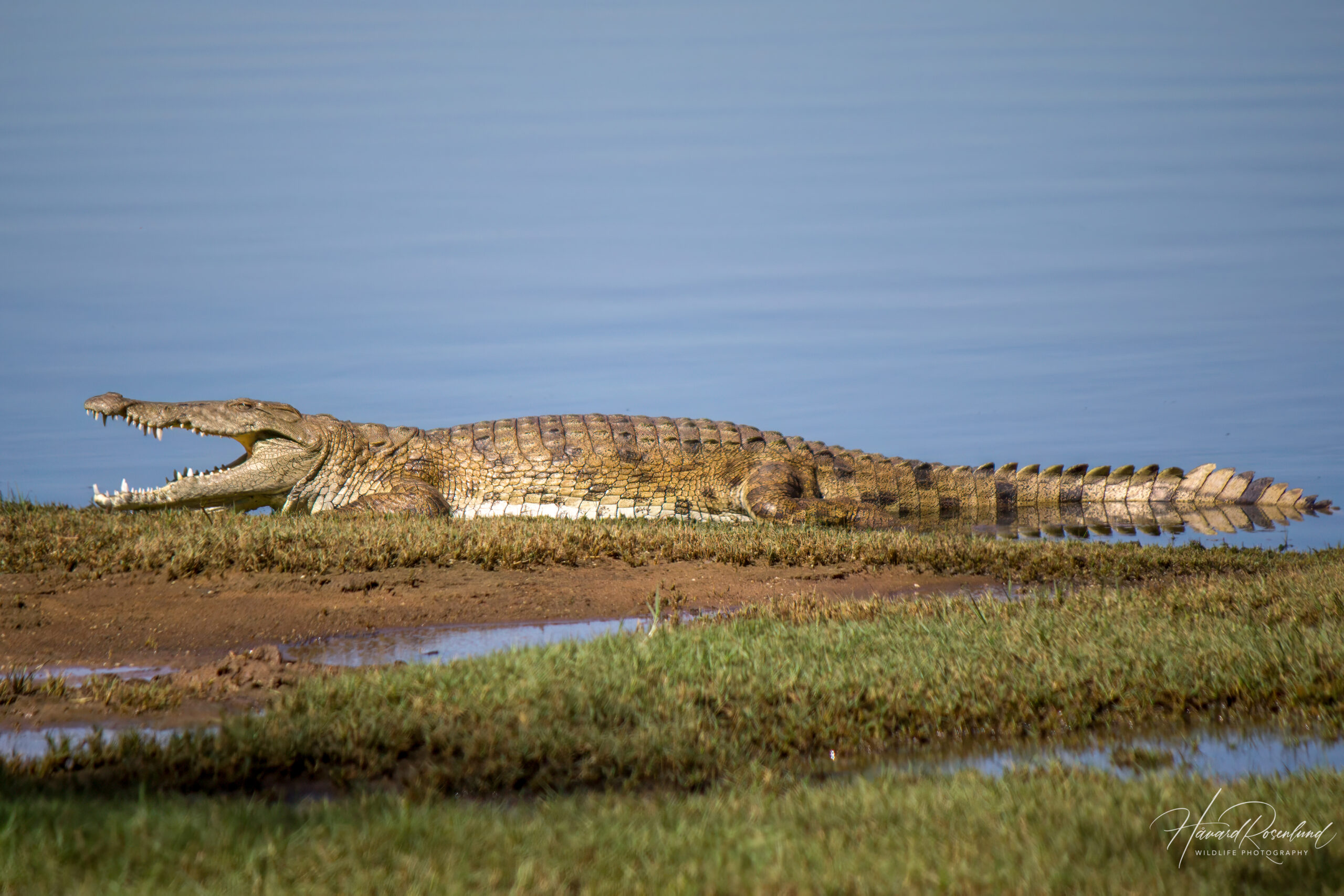
Nile crocodiles regulate body temperature behaviourally. They bask on banks to warm up, retreat to water or shade when overheated and may gape with the mouth open as part of cooling. Activity can occur by day or night, with hunting activity often increasing when prey approaches the water.
Although often solitary, crocodiles gather at favourable basking sites, concentrated food sources and during drought when water contracts. Size strongly influences access to the best positions. They also travel over land between water bodies and may follow regular routes between familiar waters and shorelines.
The video below shows a Nile crocodile moving quietly through the water.
Reproduction
Sexual maturity depends more on size than age and is often reached after roughly 10–16 years. Females generally mature at around 2.2–2.8 m, while males are commonly about 3 m. Courtship includes head movements, vocalisations, bubbles and splashing.
The female digs a nest in sand or soil and usually lays about 25–80 eggs. She remains nearby during an incubation period of roughly three months. Calls from the young inside the eggs help trigger nest opening, and the mother may carry hatchlings gently to the water in her mouth. She can also help a hatchling emerge by gently rolling an unhatched egg between her tongue and palate until the shell cracks. Newly hatched Nile crocodiles are usually about 28–32 cm long.
A four-year camera-trap study at Lake St Lucia showed how extensive maternal care can be. Of 19 monitored nests, 37% were raided, mainly by Nile monitors (Varanus niloticus) and marsh mongooses (Atilax paludinosus), yet females repeatedly returned and defended their nests. In one detailed hatching sequence, a mother made 13 trips between nest and water over 32.5 hours while excavating and transporting hatchlings. Females can continue to remain near nursery groups for many months after hatching.
Nile crocodiles have temperature-dependent sex determination: sex is determined by nest temperature during a sensitive stage of embryonic development. In the Lake St Lucia population, males are reportedly developed in the temperature range of 31.7 and 34.5 °C, while females are developed in temperatures below and above this range. These values can vary between populations and study conditions and should not be treated as fixed thresholds for the species as a whole.
Cultural significance
Crocodiles of the Nile region held extraordinary religious importance in ancient Egypt. The crocodile-headed god Sobek was associated with the Nile, fertility, protection and royal power, with major cult centres in the Faiyum and at Kom Ombo. Sacred crocodiles were kept, represented in art and, from the Late Period onwards, mummified as offerings.
Ancient Egyptians lived alongside more than one crocodile species or form. Genetic work on mummified specimens has shown that some animals once assumed to be Nile crocodiles were actually West African crocodiles (Crocodylus suchus). The Sobek tradition therefore encompassed crocodiles of the Nile region more broadly, not only C. niloticus.
Relationship with humans
Nile crocodiles often live close to people where fishing, washing, water collection and river crossings overlap with crocodile habitat, and serious or fatal incidents can occur. Many incidents are never formally recorded, so no reliable continent-wide annual total exists.
Risk is highest close to occupied water edges. Keeping well back from banks, avoiding habitual animal paths and known crossing points, and following local guidance are important in crocodile country, especially around dawn, dusk and at night.
The species is also economically important through regulated crocodile farming and legal skin trade in several African countries. These industries developed partly as alternatives to the unregulated exploitation that drove severe declines during the twentieth century.
Status
The Nile crocodile is listed as Least Concern on the IUCN Red List. The assessment published in 2017 estimated roughly 50,000–70,000 mature individuals and considered the overall population stable, although abundance varies greatly among river systems and regions.
The situation is weaker at the southern edge of the range. The 2017 South African regional assessment classified the Nile crocodile as Vulnerable following an estimated decline of more than 30% over three generations. Counts from Kruger National Park and KwaZulu-Natal then totalled at least 5,389 Nile crocodiles, excluding hatchlings. This figure excluded smaller populations and is a historical estimate from the assessment data, not a current national census.
Population security varies greatly across the range. Some populations are abundant in major protected wetlands, while others remain depleted or fragmented.
Threats
Intensive exploitation for skins caused major declines during the mid-twentieth century. Today, local threats include habitat loss, wetland degradation, pollution, injury or drowning in fishing gear, illegal removal and retaliatory removal after conflict with people.
Changes to river flow, dam construction and prolonged drought can alter nesting banks and nursery habitat. At Lake St Lucia, crocodiles are also exposed to persistent pollutants such as pesticide residues, showing how these substances can accumulate in large predators at the top of the food chain even inside major protected wetland systems.
Conservation
Legal protection, regulated trade, crocodile farming and programmes in which eggs or young are collected from the wild and raised under controlled conditions have allowed Nile crocodile populations to recover in several countries. International trade is controlled through CITES: most populations are in Appendix I, while specified national populations are included in Appendix II under particular management conditions.
Effective conservation requires more than protecting adults from direct removal. Nesting beaches, seasonal wetlands, fish populations and safe connections between water bodies all matter. Where crocodiles and people share the same waterways, practical conflict reduction is equally important because local tolerance can determine whether a population remains protected.
Image gallery
Loading map and observations…
National Red List status
| Country | Status | Assessment | Source |
|---|---|---|---|
| South Africa | VUVulnerable | Red List of South African Species 2017 | SANBI – Red List of South African Species |
Have you seen this species?
Independent species archive
Did you find this species page useful?
Wildlife Vagabond is independently built and maintained. Voluntary support helps cover hosting, maps, data storage and continued improvements to the species archive.
Support Wildlife VagabondSpecies content will remain freely available.
References
Information about the species’ global distribution and status is based primarily on global Red List data. See the references below for details.
- Combrink, X., Warner, J. K., & Downs, C. T. (2016). Nest predation and maternal care in the Nile crocodile (Crocodylus niloticus) at Lake St Lucia, South Africa. Behavioural Processes, 133, 31-36. https://doi.org/10.1016/j.beproc.2016.10.014
- Convention on International Trade in Endangered Species of Wild Fauna and Flora. (n.d.). Crocodylus niloticus. https://cites.org/eng/taxonomy/term/3544
- Egypt Ministry of Tourism and Antiquities. (n.d.). Crocodile Museum. https://egymonuments.gov.eg/en/museums/crocodile-museum
- González, E. J., Martínez‐López, M., Morales‐Garduza, M. A., García‐Morales, R., Charruau, P., & Gallardo‐Cruz, J. A. (2019). The sex‐determination pattern in crocodilians: A systematic review of three decades of research. Journal of Animal Ecology, 88(9), 1417-1427. https://doi.org/10.1111/1365-2656.13037
- Hekkala, E., Shirley, M. H., Amato, G., Austin, J. D., Charter, S., Thorbjarnarson, J., Vliet, K. A., Houck, M. L., DeSalle, R., & Blum, M. J. (2011). An ancient icon reveals new mysteries: mummy DNA resurrects a cryptic species within the Nile crocodile. Molecular Ecology, 20(20), 4199-4215. https://doi.org/10.1111/j.1365-294X.2011.05245.x
- Hutton, J. M. (1987). Incubation temperatures, sex ratios and sex determination in a population of Nile crocodiles (Crocodylus niloticus). Journal of Zoology, 211(1), 143-155. https://doi.org/10.1111/j.1469-7998.1987.tb07458.x
- International Union for Conservation of Nature. (n.d.). Crocodylus niloticus. The IUCN Red List of Threatened Species. https://www.iucnredlist.org/species/45433088/3010181
- Leslie. (1997). The ecology and physiology of the Nile crocodile at Lake St Lucia. https://researchdiscovery.drexel.edu/esploro/outputs/doctoral/The-ecology-and-physiology-of-the/991021889008904721
- Pooley, A. C. (1977). Nest opening response of the Nile crocodile Crocodylus niloticus. Journal of Zoology, 182(1), 17-26. https://doi.org/10.1111/j.1469-7998.1977.tb04137.x
- South African National Biodiversity Institute. (2017). Regional assessment of Crocodylus niloticus in South Africa. https://speciesstatus.sanbi.org/assessment/last-assessment/2680/
- South African National Biodiversity Institute. (n.d.). Crocodylus niloticus: natural history and feeding behaviour. https://biodiversityadvisor.sanbi.org/search/detail/80956
- The Metropolitan Museum of Art. (n.d.). Metropolitan Museum of Art. Ancient Egyptian crocodile object. https://www.metmuseum.org/art/collection/search/552246
- The Reptile Database. (n.d.). Crocodylus niloticus. https://reptile-database.reptarium.cz/Crocodylus/niloticus
- The Reptile Database. (n.d.). Crocodylus suchus. https://reptile-database.reptarium.cz/Crocodylus/suchus