
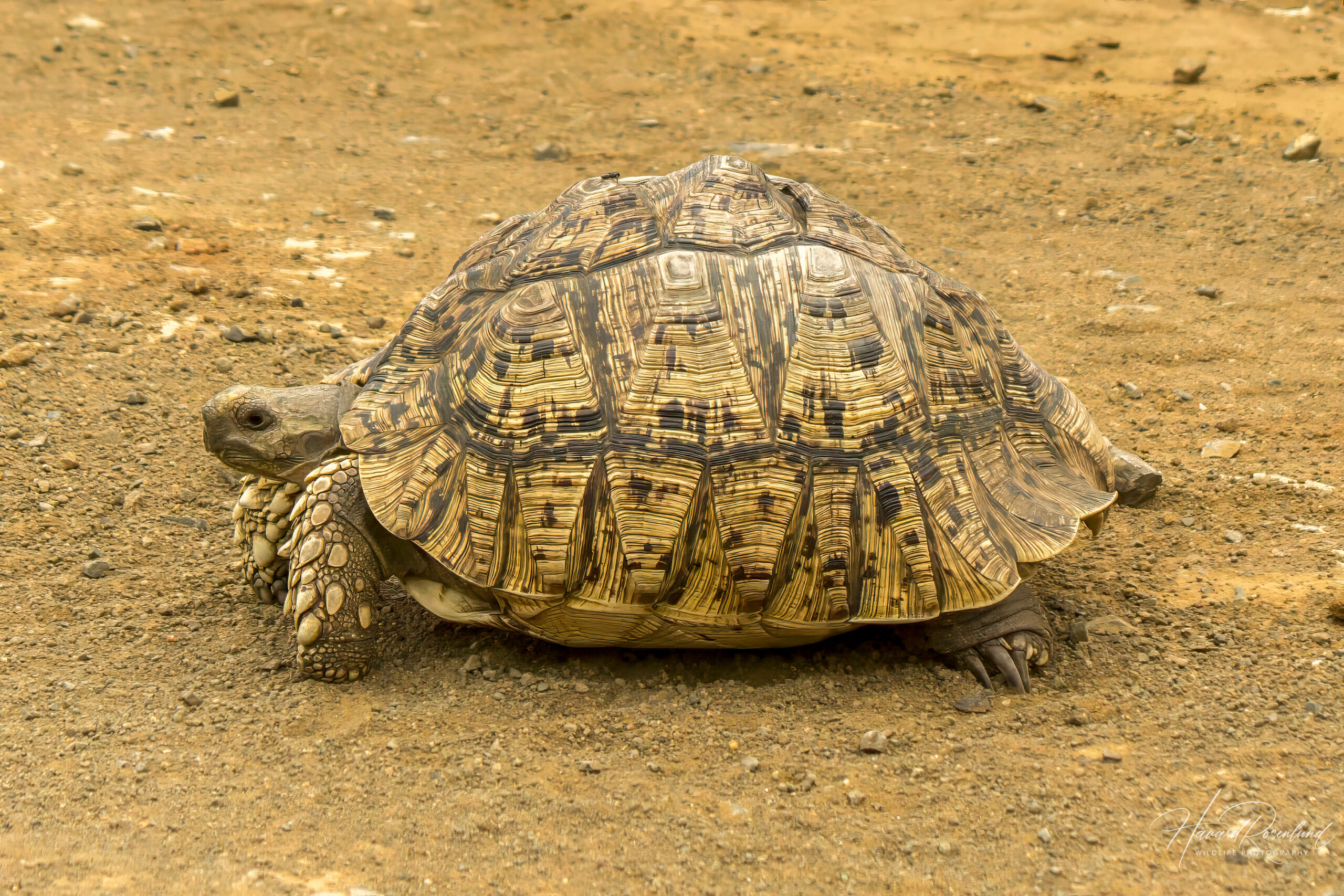
Leopard Tortoise
Stigmochelys pardalis
At a glance
Habitat
- Savanna, grassland, semi-desert, thorn scrub and open woodland
Diet
- Mainly grasses and herbs; also succulents, fungi, fallen fruit and mineral-rich material
Activity
- Diurnal, with activity concentrated in mild temperatures and after rain
Size
- Length: typically 35–50 cm shell length; exceptional individuals exceed 70 cm Weight: often 10–20 kg; exceptional individuals exceed 40 kg
Range
- Eastern and southern Africa from South Sudan and Ethiopia to South Africa
Description
The leopard tortoise (Stigmochelys pardalis) is one of Africa’s largest and most widespread tortoises. Adults commonly have a shell length of about 35–50 cm and weigh around 10–20 kg, although size varies greatly across the range. Exceptional individuals can exceed 70 cm and 40 kg.
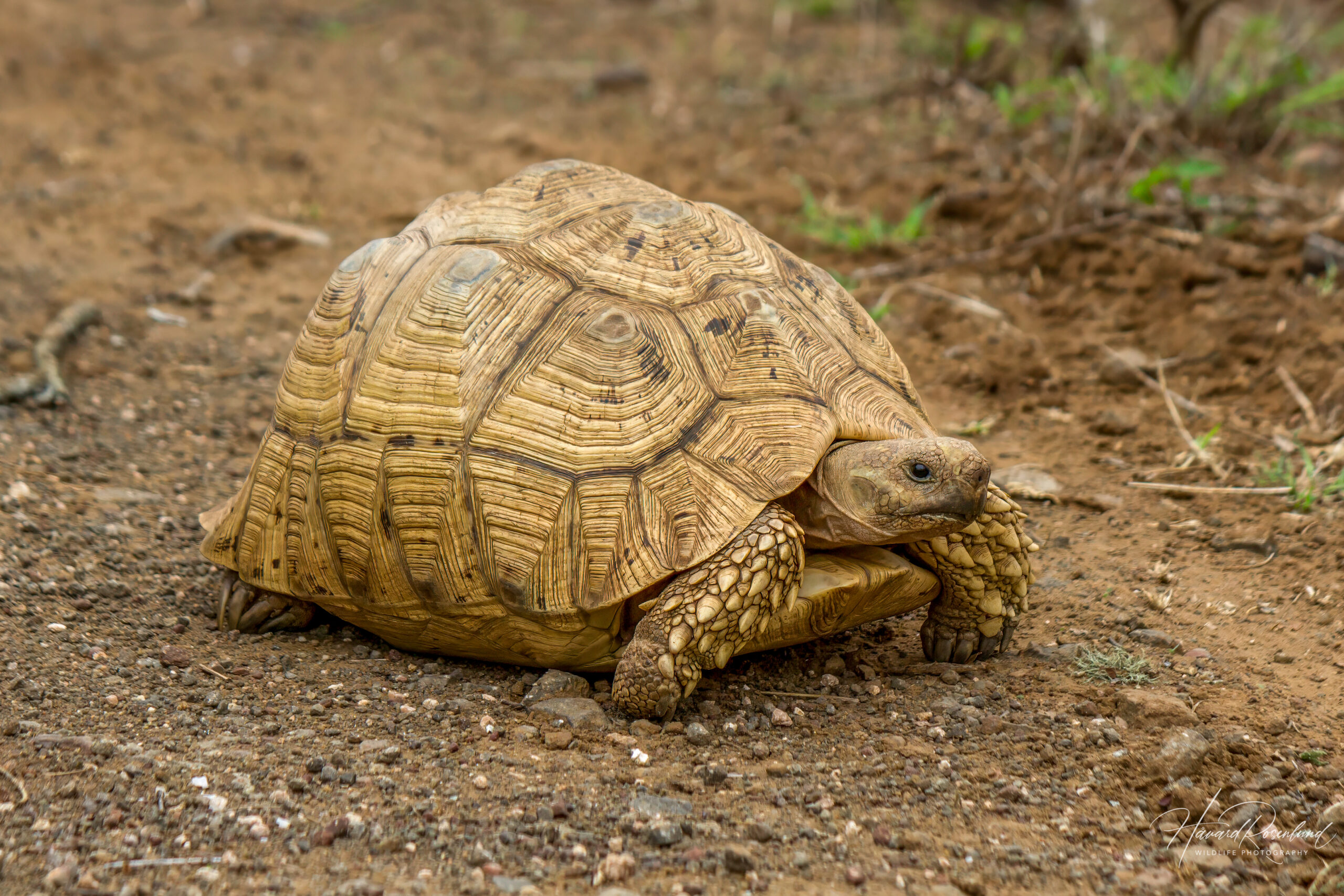
The high-domed carapace has black or dark-brown spots, blotches and radiating lines on a yellow to cream background. Each pattern is individual. Juveniles usually have the sharpest contrast, while the markings often fade and merge as the shell grows and wears.
The African spurred tortoise (Centrochelys sulcata) can grow larger, but it has a more uniformly brown shell and is concentrated in the Sahel rather than the eastern and southern African range of the leopard tortoise.
Taxonomy
The species was traditionally divided into two subspecies, Stigmochelys pardalis pardalis and S. p. babcocki, based mainly on size and shell pattern. Modern genetic and morphological reviews found extensive geographic variation but did not support a clear two-subspecies division.
The Reptile Database and recent global turtle checklists therefore treat the leopard tortoise as a single species without recognised subspecies. Geographic genetic structure remains important when confiscated or rehabilitated animals are considered for release.
Habitat
Leopard tortoises occupy savanna, grassland, thorn scrub, semi-desert and open woodland, from sea level to high-elevation landscapes. They avoid prolonged cold and waterlogged conditions but occur in both dry and seasonally wet environments.
Suitable habitat usually combines open feeding areas with bushes, rocks, abandoned burrows or other shelter from extreme heat, cold and drought.
Diet
The species is mainly herbivorous. Grasses and herbs dominate the diet, supplemented by succulents, fungi and fallen fruit. Small amounts of animal-derived or mineral-rich material are also taken.
Foraging
Leopard tortoises graze while moving slowly through open vegetation, cropping grasses and herbs as they travel. When minerals are scarce, they may also eat bones, mineral-rich soil and carnivore faeces and visit natural or artificial mineral licks.
A 2024 study in the Kalahari documented tortoises feeding on spotted hyaena (Crocuta crocuta) faeces and gathering at artificial mineral and salt licks during the wet season. The behaviour is thought to help supply nutrients such as calcium, phosphorus and sodium that may be scarce in the surrounding vegetation.
Behaviour
Leopard tortoises are mainly diurnal, but activity is strongly affected by temperature, rainfall and access to water. They may walk considerable distances during mild weather and after rain, then shelter beneath bushes, rocks or in abandoned burrows during midday heat, cold nights or drought.
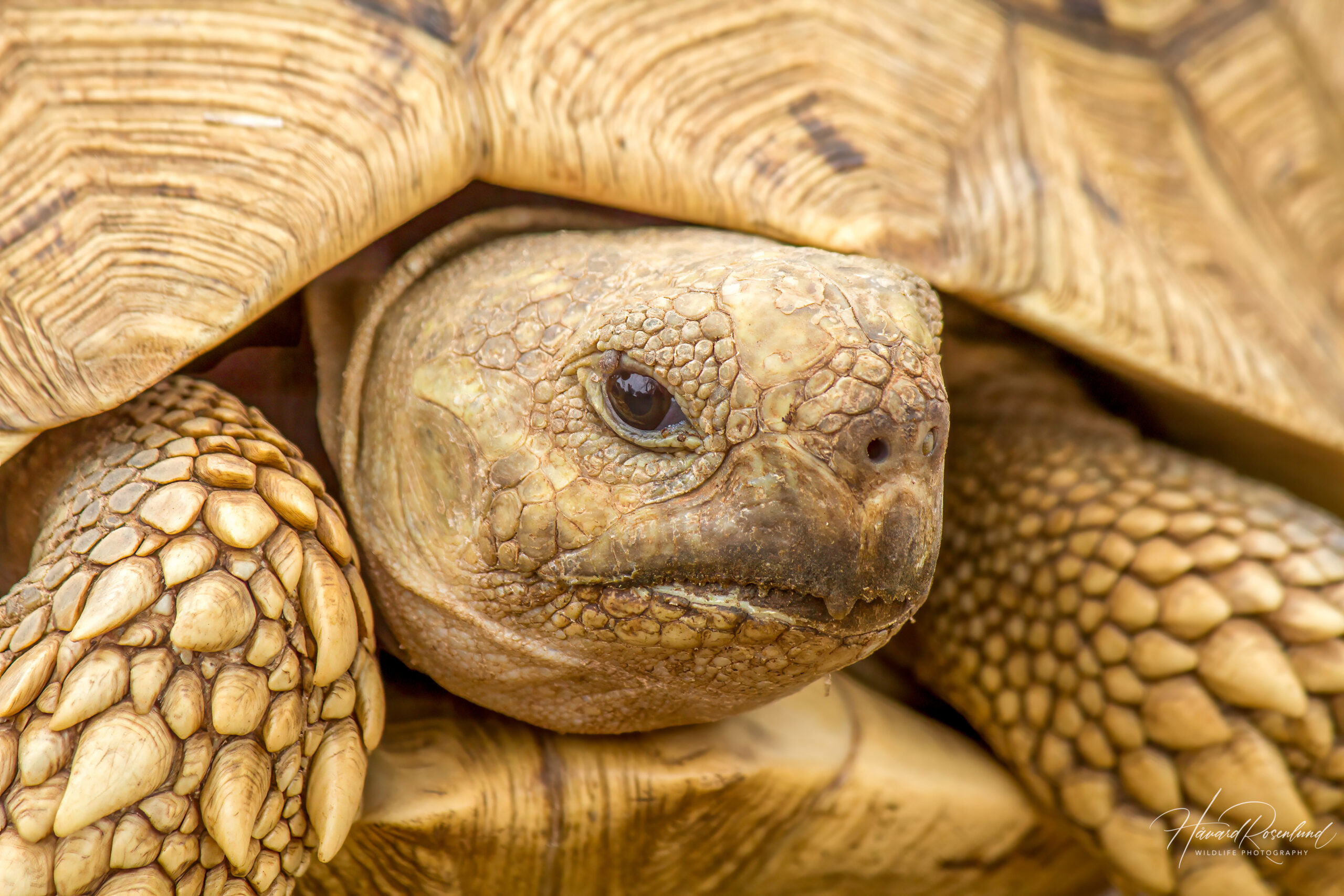
They usually live alone and do not defend fixed territories. Home ranges overlap, and temporary gatherings can form at concentrated food, water or mineral sites. When threatened, a tortoise withdraws its head and limbs and uses the enlarged scales on the forelegs to help cover the shell opening.
The legs and claws make leopard tortoises surprisingly agile on rocky and uneven ground. Small juveniles can climb very steep, short surfaces. The species can also float and swim slowly.
Leopard tortoises can retain water internally and obtain much of their moisture from vegetation, but they drink deeply when water becomes available.
Reproduction
Growth and age at sexual maturity vary with region and food availability; many wild animals mature at roughly 12–15 years. Males pursue females and compete by ramming and attempting to overturn rivals. The male may butt the female during courtship and produces loud grunts while mating.
The timing of mating and egg-laying varies geographically, but egg-laying from May to October has been documented in parts of the range. The female digs a flask-shaped nest about 10–30 cm deep in firm soil. She may lay five to seven clutches in a season, often about three weeks apart. Clutches commonly contain around 6–15 eggs, although totals from one to about 30 have been reported. She covers and compacts the nest but provides no further parental care.
Development is temperature-dependent and the interval from laying to hatching varies widely, from several months to more than a year under different natural and captive conditions. Hatchlings are independent when they emerge. Leopard tortoises are exceptionally long-lived and can reach about 100 years.
Status
The leopard tortoise is classified as least concern on the IUCN Red List, based on the assessment published in 2022. It remains widespread and locally common, but slow growth and low juvenile survival make local populations vulnerable when adult mortality rises.
Habitat loss, collection for food, traditional use and the pet trade, deliberate killing, fires and road traffic affect populations locally. Fences are a particularly serious problem in parts of South Africa: tortoises may repeatedly push against ordinary fences, while low electric wires can shock an animal until it dies. Studies have found that fence mortality can remove disproportionate numbers of large breeding-age animals.
Conservation
International trade is regulated under CITES Appendix II, while local conservation increasingly focuses on reducing avoidable adult mortality and making sure confiscated animals are returned to appropriate areas.
A conservation-genetics study published in 2026 used a reference database to assign confiscated and rehabilitated leopard tortoises in South Africa to geographic genetic groups. 27 of the 50 illegally possessed tortoises in the study had already been released to the wild, most after about six months of gradual acclimatisation in fenced areas at sites matched to their likely origins. This approach reduces the risk of moving animals into genetically and ecologically inappropriate populations.
Image gallery
Loading map and observations…
Have you seen this species?
Independent species archive
Did you find this species page useful?
Wildlife Vagabond is independently built and maintained. Voluntary support helps cover hosting, maps, data storage and continued improvements to the species archive.
Support Wildlife VagabondSpecies content will remain freely available.
References
Information about the species’ global distribution and status is based primarily on global Red List data. See the references below for details.
- Abraham, A. J., Louw, M. L. H., van Dijk, L. M., & Webster, A. B. (2024). Consumption of hyaena faeces and artificial mineral licks by leopard tortoises (Stigmochelys pardalis) in a low‐nutrient environment. African Journal of Ecology, 62(3), e13308. https://doi.org/10.1111/aje.13308
- Armstrong, A. J., Kropff, A. S., Kotze, A., Whitehead, W., Goosen, E., Ihlow, F., Monadjem, A., Padidar, S., & Vamberger, M. (2026). Back Home: first successful geographical assignment of rehabilitated leopard tortoises Stigmochelys pardalis using a conservation genetic database. Conservation Genetics, 27(2), 41. https://doi.org/10.1007/s10592-026-01773-y
- Ernst, Altenburg & Barbour. (n.d.). Turtles of the World: Geochelone pardalis — natural history and reproduction. https://turtles.linnaeus.naturalis.nl/linnaeus_ng/app/views/species/taxon.php?epi=11&id=8155
- Holt, S., Horwitz, L. K., Wilson, B., & Codron, D. (2021). Leopard tortoise Stigmochelys pardalis (Bell, 1928) mortality caused by electrified fences in central South Africa and its impact on tortoise demography. African Journal of Herpetology, 70(1), 32-52. https://doi.org/10.1080/21564574.2020.1860140
- International Union for Conservation of Nature. (2022). Stigmochelys pardalis. The IUCN Red List of Threatened Species. https://www.iucnredlist.org/species/163449/217761530
- Lee, A. T., Macray, M. B., Ryan, P. G., & Alexander, G. J. (2021). Tortoise mortality along fence lines in the Karoo region of South Africa. Journal for Nature Conservation, 59, 125945. https://doi.org/10.1016/j.jnc.2020.125945
- McMaster, M. K., & Downs, C. T. (2008). Digestive parameters and water turnover of the leopard tortoise. Comparative Biochemistry and Physiology Part A: Molecular & Integrative Physiology, 151(1), 114-125. https://doi.org/10.1016/j.cbpa.2008.06.007
- South African National Biodiversity Institute. (n.d.). Leopard tortoise: biology, variation and natural history. https://www.sanbi.org/animal-of-the-week/leopard-tortoise/
- The Reptile Database. (n.d.). Stigmochelys pardalis: taxonomy and distribution. https://reptile-database.reptarium.cz/Stigmochelys/pardalis
- Turtle Taxonomy Working Group. (2025). Turtles of the World: annotated checklist and atlas. https://iucn-tftsg.org/toc/