
Three Diving Ducks Share Thousands of Genes With DNA Repeats in Their Exons
Short DNA motifs repeated in a row are called simple sequence repeats (SSRs), or microsatellites. Their motifs are one to six DNA bases long. Exons are parts of genes retained in mature RNA; some carry instructions for proteins, while others have regulatory roles. A repeat’s location can matter, but finding one in an exon does not by itself show that it changes how a gene works.
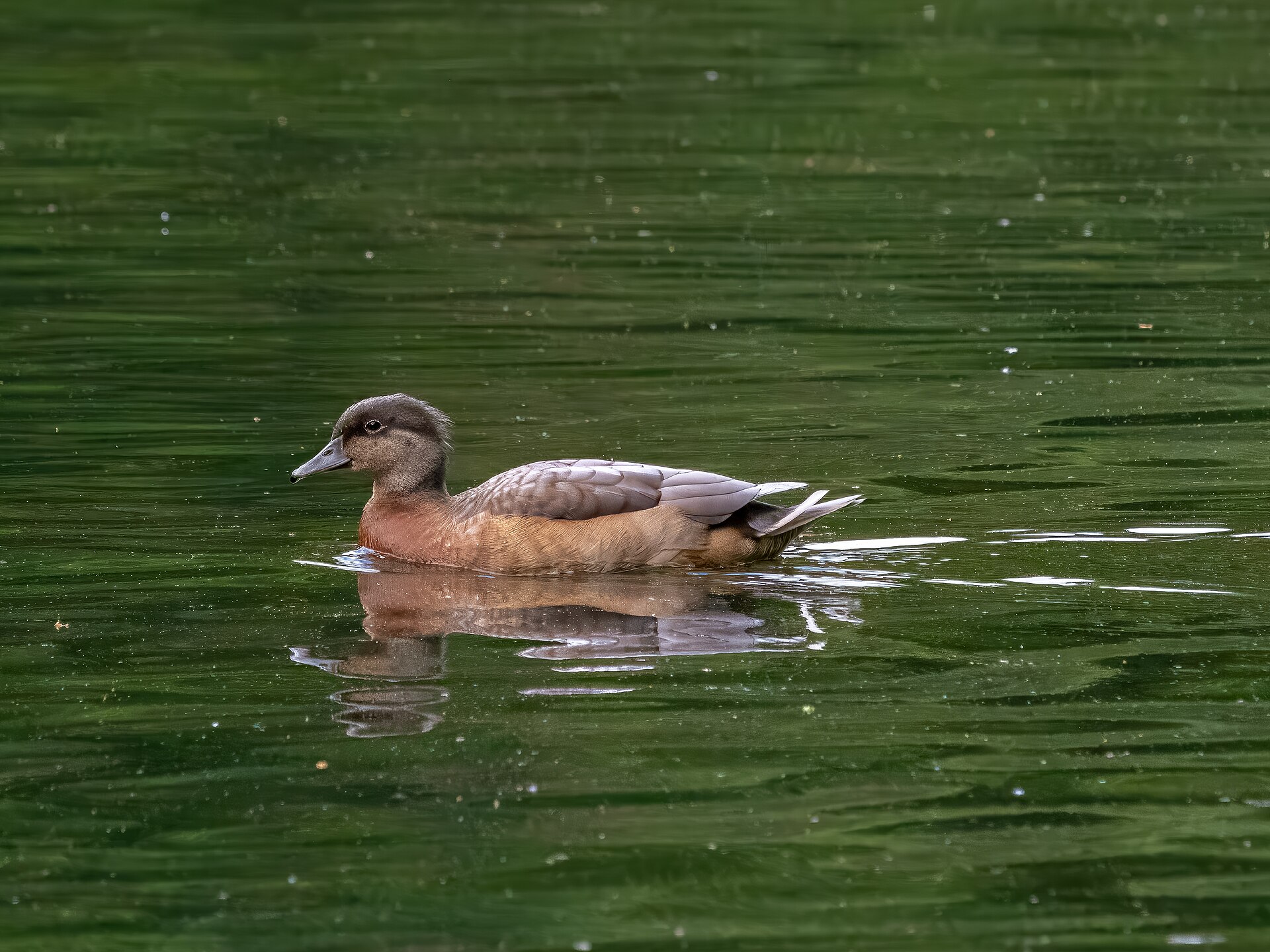
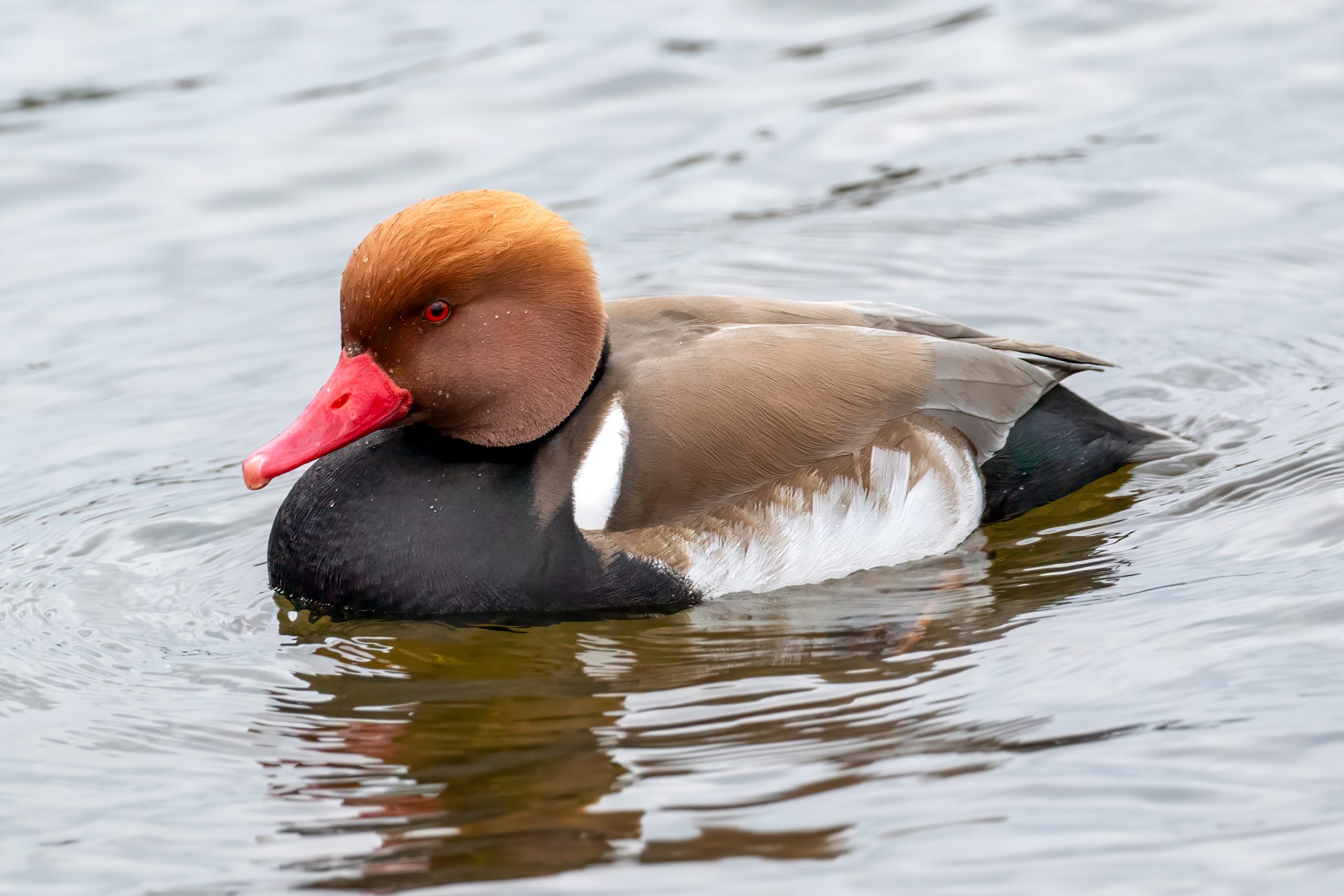
Researchers compared chromosome-level genome assemblies and gene annotations from Common Pochard (Aythya ferina), Greater Scaup (Aythya marila) and Red-crested Pochard (Netta rufina). They counted SSRs across each genome and separately counted repeats that overlapped annotated exons. This revealed a contrast: repeat density varied substantially across the genomes as a whole, while the density within exons was more similar among species.
Across whole genomes, Greater Scaup had the highest SSR density, at about 741 repeats per million DNA bases. Common Pochard had about 706, and Red-crested Pochard about 518. The genomes were similar in size. Much of the difference came from six-base repeats: these were numerous in the two Aythya species but far less common in Red-crested Pochard.
Exons showed a closer pattern
Because the species differed in the total length of their annotated exons, the researchers compared repeat density per million exon bases. The values were closer than the genome-wide densities: 114 in Common Pochard, 140 in Greater Scaup and 138 in Red-crested Pochard. Red-crested Pochard had the fewest exonic repeats in total, but its exon-normalized density was close to Greater Scaup’s.
The types of repeats also differed by genomic region. Two-base repeats were the most common type in exons, whereas one- and six-base repeats were prominent across the genomes as a whole. The repeat landscape inside exons therefore differed from that across the rest of the genome.
Thousands of repeat-containing genes were shared
Comparing standardized gene symbols, the researchers identified 4,336 genes with exonic SSRs in all three species. The species-specific counts were 1,405 in Common Pochard, 772 in Greater Scaup and 355 in Red-crested Pochard. The shared count describes genes matched by their standardized symbols; the study did not test whether each match was a one-to-one evolutionary counterpart or whether the same repeat occurred at the same genomic position in all three ducks.
Functional enrichment analysis asks whether a gene set contains more genes associated with particular functions than expected against a reference set. In the shared genes, the strongest associations involved transcription and epigenetic regulation. This included chromatin remodeling, which changes how DNA is packaged and can affect which regions are accessible for gene activity, and RNA processing, including alternative splicing, which helps determine which mature RNA versions a gene produces.
Other enriched themes involved protein maintenance, development and cellular stress responses. The ubiquitin–proteasome system tags proteins for breakdown and recycling; developmental associations included cell differentiation and signaling pathways such as Notch and TGF-beta; and the stress-related group included autophagy, through which cells break down and reuse some of their own components. The species-specific gene sets did not show a consistent functional pattern.
These results describe functions associated with genes that contain exonic repeats; they do not show that the repeats control those functions. The analysis also did not test whether the patterns are adaptations for diving. Functional annotations were drawn from human resources because a duck-specific resource was unavailable. In addition, shared genes had longer annotated exon sequences than comparison genes: median lengths were about 1.7 to 2.1 times greater across the three species. Longer exons provide more opportunity for repeats to occur and be detected, so gene length may contribute to the functional associations.
Genetics & genomics
Related news
Tunisia’s Largest Known Winter Gathering of Red-crested Pochards Reached 159 Birds
Tunisia’s largest known winter gathering of red-crested pochards reached 159 birds at Sidi Saâd in December 2025, followed…
Read story →
Four Trematode Species Found in One Red-crested Pochard, Two New for Türkiye
Among 57 wild birds from the Kızılırmak Delta, one red-crested pochard carried 14 notocotylid trematodes belonging to four…
Read story →
Two Red-crested Pochard Pairs Produced Five Chicks in Tunisia’s First Confirmed Breeding Record
Two red-crested pochard pairs nested at Khniss wetland in 2025, producing five chicks and providing the first confirmed…
Read story →SPECIES IN THIS STORY
Species in this story
Independent research and conservation news archive
Did you find this information useful?
Wildlife Vagabond is independently built and maintained. Voluntary support helps cover source verification, hosting and continued work on research and conservation news.
Support Wildlife VagabondThe news archive will remain freely available.