
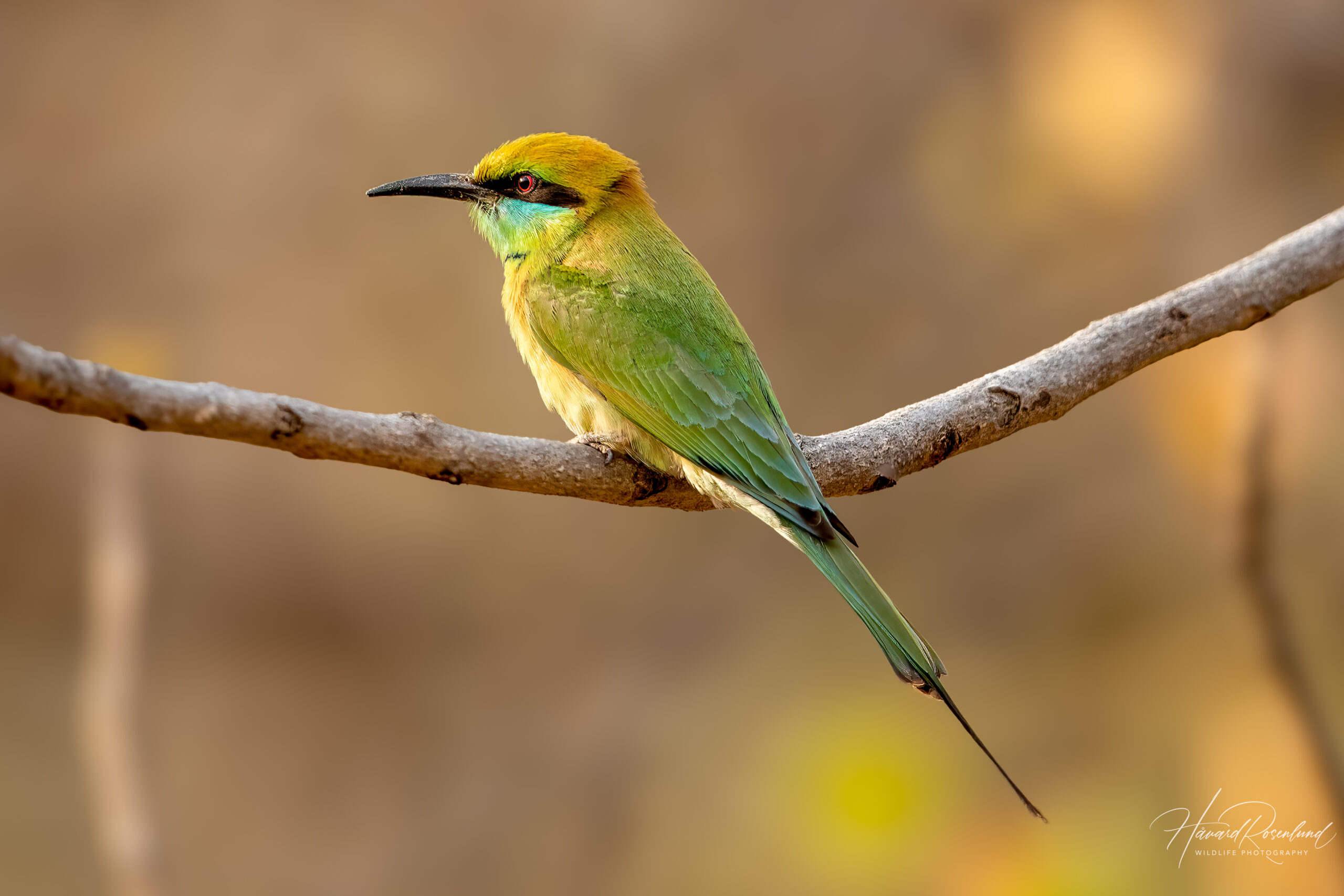
Asian Green Bee-eater
Merops orientalis
At a glance
Habitat
- Open woodland, scrub, grassland, farmland and lightly settled areas with exposed hunting perches
Diet
- Flying insects, including beetles, bees and wasps, bugs, grasshoppers, dragonflies, butterflies and flies
Activity
- Diurnal
Size
- Length: 16–18 cm Weight: 15–18 g
Range
- From southeastern Iran and the Indian subcontinent east into south-central China and mainland Southeast Asia
Description
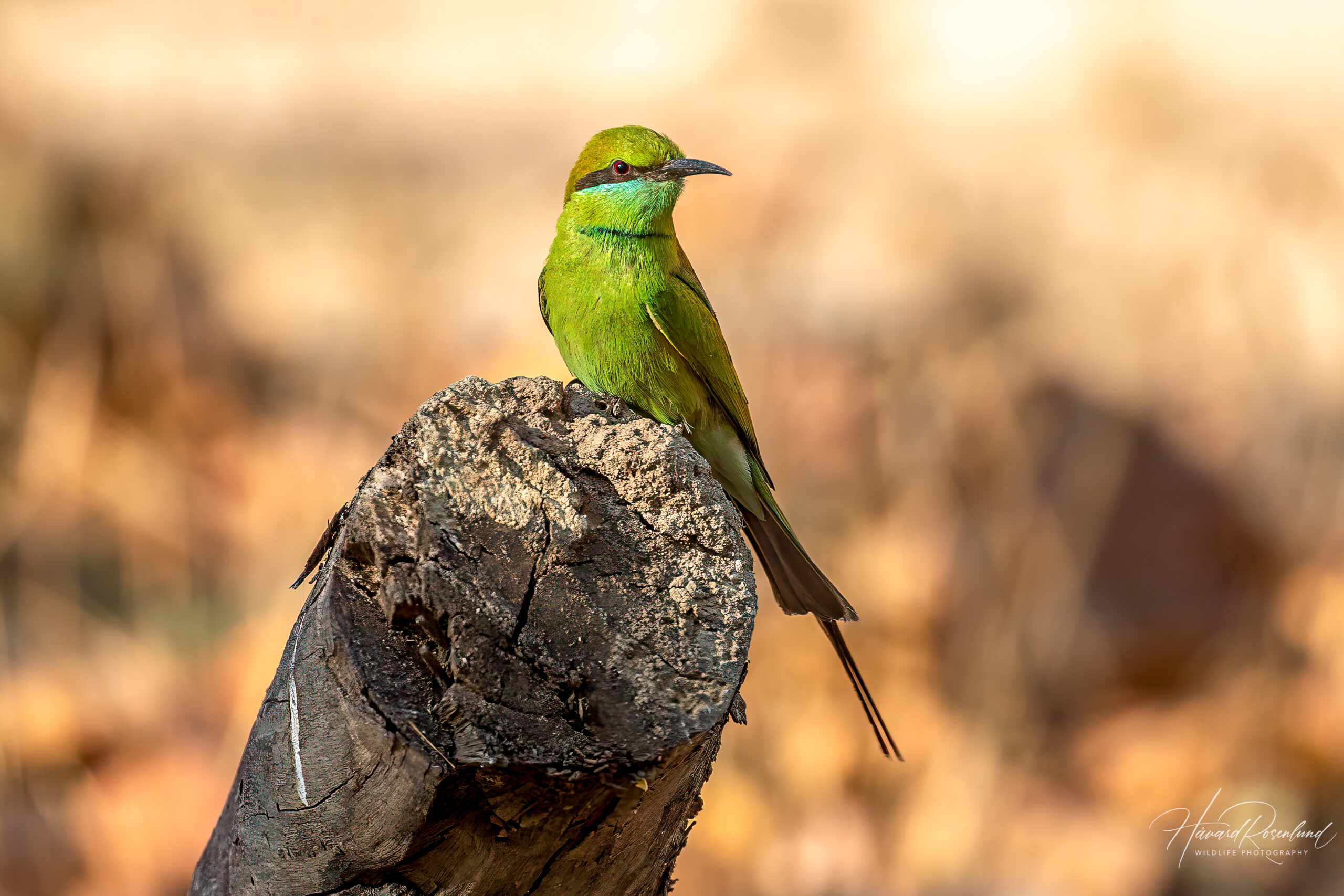
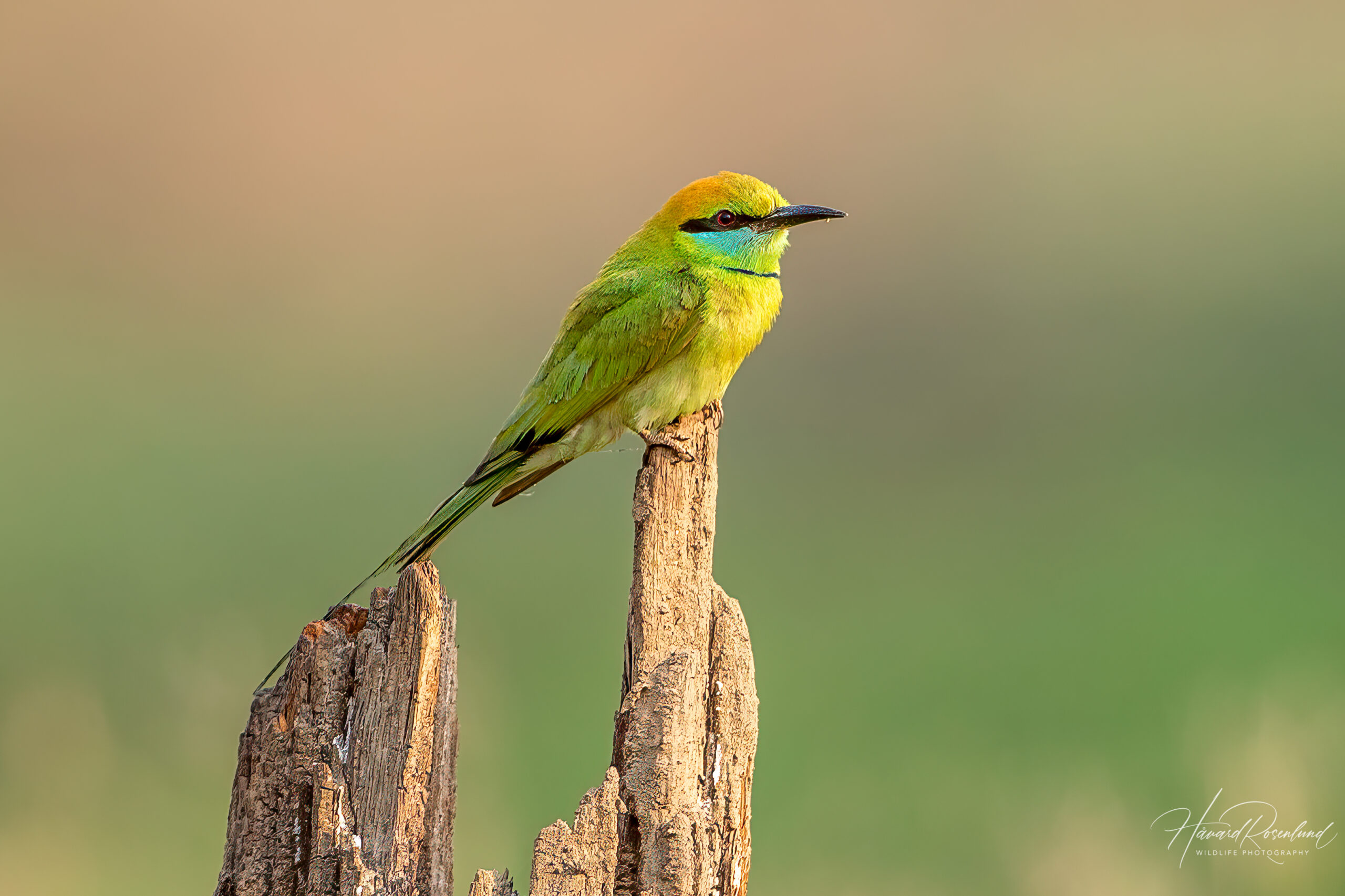
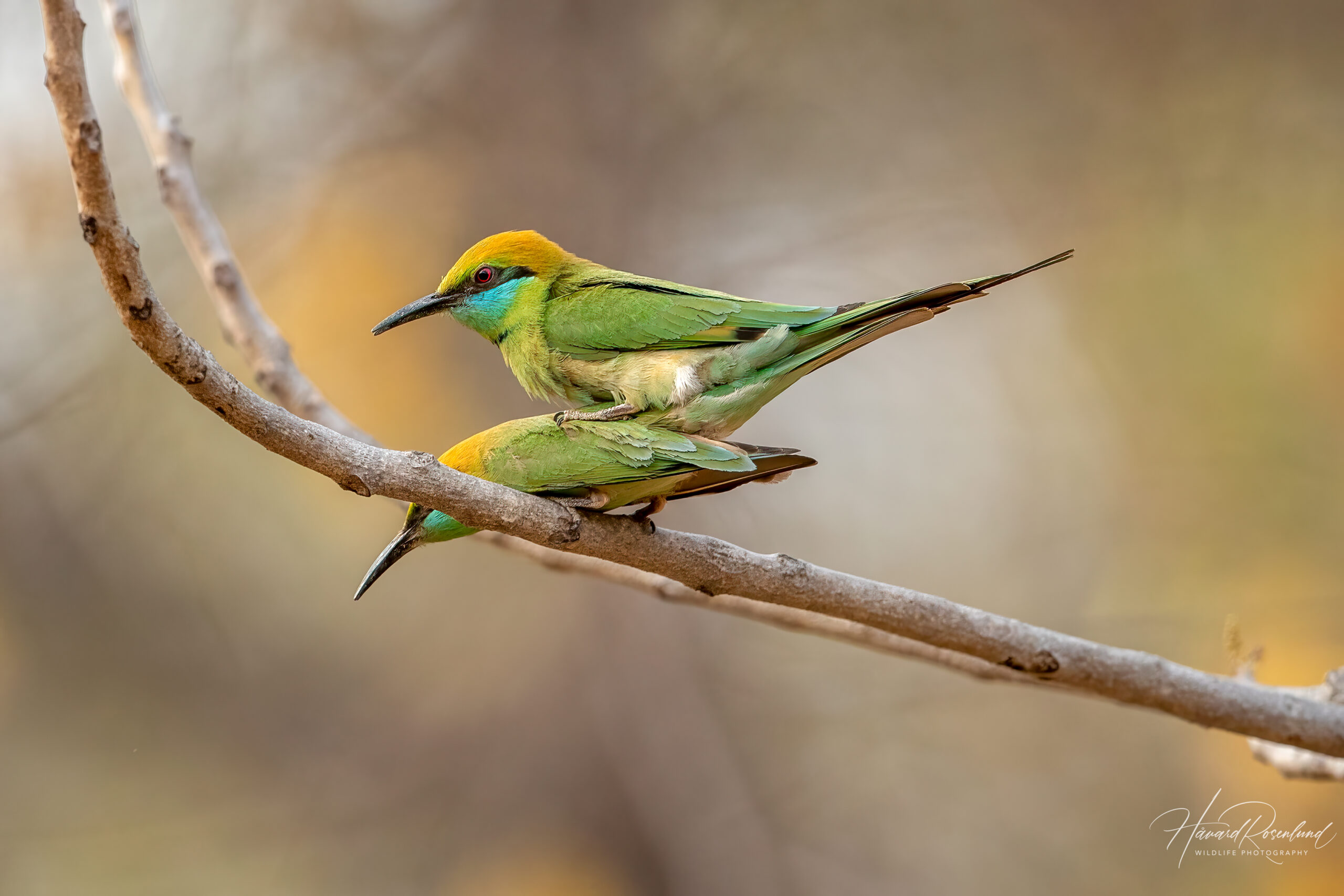
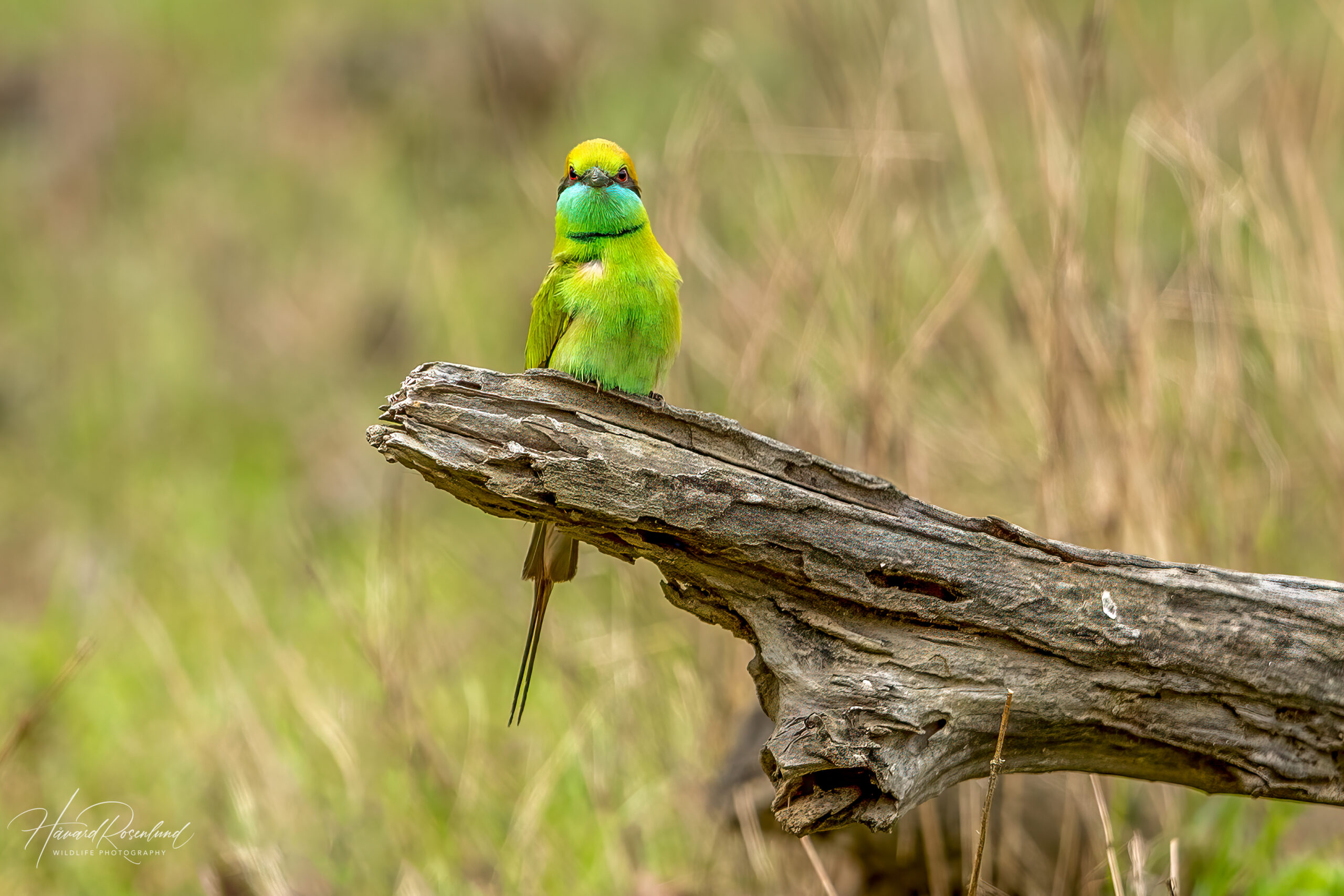
The Asian green bee-eater (Merops orientalis) is a small, slender bee-eater found from south-eastern Iran across the Indian subcontinent into parts of mainland Southeast Asia. Adults are about 16–18 cm long before the elongated central tail streamers are taken into account and weigh roughly 15–18 g. Most of the plumage is bright green, with a narrow black eye-mask, a black gorget across the lower throat, blue on the throat and a rufous-golden wash over the crown and nape. Adults develop the fine central tail streamers that juveniles lack.
It can be confused with other small green bee-eaters near the edges of its range, but the combination of head colour, throat pattern and voice is useful where related species meet.
Taxonomy
The species was formerly treated as part of a much broader Green Bee-eater complex. African green bee-eater (Merops viridissimus) and Arabian green bee-eater (Merops cyanophrys) are now treated as separate species, supported by consistent differences in plumage and vocalisations.
AviList therefore recognises the Asian green bee-eater Merops orientalis as an Asian species distinct from its African and Arabian relatives. Older books and conservation sources may still use “Green Bee-eater” for the wider former species, which is why historical range descriptions can extend much farther west and south than the species treated on this page.
Habitat
Asian green bee-eaters favour open woodland, scrub, grassland, farmland, riverbanks and lightly settled areas. Exposed wires, fences, shrubs and bare branches are important because they provide lookout posts above open ground and low vegetation.
The species is not a habitat specialist and remains common in many agricultural and human-modified landscapes as long as suitable hunting perches and open ground remain available.
Diet
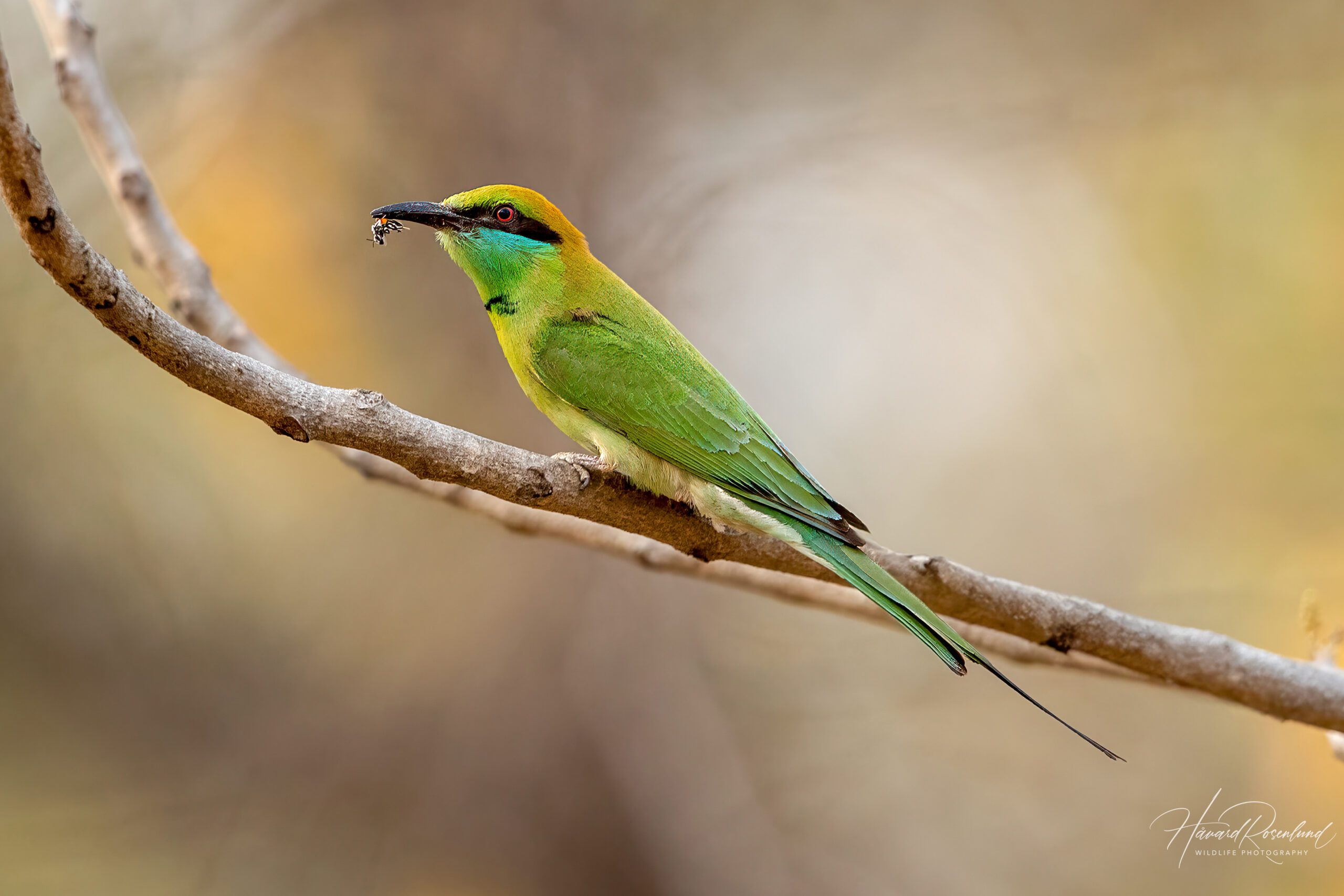
The diet consists almost entirely of insects. Pellet analysis in Tamil Nadu found beetles to be the largest single prey group, followed closely by bees and wasps, while bugs, grasshoppers, dragonflies, butterflies and flies were also important. The species is therefore better described as a broad aerial insectivore than simply as a predator of bees.
Foraging
Hunting normally begins from a fixed perch. The bird scans the surrounding air, launches after a passing insect in a fast, agile sally and often returns to the same or a nearby perch to process the catch. Field studies in southern India found aerial hawking to be the dominant feeding method, and activity observations showed that birds spend a large proportion of the day scanning for prey.
Stinging bees and wasps receive special treatment. Bee-eaters repeatedly beat the insect against the perch and rub the abdomen along the substrate before swallowing it, reducing the danger from the sting and venom apparatus. Classic experiments on small bee-eaters found that the basic treatment sequence is largely innate but becomes more efficient with experience.
The behaviour reduces risk rather than making the birds immune. A 2023 field report documented Asian green bee-eaters trapped in mist nets being killed by attacking red dwarf honeybees, showing that concentrated stinging can still be lethal.
Breeding
Asian green bee-eaters excavate their own nest tunnels in sandy banks, earth mounds, cuttings and suitable level ground. Both members of the pair take part in digging. A study of 34 nests in Tamil Nadu found tunnels 79–125 cm long, averaging about 1.05 m, and ending in an enlarged unlined chamber. Clutches contained 3–6 white eggs, with three the most frequent clutch size, and both sexes incubated for an average of about 14.4 days. The young left the nest after about 26–28 days and continued to receive food from the parents for a period after fledging.
Nest architecture can influence breeding outcome. A 2026 study of 38 nests in Pakistan found a positive association between tunnel depth and clutch size and between nest height and breeding success. The long burrow is therefore more than simple shelter: its dimensions and placement form part of the species' reproductive ecology.
Status
The Asian green bee-eater is classified as least concern on the IUCN Red List. The published IUCN assessment predates the modern split of African and Arabian green bee-eaters, so some of the range and population information behind that assessment refers to the older, broader species concept.
Indian monitoring data published in 2025 give a long-term national estimate of about +23% and a recent annual estimate close to zero. The 2025 update did not recalculate the trend or conservation-priority categories; the underlying 2023 assessment classified both trends as stable and the species as low conservation priority. It remains extremely widespread in India.
Image gallery
Loading map and observations…
Have you seen this species?
Independent species archive
Did you find this species page useful?
Wildlife Vagabond is independently built and maintained. Voluntary support helps cover hosting, maps, data storage and continued improvements to the species archive.
Support Wildlife VagabondSpecies content will remain freely available.
References
Information about the species’ global distribution and status is based primarily on global Red List data. See the references below for details.
- Ali, A. H. M. S., & Asokan, S. (2015). Diurnal-activity Patterns of the Small Bee-eater (Merops orientalis) in Southern India. Tropical life sciences research, 26(1), 9-20. https://pubmed.ncbi.nlm.nih.gov/26868589/
- Asokan, S., & Ali, A. M. S. (2010). Foraging behavior of selected insectivorous birds in Cauvery Delta region of Nagapattinam District, Tamil Nadu, India. Journal of Threatened Taxa, 2(2), 690-694. https://doi.org/10.11609/JoTT.o2201.690-4
- Asokan, S., Ali, A. M. S., & Manikannan, R. (2009). Diet of three insectivorous birds in Nagapattinam District, Tamil Nadu, India – a preliminary study. Journal of Threatened Taxa, 1(6), 327-330. https://doi.org/10.11609/JoTT.o2145.327-30
- Asokan, S., Ali, A. M. S., & Manikannan, R. (2010). Breeding biology of the Small Bee-eater Merops orientalis (Latham, 1801) in Nagapattinam District, Tamil Nadu, India. Journal of Threatened Taxa, 2(4), 797-804. https://doi.org/10.11609/JoTT.o2273.797-804
- BirdLife International. (n.d.). Asian Green Bee-eater species factsheet. https://datazone.birdlife.org/species/factsheet/asian-green-bee-eater-merops-orientalis
- eBird. (n.d.). 2022 taxonomy update. Cornell Lab of Ornithology. https://ebird.org/news/2022-taxonomy-update/
- Fry, C. H. (1969). The recognition and treatment of venomous and non-venomous insects by small bee-eaters. Ibis, 111(1), 23-29. https://doi.org/10.1111/j.1474-919X.1969.tb01601.x
- International Ornithologists’ Union. (n.d.). IOC World Bird List – Proposed splits and lumps. https://www.worldbirdnames.org/new/updates/proposed-splits/
- International Union for Conservation of Nature. (n.d.). Asian Green Bee-eater. The IUCN Red List of Threatened Species. https://www.iucnredlist.org/species/22725876/119972083
- Sadam, A., Awais, M., Hu, H., Yu, D., & Hu, Y. (2026). Nest Depth and Height Are Associated with Breeding Outcomes in the Small Bee-Eater (Merops orientalis): A Preliminary Field Study from Pakistan. Animals, 16(2), 186. https://doi.org/10.3390/ani16020186
- State of India's Birds. (2025). 2025 – Green Bee-eater. https://stateofindiasbirds.in/species/mh-grnbee3/