
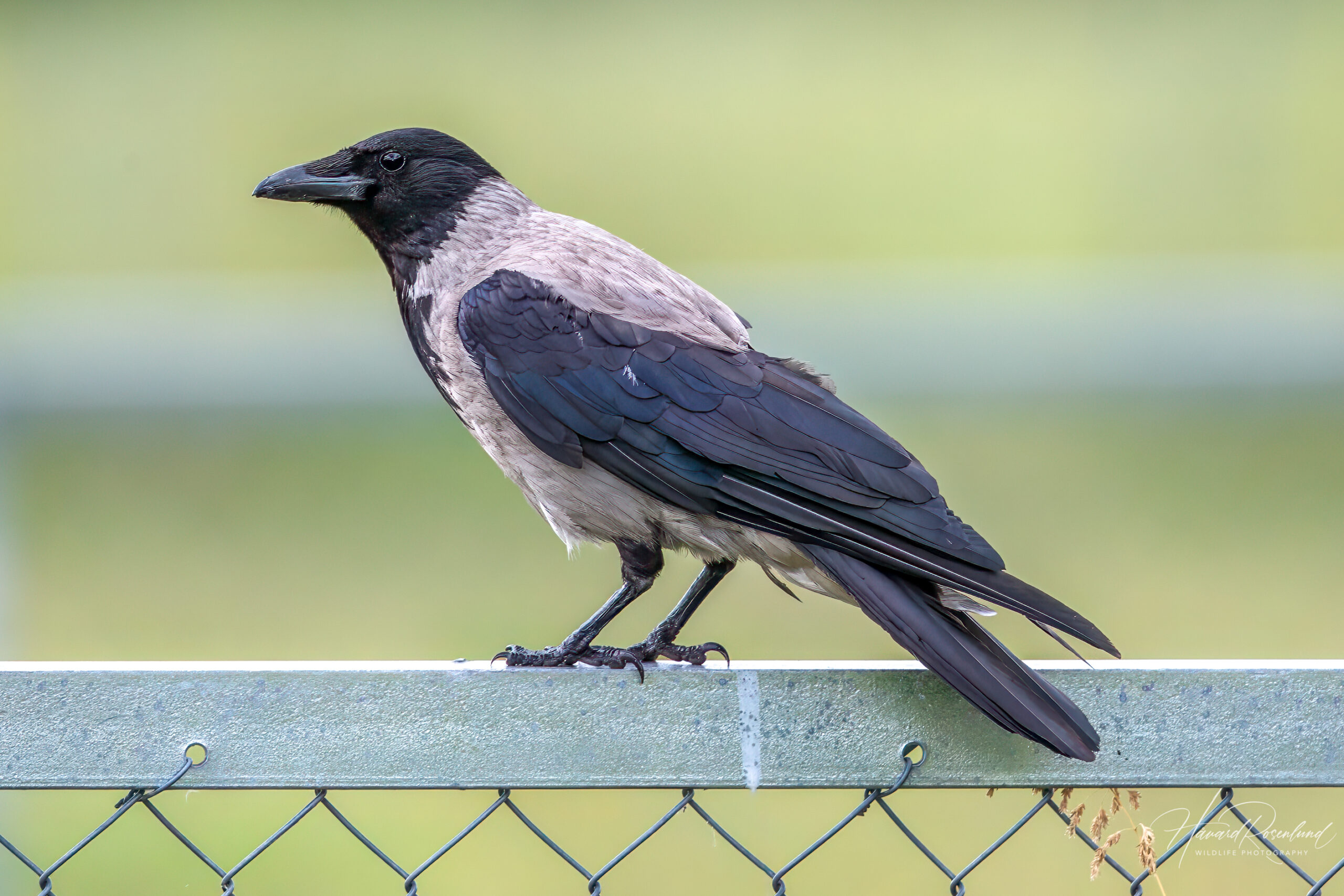
Hooded Crow
Corvus corone cornix
At a glance
Habitat
- Farmland, coasts, wetlands, woodland edges, mountains, towns and cities
Diet
- Omnivorous; invertebrates, grain, fruit, carrion, eggs, small vertebrates and human food
Activity
- Diurnal
Size
- Length: 48–52 cm; wingspan around 98 cm Weight: Around 500 g
Range
- Northern and eastern Europe into western and central Asia; the grey-and-black subspecies of Carrion Crow
Description
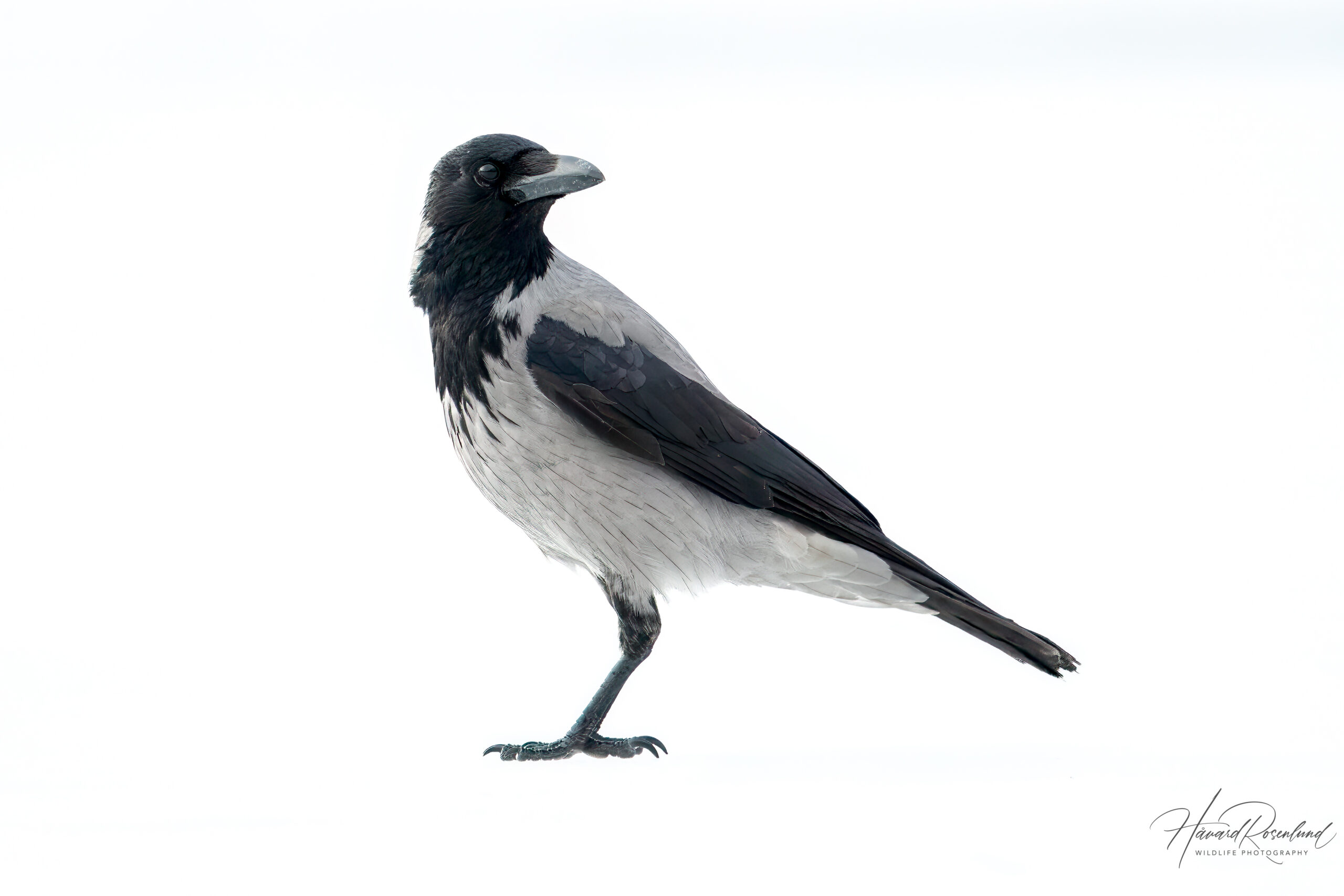
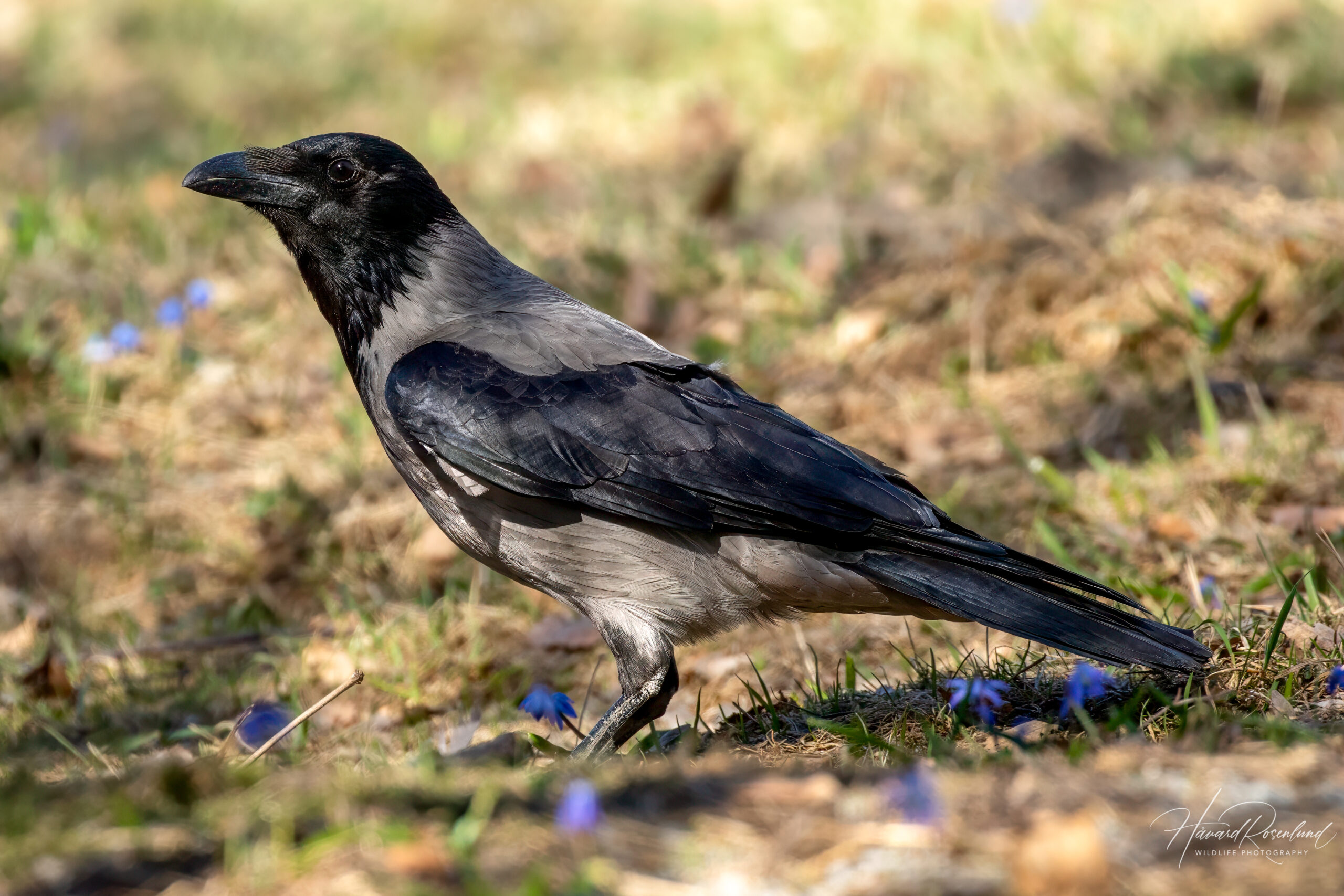
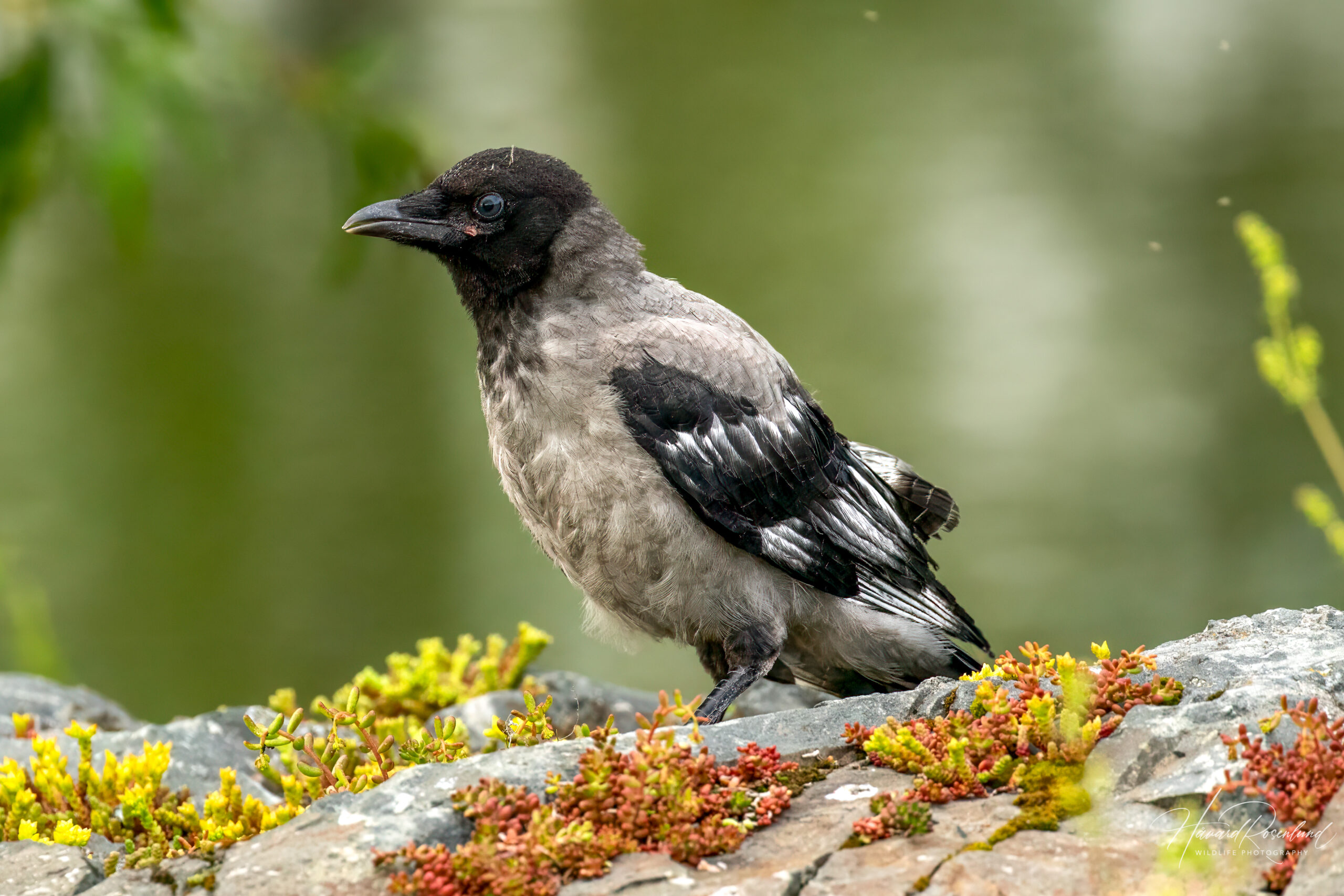
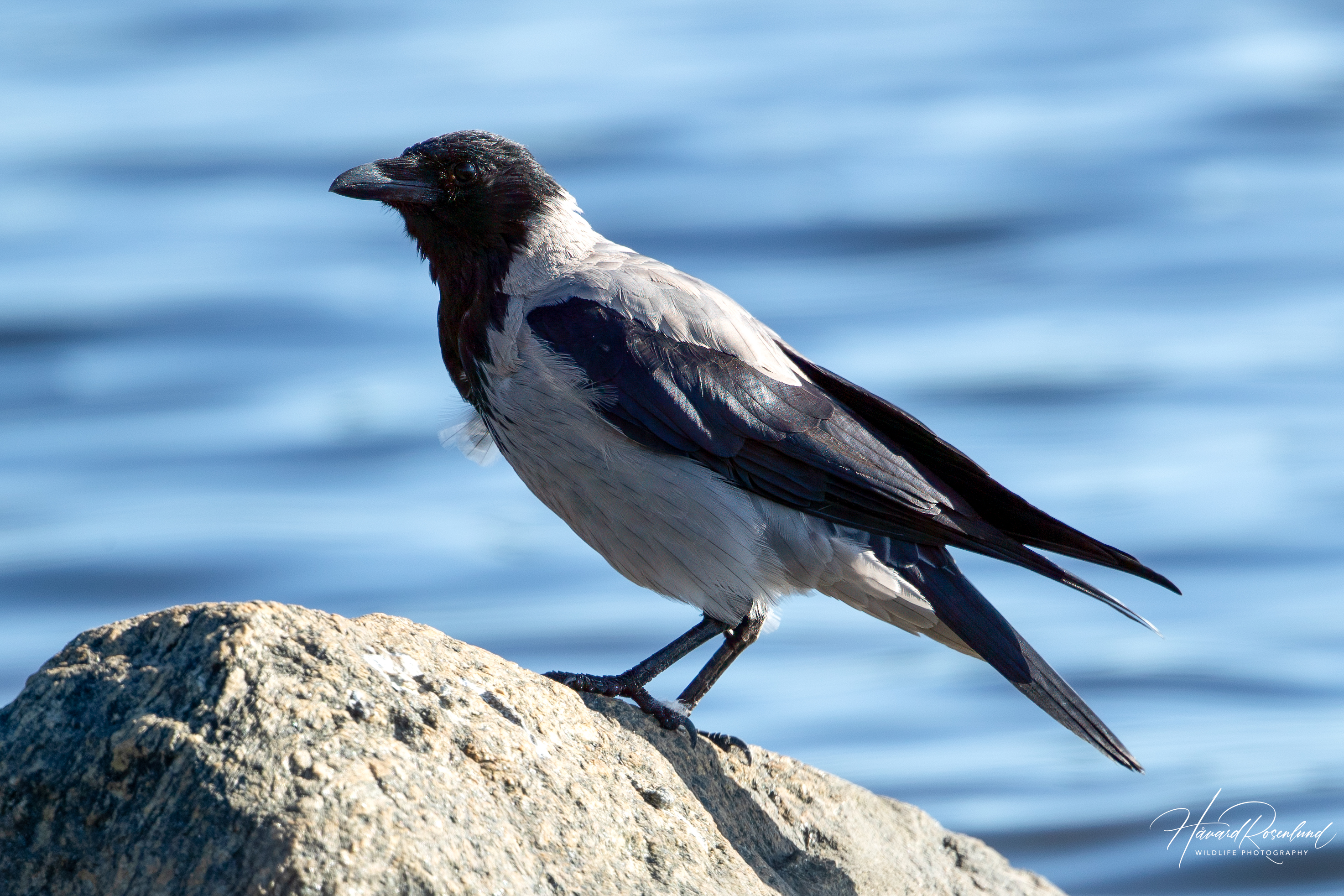
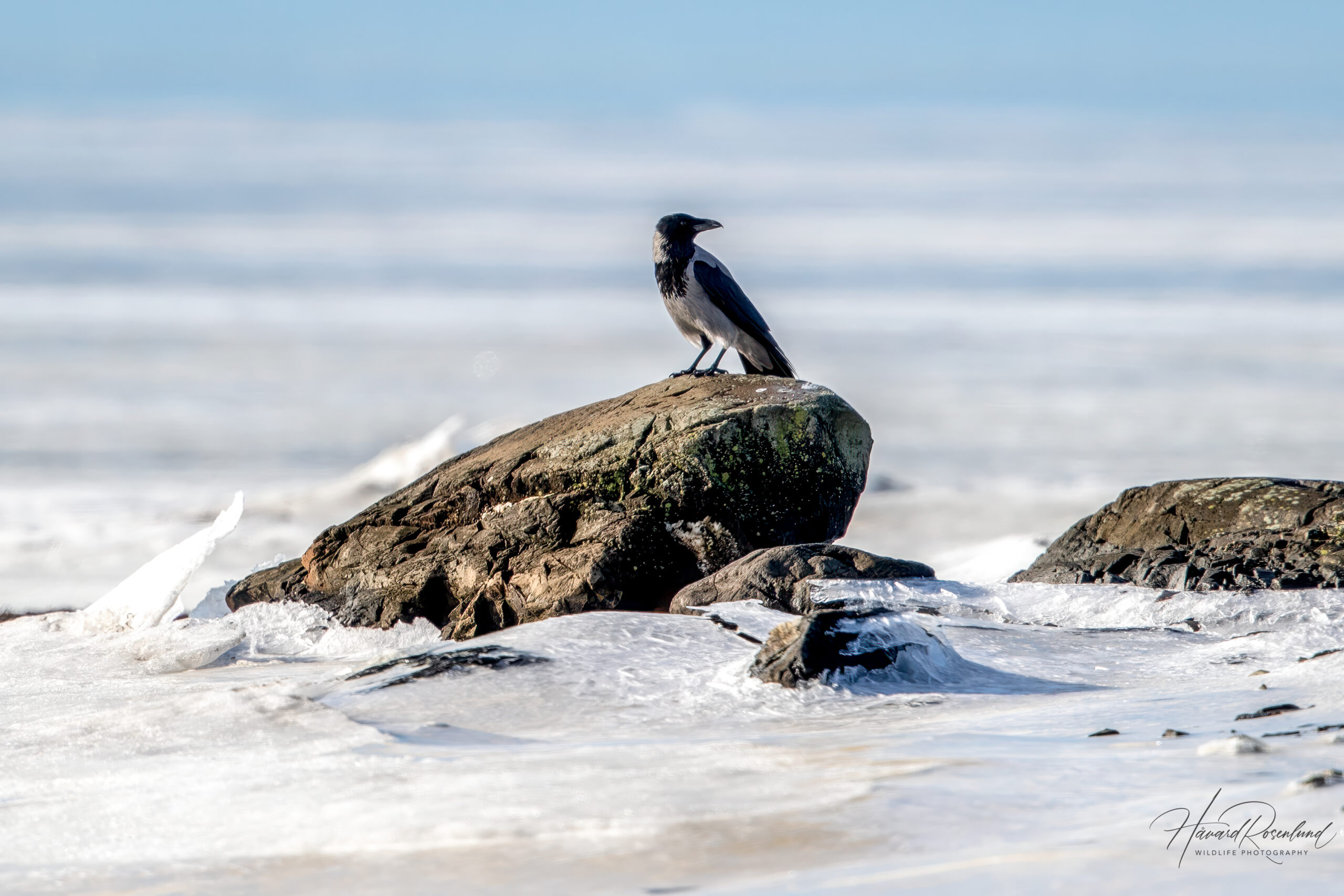
The hooded crow (Corvus corone cornix) is the familiar grey-and-black northern and eastern subspecies of the carrion crow (Corvus corone). Adults are about 48–52 cm long, have a wingspan of around 98 cm and weigh around 500 g. The pale grey body contrasts sharply with the black head, throat, wings and tail.
Where hooded crows meet the all-black western subspecies, western carrion crow (C. c. corone), particularly along the long European contact zone, the two forms hybridise and produce birds with intermediate plumage. The striking colour difference is thus maintained across a narrow transition zone between populations that otherwise exchange genes extensively.
Taxonomy
The hooded crow was widely treated as a separate species, Corvus cornix, from the early 2000s. AviList reunited the hooded and all-black forms in 2025 and currently treats the hooded form as the subspecies Corvus corone cornix within Corvus corone.
The European hybrid zone helps explain why the classification has changed. Genomic studies show extensive gene flow across most of the genome, while a small number of regions associated with plumage remain strongly differentiated. The grey-and-black appearance can therefore remain sharply distinct even where the two forms interbreed.
Habitat
Hooded crows use an exceptionally broad range of habitats, including farmland, coasts, wetlands, woodland edges, mountains, villages and cities. They do especially well in landscapes that combine open feeding areas with trees, cliffs or buildings for resting and nesting.
The subspecies is not tied to one particular habitat. Shorelines, agricultural fields, urban lawns and natural open ground can all provide good feeding opportunities, and individuals readily shift between them as weather, disturbance and food availability change.
Diet
Hooded crows are omnivorous and highly opportunistic. They eat insects and other invertebrates, earthworms, grain and seeds, fruit, carrion, eggs, nestlings, small vertebrates and discarded human food. Individuals quickly learn where temporary food sources appear, from ploughed fields and shorelines to roadsides and city parks.
Surplus food may be cached for later use. Field studies have documented hooded crows storing eggs and intertidal prey, including mussels hidden when exposed at low tide and recovered later when fresh prey became less accessible. This caching behaviour adds another layer of flexibility to an already broad diet.
Hooded crows can also drop mussels from the air to break them open on hard surfaces. A field study published in 2014 in Cork Harbour, Ireland, found that adults released mussels from an average height of 4.8 m, close to the lowest height that usually broke the shell on the first drop. Juveniles used more variable heights and more often dropped mussels onto unsuitable surfaces, suggesting that the technique improves with experience.
Behaviour
Breeding hooded crows usually live as territorial pairs, while young and non-breeding birds are more likely to gather in loose groups or at communal roosts. They are alert and highly responsive to what happens around them, and frequently use calls, body postures and direct approaches or chases when interacting with other crows.
Crows can be aggressive towards potential predators and competitors and readily mob raptors, owls and other threats. Outside the breeding season, social groups can form and break apart as birds move between feeding and resting sites, allowing them to exploit temporary food concentrations without living in a permanently stable flock.
Intelligence
Hooded crows show sophisticated memory and physical problem-solving. Their food-caching behaviour requires them to return to stored resources after conditions have changed, and experimental work has revealed abilities that go well beyond simple food handling.
In a 2024 experiment, three hooded crows learned that objects of a particular colour or size were rewarded. When later given sheets of material rather than ready-made objects, all three spontaneously tore off new pieces that matched the rewarded colour, and their pieces also tended to match the previously rewarded size. The experiment suggests that the birds could retain features of an object as a mental template and use that memory when producing a new object. It does not imply that wild hooded crows routinely manufacture tools, but it demonstrates a highly flexible ability to solve physical problems.
Migration
The hooded form is resident or only partly migratory across much of its range. Birds from colder northern and eastern regions are more likely to move south or towards coasts in autumn, while many adults in milder areas remain within or close to their year-round territories.
Seasonal movements are flexible rather than following one fixed route. Age, weather and winter food availability all influence how far individuals move, and young birds generally range more widely than established territorial adults.
Breeding
Hooded crows normally breed as territorial pairs and raise one brood per year. The large stick nest is usually built high in a tree, although cliffs, pylons and buildings can also be used. A clutch usually contains three to six eggs.
The female incubates for about 18–19 days, while both parents feed the young and defend the nesting area. The chicks remain in the nest for roughly four weeks and continue to depend on their parents for a period after fledging.
Relationship with humans
Hooded crows have become conspicuous urban birds in many parts of northern and eastern Europe. Historical and ecological work in Finnish cities linked their urbanisation to reliable human-derived food, improved winter survival in built-up areas and increasing availability of nesting sites as cities expanded.
Urban birds also adjust their behaviour to people. A 2025 study in Belgrade found that escape responses varied with features of the urban environment, including human activity and food availability. This flexibility helps crows exploit lawns, refuse and other city resources while continually balancing food opportunities against disturbance.
The same adaptability can bring them into conflict with people. Hooded crows may be persecuted because they take eggs and young of other birds, damage crops locally or gather around waste. The extent of these effects varies greatly between places; large numbers of crows in one area do not by themselves show that the birds are causing substantial ecological or economic damage.
Status
The hooded crow is not assessed separately by the IUCN. Its global status follows the parent species Corvus corone, which is classified as least concern. The hooded subspecies remains widespread and common across much of northern and eastern Europe and western Asia.
Image gallery
Loading map and observations…
Have you seen this species?
Independent species archive
Did you find this species page useful?
Wildlife Vagabond is independently built and maintained. Voluntary support helps cover hosting, maps, data storage and continued improvements to the species archive.
Support Wildlife VagabondSpecies content will remain freely available.
References
Information about the species’ global distribution and status is based primarily on global Red List data. See the references below for details.
- BirdLife International. (n.d.). Carrion Crow species factsheet. https://datazone.birdlife.org/species/factsheet/carrion-crow-corvus-corone
- BirdLife Norge. (n.d.). følger AviList. https://www.birdlife.no/organisasjonen/nyheter/?id=3793
- British Trust for Ornithology. (n.d.). Hooded Crow. https://www.bto.org/learn/about-birds/birdfacts/hooded-crow
- Christidis, L., Rheindt, F. E., Iliff, M. J., Lepage, D., Rasmussen, P. C., Donald, P., Alström, P., Areta, J. I., Brammer, F., Chesser, T., Donsker, D., Dowsett, B., Gerbracht, J., Kirsch, M., Kuziemko, M., Lagerqvist, M., Littauer, R., Longmore, W., Norman, J., … Stervander, M. (2026). AviList v2025b. AviList. https://doi.org/10.2173/avilist.v2025b
- Davenport, J., O'Callaghan, M. J. A., Davenport, J. L., & Kelly, T. C. (2014). Mussel dropping by Carrion and Hooded crows: biomechanical and energetic considerations. Journal of Field Ornithology, 85(2), 196-205. https://doi.org/10.1111/jofo.12060
- Fjeld, P. E., & Sonerud, G. A. (1988). Food Caching, Cache Recovery, and the Use of an Egg Shell Dump in Hooded Crows Corvus corone cornix. Ornis Scandinavica, 19(4), 268. https://doi.org/10.2307/3676720
- International Union for Conservation of Nature. (n.d.). Corvus corone cornix. The IUCN Red List of Threatened Species. https://www.iucnredlist.org/species/22706016/118784397
- Knief, U., Bossu, C. M., Saino, N., Hansson, B., Poelstra, J., Vijay, N., Weissensteiner, M., & Wolf, J. B. W. (2019). Epistatic mutations under divergent selection govern phenotypic variation in the crow hybrid zone. Nature Ecology & Evolution, 3(4), 570-576. https://doi.org/10.1038/s41559-019-0847-9
- Novčić, I., Jovanović, D., & Mikula, P. (2025). Effects of human presence and anthropogenic food availability on escape behaviour of hooded crows across urban landscape. Animal Behaviour, 230, 123402. https://doi.org/10.1016/j.anbehav.2025.123402
- Smirnova, A. A., Bulgakova, L. R., Cheplakova, M. A., & Jelbert, S. A. (2024). Hooded crows (Corvus cornix) manufacture objects relative to a mental template. Animal Cognition, 27(1), 36. https://doi.org/10.1007/s10071-024-01874-6
- The Wildlife Trusts. (n.d.). Hooded Crow. https://www.wildlifetrusts.org/wildlife-explorer/birds/crows-and-shrikes/hooded-crow
- Vuorisalo, T., Andersson, H., Hugg, T., Lahtinen, R., Laaksonen, H., & Lehikoinen, E. (2003). Urban development from an avian perspective: causes of hooded crow (Corvus corone cornix) urbanisation in two Finnish cities. Landscape and Urban Planning, 62(2), 69-87. https://doi.org/10.1016/S0169-2046(02)00124-X