
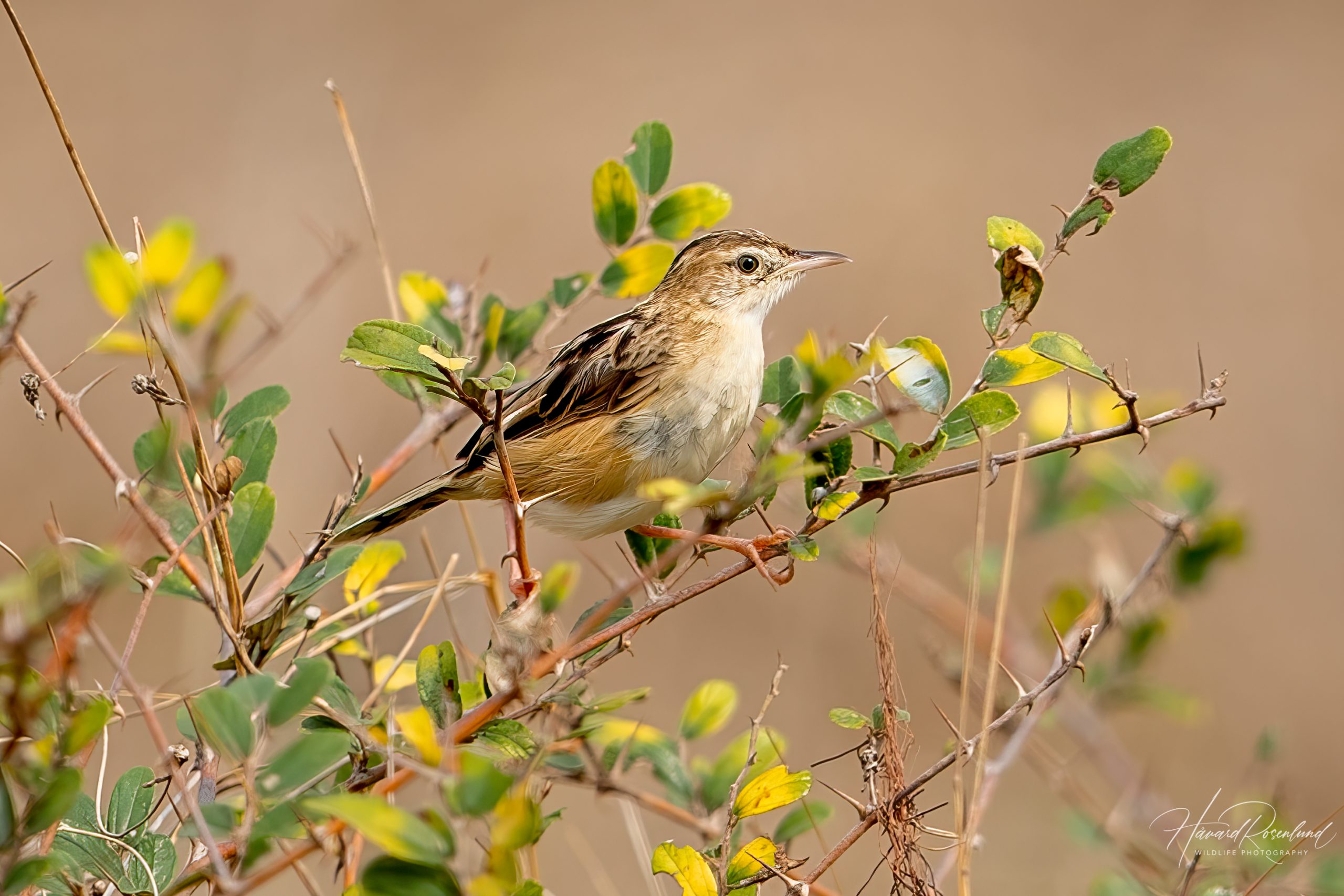
Zitting Cisticola
Cisticola juncidis
At a glance
Habitat
- Grassland, marsh edges, rice fields, farmland and other open habitats with tall grasses or sedges
Diet
- Mainly insects, spiders and other small invertebrates
Activity
- Diurnal
Size
- Length: about 10–14 cm Weight: about 7–10 g
Range
- Southern Europe and much of Africa east through southern Asia to northern Australia
Description
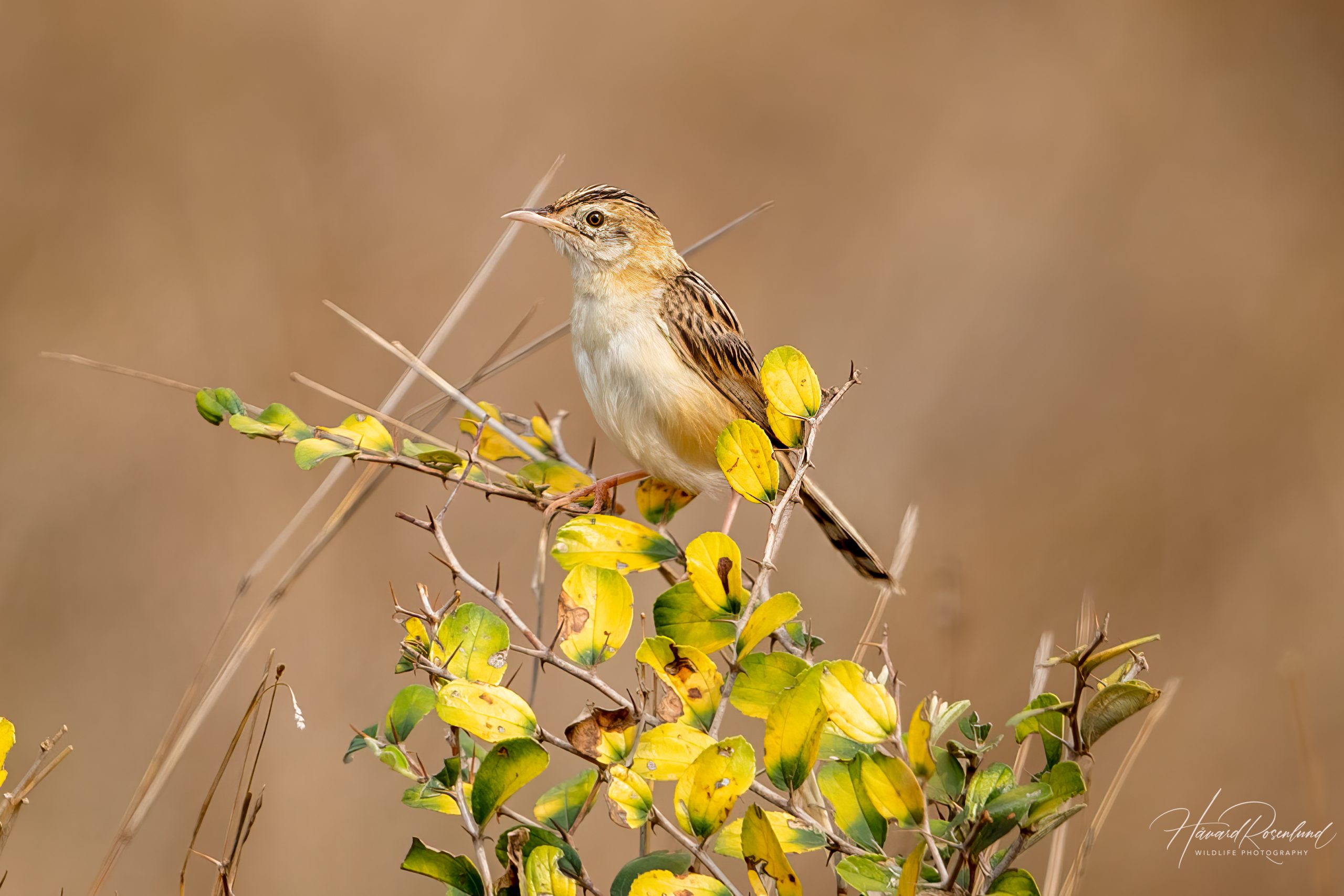
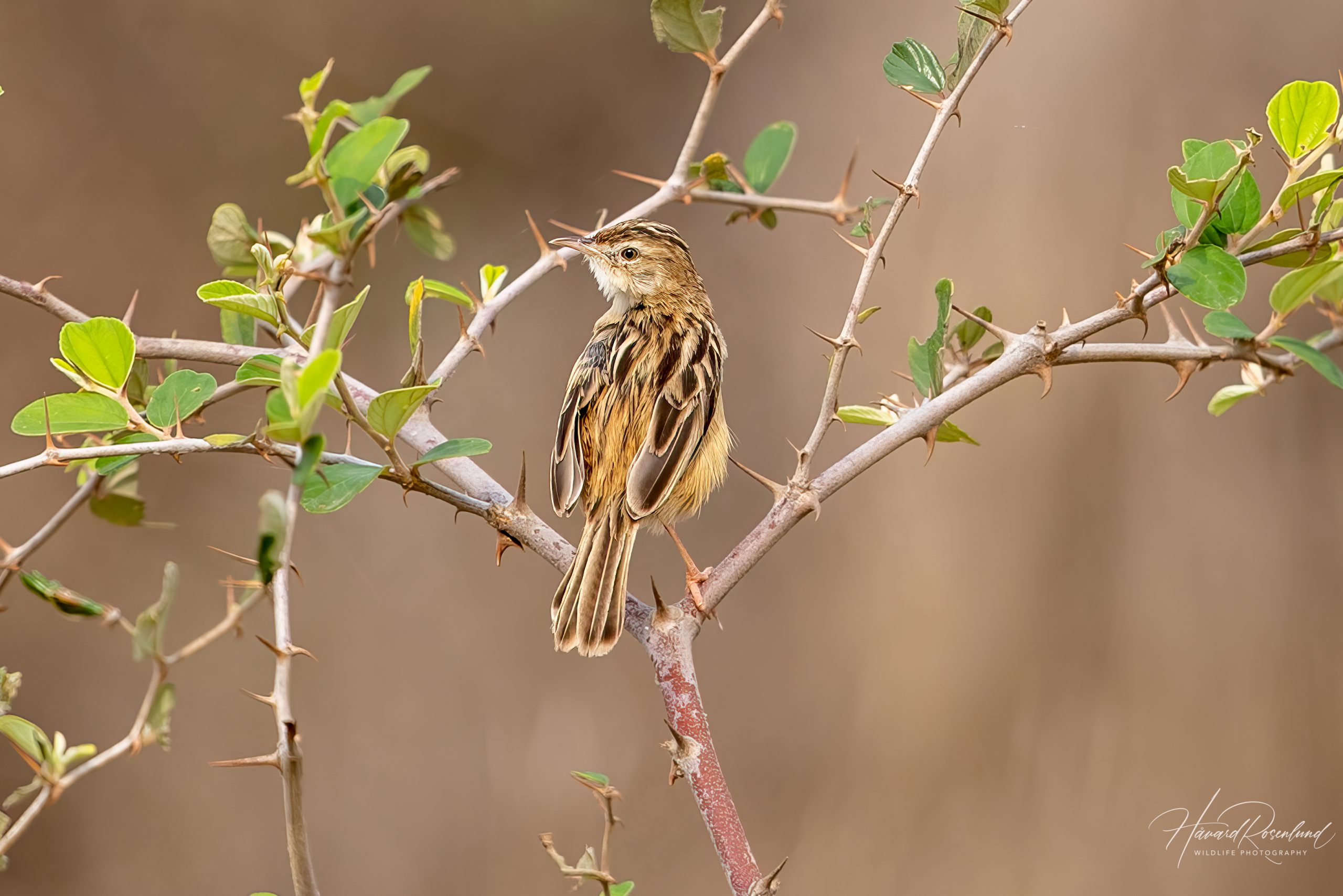
The zitting cisticola (Cisticola juncidis) is a tiny, short-winged warbler of grasslands and other open habitats across the warmer parts of the Old World. Adults are about 10–14 cm long and usually weigh around 7–10 g. The upperparts are warm brown with heavy dark streaking, while the underparts are pale buff to whitish. The tail is short and rounded, with dark subterminal marks and pale tips that become conspicuous when it is spread.
Its English name comes from the repetitive, high-pitched “zit” notes given by displaying males in flight. In dense grass the bird itself is easy to overlook, and the rhythmic call is often the first sign that a breeding male is present.
Habitat
Zitting cisticolas inhabit open country with a dense grass or sedge layer, including natural grassland, wet meadows, marsh edges, savanna, rice fields, fallow land and other agricultural areas. The vegetation must be tall and flexible enough to provide both concealment and attachment points for the nest.
Agricultural landscapes can provide extensive suitable habitat across much of the range, but intensive mowing, drainage or removal of grassy field margins can quickly remove nesting cover.
Diet
The diet consists mainly of small insects, spiders and other invertebrates taken from grass stems, leaves and the ground. Birds move actively through low vegetation, gleaning prey and occasionally making short flights after small insects.
Because most foraging takes place within the grass layer, the species can remain inconspicuous even where it is common. Feeding habitat and nesting habitat largely overlap, making the structure of the vegetation more important than the presence of trees or other tall cover.
Behaviour
Outside the conspicuous breeding displays, zitting cisticolas spend much of their time moving quietly through grass and other low vegetation. They are usually encountered alone or in pairs, although small loose groups can form outside the breeding season.
When not singing above the grass, they tend to remain close to cover and are easily overlooked. Their short flights between stems and patches of grass are usually low, and the combination of cryptic plumage and a preference for dense vegetation makes everyday activity much less obvious than the male's breeding display.
Breeding
Breeding males become strikingly conspicuous despite the species' otherwise secretive habits. They repeatedly rise above the grass in an undulating display flight, producing a regular “zit… zit… zit” while marking territories and courting females. The mating system varies greatly between populations. A six-season study in Japan from 1978 to 1983 followed more than 127 territorial males and found that 50–70% were polygynous each year, while a population studied in Hyogo Prefecture was predominantly monogamous.
Nest construction is unusually divided between the sexes. A male first builds the outer framework of one or more elongated bottle- or dome-shaped nests by drawing living grass leaves together with cobwebs and plant fibres. Once a nest is accepted, it is completed and lined before egg-laying; in the monogamous Hyogo population both sexes carried lining material. Males may build several outer frameworks that are never used, so nest construction also forms part of courtship.
A study published in 1982 followed 38 nests in rice-field habitat in north-western Peninsular Malaysia. Clutches contained three or four eggs, incubation lasted about 10–14 days and young left the nest after 14–15 days. Two main breeding periods occurred there, from January to March and again from June to September. In the monogamous Hyogo population, females incubated while both parents fed the chicks; male care was much lower in Japanese populations where polygyny was common. The mating system is therefore closely linked to the division of parental work.
Status
The zitting cisticola is classified as least concern on the IUCN Red List and remains extremely widespread. It is not considered globally threatened, although intensive mowing, drainage and removal of dense grassy margins can rapidly reduce suitable breeding habitat locally.
Image gallery
Loading map and observations…
Have you seen this species?
Independent species archive
Did you find this species page useful?
Wildlife Vagabond is independently built and maintained. Voluntary support helps cover hosting, maps, data storage and continued improvements to the species archive.
Support Wildlife VagabondSpecies content will remain freely available.
References
Information about the species’ global distribution and status is based primarily on global Red List data. See the references below for details.
- Avery, M. L. (1982). Nesting Biology, Seasonality, and Mating System of Malaysian Fantail Warblers. The Condor, 84(1), 106. https://doi.org/10.2307/1367830
- BirdLife International. (n.d.). Zitting Cisticola species factsheet. https://datazone.birdlife.org/species/factsheet/zitting-cisticola-cisticola-juncidis
- British Trust for Ornithology. (n.d.). Zitting Cisticola BirdFacts. https://www.bto.org/learn/about-birds/birdfacts/zitting-cisticola
- International Union for Conservation of Nature. (n.d.). Zitting Cisticola. The IUCN Red List of Threatened Species. https://www.iucnredlist.org/species/22713491/111070621
- Kobayashi, K. (1983). Breeding Ecology of the Fantail Warbler Cisticola juncidis in Hyogo Prefecture. Journal of the Yamashina Institute for Ornithology, 15(1), 72-86. https://doi.org/10.3312/jyio1952.15.72
- Motai, T. (1973). Male behavior and polygamy in Cisticola juncidis. Journal of the Yamashina Institute for Ornithology, 7(1), 87-103. https://doi.org/10.3312/jyio1952.7.87
- State of India's Birds. (2025). State of India’s Birds 2025 – Zitting Cisticola. https://stateofindiasbirds.in/species/zitcis1/
- Ueda, K. (1986). A Polygamous Social System of the Fan‐tailed Warbler Cisticola juncidis. Ethology, 73(1), 43-55. https://doi.org/10.1111/j.1439-0310.1986.tb00998.x