
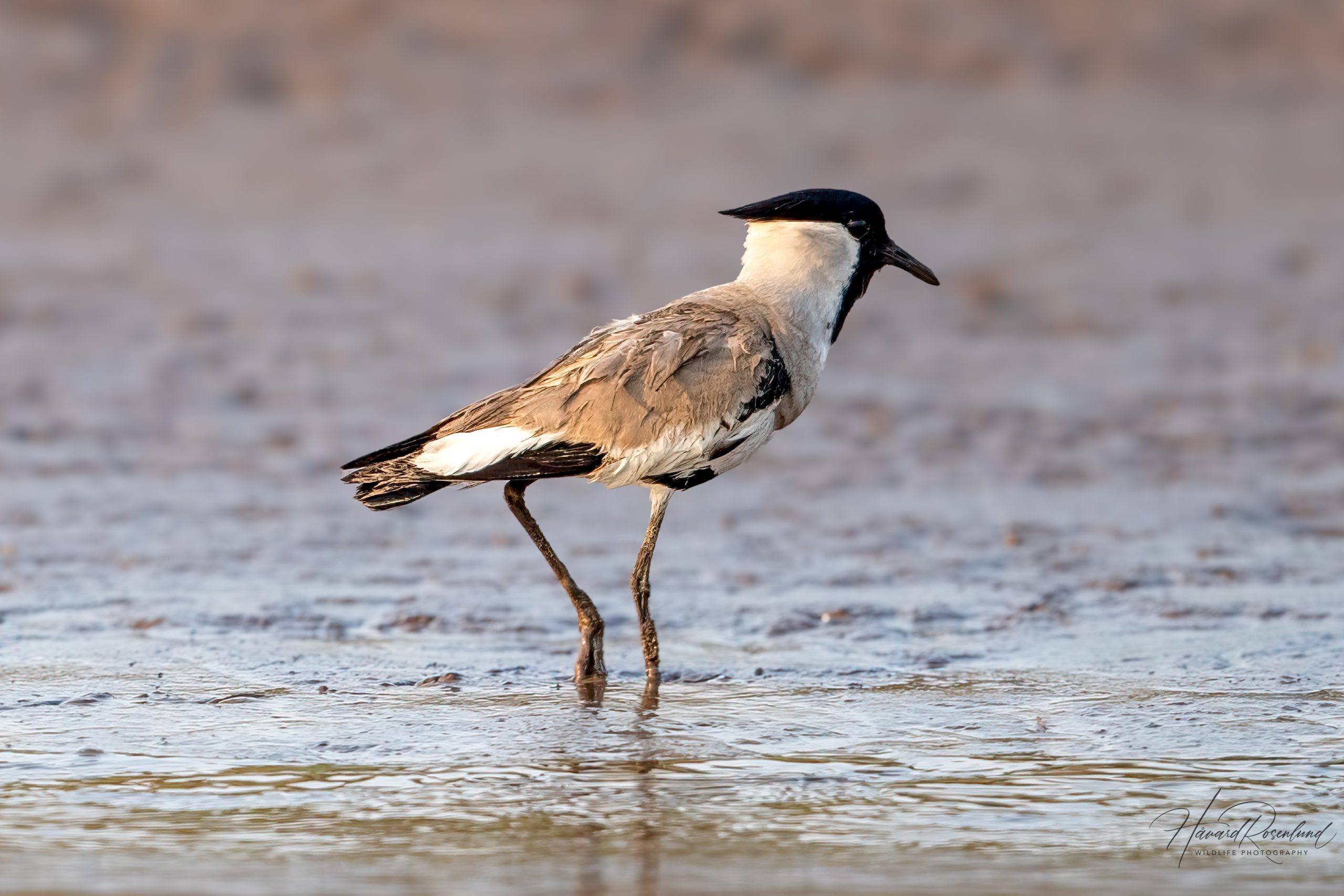
River Lapwing
Vanellus duvaucelii
At a glance
Habitat
- Broad rivers with exposed sandbanks, gravel bars and shingle islands
Diet
- Insects, worms, molluscs, crustaceans and other small aquatic or terrestrial prey
Activity
- Diurnal
Size
- Length: 29–32 cm Weight: 143–185 g
Range
- Northern Indian subcontinent east through mainland Southeast Asia
Description
The river lapwing (Vanellus duvaucelii) is a medium-sized wader of South and Southeast Asia. It measures about 29–32 cm and weighs roughly 143–185 g. Its distribution follows major river systems from the northern Indian subcontinent east through mainland Southeast Asia.
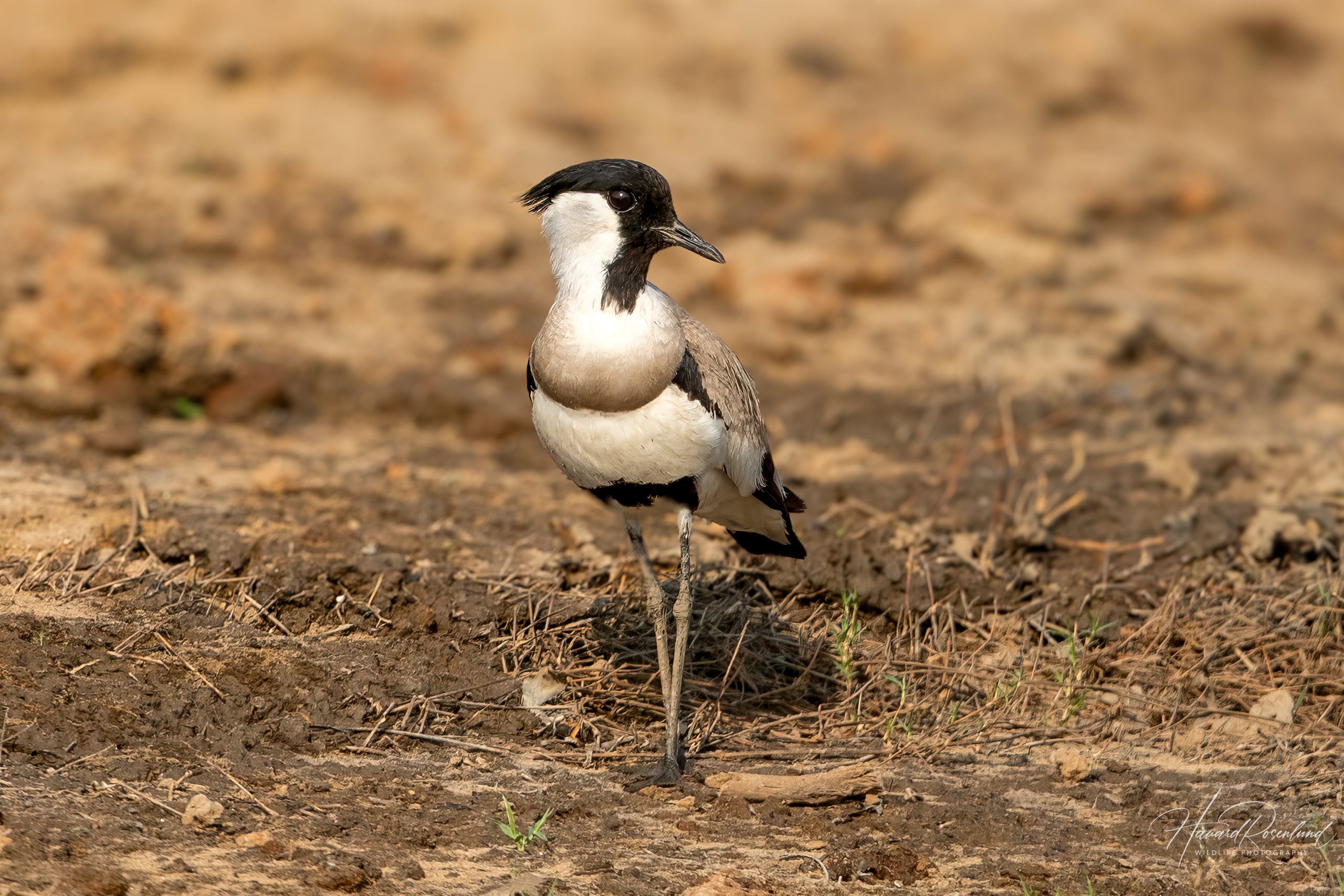
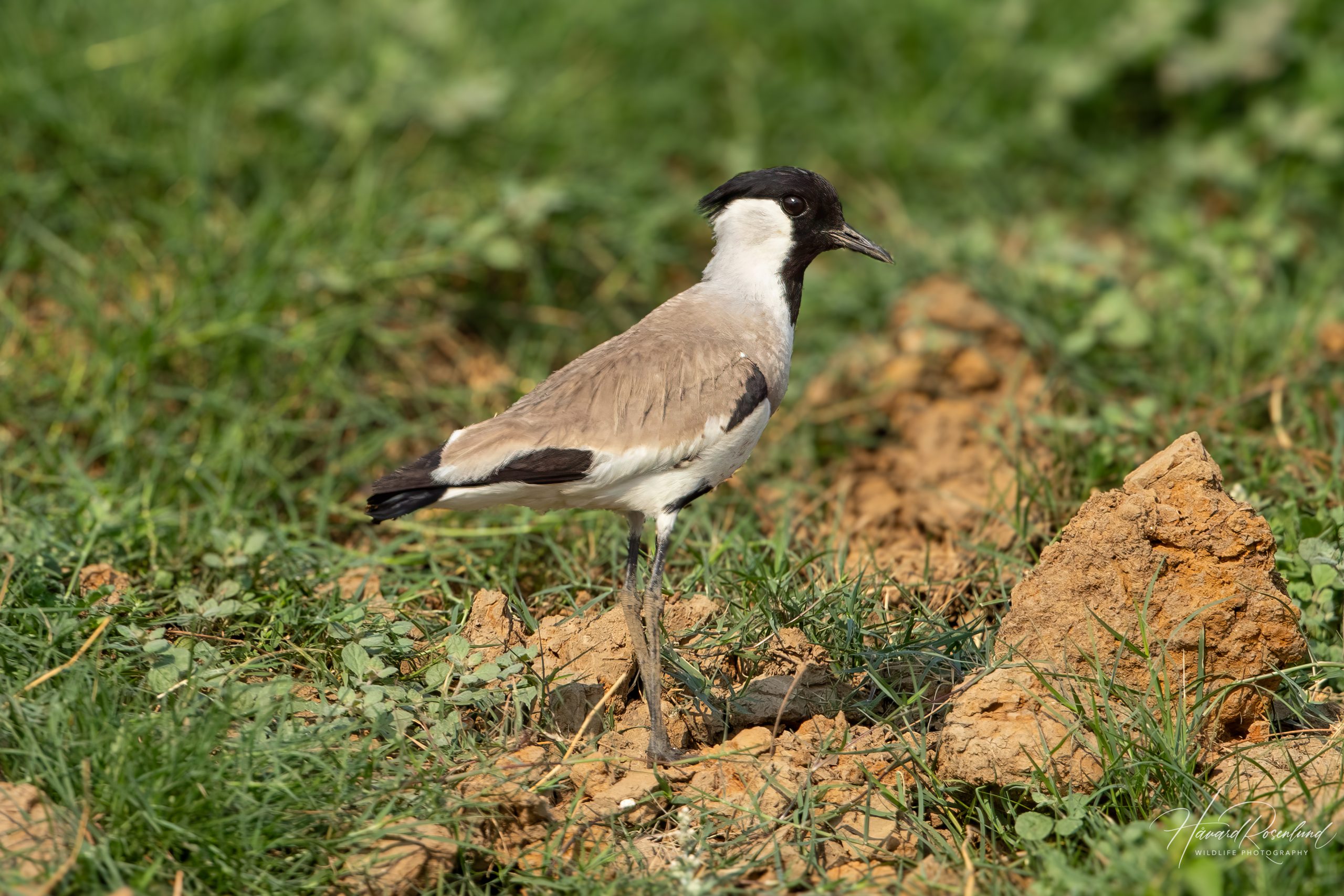
The black crest, crown, face and throat contrast with pale neck-sides, a grey-brown breast band and white underparts broken by a black belly patch. The back is brown, while the white rump, white wing panels and black flight feathers form a bold pattern in flight. The sexes look similar, although males average slightly larger.
Habitat
River lapwings are strongly tied to broad, flowing rivers with exposed sandbanks, gravel bars and shingle islands. They also use reservoir margins, wet grassland and farmland close to water, but open, sparsely vegetated riverbanks are especially important for breeding.
This makes the species dependent on changing river conditions. Seasonal falls in water level expose new nesting and feeding habitat, while floods reshape banks and islands. Dams, altered flow and extraction of sand and gravel can remove or stabilise these naturally shifting surfaces.
Diet
River lapwings feed mainly on insects, worms, molluscs, crustaceans and other small invertebrates. They walk over damp ground, gravel and the water's edge, stopping to pick prey from the surface or shallow substrate. Small fish and other aquatic animals may also be taken occasionally.
A diet study published in 2020 followed breeding birds at five sites in northern India during three breeding seasons, 2016–2018. Beetles made up about one third of identified prey, with caddisflies, flies and earwigs also important. Insect larvae dominated in March–April, while adult insects became more important in May–June; seeds formed a smaller part of the diet.
Behaviour
The species is usually seen alone, in pairs or in small groups rather than in large flocks. Birds are conspicuous and vigilant on open riverbanks, frequently pausing to scan their surroundings and giving sharp repeated calls when disturbed.
Outside periods of active nest defence, pairs and small groups spend much of the day walking and feeding along exposed bars and water margins. Most birds are resident or locally mobile rather than long-distance migrants, and local movements follow changing water levels and the appearance or disappearance of suitable feeding banks.
Breeding
Breeding generally takes place from March to June, when suitable sand and gravel banks are exposed. The nest is a shallow scrape in open ground, often among pebbles and sometimes edged with small stones. Clutches usually contain two to four well-camouflaged eggs. A four-year study of 300 nests in northern India, published in 2022, found a median incubation period of 28 days.
Both adults guard the nesting area vigorously. When a predator or person approaches, parents may call loudly, circle overhead, dive towards the intruder or move conspicuously away from the nest to draw attention from the eggs or chicks. The chicks hatch well developed and leave the scrape soon after hatching, but remain dependent on the adults for warning and protection. A field study published in 2018 reported that chicks were ready to fly about 12–15 days after hatching.
Nest losses can be substantial. A study published in 2020 from Raebareli district in Uttar Pradesh found nesting success of roughly 64–70% across three breeding seasons, with the best results on open, unvegetated riverbanks. Predation accounted for 55% of failed nests and farming for 32%, while trampling, human disturbance and flooding caused smaller losses. A 2025 study along the upper Tapi River likewise recorded failures involving feral dogs, crows, raptors, flooding and human activity.
Status
The river lapwing is classified as near threatened on the IUCN Red List. It remains widespread along suitable rivers, but its dependence on exposed and naturally changing riverbanks makes it unusually sensitive to modifications of river systems.
State of India's Birds 2025 estimates a long-term national decline of about 24%. The current estimate is a small annual increase of about 0.7%, but the uncertainty spans a slight decline to a modest increase, so the recent trend is considered stable.
Threats
The main threats are dams and altered river flow, extraction of sand and gravel, conversion or stabilisation of riverbanks, disturbance during breeding, hunting in parts of the range and degradation of wetlands adjoining rivers. These changes can remove the open bars used for both feeding and nesting even when water remains in the channel.
Nests and chicks are also vulnerable to domestic and feral dogs, livestock trampling, farming on exposed banks and repeated human presence. Flooding is a natural source of nest loss, while water releases from dams can subject nests to rapid changes in water level at unfavourable times.
Conservation
Conservation depends on river stretches where sandbanks, gravel bars and shallow water are still created and reshaped by natural river processes. Protecting important nesting bars during the breeding season, limiting intensive sand and gravel extraction and avoiding disruptive work close to active nests can reduce nest losses locally.
Where disturbance is high, temporarily limiting access to important nesting bars, keeping free-ranging dogs away from breeding areas and working with riverside communities can further reduce nest losses. River flows below dams also need to retain enough of their natural seasonal variation because the species depends not simply on the presence of a river, but on the processes that continually create suitable feeding and nesting surfaces.
Image gallery
Loading map and observations…
Have you seen this species?
Independent species archive
Did you find this species page useful?
Wildlife Vagabond is independently built and maintained. Voluntary support helps cover hosting, maps, data storage and continued improvements to the species archive.
Support Wildlife VagabondSpecies content will remain freely available.
References
Information about the species’ global distribution and status is based primarily on global Red List data. See the references below for details.
- Ahmed, S., Chowdhury, S. U., & Sheldon, R. D. (2018). Surveys of River Lapwings <i>Vanellus duvaucelii</i> in Bangladesh and observations on their nesting ecology. Wader Study, 125(2), 90–96. https://doi.org/10.18194/ws.00117
- BirdLife International. (n.d.). River Lapwing (Vanellus duvaucelii) species factsheet. https://datazone.birdlife.org/species/factsheet/river-lapwing-vanellus-duvaucelii
- Chaudhari, P., & Wagh, G. (2025). Breeding ecology of the river lapwing (Vanellus duvaucelii) along the Tapi river basin of melghat landscape, Maharashtra, India: Nest characteristics and threats. International Journal of Fauna and Biological Studies, 12(4), 41-52. https://doi.org/10.22271/23940522.2025.v12.i4a.1113
- International Union for Conservation of Nature. (n.d.). Vanellus duvaucelii. The IUCN Red List of Threatened Species. https://www.iucnredlist.org/species/22693992/93432617
- Kumar, V., Mishra, H., & Kumar, A. (2020). Estimation of the diet of River Lapwings <i>Vanellus duvaucelii</i> during the breeding season. Wader Study, 121–129. https://doi.org/10.18194/ws.00194
- Kumar, V., Mishra, H., Prateek, & Kumar, A. (2022). Nest characteristics, egg attributes, and hatching success of river lapwing, Vanellus duvaucelii. Ornithology Research, 30(2), 118-129. https://doi.org/10.1007/s43388-022-00089-y
- Mishra, H., Kumar, V., & Kumar, A. (2018). Population structure, behavior, and distribution pattern of the river lapwing Vanellus duvaucelii (Lesson, 1826). Journal of Asia-Pacific Biodiversity, 11(3), 422–430. https://doi.org/10.1016/j.japb.2018.06.001
- Mishra, H., Kumar, V., & Kumar, A. (2020). Factors influencing nesting success of the river lapwing, Vanellus duvaucelii (Lesson, 1826). Avian Biology Research, 13(3), 35-43. https://doi.org/10.1177/1758155920921072
- Mishra, H., Kumar, V., Bano, F., Prateek, Mishra, A., & Kumar, A. (2024). Insights into key threats and conservation status of the river lapwing, Vanellus duvaucelii (Lesson, 1826) in Northern India. Israel Journal of Ecology and Evolution, 70(3), 131-138. https://doi.org/10.1163/22244662-bja10075
- State of India's Birds. (n.d.). River Lapwing. https://stateofindiasbirds.in/species/rivlap1/