
Little Ringed Plover
Thinornis dubius
At a glance
Habitat
- Freshwater gravel and sand banks, lake shores, gravel pits, reservoirs and bare industrial ground
Diet
- Insects, spiders, worms and other small invertebrates
Activity
- Diurnal; visual run-and-pause forager
Size
- Length: 14–17 cm Weight: ~37.5 g
Range
- Breeds across much of Eurasia; northern populations winter from Africa to South Asia
Description
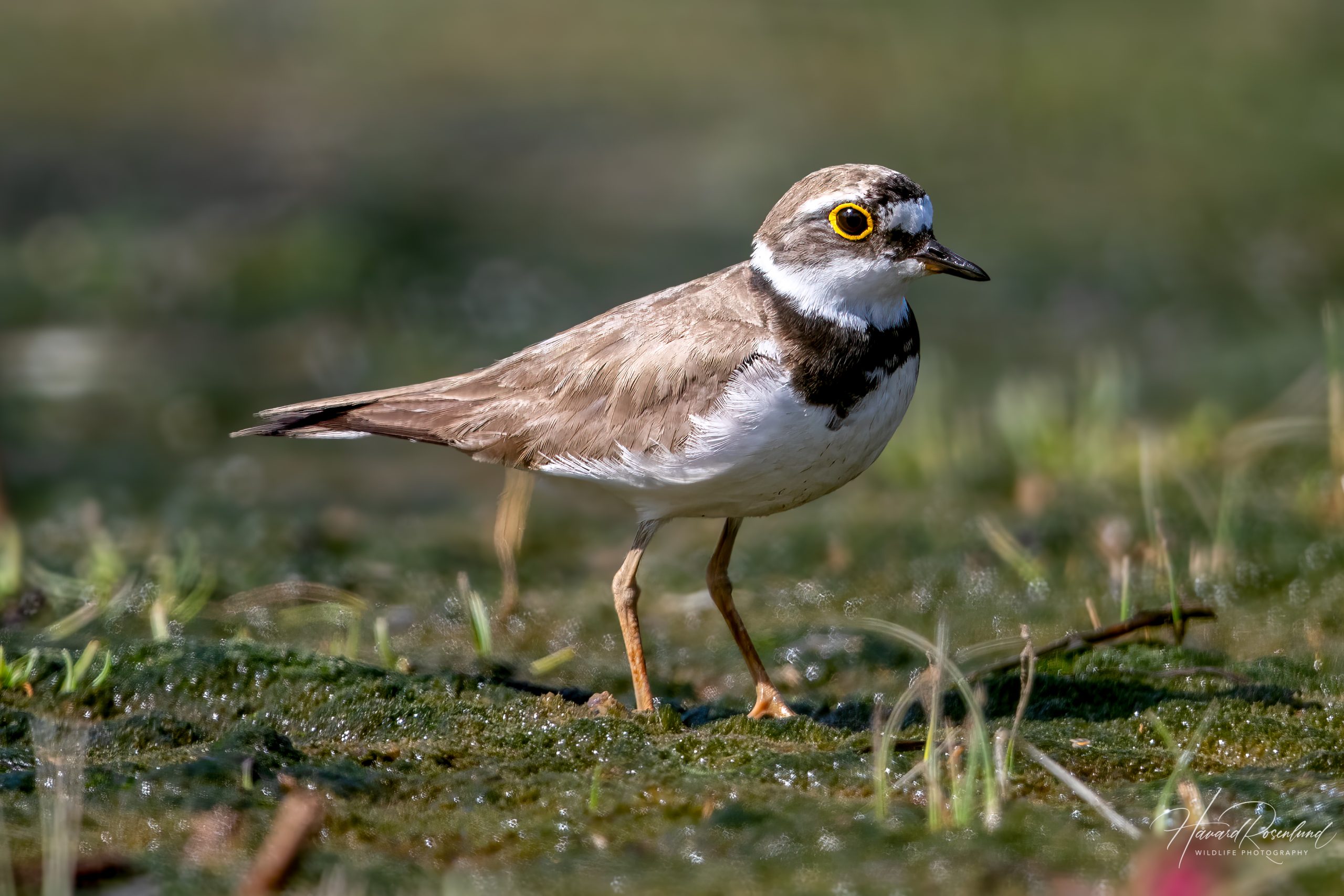
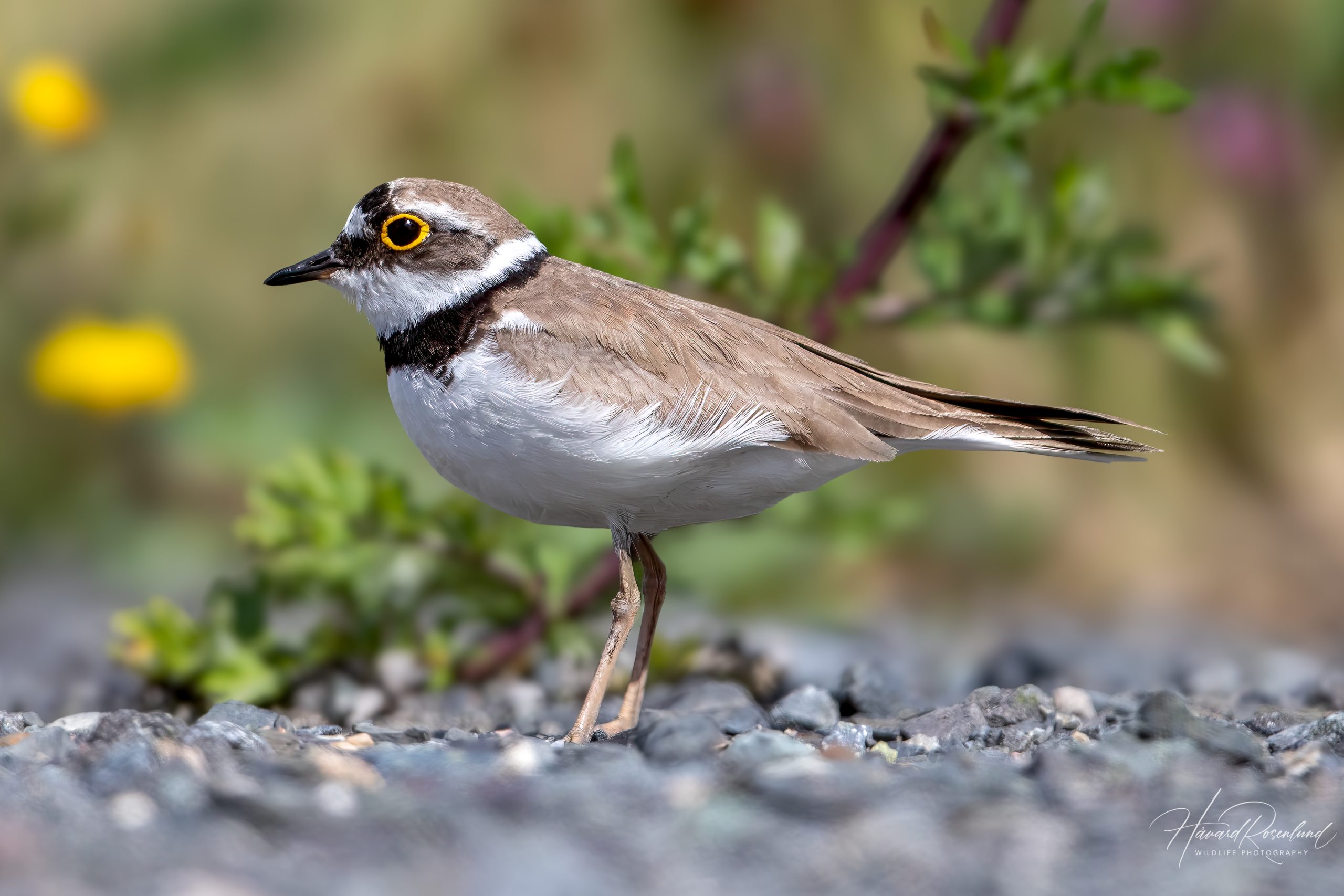
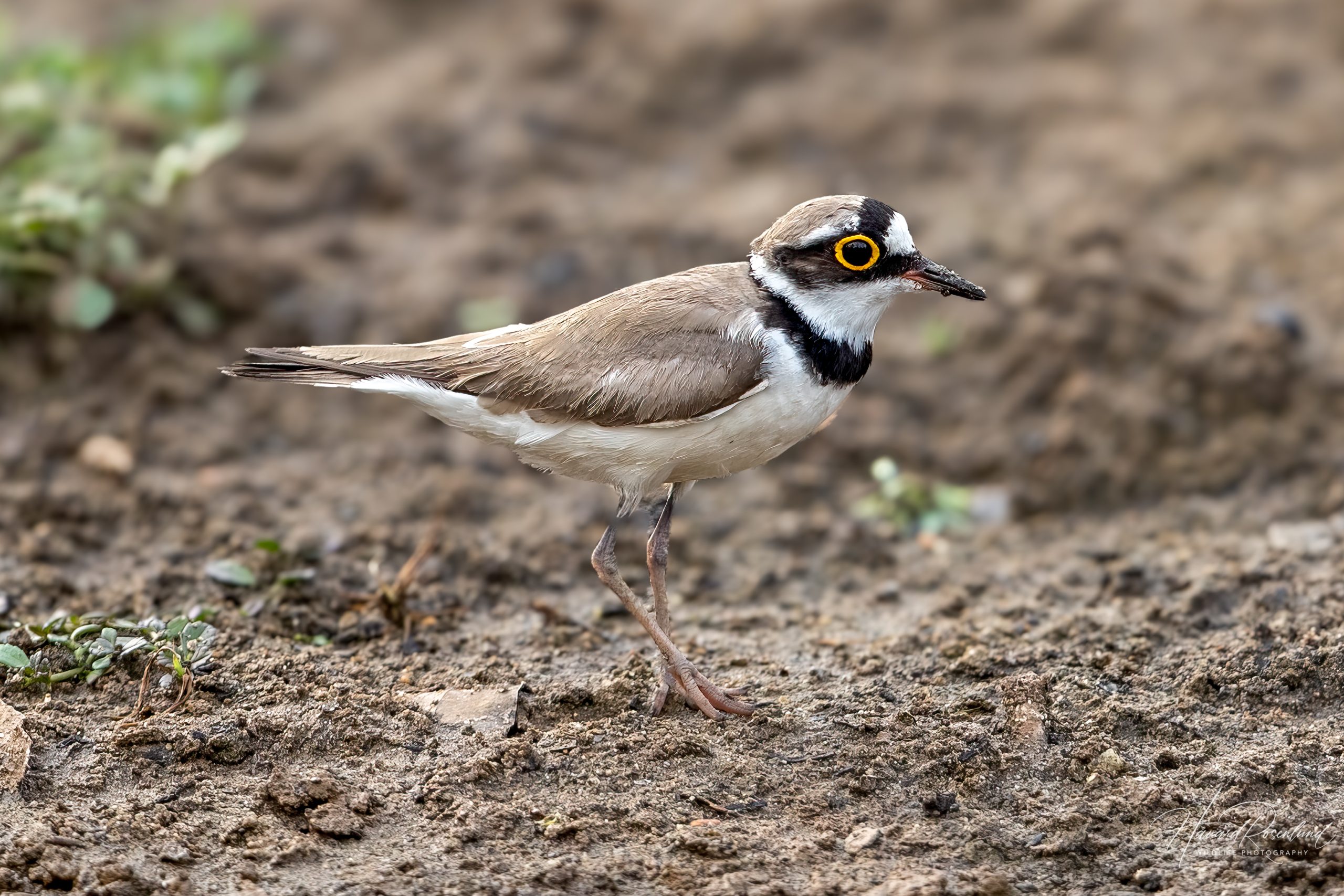
The little ringed plover (Thinornis dubius) is a small, delicate plover breeding across much of Eurasia. Adults are about 14–17 cm long, have a wingspan of roughly 42–48 cm and average about 37.5 g. Breeding birds have a black breast band and bold black-and-white head pattern, but the most distinctive feature at close range is the narrow bright yellow ring around the eye. The bill is almost entirely black and the legs are pale flesh-coloured to yellowish.
The common ringed plover (Charadrius hiaticula) is larger and heavier, with orange legs and an orange-based bill in breeding plumage. Little ringed plovers also lack the conspicuous white wingbar shown by ringed plovers in flight and are more strongly associated with fresh water and inland gravel habitats.
Taxonomy
The little ringed plover was long known as Charadrius dubius, and that name remains widespread in older literature and in some current conservation databases. AviList v2025 reorganised several plover genera and transferred the species to Thinornis, giving the current scientific name Thinornis dubius.
The change reflects a broader restructuring of the plover family rather than a split of the species itself. Older records and studies published as Charadrius dubius therefore still refer to the same species.
Habitat
Little ringed plovers favour open, sparsely vegetated ground close to fresh water. Natural breeding sites include gravel and sand banks along rivers, lake shores and seasonally exposed sediment, but the species readily uses artificial habitats that reproduce the same bare substrate, including gravel pits, quarries, reservoirs, construction sites and industrial ground.
This ability to colonise newly created bare ground has contributed to range expansion in parts of western and northern Europe. Such sites are often temporary, however: succession, flooding, redevelopment or increasing disturbance can quickly make a previously suitable breeding area unusable.
Diet
The diet consists mainly of small invertebrates, including insects and their larvae, spiders, worms and small crustaceans. Birds hunt visually on mud, sand and gravel, using the characteristic plover technique of running rapidly for a short distance, stopping to scan and then pecking at detected prey.
Feeding is concentrated on open surfaces where prey can be seen and reached easily. Chicks use the same general stop-and-run strategy soon after hatching, although the adults remain nearby to warn and defend them.
Behaviour
Little ringed plovers are strongly territorial on the breeding grounds. Pairs occupy and defend patches of suitable bare ground, with territorial aggression generally strongest before egg-laying and becoming less intense later in the nesting cycle.
Intruding little ringed plovers are chased actively, and territorial birds may also drive away other small plover species using the same gravel or shoreline habitat. Outside the breeding season this territoriality relaxes and birds may occur in small groups during migration.
Migration
Northern populations are long-distance migrants, while some populations farther south are more sedentary. Tracking of birds breeding in southern Sweden revealed remarkably varied migration patterns: individuals travelled southeast through the Middle East and wintered at widely separated sites in the Sahara, sub-Saharan Africa and central India.
Autumn migration through Europe begins from late July and is strongest through August and September. The Swedish birds often used lengthy autumn stopovers in the Middle East, whereas spring migration was more direct toward the breeding grounds. Northward passage begins in March, with most northern European breeding areas reoccupied during April. The Swedish tracking study therefore showed that even birds from the same local breeding population can spend the winter in regions as widely separated as West Africa and India.
Breeding
The nest is a shallow scrape on bare gravel, sand or stones with little surrounding vegetation. Small pebbles and plant fragments may be added around the eggs, but camouflage against the substrate provides most of the concealment. Four eggs are typical, with both parents sharing incubation.
BTO nest records give an incubation period of about 24–25 days. The downy chicks are precocial, meaning they leave the nest soon after hatching and feed for themselves under parental protection. When a predator or other threat approaches, adults can perform conspicuous distraction displays that draw attention away from the eggs or young. The chicks become capable of flight after roughly 25–27 days, and one or two broods may be raised in a season.
Status
The little ringed plover is classified as least concern on the IUCN Red List because of its very large range and substantial population. Trends vary regionally. In Britain, where the species first bred in 1938, the breeding population expanded strongly during the twentieth century and was estimated at about 1,250 pairs in the 2007 national survey.
Local breeding success can nevertheless be fragile because nests and chicks lie on open ground. Recreational disturbance, vehicles, redevelopment, removal or overgrowth of gravel banks and rapid changes at artificial breeding sites can all make local breeding sites unsuitable. Because individual sites are often short-lived, the species depends on new or recently disturbed gravel and sand surfaces becoming available as older sites overgrow or are redeveloped.
A long-term study published in 2011 from the Rhône in Switzerland followed the river section over three decades. After restoration of a formerly channelised stretch began in 1994, the habitat became more varied and little ringed plovers established more territories; the local population increased by an estimated 20% between 1995 and 2007.
Image gallery
Loading map and observations…
Have you seen this species?
Independent species archive
Did you find this species page useful?
Wildlife Vagabond is independently built and maintained. Voluntary support helps cover hosting, maps, data storage and continued improvements to the species archive.
Support Wildlife VagabondSpecies content will remain freely available.
References
Information about the species’ global distribution and status is based primarily on global Red List data. See the references below for details.
- Arlettaz, R., Lugon, A., Sierro, A., Werner, P., Kéry, M., & Oggier, P.-A. (2011). River bed restoration boosts habitat mosaics and the demography of two rare non-aquatic vertebrates. Biological Conservation, 144(8), 2126-2132. https://doi.org/10.1016/j.biocon.2011.05.003
- BirdLife International. (n.d.). Little Ringed Plover species factsheet. https://datazone.birdlife.org/species/factsheet/little-ringed-plover-charadrius-dubius
- British Ornithologists’ Union Records Committee. (2026). British Ornithologists' Union Records Committee (BOURC): 58th Report (January 2026). Ibis, 168(1), 395-410. https://doi.org/10.1111/ibi.70009
- British Trust for Ornithology. (n.d.). Little Ringed Plover BirdFacts. https://www.bto.org/learn/about-birds/birdfacts/little-ringed-plover
- Christidis, L., Rheindt, F. E., Iliff, M. J., Lepage, D., Rasmussen, P. C., Donald, P., Alström, P., Areta, J. I., Brammer, F., Chesser, T., Donsker, D., Dowsett, B., Gerbracht, J., Kirsch, M., Kuziemko, M., Lagerqvist, M., Littauer, R., Longmore, W., Norman, J., … Stervander, M. (2026). AviList v2025b. AviList. https://doi.org/10.2173/avilist.v2025b
- Hedenström, A., Klaassen, R. H., & Åkesson, S. (2013). Migration of the Little Ringed PloverCharadrius dubiusbreeding in South Sweden tracked by geolocators. Bird Study, 60(4), 466-474. https://doi.org/10.1080/00063657.2013.843635
- Humphreys, R. K., & Ruxton, G. D. (2020). Avian distraction displays: a review. Ibis, 162(4), 1125-1145. https://doi.org/10.1111/ibi.12814
- International Union for Conservation of Nature. (n.d.). Little Ringed Plover. The IUCN Red List of Threatened Species. https://www.iucnredlist.org/species/22693770/155486463
- Simmons, K. E. L. (1956). Territory in the little ringed plover <i>Charadrius dubius</i>. Ibis, 98(3), 390-397. https://doi.org/10.1111/j.1474-919X.1956.tb01422.x