
Black-winged Stilt
Himantopus himantopus
At a glance
Habitat
- Shallow freshwater and saline wetlands, mudflats, rice fields and lagoons
Diet
- Aquatic insects and other small invertebrates; also crustaceans, molluscs and occasional small fish
Activity
- Diurnal
Size
- Length: 33–36 cm Weight: ~180 g
Range
- Europe, Africa and much of Asia; movement patterns range from resident to migratory
Description
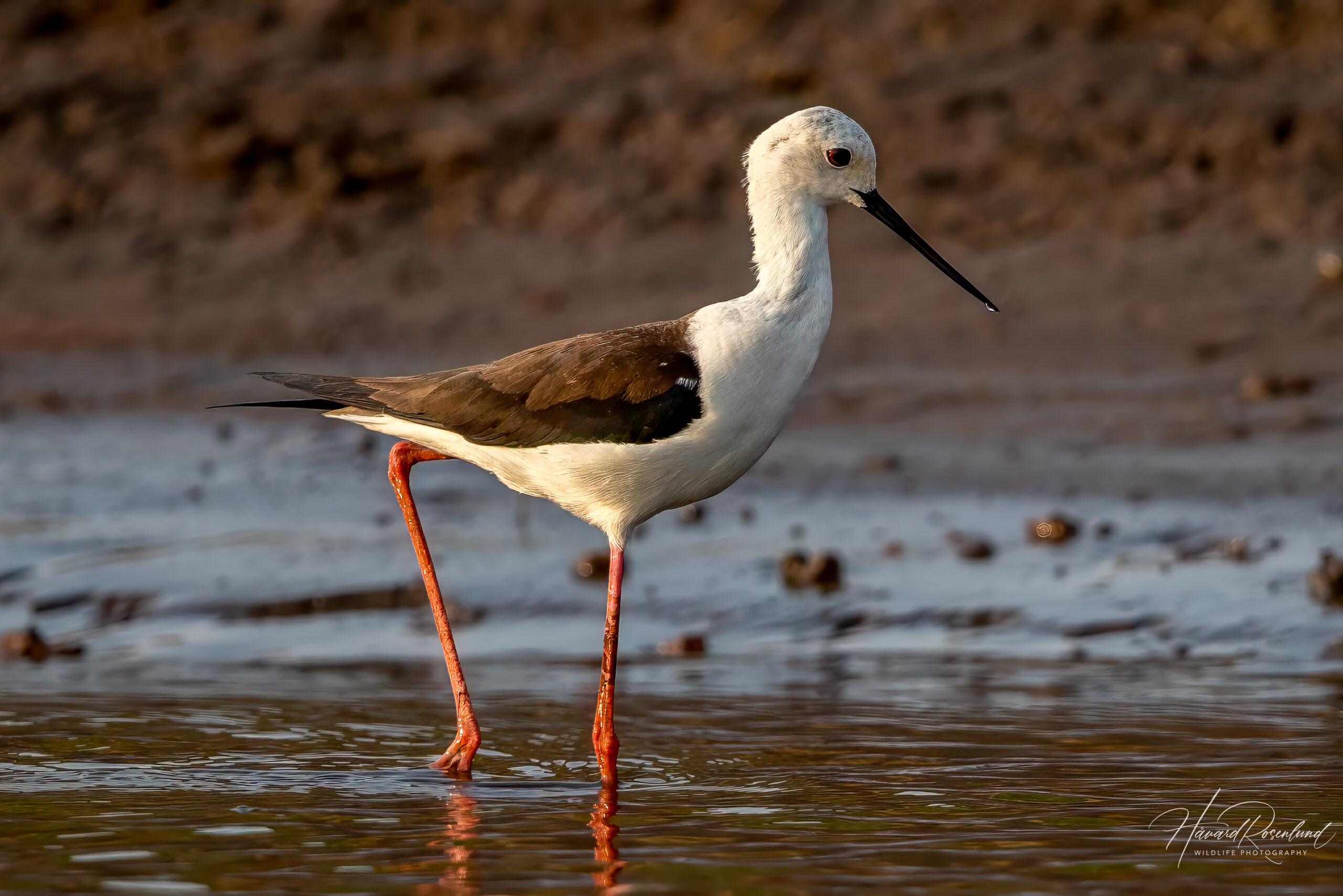
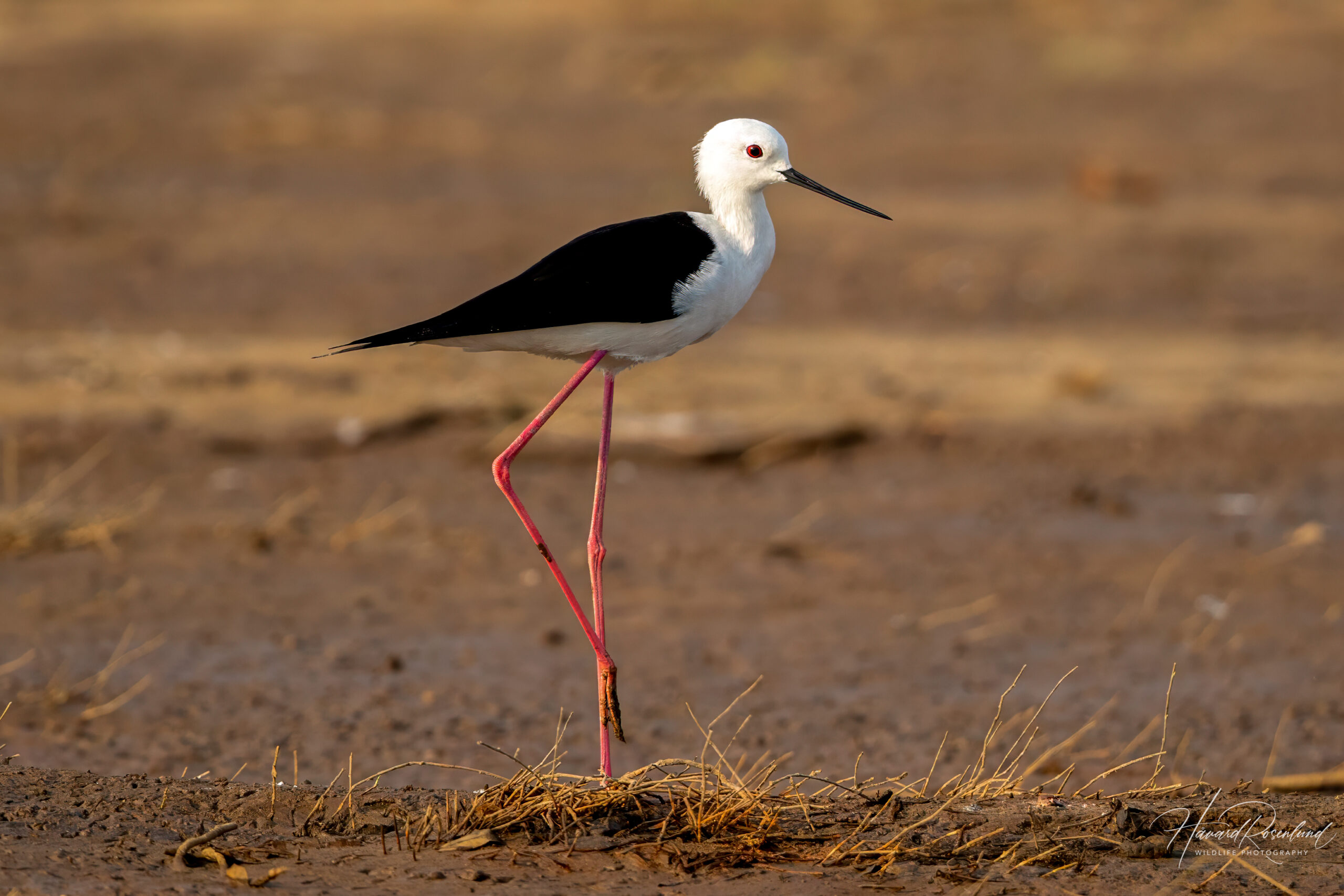
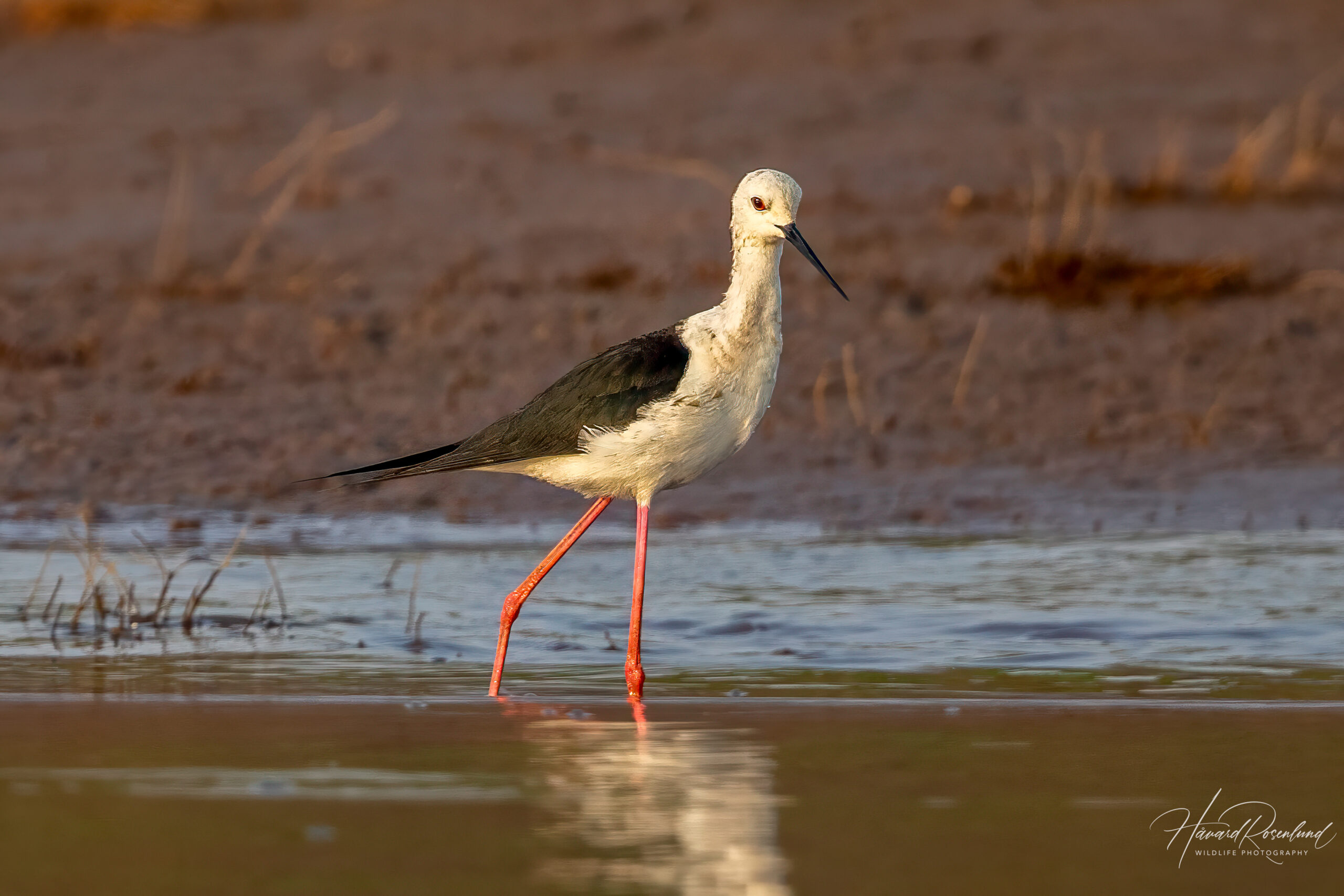
The black-winged stilt (Himantopus himantopus) is an unmistakable long-legged wader distributed across Europe, Africa and much of Asia. Adults are about 33–36 cm long, have a wingspan of roughly 70–80 cm and weigh around 180 g. The extremely long pink-red legs can account for around 60% of the bird's total height when standing; together with the fine straight black bill and sharply contrasting black-and-white plumage, they allow the bird to wade through water that is relatively deep for its small body size.
Males usually have glossy black upperparts, while females tend to be browner on the back. The amount of dark plumage on the head and neck varies with age, sex and population. The black-winged stilt is closely related to the pied stilt (Himantopus leucocephalus) of Australasia and black-necked stilt (Himantopus mexicanus) of the Americas, which are recognised as separate species.
Habitat
Black-winged stilts favour open, shallow wetlands with exposed mud or sparse emergent vegetation. They use freshwater marshes, saltpans, lagoons, estuaries, flooded fields, sewage ponds, rice fields and the margins of lakes and reservoirs.
The species readily shifts between wetlands as water levels change. Temporary flooded areas can therefore become valuable very quickly, while sites that dry completely or become too deeply inundated may be abandoned.
Diet
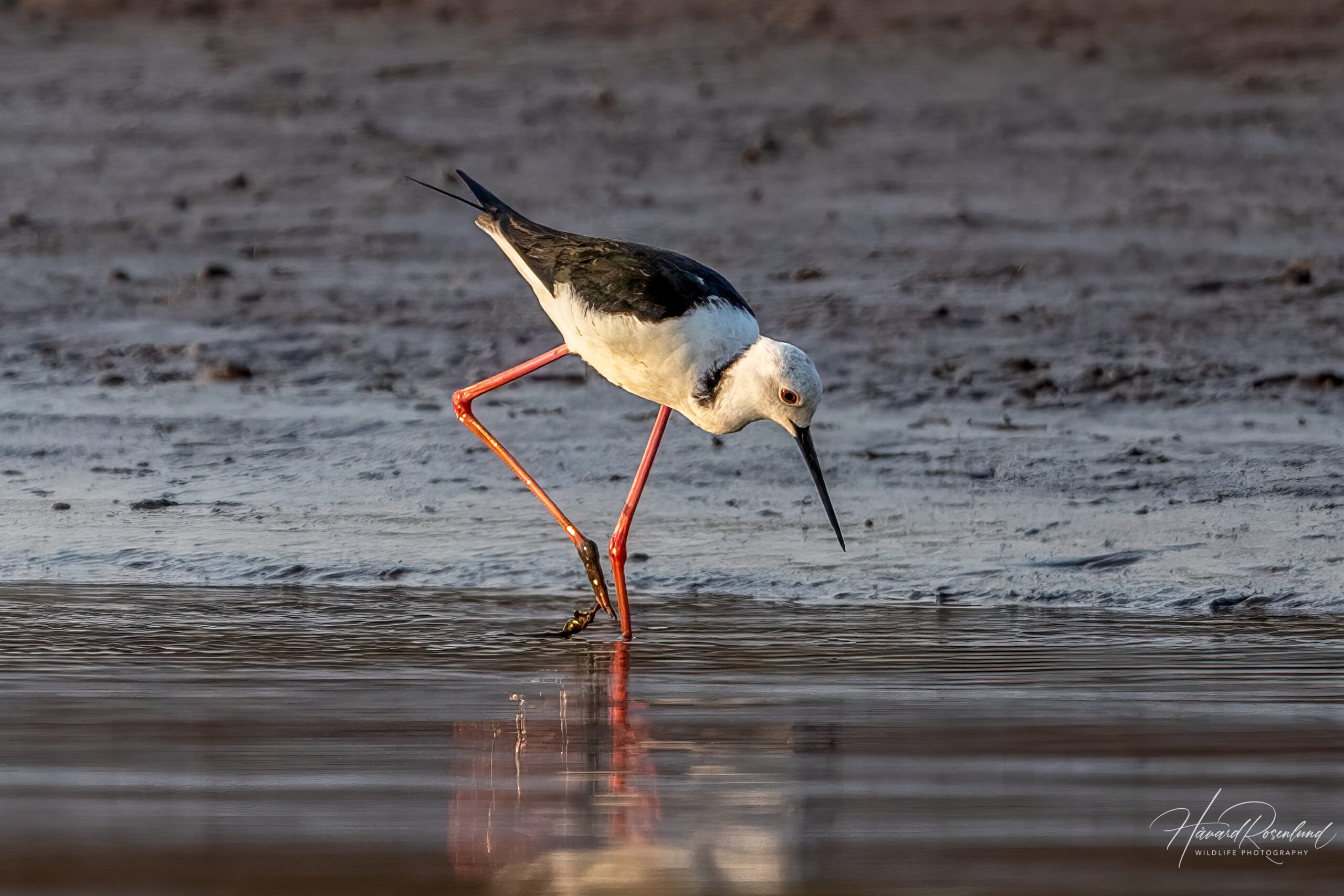
Aquatic invertebrates form the core of the diet, particularly adult and larval insects. Crustaceans, molluscs, worms, spiders, tadpoles, fish eggs and occasional small fish are also taken.
Black-winged stilts usually pick prey from the water surface, mud or vegetation and can immerse the head and neck to reach food in deeper water. The exceptionally long legs allow them to exploit feeding depths unavailable to many similarly sized waders, while the fine straight bill is well suited to picking small prey precisely from water and soft sediment as the bird walks through shallow wetland margins.
Migration
Movement patterns vary greatly across the range. Many tropical populations are resident or locally nomadic, shifting in response to rainfall and changing wetland conditions. Birds breeding in temperate parts of Europe and Asia are more strongly migratory and move south or southwest after breeding, with some European populations wintering around the Mediterranean or in Africa.
The species has become a more regular breeder at the north-western edge of its European range, including Britain. This expansion is probably driven by several interacting factors rather than climate alone: increases in nearby source populations, warmer conditions and improved wetland habitat may all contribute, while drought farther south, predation and disturbance can influence where birds settle.
Breeding
Black-winged stilts breed as territorial pairs, often close together in loose colonies on open wetland margins or small islands. The nest is usually a shallow scrape or low mound of plant material, shells, stones and mud near shallow water. On very wet sites it can instead be a floating nest of aquatic vegetation. If water levels rise, adults may add material and raise the nest.
Both sexes defend the nesting area vigorously and may use distraction displays, including feigning a broken wing, to draw predators away from eggs or chicks. Clutches usually contain three or four eggs, and both parents incubate for roughly 22–25 days.
The chicks hatch well developed and leave the nest soon afterwards. They feed for themselves but remain guarded and brooded by the adults. Young become capable of flight after about four weeks and remain associated with the family for some time afterwards.
Status
The black-winged stilt is classified as least concern on the IUCN Red List, and the global population trend is considered increasing. Its enormous range and ability to exploit both natural and artificial shallow wetlands help the species respond to highly variable water conditions.
Local breeding success can be affected by wetland drainage, sudden changes in water level, disturbance and predation. Even in regions where the species is expanding, breeding depends on suitable shallow wetlands with sufficiently stable water conditions.
Image gallery
Loading map and observations…
Have you seen this species?
Independent species archive
Did you find this species page useful?
Wildlife Vagabond is independently built and maintained. Voluntary support helps cover hosting, maps, data storage and continued improvements to the species archive.
Support Wildlife VagabondSpecies content will remain freely available.
References
Information about the species’ global distribution and status is based primarily on global Red List data. See the references below for details.
- Agreement on the Conservation of African-Eurasian Migratory Waterbirds. (n.d.). Black-winged Stilt (Himantopus himantopus). https://www.unep-aewa.org/species/himantopus-himantopus
- Biodiversity Explorer. (n.d.). Black-winged Stilt (Himantopus himantopus). Iziko Museums of South Africa. https://www.biodiversityexplorer.info/birds/recurvirostridae/himantopus_himantopus.htm
- BirdLife International. (n.d.). Black-winged Stilt species factsheet. https://datazone.birdlife.org/species/factsheet/black-winged-stilt-himantopus-himantopus
- British Trust for Ornithology. (n.d.). Black-winged Stilt BirdFacts. https://www.bto.org/learn/about-birds/birdfacts/black-winged-stilt
- International Union for Conservation of Nature. (n.d.). Black-winged Stilt. The IUCN Red List of Threatened Species. https://www.iucnredlist.org/species/22727969/155440465