
Common Hippopotamus
Hippopotamus amphibius
At a glance
Habitat
- Rivers, lakes, floodplains, swamps and permanent pools with nearby grassland
Diet
- Primarily short grasses; very occasional other plant matter or carrion
Activity
- Most active on land around dusk and before sunrise; rests extensively by both day and night
Size
- Length: 2.6–3.5 m Weight: 1,300–1,800 kg for typical adults
Range
- Patchily distributed across sub-Saharan Africa
Description
The common hippopotamus (Hippopotamus amphibius) is one of the largest living land mammals. Average adult weights are about 1,546 kg for males and 1,385 kg for females, although individuals vary greatly. The largest well-documented wild male weighed 2,065 kg.
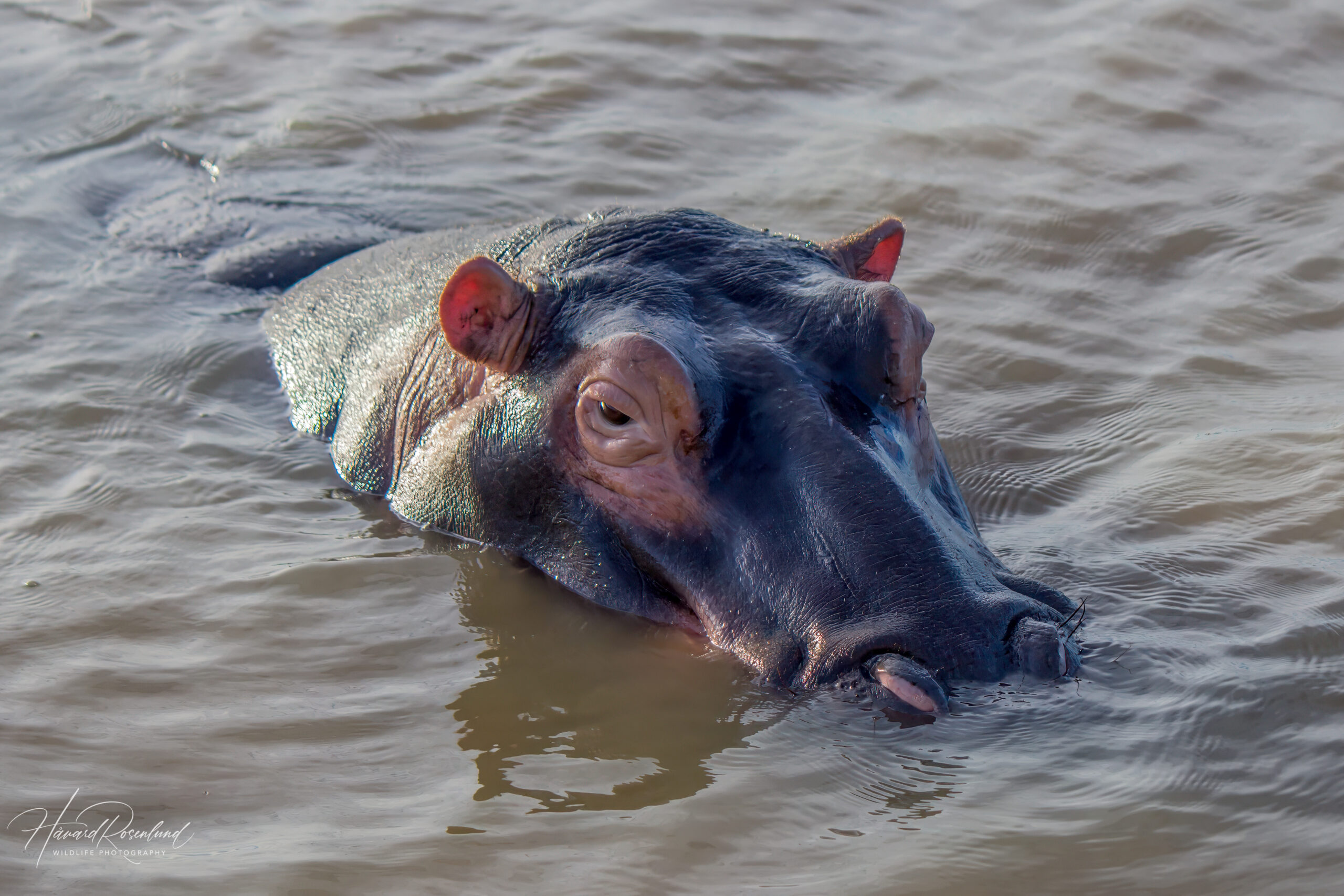
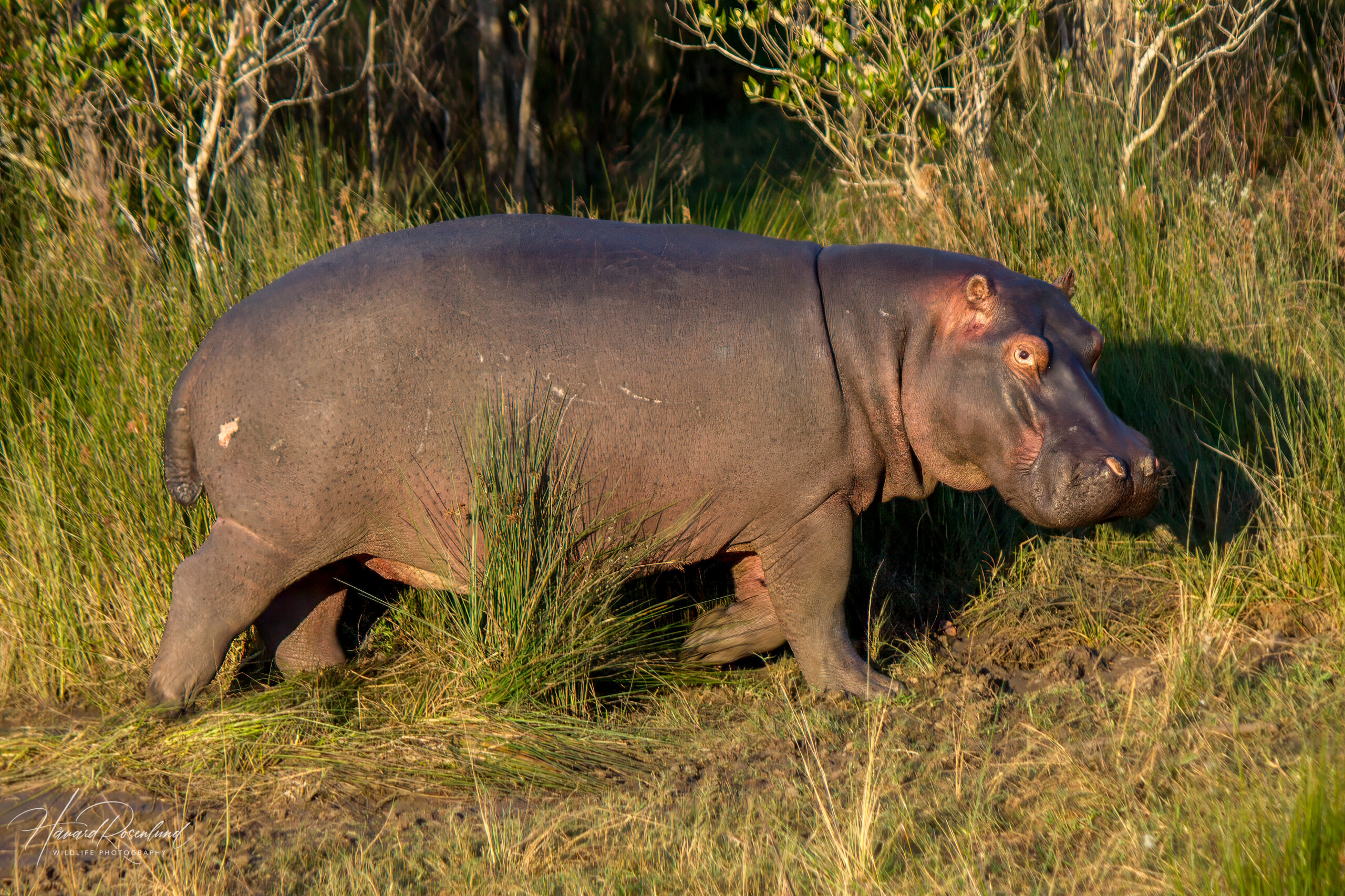
The body is massive and barrel-shaped, with short legs and four toes on each foot. The skin is dark reddish brown to grey-brown, often with clearly pinker areas on the underside and around the eyes and ears, and carries only very sparse hair. The enormous head contrasts sharply with the small ears.
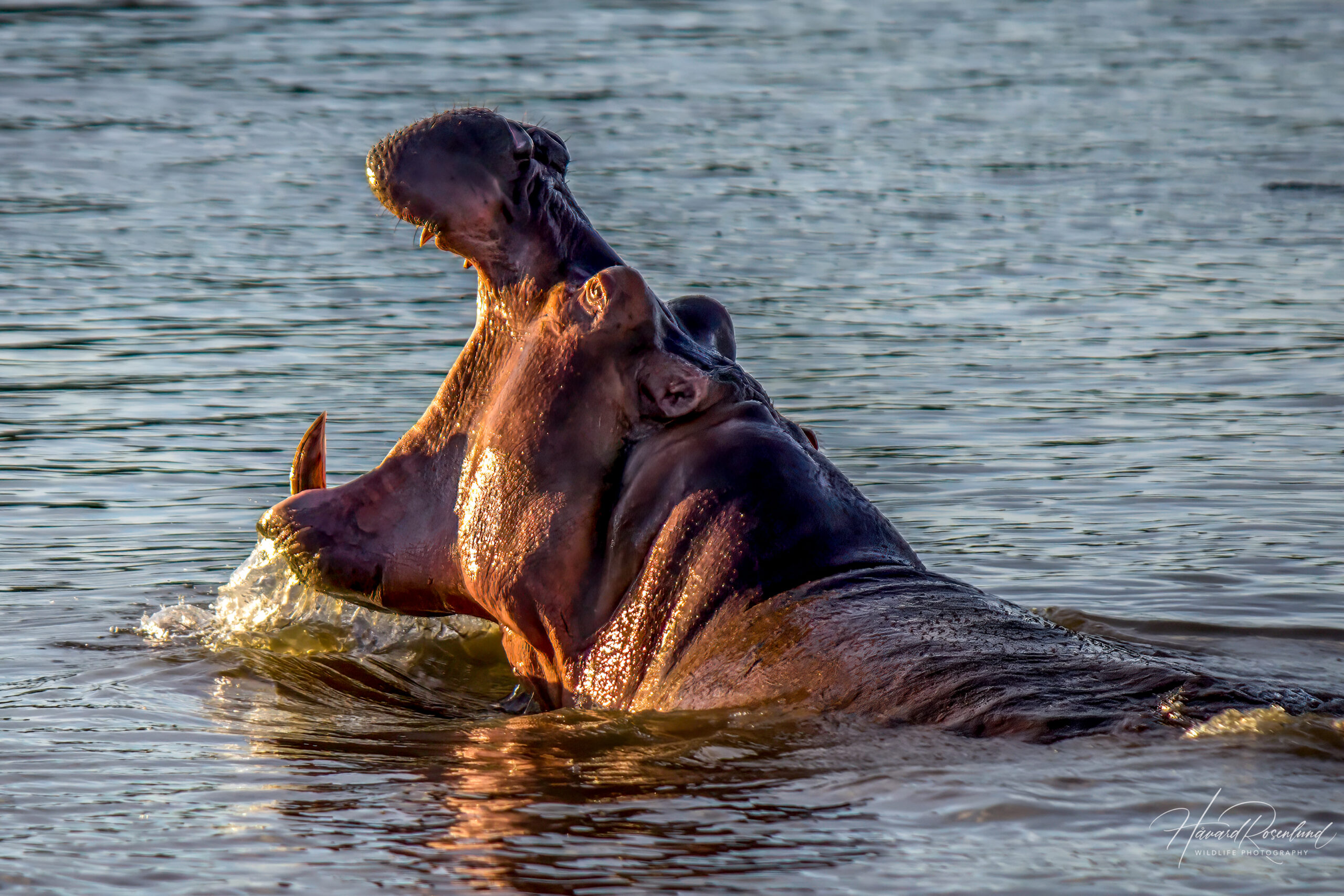
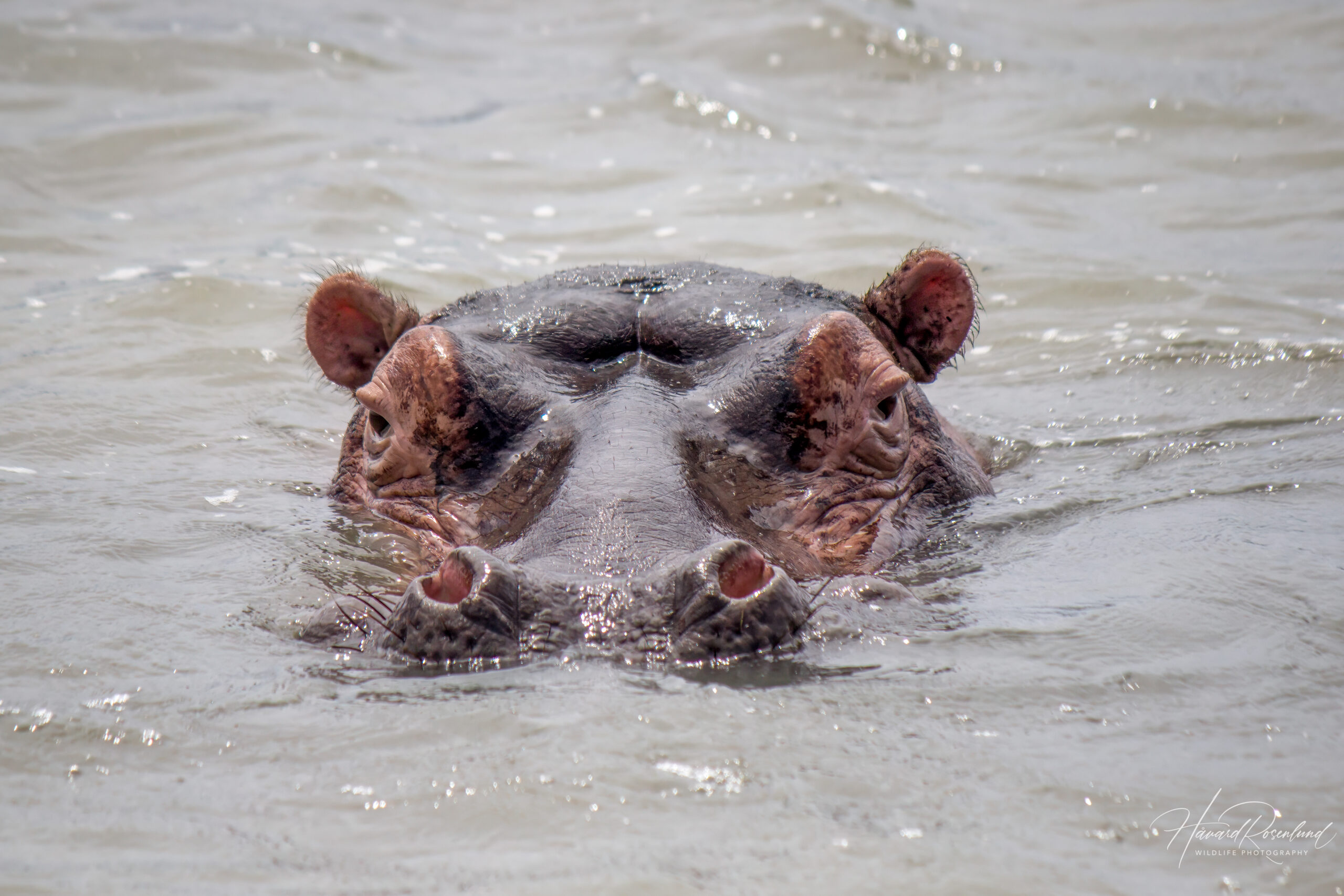
The eyes, ears and nostrils sit high on the skull, allowing most of the body to remain submerged while the hippo watches its surroundings and breathes. The jaws are exceptionally powerful, and the large incisors and especially the canine teeth develop into impressive tusks. These front teeth are used mainly in defence, threat displays and fighting rather than for cropping or chewing grass.
Taxonomy
The common hippopotamus is the only living species in the genus Hippopotamus. Its closest living relatives are cetaceans—the whales, dolphins and porpoises—rather than pigs, which hippos superficially resemble.
Five geographic subspecies have traditionally been named, but their validity is uncertain. Genetic studies have found clear local differences without consistently supporting the traditional subspecies boundaries, so they are best treated cautiously rather than as sharply separated forms.
Habitat
Hippos need permanent or long-lasting water with suitable grazing nearby. They inhabit rivers, lakes, floodplains, swamps and pools across sub-Saharan Africa, and their local distribution can change greatly as water levels rise and fall.
Water bodies provide important resting places and help with thermoregulation. During droughts, shrinking pools can force many hippos into a small area and increase competition, conflict and pressure on water quality.
Diet
Hippos are overwhelmingly herbivorous and feed mainly on short grasses. They usually graze alone on land and may travel several kilometres from water before returning. Repeated journeys often create broad paths between water and feeding grounds, and older feeding studies have shown that a large individual may consume several tens of kilograms of fresh grass in a night.
Feeding is often most intense around dusk and before sunrise, but the familiar picture of hippos grazing continuously throughout the night is too simple. A 24-hour study in Botswana found that they rested through much of the night and could also feed on land during the day. When and where they feed therefore varies with season, water level, temperature and disturbance.
Rare cases of scavenging, meat-eating and even cannibalism have been documented, but these are unusual and do not change the species’ basic grazing lifestyle.
Aquatic life
Hippos spend much of their time resting in water. Water and mud are important for thermoregulation, but recent field observations show that hippos can also spend hours on land in daylight, even in substantial heat, without their skin necessarily drying and cracking. Their skin also produces a reddish secretion containing hipposudoric and norhipposudoric acids, which helps protect against sunlight and has antimicrobial properties.
Despite their aquatic lifestyle, hippos do not swim like most aquatic mammals and are not very buoyant. They usually walk, run or bound along the bottom and push themselves upwards to breathe. Underwater, buoyancy can make these movements almost weightless, with unsupported phases between pushes from the bottom. Their feet are also adapted for soft substrates: the toes can move laterally to support the body on soft ground and then draw closer together as the limb moves through the water.
Hippos can remain submerged for several minutes, and voluntary dives of 6–7 minutes have been recorded. During submergence the heart rate falls sharply, a diving response that helps reduce oxygen use. The nostrils are normally closed between breaths even when the head is above water and are actively opened when the animal inhales. Hippos can sleep in water and rise to the surface to breathe without fully waking.
Hearing and acoustic communication are also adapted to a life between water and air. Hippos produce sounds both above and below the surface, and when the eyes and nostrils are above water while the mouth and throat remain submerged, some calls can be transmitted through both media at once. Playback experiments showed that hippos in this position responded to underwater calls that were inaudible in air, suggesting that they can receive sound through water and air simultaneously.
Nutrient transfer
Hippos feed on land but spend much of the day in water, so their dung moves large amounts of plant material and nutrients from grasslands into rivers and lakes. This can provide food and nutrients for aquatic organisms and makes hippos important links between land and freshwater ecosystems.
The effect of this dung input depends on how many hippos use a water body and how quickly the water is renewed. Moderate nutrient inputs can support aquatic food webs, while heavy accumulation in crowded or drought-affected pools can reduce oxygen levels and alter communities living on the bottom.
Behaviour
The daily rhythm is more variable than the classic description of “water by day, grazing all night” suggests. Hippos rest extensively in water during the day and are often most active on land around dusk and before sunrise, but they may also rest or feed on land in the middle of the day when conditions are suitable and disturbance is low.
They can move surprisingly quickly over short distances on land. Well-used routes connect resting water with grazing areas, and many hippos return to the same paths night after night. They may also spend longer periods on land in cooler conditions, while seasonal changes in water level, food and biting insects can influence where they choose to rest.
Social behaviour
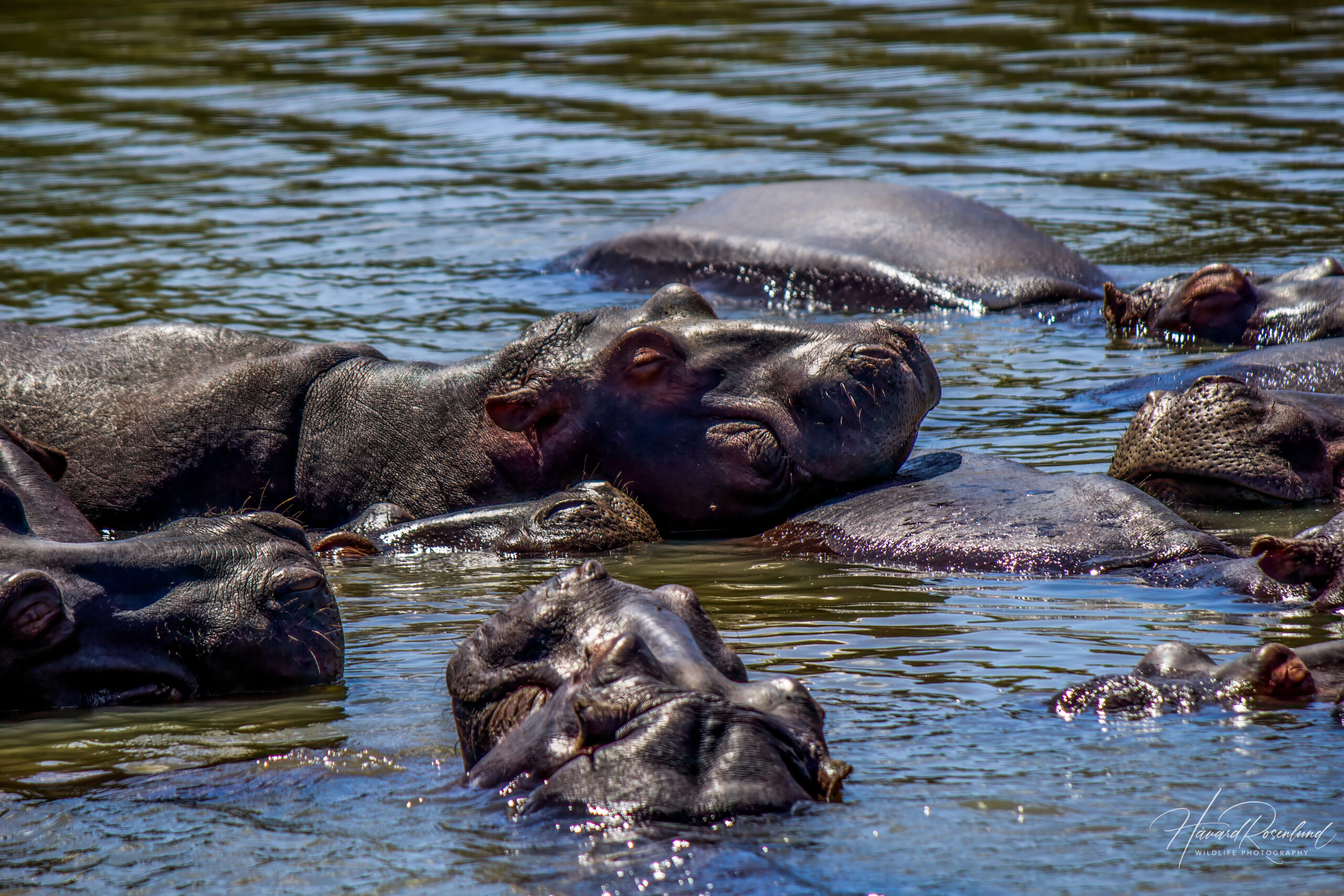
Hippos are social mainly in water. Groups may contain only a few animals, several tens, and under particularly favourable or crowded conditions more than a hundred. Females and calves often form the social core, while adult males either hold territories or live as subordinate bachelors.
A territorial bull primarily defends a stretch of water and the immediate shoreline; that territoriality does not extend into the nocturnal grazing grounds. Subordinate males may remain within a territory as long as they show submission, and bachelors can also form their own groups. On land hippos are much less social and usually graze separately.
Communication includes grunts, bellows, splashing and dung-spreading displays in which the tail is rapidly swung from side to side. The first video below shows a typical group with calves, while the second shows a more spread-out group with two hippos playing in the water.
Aggression and fighting
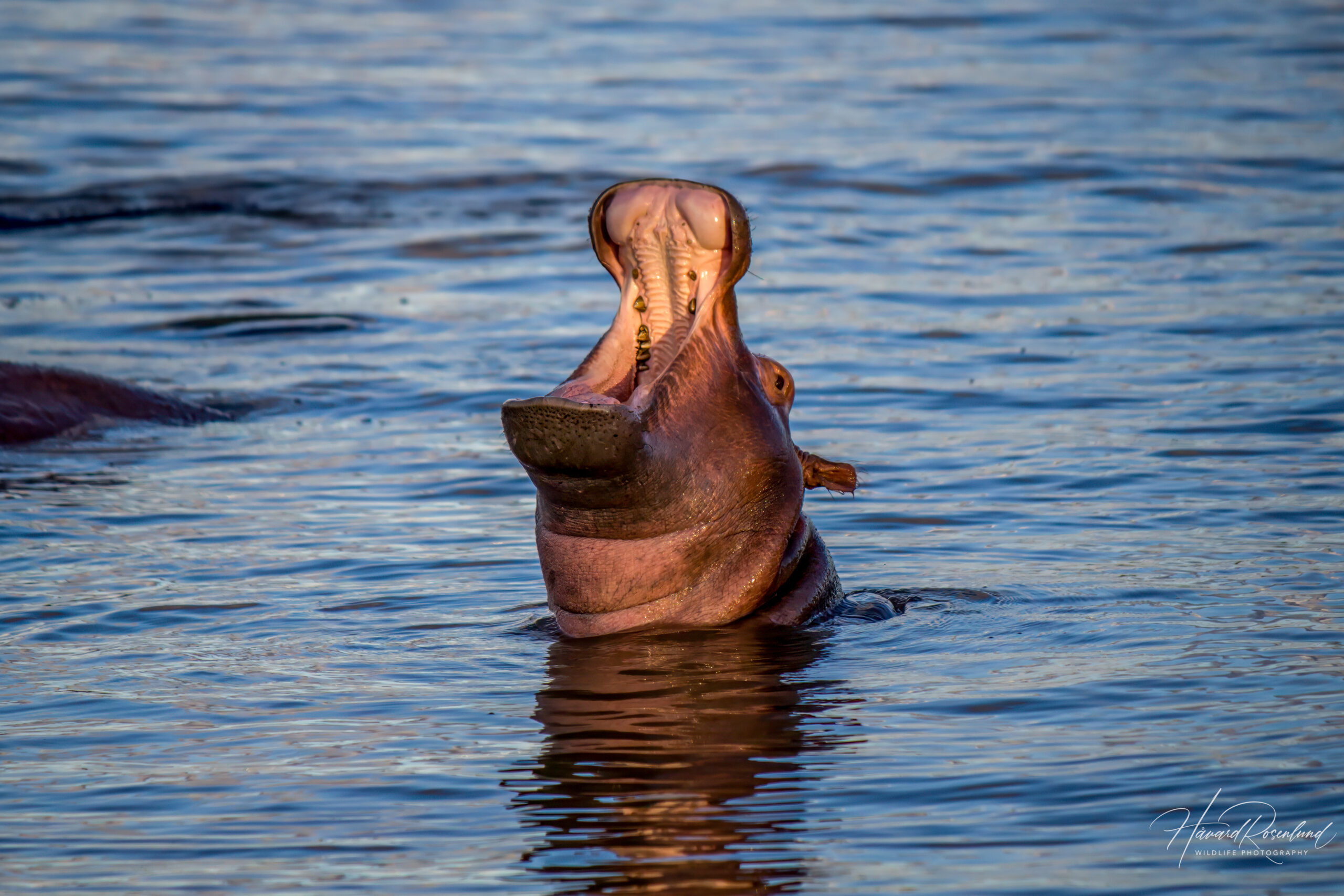
Territorial bulls can be highly aggressive towards rivals, especially where many animals are crowded into limited water. Encounters often begin with threat displays in which the hippos open their mouths widely and expose the enormous incisors and canines. A hippo can gape to nearly 150°, and this extreme jaw opening is closely associated with combat between rivals. The second video above gives a striking view of how far the jaws can open.
If a confrontation escalates, the canines and incisors are used as weapons. Males can inflict deep wounds on one another, and serious fights may result in major injuries or death. The same combination of size, teeth and strength also leaves healthy adult hippos with very few natural predators.
Reproduction
Mating usually takes place in water. The female remains largely submerged during copulation and surfaces to breathe. After a pregnancy of about eight months, a female normally gives birth to one calf weighing roughly 25–50 kg. Birth can occur in shallow water or on land, and across much of the southern range calving follows a clear seasonal pattern linked to rainfall.
Calves can suckle both underwater and on land and remain close to their mothers. In deeper water a small calf may rest across its mother’s back. Females are strongly protective, especially during the first months.
Calves are also the age class most vulnerable to predators. Lions, spotted hyenas and Nile crocodiles may occasionally take young hippos, whereas healthy adults have very few natural predators.
Cultural significance
Hippopotamuses had a powerful and sometimes contradictory place in ancient Egyptian culture. They were dangerous animals of the Nile, but also became symbols of regeneration, protection and rebirth. Blue faience hippo figurines were placed in Middle Kingdom burials and decorated with plants and animals from the river environment.
The hippopotamus also formed the main body of Taweret, a protective goddess associated especially with pregnancy and childbirth. Her image combined the strength of several feared animals and was used in amulets and religious objects intended to protect people.
Relationship with humans
Hippos often live close to people because rivers and lakes are important to both hippos and people. Conflict occurs when hippos enter crops, share narrow waterways with boats or encounter people on paths between water and grazing grounds. Territorial bulls, mothers with calves and hippos surprised on land can be dangerous at close range. There is no reliable continent-wide figure for annual human deaths caused by hippos, so widely repeated claims giving a precise yearly total should be treated cautiously.
Hippos are hunted for meat and for their large canine teeth, which are traded as ivory. The species is listed on CITES Appendix II, so international trade in teeth and other products is regulated. A TRAFFIC review of trade from 2009–2018 found that Hong Kong SAR alone imported more than 25 tonnes of hippo ivory, while 48 countries and territories were implicated in illegal trade. Hippo ivory is therefore a significant international commodity rather than only a local by-product of hunting.
Status
The common hippopotamus is listed as Vulnerable on the IUCN Red List. The current global assessment was published in 2017 and estimated about 115,000–130,000 hippos across sub-Saharan Africa. No newer continent-wide census has replaced that estimate.
The species formerly had a much wider range and occurred along the Nile north into Egypt, where it later disappeared. Its present distribution is fragmented and restricted to sub-Saharan Africa.
The IUCN SSC Hippo Specialist Group currently describes the range-wide trend as broadly stable, but with clear regional declines. A 2025 review of southern African populations also found major gaps in survey coverage, so even in stronghold regions the exact distribution and abundance are less certain than the old continental total may suggest.
Threats
The main threats are loss and degradation of rivers, wetlands and nearby grazing areas, changes to river flow, severe drought, human–hippo conflict and illegal or poorly regulated hunting. Populations can decline quickly when shrinking water supplies concentrate animals or when protection weakens during political conflict.
Hunting for meat and ivory is particularly important in parts of West and Central Africa. Populations in these regions are generally smaller and more isolated than the large strongholds in eastern and southern Africa, so local populations can be slower to recover from losses.
Conservation
Conservation depends on protecting both water and the surrounding grazing areas, keeping access routes open and reducing conflict with nearby communities. Better survey coverage is also important because many populations have not been monitored regularly.
In March 2025, specialists from 13 West African range countries met to build a regional conservation action plan. Combined data suggested about 7,000 hippos remained across those countries, with Burkina Faso and Côte d’Ivoire each holding more than 1,000. The workshop identified habitat loss, habitat degradation and human–hippo conflict as the main regional problems and established a framework for cooperation between countries.
Conservation organizations

Image gallery
Loading map and observations…
National Red List status
| Country | Status | Assessment | Source |
|---|---|---|---|
| South Africa | LCLeast Concern | Red List of South African Species 2016 | SANBI – Red List of South African Species |
Have you seen this species?
Independent species archive
Did you find this species page useful?
Wildlife Vagabond is independently built and maintained. Voluntary support helps cover hosting, maps, data storage and continued improvements to the species archive.
Support Wildlife VagabondSpecies content will remain freely available.
References
Information about the species’ global distribution and status is based primarily on global Red List data. See the references below for details.
- Avedik, A., & Clauss, M. (2023). Chewing, dentition and tooth wear in Hippopotamidae (Hippopotamus amphibius and Choeropsis liberiensis). PLOS ONE, 18(10), e0291825. https://doi.org/10.1371/journal.pone.0291825
- Barklow, W. E. (2004). Amphibious communication with sound in hippos, Hippopotamus amphibius. Animal Behaviour, 68(5), 1125-1132. https://doi.org/10.1016/j.anbehav.2003.10.034
- Coughlin, B. L., & Fish, F. E. (2009). Hippopotamus Underwater Locomotion: Reduced-Gravity Movements for a Massive Mammal. Journal of Mammalogy, 90(3), 675-679. https://doi.org/10.1644/08-MAMM-A-279R.1
- Dawson, J., Pillay, D., Roberts, P. J., & Perissinotto, R. (2016). Declines in benthic macroinvertebrate community metrics and microphytobenthic biomass in an estuarine lake following enrichment by hippo dung. Scientific Reports, 6(1), 37359. https://doi.org/10.1038/srep37359
- Dudley, J. P., Hang'Ombe, B. M., Leendertz, F. H., Dorward, L. J., de Castro, J., Subalusky, A. L., & Clauss, M. (2016). Carnivory in the common hippopotamus <i>Hippopotamus amphibius</i>: implications for the ecology and epidemiology of anthrax in African landscapes. Mammal Review, 46(3), 191–203. https://doi.org/10.1111/mam.12056
- Elsner, R. (1966). Diving Bradycardia in the Unrestrained Hippopotamus. Nature, 212(5060), 408-408. https://doi.org/10.1038/212408a0
- Eltringham. (1999). The Hippos. https://www.sciencedirect.com/book/9780856611315/the-hippos
- Endo, H., Yoshida, M., Nguyen, T. S., Akiba, Y., Takeda, M., & Kudo, K. (2019). Three‐dimensional CT examination of the forefoot and hindfoot of the hippopotamus and tapir during a semiaquatic walking. Anatomia, Histologia, Embryologia, 48(1), 3-11. https://doi.org/10.1111/ahe.12405
- Graham, L. H., Reid, K., Webster, T., Richards, M., & Joseph, S. (2002). Endocrine patterns associated with reproduction in the Nile hippopotamus (Hippopotamus amphibius) as assessed by fecal progestagen analysis. General and comparative endocrinology, 128(1), 74-81. https://doi.org/10.1016/s0016-6480(02)00066-7
- Inman, V. L., & Leggett, K. E. A. (2025). Sleeping giants: temporal, seasonal, and spatial variations in the 24-h activity budget of Hippopotamus amphibius. Journal of Mammalogy, gyaf068. https://doi.org/10.1093/jmammal/gyaf068
- International Union for Conservation of Nature. (2017). Hippopotamus amphibius. The IUCN Red List of Threatened Species. https://www.iucnredlist.org/species/10103/18567364
- IUCN SSC Hippo Specialist Group. (2025). West African action-plan workshop. https://www.hipposg.org/workshop-2025-1
- IUCN SSC Hippo Specialist Group. (n.d.). Common Hippopotamus. https://www.hipposg.org/common-hippopotamus
- Lacy, Beger & Traill. (2025). Common hippopotamus populations in southern Africa. https://www.sciencedirect.com/science/article/pii/S0006320724004403
- Leivestad, H., Richardson, D., & Wright, P. G. (1973). The respiratory properties of the blood of the hippopotamus. Respiration physiology, 19(1), 19-25. https://doi.org/10.1016/0034-5687(73)90086-8
- Mammal Diversity Database. (n.d.). Hippopotamus amphibius. American Society of Mammalogists. https://www.mammaldiversity.org/taxon/1006390/
- Masese, F. O., Kiplagat, M. J., González-Quijano, C. R., Subalusky, A. L., Dutton, C. L., Post, D. M., & Singer, G. A. (2020). Hippopotamus are distinct from domestic livestock in their resource subsidies to and effects on aquatic ecosystems. Proceedings of the Royal Society B: Biological Sciences, 287(1926), 20193000. https://doi.org/10.1098/rspb.2019.3000
- Maust-Mohl, M., Reiss, D., & Reidenberg, J. S. (2019). A Comparison of Common Hippopotamus (Artiodactyla) and Mysticete (Cetacea) Nostrils: An Open and Shut Case. Anatomical record (Hoboken, N.J. : 2007), 302(5), 693-702. https://doi.org/10.1002/ar.24032
- Moneron, S., & Drinkwater, E. (2021). The Often-Overlooked Ivory Trade: A rapid assessment of the international trade in hippo ivory between 2009 and 2018. TRAFFIC International. https://www.traffic.org/publications/reports/often-overlooked-ivory-trade-a-rapid-assessment-of-the-international-trade-in-hippo-ivory/
- Saikawa, Y., Hashimoto, K., Nakata, M., Yoshihara, M., Nagai, K., Ida, M., & Komiya, T. (2004). The red sweat of the hippopotamus. Nature, 429(6990), 363. https://doi.org/10.1038/429363a
- The Metropolitan Museum of Art. (n.d.). Hippopotami in Ancient Egypt. https://www.metmuseum.org/essays/hippopotami-in-ancient-egypt