
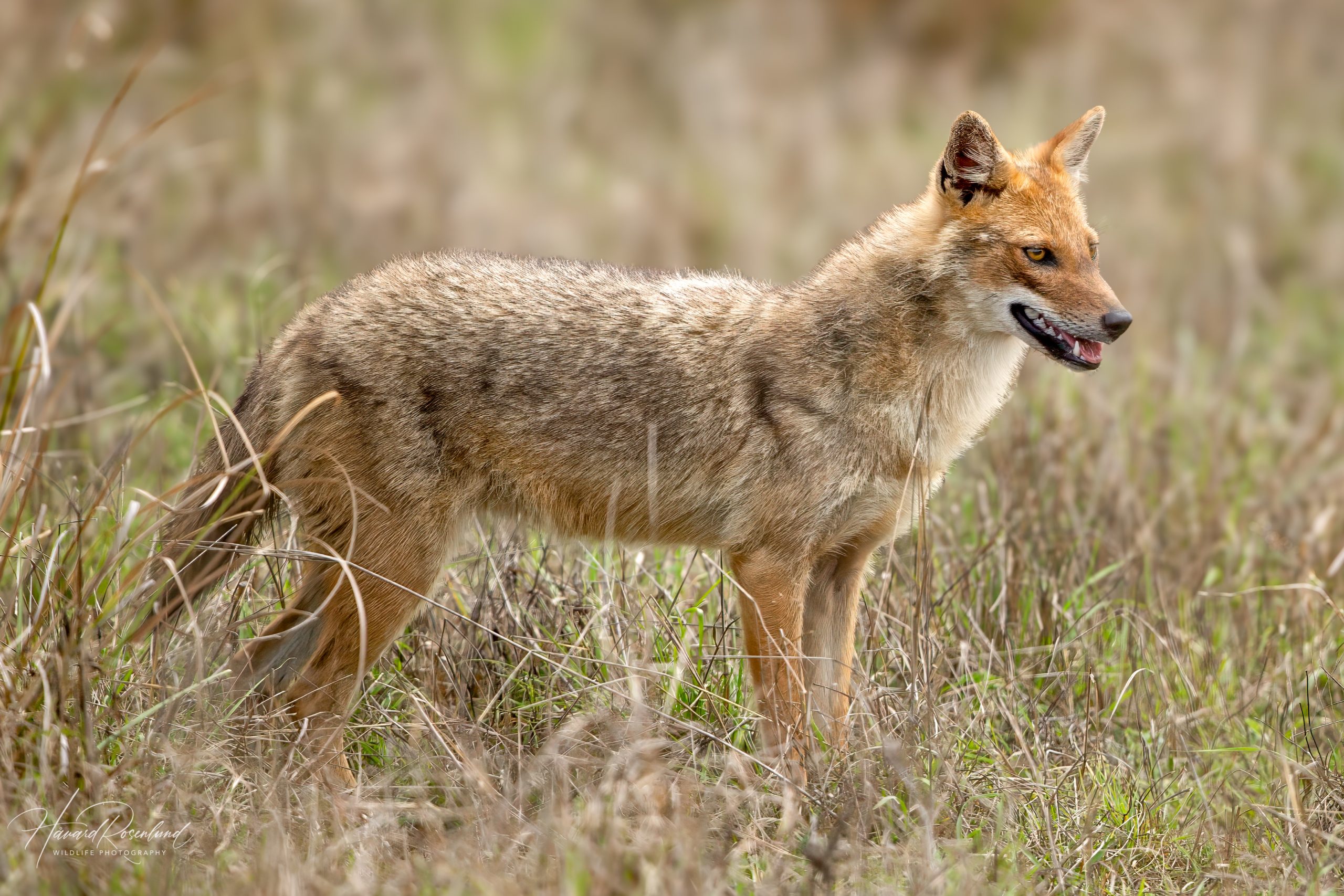
Golden Jackal
Canis aureus
At a glance
Habitat
- Open woodland, scrub, grassland, wetlands, farmland and human-modified landscapes
Diet
- Opportunistic omnivore; small vertebrates, invertebrates, carrion and plant matter
Activity
- Flexible; often crepuscular or nocturnal around people
Size
- Length: 70–105 cm (head–body) Weight: 7–15 kg
Range
- Europe and the Middle East through Central and South Asia to parts of Southeast Asia
Description
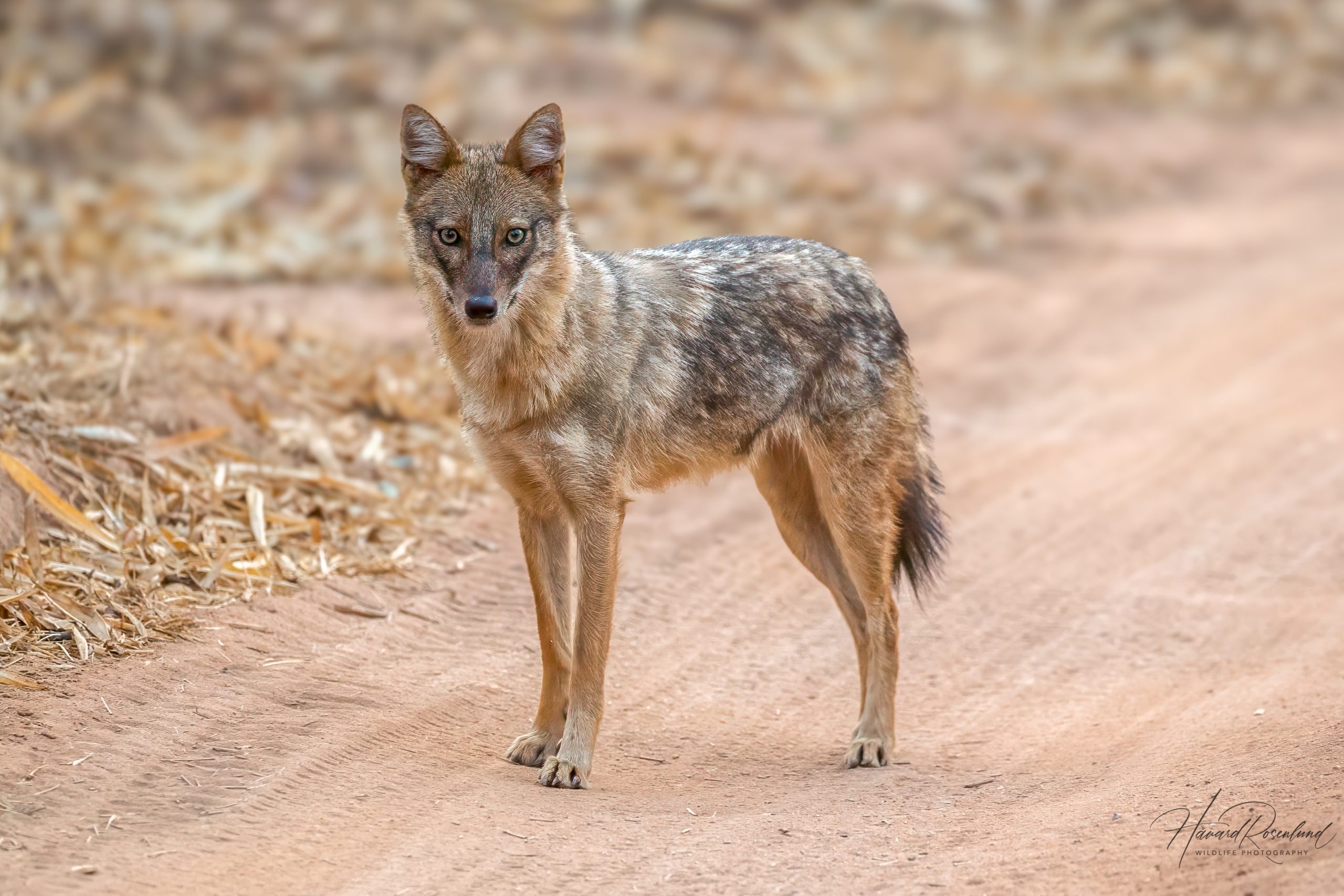
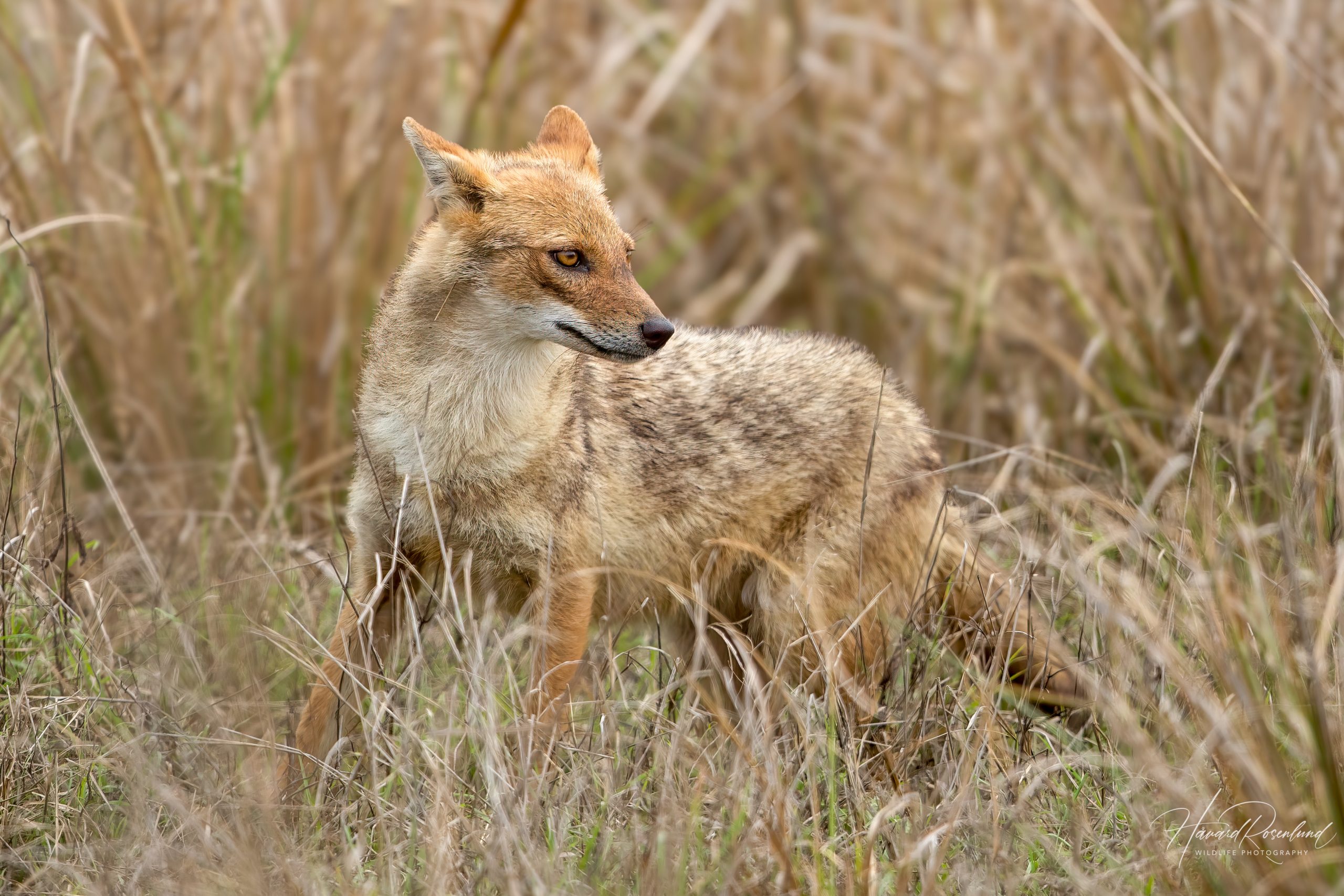
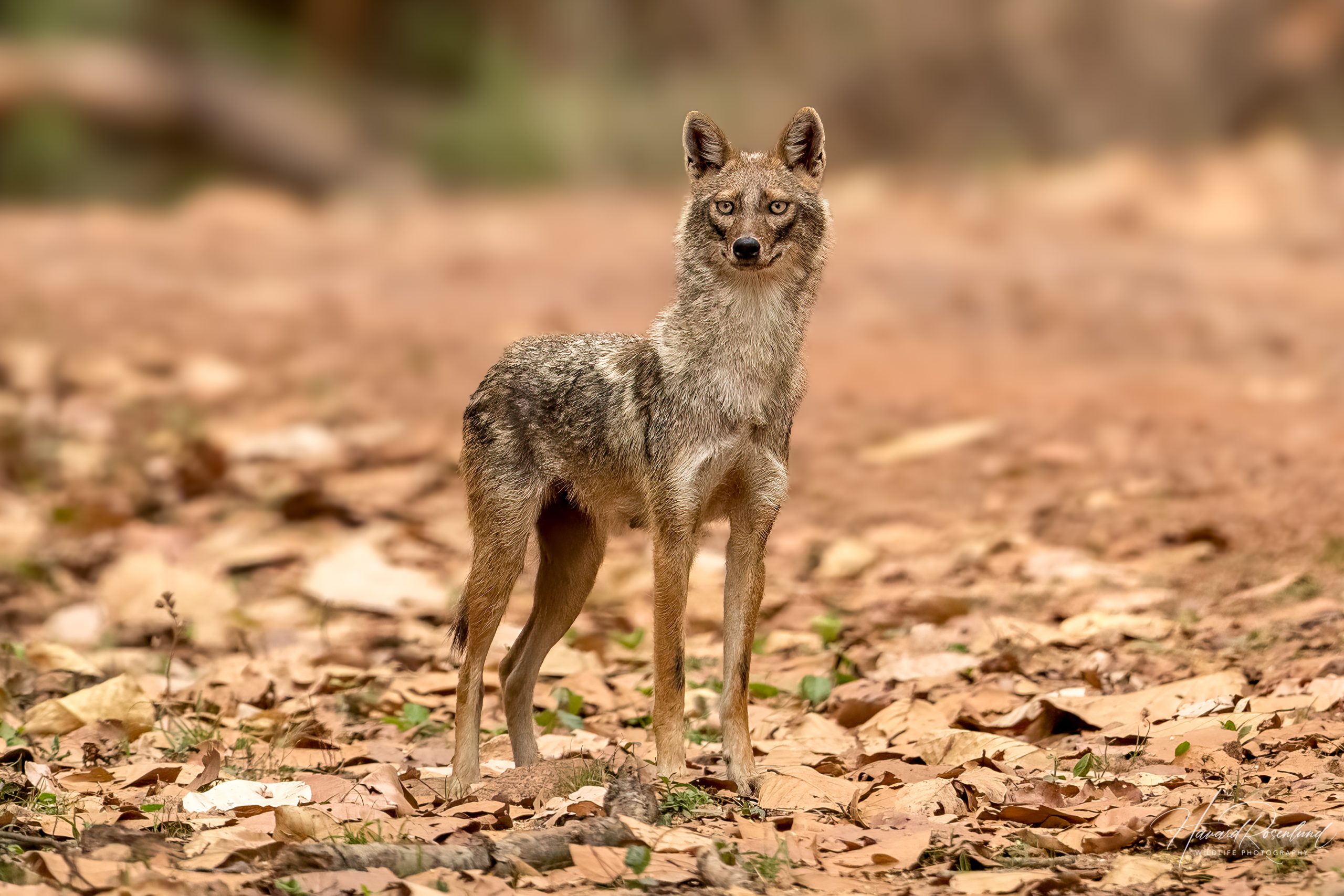
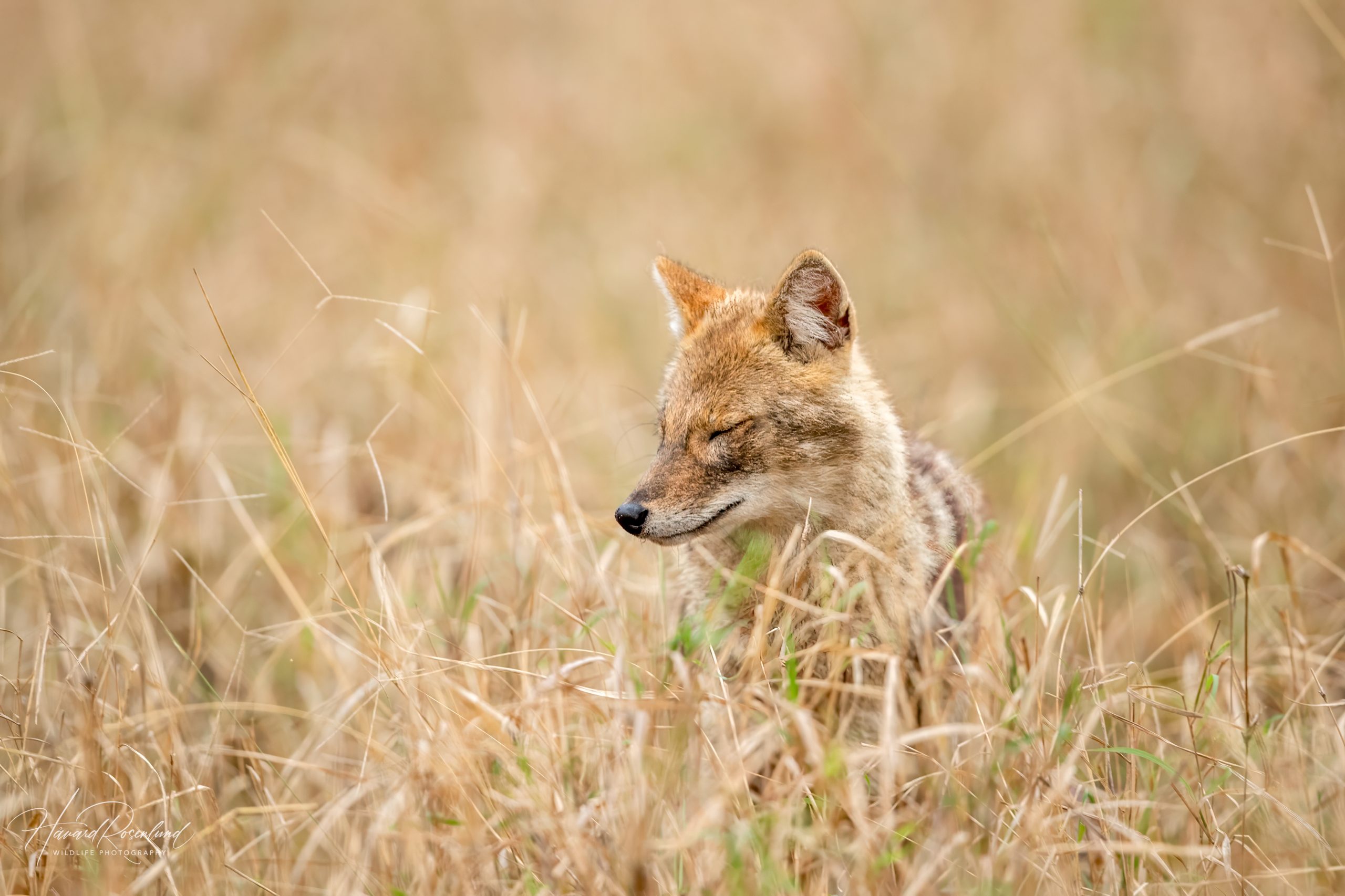
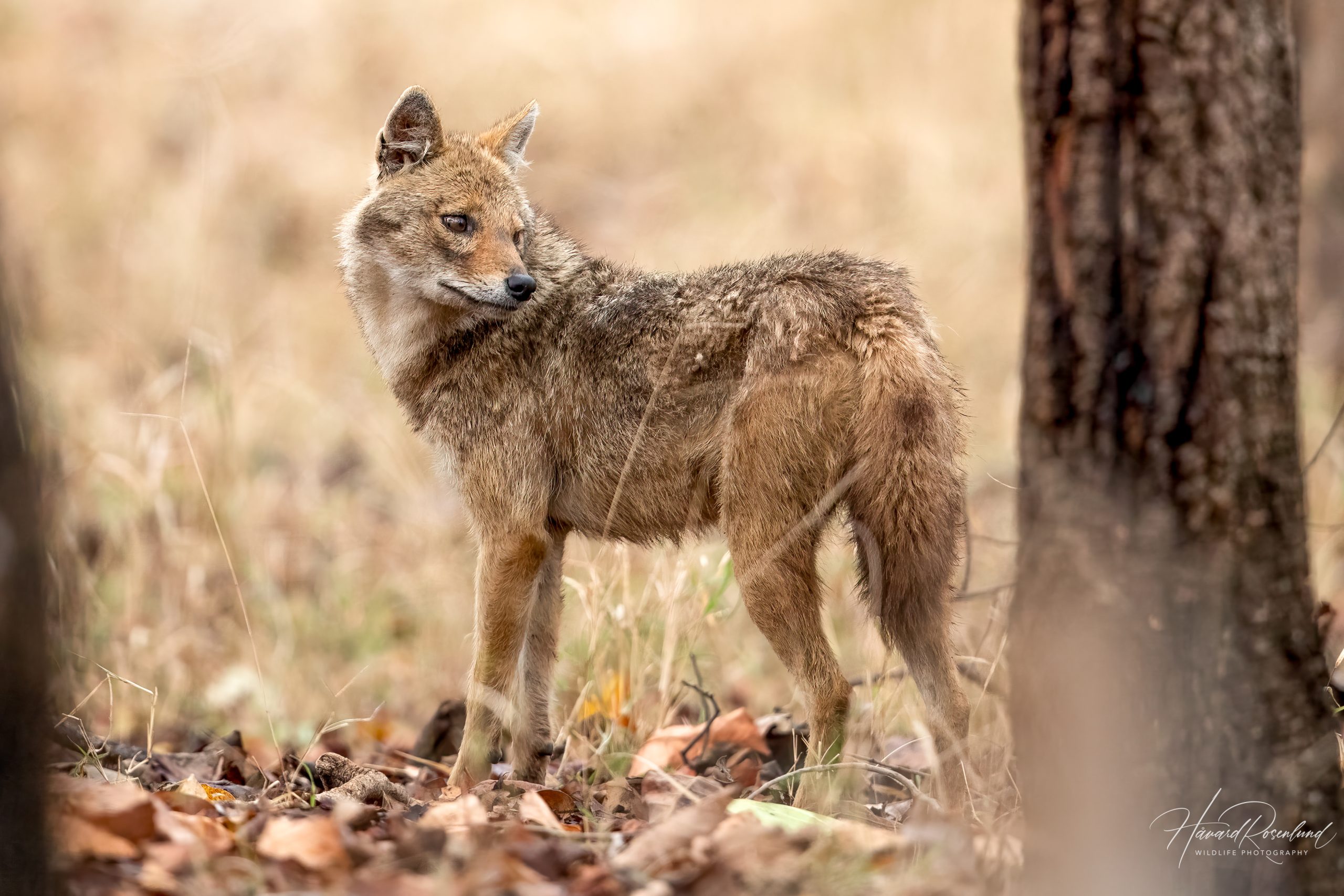
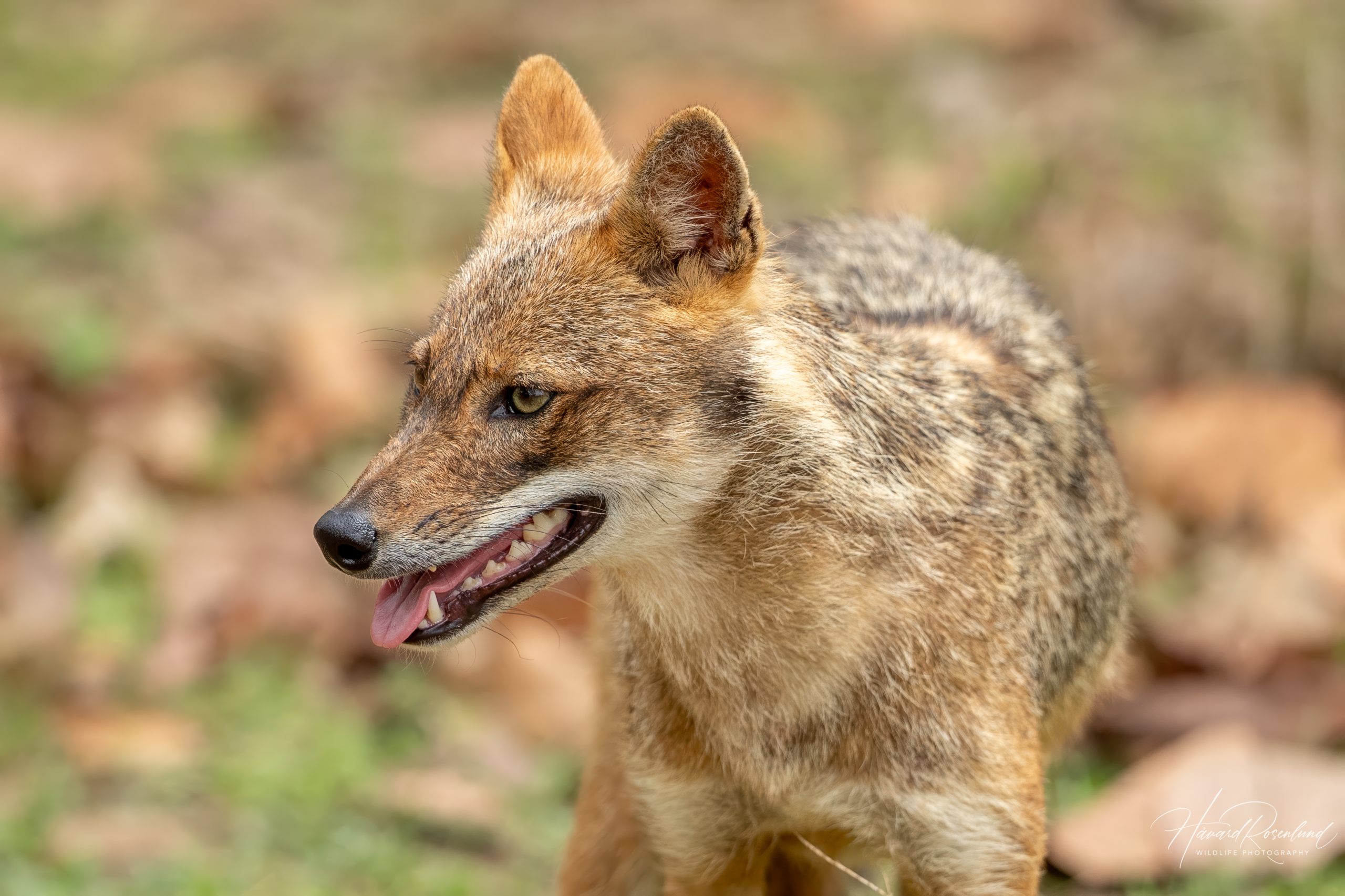
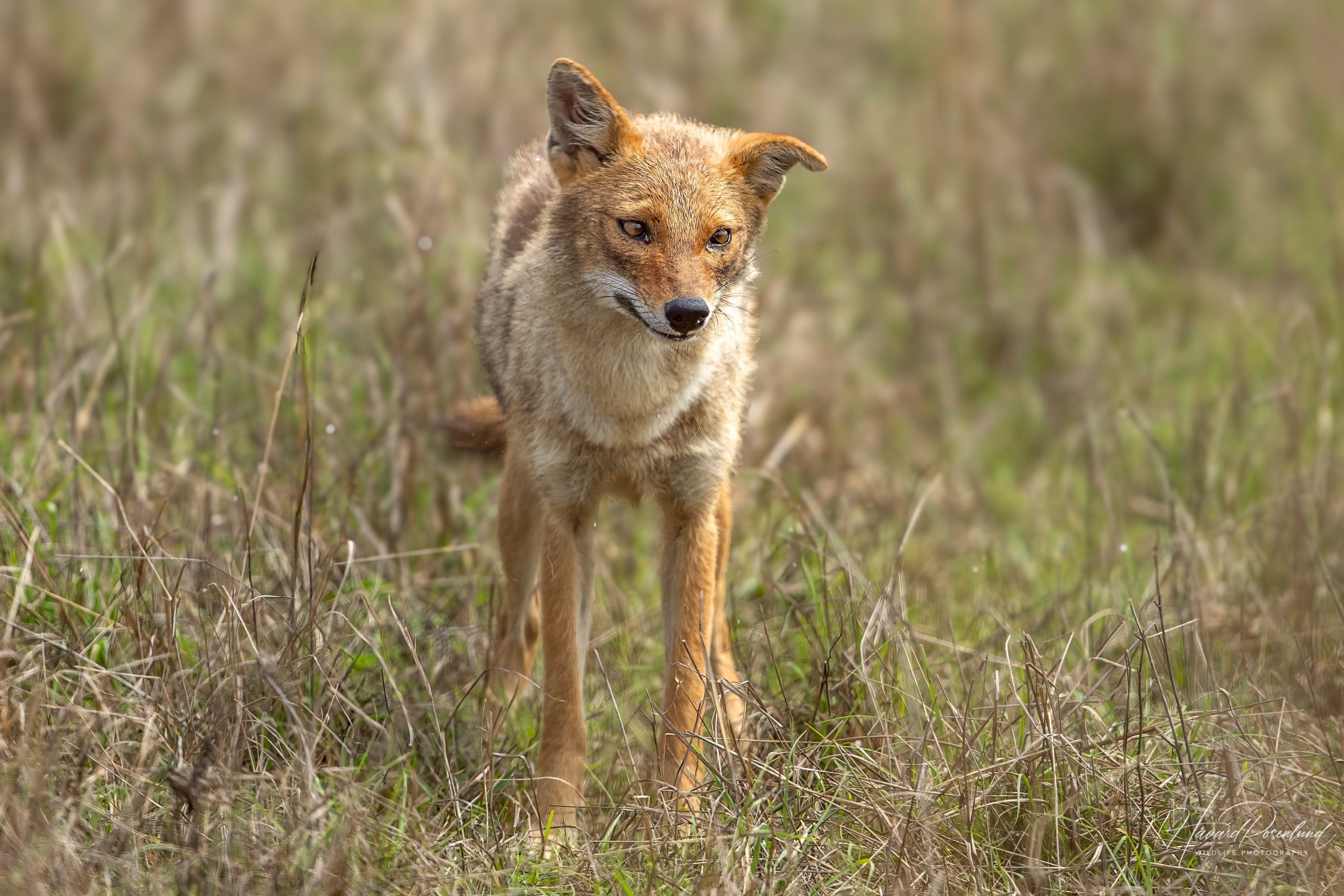
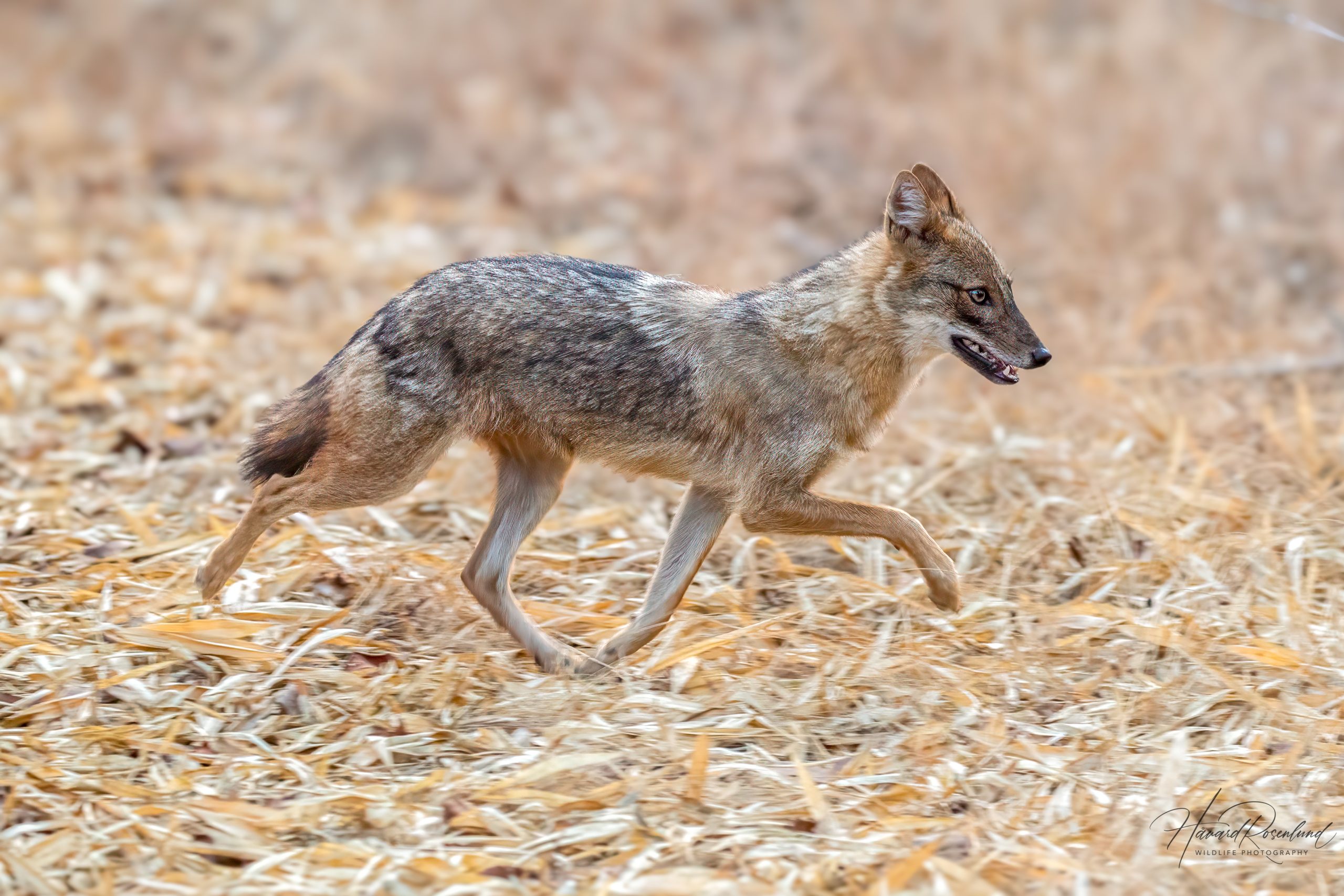
The golden jackal (Canis aureus) is a medium-sized Eurasian canid with a slender, wolf-like build, pointed ears and a bushy tail. Adults are roughly 70–105 cm in head-and-body length, with a further 20–30 cm of tail, stand about 38–50 cm at the shoulder and usually weigh about 7–15 kg. Males average somewhat larger than females. The coat varies geographically and seasonally from pale yellow-gold and reddish brown to grizzled grey-brown, often with darker hairs along the back and tail.
Golden jackals are larger and longer-legged than most red foxes (Vulpes vulpes) but much smaller than grey wolves (Canis lupus). Their proportions and colour can vary enough to cause confusion with both species at a distance, especially in newly colonised parts of Europe where observers may not expect to see a jackal.
Taxonomy
For much of the twentieth century, similar wolf-like canids across northern and eastern Africa were included within the golden jackal. Genome-wide research published in 2015 overturned that interpretation and showed that the African animals form a distinct lineage more closely related to grey wolves and other wolf-like canids than to Eurasian golden jackals. They are now recognised as the African golden wolf (Canis lupaster).
The name Canis aureus therefore refers to the Eurasian golden jackal, whose natural range extends from Europe and the Middle East through Central and South Asia into parts of Southeast Asia.
Habitat
Golden jackals occupy an unusually broad range of habitats, including semi-arid scrub, grassland, open woodland, wetlands, river valleys, agricultural landscapes, mangroves and the edges of towns and villages. In Europe they are particularly associated with varied lowland landscapes that combine cover with open feeding areas, while in South Asia they also occur in heavily modified rural and semi-urban environments.
This flexibility is central to the species' expansion. Severe and persistent snow can limit establishment in colder regions, while varied human-modified landscapes provide both cover and abundant feeding opportunities.
Diet
The golden jackal is an opportunistic omnivore. Small mammals, birds, reptiles, amphibians, fish, insects, fruit, seeds and carrion are all taken, and the balance changes with season and local availability.
Diet studies show how strongly the balance between predation and scavenging can vary among landscapes. Small mammals can dominate where they are abundant, while livestock remains, wild ungulate carcasses and other animal waste become major resources in many human-dominated areas.
Hunting & scavenging
Golden jackals usually take small prey alone or as a pair, searching open ground and vegetation for rodents, birds and other accessible animals. Family members can also hunt cooperatively, which allows them to tackle larger prey than a single jackal could normally subdue.
Scavenging is equally important in many populations. Jackals investigate carcasses, slaughter remains and other concentrated food and may gather in larger numbers when a rich resource is available. The species therefore shifts fluidly between active predation and scavenging according to prey abundance, carrion supply and local human activity.
Behaviour
The basic social unit is usually a territorial breeding pair, sometimes accompanied by young from the current or previous year. Family members may forage separately when food is dispersed but cooperate in territory defence, pup care and exploitation of richer food sources. Howls and yelping calls help pairs and neighbouring groups maintain contact, while urine and faeces are used for scent marking.
Activity patterns are flexible. Jackals can be active by day or night, but they tend to become more nocturnal around people.
Home ranges
Resident golden jackals usually occupy stable territories, but the amount of space used varies greatly with sex, age, food and landscape. A study of 45 GPS-collared jackals in southwestern Hungary during 2020–2023 found that the 28 resident animals had a calculated mean home range of about 14.4 km². Males used substantially larger areas on average than females. Other populations can differ greatly, including much larger ranges in dry, prey-poor landscapes.
Non-resident animals showed a very different pattern. The 17 jackals that shifted their ranges in the Hungarian study used about 92.4 km² on average and moved their home range once or more. Young animals are also capable of long-distance dispersal. This contrast between smaller defended territories and much larger exploratory movements helps explain the species' rapid expansion through Europe.
Interspecific competition
Grey wolves (Canis lupus) are the dominant competitor of golden jackals across much of Europe. A large study published in 2026, based on surveys at nearly 9,000 sites in 13 European countries, found wolf presence to be the strongest factor limiting where golden jackals occurred.
The interaction is strongly modified by people. Wolf suppression weakened near human activity because wolves avoided people more strongly than jackals, creating a partial refuge for the smaller canid near people. This helps explain why jackals can expand through heavily modified European landscapes even while remaining subordinate to wolves where the two meet.
Reproduction
Golden jackals usually form long-term pair bonds and raise one litter per year. Breeding timing varies across the wide range and is generally concentrated from winter into early spring in temperate populations. After a gestation of about 60–63 days, the female gives birth in a den, which may be excavated by the pair or adapted from an existing burrow or sheltered cavity.
Litters contain several pups, with 1–9 recorded. The pups are born blind and open their eyes after about ten days. They suckle during the first weeks and are usually weaned by 8–10 weeks of age. Both parents provision and guard the young, and older offspring may remain with the family and assist. A study published in 2024 from Samos, Greece, documented a breeding pair caring for six pups together with one male and one female from the previous year's litter. Both yearlings remained as helpers at the den.
Relationship with humans
Golden jackals often live close to people without depending on direct contact. Agricultural landscapes, livestock carcasses, refuse and other concentrated food can provide resources, while jackals may also reduce rodent numbers and remove animal remains. This coexistence can create conflict where jackals are blamed for livestock losses or are attracted to waste, and persecution and indiscriminate killing remain important local sources of mortality.
Status
The golden jackal is classified as least concern on the IUCN Red List, with an increasing global population trend. The species remains common across much of its broad range.
Europe is currently the most conspicuous expansion front. Data for 2023 recorded golden jackal presence across about 765,000 km² in Europe, a 46% increase in occupied range compared with 2016. The population was estimated at 150,000 animals or more, although systematic monitoring is too uneven for a precise continent-wide population estimate. Breeding populations are established across much of south-eastern and central Europe, while long-distance dispersers have reached northern and western countries including Finland, Norway, France and Spain.
Image gallery
Loading map and observations…
Have you seen this species?
Independent species archive
Did you find this species page useful?
Wildlife Vagabond is independently built and maintained. Voluntary support helps cover hosting, maps, data storage and continued improvements to the species archive.
Support Wildlife VagabondSpecies content will remain freely available.
References
- Csányi, E., Gaál, D., Heltai, M., Pölös, M., Sándor, G., Schally, G., & Lanszki, J. (2025). Home ranges of roaming golden jackals in a European forest‐agricultural landscape. The Journal of Wildlife Management, 89(2), e22688. https://doi.org/10.1002/jwmg.22688
- Custers, J., Hatlauf, J., van der Niet, S., Tintoré, B., & Miliou, A. (2024). The Secret Family Life of a Group of Golden Jackals on Samos, Greece. Ecology and evolution, 14(12), e70620. https://doi.org/10.1002/ece3.70620
- European Commission – Large carnivore populations across Europe. (n.d.). Golden jackal. https://environment.ec.europa.eu/topics/nature-and-biodiversity/habitats-directive/large-carnivores/large-carnivore-populations-across-europe_en
- International Union for Conservation of Nature. (n.d.). Golden Jackal. The IUCN Red List of Threatened Species. https://www.iucnredlist.org/species/118264161/163507876
- IUCN SSC Canid Specialist Group. (n.d.). Golden jackal (Canis aureus) species account. https://www.canids.org/species/view/PREKMW872861
- Koepfli, K.-P., Pollinger, J., Godinho, R., Robinson, J., Lea, A., Hendricks, S., Schweizer, R. M., Thalmann, O., Silva, P., Fan, Z., Yurchenko, A. A., Dobrynin, P., Makunin, A., Cahill, J. A., Shapiro, B., Álvares, F., Brito, J. C., Geffen, E., Leonard, J. A., … Wayne, R. K. (2015). Genome-wide Evidence Reveals that African and Eurasian Golden Jackals Are Distinct Species. Current Biology, 25(16), 2158-2165. https://doi.org/10.1016/j.cub.2015.06.060
- Lange, P. N. A. M. J. G., Lelieveld, G., & De Knegt, H. J. (2021). Diet composition of the golden jackal Canis aureus in south‐east Europe – a review. Mammal Review, 51(2), 207-213. https://doi.org/10.1111/mam.12235
- Mammal Diversity Database. (n.d.). American Society of Mammalogists. Mammal Diversity Database – Canis aureus. American Society of Mammalogists. https://www.mammaldiversity.org/taxon/1005939/
- Moehlman, P. D., & Hayssen, V. (2018). Canis aureus (Carnivore: Canidae). Mammalian Species, 50(957), 14–25. https://doi.org/10.1093/mspecies/sey002
- Ranc, N., Wilmers, C. C., Maiorano, L., Warton, D. I., Álvares, F., Cagnacci, F., Hatlauf, J., Acosta-Pankov, I., Banea, O., Berce, T., Červinka, J., Ćirović, D., Ćosić, N., Gál, L., Giannatos, G., Guimarães, N. F., Heltai, M., Ivanov, G., Lanszki, J., … Krofel, M. (2026). Human shielding from wolves facilitates jackal expansion across Europe. Nature Ecology & Evolution, 10(6), 1091-1102. https://doi.org/10.1038/s41559-026-03060-y