
African Wild Dog
Lycaon pictus
At a glance
Habitat
- Savannas, open woodlands, grasslands and semi-arid habitats
Diet
- Mainly medium-sized antelopes; also smaller and larger prey
Activity
- Mostly diurnal, especially around dawn and dusk
Size
- Length: 76–112 cm (head–body) Weight: 17–36 kg
Range
- Fragmented populations in sub-Saharan Africa
Description
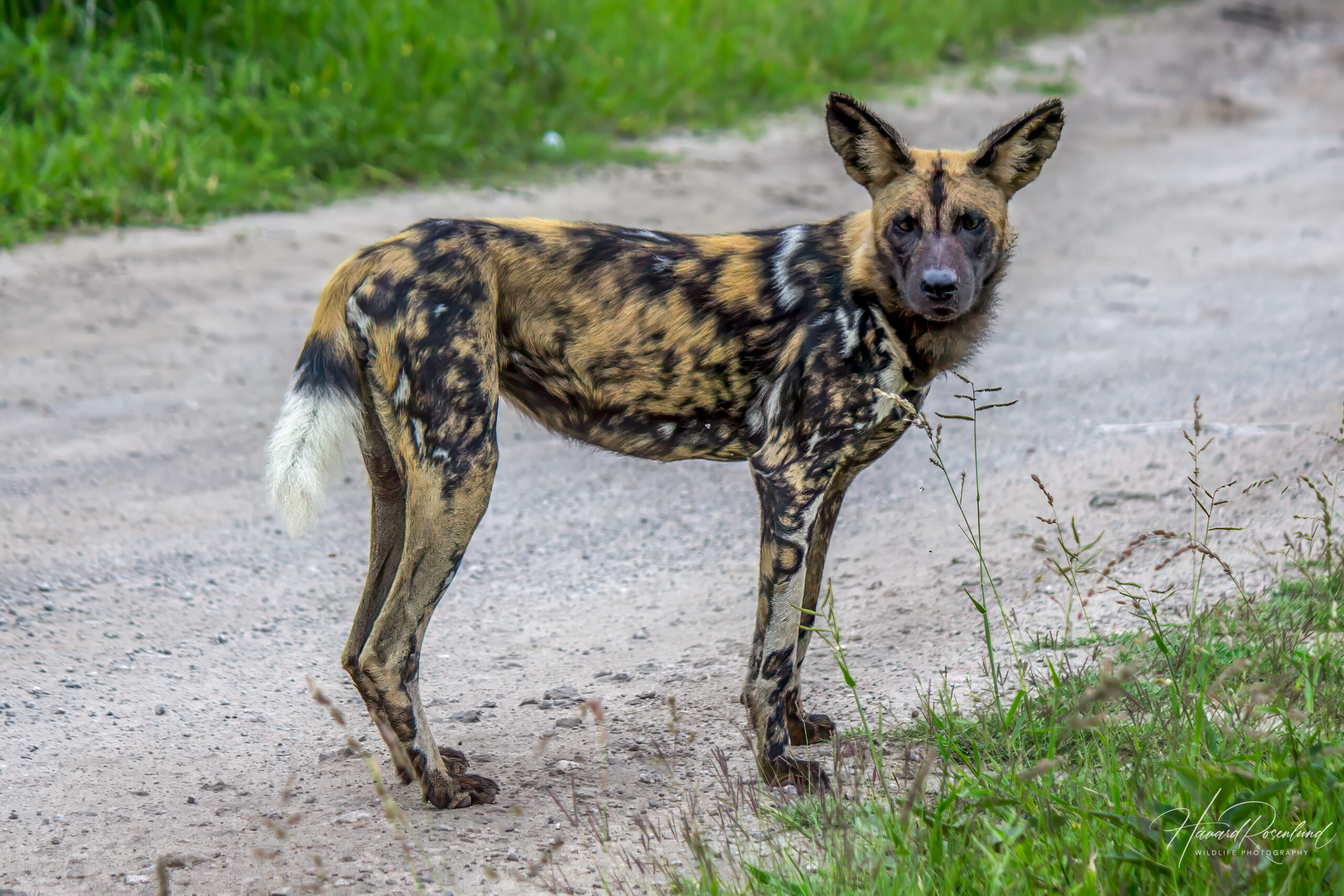
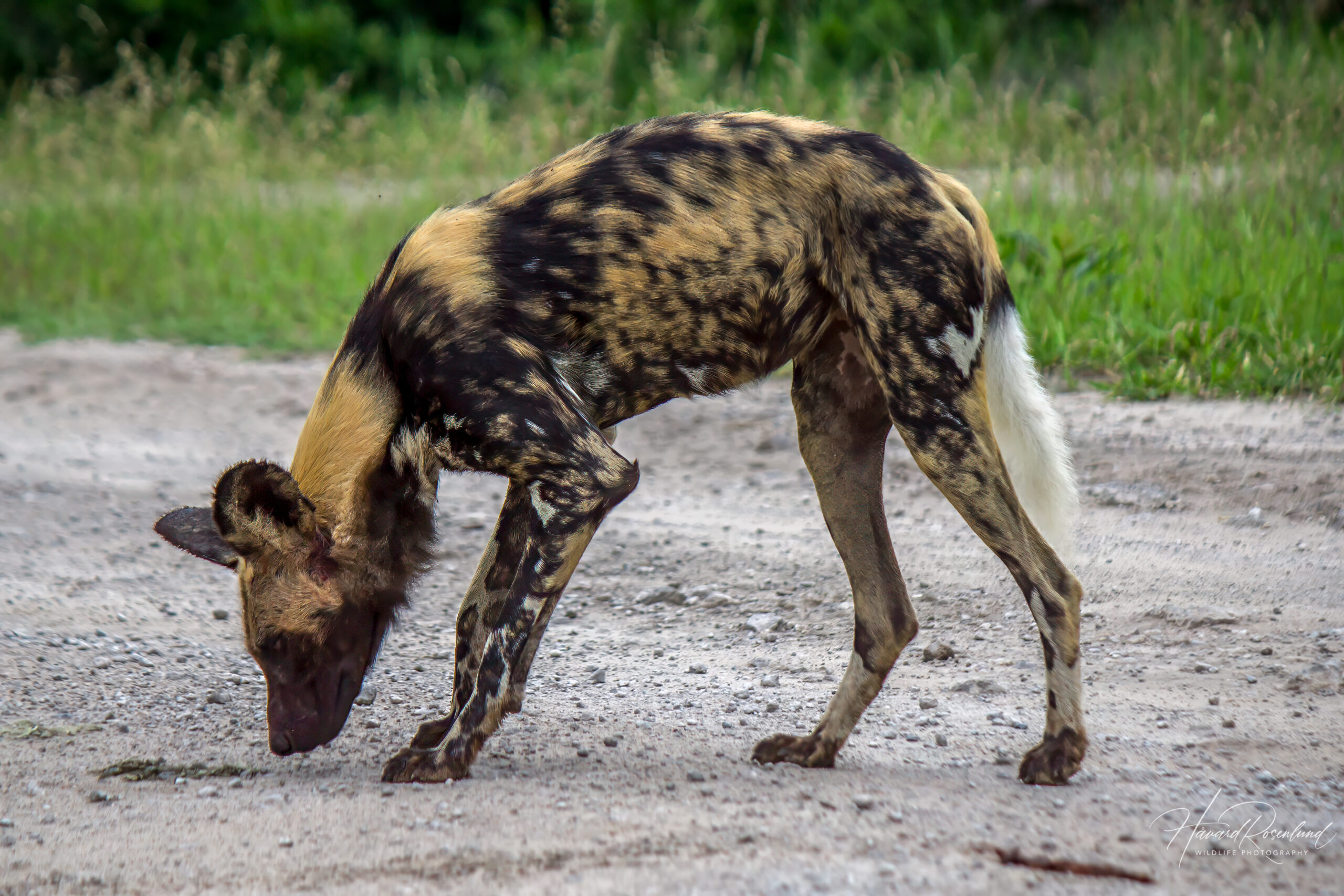
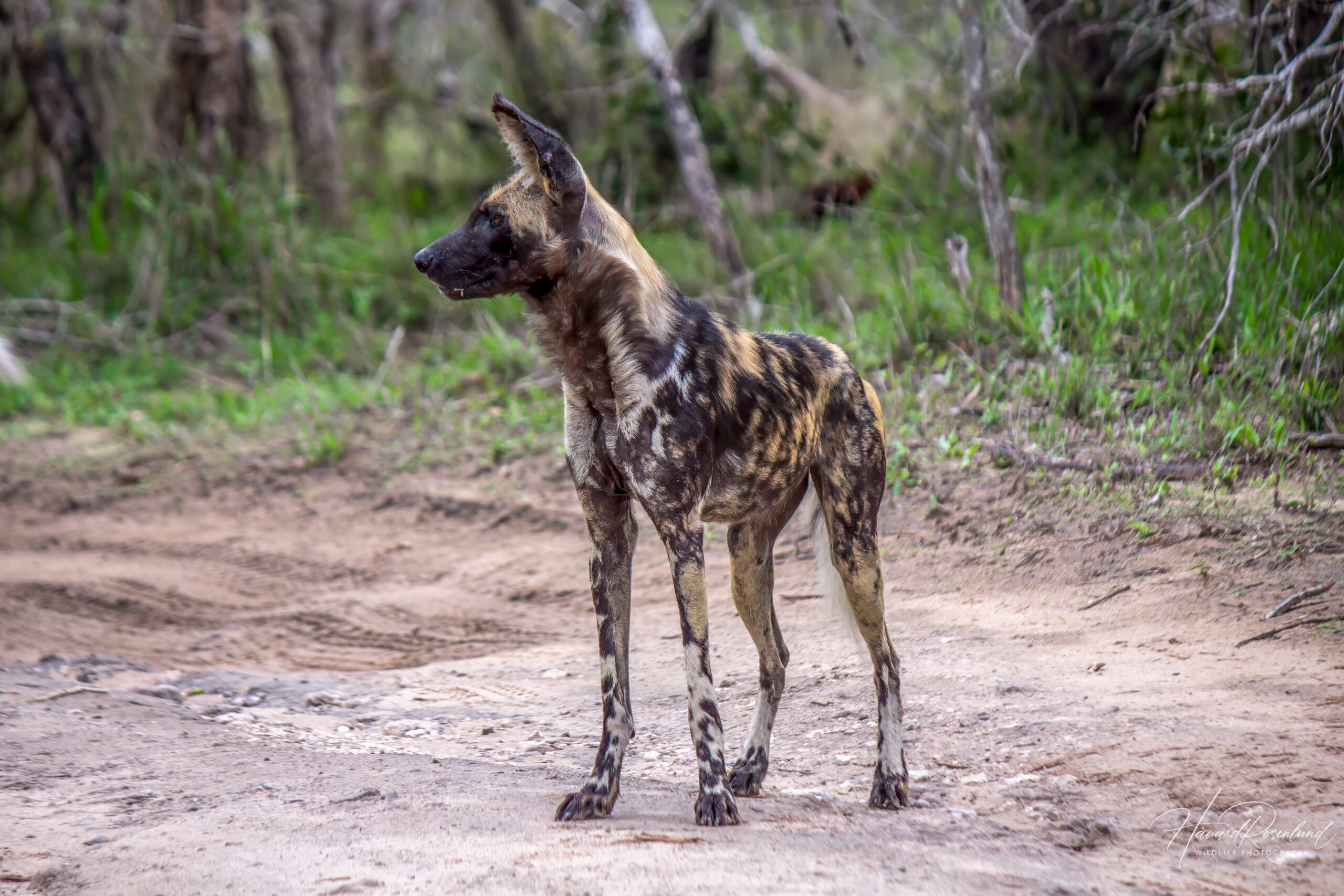
The African wild dog (Lycaon pictus), also known as the painted dog or African hunting dog, is the only living species in the genus Lycaon. Adults are roughly 76–112 cm long from head to body, with a 30–41 cm tail and a shoulder height of 61–78 cm, and weigh about 17–36 kg. Their long legs, lean build and feet with only four functional toes make them well suited to endurance running.
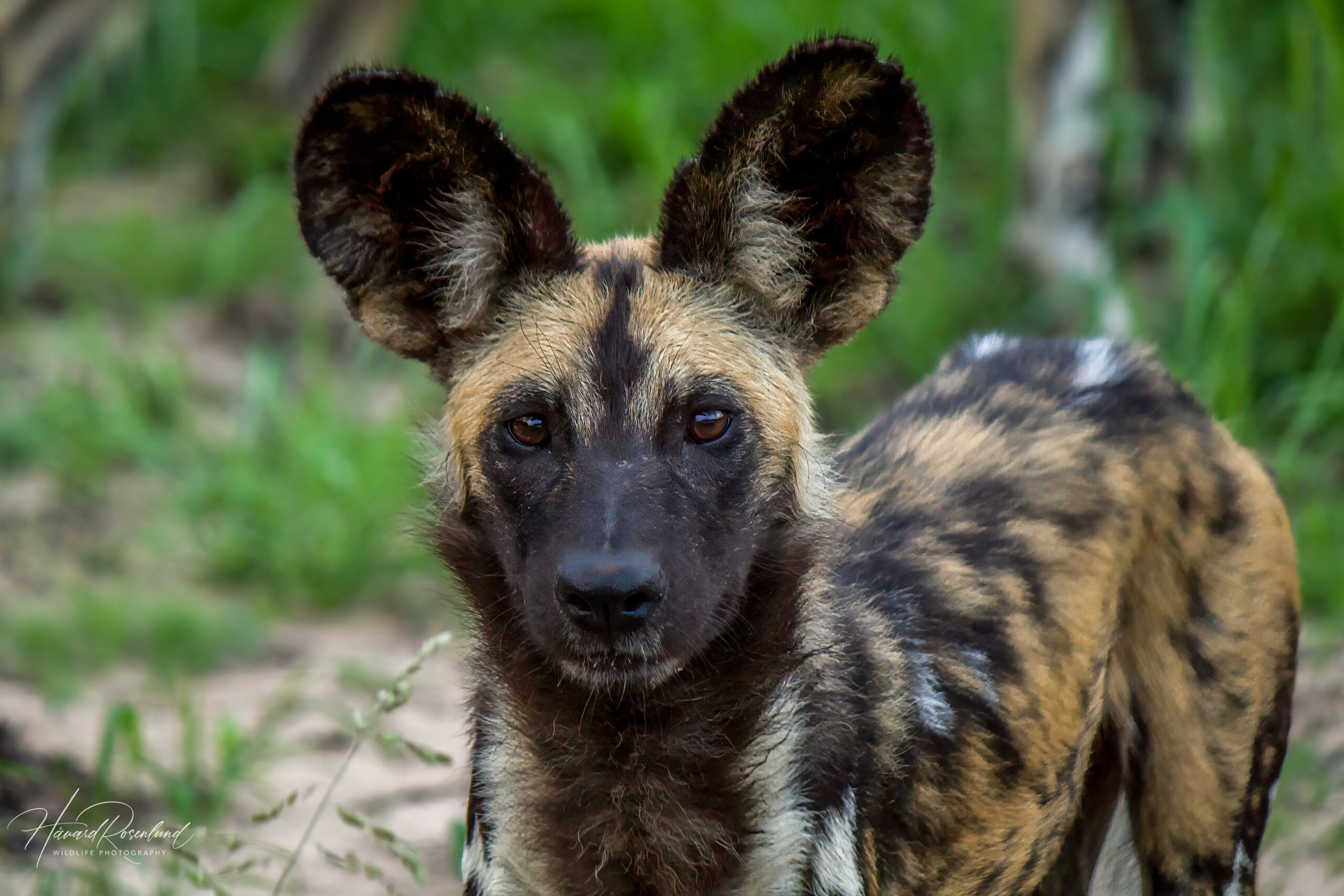
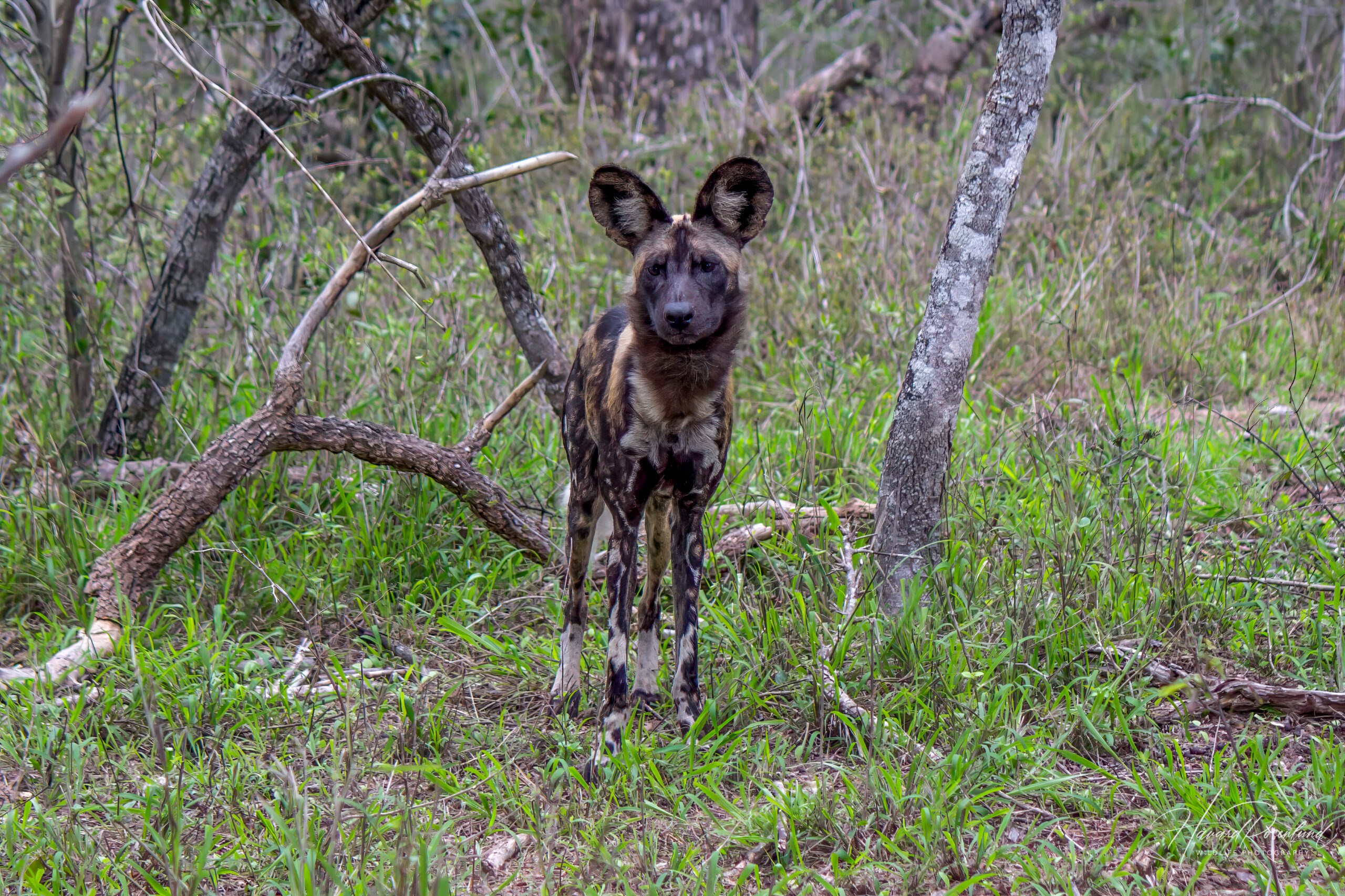
Every individual has a unique coat pattern of black, white, yellow-brown and reddish patches. The large rounded ears provide excellent hearing and help the animal lose heat, while the conspicuous white tail tip makes it easier for pack members to follow one another through tall grass and woodland. The pattern is so individual that researchers can recognise animals from photographs.
Habitat
Although African wild dogs are often associated with open savanna, they live in a much wider range of habitats. They occur in grassland, bushy savanna, open woodland, semi-desert and some upland forests. They also occurred in desert regions in the past, but tropical rainforest and the driest deserts are habitats that do not suit the species.
Prey availability and the amount of human disturbance usually matter more than the vegetation type itself, and wild dogs do best where human pressure is low. Some of the highest recorded densities occur in relatively thick bush rather than on open plains. Because packs use such large areas, connected landscapes that give them access to hunting grounds, dens and dispersal routes are especially important.
Diet
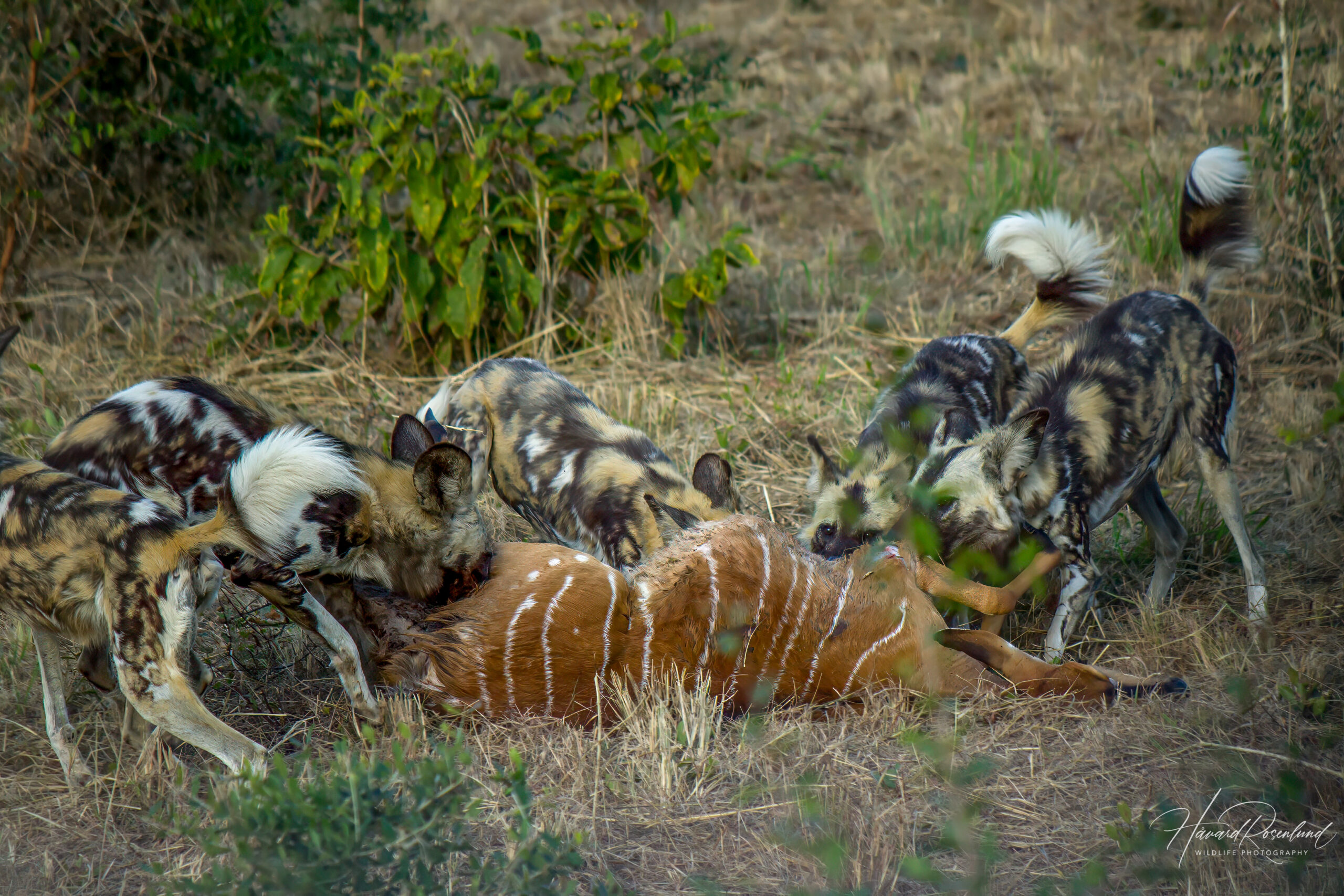
African wild dogs feed mainly on medium-sized antelopes. Impala (Aepyceros melampus), greater kudu (Tragelaphus strepsiceros), Thomson’s gazelle (Eudorcas thomsonii) and blue wildebeest (Connochaetes taurinus) are important in different parts of the range. The prey they take often weighs more than a single wild dog, but which species dominate the diet varies with what is available locally.
Smaller antelopes, warthogs and hares are also taken, and large packs sometimes pursue much larger animals. Very small food items such as reptiles and eggs make up only a small part of the diet. Recent studies from Zambia show that when populations of large herbivores decline, wild dogs have to spend more energy finding and catching food while getting less in return. Healthy prey populations are therefore crucial for the species.
Hunting
African wild dogs hunt cooperatively and are specialists in long pursuits. Packs usually hunt during daylight, especially in the cooler hours around dawn and dusk, although hunts can also continue into the night. They locate prey mainly by sight and coordinate long chases through movement and high-pitched contact calls.
Hunting success varies with the prey species, habitat and the number of dogs taking part. Larger hunting groups can bring down prey that would be too large for one wild dog alone, and can also defend a carcass more effectively from spotted hyenas. Once prey is caught, the pack feeds quickly, and pups are often given early access.
The video below shows a pack feeding on an impala. Their characteristic contact calls become especially clear as the meal continues.
Behaviour
When a pack does not have young pups at a den, African wild dogs move around a great deal and spend much of their time travelling, hunting and resting together. They are most active during the cooler parts of the day, although the timing varies with temperature, prey availability and disturbance.
Wild dogs communicate with squeaks, twittering contact calls, whines, growls and body language. They use scent marking less than many other canids, and neighbouring packs often use many of the same areas. Play is common among both young and adults and helps maintain strong social bonds.
Social behaviour
African wild dogs live in tightly bonded packs, and pups are raised communally. A pack commonly contains about 6–20 animals, although both smaller and larger groups occur. Most pups in the pack are the offspring of the dominant pair, while the other adults help guard, feed and care for the litter. Young, injured or sick pack members may be given food regurgitated by dogs returning from a hunt.
Before moving on after a rest, the dogs often gather and become highly active. A study of five packs in Botswana found that the more animals that made rapid nasal exhalations described by the researchers as “sneezes”, the more likely the pack was to set off. Fewer “sneezes” were needed when a dominant dog initiated the gathering, but enough responses from the rest could also get the whole pack moving. This suggests that the decision to leave is largely shared across the pack rather than made by the dominant pair alone.
Females usually leave their natal pack, often with sisters or other females, while many males remain with brothers and other male relatives. Males can also leave, especially when new packs are forming. Dispersers may travel very long distances before meeting unrelated animals with which they can form a new pack.
The pair I filmed in the video below came from different packs in Hluhluwe-iMfolozi Park in South Africa. They later travelled through several reserves in Zululand before being found in Somkhanda Game Reserve. Their frequent play helped strengthen the bond between them as they formed a new pair.
Home ranges
African wild dogs use unusually large home ranges. Packs in areas with plenty of prey may use a few hundred square kilometres, while home ranges can exceed 2,000 km² where prey is widely scattered or populations are fragmented. Neighbouring packs may use many of the same areas rather than keeping to clearly separated territories.
While the pups are still confined to a den, usually for about two to four months, the pack moves around much less. Once the pups are large enough to keep up, the pack resumes its long-distance movements.
These large home ranges make the species difficult to protect. Even a large reserve may be too small for a pack to remain within its boundaries throughout the year. When wild dogs move outside a reserve, they are more likely to encounter roads, livestock, snares and people who may persecute them.
Interspecific competition
African wild dogs often come off worse than the larger carnivores they share their habitat with. Lions (Panthera leo) are particularly dangerous and may kill both adults and pups without eating them. Spotted hyenas (Crocuta crocuta) compete strongly for food and can steal kills, although a large wild dog pack may be able to drive away one or a few hyenas.
A study in Hluhluwe-iMfolozi Park found that packs actively kept away from lions, especially while they had pups at dens, by changing both where and when they moved. They did not avoid spotted hyenas nearly as much, probably because the packs in the study were large enough to defend many of their kills.
Competition can limit wild dog populations even in protected landscapes, and there are often fewer wild dogs where lions and spotted hyenas are abundant. But fewer large carnivores do not necessarily mean good conditions. If poaching has reduced the large herbivores that wild dogs depend on, these areas can still be poor habitat.
Reproduction
Most populations have a distinct breeding season, although the timing varies across the range. Gestation lasts about 69–72 days. Litters are among the largest of any canid: around 8–12 pups is common, but litters can range from only a few pups to nearly 20. When a litter survives, females usually produce the next litter about 12–14 months later; if a litter fails, the interval can be substantially shorter.
The pack usually uses a large burrow as a den, often one originally dug by an aardvark (Orycteropus afer) or porcupine. Pups stay close to the den for about three months before they begin travelling regularly with the pack. Adults and older young help guard the den and provide food.
Because the rest of the pack helps with care, one female can raise a much larger litter than she could manage alone. Pups may begin killing prey themselves by about 11 months of age but generally do not become efficient hunters until around 12–14 months. Successful copulation has been recorded at 21 months in males and 22 months in females, although the social system means that many individuals do not breed that early.
Relationship with humans
African wild dogs generally prefer wild prey, but their enormous home ranges often take packs through grazing and farming areas where livestock is available. Attacks on sheep, goats and calves can occur, although studies show that livestock losses are often much lower where healthy populations of wild prey remain.
Active herding, secure night-time enclosures and healthy wild-prey populations can reduce conflict and make it easier for people and wild dogs to live in the same landscape.
During three months as a volunteer at Thanda Private Game Reserve in South Africa, I saw how difficult it can be to keep wild dogs inside a fenced reserve when they use such large areas. The pack of 12 escaped repeatedly and spent most of its time on neighbouring properties; Wildlife ACT later reported that the dogs had spent less than 40% of their time on Thanda itself. They also hunted valuable game outside the reserve, including a sable antelope (Hippotragus niger), something the owners of the antelope were not pleased about given the considerable value of such animals. After several failed attempts to recapture the pack and keep it in Thanda, the wild dogs were moved to Tswalu Kalahari Reserve in 2013. Thanda covered about 140 km² (14,000 ha), while Tswalu covered around 1,000 km² (100,000 ha), more than seven times the area.
Status
The African wild dog is classified as Endangered on the IUCN Red List. The IUCN SSC Canid Specialist Group estimates that about 6,600 adults remain across 39 subpopulations. Around 1,400 of these are counted as mature individuals under the Red List definition, because most pups are produced by the dominant pairs.
The species has disappeared from much of its former range south of the Sahara and is now almost gone from West and North Africa. The largest remaining populations are found in southern Africa and the southern part of East Africa. The global population is declining, and many subpopulations contain very few animals that actually breed.
Threats
Fragmentation of their habitat is the main threat to African wild dogs. Their large home ranges repeatedly bring packs into contact with people and livestock. Wild dogs are killed in retaliation for real or suspected livestock losses, caught accidentally in wire snares, struck by vehicles and exposed to infectious diseases such as rabies and canine distemper from domestic dogs.
Small and isolated populations are especially vulnerable. A disease outbreak or the loss of only a few breeding animals can cause an entire pack or local population to disappear quickly. Lions and spotted hyenas also kill wild dogs, while declining numbers of wild prey can force packs to travel farther for less food.
When prey becomes scarce in a fragmented landscape, packs have to travel farther and cross more roads and farmland. At the same time, small populations can take longer to recover after disease or the loss of breeding animals.
Conservation
Protecting African wild dogs requires large connected landscapes and healthy populations of wild prey. It is also important to reduce deaths when packs move outside protected areas. Key measures include removing snares, protecting livestock better, maintaining movement corridors, reducing the risk of rabies around important wild dog populations by vaccinating domestic dogs, and responding quickly when packs enter high-risk areas.
South Africa has developed a managed metapopulation, a network of separate fenced reserves that are managed as parts of one larger population. Animals are moved between reserves to establish new packs, expand the species’ range and maintain genetic diversity. KwaZulu-Natal is an important part of this system, and close tracking allows managers to respond quickly when dogs disperse, are injured, become caught in snares or come into conflict with people.
Wildlife ACT takes part in this monitoring and is also involved in the KwaZulu-Natal Wild Dog Management Group and the national management of the metapopulation. I have worked closely with the organisation and can personally recommend its conservation programmes.
Conservation organizations
Image gallery
Loading map and observations…
National Red List status
| Country | Status | Assessment | Source |
|---|---|---|---|
| South Africa | ENEndangered | Red List of South African Species 2016 | SANBI – Red List of South African Species |
Have you seen this species?
Independent species archive
Did you find this species page useful?
Wildlife Vagabond is independently built and maintained. Voluntary support helps cover hosting, maps, data storage and continued improvements to the species archive.
Support Wildlife VagabondSpecies content will remain freely available.
References
- African Wildlife Conservation Fund. (n.d.). Lowveld Wild Dog Project. https://www.africanwildlifeconservationfund.org/lowveld-wild-dog-project/
- Bucci, M. E., Nicholson, K. L., & Krausman, P. R. (2022). <i>Lycaon pictus</i> (Carnivora: Canidae). Mammalian Species, 54(1017), seac002. https://doi.org/10.1093/mspecies/seac002
- Cornu, L., Broekhuis, F., Kavwele, C. M., Mogensen, N., Sakat, D., & Briefer, E. F. (2024). Coexisting with carnivores: insights into local attitudes toward African wild dogs (Lycaon pictus) in the Maasai Mara, Kenya. Human Dimensions of Wildlife, 29(6), 691-707. https://doi.org/10.1080/10871209.2023.2294070
- Creel, S., & Creel, N. M. (1996). Limitation of African Wild Dogs by Competition with Larger Carnivores. Conservation Biology, 10(2), 526-538. https://doi.org/10.1046/j.1523-1739.1996.10020526.x
- Creel, S., Redcliffe, J., Goodheart, B., Reyes de Merkle, J., Mwape, H., Matsushima, S., Dart, C., Banda, K., Mayani, B., Njobvu, J., Kabungo, R., Mungolo, M., Kabwe, R., Kaseketi, E., Donald, W., Kaluka, A., Chifunte, C., Maimbo, H., Plankenhorn, L., … Wilson, R. P. (2025). Prey depletion, interspecific competition, and the energetics of hunting in endangered African wild dogs, . Proceedings of the National Academy of Sciences of the United States of America, 122(6), e2414772122. https://doi.org/10.1073/pnas.2414772122
- Darnell, A. M., Graf, J. A., Somers, M. J., Slotow, R., & Szykman Gunther, M. (2014). Space Use of African Wild Dogs in Relation to Other Large Carnivores. PLoS ONE, 9(6), e98846. https://doi.org/10.1371/journal.pone.0098846
- Fanshawe, J. H., & Fitzgibbon, C. D. (1993). Factors influencing the hunting success of an African wild dog pack. Animal Behaviour, 45(3), 479-490. https://doi.org/10.1006/anbe.1993.1059
- International Union for Conservation of Nature. (n.d.). Lycaon pictus. The IUCN Red List of Threatened Species. https://www.iucnredlist.org/species/12436/166502262
- IUCN SSC Canid Specialist Group. (n.d.). African wild dog (Lycaon pictus): status, ecology and conservation. https://www.canids.org/species/view/PREKNU724601
- Walker, R. H., King, A. J., McNutt, J. W., & Jordan, N. R. (2017). Sneeze to leave: African wild dogs (Lycaon pictus) use variable quorum thresholds facilitated by sneezes in collective decisions. Proceedings of the Royal Society B: Biological Sciences, 284(1862), 20170347. https://doi.org/10.1098/rspb.2017.0347
- Wildlife ACT. (n.d.). African Wild Dog (Lycaon pictus): ecology and conservation. https://www.wildlifeact.com/about-wildlife-act/wildlife-species/african-wild-dog-lycaon-pictus
- Woodroffe, R., Lindsey, P., Romañach, S., Stein, A., & ole Ranah, S. M. (2005). Livestock predation by endangered African wild dogs (Lycaon pictus) in northern Kenya. Biological Conservation, 124(2), 225-234. https://doi.org/10.1016/j.biocon.2005.01.028