
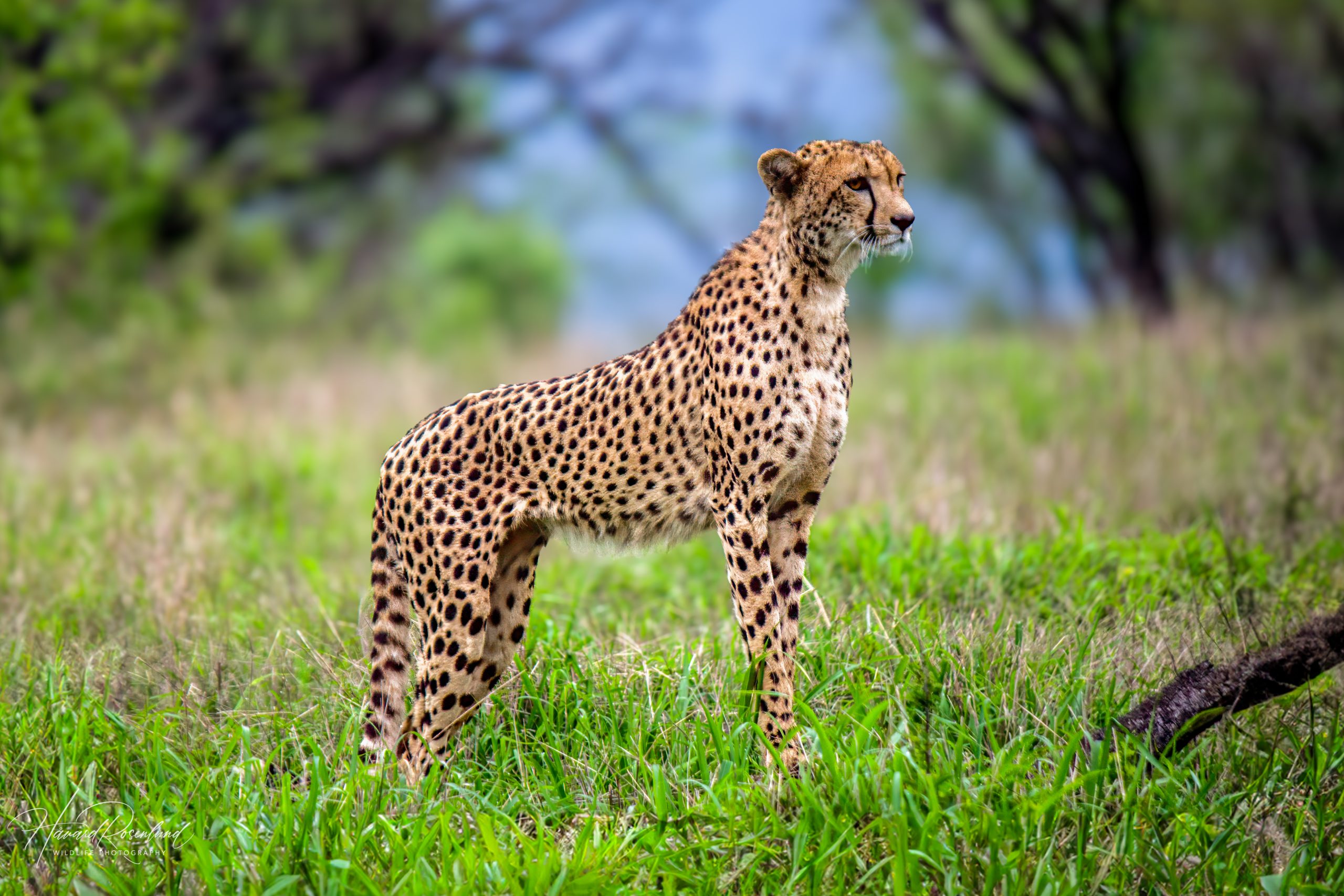
Cheetah
Acinonyx jubatus
At a glance
Habitat
- Grassland, savanna, shrubland, semi-desert, dry forest and open woodland
Diet
- Carnivore; mainly gazelles and other prey weighing 10–56 kg
Activity
- Mostly active by day, with some nocturnal activity
Size
- Length: 113–140 cm body; 60–84 cm tail Weight: 23–65 kg
Range
- Fragmented populations in Africa; Asiatic cheetah survives only in Iran
Description
The cheetah (Acinonyx jubatus) is a large, lightly built cat and the only living member of its genus. Molecular evidence places it closest to the puma (Puma concolor) and jaguarundi (Herpailurus yagouaroundi) rather than the roaring cats of the genus Panthera.
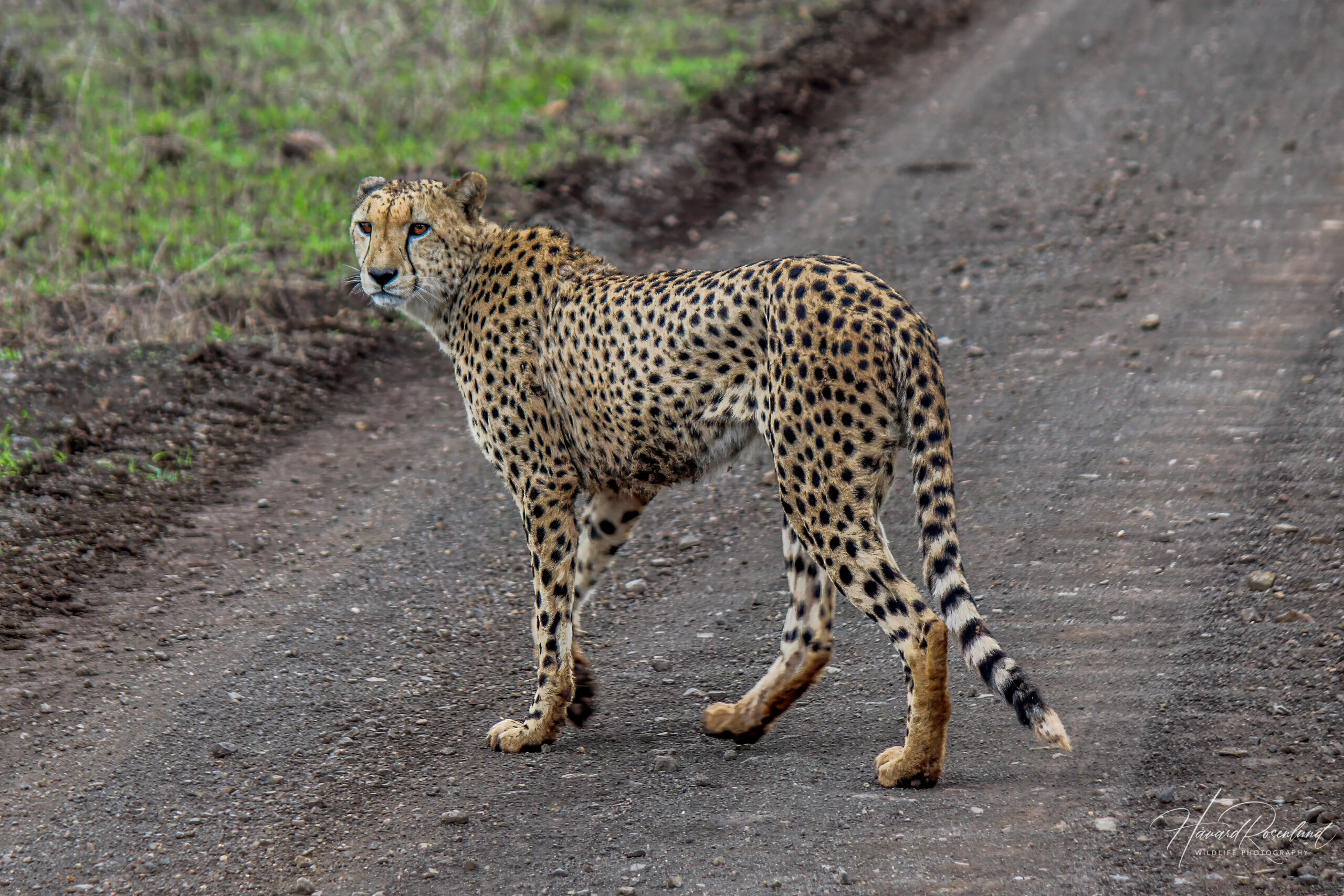
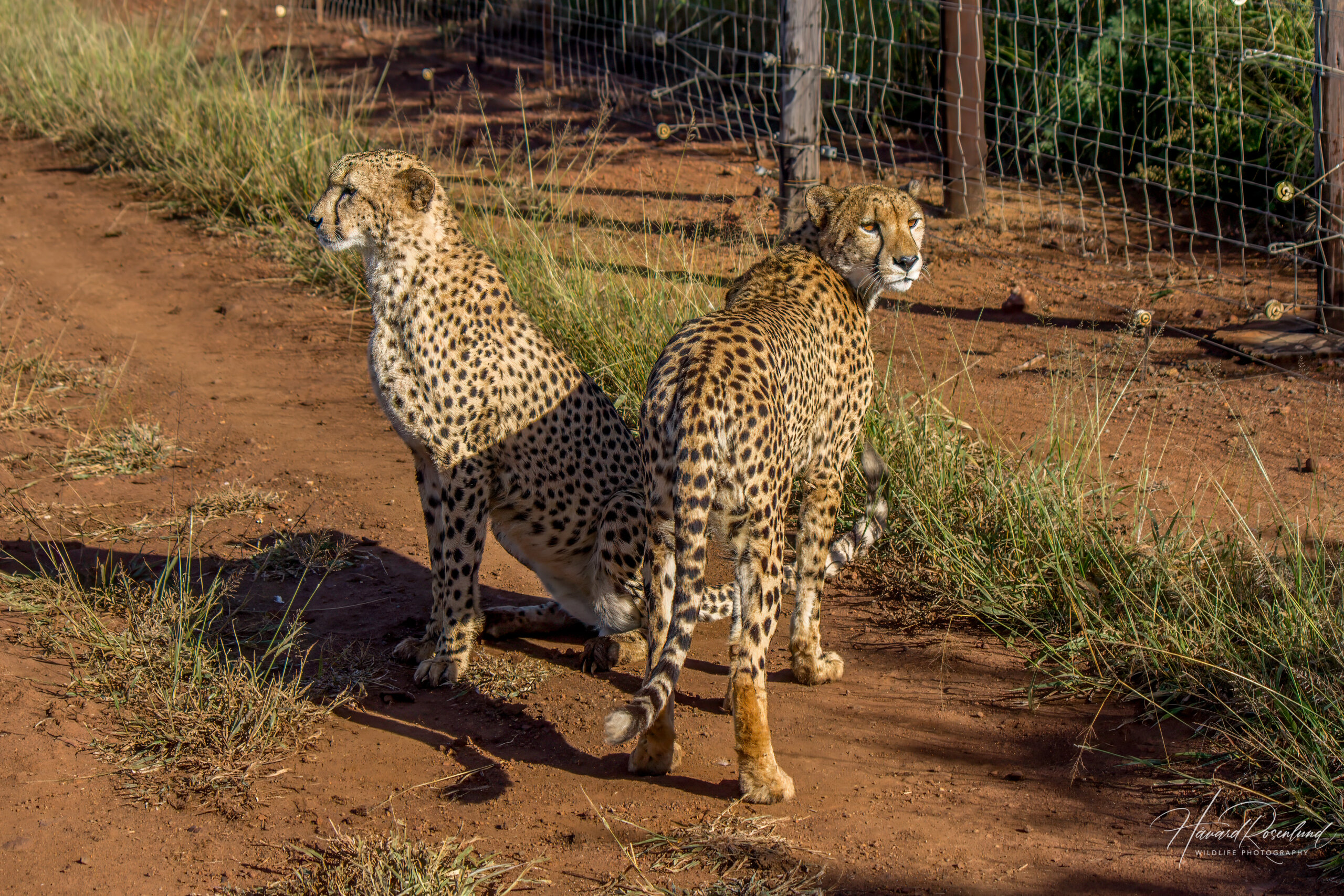
Adults measure roughly 113–140 cm from head to body, have a 60–84 cm tail and weigh 23–65 kg. The tawny coat is covered with solid black spots rather than the rosettes of a leopard (Panthera pardus), and each individual has a unique pattern that can be used for identification. The slender body, long legs and dark lines running from the eyes towards the mouth are also characteristic.
Habitat
Cheetahs are strongly associated with open grassland and savanna, but they also use shrubland, semi-desert, dry forest, open woodland and mountainous desert country. Sufficient cover for stalking and resting is important, so the species does not require a completely open landscape. Dense tropical rainforest is unsuitable.
The species naturally occurs at low density and uses very large landscapes. The IUCN SSC Cat Specialist Group estimates that 77% of known cheetah range lies outside protected areas. Farms, community lands, conservancies and wildlife corridors are therefore as important as many national parks for maintaining connected populations.
Diet
Cheetahs feed mainly on small and medium-sized mammals. Preferred prey often falls between about 10 and 56 kg and includes gazelles, springbok (Antidorcas marsupialis), impala (Aepyceros melampus) and other antelopes. Hares and birds are also taken, while male coalitions can sometimes overpower substantially larger prey such as blue wildebeest (Connochaetes taurinus) or greater kudu (Tragelaphus strepsiceros).
Diet changes markedly between regions. Thomson’s gazelle (Eudorcas thomsonii) is especially important on the East African plains, whereas springbok and impala are prominent in southern Africa. The surviving Asiatic cheetahs in Iran rely on the medium-sized ungulates available in arid mountain and desert landscapes.
Hunting
The cheetah is the fastest living land mammal, but successful hunting depends on far more than maximum speed. Its long limbs, powerful thigh muscles and flexible spine lengthen each stride, while semi-retractable claws provide traction and the long tail helps control balance and rapid changes of direction. Enlarged airways, lungs and heart support the intense oxygen demand of a sprint and the recovery that follows.
Cheetahs hunt mainly by sight. They usually select a target, stalk to within roughly 10–30 metres where cover allows, and then accelerate into a short pursuit. A cheetah commonly trips the target with a forepaw before killing it with a throat bite.
A 2013 tracking study recorded 367 runs by five wild cheetahs and measured a maximum of 93 km/h. Most hunts were considerably slower. What separated successful chases was the combination of acceleration, braking, power and manoeuvrability, showing why the familiar image of a cheetah simply outrunning prey on a straight open plain is incomplete.
High-speed chases are short, normally only a few hundred metres. Earlier claims that cheetahs routinely stop because they overheat during the chase are also misleading: field measurements found that body temperature rose more strongly after a kill, while the cheetah was recovering and still had to remain alert to larger competitors.
Many hunts occur in the morning or late afternoon, but daytime hunting is common and helps reduce overlap with more nocturnal lions and spotted hyenas. Cheetahs rarely defend a carcass successfully against larger carnivores, so they tend to feed quickly and seldom return after abandoning a kill.
The video below shows two cheetah brothers moving on after lions displaced them from a kill at Thanda Private Game Reserve.
Behaviour
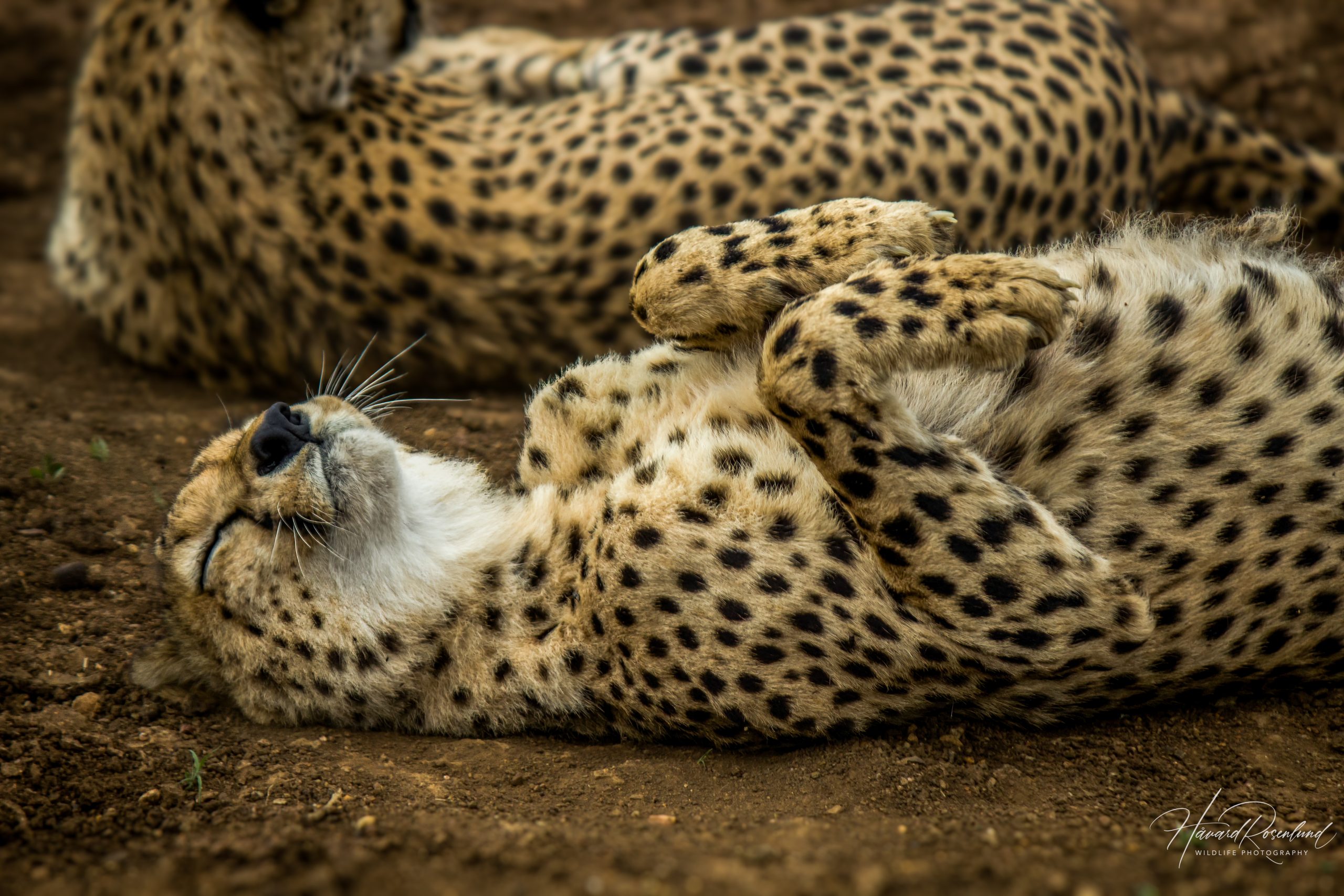
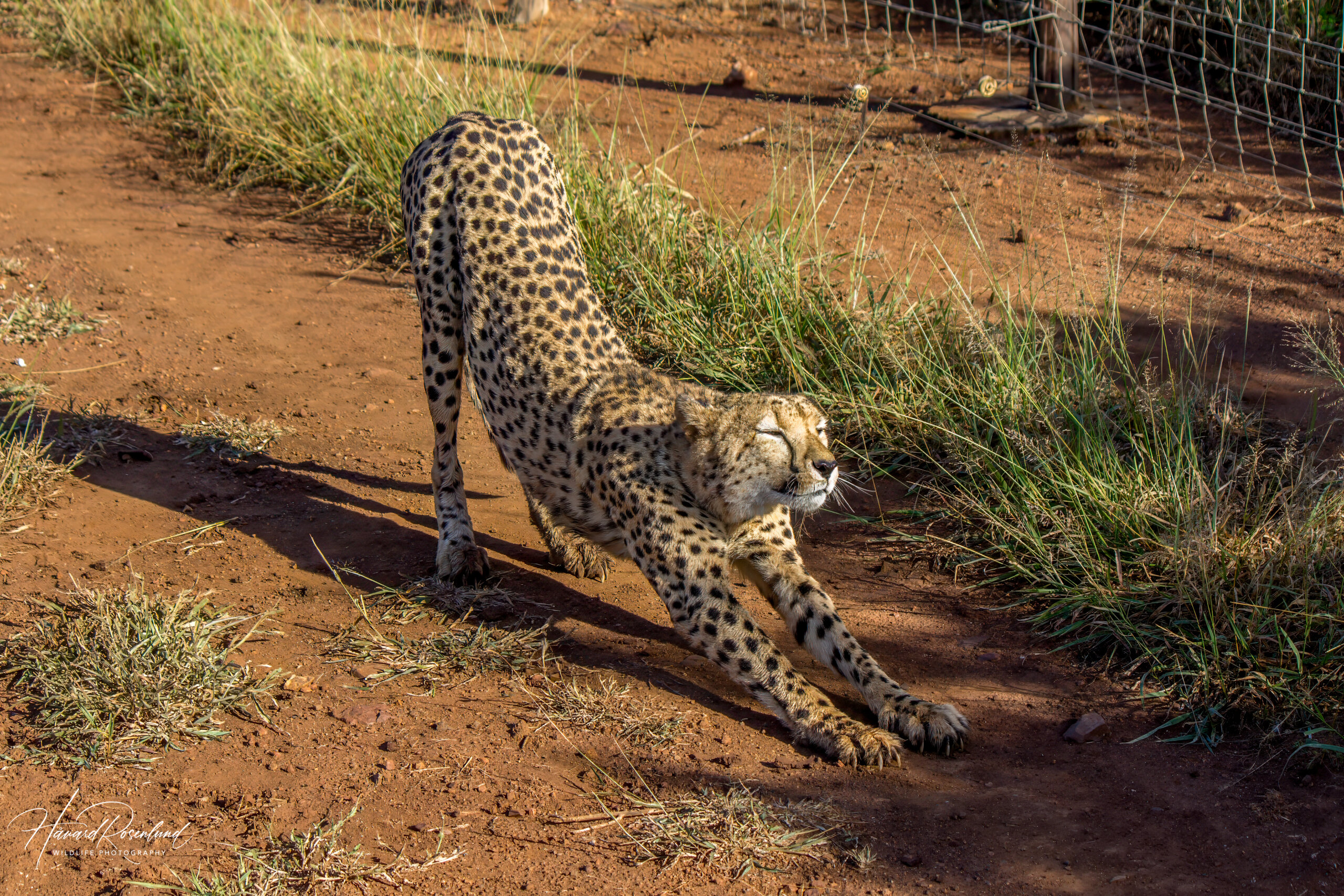
Cheetahs are mainly active by day, but their schedule is flexible. Studies have recorded substantial nocturnal activity, especially on bright moonlit nights, and animals living around people may shift activity to reduce encounters. Resting on raised ground, termite mounds or other vantage points helps them scan for prey and competitors.
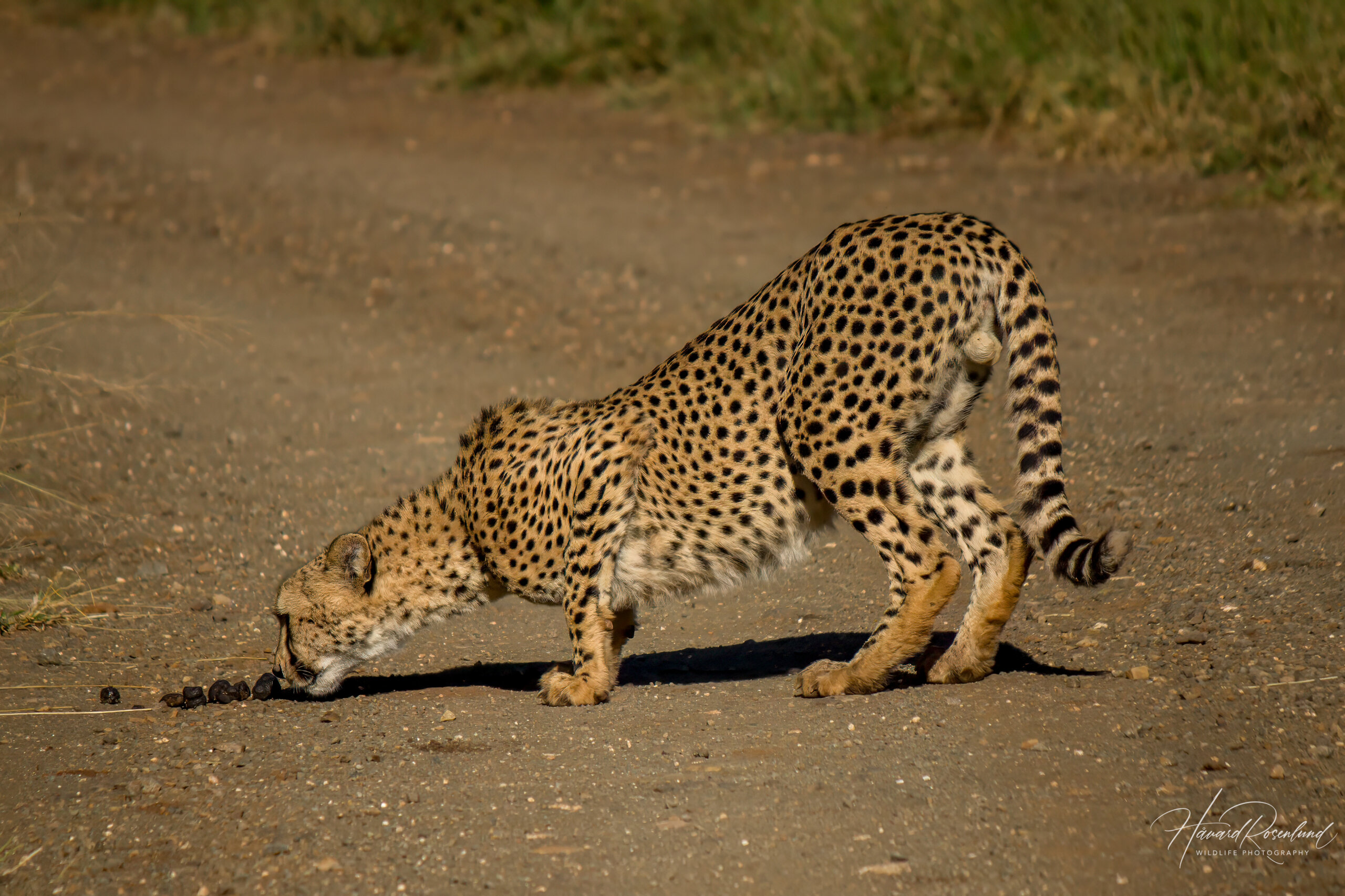
Communication includes chirps, yelps, growls, hisses and purring. The high, bird-like contact call is especially important between mothers and cubs and between coalition members that become separated. Cheetahs also communicate through scent. Males repeatedly urine-mark, scratch and defecate on conspicuous features such as large trees, termite mounds and posts, allowing neighbouring animals to share space and locate one another without frequent direct encounters.
Social behaviour
The social organisation of the cheetah is unusual among cats. Adult females normally live alone except when accompanied by dependent young, and their ranges overlap broadly with those of other females. After independence, male and female siblings may remain together for several months before the females disperse from the sibling group.
Adult males can remain solitary or form coalitions, usually of two or three animals. Coalition partners are often brothers, but unrelated males also form lasting alliances. Coalitions have a major advantage when competing for territories and may remain together for life.
Home ranges
Cheetah space use differs sharply between territorial males and the more wide-ranging females and non-territorial males. Territorial males may defend compact areas averaging around 30 km² where valuable resources and female movements concentrate. These territories are far smaller than the surrounding home ranges and are advertised intensively with scent marks.
Females and non-territorial males can travel across enormous overlapping areas. Published estimates exceed 200 km² in parts of southern Africa, are around 800 km² in the Serengeti and average roughly 1,595 km² in Namibia. In the prey-poor deserts of Iran, tracked Asiatic cheetahs have covered still larger areas across multiple protected sites.
These enormous home ranges are one reason cheetah conservation cannot be confined to isolated reserves. An animal may spend much of its life crossing farmland, community land, roads and corridors between protected areas.
Interspecific competition
Cheetahs share much of their African range with larger carnivores that can overpower them. Lions (Panthera leo) and spotted hyenas (Crocuta crocuta) steal kills, while lions, hyenas and leopards (Panthera pardus) can kill cheetahs, especially cubs. The cheetah’s lightly built body is adapted for speed rather than fighting, so avoiding direct confrontation is usually the safest strategy.
Experiments in the Serengeti in which researchers played recorded lion and hyena calls showed that cheetahs actively moved away after detecting them, and their hunting activity fell once they became aware of these competitors. Long-term Serengeti research has also linked high lion abundance with lower cheetah recruitment.
This pressure helps shape both space use and activity. Daytime hunting, rapid feeding and the use of areas with fewer dominant carnivores can reduce risk, which helps explain why some landscapes outside major protected areas are important refuges for cheetahs.
Reproduction
Breeding can occur throughout the year. Females mate with more than one male, and cubs within the same litter can have different fathers. Both sexes generally reach sexual and physical maturity at around 20–24 months of age, although first actual breeding often occurs later. After a gestation of about 90–98 days, a female gives birth in dense cover to one to six cubs.
Young cubs have a long pale mantle along the neck and back that breaks up their outline. A popular hypothesis is that this makes them resemble the aggressive honey badger (Mellivora capensis). The mother moves the litter between hiding places and hunts alone to support it.
Cub mortality can be very high, particularly where lions, spotted hyenas and leopards are abundant. Young cheetahs remain with their mother for roughly 13–20 months. Sisters normally separate within the following months, whereas surviving brothers may remain together as a coalition for life.
Cultural significance
Humans have captured and trained cheetahs for coursing for centuries, and the animal became closely associated with elite hunting in parts of Asia. In Mughal India, trained cheetahs were used to pursue blackbuck (Antilope cervicapra) and other antelopes and appear repeatedly in court art and written accounts. Emperor Akbar maintained an exceptionally large establishment of hunting cheetahs.
The relationship was not domestication: trained animals were overwhelmingly taken from the wild because cheetahs bred very poorly in captivity. Their use as prestigious hunting animals therefore created continuous demand for wild capture. The English word “cheetah” itself derives from a South Asian word referring to the animal’s spotted appearance.
Relationship with humans
Today a large proportion of the world’s cheetahs live in landscapes shared with livestock owners and game farmers. Cheetahs sometimes kill domestic animals, but studies in several regions show that perceived losses can be greater than verified predation. Husbandry, the availability of wild prey and local attitudes strongly influence whether cheetahs are tolerated.
Tourism creates another close relationship. Cheetahs are sought-after safari animals and may become accustomed to vehicles, but crowding or poorly managed viewing can interfere with hunts and separate females from cubs. Coexistence therefore depends both on reducing real economic costs for local people and on keeping wildlife tourism from adding unnecessary pressure.
Status
The cheetah is listed as Vulnerable on the IUCN Red List. The 2022 assessment tentatively estimated 6,517 mature animals in 33 subpopulations. Only two subpopulations were estimated to contain more than 1,000 mature individuals, while roughly two thirds contained fewer than 100. Most populations for which a trend could be assessed were declining.
Four subspecies are recognised. The Northwest African cheetah (A. j. hecki) and Asiatic cheetah (A. j. venaticus) are both Critically Endangered. The Asiatic cheetah now survives naturally only in Iran, where the remaining population is estimated at fewer than 50 mature animals.
Threats
The main threats are habitat loss and fragmentation, depletion of wild prey, retaliatory killing following real or perceived livestock losses, illegal trade, snares, road traffic and poorly managed tourism. Because cheetahs range over enormous areas and most known range lies outside protected reserves, infrastructure and land-use change can fragment populations even where core protected areas remain intact.
Live-animal trafficking is particularly serious in the Horn of Africa, where cubs are captured for the exotic-pet market in the Gulf and many die before reaching buyers. Low genetic diversity following ancient population bottlenecks is an additional concern, especially for very small isolated populations, although habitat loss, prey decline and direct killing remain the more immediate drivers of current decline.
Conservation
Effective cheetah conservation has to work at landscape scale. Maintaining wild prey and movement corridors, reducing retaliatory killing through improved livestock management, protecting marking and breeding areas and coordinating conservation across private, community and state land are all central. Regional strategies and national action plans now cover most of the species’ known range, while anti-trafficking work is particularly important in northeastern Africa.
The surviving Asiatic population requires especially intensive protection of prey, roads and connected desert habitats in Iran. Its extremely small size makes every breeding animal important.
India began reintroducing African cheetahs in 2022, more than seven decades after the native Asiatic cheetah disappeared there. At an official government review on 19 May 2026, the programme reported 53 cheetahs, 33 of them born in India. Kuno National Park remains the principal site and Gandhi Sagar Wildlife Sanctuary has been developed as an additional release area. The project uses African cheetahs because the remaining Iranian population is far too small to supply animals for a reintroduction.
Conservation organizations



Image gallery
Loading map and observations…
National Red List status
| Country | Status | Assessment | Source |
|---|---|---|---|
| South Africa | VUVulnerable | Red List of South African Species 2016 | SANBI – Red List of South African Species |
Have you seen this species?
Independent species archive
Did you find this species page useful?
Wildlife Vagabond is independently built and maintained. Voluntary support helps cover hosting, maps, data storage and continued improvements to the species archive.
Support Wildlife VagabondSpecies content will remain freely available.
References
- Chavda. (2012). Lions, Cheetahs, and Others in the Mughal Landscape. https://academic.oup.com/book/9745/chapter-abstract/156913132
- Cheetah Conservation Fund. (n.d.). Cheetah biology, behaviour and threats. https://cheetah.org/learn/about-cheetahs/
- Durant, S. M., Mitchell, N., Groom, R., Pettorelli, N., Ipavec, A., Jacobson, A. P., Woodroffe, R., Böhm, M., Hunter, L. T. B., Becker, M. S., Broekhuis, F., Bashir, S., Andresen, L., Aschenborn, O., Beddiaf, M., Belbachir, F., Belbachir-Bazi, A., Berbash, A., Brandao de Matos Machado, I., … Young-Overton, K. (2017). The global decline of cheetah Acinonyx jubatus and what it means for conservation. Proceedings of the National Academy of Sciences, 114(3), 528-533. https://doi.org/10.1073/pnas.1611122114
- Durant, S. M. (2000). Living with the enemy: avoidance of hyenas and lions by cheetahs in the Serengeti. Behavioral Ecology, 11(6), 624-632. https://doi.org/10.1093/beheco/11.6.624
- Durant, S. M. (2004). Factors affecting life and death in Serengeti cheetahs: environment, age, and sociality. Behavioral Ecology, 15(1), 11-22. https://doi.org/10.1093/beheco/arg098
- Government of India. (2026, May 19). Project Cheetah review. https://www.pib.gov.in/PressReleasePage.aspx?PRID=2262834&lang=1®=20
- International Union for Conservation of Nature. (n.d.). Acinonyx jubatus. The IUCN Red List of Threatened Species. https://www.iucnredlist.org/species/219/124366642
- Iranian Cheetah Society. (n.d.). Asiatic cheetah population monitoring. https://www.wildlife.ir/en/our-projects/asiatic-cheetah-population-monitoring/
- IUCN SSC Cat Specialist Group. (n.d.). Cheetah species account. https://www.catsg.org/living-species-cheetah
- National Tiger Conservation Authority. (n.d.). Project Cheetah. https://ntca.gov.in/project-cheetah-kuno-np/
- Schmidt, M. J., Steenkamp, G., Failing, K., Caldwell, P., & Kirberger, R. M. (2019). A contribution to age determination of cheetahs (Acinonyx jubatus) based on radiographic analysis of the skull and postcranial morphology. PLOS ONE, 14(6), e0217999. https://doi.org/10.1371/journal.pone.0217999
- Wilson, A. M., Lowe, J. C., Roskilly, K., Hudson, P. E., Golabek, K. A., & McNutt, J. W. (2013). Locomotion dynamics of hunting in wild cheetahs. Nature, 498(7453), 185-189. https://doi.org/10.1038/nature12295