
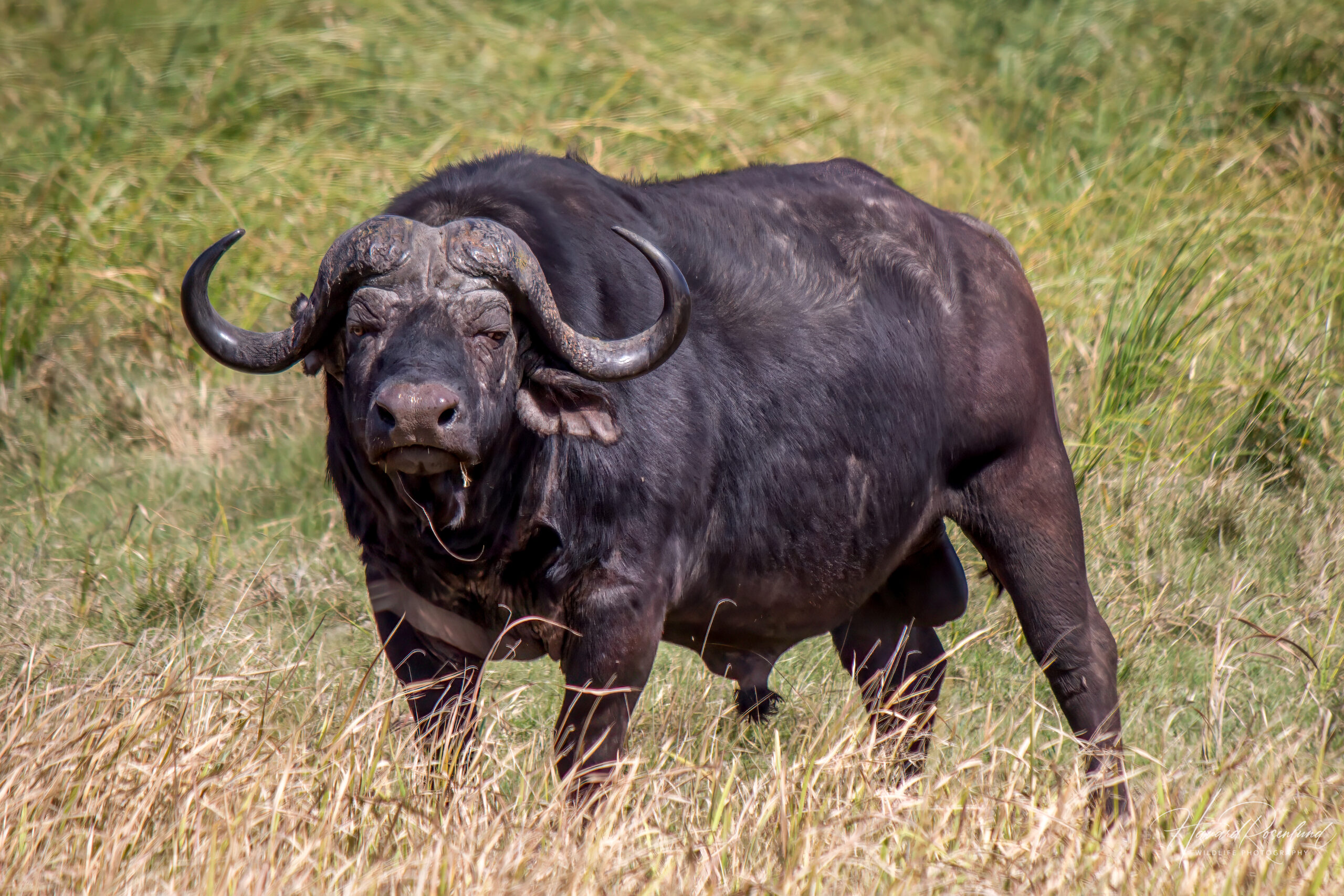
African Buffalo
Syncerus caffer
At a glance
Habitat
- Savanna, grassland, woodland, floodplains and forest mosaics with dependable water
Diet
- Primarily grasses, with sedges, herbs and some browse
Activity
- Active by day and night, often feeding in cooler hours
Size
- Length: about 2.1–3.0 m (head–body) Weight: roughly 250–900 kg, depending on sex and subspecies
Range
- Patchily distributed across sub-Saharan Africa
Description
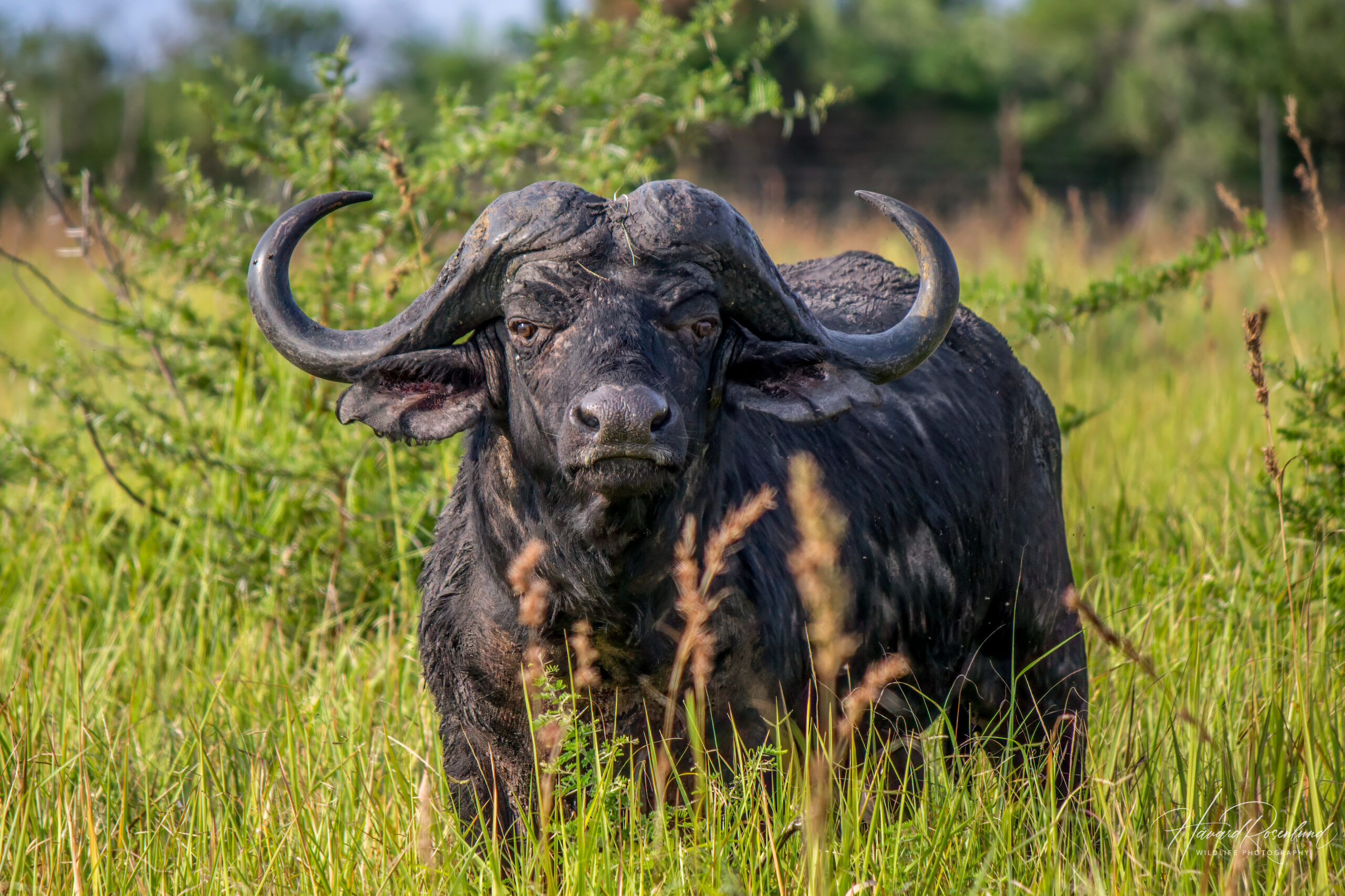
The African buffalo (Syncerus caffer) is Africa’s only living wild cattle species and one of the continent’s largest bovids. It has a long, heavy body, relatively short legs and powerful horns. Size varies greatly across the species: the large Cape buffalo can reach about 2.1–3.0 m in head-and-body length, stand roughly 1.4–1.6 m at the shoulder and weigh up to around 900 kg. Bulls are usually much larger than cows.
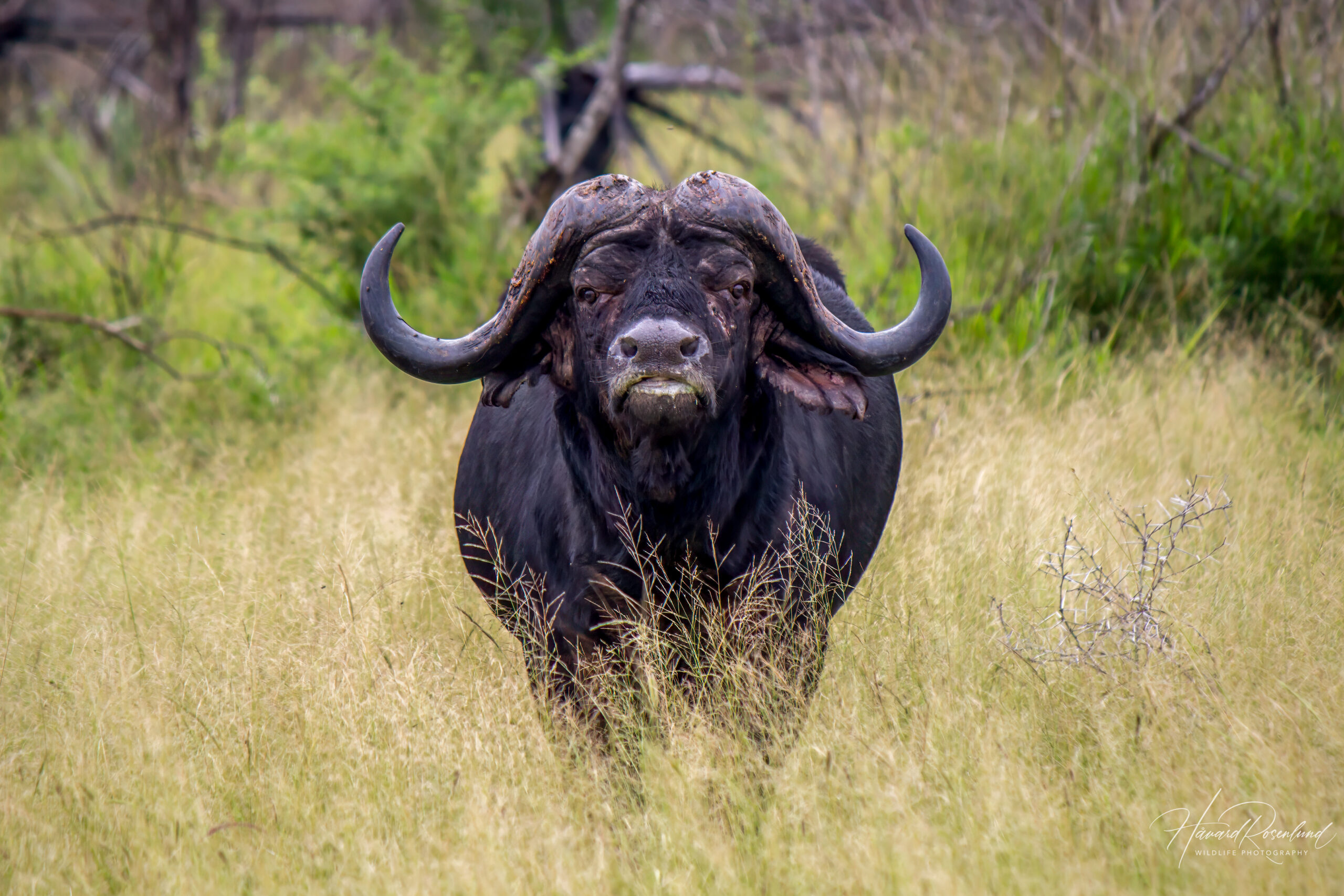
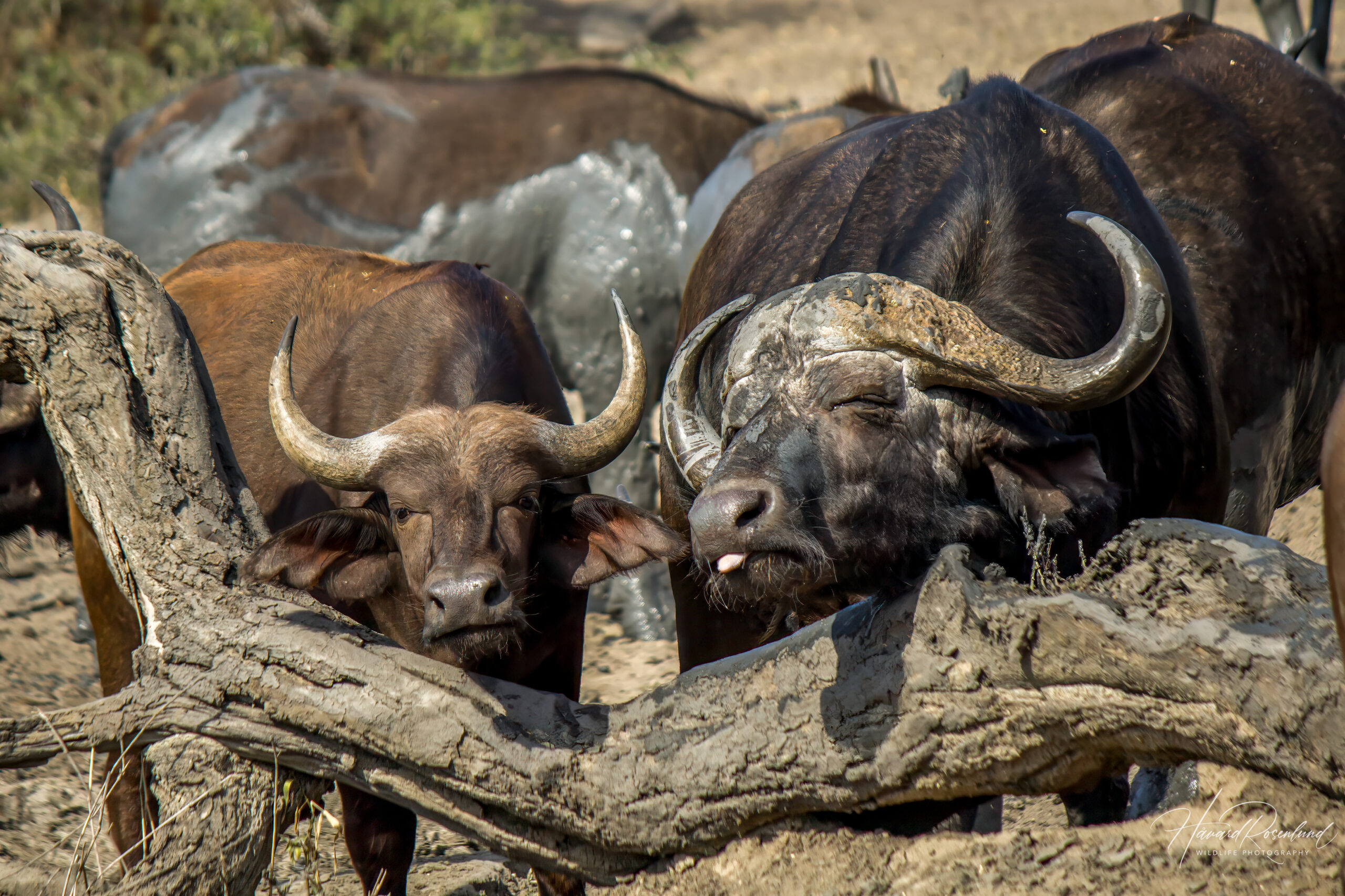
The horns grow sideways from a heavy base and curve outward and upward. In mature Cape buffalo bulls the horn bases can meet across the forehead to form a thick shield known as the boss.
Taxonomy
Four subspecies are commonly recognised. The large, dark Cape buffalo (S. c. caffer) occurs mainly in eastern and southern Africa; the smaller reddish forest buffalo (S. c. nanus) lives in the rainforests of West and Central Africa; the West African savanna buffalo (S. c. brachyceros) occupies savannas farther west; and the Central African savanna buffalo (S. c. aequinoctialis) occurs between the main western and eastern forms.
These forms differ markedly in size, colour and horn shape, but they are still treated as one species by the Mammal Diversity Database. Boundaries are not always sharp, and intermediate populations occur where ecological regions meet. This page focuses mainly on the Cape buffalo, the form I have photographed.
Habitat
Habitat use differs markedly among the subspecies. Cape buffaloes occur mainly in savanna, grassland, open woodland and floodplains in eastern and southern Africa, whereas forest buffaloes are associated with rainforest and forest clearings in West and Central Africa. The West and Central African savanna forms mainly occupy savannas and forest–savanna mosaics.
For Cape buffaloes, reliable water is one of the most important requirements, and herds often use marshes, reedbeds and riverine areas as well as open grassland. Seasonal changes in grass quality and water availability can drive substantial movements. Dense cover is useful for resting and shelter, but Cape buffaloes can also thrive in very open landscapes where good grazing and water remain available.
Diet
African buffaloes are primarily grazers. Grasses make up most of the diet, with sedges, herbs and some browse added when conditions require it. Herds often feed most actively in the cooler parts of the day and may revisit productive grass patches repeatedly.
Because buffaloes need both good grazing and regular water, the distribution of these resources strongly influences herd size, daily movement and seasonal range use.
Behaviour
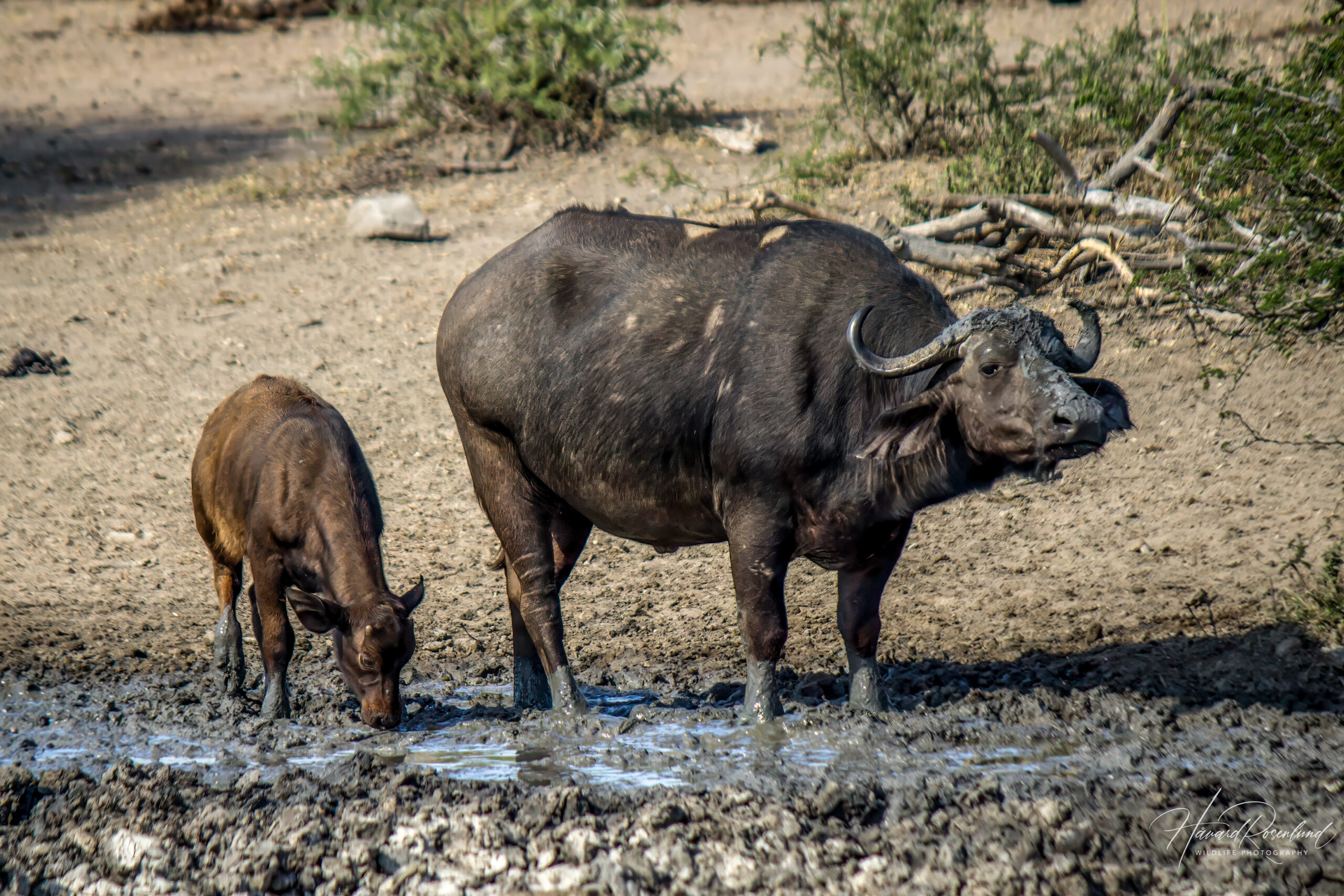
African buffaloes are active by day and night. Feeding often peaks in the cooler morning, late afternoon and night, while hot periods may be spent resting, ruminating, wallowing or standing in shade or water.
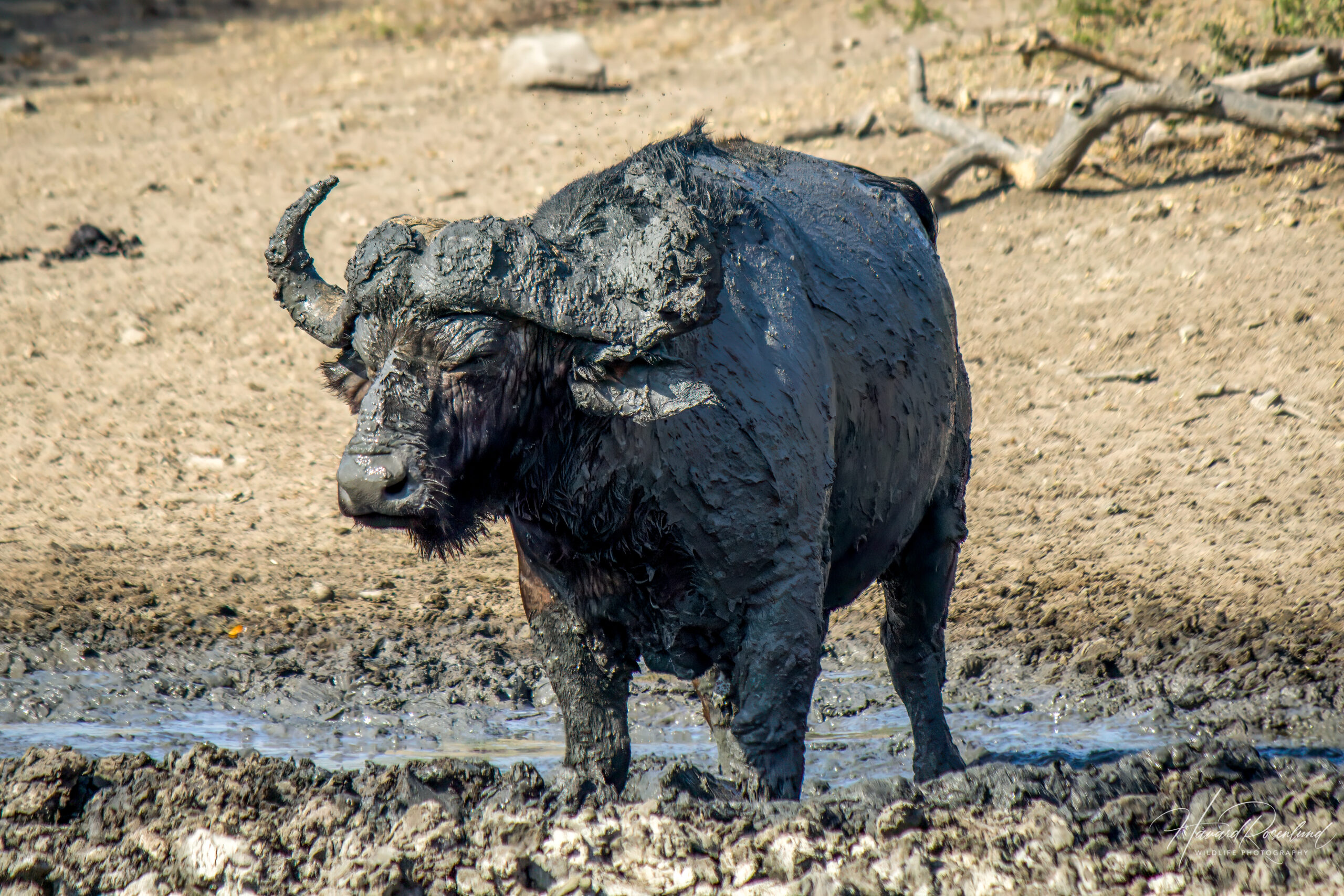
They are alert and powerful animals. When threatened, an individual may stand its ground, flee towards the herd or join a collective defence. Wallowing in mud helps with cooling and may also reduce biting insects and skin irritation.
Social behaviour
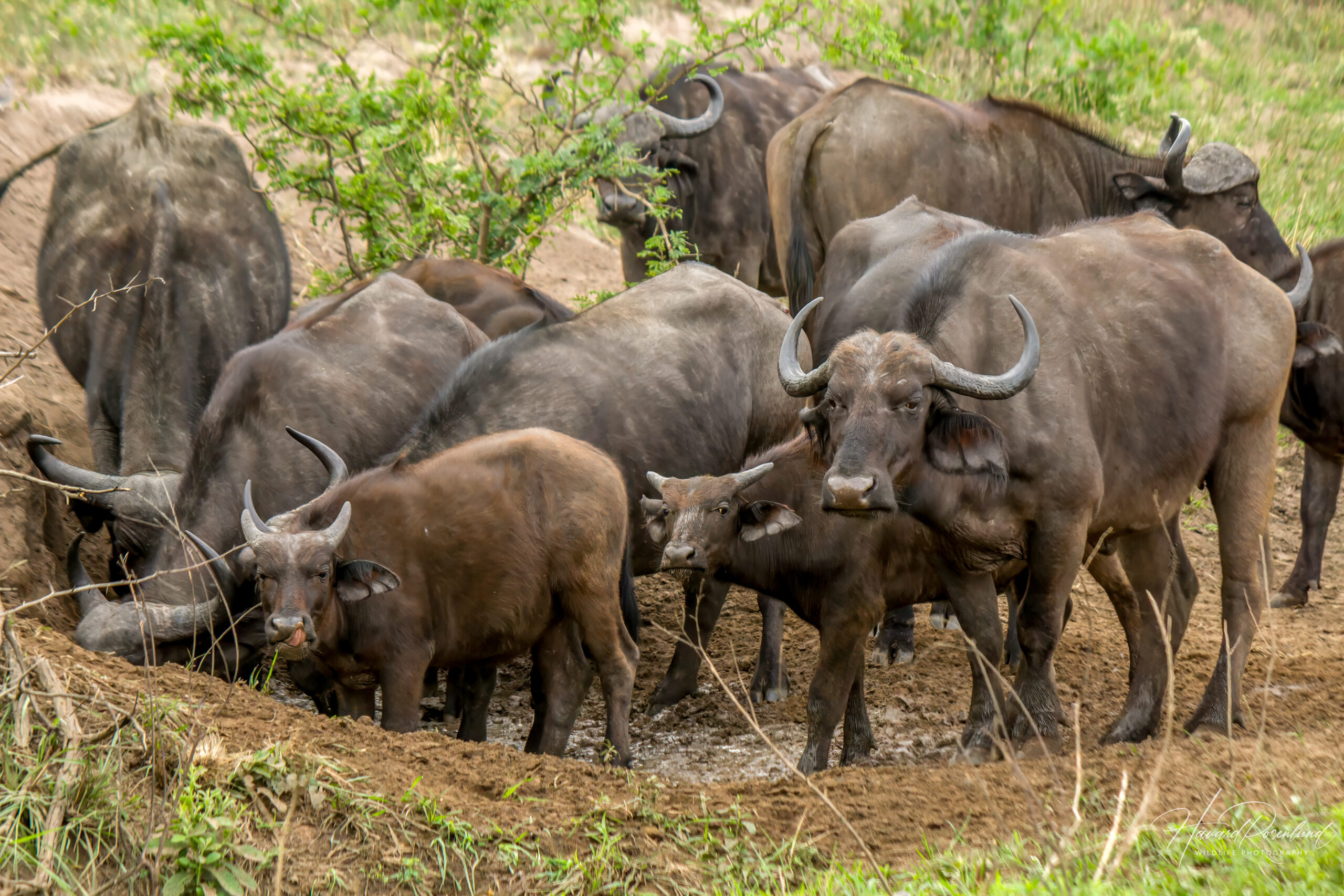
Most African buffaloes live in herds ranging from a few animals to several hundred, with exceptional gatherings exceeding a thousand. The most stable core consists of related females and their young, while bulls move between mixed herds, bachelor groups and solitary periods. Herds regularly split and reunite as resources change.
In Cape buffaloes, young bulls often begin leaving mixed herds temporarily from about four to five years of age and form bachelor groups, especially during parts of the dry season. They may later return to mixed herds as mating activity increases. As bulls age they spend progressively more time away from mixed herds, and from around ten years of age some remain permanently alone or in small groups of older males. Adult bulls establish dominance through posture, horn displays and pushing contests.
Classic fieldwork at Lake Manyara suggested that herds can choose a direction through a form of collective decision-making. During rest, females tended to orient their bodies in the direction they preferred to travel, and the herd later often moved in the direction in which most females had oriented themselves. This has sometimes been described as “voting”, but the main point is simpler: the herd appears to arrive at a shared direction without one animal making the decision for everyone.
Predation
Lions (Panthera leo) are the main predators of adult African buffaloes. Spotted hyenas (Crocuta crocuta), Nile crocodiles (Crocodylus niloticus) and other large predators may take calves or weakened animals.
Buffaloes are unusual among large herbivores in how actively a herd can defend itself. Adults may surround calves, charge predators and sometimes return to assist a herd member under attack. Lions therefore face substantial risk when hunting healthy adults, especially in large groups.
Reproduction
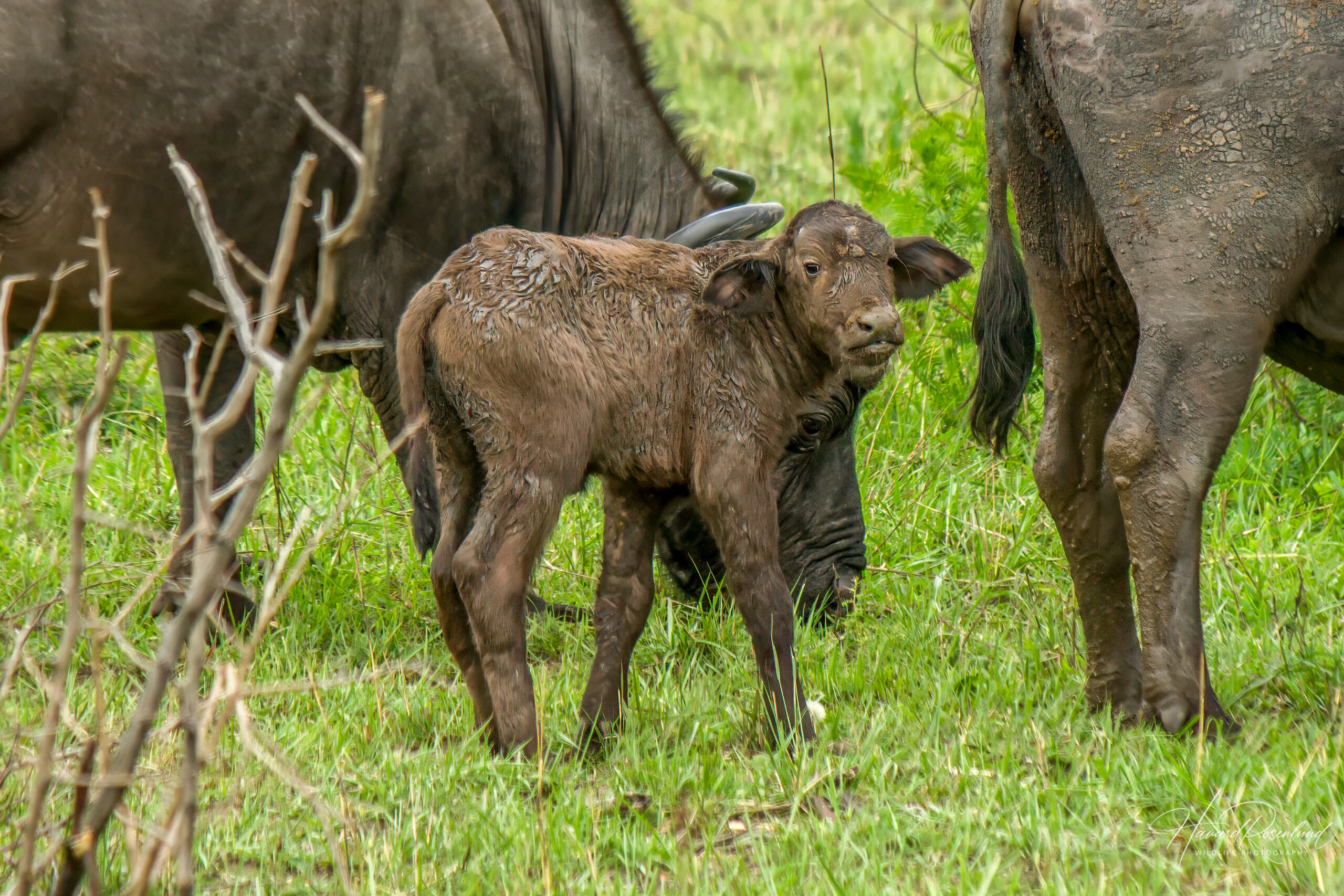
Breeding can occur throughout the year, but mating and calving often peak in relation to the wet season and local food conditions. Gestation lasts roughly 330–346 days, and a cow normally gives birth to one calf.
Calves remain close to their mothers and gain protection from the herd. Females usually remain within or near their natal social network, while young bulls increasingly associate with other males as they mature.
Disease
African buffaloes are important hosts for several pathogens that matter to both wildlife and livestock management. In parts of southern Africa they act as reservoirs for bovine tuberculosis caused by Mycobacterium bovis. Foot-and-mouth disease viruses and Theileria parva, associated with corridor disease in cattle, are other important examples.
The effect of disease varies greatly between ecosystems. A pathogen may circulate for years with limited visible mortality, while drought, poor body condition or interactions with livestock can change the outcome. Disease therefore affects not only buffalo health, but also where buffaloes can be moved and how managers limit contact between wildlife and livestock.
Cultural significance
African buffaloes appear only rarely in San rock art, which makes the surviving examples especially interesting. Research from southern Africa has linked buffalo imagery to San ideas about powerful rain animals. In these traditions, horned rain creatures could represent destructive storms or the softer rains that restored the land.
Because buffalo paintings are so rare, their meaning cannot be reduced to one simple symbol. The surviving images nevertheless show that the species also had a place in ritual thought, not only in the physical landscape.
Relationship with humans
African buffaloes have long been important as game animals, sources of meat and major attractions in wildlife tourism. In southern Africa they are also central to the game-ranching economy, where disease status strongly affects movement and value. Disease-free animals from approved populations can command unusually high prices because they can be translocated to properties that could not accept buffaloes from populations carrying regulated livestock diseases.
Managing buffaloes near livestock can be particularly complicated because disease control, veterinary fences, hunting, tourism and conservation all interact. The species can therefore be both economically valuable and an important veterinary concern.
The species also has a formidable reputation around people. Buffaloes can injure or kill people when surprised, threatened or wounded, and older bulls are widely regarded as particularly dangerous to encounter on foot. As noted earlier, older bulls often spend longer periods away from mixed herds. These bulls, often called “dagga boys” in southern Africa, commonly spend time alone or in small groups around water and dense cover. Field studies also show that adult males in bachelor groups face much higher lion predation risk than buffaloes in mixed herds, which helps explain why such bulls may be especially wary and defensive.
Status
The African buffalo is listed as Near Threatened on the IUCN Red List. The current global IUCN assessment was published in 2019 and describes the overall population trend as decreasing.
A more recent continent-wide review using population data up to 2022 estimated more than 564,000 savanna buffaloes, excluding about 75,000 animals under intensive private management in South Africa. Cape buffaloes are by far the most numerous, with more than 510,000 individuals, while West African and Central African savanna buffaloes were estimated at more than 20,000 and more than 34,000 respectively. No reliable total population estimate is available for forest buffaloes because they are difficult to count accurately in dense forest.
The Central African savanna buffalo has declined sharply and was estimated to have lost nearly half its population over about 25 years. West African savanna buffaloes now survive mainly in a small number of isolated protected areas. Forest buffaloes still have important strongholds in the Congo Basin, but populations in West Africa are small, fragmented and often poorly known. Cape buffaloes remain in a much stronger position and are, for example, regionally listed as Least Concern in South Africa.
Threats
The main pressures on the species as a whole are habitat loss and fragmentation, illegal hunting, unsustainable harvest in some regions, disease, and disruption associated with conflict and agricultural expansion. The importance of these pressures varies greatly among subspecies and regions.
The West and Central African savanna forms are especially affected by fragmentation and human pressure, and many populations are now isolated within a small number of protected areas. For forest buffaloes in West Africa, bushmeat hunting, forest loss and degradation, and the small size and isolation of remaining populations are among the main concerns. Forest buffaloes fare better in parts of Central Africa, particularly in large forest landscapes with low human density.
For Cape buffaloes, disease, drought, fencing and land conversion are important local pressures. Because buffaloes depend on water and often move across large landscapes, fences and land-use change can concentrate animals or prevent seasonal movements. Veterinary barriers can be necessary for livestock disease control but may also fragment buffalo populations if poorly planned.
Conservation
African buffalo conservation depends heavily on well-managed protected areas and on preventing populations from becoming increasingly isolated. For Cape buffaloes, large, connected conservation landscapes help maintain natural movements and genetic diversity. Where connections have been broken, active population management and, in some cases, translocation can help reduce isolation.
In West and Central Africa, protecting the remaining strongholds is especially important. Forest buffaloes in West Africa are heavily dependent on effective protected areas and enforcement of wildlife laws, while large connected forests in the Congo Basin still provide important refuges. For the northern savanna forms, both protecting the remaining populations and preventing further fragmentation are priorities.
Conservation measures must also account for diseases that can pass between buffaloes and livestock. Veterinary fencing and other disease-control measures can reduce transmission risk, but they should be designed so that they do not unnecessarily block seasonal movements or isolate populations. Conservation needs therefore differ substantially among regions and subspecies.
Image gallery
Loading map and observations…
National Red List status
| Country | Status | Assessment | Source |
|---|---|---|---|
| South Africa | LCLeast Concern | Red List of South African Species 2016 | SANBI – Red List of South African Species |
Have you seen this species?
Independent species archive
Did you find this species page useful?
Wildlife Vagabond is independently built and maintained. Voluntary support helps cover hosting, maps, data storage and continued improvements to the species archive.
Support Wildlife VagabondSpecies content will remain freely available.
References
- Cornélis, D., Melletti, M., Korte, L., Ryan, S. J., Mirabile, M., Prin, T., & Prins, H. H. T. (2014). African buffalo <i>Syncerus caffer</i> (Sparrman, 1779). In Ecology, Evolution and Behaviour of Wild Cattle (pp. 326–372). Cambridge University Press. https://doi.org/10.1017/CBO9781139568098.022
- International Union for Conservation of Nature. (2019). Syncerus caffer. The IUCN Red List of Threatened Species. https://www.iucnredlist.org/species/21251/50195031
- Mammal Diversity Database. (n.d.). Syncerus caffer. American Society of Mammalogists. https://www.mammaldiversity.org/taxon/1006274/
- Mhlophe, S. K., Clarke, C., Ghielmetti, G., Matthews, M., Kerr, T. J., Miller, M. A., & Goosen, W. J. (2025). Culture-independent detection of Mycobacterium tuberculosis complex DNA using targeted next generation sequencing in African buffalo (Syncerus caffer) oronasal swabs in South Africa. Frontiers in Veterinary Science, 12, 1523628. https://doi.org/10.3389/fvets.2025.1523628
- Michel, A. L., & Bengis, R. G. (2012). The African buffalo: A villain for inter-species spread of infectious diseases in southern Africa. Onderstepoort Journal of Veterinary Research, 79(2), a453. https://doi.org/10.4102/ojvr.v79i2.453
- National Museum South Africa. (n.d.). The Buffalo in San Rock Art. https://nationalmuseumpublications.co.za/the-buffalo-in-san-rock-art/
- Prins. (1996). Ecology and Behaviour of the African Buffalo. https://link.springer.com/book/10.1007/978-94-009-1527-5
- South African National Biodiversity Institute. (n.d.). Syncerus caffer regional assessment. https://speciesstatus.sanbi.org/assessment/last-assessment/2232/
- Spaan, R. S., Epps, C. W., Ezenwa, V. O., & Jolles, A. E. (2019). Why did the buffalo cross the park? Resource shortages, but not infections, drive dispersal in female African buffalo (). Ecology and evolution, 9(10), 5651-5663. https://doi.org/10.1002/ece3.5145