
Two Predation Events Documented Eastern Vine Snakes Eating Flap-necked Chameleons in Mozambique
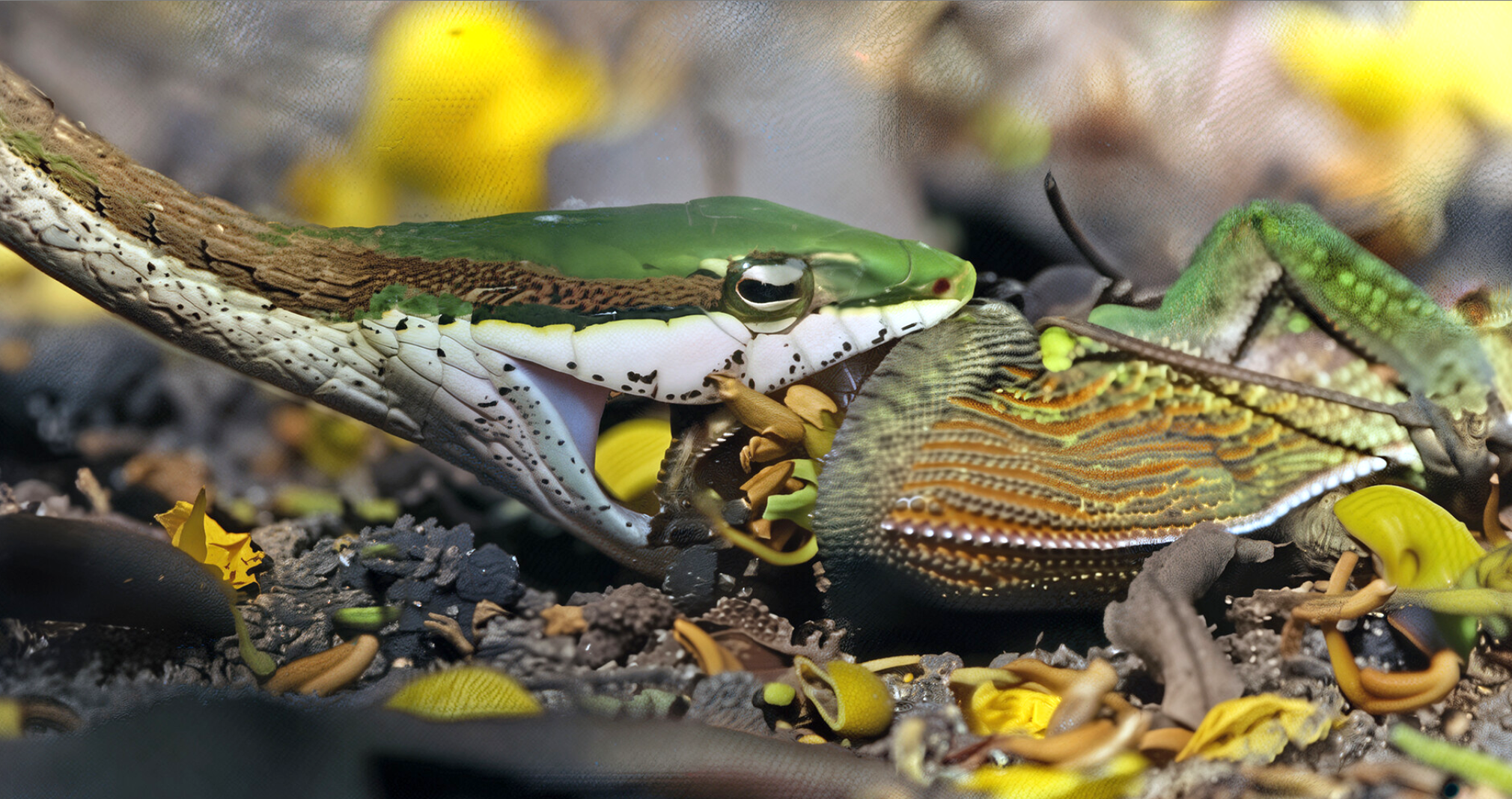
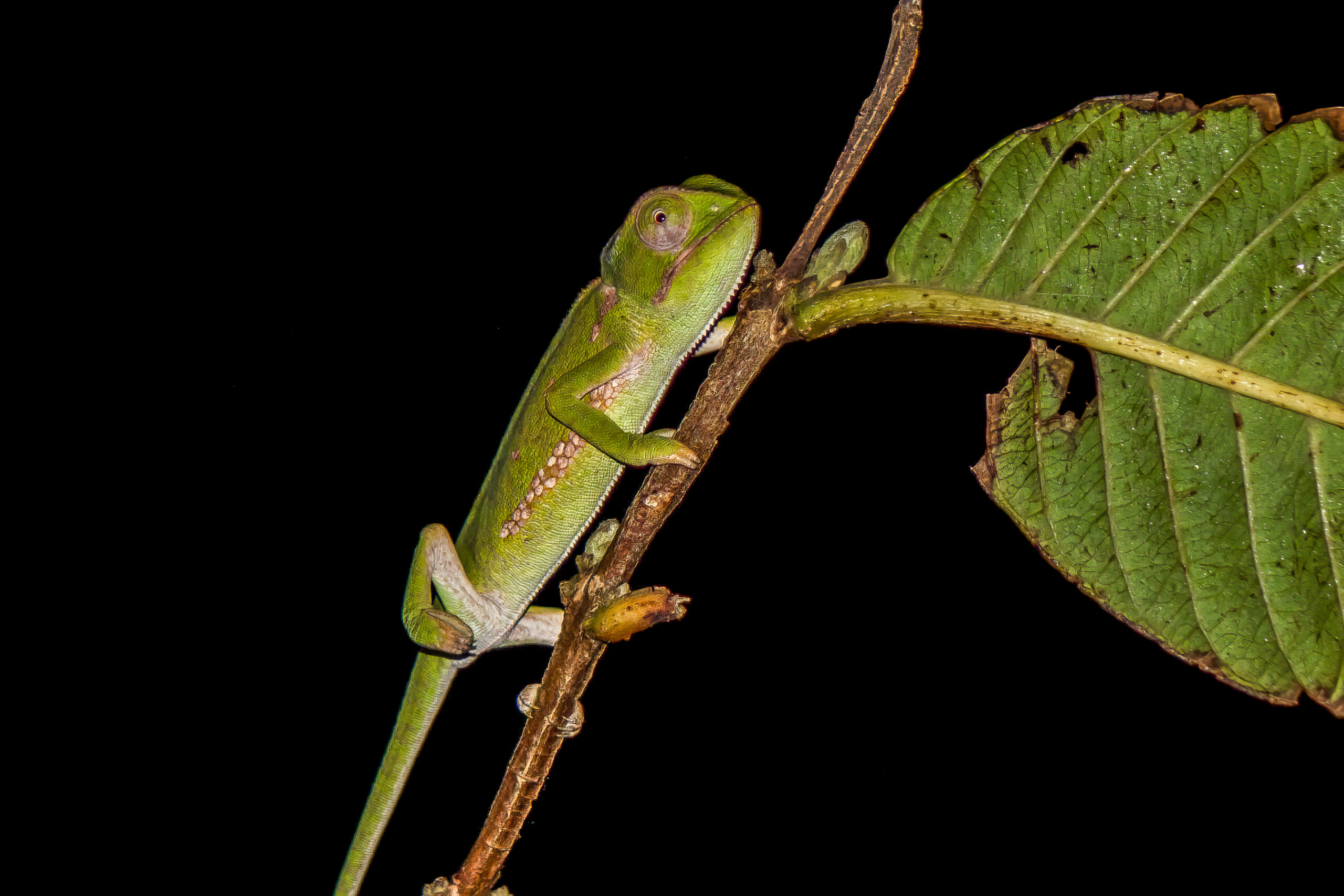
Two direct field observations in the Zambezi Delta documented eastern vine snakes (Thelotornis mossambicanus) feeding on flap-necked chameleons (Chamaeleo dilepis). The study, published on 9 June 2026 in African Journal of Ecology, provides the first published photographic documentation of this predator–prey interaction in the wild.
Both observations were made during opportunistic visual searches in sand-forest habitat at Ngazi Camp in Coutada 11, southern Mozambique. In other words, researchers were actively looking for reptiles and recorded rare interactions when they happened rather than following fixed sampling points or a standardised predation survey. The two encounters can therefore describe behaviour in detail, but they cannot show how frequently eastern vine snakes prey on flap-necked chameleons. The first occurred on 16 April 2023. Researchers initially saw an adult vine snake about 1.8–2.5 metres above the ground and an adult flap-necked chameleon nearby in the vegetation. When they passed the same place again a few minutes later, a vine snake was on the ground holding a chameleon head-first in its mouth. The researchers could not confirm that these were the same two individuals they had seen earlier.
The first interaction was followed for about 30 minutes. The snake initially remained on the sandy ground without swallowing the chameleon. It then moved across the substrate, climbed a staircase and entered a tree while dragging the limp prey. Only after reaching a stable position in the vegetation did it begin swallowing the chameleon, continuing to climb as ingestion progressed.
The second observation, on 17 June 2025, began with another vine snake already holding a flap-necked chameleon on the ground. In this case ingestion had started. The snake retreated behind a water reservoir while swallowing the prey, completed ingestion and then moved towards a nearby fig tree. This interaction lasted about 25 minutes.
The attacks were reconstructed from what happened afterwards
The initial strikes and captures were not observed in either case. The authors consider it most plausible that the encounters began in the three-dimensional arboreal habitat before predator and prey ended up on the ground. Eastern vine snakes are rear-fanged snakes with potent haemotoxic venom, so venom-induced weakness could have contributed to the chameleons losing their grip; a violent struggle could also have dislodged the animals. Because the actual strike and fall were not seen, the study cannot determine which mechanism caused the displacement. The authors use the observations to discuss what they call vertical displacement: a predator–prey interaction shifting from structurally complex vegetation to the comparatively flat forest floor.
Flap-necked chameleons rely on camouflage, panoramic vision, grasping feet and a prehensile tail in their arboreal habitat. Eastern vine snakes are likewise highly specialised for hunting in vegetation, with a slender cryptic body and binocular vision that aids depth perception. The authors argue that the two encounters show how the chameleon’s arboreal defences can be overcome by a predator that is itself strongly adapted to the same environment.
Because interactions between cryptic animals in dense vegetation are difficult to observe directly, the researchers suggest that long-term arboreal camera trapping and automated video analysis could help document more rare predator–prey events of this kind.
Ecology
Related news
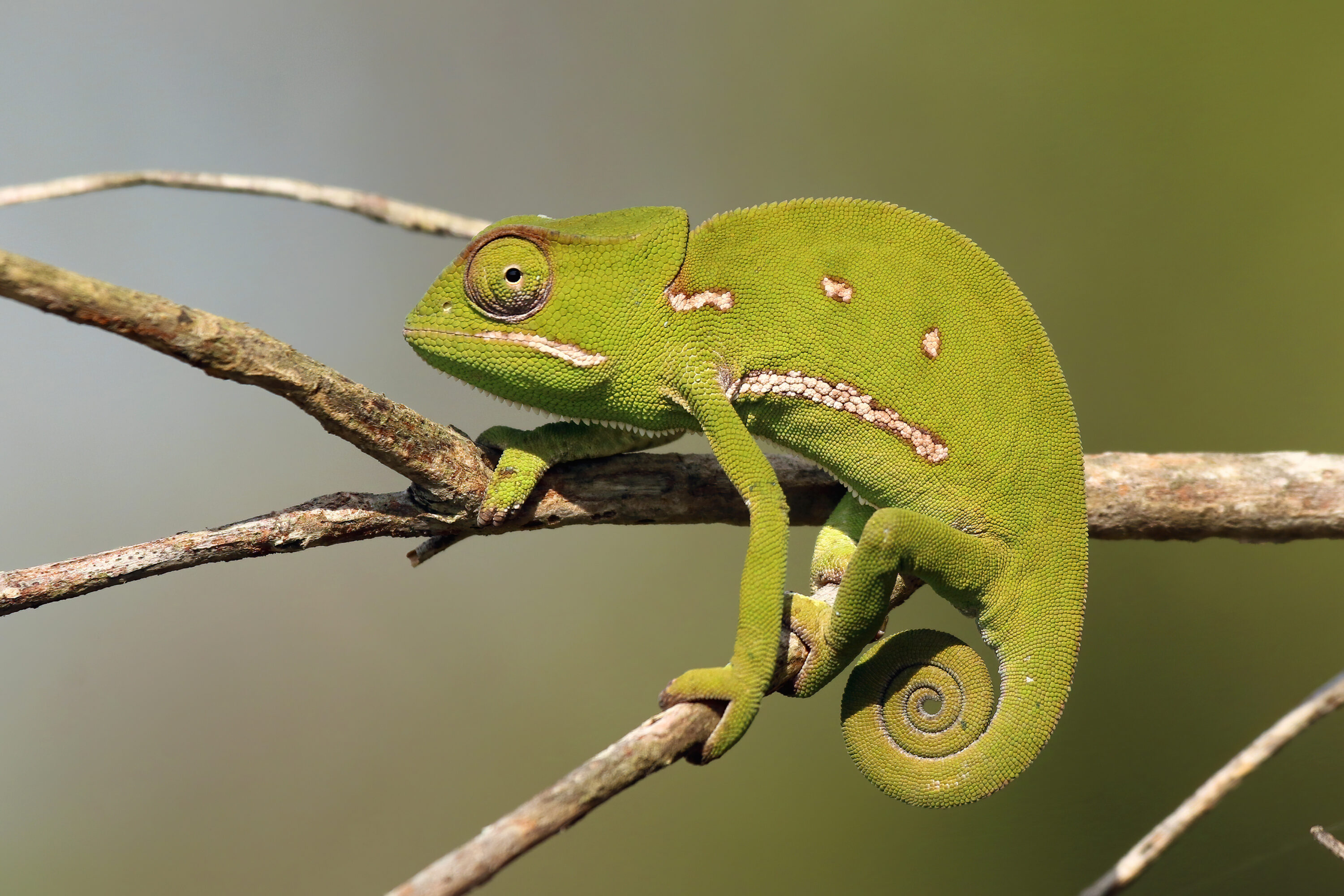
Taxonomic Paper Returned roperi and martensi to Subspecies of the Flap-Necked Chameleon
A 2026 taxonomic reassessment argued that Chamaeleo incognitus was not validly established and formally returned roperi and martensi…
Read story →
African Bush Elephants Distinguished Artificial Food-Quantity Patterns at Close Range
In experiments in South Africa, four semi-tame elephants chose between visual patterns representing canopy size and leaf density.…
Read story →
Maps Show Where Wild Boar Could Thrive and Spread on Jeju Island
Researchers mapped potentially suitable wild-boar habitat across roughly 36% of Jeju Island and identified eight possible corridors linking…
Read story →SPECIES IN THIS STORY
Species in this story
Independent research and conservation news archive
Did you find this information useful?
Wildlife Vagabond is independently built and maintained. Voluntary support helps cover source verification, hosting and continued work on research and conservation news.
Support Wildlife VagabondThe news archive will remain freely available.