
Common Buzzard
Buteo buteo
At a glance
Habitat
- Woodland edges, farmland, grassland and other open hunting areas with trees or structures for nesting and perching
Diet
- Opportunistic; mainly small mammals where abundant, but also birds, amphibians, reptiles, insects, earthworms and carrion
Activity
- Diurnal
Size
- Length: 45–57 cm Weight: about 830 g on average
Range
- Europe and western Asia; northern and eastern populations are more migratory
Description
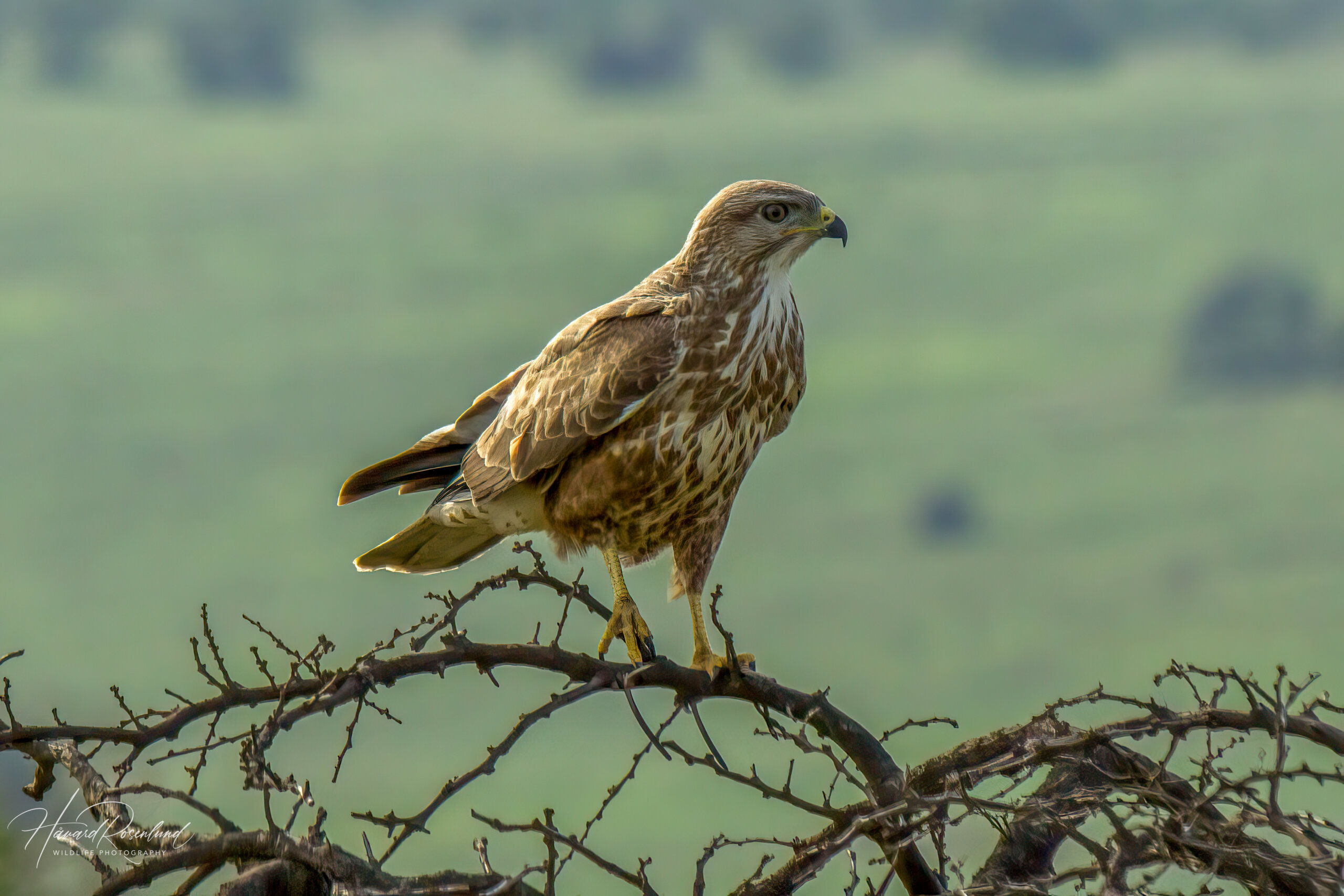
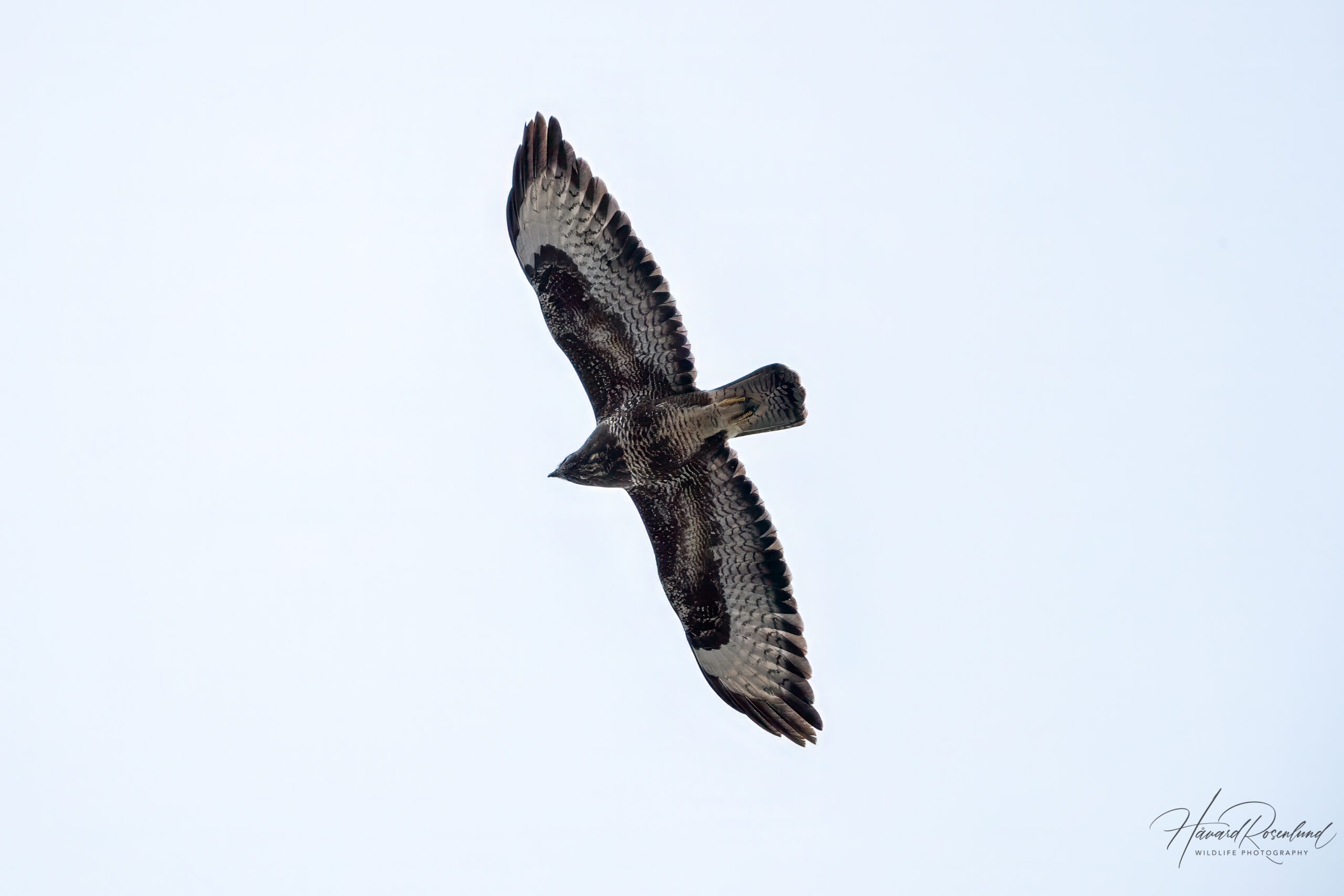
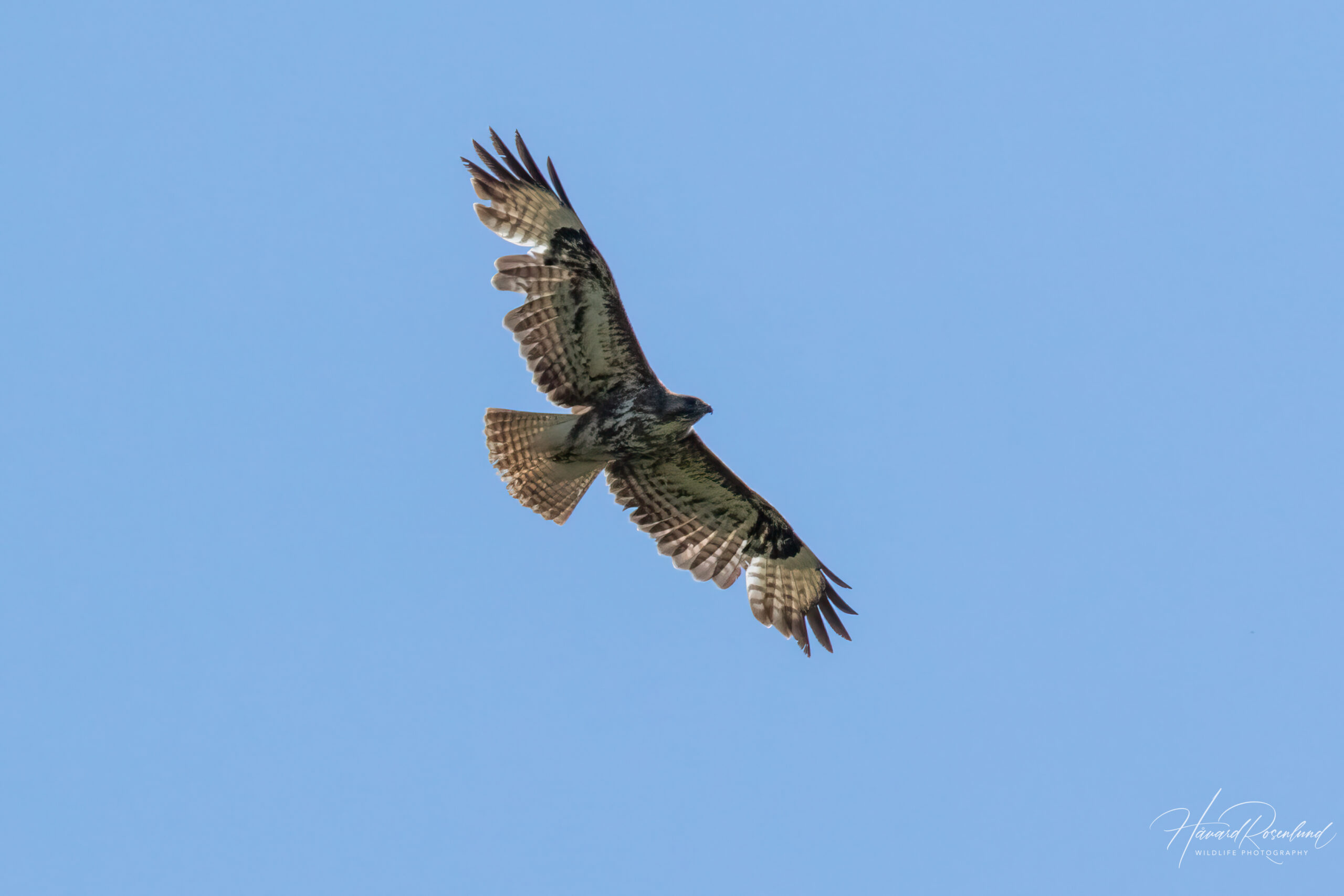
The common buzzard (Buteo buteo) is a broad-winged, medium-sized raptor widespread across Europe and western Asia. Adults are about 45–57 cm long and average roughly 830 g, with females generally larger than males. In flight the species shows broad rounded wings, a relatively short rounded tail and a compact body, often soaring with the wings held in a shallow V.
Plumage is extraordinarily variable. Individuals range continuously from almost uniformly dark brown to very pale birds with extensive whitish plumage, and dividing them into a few discrete “morphs” only simplifies a much broader spectrum. A long-term study of 202 families found that colour is highly heritable and is best treated as a polygenic quantitative trait. A Europe-wide study published in 2026 also found strong geographic structure, with particularly pale birds concentrated in north-central Europe.
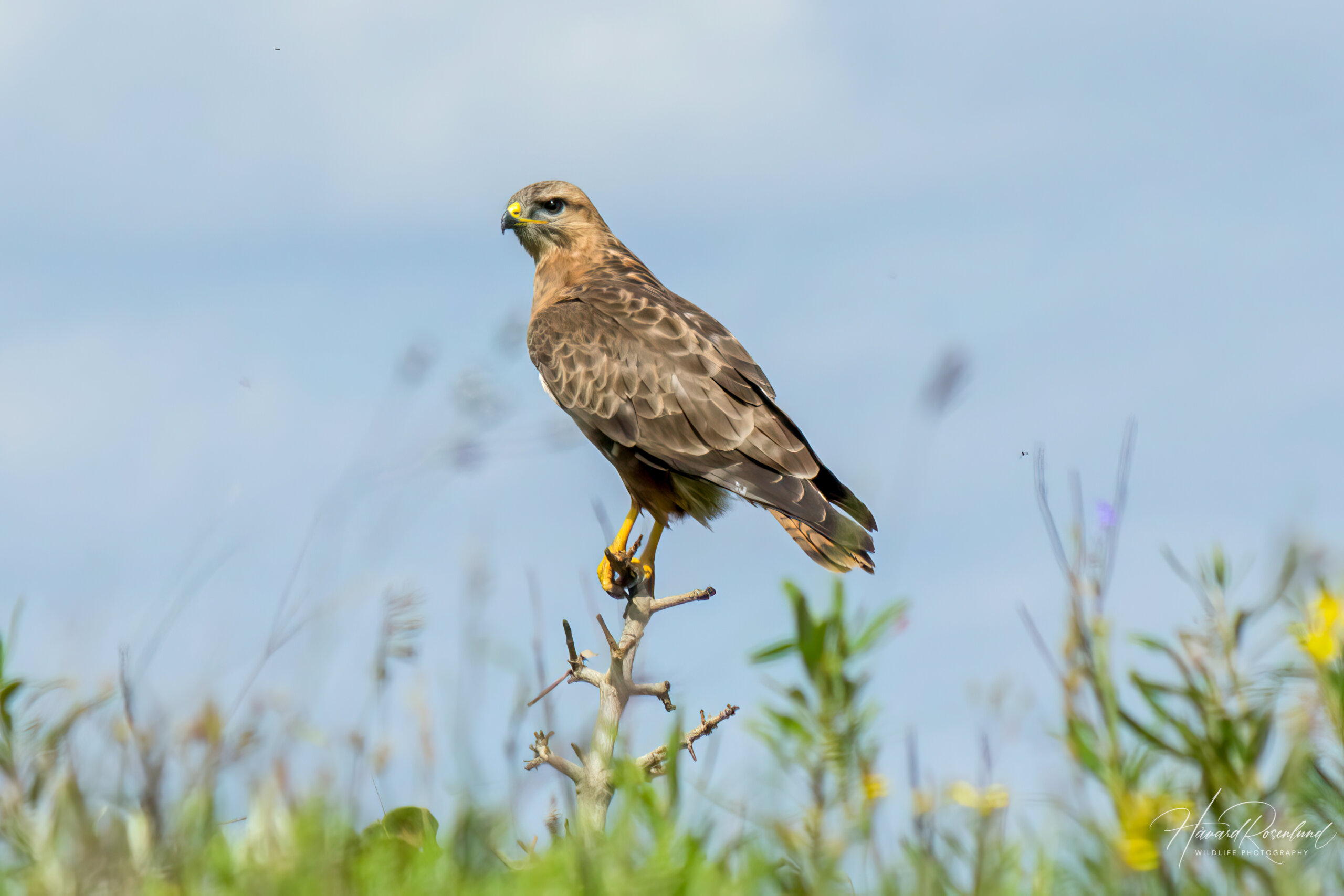
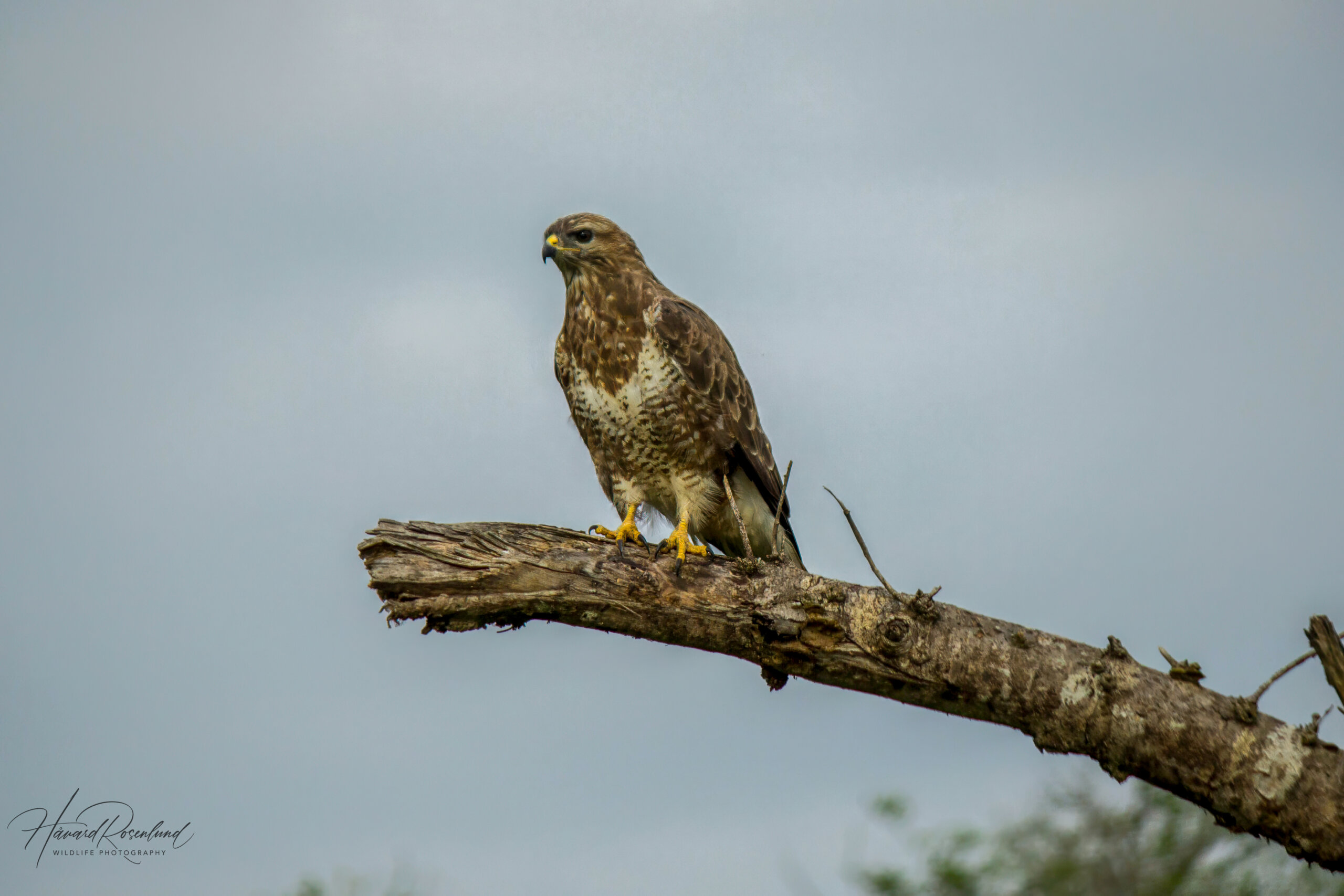
The highly migratory steppe buzzard (Buteo buteo vulpinus) is an eastern subspecies of the common buzzard. It breeds across northern and eastern parts of the species' range and migrates to sub-Saharan Africa and southern Asia. Several of the South African photographs in the gallery depict this form.
Habitat
Common buzzards use a broad range of landscapes but typically combine woodland, forest edges or scattered trees for nesting and roosting with open ground for hunting. Farmland, pasture, meadow, heath and wetland margins can all provide suitable feeding habitat when prey is available.
This woodland–open-ground mosaic is more important than any single vegetation type. The species also uses strongly human-modified countryside, including farmland and road corridors.
Diet
The diet is opportunistic and changes with local abundance. Small mammals are often the main prey, but common buzzards also take birds, amphibians, reptiles, large insects and earthworms and readily use carrion.
Hunting
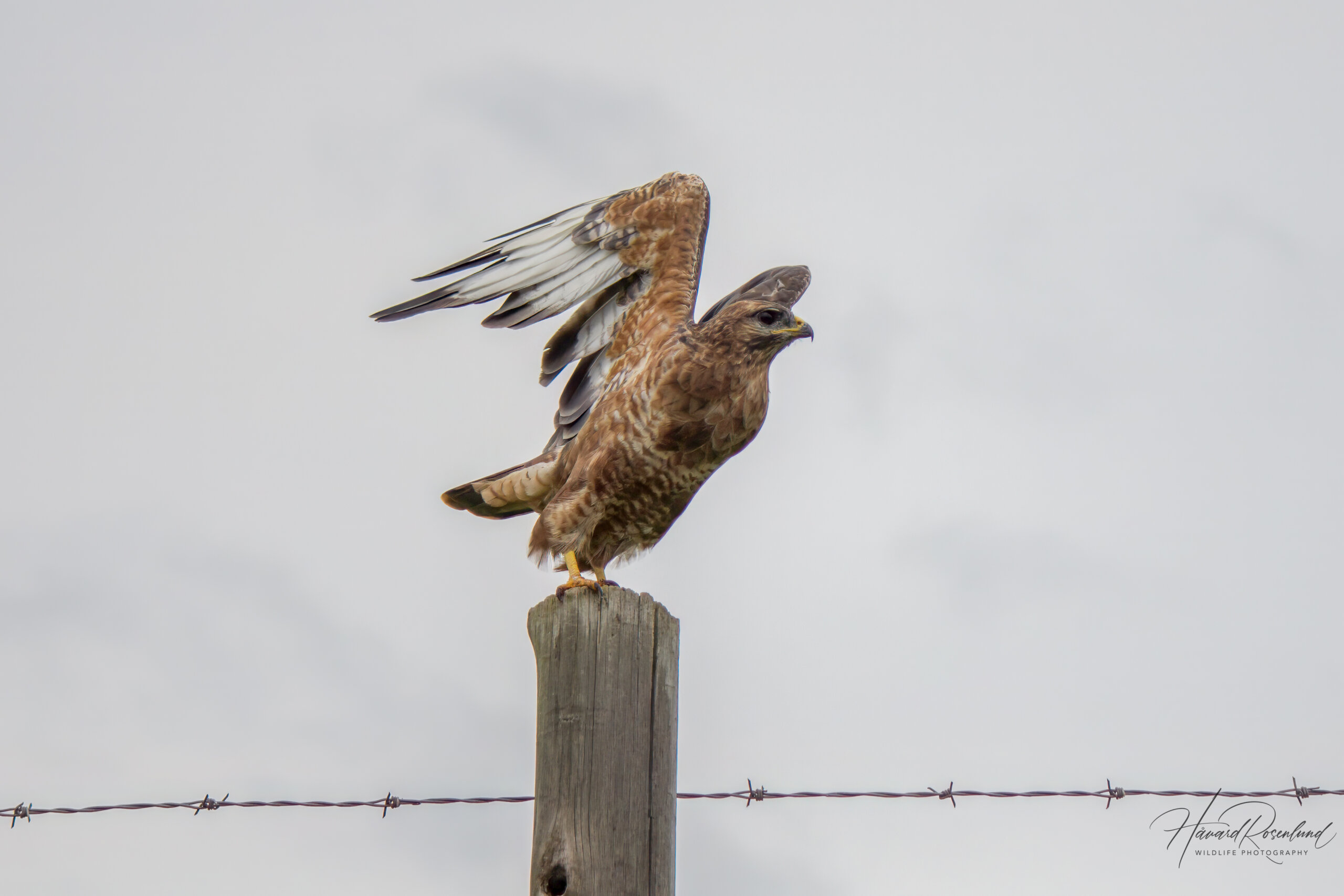
Common buzzards alternate between two broad hunting modes. They can wait from trees, fence posts, utility poles and other elevated lookouts before dropping onto prey, or search more widely while soaring and scanning open ground. The balance changes with terrain, weather, prey accessibility and the availability of suitable perches.
Field studies show that the birds actively adjust where and how they hunt. Snow cover can alter hunting-site use in winter, while roads and expressways create both new lookout structures and strips of short vegetation where prey may be easier to detect. Buzzards therefore exploit the structure of a landscape rather than relying on one fixed hunting technique.
Migration
Migration varies strongly across the range. Many adults in western and central Europe are resident, whereas birds breeding farther north and east are increasingly migratory. Satellite tracking and ringing studies show that northern common buzzards are primarily short-distance migrants, moving toward western, central and southern Europe rather than undertaking the transcontinental journeys typical of many other raptors.
Migration distance also varies with population and winter conditions. A long-term analysis of 2,157 recoveries of ringed birds across Europe found that northern populations have shortened their autumn movements as winters have become milder, with the strongest changes in northern Europe. The eastern steppe buzzard is much more strongly migratory and travels far beyond Europe, with major wintering populations in eastern and southern Africa and smaller numbers in southern Asia.
Breeding
Common buzzards usually form territorial monogamous pairs and often return to the same breeding area for many years. Territorial pairs also perform conspicuous flight displays that advertise their presence and reinforce the pair bond. The nest is a large platform of sticks, usually high in a tree and frequently decorated with fresh green leaves or twigs. Cliffs are also used in some parts of the range and can predominate as nest sites in some island populations. Alternative nests may be maintained within the same territory and pairs can switch between them in different years.
A typical clutch contains two to three eggs. The female does most of the incubating, with occasional help from the male, for about 34 days. Both parents feed the young, although the male initially provides much of the prey while the female remains close to the nest. The chicks normally fledge at about 44–52 days of age and remain dependent on the adults for some time afterwards.
Status
The common buzzard is classified as least concern on the IUCN Red List. Across much of Europe the species has recovered strongly from historical persecution and earlier pesticide-related declines and is now one of the continent's most familiar birds of prey.
British monitoring shows a 76% increase in the breeding population between 1995 and 2024, continuing the major recovery from its mid-twentieth-century low. The broad European picture remains far more secure than during the historical period of intense persecution.
Image gallery
Loading map and observations…
Have you seen this species?
Independent species archive
Did you find this species page useful?
Wildlife Vagabond is independently built and maintained. Voluntary support helps cover hosting, maps, data storage and continued improvements to the species archive.
Support Wildlife VagabondSpecies content will remain freely available.
References
Information about the species’ global distribution and status is based primarily on global Red List data. See the references below for details.
- BirdLife International. (n.d.). Common Buzzard species factsheet. https://datazone.birdlife.org/species/factsheet/common-buzzard-buteo-buteo
- British Trust for Ornithology. (n.d.). Buzzard. https://www.bto.org/learn/about-birds/birdfacts/buzzard
- Cieśluk, P., Cmoch, M., & Kasprzykowski, Z. (2023). Hunting Site Behaviour of Sympatric Common Buzzard Buteo buteo and Rough-Legged Buzzard Buteo lagopus on Their Wintering Grounds. Animals, 13(17), 2801. https://doi.org/10.3390/ani13172801
- Cieśluk, P., Morelli, F., & Kasprzykowski, Z. (2024). Comparison of hunting site strategies of the common buzzard Buteo buteo in open landscapes and along expressways. PeerJ, 12, e18045. https://doi.org/10.7717/peerj.18045
- Delhey, K., Kappers, E. F., Valcu, M., Both, C., & Kempenaers, B. (2026). Environmental correlates of spatio‐temporal patterns of colour variation in a bird of prey: The common buzzard (Buteo buteo). Ibis, 168(3), 985-1001. https://doi.org/10.1111/ibi.70041
- International Union for Conservation of Nature. (n.d.). Common Buzzard. The IUCN Red List of Threatened Species. https://www.iucnredlist.org/species/61695117/206634667
- Kappers, E., Chakarov, N., Krüger, O., Mueller, A., Valcu, M., Kempenaers, B., & Both, C. (2017). Classification and Temporal Stability of Plumage Variation in Common Buzzards. Ardea, 105(2), 125-136. https://doi.org/10.5253/arde.v105i2.a1
- Kappers, E. F., de Vries, C., Alberda, A., Forstmeier, W., Both, C., & Kempenaers, B. (2018). Inheritance patterns of plumage coloration in common buzzards Buteo buteo do not support a one-locus two-allele model. Biology Letters, 14(4), 20180007. https://doi.org/10.1098/rsbl.2018.0007
- Martín, B., Onrubia, A., & Ferrer, M. (2014). Effects of climate change on the migratory behavior of the common buzzard Buteo buteo. Climate Research, 60(3), 187-197. https://doi.org/10.3354/cr01233
- Strandberg, R., Alerstam, T., Hake, M., & Kjellén, N. (2009). Short‐distance migration of the Common Buzzard Buteo buteo recorded by satellite tracking. Ibis, 151(1), 200-206. https://doi.org/10.1111/j.1474-919X.2008.00890.x