
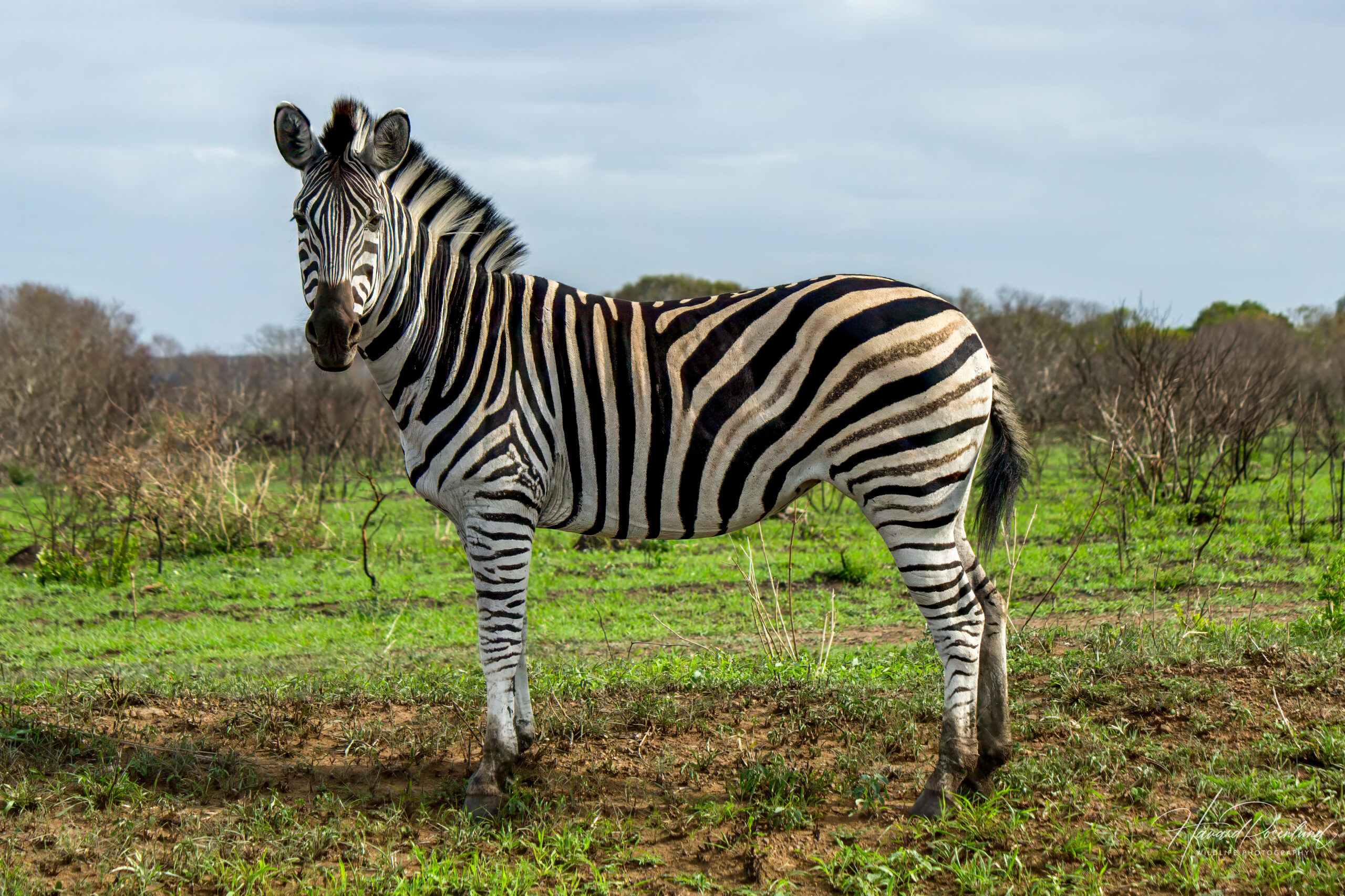
Plains Zebra
Equus quagga
At a glance
Habitat
- Grasslands, open savannas and lightly wooded country
Diet
- Primarily grasses; occasional leaves and shoots
Activity
- Active by day and night, with feeding peaks in cooler hours
Size
- Length: 2.0–2.5 m (head–body) Weight: 175–385 kg
Range
- Eastern and southern Africa
Description
The plains zebra (Equus quagga) is the most widespread of the three living zebra species. Adult plains zebras measure about 200–250 cm in head-and-body length, stand roughly 110–140 cm at the shoulder and weigh around 175–385 kg. The difference between the sexes is small, although stallions are usually slightly larger than mares.
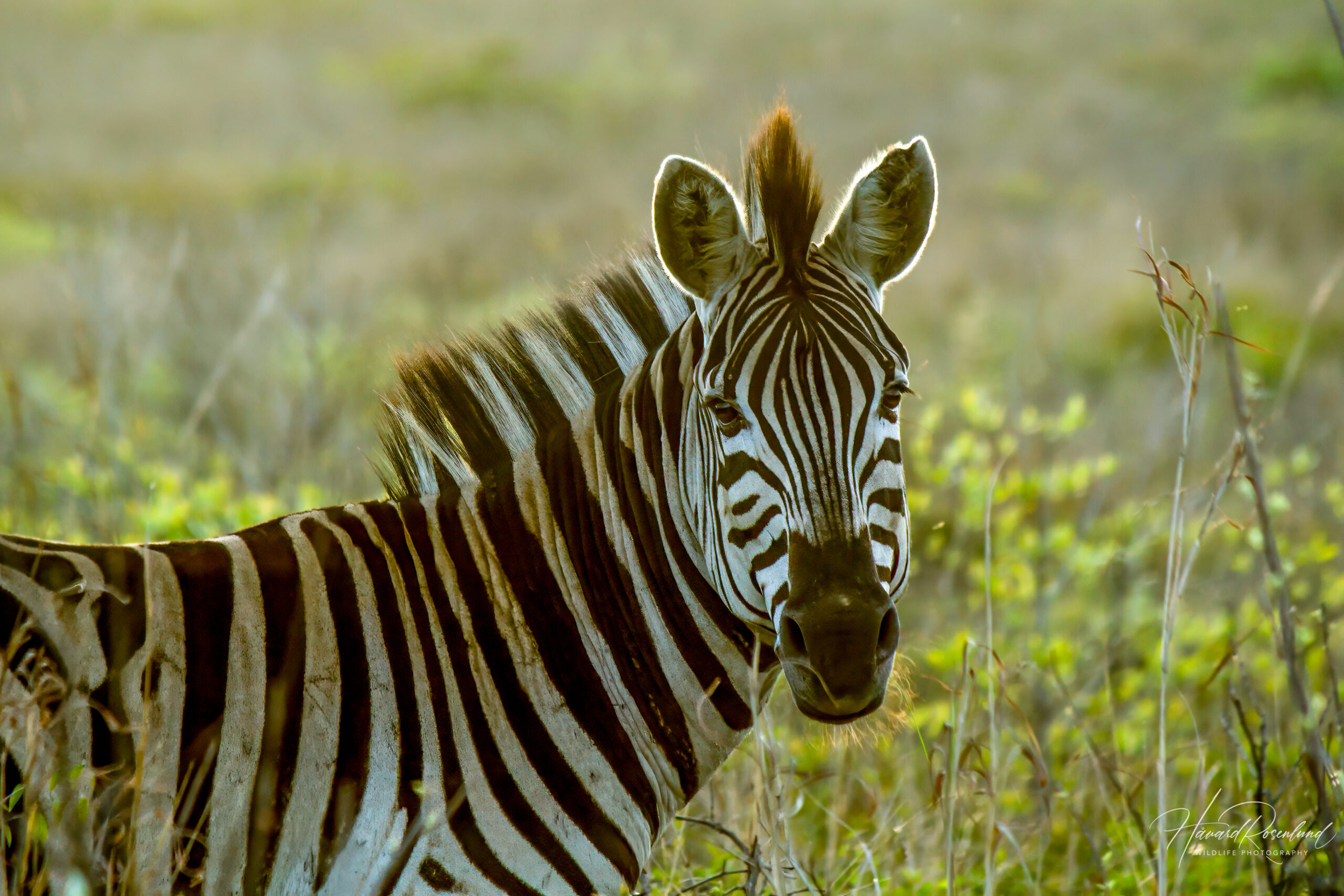
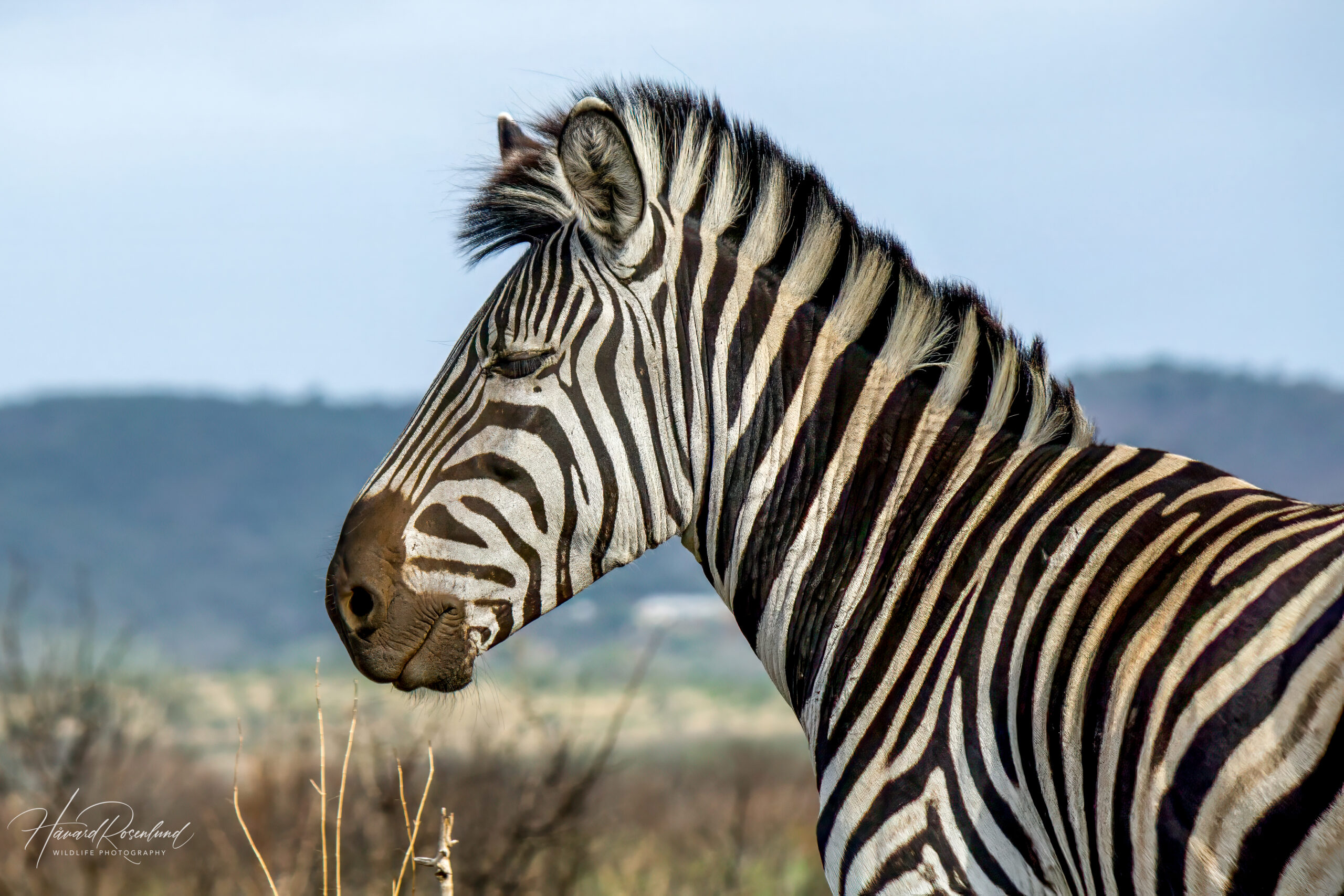
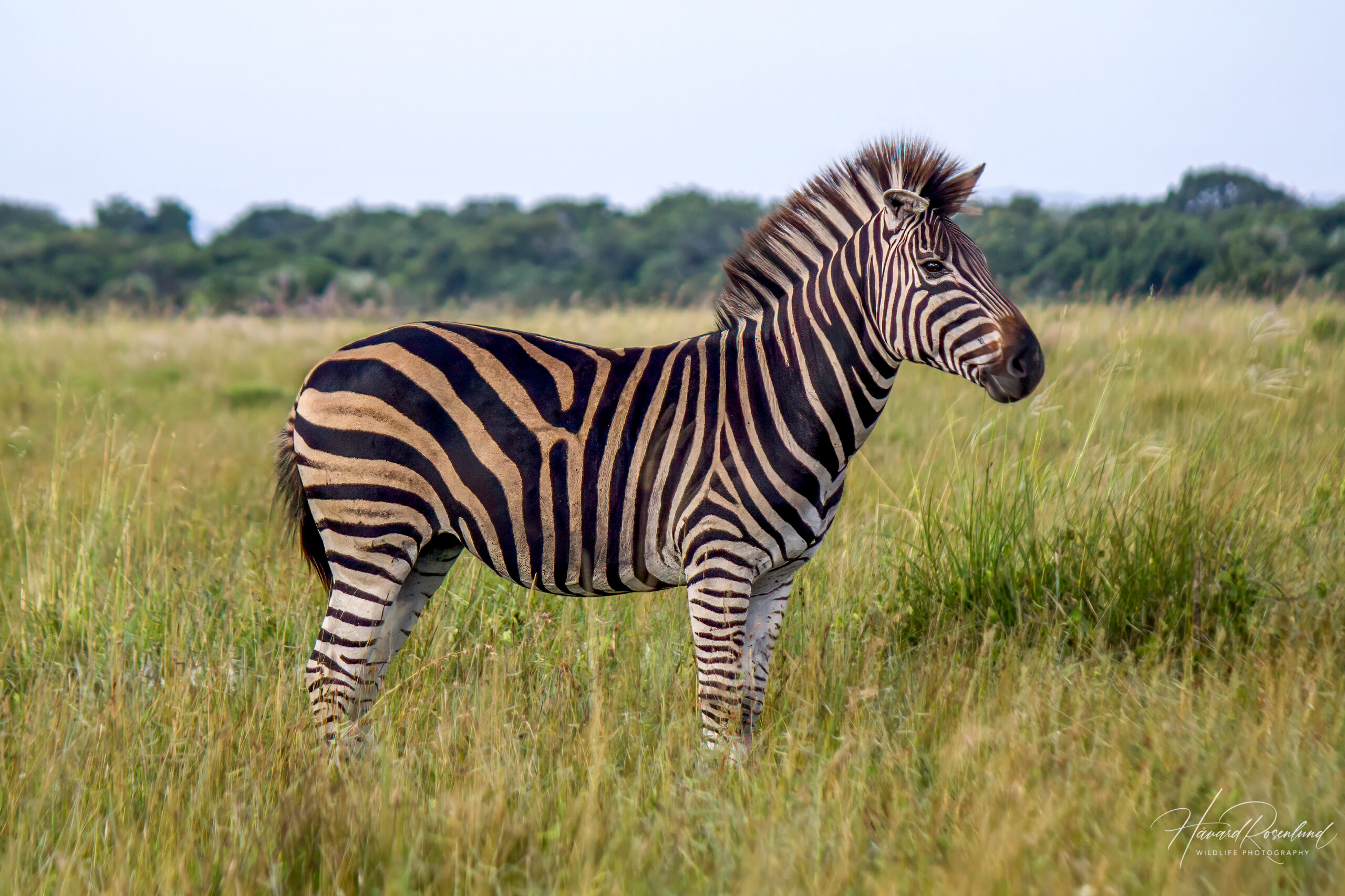
The black-and-white stripe pattern varies greatly between individuals and across the range. Plains zebras usually have broader stripes than Grevy’s zebra (Equus grevyi), and the striping commonly continues onto the belly, unlike in Grevy’s zebra and mountain zebra (Equus zebra). Southern populations often show paler “shadow stripes” between the main dark bands and less extensive striping on the legs.
Taxonomy
Plains zebra is currently treated as a single species, Equus quagga, by Mammal Diversity Database v2.5. Many geographic forms have been named, and names such as Grant’s zebra (E. q. boehmi) and Burchell’s zebra (E. q. burchellii) are still widely used. The number and boundaries of the subspecies have varied between classifications, and many of the differences in body size and stripe pattern change gradually across the range rather than forming sharp divisions.
The species name has an unusual history. The extinct quagga of southern Africa was described before Burchell’s zebra, and genetic work later confirmed that the quagga belonged within the plains zebra lineage. Under zoological naming rules the older name quagga therefore has priority, which is why the species is now called Equus quagga rather than Equus burchellii. The quagga itself is generally referred to as E. q. quagga.
Stripes
Many explanations have been proposed for zebra stripes, including camouflage, confusing predators, recognising other zebras and helping control body temperature. No single idea explains every part of the pattern, and several of the classic theories have received mixed support in experiments.
The clearest experimental support concerns biting flies. Field studies show that horseflies approach zebras and ordinary horses at similar rates, but land on zebras far less often. Experiments with the same horses showed why the stripes may matter: when the horses wore black, white or zebra-striped cloth coats, the flies had much greater difficulty landing on the striped fabric than on the solid-coloured coats. Other experiments have found the same effect with different zebra stripe patterns. This does not mean that fly protection is the stripes’ only function, but it is currently one of the best-supported explanations.
Each zebra also has its own distinctive pattern, which may help individuals recognise one another. The stripes may therefore provide several benefits at the same time.
Habitat
Plains zebras inhabit open grassland, savanna and lightly wooded country across eastern and southern Africa. They usually avoid dense forest and the driest deserts, but can use surprisingly dry landscapes where seasonal water and grazing are still available.
The species depends strongly on water and normally stays within travelling distance of a reliable source. Rainfall therefore shapes both local habitat use and long-distance movements. After rain, zebras can make use of temporary grasslands and waterholes that disappear during the dry season.
Diet
Plains zebras are mainly grazers, with grasses making up about 90% or more of the diet in many populations. Like other horses, they digest much of their food in the hindgut. This lets them process large amounts of coarse, fibrous grass quickly, even though they extract less nutrition from each mouthful than ruminants such as antelopes. Leaves, shoots and other plant material are eaten occasionally.
Their digestive system allows plains zebras to feed on taller, coarser grasses that many smaller ruminants use less readily. By cropping this layer, zebras can make shorter, fresher growth easier for wildebeest and gazelles to reach. The species may still compete when fresh grass becomes scarce.
Behaviour
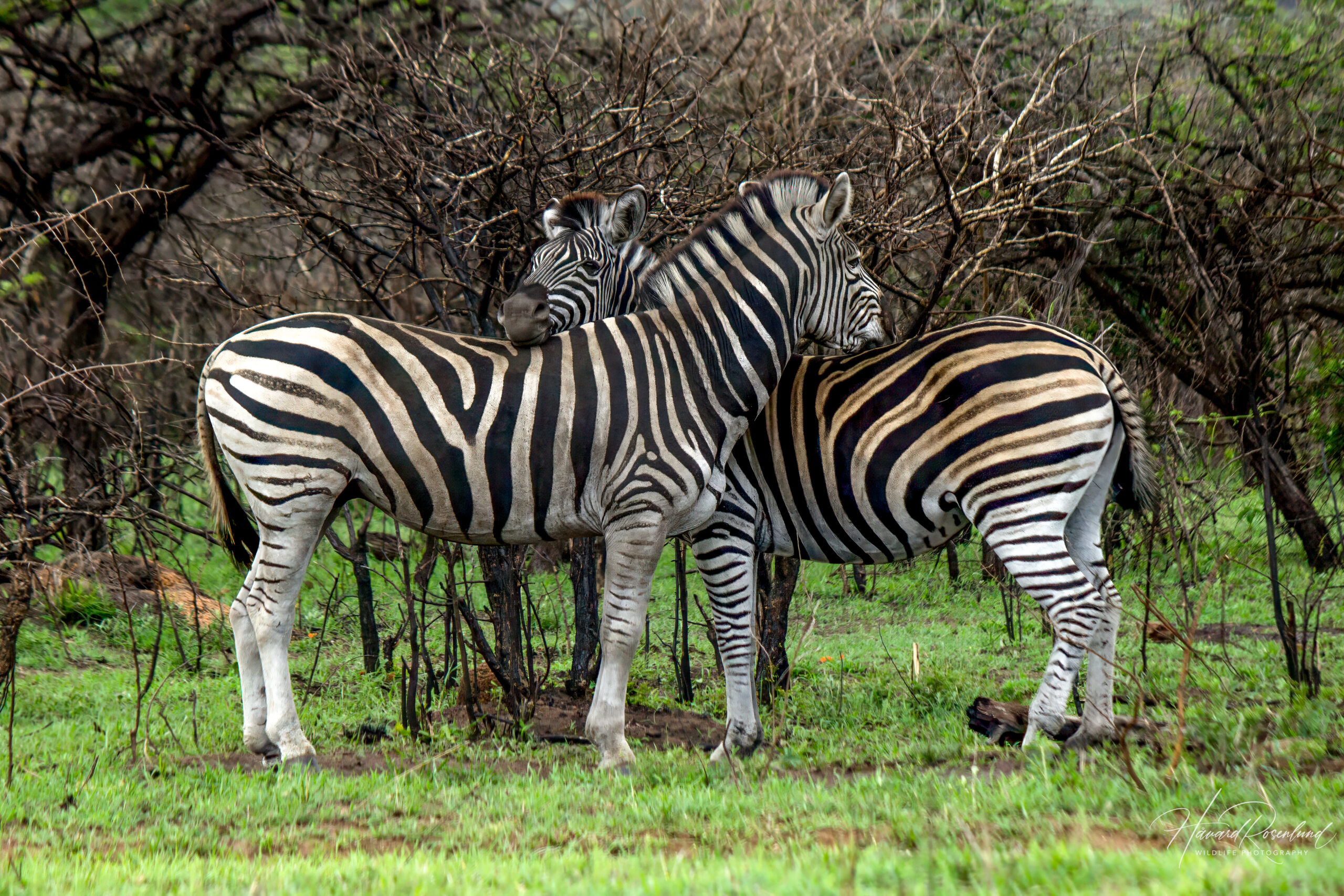
Plains zebras feed by day and night, with much of their activity in the cooler hours and longer rest periods around midday. They regularly dust-bathe, rub against trees and groom one another, and much of their daily movement links grazing areas with water.
The species also has a varied vocal repertoire. A 2024 study distinguished at least four call types: two kinds of snort, squeals and the characteristic “quagga quagga” call used for long-distance contact. Snorts carried the clearest individual signatures, which may allow other zebras to recognise the caller by voice.
Social behaviour
The basic social unit is a stable family group with one stallion, one or several mares and their offspring. The mares form the long-term core of the group and have a ranking system among themselves; a high-ranking mare often leads routine movements. Family groups can remain together for years even when they temporarily join many other groups in herds of hundreds or thousands.
Young males leave the family they were born into and join bachelor groups. As they mature, stallions compete for young mares and eventually form family groups of their own. Conflicts can involve threat displays, biting and kicking, but many are settled without a prolonged fight. Bachelor groups give younger males a social setting in which to develop before they establish families of their own.
Close bonds between mares also have direct practical benefits. A 2025 study found that mares slept longer while lying down when another zebra kept watch, and in 64% of these cases the vigilant partner was the mare’s closest female friend. The same friend also intervened when the mare was harassed and was more likely to be the first to follow when the mare tried to set the family group in motion. Stable bonds between unrelated mares therefore contribute both to safety and coordination within the group.
Predation
Lions (Panthera leo), spotted hyenas (Crocuta crocuta), African wild dogs (Lycaon pictus), leopards (Panthera pardus) and Nile crocodiles (Crocodylus niloticus) all take plains zebras.
Adult plains zebras can be difficult and dangerous prey even for lions. Rapid acceleration, abrupt turns and powerful kicks mean that an attack is not over simply because a lion reaches the hindquarters. Failed attacks may leave long claw marks and scars across the rump and thighs. Such marks on living zebras are visible evidence of encounters they survived.
Early detection nevertheless remains crucial. Family members may bunch around foals, and stallions often place themselves between the group and a threat while the others move away.
Migration
Some plains zebra populations are largely resident, while others make spectacular seasonal migrations in response to rain, fresh grass and water. More than 200,000 Grant’s zebras (Equus quagga boehmi) migrate through the Serengeti–Mara ecosystem. Family groups merge into enormous herds during the wet season, then spread into different dry-season areas before often using many of the same routes again in later years.
Southern Africa contains several other major migrations. Zebras travelling between the Chobe River floodplains in Namibia and the Nxai Pan region of Botswana cover about 250 km on the outward journey and take a less direct route back, making the round trip roughly 500 km. CMS estimates that about 5,000–10,000 animals may take part. Another population moves between the Okavango Delta and the Makgadikgadi grasslands, more than 200 km apart, using seasonal waterholes to reach mineral-rich wet-season grazing.
These movements show that protecting the seasonal destinations is not enough. The routes between them are part of the habitat too. Fences, settlements or other barriers can cause an entire migration to disappear if they block the traditional path.
Reproduction
Plains zebras can breed throughout the year, although births often show a modest peak during or after the rains. Pregnancy lasts about 12–13 months and normally produces one foal. Mares can therefore give birth at intervals of roughly a year or somewhat longer when conditions are good.
A newborn can stand within minutes and is soon able to run. During the first days the mare commonly keeps other zebras at some distance while the foal becomes familiar with her appearance, smell and voice. The foal then becomes part of the family group, whose adults provide extra protection.
In captivity, incoming stallions have occasionally been observed attempting to kill foals they did not sire. A long-term study of plains zebras in Hwange National Park found no sign that such behaviour regularly affects foal survival in the wild. In 2022, however, an apparent attempt was documented in wild plains zebras, during which an unrelated mare helped the mother defend the foal against the stallion. The event shows that the behaviour can occur in the wild, but appears to be rare.
The video below shows a foal about 20 minutes old taking its first steps while its mother keeps the rest of the family at a distance.
Quagga
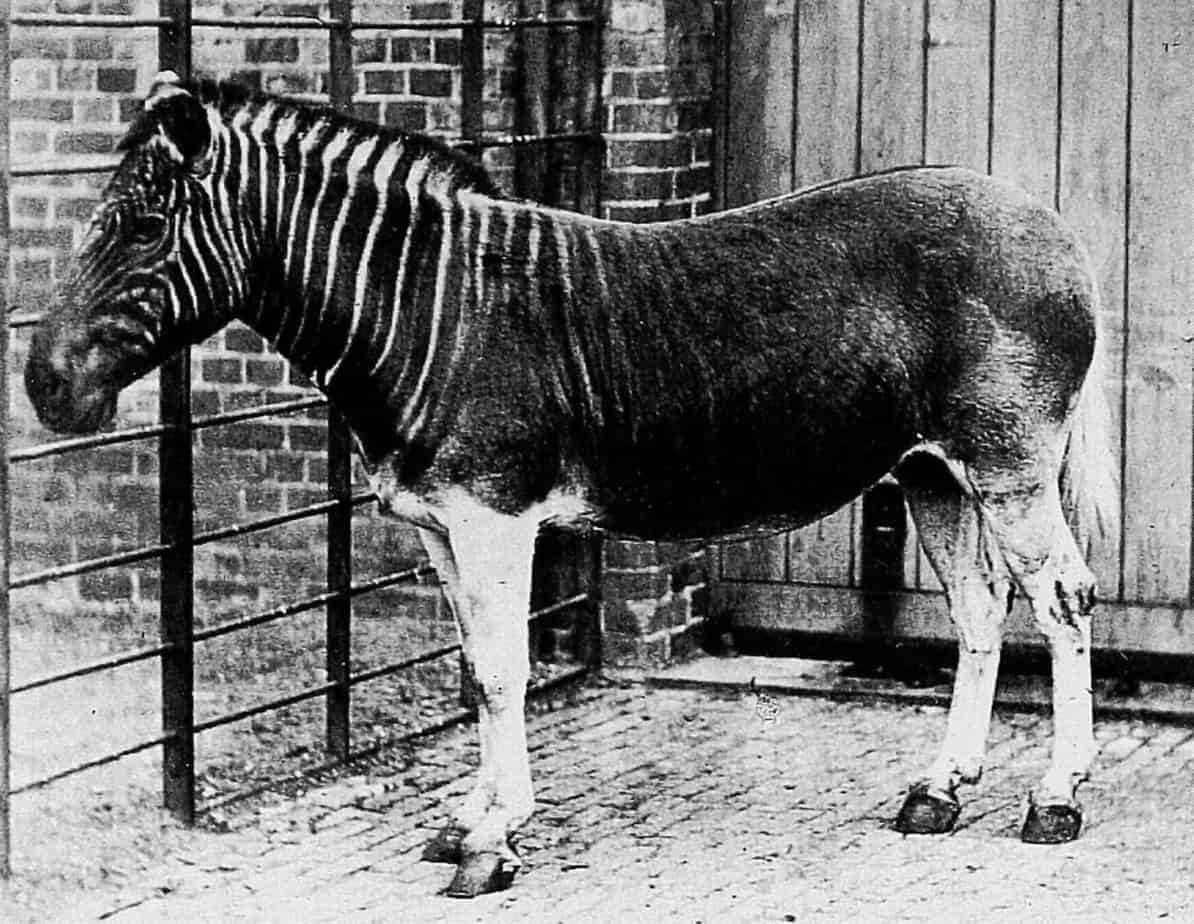
The quagga (Equus quagga quagga) was the southernmost, now-extinct form of plains zebra. Its front half was strongly striped, while the stripes faded towards a brown hindquarter, and individuals varied considerably. As described under Taxonomy, the quagga belonged within the plains zebra lineage, although its distinctive appearance led it to be treated as a separate species for many years.
The reduced striping may have had an ecological explanation. Quaggas lived under cooler and drier conditions than most other plains zebras, with fewer biting flies. This may have weakened the selection pressure for retaining stripes across the entire body and contributed to their gradual disappearance towards the hindquarters. The relationship has not, however, been conclusively demonstrated.
Wild quaggas disappeared in the late nineteenth century after heavy hunting and competition with livestock. The last known captive animal, a mare at Amsterdam Zoo, died on 12 August 1883. The historic photograph below shows the London Zoo mare, the only living quagga known to have been photographed.
The Quagga Project, started in South Africa in 1987, selectively breeds southern plains zebras with reduced striping and other quagga-like features. The resulting animals can increasingly resemble historical quaggas, but the project does not bring the extinct population back. Instead, it aims to recreate the quagga’s appearance using living plains zebras.
Cultural significance
The zebra is one of Botswana’s national symbols. Two zebras support the country’s coat of arms, where they represent Botswana’s wildlife, and the zebra is also the country’s official national animal. The black-and-white pattern is also used as a symbol of racial harmony.
The zebras involved in Botswana’s great seasonal migrations are plains zebras, making the species an important part of both the country’s natural heritage and its national symbolism.
Status
The plains zebra is listed as Near Threatened on the IUCN Red List. The current global assessment was published in 2016 and documented a decline of about 24% over the previous 14 years, from roughly 660,000 animals to just over 500,000. These figures are now historical reference points rather than a current population count.
The species remains common in several large protected ecosystems, especially in eastern and southern Africa, but its range is much more fragmented than it once was and it has disappeared from parts of its former distribution. Large populations in some reserves therefore do not mean that every regional population is secure.
Threats
The main threats vary across the range. Plains zebras are affected by unregulated hunting for meat and skins, conversion of grassland and savanna to farmland and settlements, competition with livestock, drought and reduced access to water. Political instability and weak wildlife protection have contributed to particularly severe losses in some northern populations.
For migratory zebras, fences, roads and expanding settlements can be just as damaging as direct habitat loss. A barrier across a traditional route can cut animals off from seasonal water or grazing even when the areas on both sides remain protected. Climate change may increase this pressure by causing temporary water sources to dry up more often.
Conservation
Large protected areas remain the foundation of plains zebra conservation, but migratory populations also need connected landscapes beyond park boundaries. The Serengeti–Mara, Chobe–Nxai Pan and Okavango–Makgadikgadi migrations cross large seasonal ranges where open routes, river crossings and temporary water sources are essential.
This means roads and fences need to be planned so they do not block old migration routes, and wildlife-friendly land must remain between protected areas. Because several migrations cross administrative and national borders, cooperation between different management authorities is also important.
Image gallery
Loading map and observations…
National Red List status
| Country | Status | Assessment | Source |
|---|---|---|---|
| South Africa | LCLeast Concern | Red List of South African Species 2016 | SANBI – Red List of South African Species |
Have you seen this species?
Independent species archive
Did you find this species page useful?
Wildlife Vagabond is independently built and maintained. Voluntary support helps cover hosting, maps, data storage and continued improvements to the species archive.
Support Wildlife VagabondSpecies content will remain freely available.
References
Information about the species’ global distribution and status is based primarily on global Red List data. See the references below for details.
- Botswana Mission. (n.d.). National symbols: zebra as national animal and coat-of-arms symbol. https://botswanamission.ch/national-symbols/
- Caro, T., Argueta, Y., Briolat, E. S., Bruggink, J., Kasprowsky, M., Lake, J., Mitchell, M. J., Richardson, S., & How, M. (2019). Benefits of zebra stripes: Behaviour of tabanid flies around zebras and horses. PLOS ONE, 14(2), e0210831. https://doi.org/10.1371/journal.pone.0210831
- Caro, T., Fogg, E., Stephens-Collins, T., Santon, M., & How, M. J. (2023). Why don't horseflies land on zebras? The Journal of experimental biology, 226(4), jeb244778. https://doi.org/10.1242/jeb.244778
- Convention on Migratory Species. (2024). Plains Zebra Migration, Makgadikgadi. https://www.cms.int/sites/default/files/publication/Fact%20Sheet%20on%20Plains%20Zebra%20Migration%2C%20Makgadikgadi%20-%20English.pdf
- Convention on Migratory Species. (2024). Plains Zebra Migration, Serengeti–Mara. https://www.cms.int/sites/default/files/publication/Fact%20Sheet%20on%20Plains%20Zebra%20Migration%2C%20Serengeti-Mara%20-%20English.pdf
- Convention on Migratory Species. (2024). Plains Zebra Migration, Zambezi. https://www.cms.int/publication/fact-sheet-plains-zebra-migrating-zambezi
- Esmaeili, S., Gogan, P. J. P., Schoenecker, K. A., & Skoog, R. O. (2026). Growth patterns, sexual dimorphism, and seasonal body mass variation in Plains Zebra of the Serengeti Region, Tanzania. Journal of Mammalogy, 107(4), 763-772. https://doi.org/10.1093/jmammal/gyag044
- Hex, S. B., Mwangi, M., Warungu, R., & Rubenstein, D. I. (2022). An observation of attempted infanticide and female–female cooperation in wild plains zebras (Equus quagga). Behaviour, 159(13-14), 1341-1364. https://doi.org/10.1163/1568539X-bja10172
- Heywood. (2022). Coat coloration. In The Life, Extinction, and Rebreeding of Quagga Zebras. https://www.cambridge.org/core/books/life-extinction-and-rebreeding-of-quagga-zebras/coat-coloration/D92F37D0A41EF8C05E3DA7880C945D79
- International Union for Conservation of Nature. (n.d.). Equus quagga (Plains Zebra). The IUCN Red List of Threatened Species. https://www.iucnredlist.org/species/41013/45172424
- Klingel, H. (1975). Social organization and reproduction in equids. Journal of reproduction and fertility. Supplement(23), 7-11. https://pubmed.ncbi.nlm.nih.gov/1060868/
- Leonard, J. A., Rohland, N., Glaberman, S., Fleischer, R. C., Caccone, A., & Hofreiter, M. (2005). A rapid loss of stripes: the evolutionary history of the extinct quagga. Biology Letters, 1(3), 291-295. https://doi.org/10.1098/rsbl.2005.0323
- Mammal Diversity Database. (2026). Equus quagga. American Society of Mammalogists. https://www.mammaldiversity.org/taxon/1006127/
- Naidoo, R., Chase, M. J., Beytell, P., Du Preez, P., Landen, K., Stuart-Hill, G., & Taylor, R. (2016). A newly discovered wildlife migration in Namibia and Botswana is the longest in Africa. Oryx, 50(1), 138-146. https://doi.org/10.1017/S0030605314000222
- Shi, A., & Hex, S. B. (2025). The direct social benefits of friendships between female plains zebras (Equus quagga). Behaviour, 162(6-8), 521-544. https://doi.org/10.1163/1568539X-bja10316
- The Quagga Project. (n.d.). The Quagga Project. https://www.quaggaproject.org/the-project/
- Tombak, K. J., Gersick, A. S., Reisinger, L. V., Larison, B., & Rubenstein, D. I. (2022). Zebras of all stripes repel biting flies at close range. Scientific reports, 12(1), 18617. https://doi.org/10.1038/s41598-022-22333-7
- Vitet, C., Duncan, P., Ganswindt, A., Mabika, C., & Chamaillé-Jammes, S. (2021). Do infanticides occur in harem-forming equids? A test with long-term sociodemographic data in wild plains zebras. Animal Behaviour, 177, 9–18. https://doi.org/10.1016/j.anbehav.2021.04.012
- Wilson, A. M., Hubel, T. Y., Wilshin, S. D., Lowe, J. C., Lorenc, M., Dewhirst, O. P., Bartlam-Brooks, H. L. A., Diack, R., Bennitt, E., Golabek, K. A., Woledge, R. C., McNutt, J. W., Curtin, N. A., & West, T. G. (2018). Biomechanics of predator–prey arms race in lion, zebra, cheetah and impala. Nature, 554(7691), 183-188. https://doi.org/10.1038/nature25479
- Xie, B., Daunay, V., Petersen, T. C., & Briefer, E. F. (2024). Vocal repertoire and individuality in the plains zebra (Equus quagga). Royal Society Open Science, 11(7), 240477. https://doi.org/10.1098/rsos.240477