
Harris’s Hawk
Parabuteo unicinctus
At a glance
Habitat
- Desert scrub, grassland, thorn woodland, open savanna, marsh edge, farmland and urban fringes
Diet
- Rabbits and hares, rodents, birds, lizards and large invertebrates
Activity
- Diurnal
Size
- Length: 46–59 cm Weight: males about 600–900 g; females about 900–1,300 g
Range
- Southwestern United States through Central America and much of South America
Description
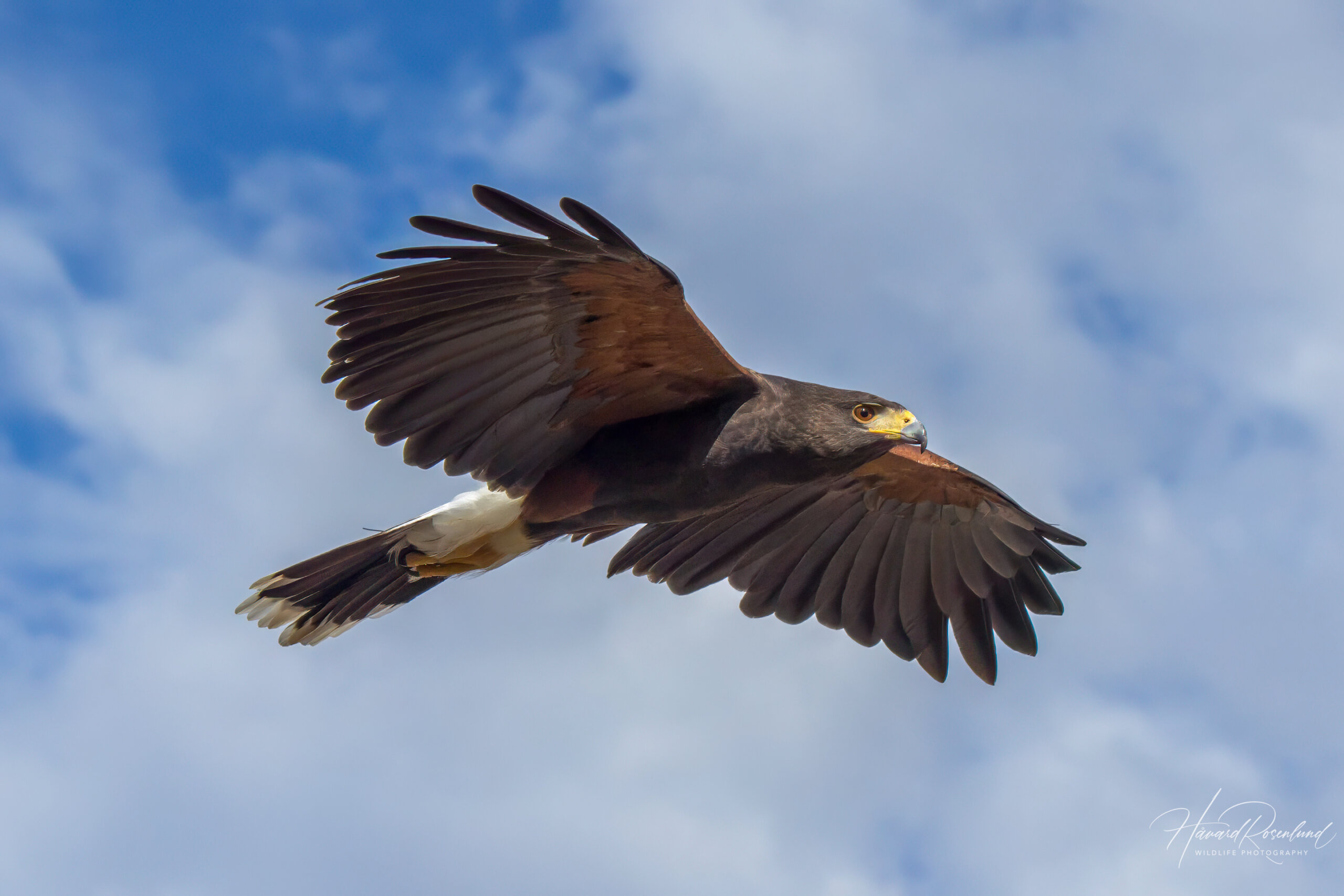
Harris's hawk (Parabuteo unicinctus) is a medium-sized American raptor best known for its unusual social behaviour. Adults measure about 46–59 cm and can have a wingspan of roughly 100–120 cm. Females are noticeably larger than males.
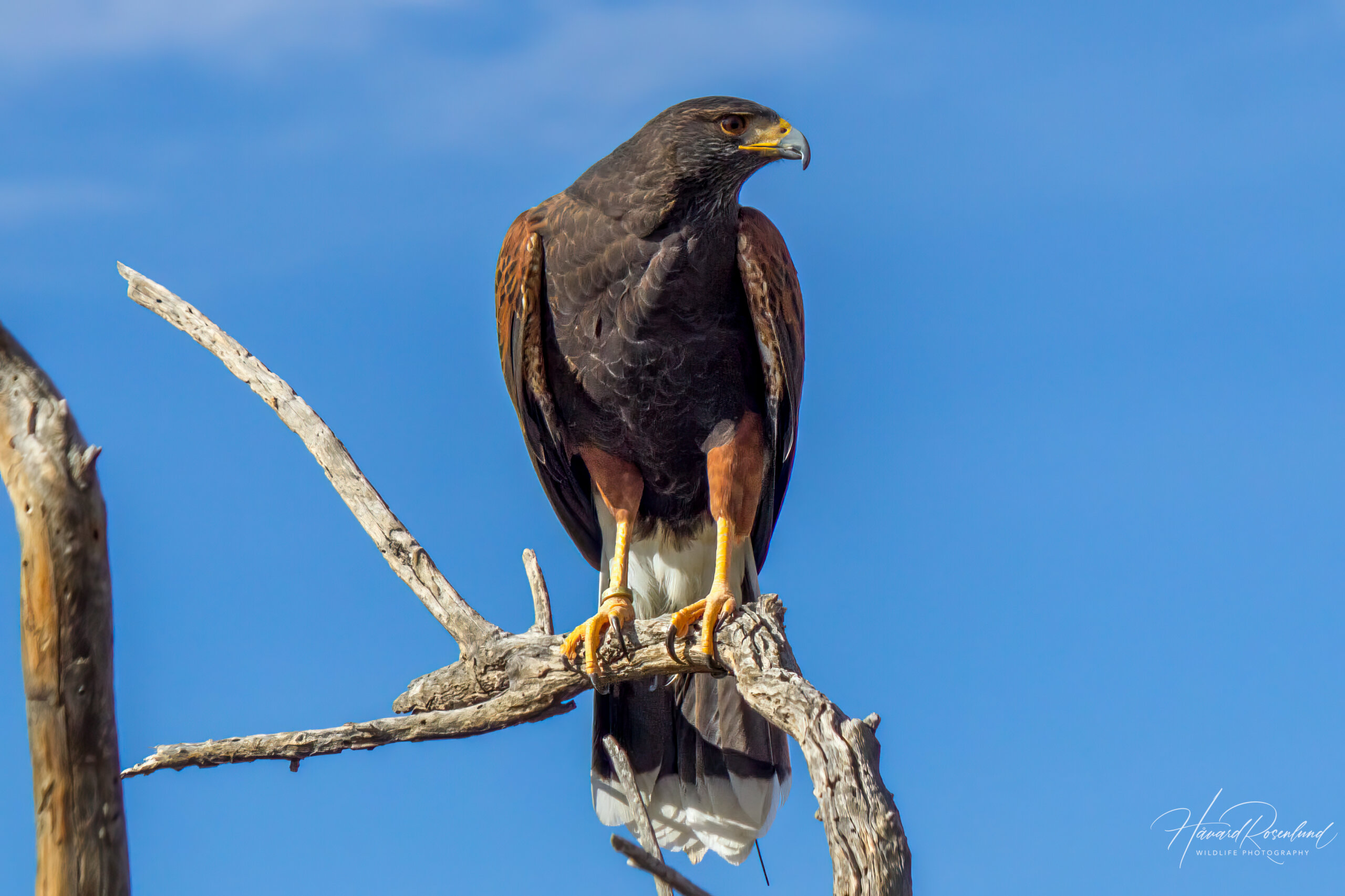
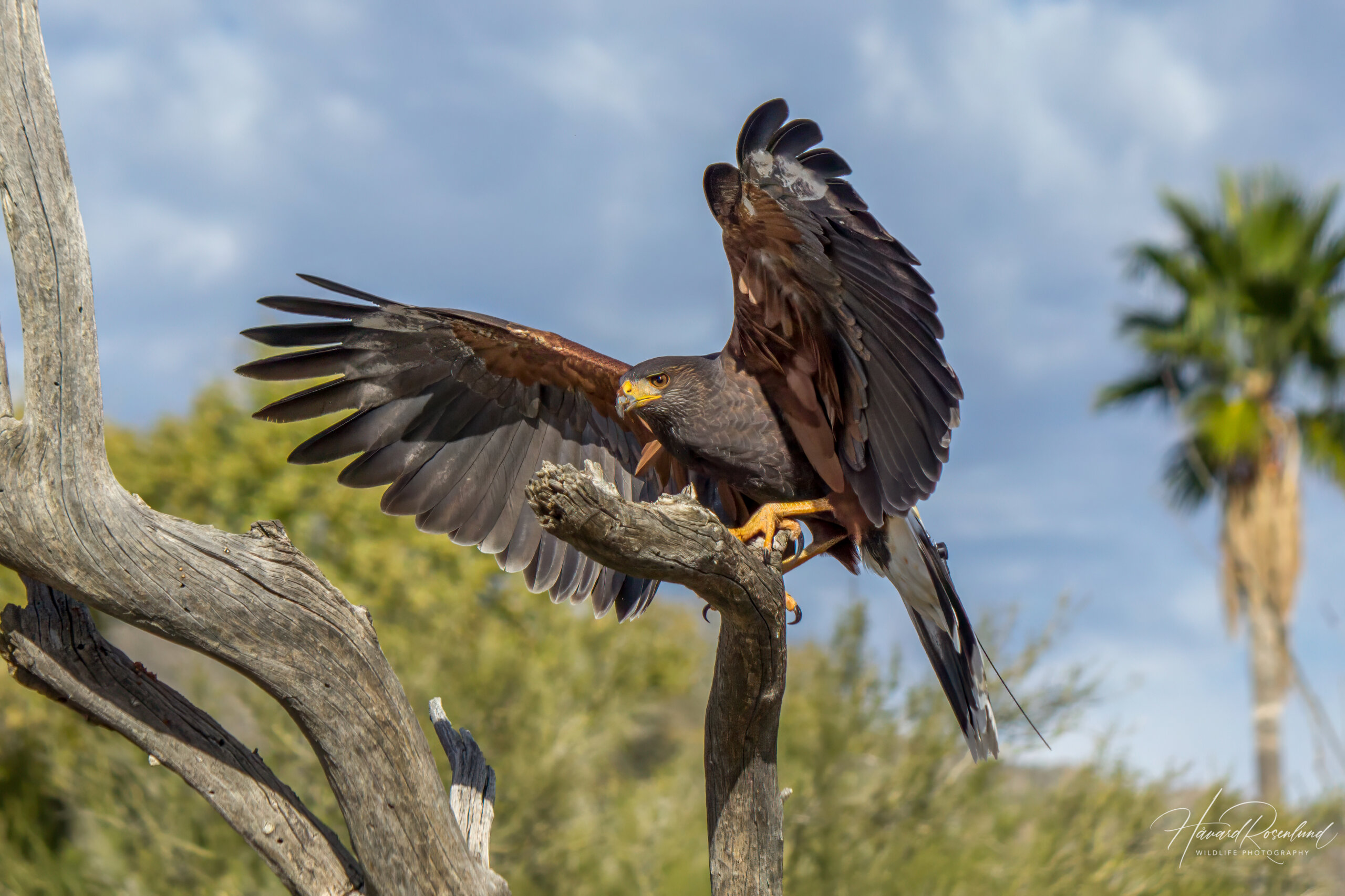
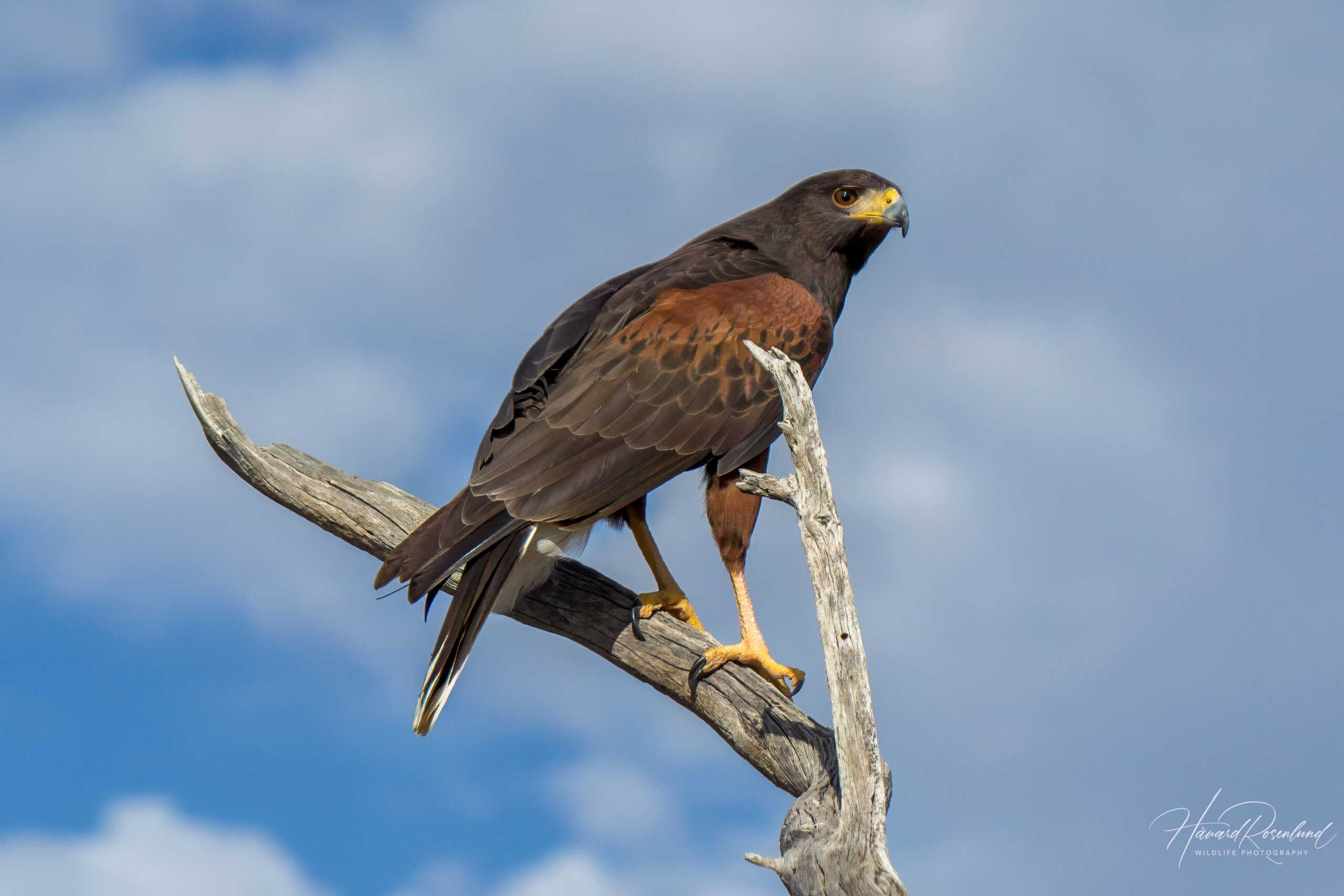
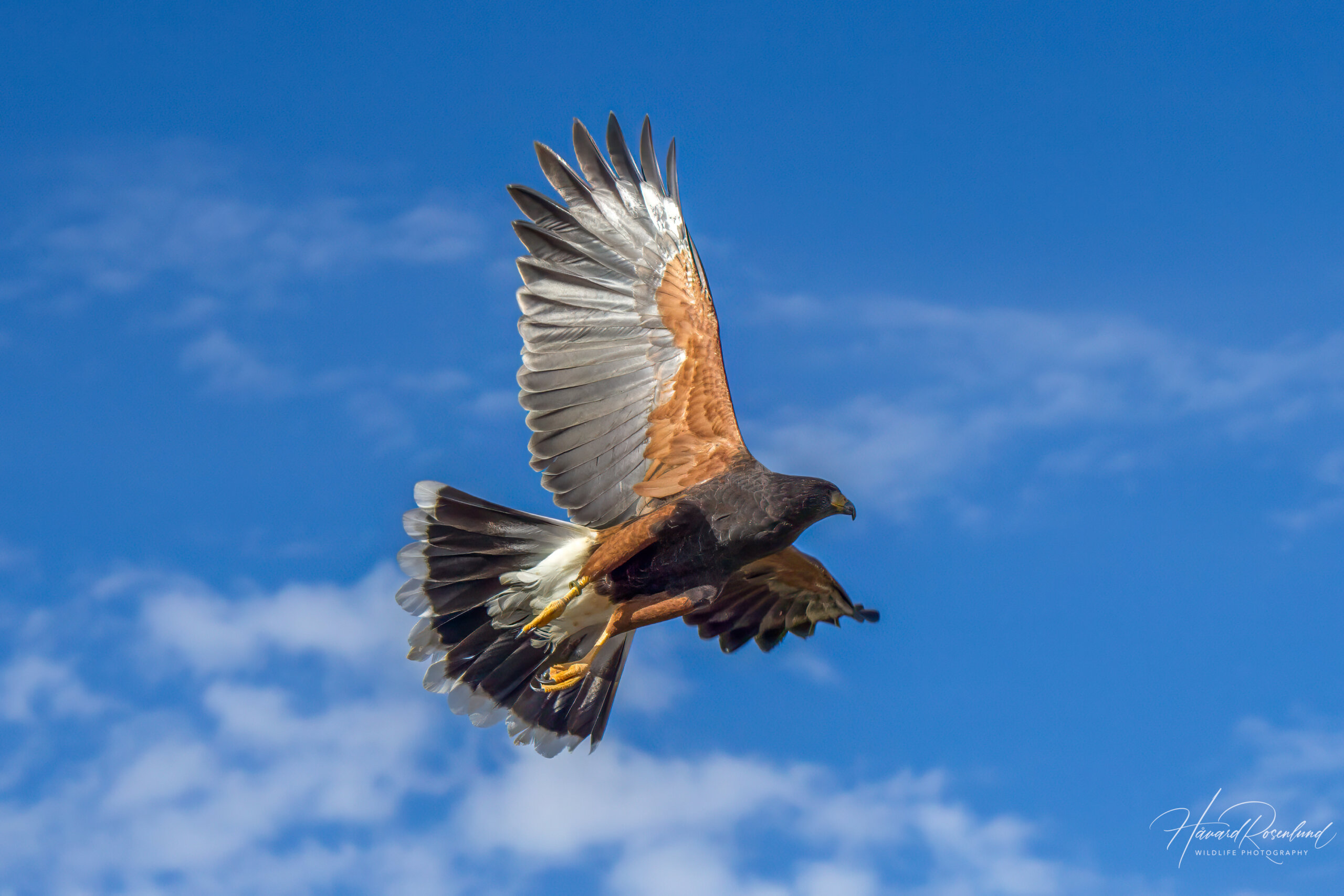
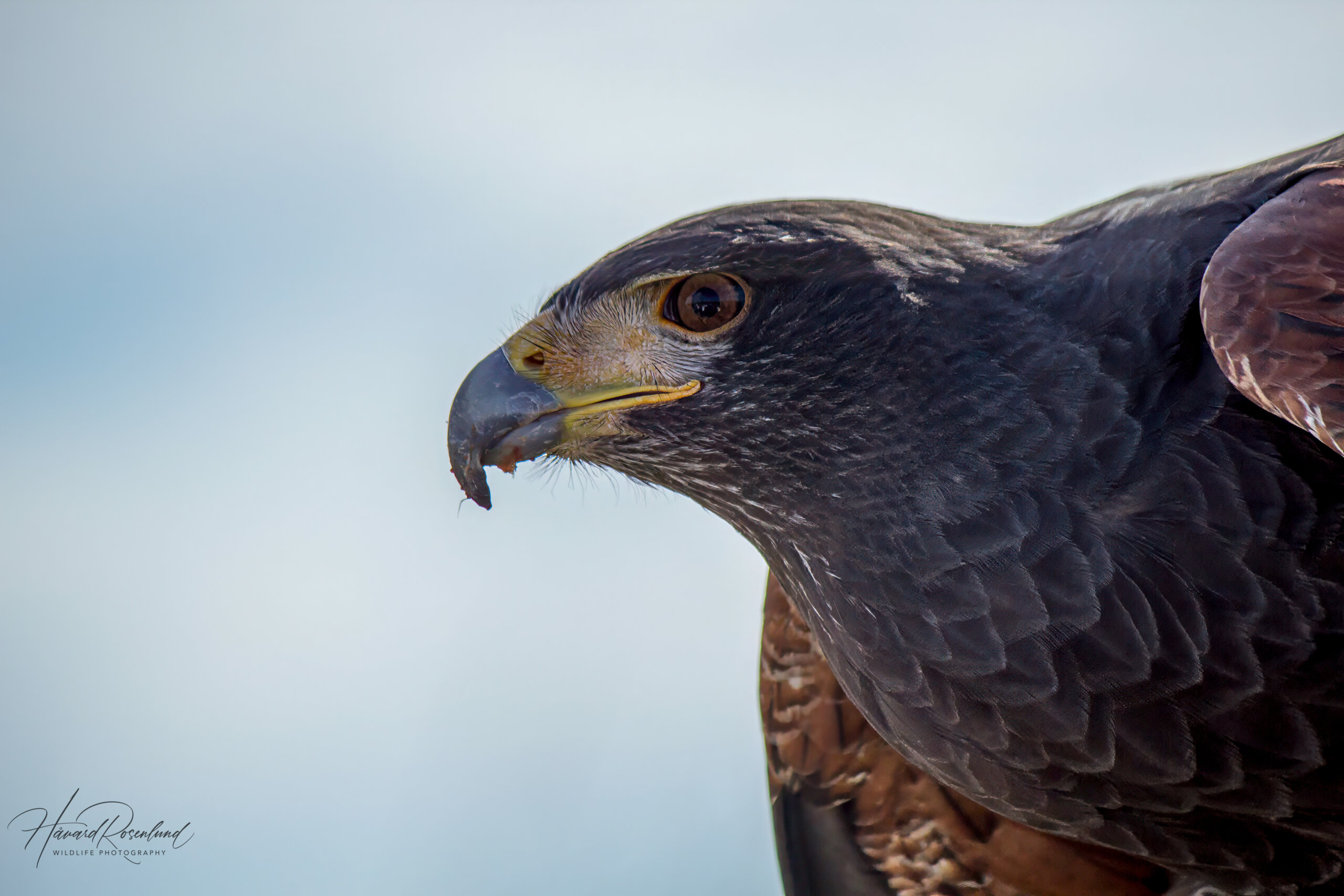
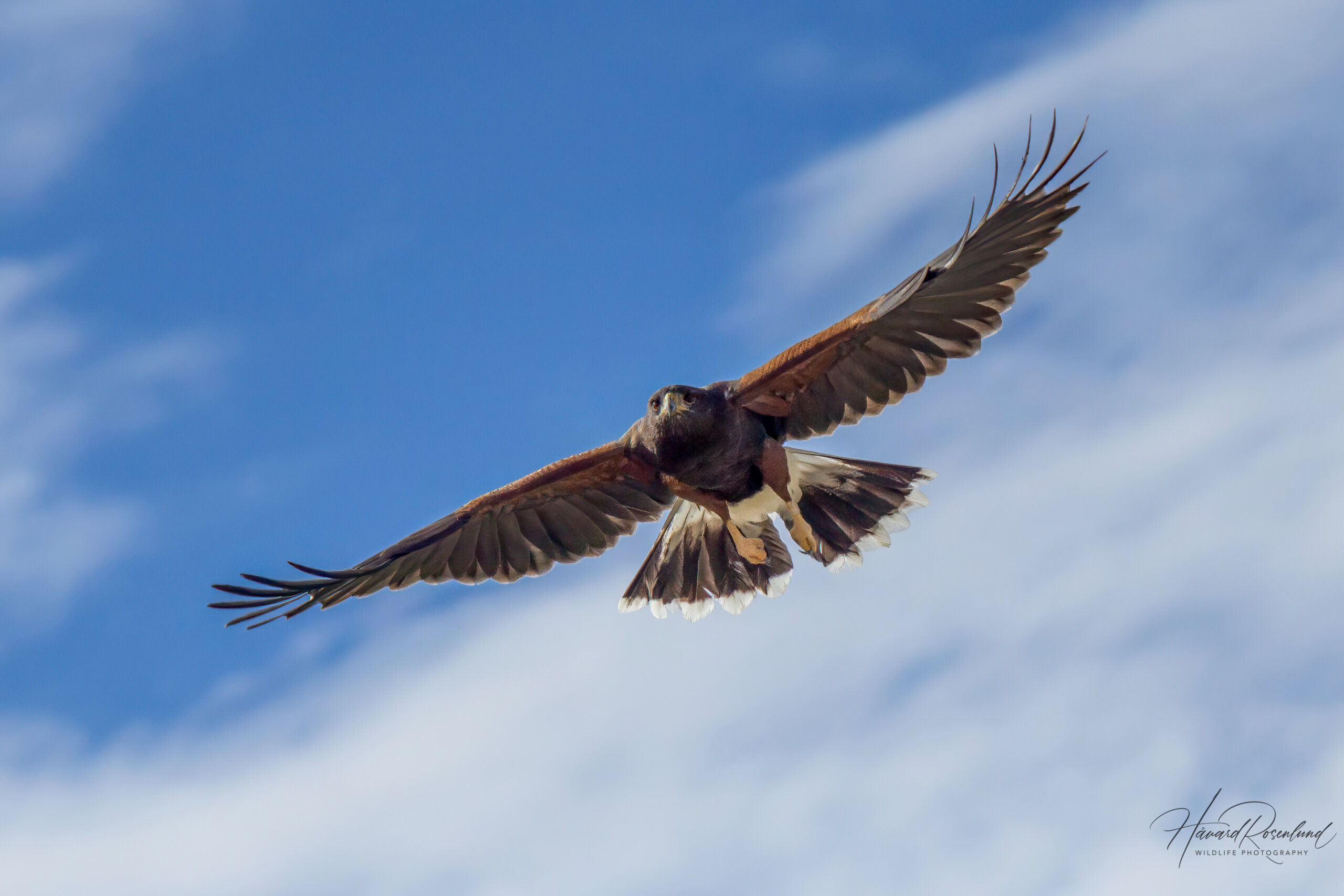
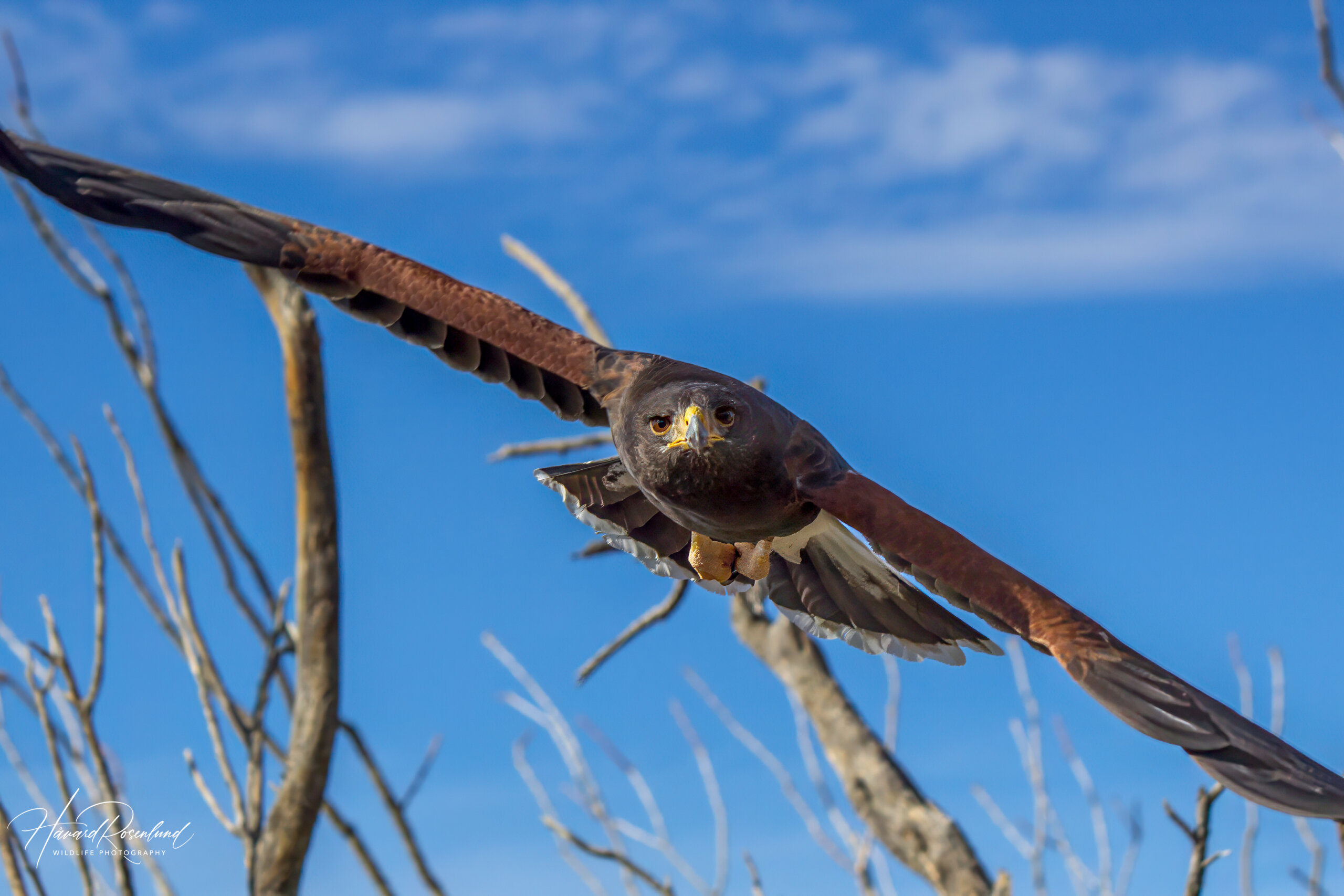
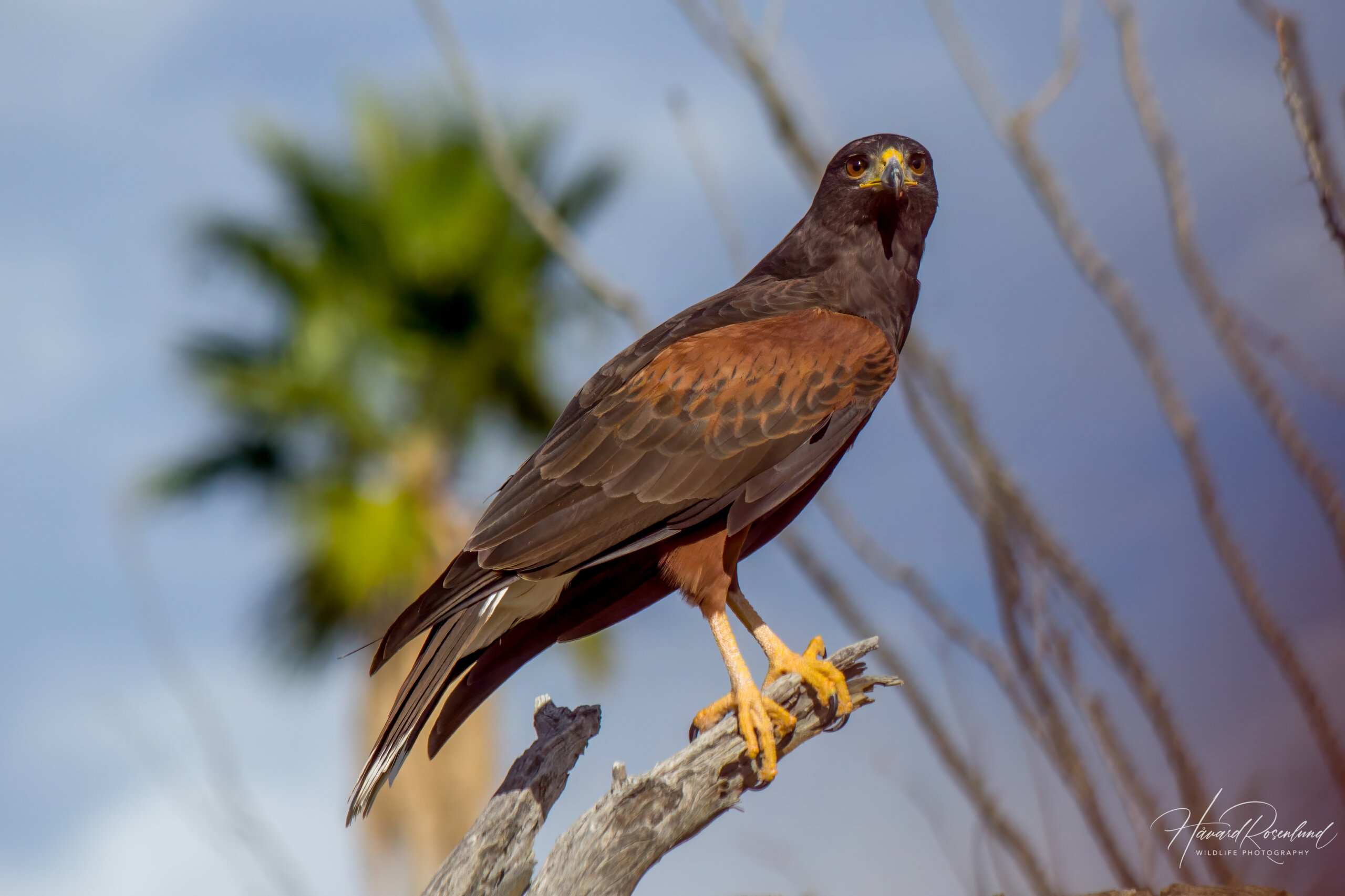
Adults are dark brown with chestnut shoulders, thighs and underwing coverts. The base and tip of the tail are white, creating a bold pattern in flight. The bare skin around the bill and the long legs are yellow. Juveniles are paler and heavily streaked but retain chestnut on the shoulders.
Habitat
Harris's hawks inhabit desert scrub, grassland, thorn woodland, open savanna, marsh edges and agricultural landscapes with scattered trees, cacti or artificial perches. In the southwestern United States they also use suburban fringes and nest on utility structures where natural sites are limited.
The species does best in relatively open landscapes where elevated lookout posts occur close to productive hunting ground. Large cacti, trees, poles and other structures can all function as perches, roosts or nest sites.
Diet
Rabbits and hares are important prey in many areas, supplemented by rodents, birds, lizards and large invertebrates. The exact balance varies with region and prey availability.
Small prey can be taken by a single hawk, while larger mammals such as rabbits and hares are especially important in populations where cooperative hunting is common.
Hunting
Harris's hawks are among the best-known cooperative hunters among birds of prey. A single bird can hunt from a perch or low flight, but groups may coordinate their movements when pursuing larger or difficult prey.
Several strategies have been documented. Hawks may surround dense cover, flush a rabbit or hare towards waiting group members, or take turns pursuing prey as it changes direction and seeks shelter. A study published in 1988 in New Mexico found that hunting parties of two to six hawks could improve capture success and take larger prey than individual birds. Larger prey caught cooperatively is shared among group members.
The degree of coordinated group hunting varies among populations and circumstances, so group hunting is not obligatory throughout the species' range. It is nevertheless one of the most distinctive aspects of the biology of Harris's hawk.
Behaviour
Harris's hawks are diurnal and spend much of the day moving between elevated lookout posts, resting sites and hunting areas. They frequently scan from cacti, trees, poles and other structures before changing perch or dropping to the ground after prey.
In hot desert environments, birds adjust activity to temperature and make use of shade and exposed perches according to conditions. Calls help maintain contact between nearby group members and are also used during alarm and territorial interactions.
Social behaviour
Unlike most medium-sized raptors, Harris's hawks can live in stable cooperative groups. A group often contains a breeding pair and helpers from earlier broods, but the composition varies and may include unrelated adults or more than one breeding male. A study published in 1987 in New Mexico found an average group size of 2.7 hawks, with pairs the most common social unit. Group structure nevertheless varies geographically.
Group members roost, travel and defend areas together and can coordinate their responses to predators and intruders. Where suitable elevated perches are scarce, one bird may briefly stand on the back of another to gain height. Up to four birds have been observed stacked on top of one another on a cactus, pole or other lookout site, an unusual behaviour closely associated with the species' tolerance of close social contact.
Breeding
A pair can breed alone, but additional group members often help defend the territory, deliver prey and care for the young. The mating system is flexible: most groups centre on a pair, but polyandrous groups—where one female breeds with more than one male—have also been documented in some populations.
The nest is a platform of sticks placed in a cactus, shrub, tree or artificial structure and lined with finer vegetation. The clutch contains one to five eggs, most often two to four. Incubation lasts about 31–36 days and is carried out mainly by the female.
The nestling period is approximately 44–48 days. In very hot weather an adult may shade the chicks with spread wings, while helpers can bring food and defend the nest. Some young disperse within a few months, whereas others remain with the family group and later help to raise younger siblings.
Relationship with humans
Harris's hawks are among the best-known raptors in modern falconry. Their natural tolerance of close social contact, cooperative tendencies and relative ease around people make them unusually receptive to working with handlers compared with many more solitary birds of prey.
For the same reasons they are widely used in educational programs and demonstrations. Their popularity in captivity is closely tied to the same social flexibility that makes the species so unusual in the wild, rather than to domestication in the strict sense.
Escaped birds occasionally appear in Western Europe, especially Britain. The British Bird Atlas for 2007–2011 recorded two isolated breeding attempts, but the species has not established a self-sustaining population there.
Status
Harris's hawk is classified as least concern on the IUCN Red List and remains widely distributed from the southwestern United States through Central America and much of South America.
Habitat conversion can remove nesting and hunting sites, while electrocution, collisions, shooting and poisoning cause local mortality. The species can nevertheless use some cleared, agricultural and suburban landscapes where prey and suitable nest or perch sites remain available.
Image gallery
Loading map and observations…
Have you seen this species?
Independent species archive
Did you find this species page useful?
Wildlife Vagabond is independently built and maintained. Voluntary support helps cover hosting, maps, data storage and continued improvements to the species archive.
Support Wildlife VagabondSpecies content will remain freely available.
References
Information about the species’ global distribution and status is based primarily on global Red List data. See the references below for details.
- Bednarz, J. C. (1987). Pair and Group Reproductive Success, Polyandry, and Cooperative Breeding in Harris' Hawks. The Auk, 104(3), 393-404. https://doi.org/10.2307/4087535
- Bednarz, J. C. (1988). Cooperative Hunting Harris' Hawks (Parabuteo unicinctus). Science, 239(4847), 1525-1527. https://doi.org/10.1126/science.239.4847.1525
- BirdLife International. (n.d.). Harris’s Hawk Parabuteo unicinctus species factsheet. https://datazone.birdlife.org/species/factsheet/harriss-hawk-parabuteo-unicinctus
- Cornell Lab of Ornithology. (n.d.). Harris’s Hawk life history, behaviour and nesting. https://www.allaboutbirds.org/guide/Harriss_Hawk/lifehistory
- Cornell Lab of Ornithology. (n.d.). Harris’s Hawk overview: sociality, falconry and education programs. https://www.allaboutbirds.org/guide/Harriss_Hawk/overview
- Coulson, J. O., & Coulson, T. D. (2013). Reexamining cooperative hunting in Harris’s Hawk (Parabuteo unicinctus): Large prey or challenging habitats? The Auk, 130(3), 548–552. https://doi.org/10.1525/auk.2013.120063
- International Association for Falconry and Conservation of Birds of Prey. (n.d.). Exotic species and hybrids in falconry: escaped Harris’s Hawks and UK breeding attempts. https://iaf.org/exotic-species-and-hybrids-in-falconry
- International Union for Conservation of Nature. (n.d.). Parabuteo unicinctus (Harris’s Hawk). The IUCN Red List of Threatened Species. https://www.iucnredlist.org/species/22695838/93529685
- The Peregrine Fund. (n.d.). Harris’s Hawk: social behaviour and back stacking. https://peregrinefund.org/explore-raptors-species/hawks/harriss-hawk