
Red Kite
Milvus milvus
At a glance
Habitat
- Open farmland, pasture and mixed countryside with woodland and mature trees for nesting
Diet
- Opportunistic; carrion is important, together with small mammals, birds, insects and other easily available food
Activity
- Diurnal
Size
- Length: 60–70 cm Weight: about 0.8–1.3 kg
Range
- Mainly Europe, from Iberia and Britain through central Europe to Scandinavia and eastern Europe
Description
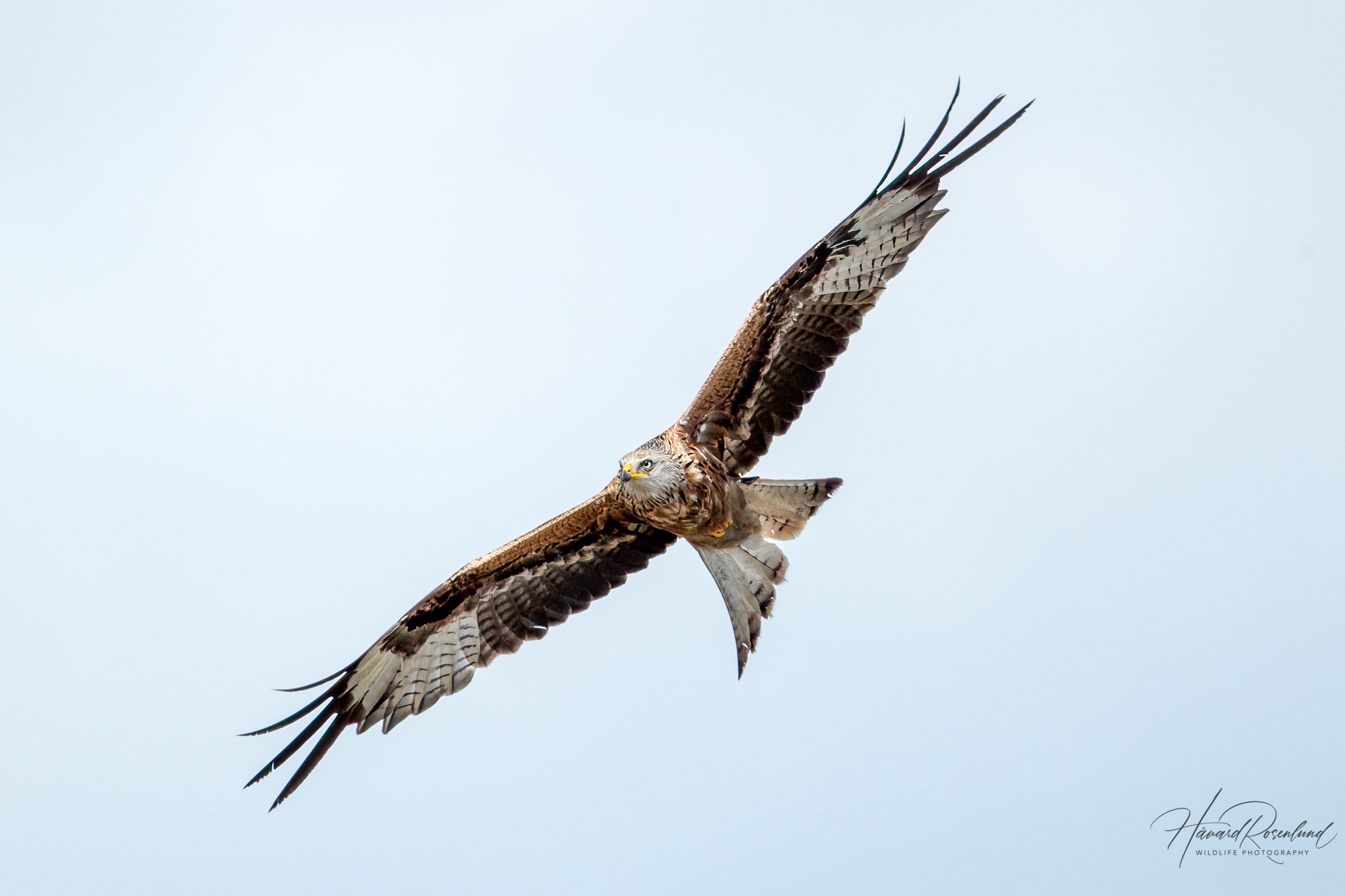
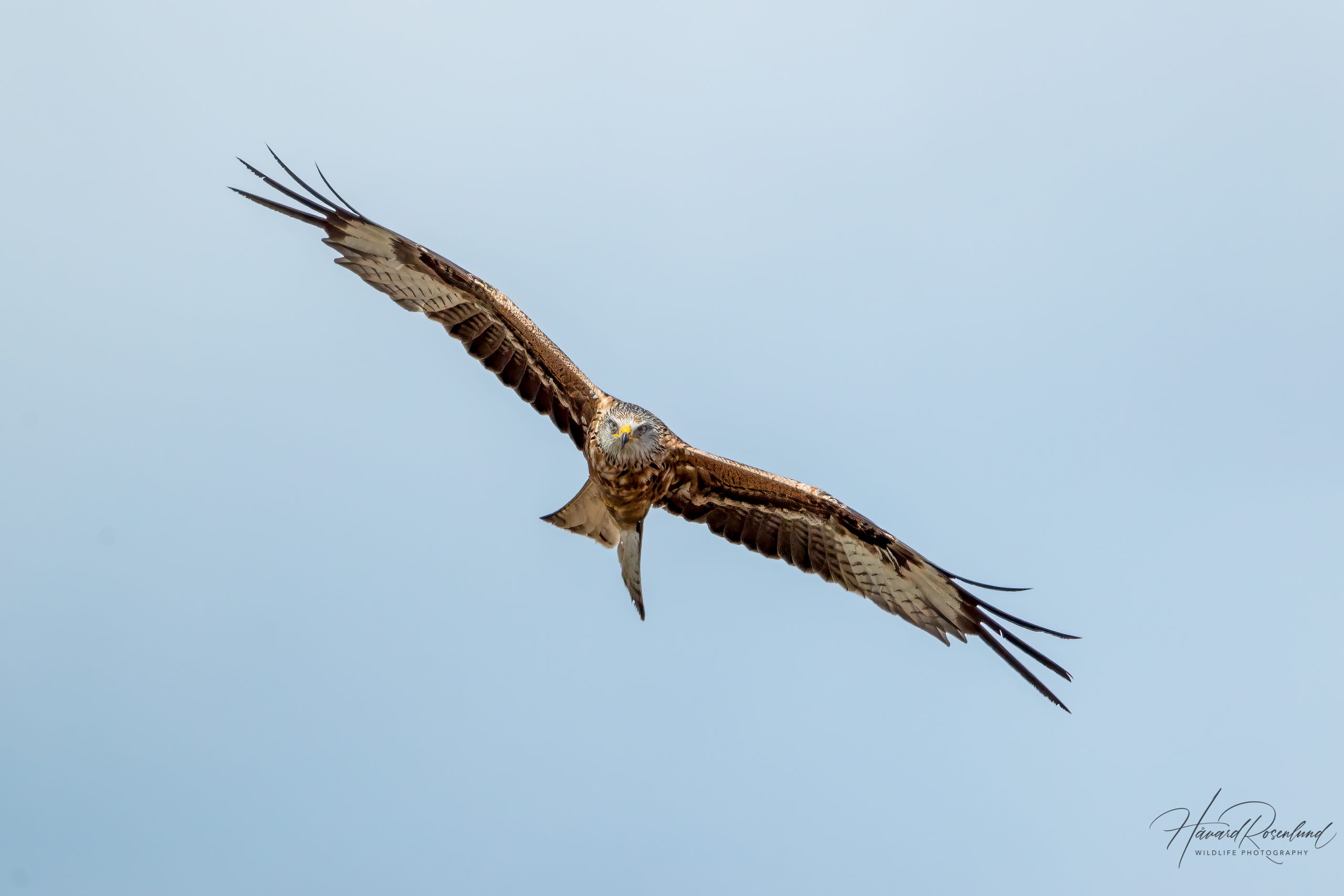
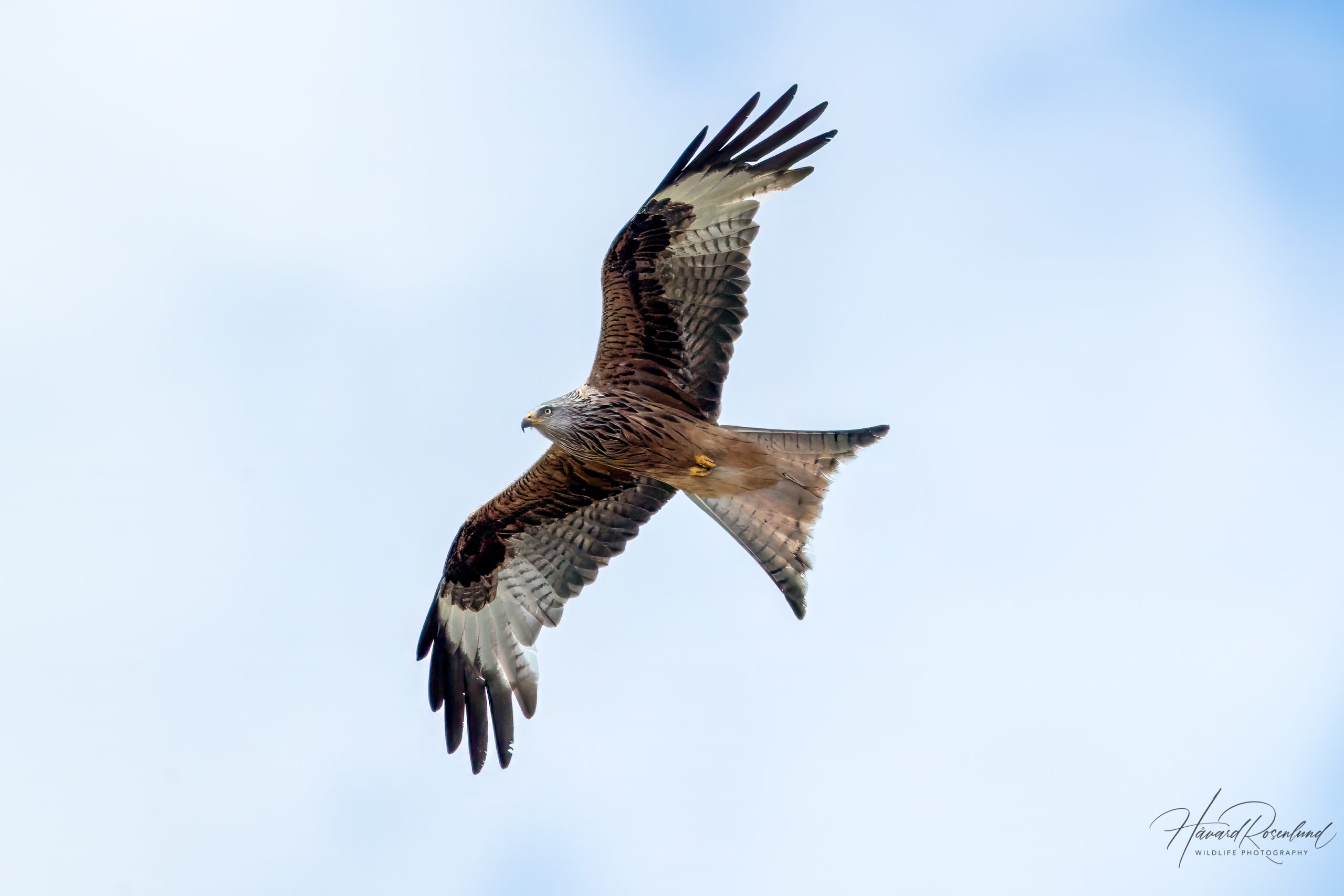
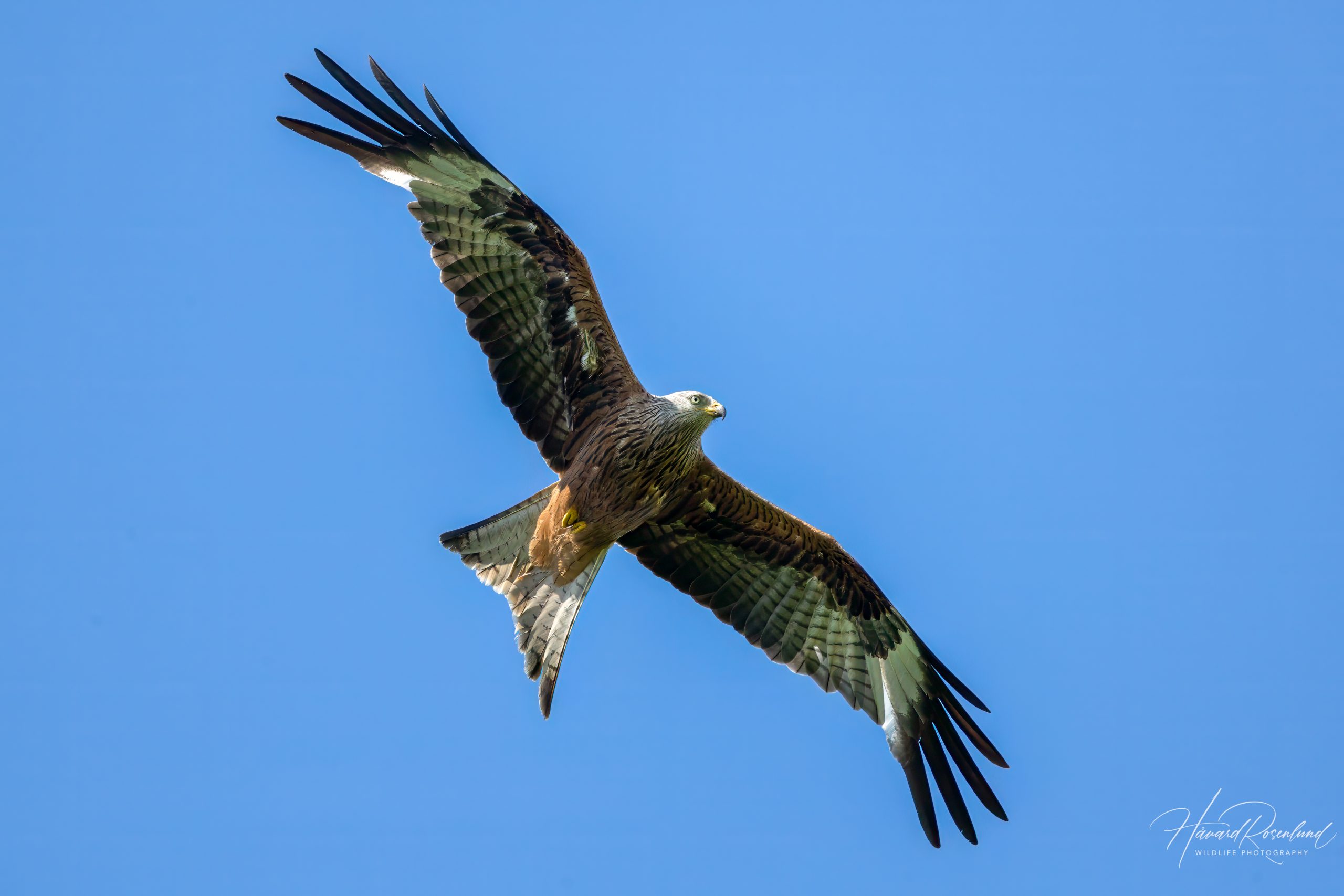
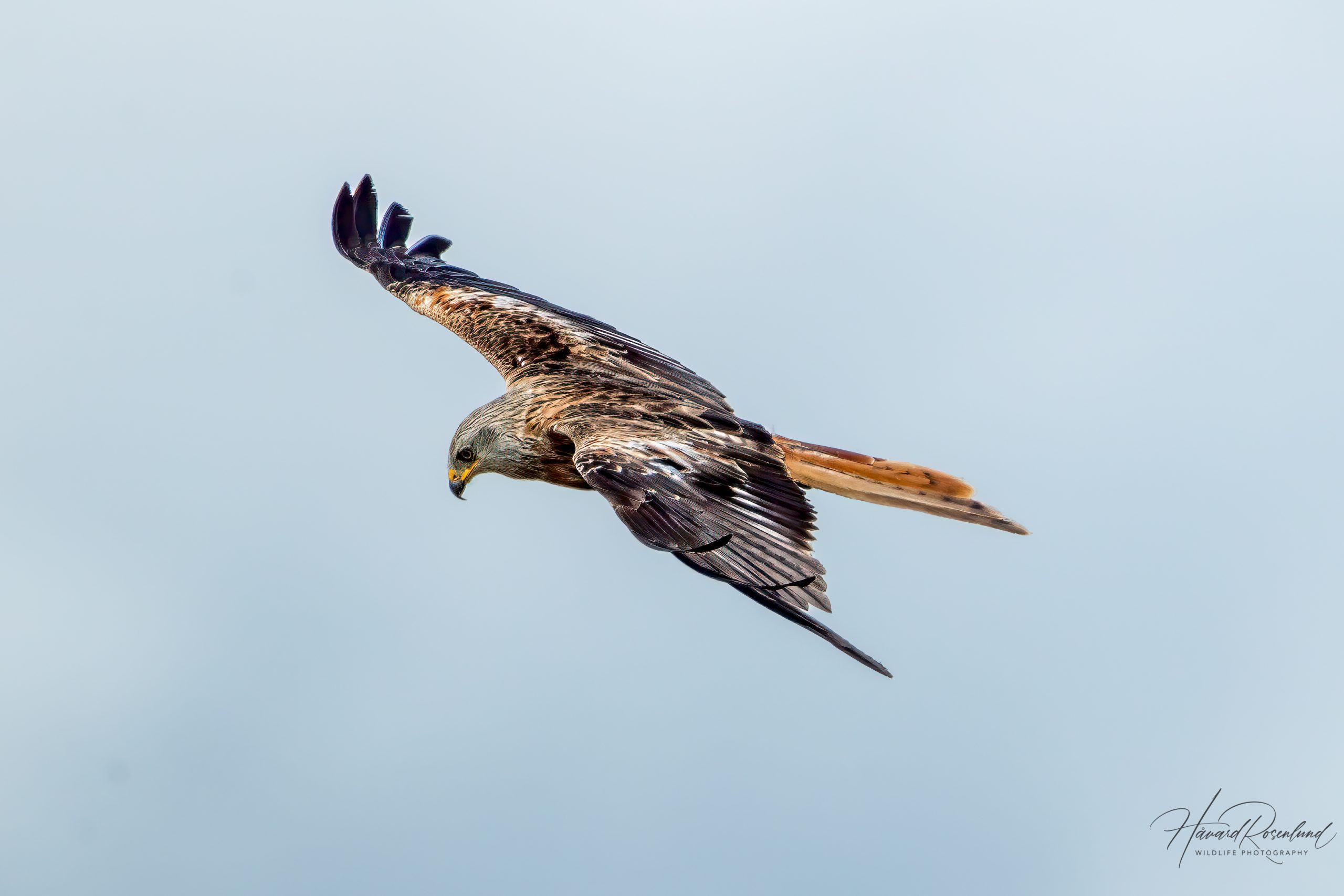
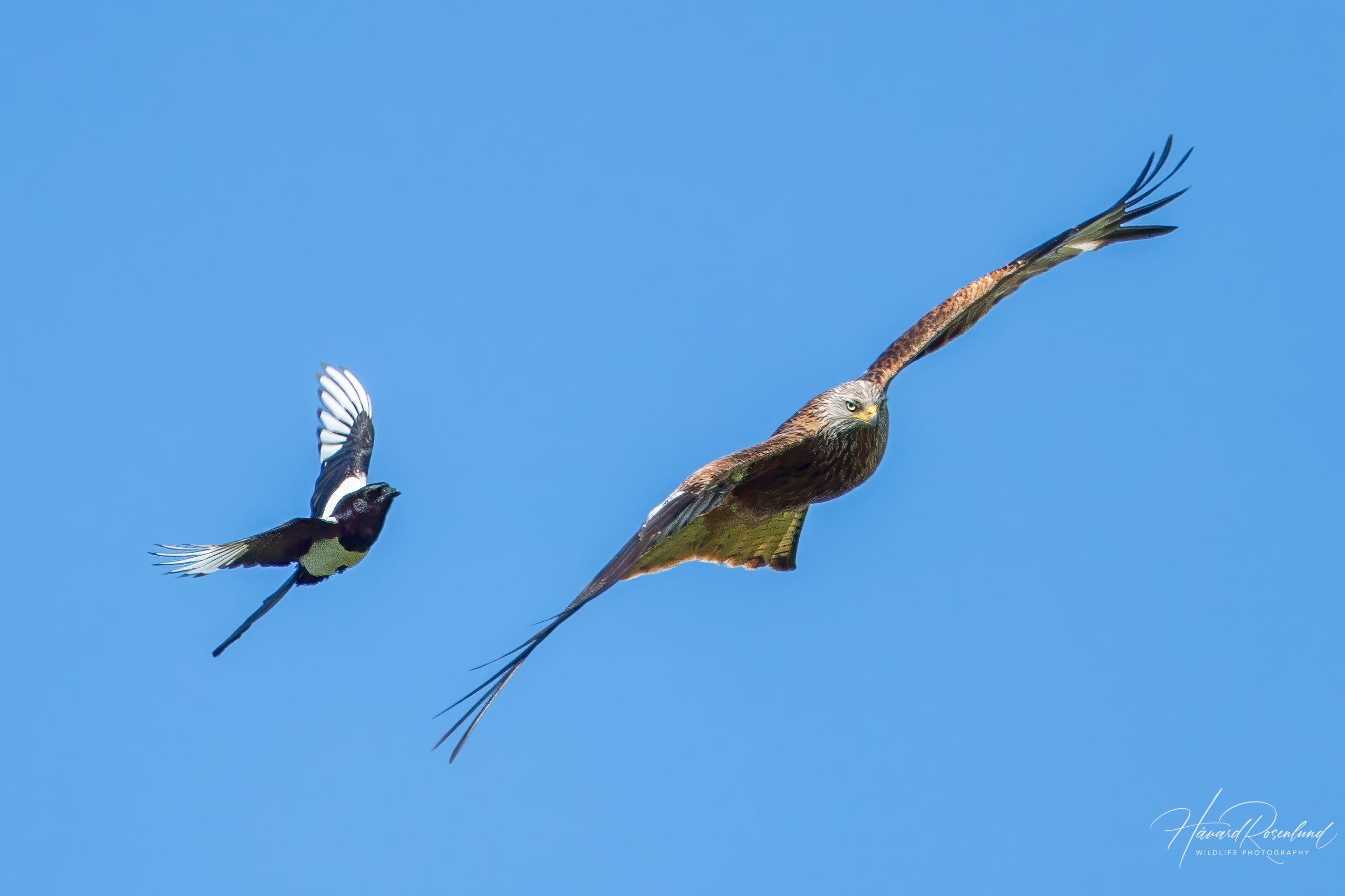
The red kite (Milvus milvus) is a large, elegant bird of prey found mainly in Europe. Adults are about 60–70 cm long, with a wingspan of roughly 175–195 cm, and usually weigh around 0.8–1.3 kg. The reddish-brown body, pale streaked head and long, deeply forked tail make the species distinctive both perched and in flight.
The wings are long and narrow, with pale panels visible underneath, while the tail is constantly twisted and adjusted as the bird steers. The similar black kite (Milvus migrans) is generally darker, has a less deeply forked tail and lacks the red kite’s strongly contrasting pale head and warm reddish body.
Habitat
Red kites thrive in varied landscapes where open feeding areas lie close to woodland or groups of mature trees. Farmland, pasture, meadows, river valleys, forest edges and lightly wooded hills are all typical. They also use villages and towns when food and suitable nesting trees remain nearby.
The species is therefore strongly linked to mixed countryside rather than dense forest. Open ground makes carrion and small prey easy to find, while mature trees provide safe nesting sites. Changes that remove either part of this combination can reduce habitat quality even when the landscape still looks generally green.
Diet
Red kites are opportunistic feeders and scavengers. Carrion is often important, including road-killed animals, but they also take small mammals, young or weakened birds, insects, earthworms and other prey that can be captured without prolonged pursuit.
Foraging & scavenging
Red kites search for food mainly in flight, often gliding low over roads, fields and recently worked farmland while scanning for carrion or vulnerable live prey. Their long wings and deeply forked tail allow very economical soaring and constant fine steering, so large areas can be searched with little flapping before the bird drops to seize food.
A study published in 2025 tracked 199 non-breeding red kites in Switzerland with GPS. Before the COVID-19 lockdown the birds often selected areas along roads, but during the 2020 lockdown they avoided roads as traffic and roadkill declined. At the same time they increased their use of areas with human-provided food sources, and after the lockdown they began using roads more again. The shift shows how quickly red kites can alter their foraging when human activity and carrion availability change.
Social behaviour
Red kites are not strongly solitary outside the breeding season. Several birds may gather where food is abundant, and communal night roosts can contain dozens or even hundreds of individuals.
A study published in 1993 found that wintering kites using communal roosts more often fed at food sources that other birds had already located. The study did not demonstrate simple information transfer from one bird to another, but the results suggest that social gatherings can influence how scattered and unpredictable food resources are exploited.
Migration
The red kite is a partial migrant. Many birds in Britain, Iberia and other mild regions remain within the same general area throughout the year, while populations farther north and east are more likely to move south in autumn. Young birds tend to wander farther than established adults.
Migration can take birds from Scandinavia and central Europe toward southern France, Iberia and occasionally North Africa. The species relies heavily on soaring flight and therefore often follows routes where rising air allows efficient travel.
Breeding
Pairs usually begin breeding in spring and build a large stick nest high in a mature tree, often reusing the same nest or nesting area in later years. Breeding pairs defend the area around the nest, and courtship includes paired circling, dives and calling above the breeding territory. Both adults collect material, and red kite nests are unusual in that they often contain cloth, paper, plastic or other human-made material among the softer lining.
Nesting can range from dispersed to loosely colonial where conditions are favourable. A study from Corsica published in 2006 found local densities of up to about 1.8 breeding pairs per km², with nests ranging from closely spaced to much more dispersed.
A typical clutch contains two eggs, although one to three have been recorded. The female performs most of the incubation, which usually lasts 31–32 days, while the male supplies much of the food. Both parents feed the chicks after hatching. The young usually fledge after 50–60 days and continue to depend on the adults for some time after their first flights.
Status
The red kite is classified as least concern on the IUCN Red List. Its European population has recovered strongly in several countries after earlier declines, helped by legal protection, reduced persecution and successful reintroductions.
The overall picture is still uneven. Some populations are increasing rapidly, while others remain affected by poisoning, changes in farmland and other pressures. Because most of the global population is concentrated in Europe, large regional changes can have a substantial effect on the species as a whole.
Conservation
Few European raptors show the value of reintroduction as clearly as the red kite. Centuries of persecution reduced the species severely in parts of western Europe, and in Britain it survived naturally only in a small population in Wales. Reintroduction projects beginning in the late 20th century released birds at several sites, and these populations expanded dramatically.
The recovery has been strong enough for red kites to become familiar again across large parts of Britain. Similar protection elsewhere in Europe has also helped populations recover. The success does not remove ongoing pressures: illegal poisoning, secondary poisoning from rodenticides, collisions and electrocution, disturbance and deliberate persecution still kill birds in parts of the range. Long-lived raptors can recover well when adult survival improves, but they are also sensitive when human-caused mortality remains high.
Image gallery
Loading map and observations…
Have you seen this species?
Independent species archive
Did you find this species page useful?
Wildlife Vagabond is independently built and maintained. Voluntary support helps cover hosting, maps, data storage and continued improvements to the species archive.
Support Wildlife VagabondSpecies content will remain freely available.
References
Information about the species’ global distribution and status is based primarily on global Red List data. See the references below for details.
- BirdLife International. (n.d.). BirdLife – Red Kite conservation and population recovery. https://www.birdlife.org/birds/red-kite/
- BirdLife International. (n.d.). Red Kite species factsheet. https://datazone.birdlife.org/species/factsheet/red-kite-milvus-milvus
- British Trust for Ornithology. (n.d.). Red Kite bird facts. https://www.bto.org/learn/about-birds/birdfacts/red-kite
- Catitti, B., Chan, Y.-C., Farine, D. R., Oppel, S., Orgeret, F., Scherler, P., Tschumi, M., Witczak, S., & Grüebler, M. U. (2025). COVID-19 lockdown effects on the foraging strategies of a facultative scavenger. Biology Letters, 21(10), 20250223. https://doi.org/10.1098/rsbl.2025.0223
- Hiraldo, F., Heredia, B., & Alonso, J. C. (1993). Communal Roosting of Wintering Red KitesMilvus milvus(Aves, Accipitridae): Social Feeding Strategies for the Exploitation of Food Resources. Ethology, 93(2), 117-124. https://doi.org/10.1111/j.1439-0310.1993.tb00983.x
- International Union for Conservation of Nature. (n.d.). Red Kite. The IUCN Red List of Threatened Species. https://www.iucnredlist.org/species/22695072/181651010
- Mougeot, F., & Bretagnolle, V. (2006). Breeding biology of the Red Kite Milvus milvus in Corsica. Ibis, 148(3), 436-448. https://doi.org/10.1111/j.1474-919X.2006.00558.x
- Pfeiffer, T., & Meyburg, B.-U. (2022). Flight altitudes and flight activities of adult Red Kites (Milvus milvus) in the breeding area as determined by GPS telemetry. Journal of Ornithology, 163(4), 867-879. https://doi.org/10.1007/s10336-022-01994-1
- Royal Society for the Protection of Birds. (n.d.). Red Kite conservation. https://www.rspb.org.uk/birds-and-wildlife/red-kite