
Black-crowned Night Heron
Nycticorax nycticorax
At a glance
Habitat
- Freshwater and coastal wetlands with nearby trees, shrubs, reeds or other sheltered daytime roosts
Diet
- Opportunistic predator; mainly fish, but also crustaceans, insects, amphibians, reptiles, rodents, birds and eggs
Activity
- Crepuscular and nocturnal; may also feed by day during breeding
Size
- Length: 58–66 cm Weight: 727–1,014 g
Range
- Widespread across temperate and tropical parts of the Americas, Europe, Africa and Asia
Description
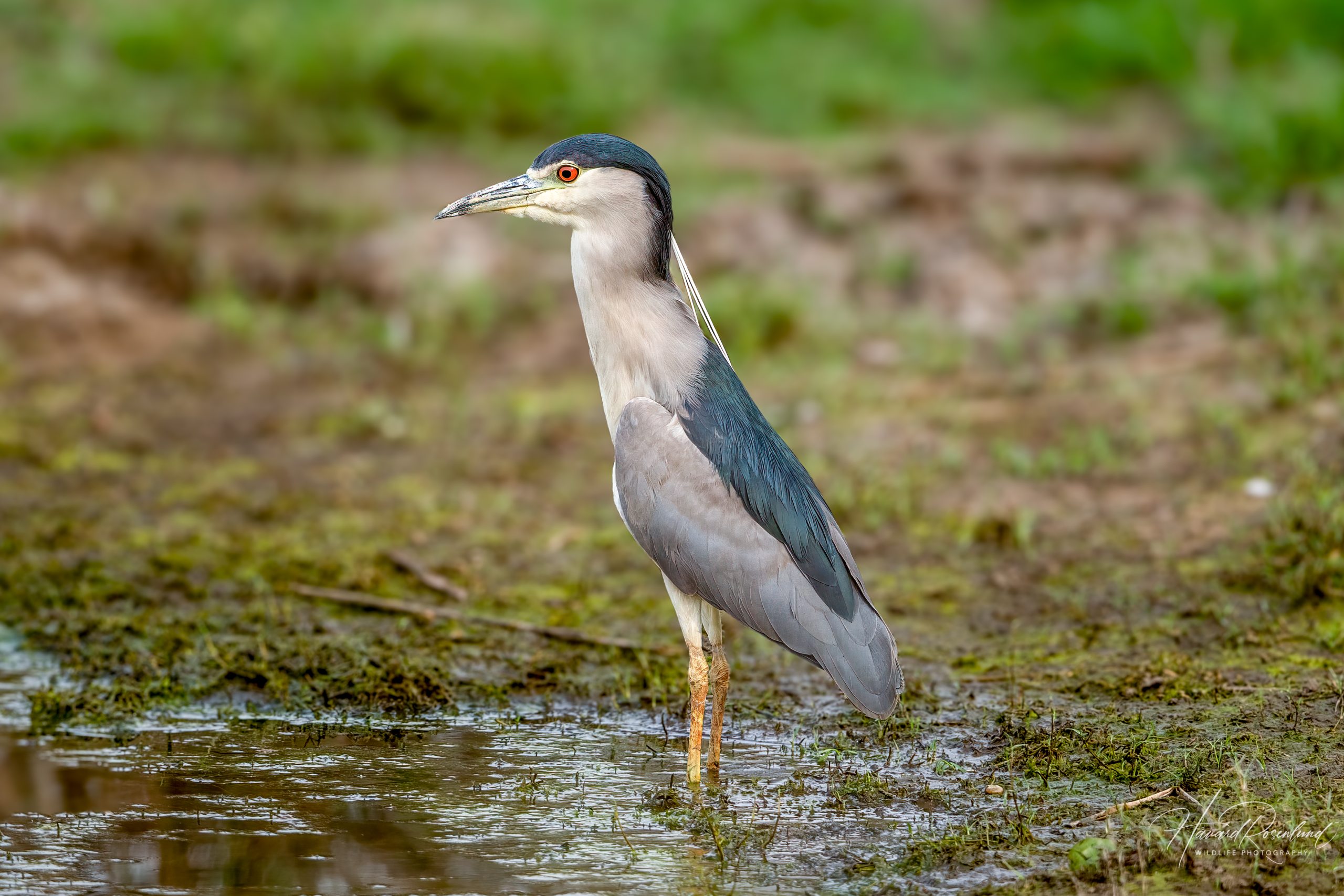
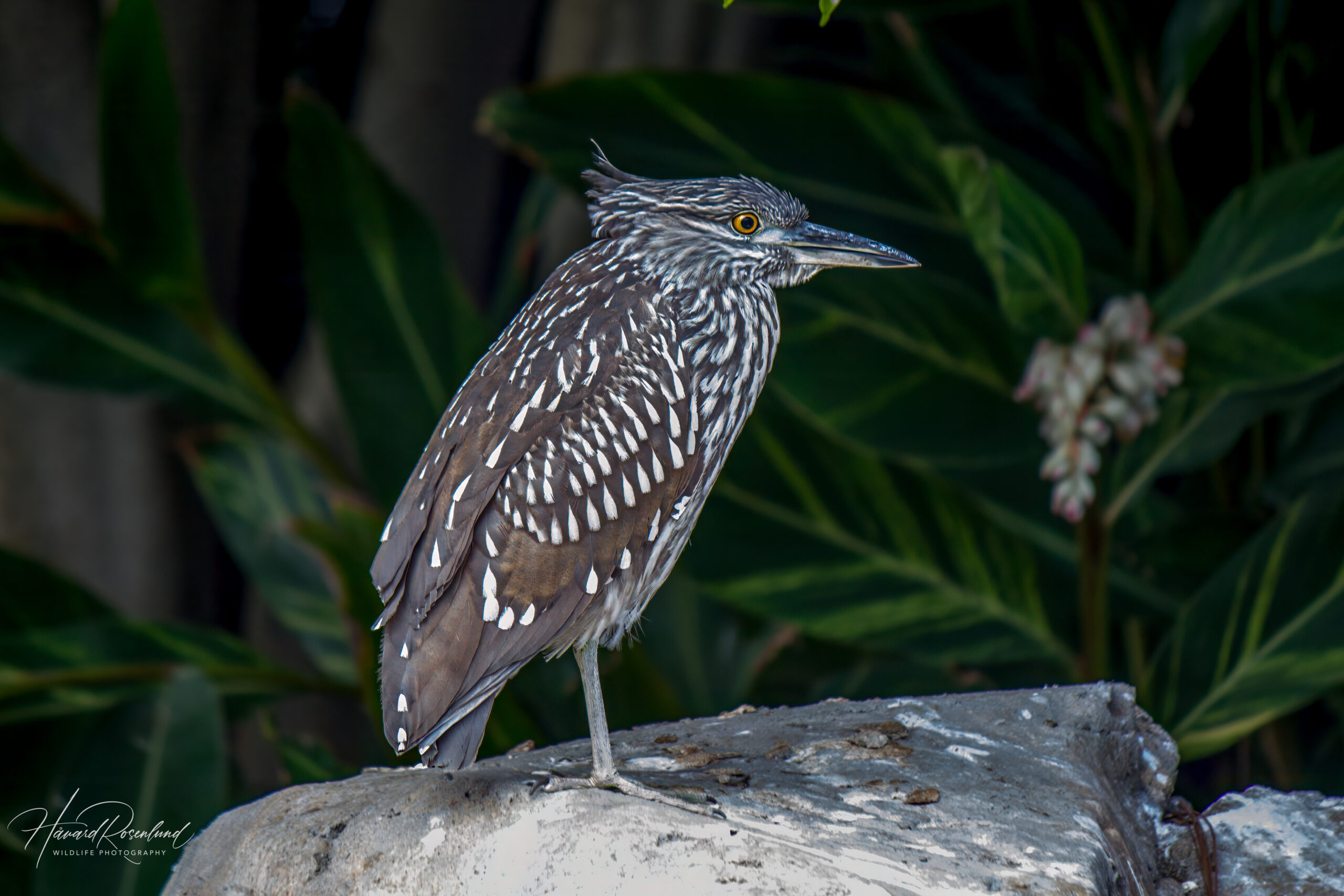
The black-crowned night heron (Nycticorax nycticorax) is a stocky, compact heron with an exceptionally broad global distribution. Adults are 58–66 cm long and weigh about 727–1,014 g. They have a black crown and back, pale grey wings, whitish underparts, red eyes, a heavy black bill and relatively short legs. During breeding, adults grow two or three long white plumes from the back of the head. Juveniles are brown overall with bold pale spotting on the wings and heavy streaking below.
The short neck, flat head and hunched posture make the species look much more compact than many other herons.
Habitat
Black-crowned night herons use an exceptionally wide range of freshwater, brackish and coastal wetlands, including marshes, rivers, lakes, reservoirs, estuaries, lagoons, mangroves, flooded fields and urban ponds.
Dense trees, shrubs or reedbeds near feeding sites are especially valuable because birds often spend daylight hours resting in sheltered cover before emerging to forage around dusk.
Diet
Fish are important prey, but the diet is highly opportunistic and also includes crayfish and other crustaceans, aquatic insects, worms, molluscs, frogs, reptiles, rodents, birds and eggs. Carrion and refuse may also be taken.
Hunting
Much hunting is by patient ambush. A black-crowned night heron stands quietly at the water's edge or on a low perch before striking rapidly when prey comes within reach.
The species hunts primarily around dusk and at night, usually leaving daytime roosts around sunset and feeding through the evening and early morning. This reduces direct competition with many herons using the same wetlands by day, although birds may also hunt in daylight during the demanding breeding season.
Behaviour
Large, light-sensitive eyes are well suited to dim conditions. A genomic study published in 2022 found changes in several vision-related genes that are consistent with adaptation to nocturnal activity. Birds often give a loud, rough quok call while flying between roosting and feeding sites.
Social behaviour
By day, black-crowned night herons often roost communally in trees, shrubs or reedbeds, sometimes together with other herons and wetland birds. Groups may remain quiet and inactive for hours before becoming much more animated around dusk.
Foraging is more often solitary or loosely spaced, although concentrations form where prey is abundant. This contrast between communal resting and dispersed feeding is characteristic of the species outside the breeding colony.
Migration
Movement patterns vary across the enormous range. Many northern populations in Europe, Asia and North America migrate south or move to milder coastal areas after breeding, while birds in warmer regions can be resident or make shorter local movements.
Water levels, freezing conditions and food availability can also drive seasonal shifts, so migration grades into more local wetland-to-wetland movement in many populations.
Breeding
Black-crowned night herons breed colonially, often alongside other herons, egrets, ibises and cormorants. The male selects a nest site, usually in a tree, shrub or dense emergent vegetation over or near water, and begins a platform of sticks. After pairing, he continues bringing material while the female does much of the final arrangement.
A clutch usually contains three to five greenish-blue eggs. Both parents incubate for about 24–26 days and later brood and feed the young. Chicks leave the nest structure on foot at around one month and move through surrounding branches and vegetation before they can fly well. Full flight develops at roughly six weeks.
Relationship with humans
The species can live in heavily modified wetlands, including city parks, reservoirs and ponds, provided that feeding habitat and secure roosting vegetation remain. Colonies can therefore persist surprisingly close to roads and buildings.
Persistent pesticides, PCBs and heavy metals can accumulate in adults, eggs and chicks because black-crowned night herons feed high in aquatic food webs. Contamination in surrounding wetlands can therefore become concentrated in birds breeding there.
Status
The black-crowned night heron is classified as least concern on the IUCN Red List. It remains one of the world's most widely distributed herons.
Wetland drainage, disturbance at colonies and deterioration of water quality can cause strong local declines even though the species remains widespread globally.
Image gallery
Loading map and observations…
Have you seen this species?
Independent species archive
Did you find this species page useful?
Wildlife Vagabond is independently built and maintained. Voluntary support helps cover hosting, maps, data storage and continued improvements to the species archive.
Support Wildlife VagabondSpecies content will remain freely available.
References
Information about the species’ global distribution and status is based primarily on global Red List data. See the references below for details.
- Avibase. (n.d.). AviList 2025 / Avibase – Nycticorax nycticorax. https://avibase.bsc-eoc.org/species.jsp?avibaseid=6BB94D7EA4D041A8&lang=EN
- BirdLife International. (n.d.). Black-crowned Night Heron species factsheet. https://datazone.birdlife.org/species/factsheet/black-crowned-night-heron-nycticorax-nycticorax
- Cornell Lab of Ornithology. (n.d.). Black-crowned Night-Heron Life History. https://www.allaboutbirds.org/guide/Black-crowned_Night-Heron/lifehistory
- International Union for Conservation of Nature. (n.d.). Black-crowned Night Heron. The IUCN Red List of Threatened Species. https://www.iucnredlist.org/species/22697211/155515762
- Luo, H., Luo, S., Fang, W., Lin, Q., Chen, X., & Zhou, X. (2022). Genomic insight into the nocturnal adaptation of the black-crowned night heron (Nycticorax nycticorax). BMC Genomics, 23(1), 683. https://doi.org/10.1186/s12864-022-08904-y