
Indian Pond Heron
Ardeola grayii
At a glance
Habitat
- Ponds, marshes, rivers, rice fields, canals, mangroves and other shallow wetlands, including many urban and agricultural waters
Diet
- Fish, frogs, crustaceans, aquatic insects and other small animals; a highly flexible wetland hunter
Activity
- Diurnal; feeding activity often peaks in the morning and evening
Size
- Length: ~40–50 cm Weight: ~230–275 g
Range
- From the Persian Gulf and Indian subcontinent east to Myanmar, including Sri Lanka, the Maldives and Andaman and Nicobar Islands
Description
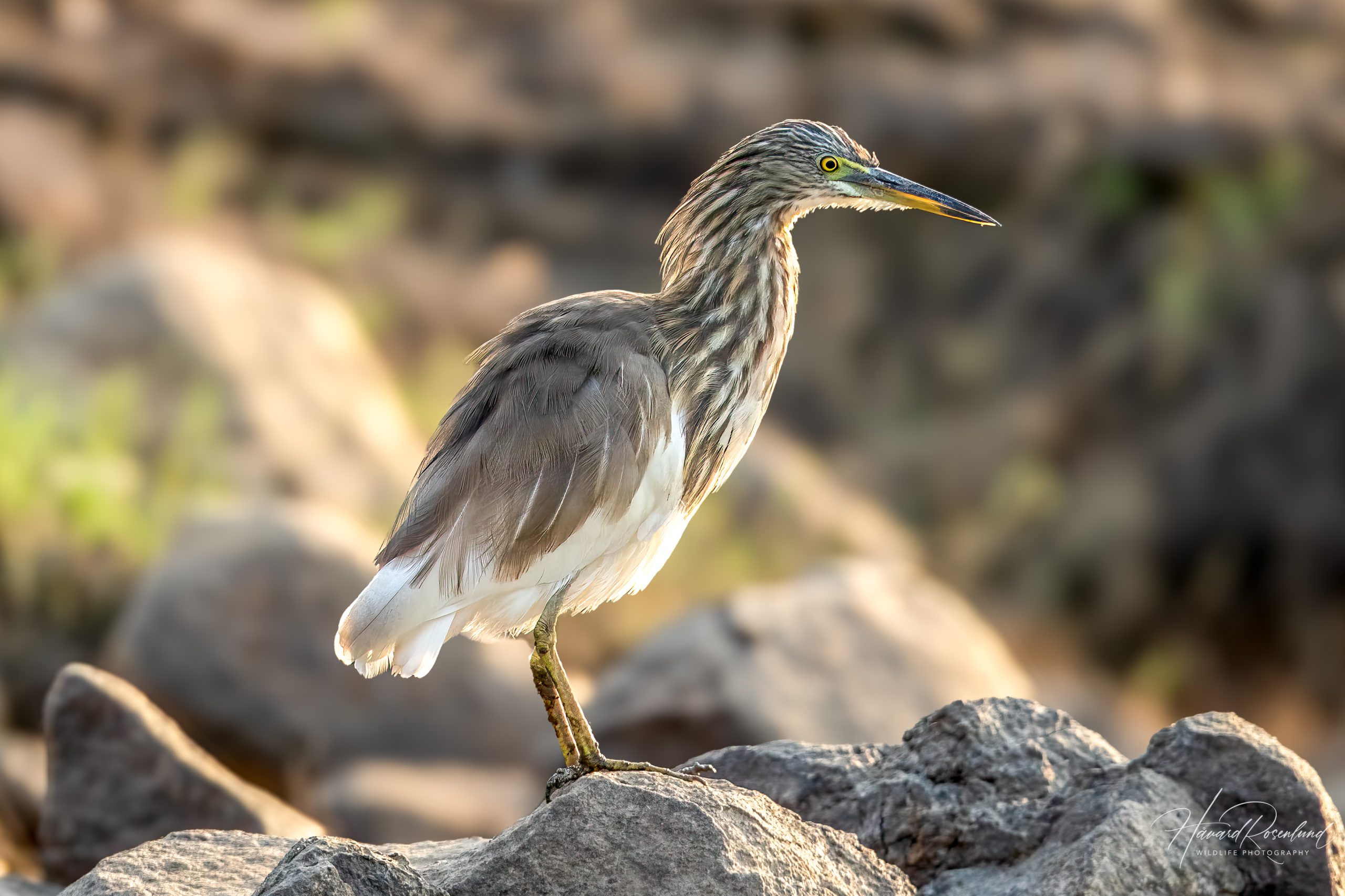
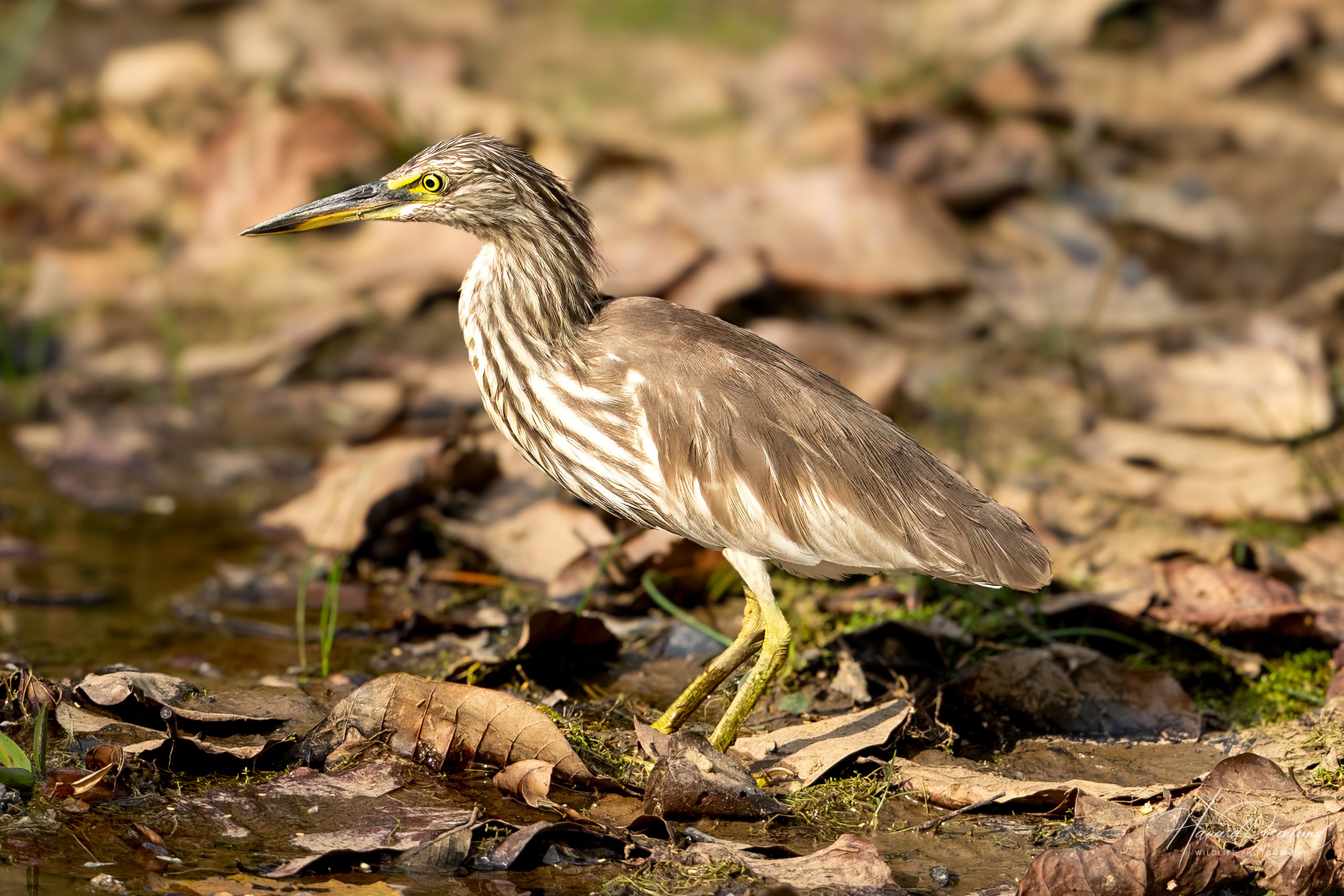
The Indian pond heron (Ardeola grayii) is a small, compact heron found widely across South Asia. Adults are roughly 40–50 cm long, have a wingspan of about 75–90 cm and weigh around 230–275 g. A bird standing motionless can look almost entirely earthy brown, with a streaked head, neck and breast that blend well with muddy wetland edges.
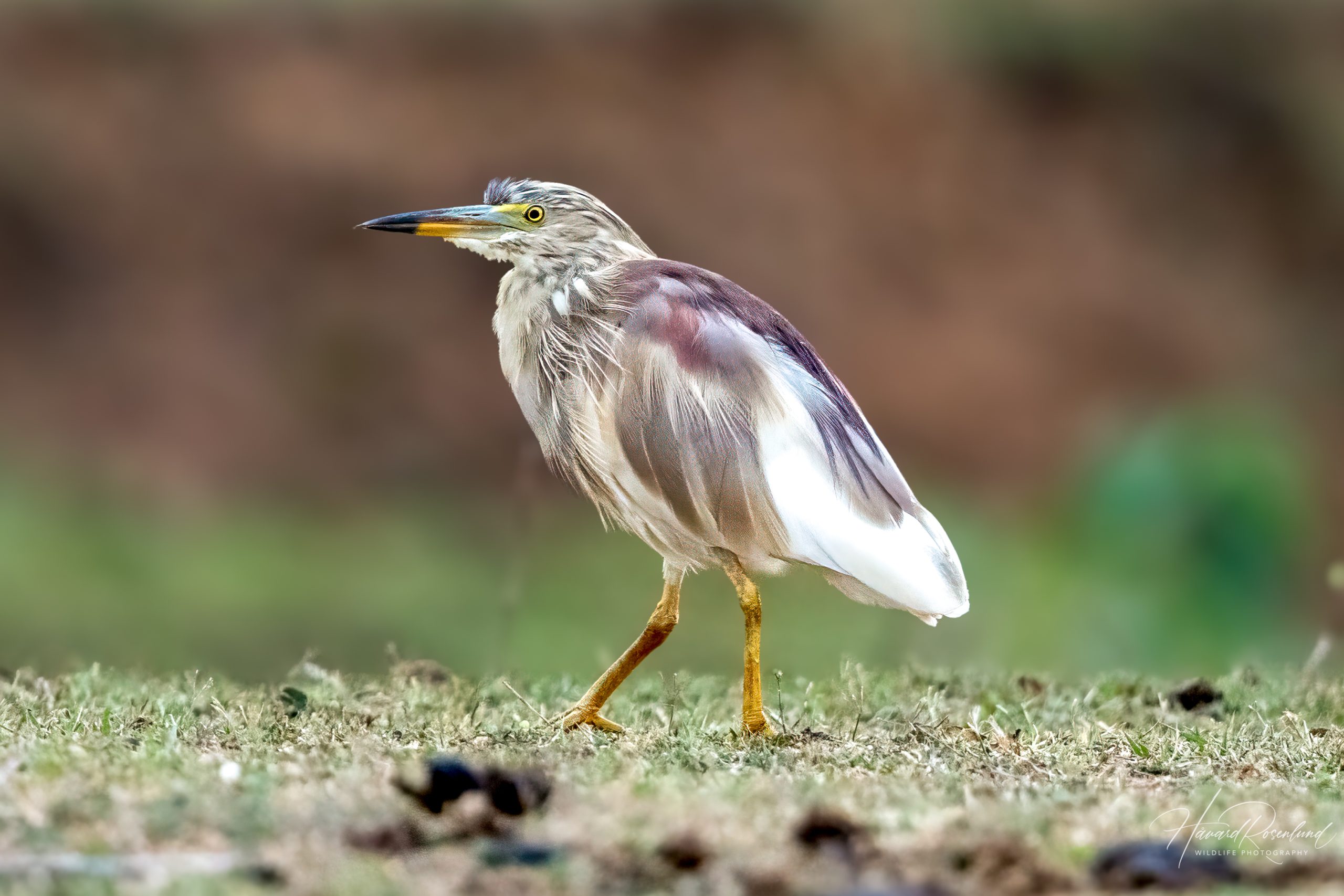
The impression changes completely when it takes flight. The wings, rump and tail are bright white, producing a sudden flash of colour that is hidden while the bird is perched. During breeding, adults develop richer chestnut-brown tones on the back and neck together with elongated head and back feathers. Other Asian pond herons can look very similar outside the breeding season, making range and breeding plumage useful identification clues.
Habitat
Indian pond herons use an exceptionally broad range of shallow wet habitats. They occur around ponds, lakes, rivers, marshes, irrigation channels, rice fields, flooded ditches, tidal creeks and mangroves. They are also common around village ponds and urban water bodies.
In India the species occurs across a very large area and uses many different wetland types. Its ability to use rice fields, reservoirs and other human-made waters helps explain why it remains one of the most familiar wetland birds across much of the subcontinent.
Diet
The diet includes fish, frogs and tadpoles, crustaceans, aquatic insects and other invertebrates, along with occasional small reptiles and terrestrial prey.
Behaviour
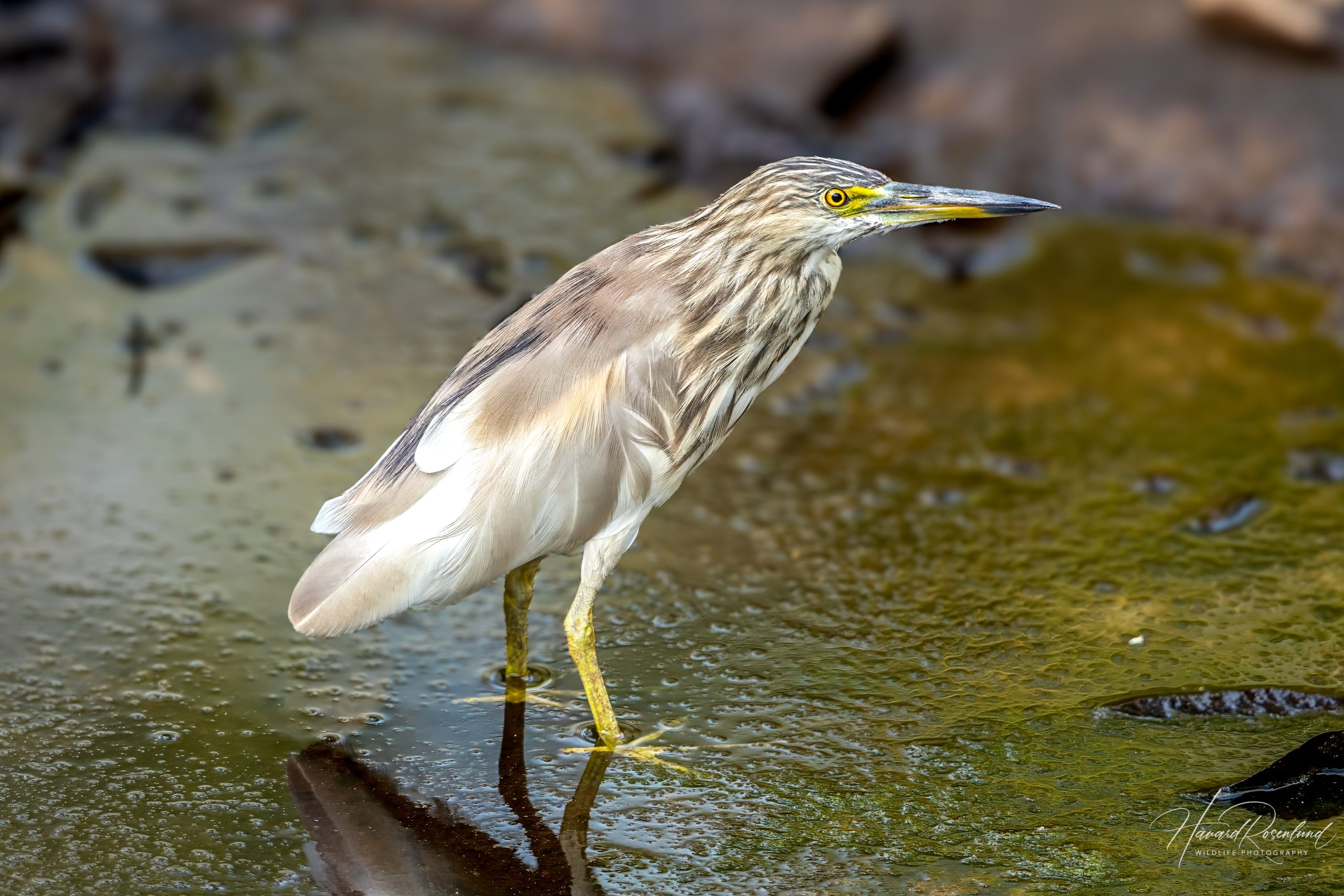
The usual hunting method is patient stand-and-wait feeding, followed by slow walking through shallow water or along wetland edges. Hunting success varies with season, prey abundance, vegetation and water depth.
Outside the breeding season, Indian pond herons are often solitary and may spend long periods feeding or resting alone along a small stretch of wetland edge. They can also become remarkably tolerant of people and sometimes continue feeding only a few metres from pedestrians, farmers or other everyday activity.
Bait-fishing
The species can also show surprisingly inventive hunting behaviour. A paper published in 2015 brought together several observations of Indian pond herons actively placing and repositioning lures on the water to draw fish within striking distance. The birds used pieces of bread and, in one case, a piece of polystyrene foam that was repeatedly retrieved and cast again. Bait-fishing is not used by every individual, but it shows that some birds can use objects in their surroundings as part of the hunt.
Breeding
Indian pond herons breed colonially, commonly sharing nesting trees with egrets and other herons. Breeding timing varies geographically and is often linked to monsoon rainfall. Nests are simple stick platforms built in trees or large shrubs, sometimes in surprisingly busy urban areas.
A study from Kerala published in 2008 recorded clutches of two to five eggs, with three especially common. Both parents incubated for about 18–24 days, and hatching success in the studied colonies reached 82%. Both adults also fed the chicks. A 2017 study from Hokersar Wetland in Kashmir found that the young became capable of flight after about 25–30 days.
Breeding therefore brings many normally dispersed birds together in dense heronries.
Status
The Indian pond heron is classified as least concern on the IUCN Red List and remains common across much of its range. In India the species has increased over the long term, while the trend in recent years has been approximately stable.
Its tolerance of human-modified wetlands gives the species considerable resilience, but local colonies and feeding sites can still be affected by pollution, wetland filling, removal of nesting trees and major changes to shallow-water habitats. Ordinary ponds, rice-field wetlands and urban waters therefore remain important habitats even for this highly adaptable species.
Image gallery
Loading map and observations…
Have you seen this species?
Independent species archive
Did you find this species page useful?
Wildlife Vagabond is independently built and maintained. Voluntary support helps cover hosting, maps, data storage and continued improvements to the species archive.
Support Wildlife VagabondSpecies content will remain freely available.
References
Information about the species’ global distribution and status is based primarily on global Red List data. See the references below for details.
- Begum. (2003). Colonial nesting behaviour in Indian Pond Heron Ardeola grayii grayii of Bangladesh. Zoos' Print Journal 18. https://zoosprint.org/index.php/zpj/article/view/6083
- BirdLife International. (n.d.). Indian Pond Heron species factsheet. https://datazone.birdlife.org/species/factsheet/indian-pond-heron-ardeola-grayii
- Dwivedi, A., Elangovan, V., Manisha, & Misra, P. K. (2020). Seasonal variation in feeding behaviour and foraging success of Indian pond heron (Ardeola grayii) in different habitats. Indian Journal of Science and Technology, 13(22), 2203–2213. https://doi.org/10.17485/IJST/v13i22.473
- International Union for Conservation of Nature. (n.d.). Indian Pond Heron. The IUCN Red List of Threatened Species. https://www.iucnredlist.org/species/22697128/93600400
- Réglade, Dilawar & Anand. (2015). Active bait-fishing in Indian Pond Heron Ardeola grayii. Indian BIRDS, 10, 124–125. https://indianbirds.in/pdfs/IB10_5_RegladeETAL_IndianPondHeron.pdf
- Seedikkoya, K., Azeez, P., & Abdul Shukkur, E. (2008). Breeding biology of pond heron in Kerala, South India. Nature Precedings. https://doi.org/10.1038/npre.2008.2558.1
- State of India's Birds. (2025). 2025 – Indian Pond Heron. https://stateofindiasbirds.in/species/inpher1/
- Wani, I. N., Fazili, M. F., Bhat, B. A., Bhat, G. A., & Habib, M. A. (2017). Breeding Biology of Indian Pond Heron (Ardeola grayii) in Hokersar Wetland, Kashmir. Journal of Research & Development, 17, 23–30. https://cord.uok.edu.in/Files/4701b853-a330-4f94-a00e-01555a32a0ff/Journal/fcb653ee-45a3-4cd4-b085-460542d49269.pdf