
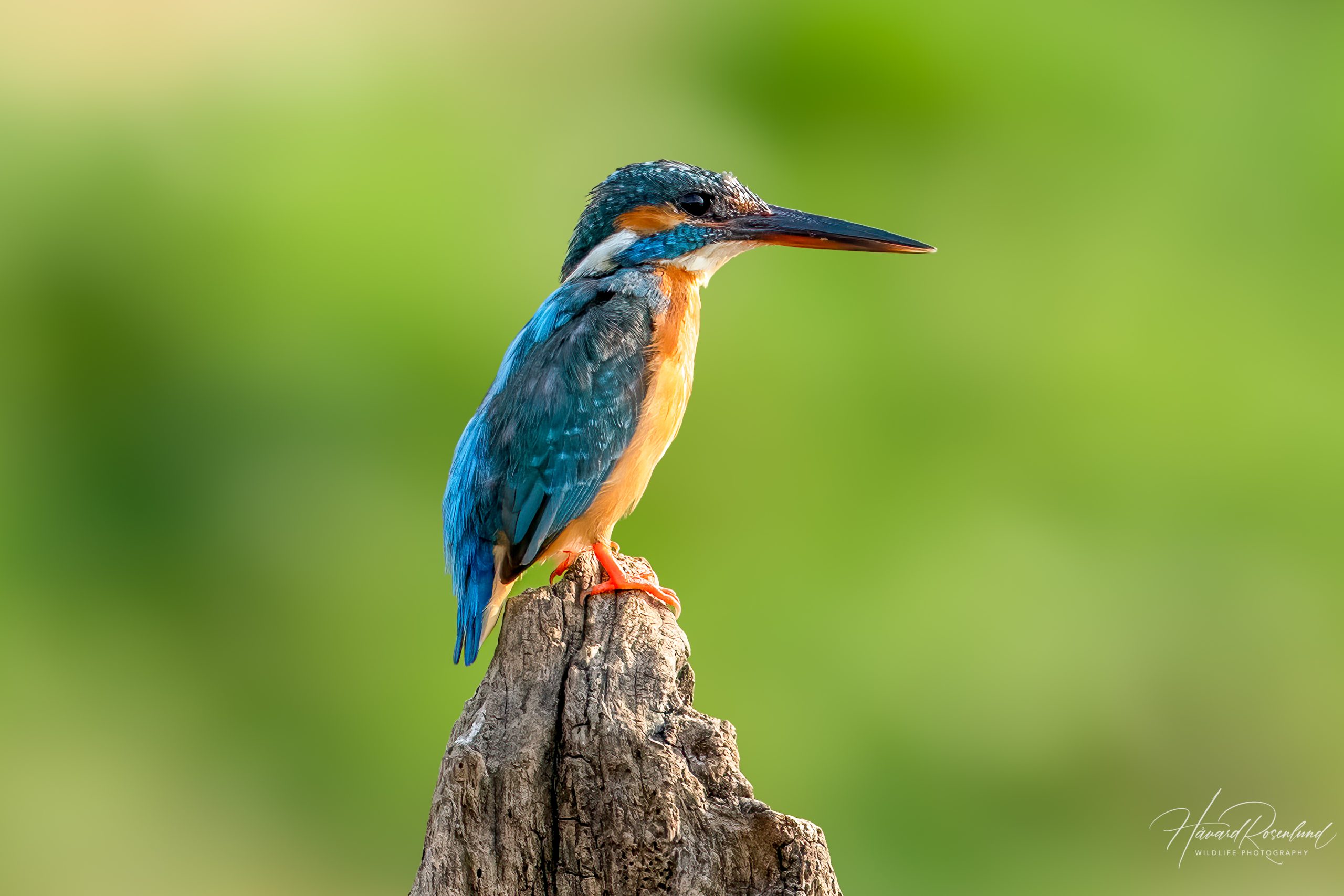
Common Kingfisher
Alcedo atthis
At a glance
Habitat
- Clear rivers, streams, lakes, ponds, canals and sheltered coasts with perches and suitable nesting banks
Diet
- Mostly small fish, supplemented by aquatic insects, crustaceans and other small aquatic prey
Activity
- Diurnal
Size
- Length: 16–18 cm Weight: about 39 g
Range
- Europe, North Africa and much of Asia; northern populations are more migratory
Description
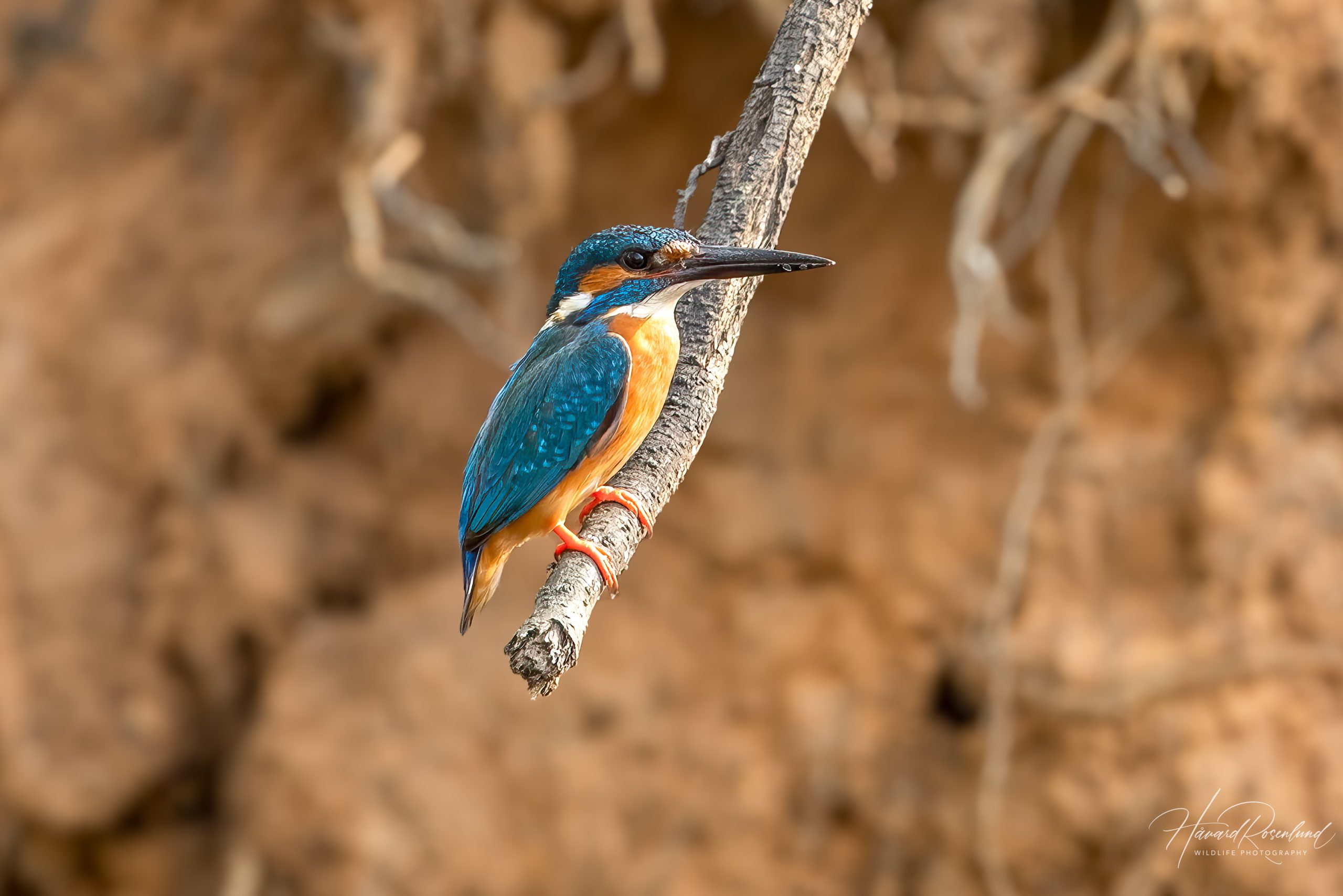
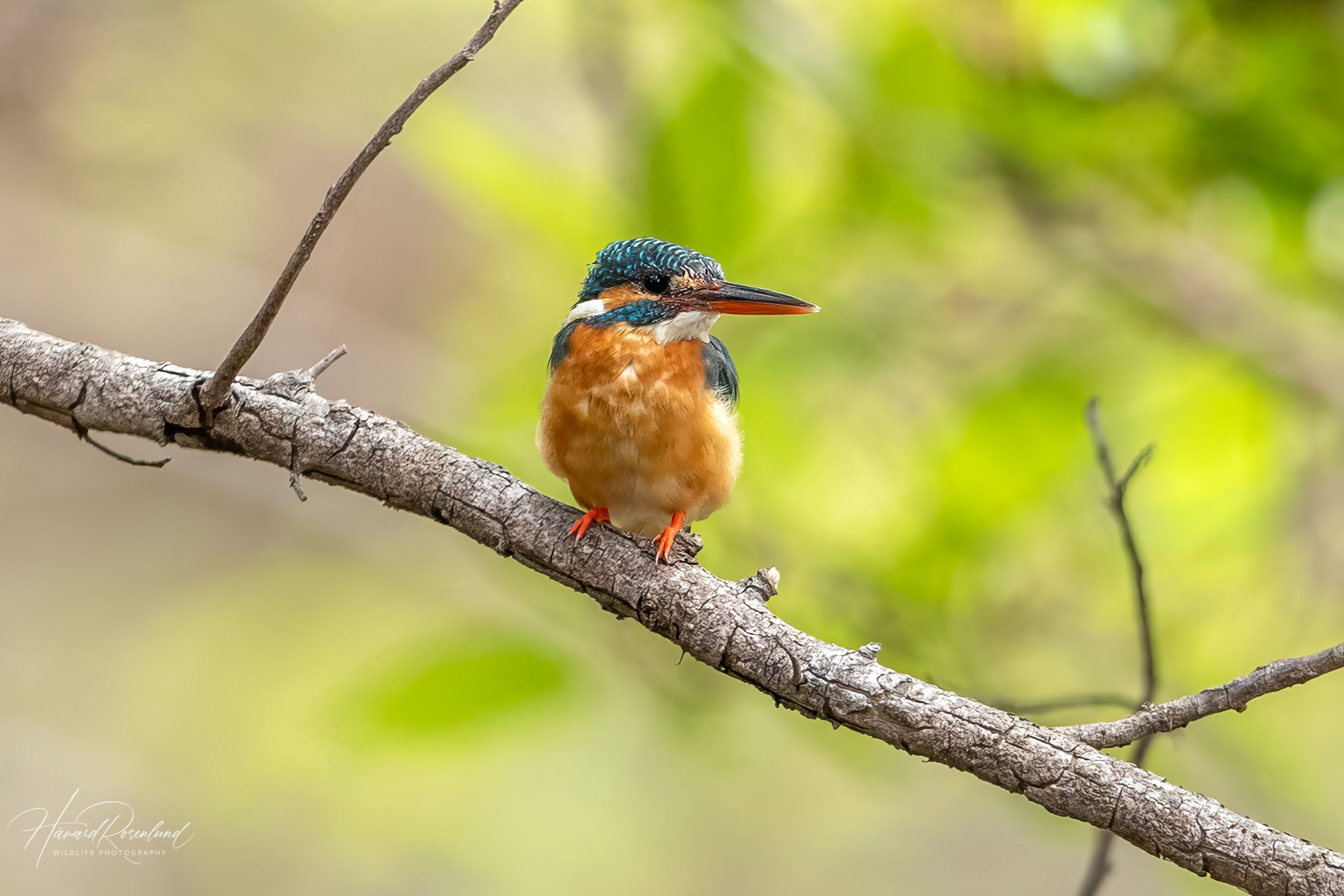
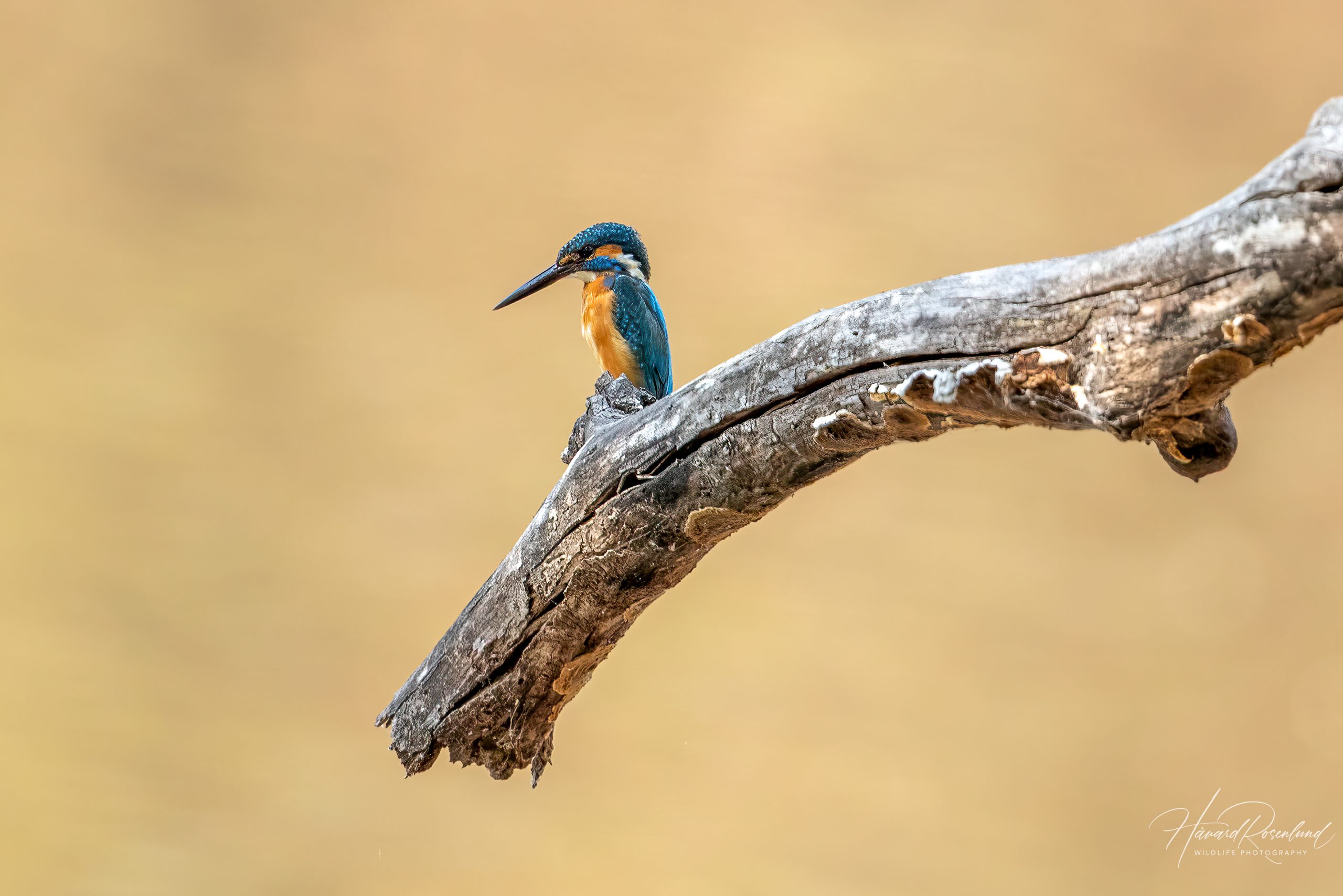
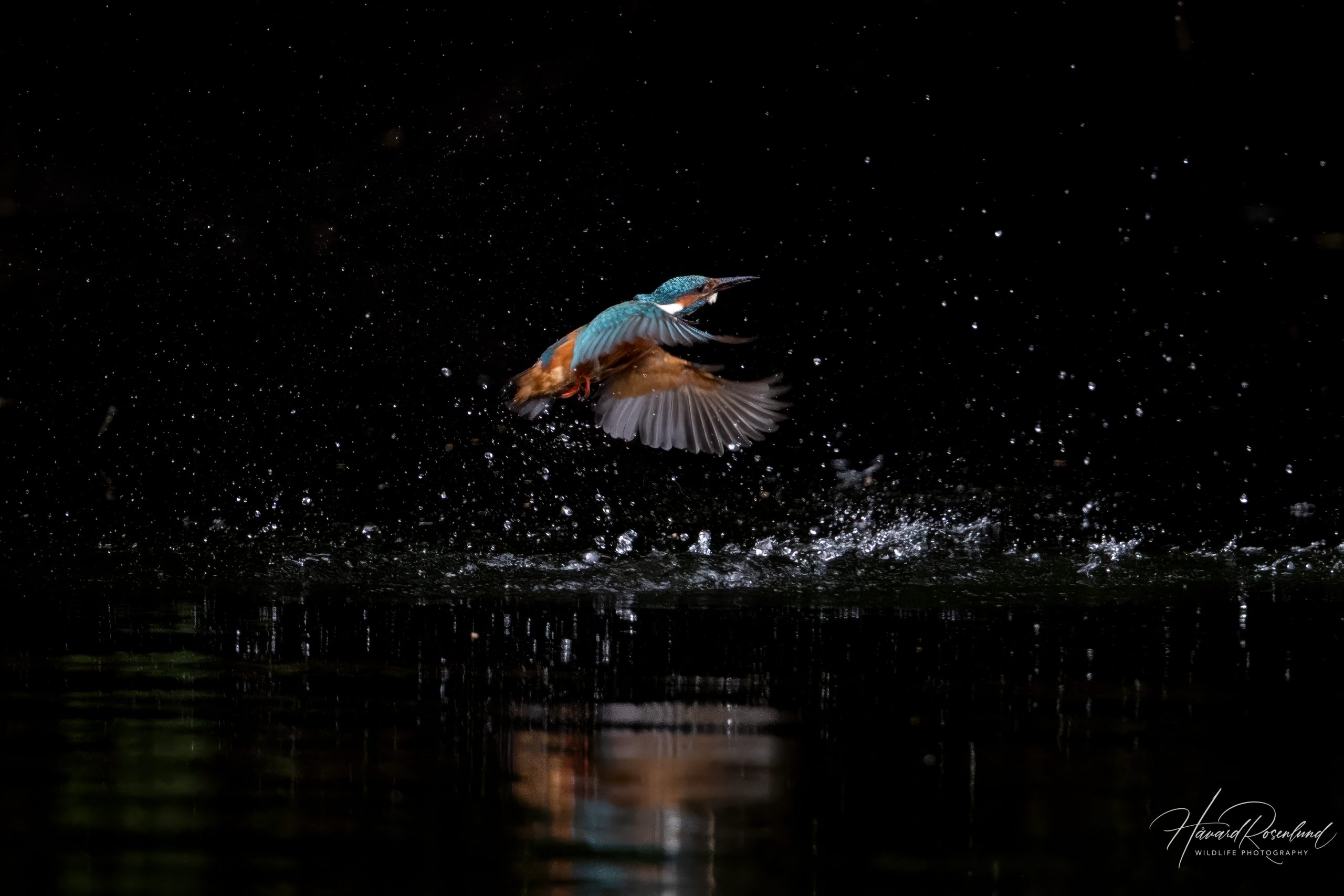
The common kingfisher (Alcedo atthis), also known as the Eurasian kingfisher, is a small, brilliantly coloured bird found across Europe, North Africa and much of Asia. Adults are about 16–18 cm long, have a wingspan of roughly 24–26 cm and weigh roughly 34–46 g. The upperparts appear vivid blue to turquoise, contrasting with orange underparts, a white throat and white patches on the sides of the neck. Males and females look similar, but females normally have orange-red colouring at the base of the lower mandible, whereas the adult male's bill is almost entirely dark. Juveniles resemble adults but have duller plumage with a distinctly greener or blue-green cast above.
The compact body, very short tail and disproportionately long, straight bill give the bird a distinctive shape even when the colours are difficult to see. Flight is fast and direct, often only a short distance above the water, and a high, sharp whistle frequently reveals a bird before it is spotted.
In southern and Southeast Asia, common kingfishers can be confused with blue-eared kingfishers (Alcedo meninting), which are generally darker blue above and lack the common kingfisher's conspicuous orange ear patch. Blyth's kingfisher (Alcedo hercules) is substantially larger and heavier-billed. These differences are most useful where the species occur together.
Habitat
Common kingfishers are closely tied to waters where small aquatic prey can be seen and reached efficiently. They use rivers, streams, lakes, ponds and canals, especially where clear or relatively shallow water is combined with overhanging branches, posts or other hunting perches. Suitable breeding habitat also requires steep or vertical banks of earth or sand in which the birds can excavate a nest tunnel.
Outside the breeding season they use a broader range of waters, including estuaries, sheltered coasts and other brackish or marine habitats. Water clarity, prey abundance and access to ice-free feeding sites can all determine whether a site remains usable, particularly during winter.
Diet
Small fish dominate the diet, supplemented by aquatic insects, crustaceans, tadpoles and other small aquatic prey. Prey choice varies with what is locally available and accessible, and small fish that can be swallowed whole are especially important.
Hunting
A common kingfisher normally watches from a perch before plunging head-first into the water, although it can also hover briefly before diving. Captured fish are usually carried back to a perch, subdued if necessary and swallowed head-first.
A controlled experiment published in 2013 with young captive common kingfishers found that the birds made more attacks and achieved greater capture success in shallower water. Experience also improved performance under some conditions, while the birds showed little evidence of specialising on one fish type when different prey were equally accessible. The results support the idea that accessibility can be as important as prey identity when a kingfisher chooses what to attack.
A comparative study published in 2019 of 71 kingfisher species found that plunge-diving species generally had narrower bills than more terrestrial relatives, and physical models showed lower peak deceleration when entering the water. This shape therefore reduces the forces acting on the head as the bill breaks the water surface and helps make rapid plunge-diving an effective feeding strategy.
Migration
Movement patterns vary strongly across the enormous range. Many common kingfishers in mild western and southern regions are resident or disperse only short distances, whereas birds from colder northern and eastern populations are more likely to move south or toward ice-free rivers, lakes and coasts in winter.
Freezing conditions are especially important because ice can suddenly remove access to feeding water. Even birds from largely resident populations may leave breeding territories after the season, and young birds commonly disperse more widely. Coastal and estuarine sites can therefore become important winter refuges when inland waters freeze.
Breeding
Common kingfishers breed in territories along suitable watercourses and excavate their own nest tunnel in a steep or vertical bank of earth or sand. Territories are actively defended, and intruders can be met with threat displays, pursuit and occasionally physical fights. Both the nesting bank and nearby feeding water are important: a good territory must provide a secure tunnel site as well as enough fish to support the adults and rapidly growing young. Courtship feeding, in which the male presents fish to the female, is a characteristic part of pair formation and the period around egg-laying.
A typical clutch contains 5–7 glossy white eggs. Both parents incubate for about 20 days. The chicks hatch naked and helpless and remain in the tunnel for roughly 23–27 days while both adults bring fish. One or two broods are usual in a season, but a third breeding attempt can occur under favourable conditions.
Breeding success depends strongly on suitable banks remaining intact through the season. River engineering, erosion or disturbance can remove nest sites even where feeding habitat remains good, which is why artificial earth or sand banks can sometimes provide useful replacement nesting habitat.
Status
The common kingfisher is classified as least concern on the IUCN Red List. In the European Red List of Birds 2021 it was also assessed as least concern, down from Vulnerable in 2015. The European trend was still considered decreasing.
Severe winter weather is one of the clearest causes of population fluctuations because prolonged freezing prevents the birds from reaching fish. Water quality, prey availability and the condition of riverbanks used for nesting can also influence populations over longer periods. The species can recover quickly after poor winters because successful pairs may raise more than one brood, but this depends on productive waters and suitable nesting banks remaining available.
Image gallery
Loading map and observations…
Have you seen this species?
Independent species archive
Did you find this species page useful?
Wildlife Vagabond is independently built and maintained. Voluntary support helps cover hosting, maps, data storage and continued improvements to the species archive.
Support Wildlife VagabondSpecies content will remain freely available.
References
Information about the species’ global distribution and status is based primarily on global Red List data. See the references below for details.
- BirdLife International. (n.d.). Common Kingfisher species factsheet. https://datazone.birdlife.org/species/factsheet/common-kingfisher-alcedo-atthis
- British Trust for Ornithology. (n.d.). Kingfisher BirdFacts. https://www.bto.org/learn/about-birds/birdfacts/kingfisher
- Crandell, K. E., Howe, R. O., & Falkingham, P. L. (2019). Repeated evolution of drag reduction at the air–water interface in diving kingfishers. Journal of The Royal Society Interface, 16(154), 20190125. https://doi.org/10.1098/rsif.2019.0125
- International Union for Conservation of Nature. (n.d.). Common Kingfisher. The IUCN Red List of Threatened Species. https://www.iucnredlist.org/species/22683027/89575948
- Reynolds, S., & Hinge, M. (1996). Foods brought to the nest by breeding KingfishersAlcedo atthisin the New Forest of southern England. Bird Study, 43(1), 96-102. https://doi.org/10.1080/00063659609460999
- Turčoková, L., Melišková, M., & Balážová, M. (2016). Nest site location and breeding success of Common kingfisher (Alcedo atthis) in the Danube river system. Folia Oecologica, 43(1), 74–82.
- Vilches, A., Arizaga, J., Salvo, I., & Miranda, R. (2013). An experimental evaluation of the influence of water depth and bottom color on the Common kingfisher's foraging performance. Behavioural Processes, 98, 25-30. https://doi.org/10.1016/j.beproc.2013.04.012