
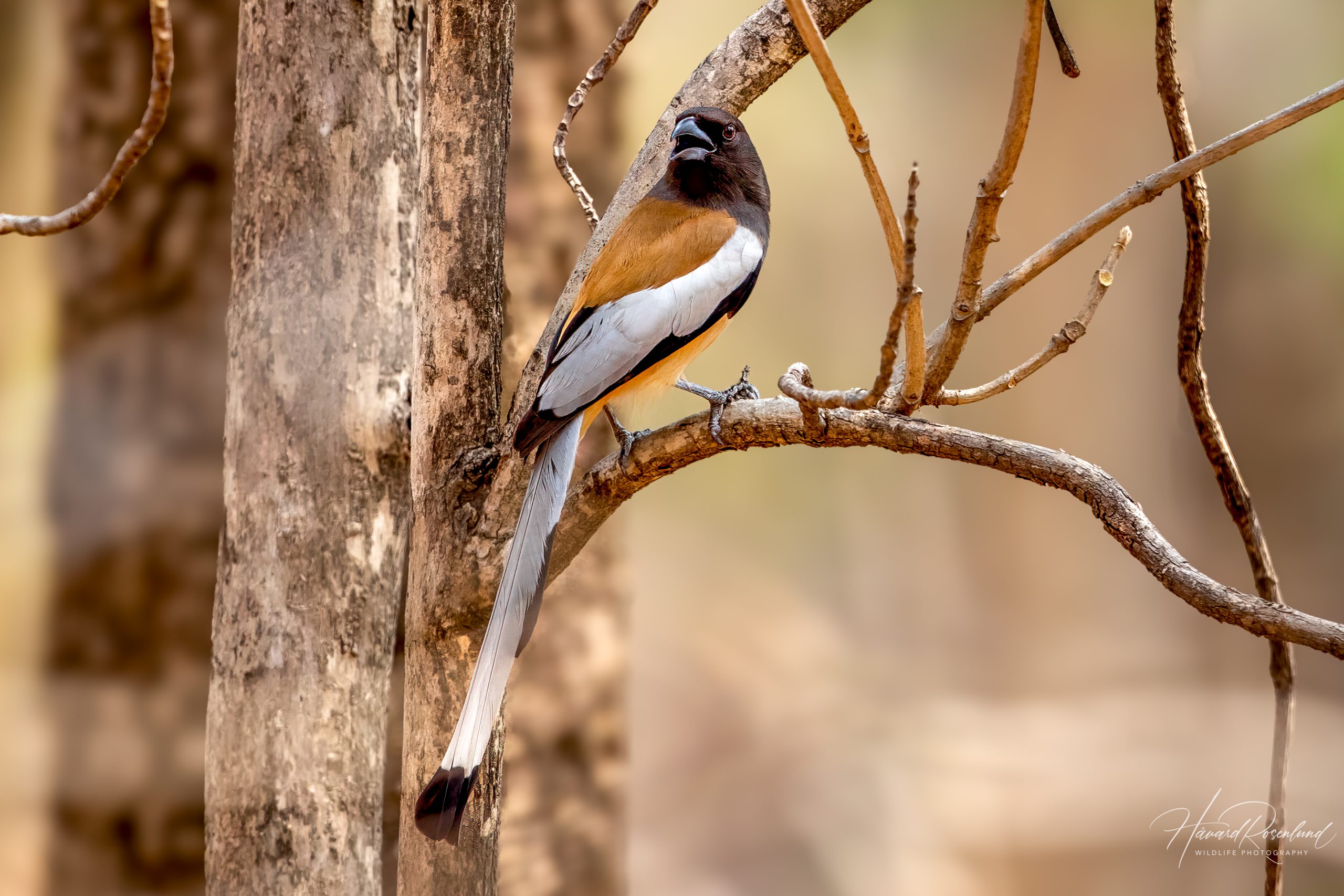
Rufous Treepie
Dendrocitta vagabunda
At a glance
Habitat
- Open and deciduous forest, scrub, secondary growth, plantations, farmland, gardens and urban parks
Diet
- Fruit, seeds, insects and other invertebrates, eggs and nestlings, small vertebrates and carrion
Activity
- Diurnal
Size
- Length: 46–50 cm including long tail Weight: 90–130 g
Range
- Indian subcontinent east into Myanmar, Thailand and adjoining parts of mainland Southeast Asia
Description
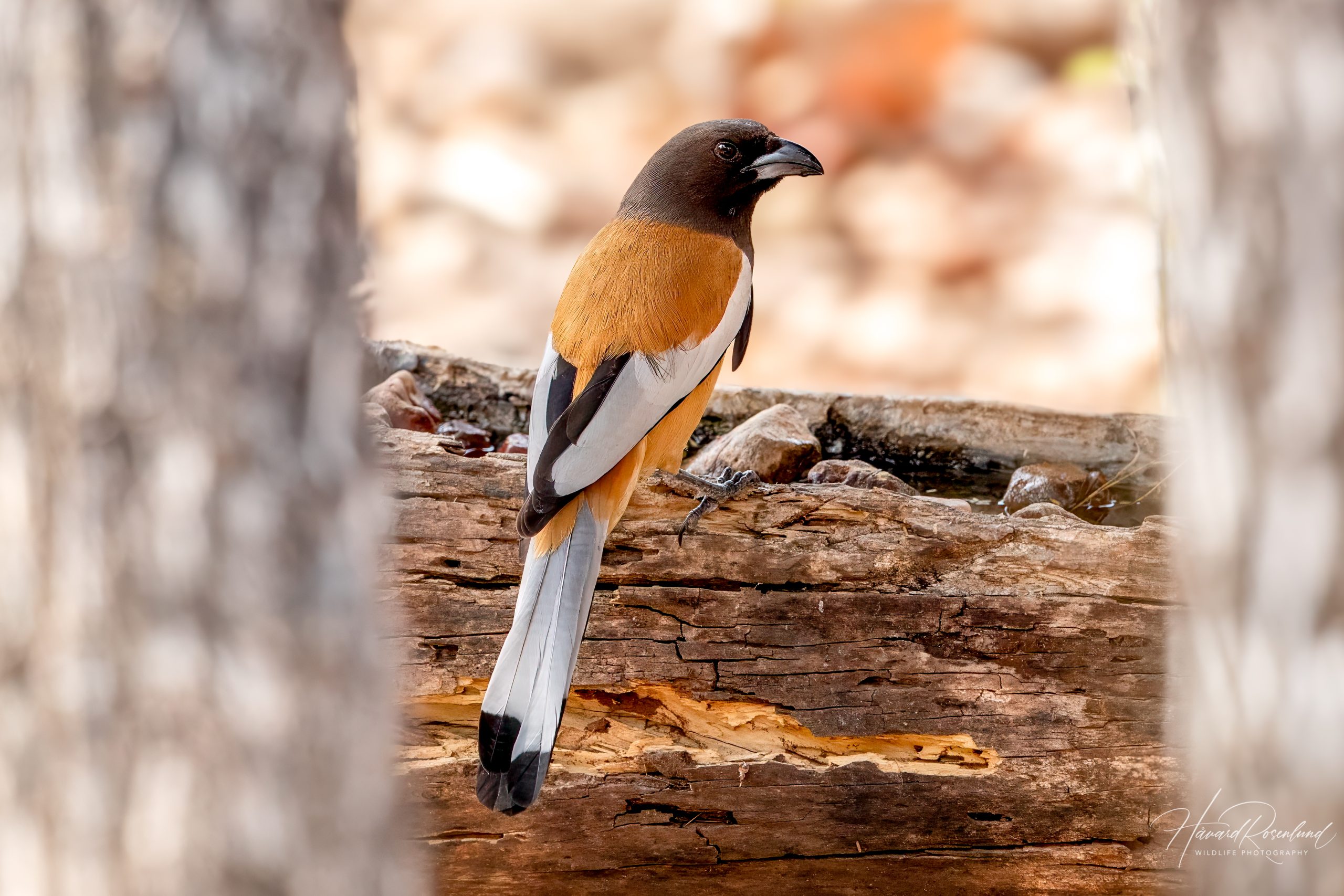
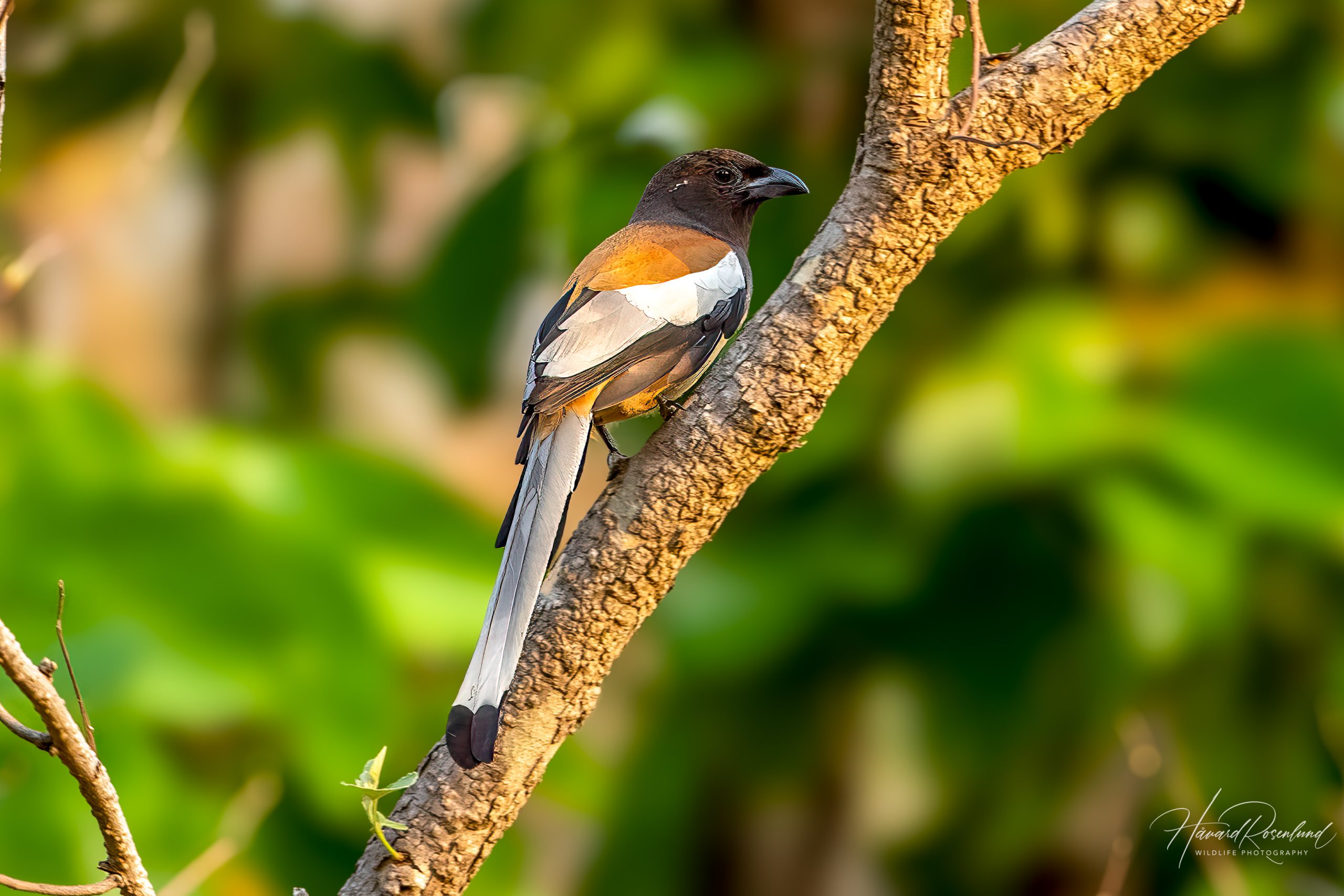
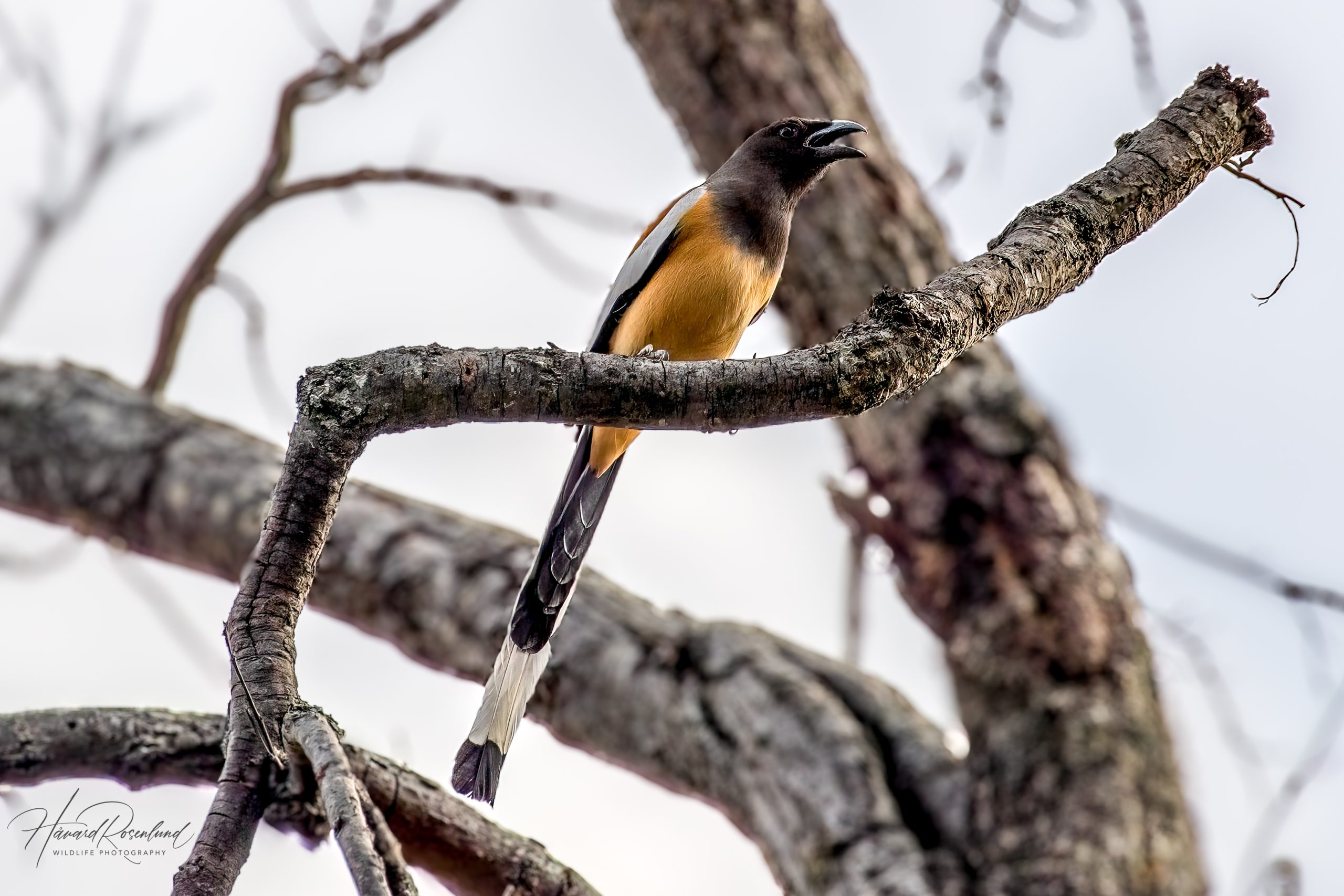
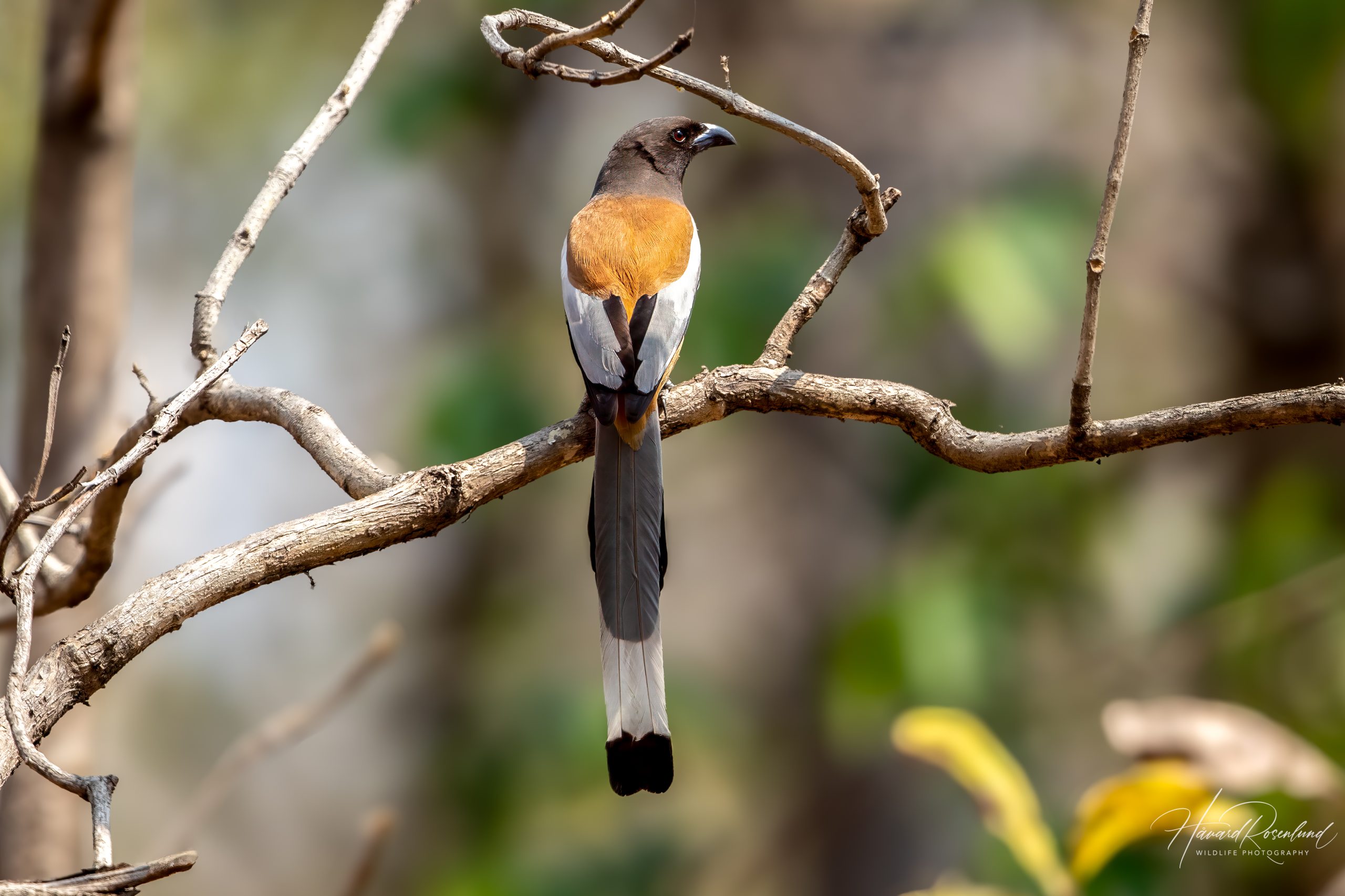
The rufous treepie (Dendrocitta vagabunda) is a long-tailed corvid native to the Indian subcontinent and adjoining parts of mainland Southeast Asia. Adults are about 46–50 cm long, much of that length formed by the graduated tail. The head and upper breast are black, the body is warm rufous to orange-brown, and the wings combine black with a prominent white patch. The pale grey-white tail ends in a broad black tip.
Like many corvids, the species is much more agile and behaviourally flexible than its rather heavy-bodied appearance suggests. It moves easily through branches, often using the long tail for balance. Grey treepie (Dendrocitta formosae) is a close look-alike farther north and east, but is greyer overall and lacks the rich rufous body and completely black head of the rufous treepie.
Habitat
Rufous treepies occupy an unusually broad range of wooded and semi-open habitats. Deciduous forest, scrub, secondary woodland, plantations, wooded farmland, gardens and city parks can all support the species. They are especially successful where mature trees are interspersed with openings and productive fruiting or flowering vegetation.
In India, the species is resident and a habitat generalist. This flexibility explains its abundance in many human-dominated landscapes, but tree cover remains essential for nesting, roosting and much of its foraging.
Diet
The rufous treepie is an opportunistic omnivore. Fruit and seeds are eaten alongside beetles, caterpillars and other invertebrates, small reptiles and other vertebrates, carrion, and the eggs and young of birds.
A study published in 2021 from Arakkonam in Tamil Nadu recorded rufous treepies pecking holes into 242 baya weaver nests in five villages to prey on eggs and chicks. This broad diet allows treepies to switch rapidly among seasonal fruits, insects, vertebrate prey and human-associated foods.
Behaviour
Rufous treepies are usually encountered in pairs or small family parties. They are active, inquisitive birds with a large vocal repertoire that includes harsh rattles, metallic calls and softer conversational notes. Their calls often carry farther than the birds themselves are visible through the canopy.
Foraging is mainly arboreal, with birds climbing and hopping through branches and probing bark, foliage and vegetation growing on branches. They also visit the ground, carcasses and human food sources. A review of caching across corvids published in 2025 confirmed that food caching has been recorded in rufous treepies, but found too little information to determine how regular or systematic the behaviour is.
Their ability to exploit unfamiliar opportunities can be striking. An observation published in 2018 from a temple in Gujarat documented four rufous treepies handling wicks from ghee lamps. One bird carried out a lit oil lamp, pulled out the burning cotton wick, extinguished it by jerking its head and swallowed the wick. A further observation published in 2021 from Andhra Pradesh documented another bird feeding on an oil-soaked lamp wick. Such unusual behaviour illustrates how readily the species can investigate and learn to exploit new food sources in human environments.
Breeding
Breeding timing varies geographically across the range, but March–July is commonly reported as the main period in India. A loose cup or platform of twigs and roots is built in a tree or dense woody vegetation, usually with both members of the pair involved in nest activity.
Clutches of three to five eggs are commonly reported. Both adults feed the nestlings after hatching, and treepies defend the nest vigorously and may mob potential predators.
Status
The rufous treepie is classified as least concern on the IUCN Red List. Indian data updated in 2025 estimate the national range at about 2.13 million km².
The same data classify the current annual trend as stable. The long-term estimate is positive, at about a 48% increase, but uncertainty remains too high to establish the long-term trend confidently. The species tolerates considerable landscape modification, but extensive loss of trees and diverse urban or agricultural vegetation can still reduce habitat locally.
Image gallery
Loading map and observations…
Have you seen this species?
Independent species archive
Did you find this species page useful?
Wildlife Vagabond is independently built and maintained. Voluntary support helps cover hosting, maps, data storage and continued improvements to the species archive.
Support Wildlife VagabondSpecies content will remain freely available.
References
Information about the species’ global distribution and status is based primarily on global Red List data. See the references below for details.
- BirdLife International. (n.d.). Rufous Treepie species factsheet. https://datazone.birdlife.org/species/factsheet/rufous-treepie-dendrocitta-vagabunda
- Daw, F., Beheim, B. A., & Wascher, C. A. F. (2025). Evolutionary drivers of caching behaviour in corvids. Animal Cognition, 28(1), 17. https://doi.org/10.1007/s10071-025-01938-1
- International Union for Conservation of Nature. (n.d.). Rufous Treepie. The IUCN Red List of Threatened Species. https://www.iucnredlist.org/species/22705836/130381668
- Pandian, M. (2021). Nesting Habits of Baya Weaver <i>Ploceus philippinus</i> (Linnaeus, 1776) in Rural Arakkonam Taluk, Vellore District, Tamil Nadu, India. Journal of the Bombay Natural History Society (JBNHS), 118. https://doi.org/10.17087/jbnhs/2021/v118/144638
- Roy, Y. K. (2021). Rufous Treepie <i>Dendrocitta vagabunda</i> feeding on the wicks of ‘diya’. Indian BIRDS, 17(1), 32. https://indianbirds.in/pdfs/IB_17_1_Roy_Treepie.pdf
- State of India's Birds. (n.d.). State of India’s Birds – Rufous Treepie. https://stateofindiasbirds.in/species/ruftre2/
- Vyas & Upadhyay. (2018). Rufous Treepie Dendrocitta vagabunda extinguishing and swallowing lamp wick. Indian BIRDS, 14(3), 92–93. https://indianbirds.in/pdfs/IB_14_3_Vyas_Upadhyay_RufousTreepie.pdf
- Zoological Survey of India. (n.d.). Zoological Survey of India – Conservation Area Series 42. https://zsi.gov.in/PDFVolumes/cas/042/index.pdf