
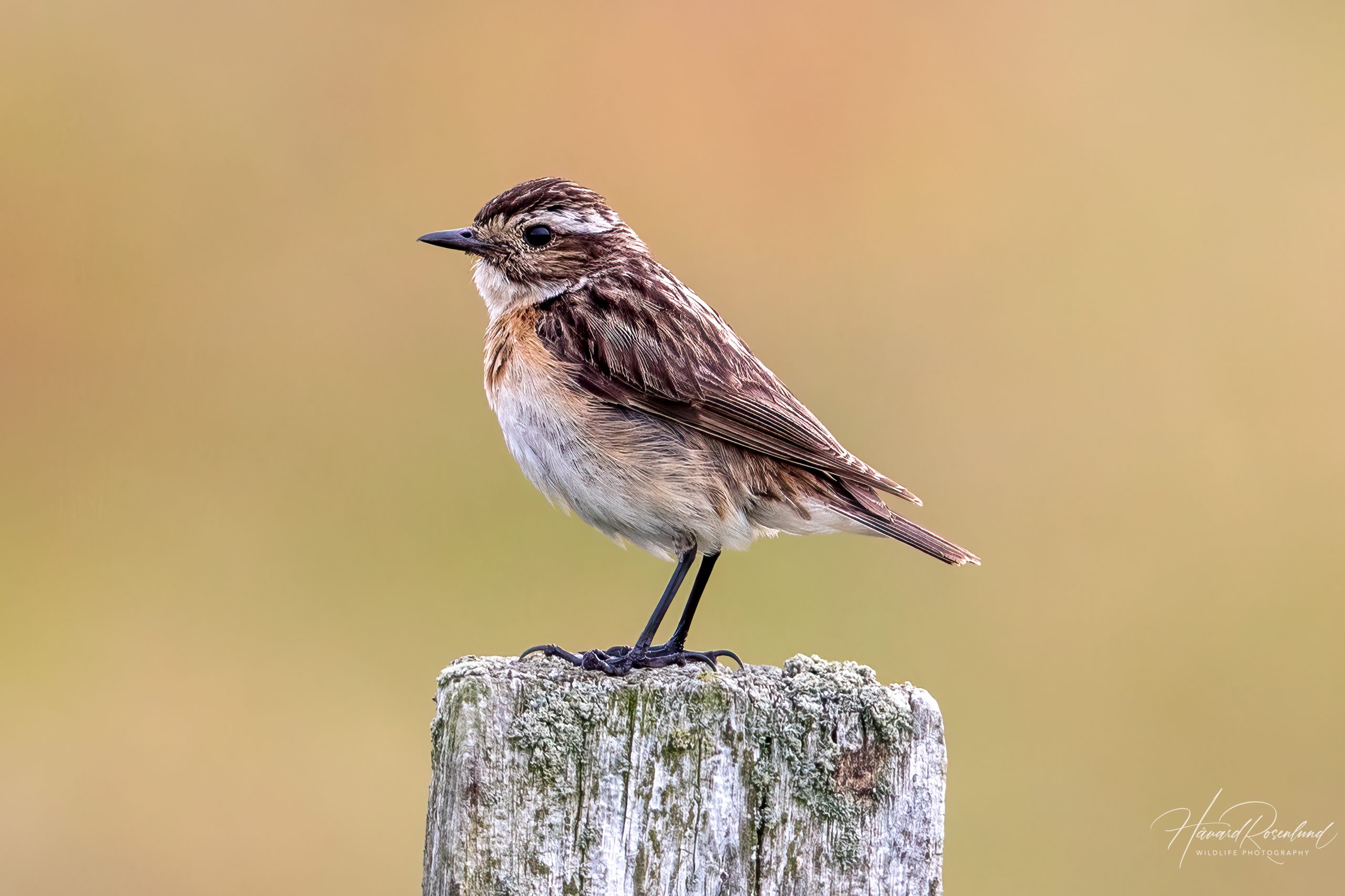
Whinchat
Saxicola rubetra
At a glance
Habitat
- Open, structurally varied meadows, grassland, heath and farmland with tall herbs, scattered shrubs or other perches
Diet
- Mainly insects and other small invertebrates; berries, seeds and other plant food are taken more often outside breeding
Activity
- Diurnal
Size
- Length: 12–14 cm Weight: 14–24 g
Range
- Breeds across Europe and western Asia; winters in sub-Saharan Africa
Description
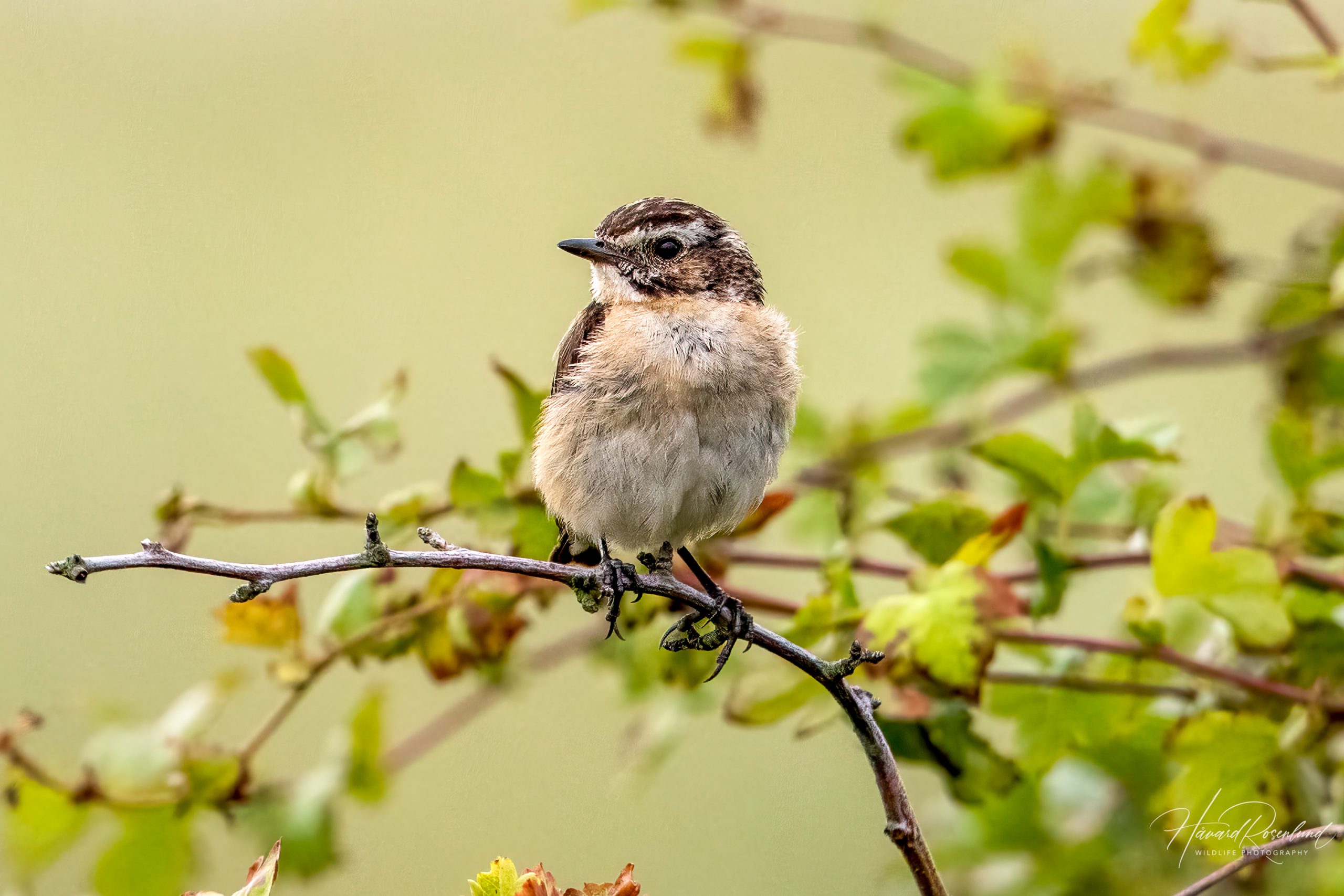
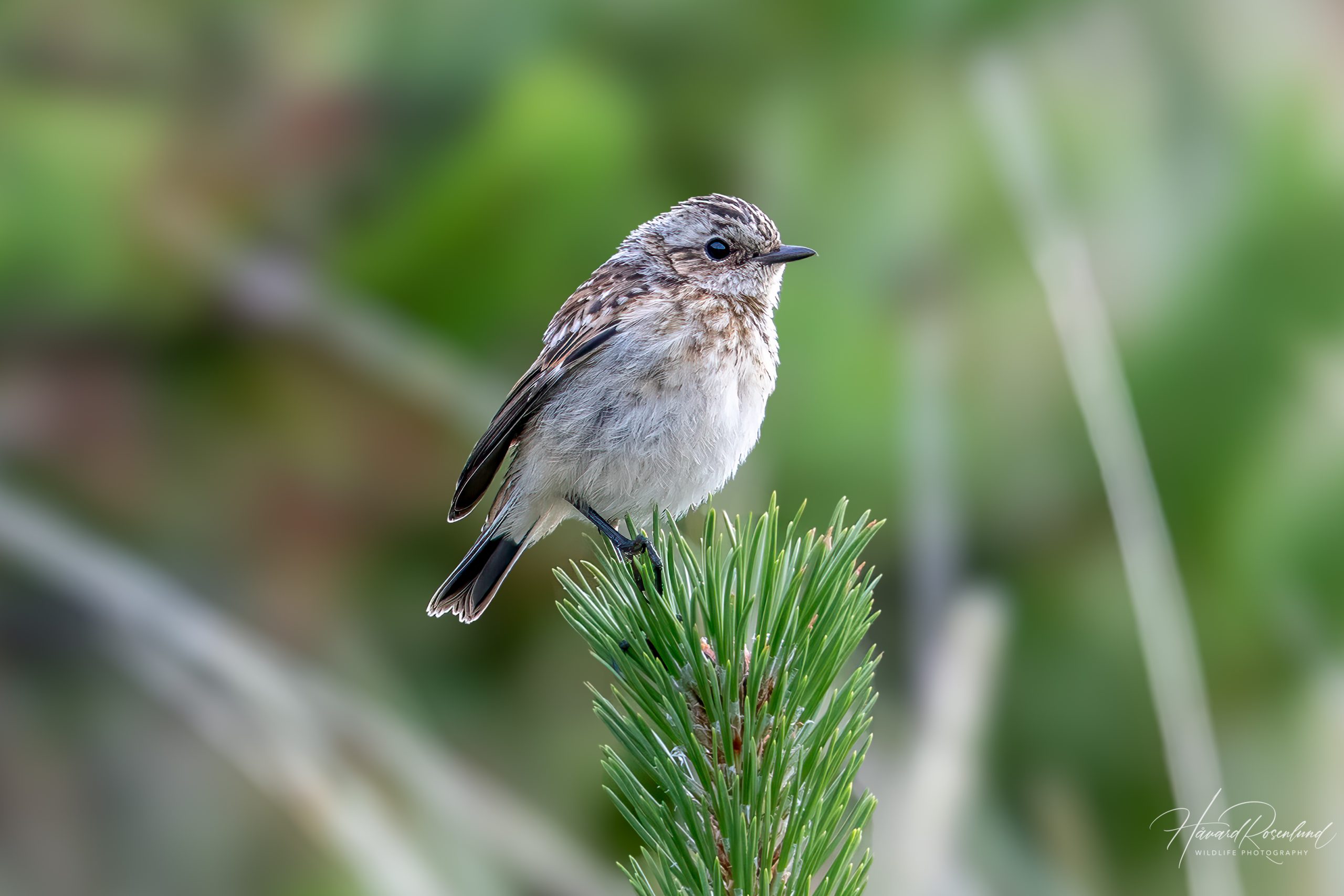
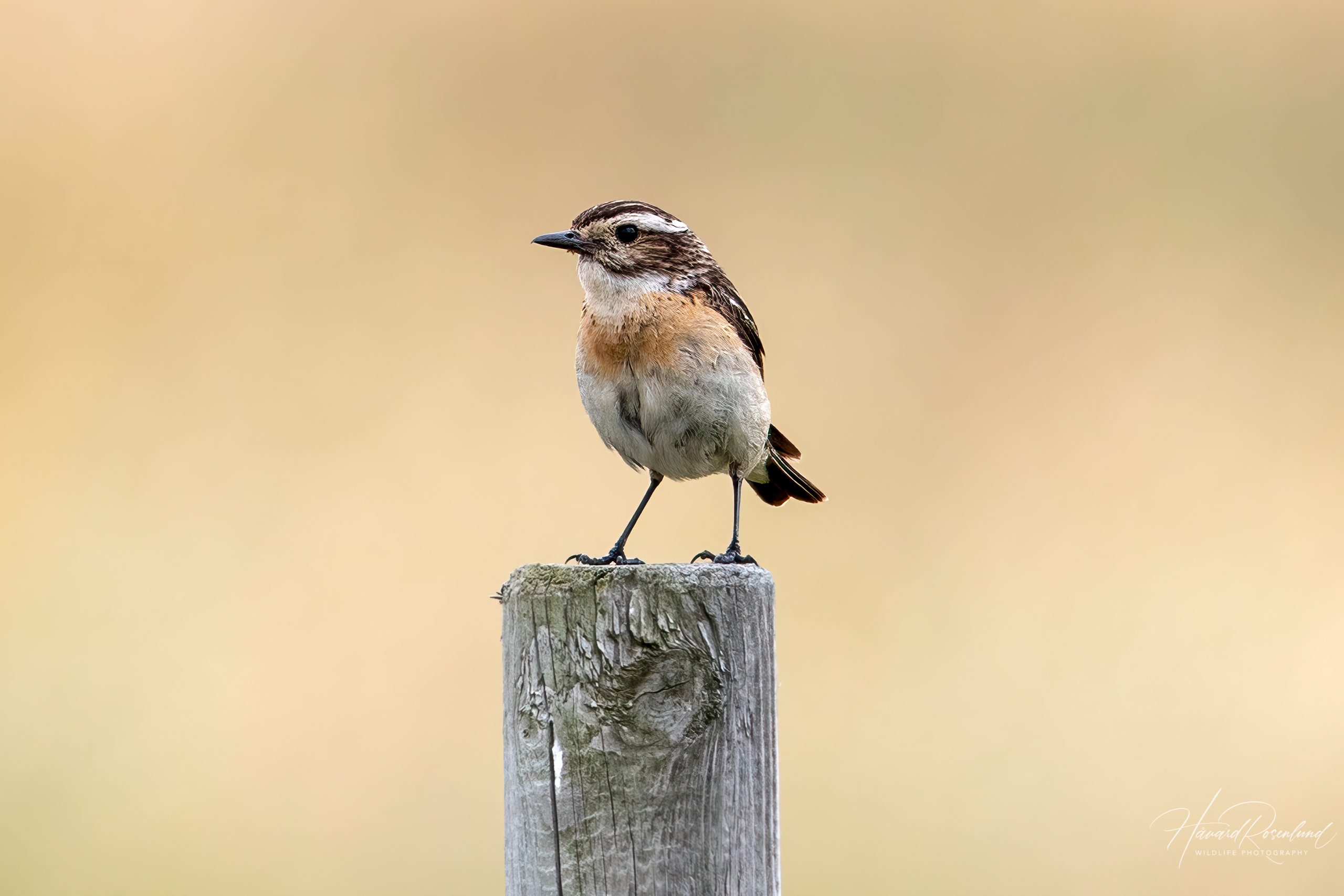
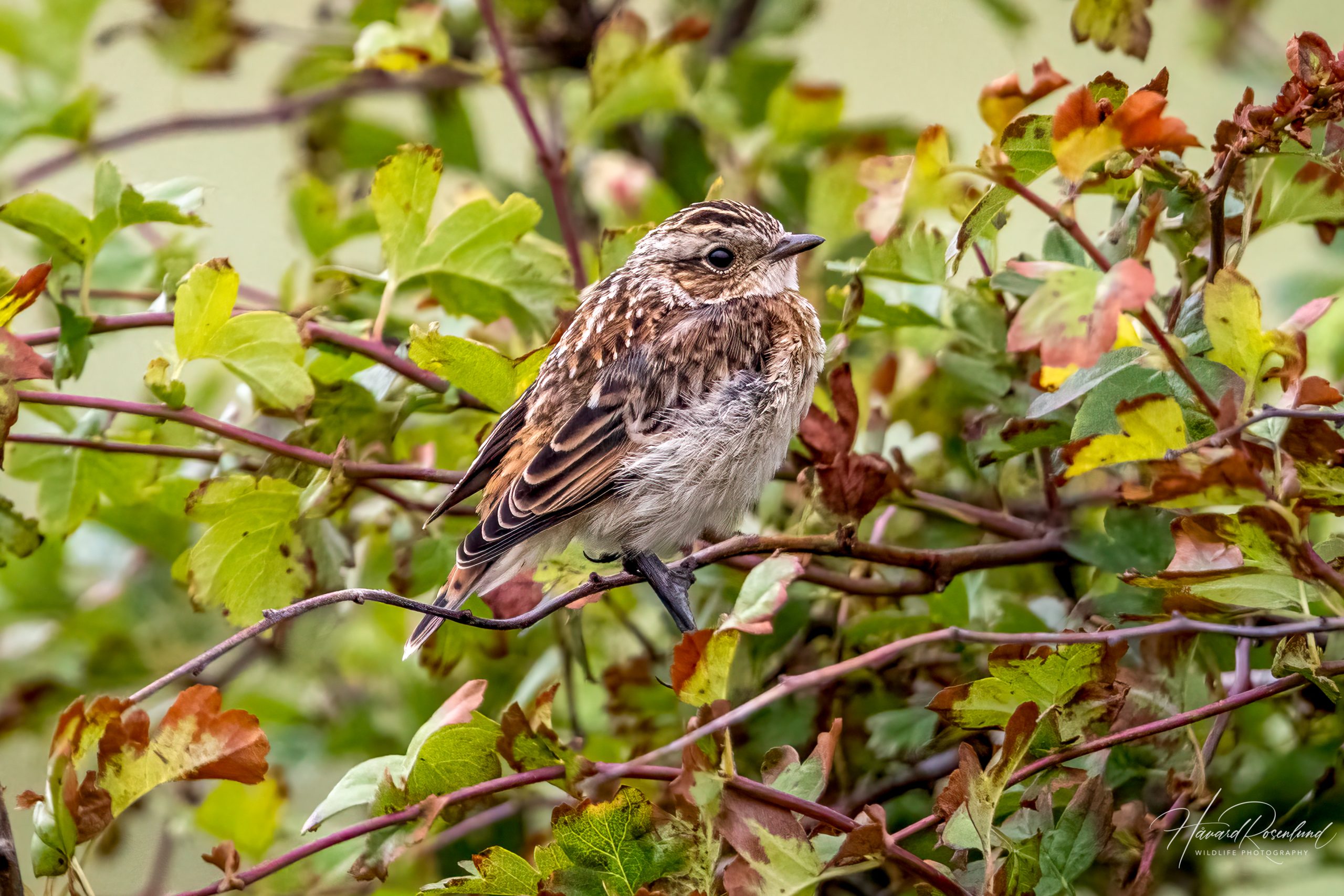
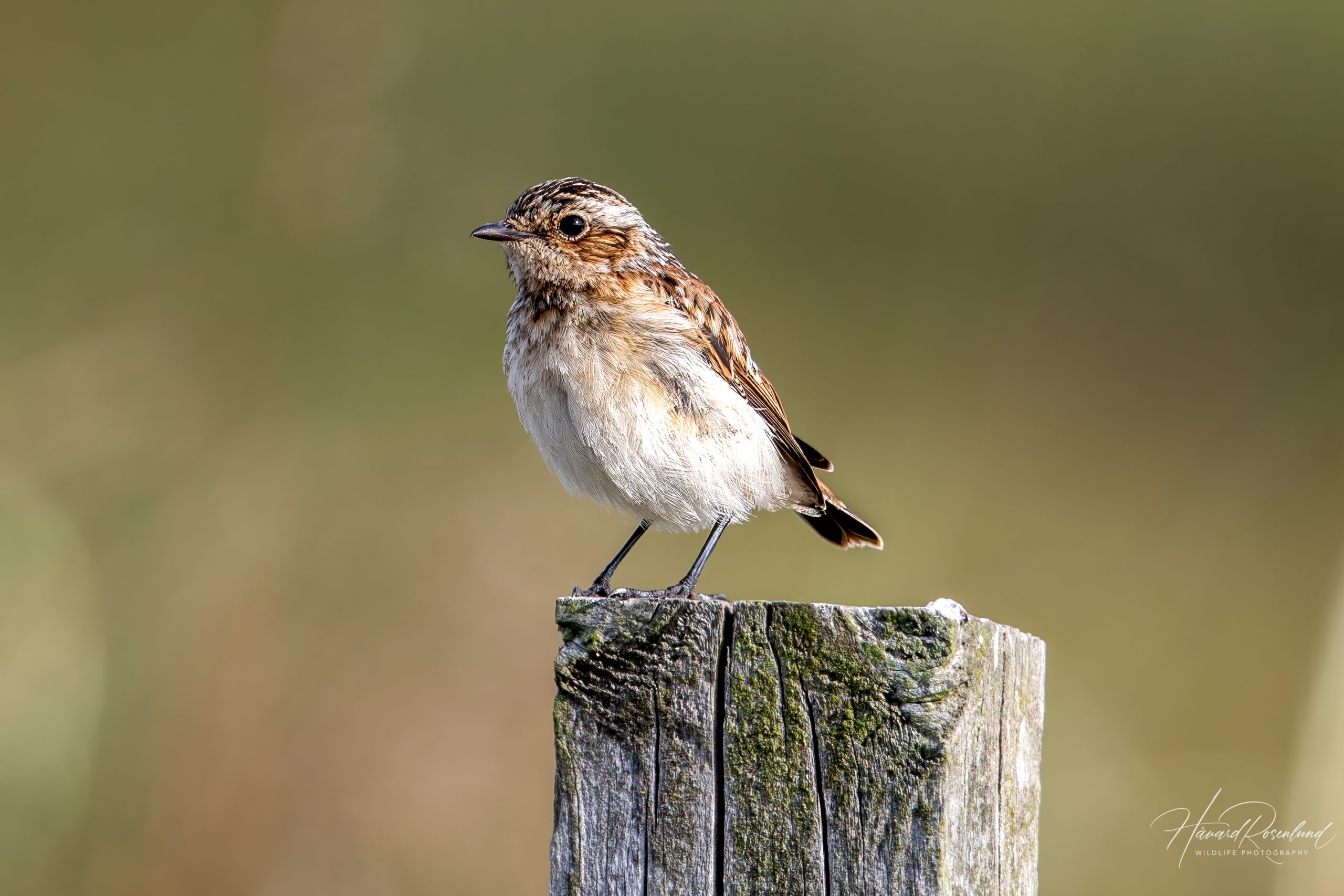
The whinchat (Saxicola rubetra) is a small chat that breeds across Europe and western Asia and spends the non-breeding season in sub-Saharan Africa. Adults are about 12–14 cm long, have a wingspan of roughly 21–24 cm and typically weigh around 14–24 g. Breeding males have a broad white eyebrow, dark facial mask, warm orange-buff breast and mottled brown upperparts, while females are paler and less strongly contrasted.
The closely related European stonechat (Saxicola rubicola) is generally darker and more compact-looking and lacks the whinchat's broad pale eyebrow. Both species frequently sit upright on exposed stems, fences and low shrubs, but the whinchat is more strongly associated with meadows and other herb-rich open vegetation.
Habitat
Whinchats favour open but structurally varied landscapes such as hay meadows, rough grassland, moorland, bog margins, field edges and lightly managed farmland. Good breeding habitat combines dense ground vegetation for a concealed nest with scattered taller stems, fence posts or shrubs that provide hunting and song perches.
The quality of the surrounding vegetation matters as much as the presence of perches. A study published in 2006 from Alpine meadows in the Lower Engadin, Switzerland, found far fewer and less diverse arthropods in intensively managed grassland. Chicks there received less food and a less diverse diet than in traditionally managed meadows. Later mowing and less intensive grassland management can therefore benefit whinchats both by protecting nests and maintaining their prey base.
Diet
Whinchats feed mainly on insects and other small invertebrates, including beetles, flies, caterpillars, grasshoppers, bugs and spiders. Flying insects can also be captured in short aerial sallies.
Berries, seeds and other plant food become more important outside the breeding season. During nesting, however, abundant invertebrate prey is especially important because both adults feed the rapidly growing chicks.
Behaviour
Whinchats are conspicuous perch-hunters. They repeatedly return to tall stems, fence wires, posts or small shrubs from which they scan the surrounding vegetation before dropping onto prey on the ground or among plants. Their strong use of scattered perches means that apparently small landscape features such as fence lines, isolated stems and shrubs can have real value within otherwise open habitat.
During the breeding season, pairs defend territories. Males sing from exposed stems, fence posts and shrubs and use short song flights while establishing and advertising the territory. Outside breeding, territoriality weakens and birds may occur more loosely together during migration and on the African non-breeding grounds.
Migration
The whinchat is a trans-Saharan long-distance migrant. Birds leave European and western Asian breeding grounds from late summer, cross the Mediterranean and Sahara and spend the non-breeding season in tropical Africa, returning north in spring.
A tracking study published in 2025 followed 64 whinchats from non-breeding sites in Liberia and Nigeria to Europe and back. Birds tracked from Liberia tended to breed in central and northern Europe, while those from Nigeria tended to breed farther east, although the breeding ranges overlapped widely. About a quarter of the tracked birds also used more than one site south of the Sahara outside the breeding season. The non-breeding period can therefore involve substantial movements rather than one fixed destination.
Breeding
The nest is a well-concealed cup on or very close to the ground, usually hidden beneath grass, tall herbs or other dense vegetation. The female builds the nest and commonly lays five or six eggs. She performs the incubation, which usually lasts about 12–14 days. Both parents feed the chicks, which normally fledge after about 13–14 days.
Ground nesting makes the species especially vulnerable to mowing. A study published in 2020 from grassland at Ljubljansko barje in central Slovenia found that mowing date had a greater effect on nest failure than either predation or weather. Delaying mowing until the young have left the nest can therefore make a major difference in breeding areas managed as hay meadow.
Status
The whinchat is classified as least concern on the IUCN Red List. It remains widespread, but populations have declined strongly across many parts of Europe. Loss of species-rich grassland, earlier and more frequent mowing, agricultural intensification and abandonment followed by scrub encroachment can all reduce breeding habitat.
The species depends on suitable habitat throughout a long annual cycle extending from European breeding grounds to migration stopovers and sub-Saharan Africa. Conditions far from the breeding grounds can therefore affect the same populations that return to Europe each spring.
Image gallery
Loading map and observations…
Have you seen this species?
Independent species archive
Did you find this species page useful?
Wildlife Vagabond is independently built and maintained. Voluntary support helps cover hosting, maps, data storage and continued improvements to the species archive.
Support Wildlife VagabondSpecies content will remain freely available.
References
Information about the species’ global distribution and status is based primarily on global Red List data. See the references below for details.
- BirdLife International. (n.d.). Whinchat species factsheet. https://datazone.birdlife.org/species/factsheet/whinchat-saxicola-rubetra
- British Trust for Ornithology. (n.d.). BirdFacts – Whinchat (Saxicola rubetra). https://www.bto.org/learn/about-birds/birdfacts/whinchat
- Britschgi, A., Spaar, R., & Arlettaz, R. (2006). Impact of grassland farming intensification on the breeding ecology of an indicator insectivorous passerine, the Whinchat Saxicola rubetra: Lessons for overall Alpine meadowland management. Biological Conservation, 130(2), 193-205. https://doi.org/10.1016/j.biocon.2005.12.013
- Cresswell, W., Patchett, R., Blackburn, E., & Burgess, M. (2025). Comparing migration of Whinchats Saxicola rubetra from the non-breeding grounds in Liberia and Nigeria: Differences due to geography but otherwise very similar. PLOS One, 20(6), e0324086. https://doi.org/10.1371/journal.pone.0324086
- International Union for Conservation of Nature. (n.d.). Whinchat. The IUCN Red List of Threatened Species. https://www.iucnredlist.org/species/22710156/87906903
- Royal Society for the Protection of Birds. (n.d.). Whinchat. https://www.rspb.org.uk/birds-and-wildlife/whinchat
- Tome, D., Denac, D., & Vrezec, A. (2020). Mowing is the greatest threat to Whinchat Saxicola rubetra nests even when compared to several natural induced threats. Journal for Nature Conservation, 54, 125781. https://doi.org/10.1016/j.jnc.2019.125781