
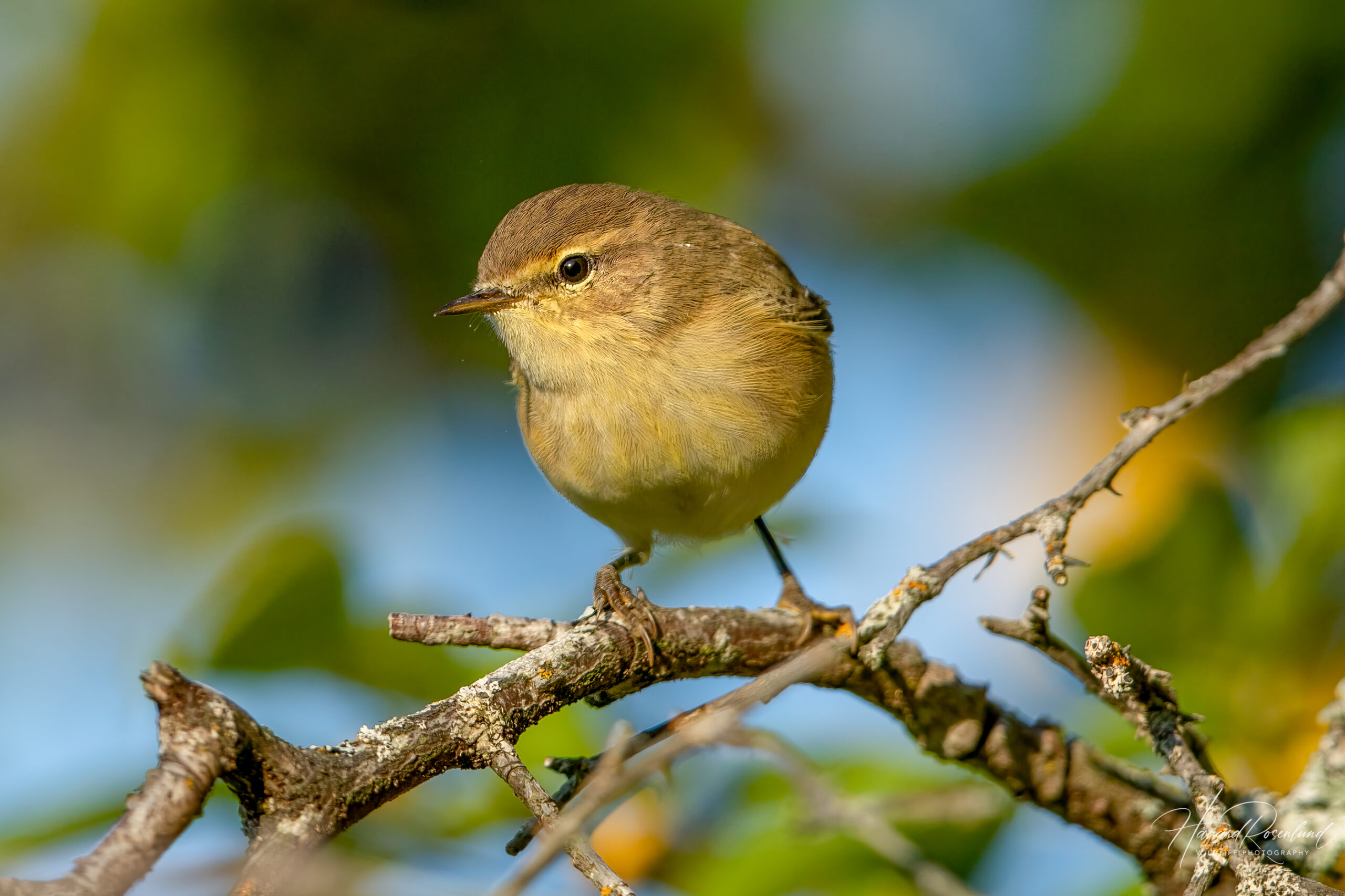
Common Chiffchaff
Phylloscopus collybita
At a glance
Habitat
- Deciduous and mixed woodland, scrub, parks and gardens with a well-developed understorey
Diet
- Mostly insects, spiders and other small invertebrates; occasionally other small foods outside breeding
Activity
- Diurnal
Size
- Length: 10–12 cm Weight: 6.5–9 g
Range
- Breeds across much of Europe and western to central Asia; most northern birds winter farther south
Description
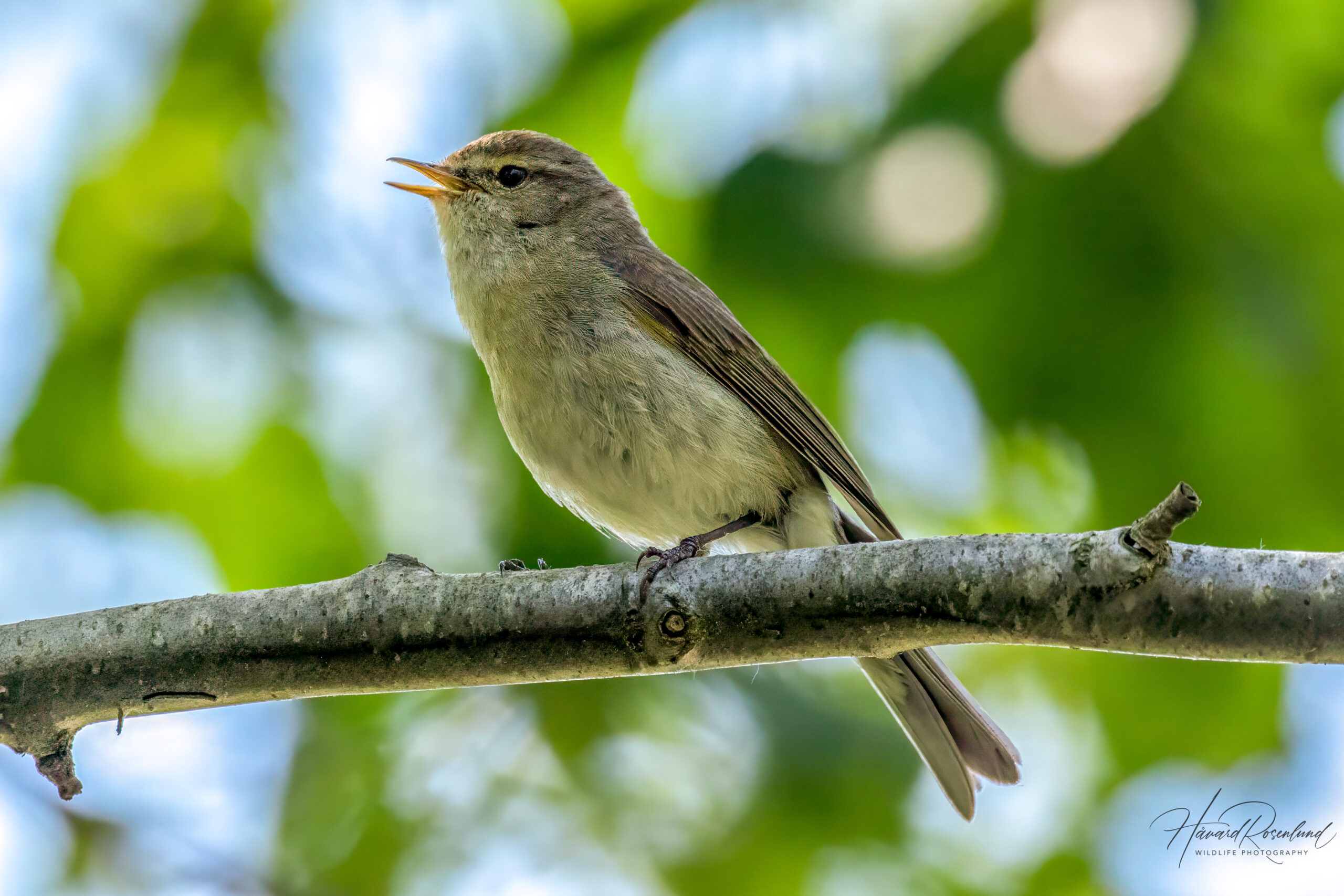
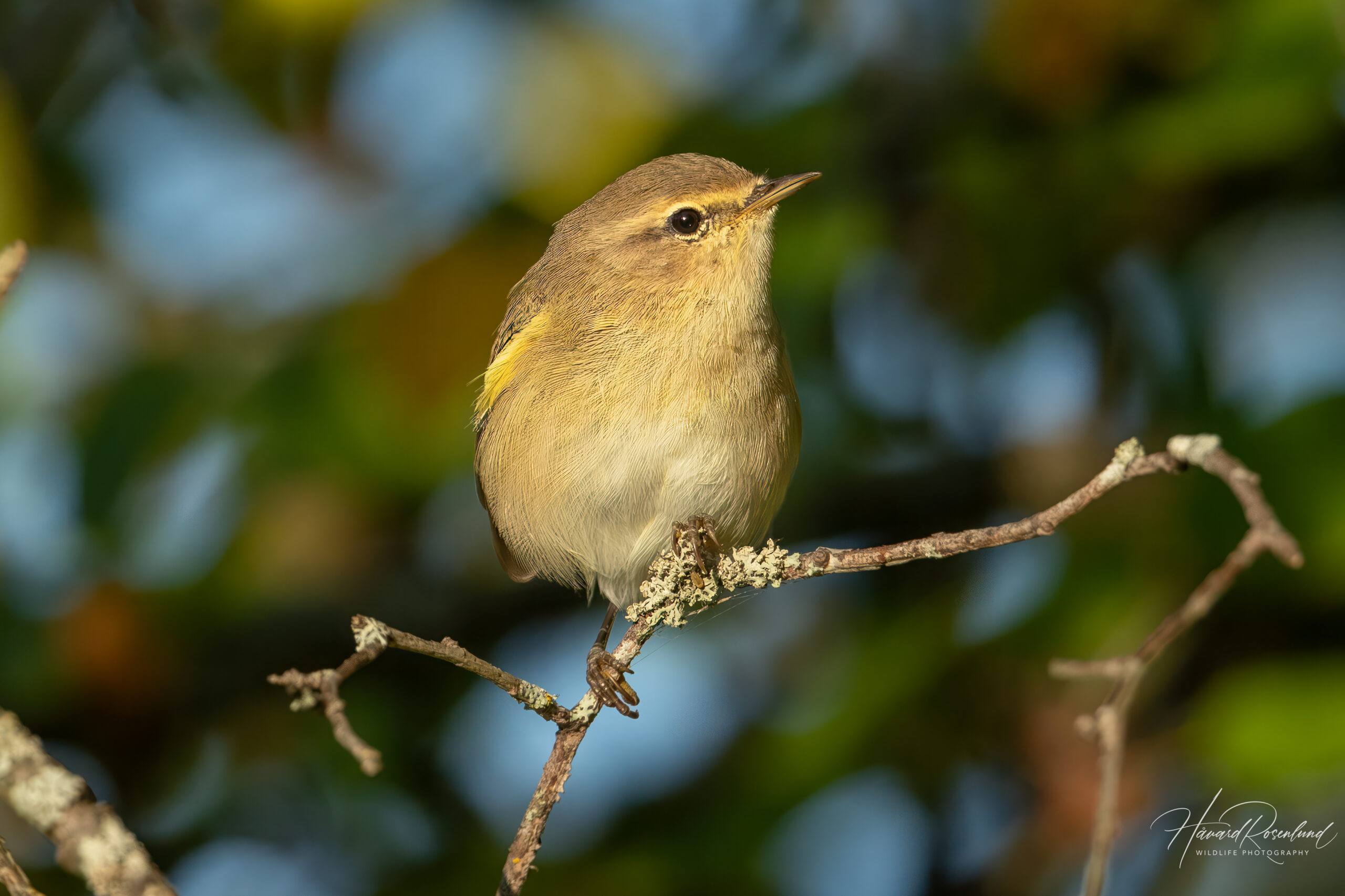
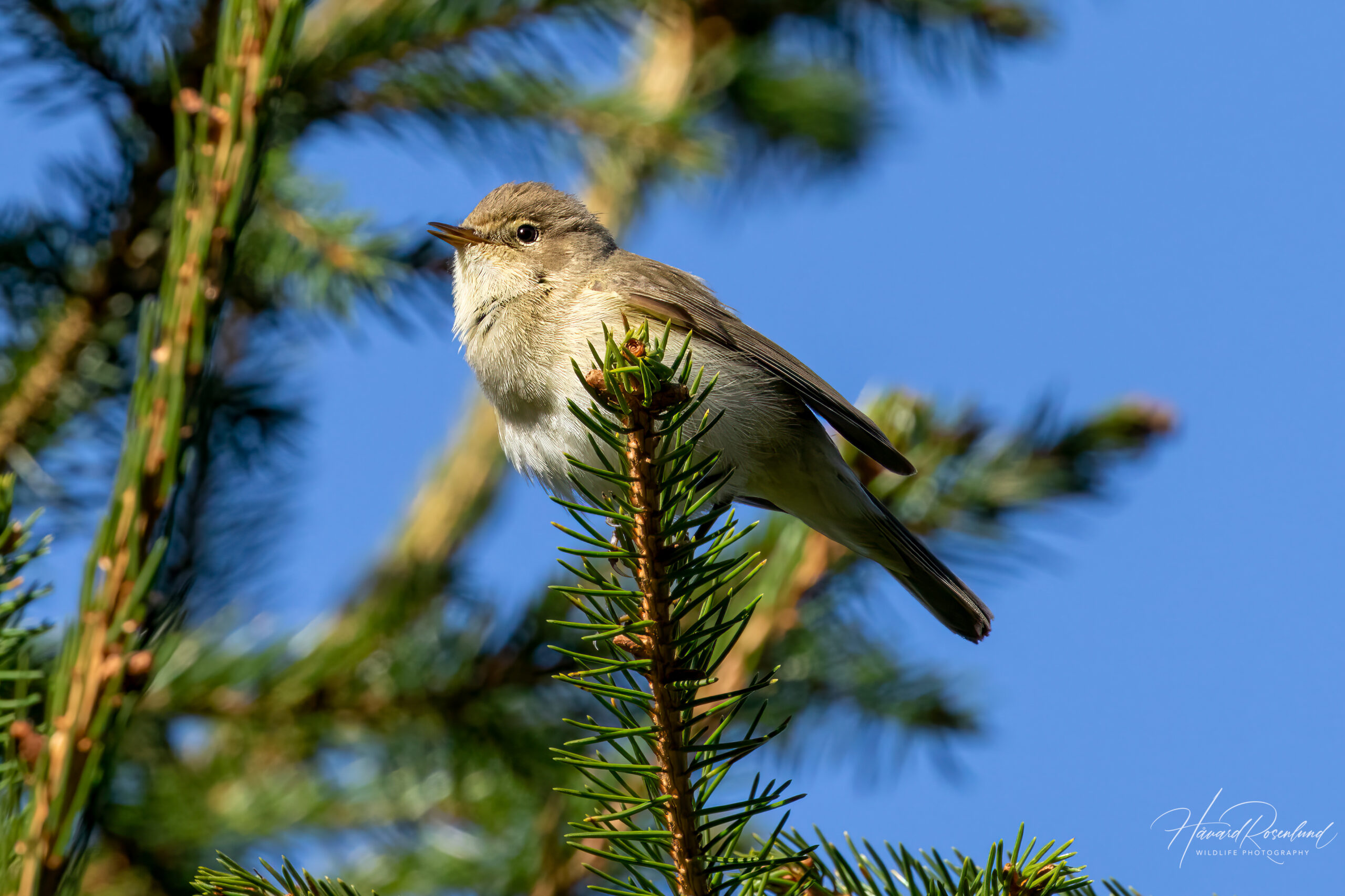
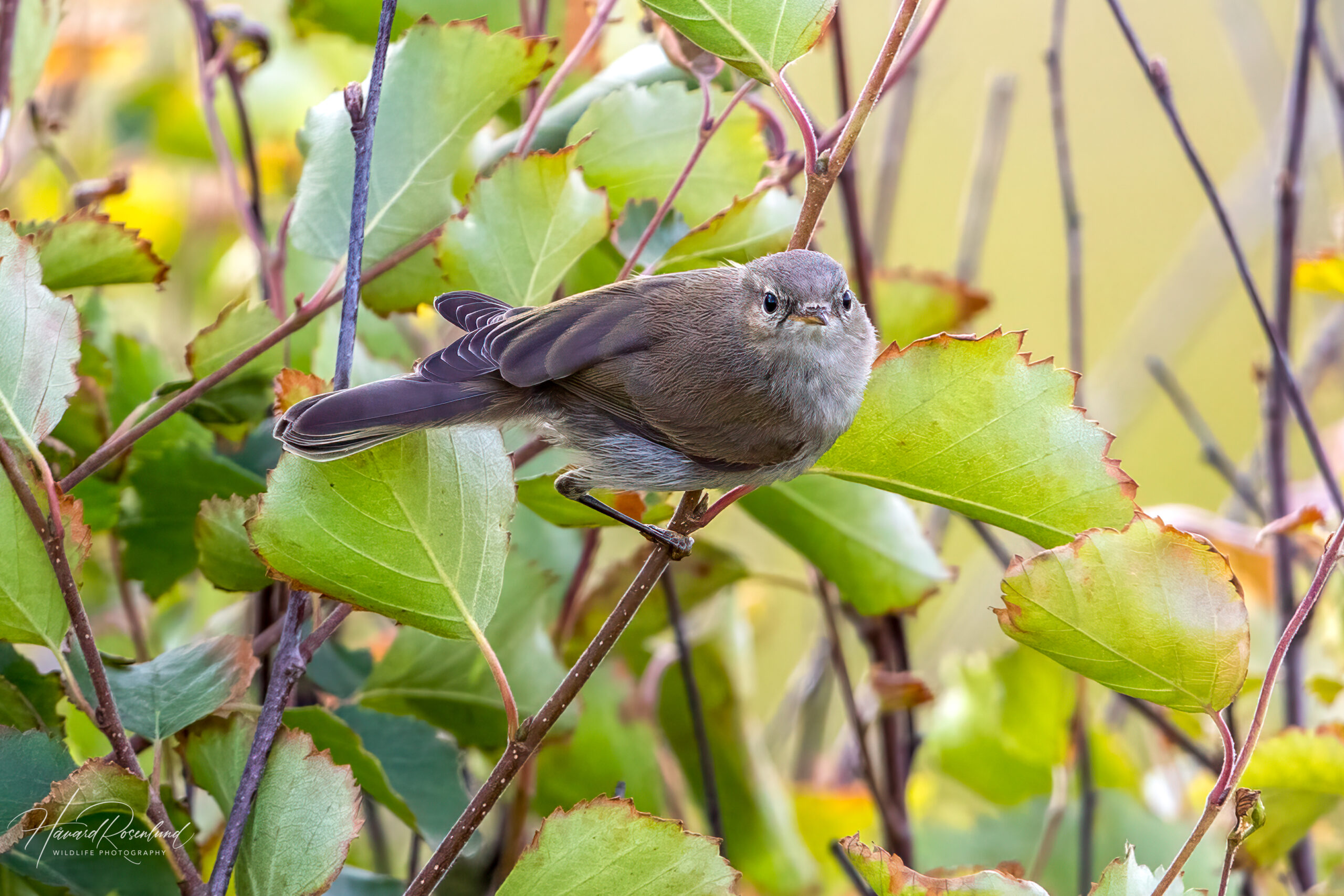
The common chiffchaff (Phylloscopus collybita) is a small leaf warbler breeding across much of Europe and western to central Asia. Adults are about 10–12 cm long and usually weigh around 6.5–9 g. The plumage is subdued olive-brown to grey-brown above and pale below, with a fairly short pale supercilium and usually dark legs. Males and females look alike.
It is notoriously similar to the willow warbler (Phylloscopus trochilus). Chiffchaffs tend to look slightly duller, with darker legs, a shorter primary projection and a less strongly marked face, but all of these features vary. Voice is much more reliable: the male's repetitive two-note “chiff-chaff” song is unmistakable and gave the species its English name, while the willow warbler has a flowing, descending song. The Siberian chiffchaff (P. c. tristis) is a distinctive eastern subspecies with colder grey-brown plumage and different calls and song.
Habitat
Common chiffchaffs breed in deciduous and mixed woodland, woodland edges, scrub, parks and gardens, usually where a well-developed shrub layer provides both feeding and nesting cover. They also occur locally in coniferous woodland and reedbeds.
The species is generally less characteristic than the willow warbler of exposed uplands and very open young woodland. Because the nest is placed close to the ground, dense low vegetation is particularly important within breeding territories even when taller trees provide much of the feeding habitat.
Diet
The diet is dominated by small invertebrates, including flies, aphids, beetles, caterpillars and spiders. Birds search actively through foliage and twigs, picking prey from vegetation and occasionally hovering or making short aerial sallies after insects.
This flexible feeding style allows chiffchaffs to exploit insect prey from early spring into autumn. Small berries and other plant foods may occasionally supplement the diet outside the breeding season, but animal prey remains the main food.
Migration
Northern populations are migratory, while increasing numbers in the milder western parts of the range now remain through winter. Most birds from northern Europe move south to western and southern Europe, the Mediterranean basin and North Africa, while some populations continue farther south. Chiffchaffs are among the earliest leaf warblers to return in spring and generally arrive well before willow warblers.
A continent-wide study published in 2024 compared spring arrival across 30 Afro-Palaearctic migrant species. In early migrants such as chiffchaffs, the migration front moved north relatively slowly, with temperature setting clear limits on how quickly it advanced. Their spring migration therefore appears to track the gradual development of vegetation and food resources rather than progressing north at a fixed rate.
Breeding
The female builds a domed nest with a side entrance, usually very low in dense vegetation or close to the ground among brambles, grass, shrubs or other cover. British nest records show a typical clutch of 5–6 eggs, with the female incubating for about 13–14 days.
The chicks are altricial, hatching poorly developed and remaining dependent on their parents in the nest. They normally stay there for around 14–16 days before fledging. Two broods are typical where the season is long enough. Because the nest is concealed close to the ground, breeding success depends heavily on dense understorey cover; British studies have shown nest predation to be an important cause of breeding failure.
Status
The common chiffchaff is classified as least concern on the IUCN Red List. It remains widespread and abundant across a very large Eurasian range.
Britain illustrates the species' strong recent expansion: long-term monitoring shows a 222% increase in the breeding population from 1967 to 2024, following an earlier decline around the late 1960s and early 1970s. Numbers have also increased across Europe since 1980. Warmer conditions may favour earlier spring arrival and winter survival in some regions, but local breeding success still depends on suitable woodland structure and dense nesting cover.
Image gallery
Loading map and observations…
Have you seen this species?
Independent species archive
Did you find this species page useful?
Wildlife Vagabond is independently built and maintained. Voluntary support helps cover hosting, maps, data storage and continued improvements to the species archive.
Support Wildlife VagabondSpecies content will remain freely available.
References
Information about the species’ global distribution and status is based primarily on global Red List data. See the references below for details.
- BirdLife International. (n.d.). Common Chiffchaff species factsheet. https://datazone.birdlife.org/species/factsheet/common-chiffchaff-phylloscopus-collybita
- Border, J. A., Boersch‐Supan, P. H., Pearce‐Higgins, J. W., Hewson, C. M., Howard, C., Stephens, P. A., Willis, S. G., Houston, A. I., Gargallo, G., & Baillie, S. R. (2024). Spatial variation in spring arrival patterns of Afro‐Palaearctic bird migration across Europe. Global Ecology and Biogeography, 33(7), e13850. https://doi.org/10.1111/geb.13850
- British Trust for Ornithology. (n.d.). Chiffchaff. https://www.bto.org/learn/about-birds/birdfacts/chiffchaff
- International Union for Conservation of Nature. (n.d.). Common Chiffchaff. The IUCN Red List of Threatened Species. https://www.iucnredlist.org/species/103843725/155613186
- Rodrigues, M., & Crick, H. (1997). The breeding biology of the ChiffchaffPhylloscopus collybitain Britain: a comparison of an intensive study with records of the BTO Nest Record Scheme. Bird Study, 44(3), 374-383. https://doi.org/10.1080/00063659709461073