
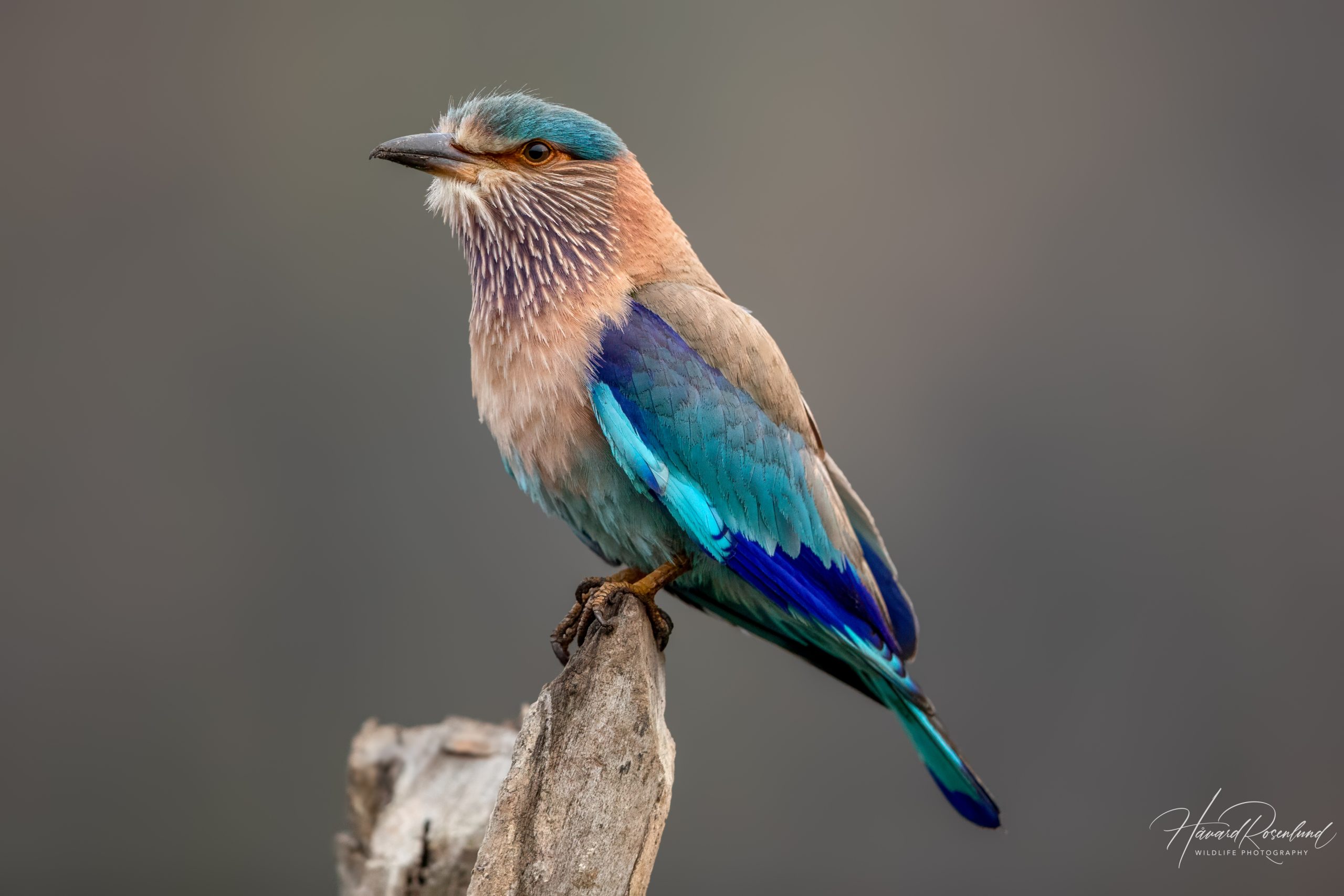
Indian Roller
Coracias benghalensis
At a glance
Habitat
- Open woodland, grassland, farmland, scrub and lightly built-up areas with exposed perches and nesting cavities
Diet
- Large insects, especially beetles and grasshoppers; also small reptiles, amphibians and other small vertebrates
Activity
- Diurnal
Size
- Length: 30–34 cm Weight: ca. 160–175 g
Range
- South and south-west Asia from Iraq and Iran through the Indian subcontinent to Bangladesh and Sri Lanka
Description
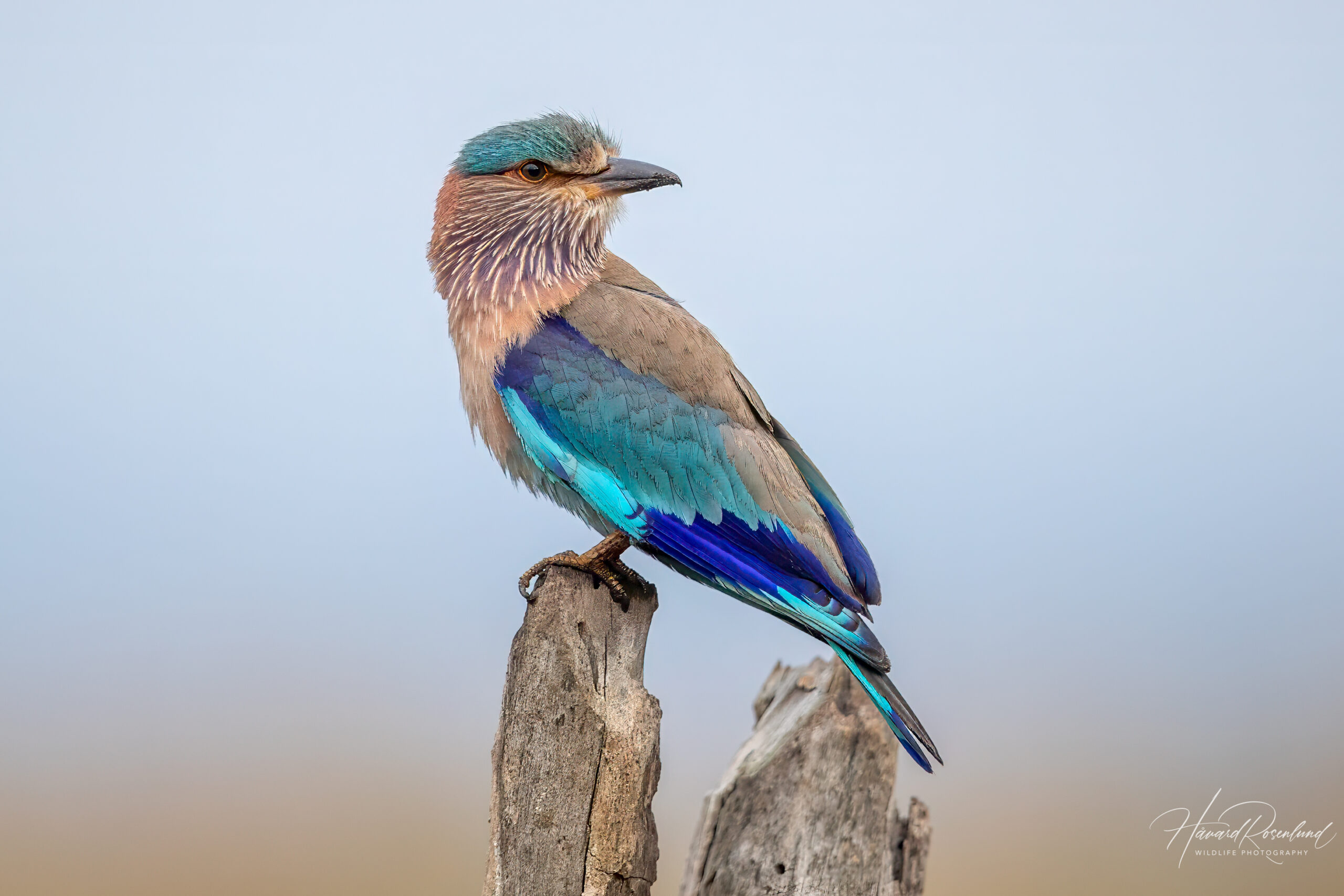
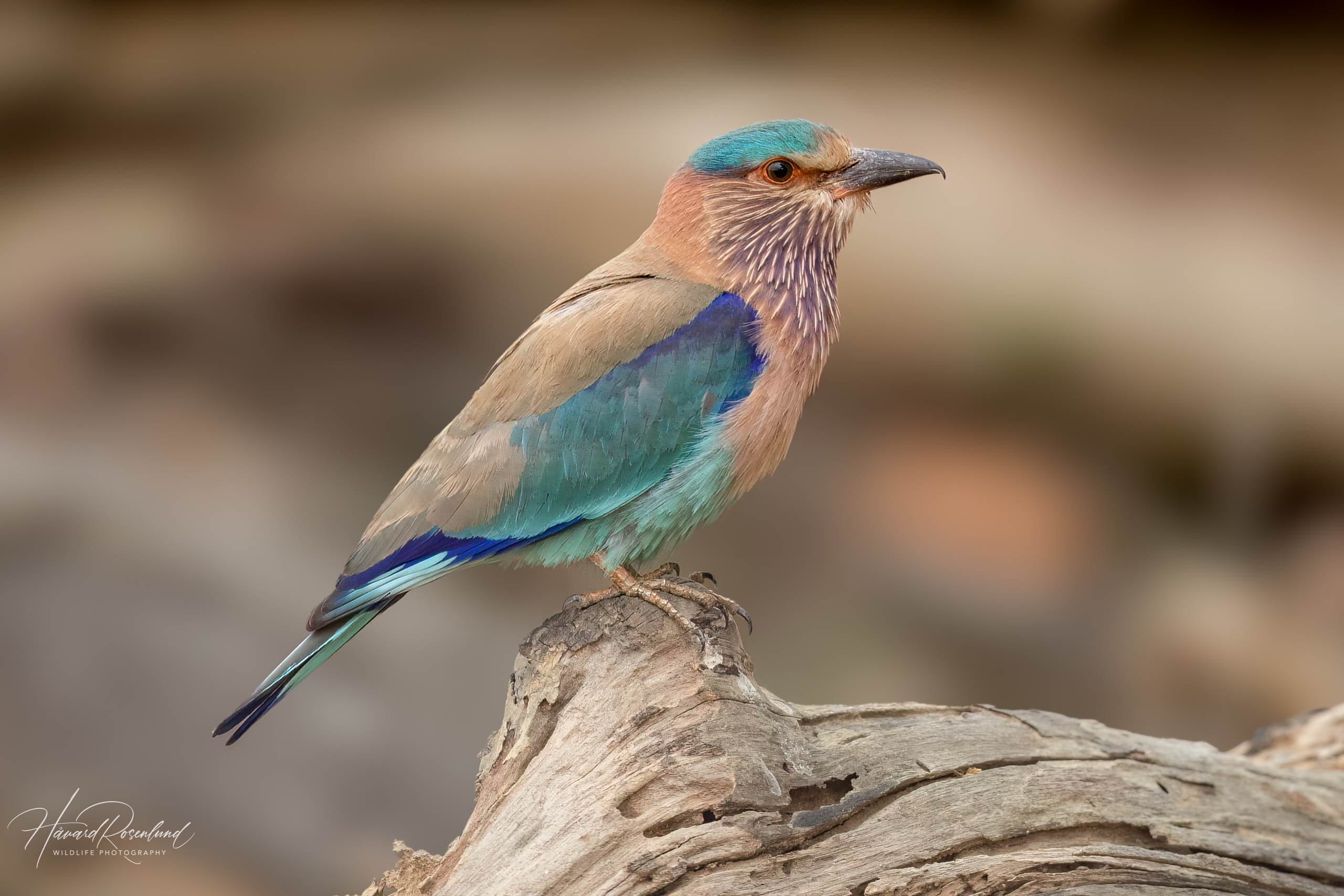
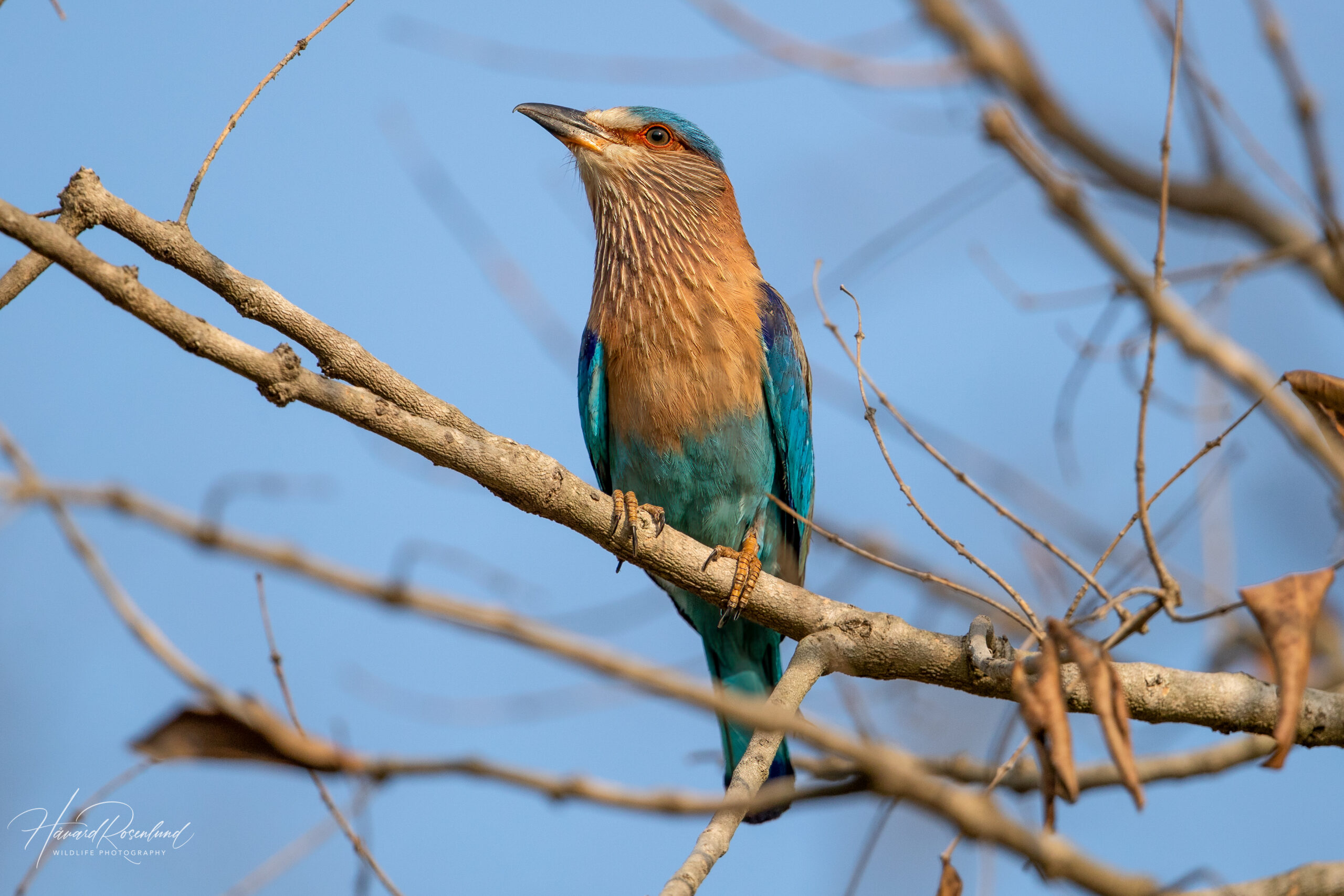
The Indian roller (Coracias benghalensis) is a stocky, brightly coloured roller of South and south-west Asia. It is about 30–34 cm long and weighs roughly 160–175 g. At rest the bird is mostly brownish with a pale blue crown and blue-green underparts, but flight reveals striking bands of turquoise, deep blue and violet across the wings and tail. Males and females are very similar in plumage.
Farther east it is replaced by the closely related Indochinese roller (Coracias affinis), which is darker overall, with a more purplish throat and a different facial pattern. The two were previously often treated as one species but are now recognised separately.
Habitat
Indian rollers favour open landscapes where elevated perches overlook short vegetation or bare ground. They use grassland, farmland, lightly wooded country, scrub, village edges and roadsides, with trees, poles and wires providing prominent lookout sites.
Open natural ecosystems and agricultural mosaics are important across much of the range. Mature trees are also valuable even in very open country because the species depends on existing cavities for nesting.
Diet
Large insects dominate the diet, especially beetles, grasshoppers, crickets and other sizeable arthropods. Small lizards, frogs and other small vertebrates are also taken.
Behaviour
Most prey is taken by sit-and-wait hunting. A roller watches from an exposed perch, drops or flies down to seize prey on or near the ground, and often returns to a perch before feeding again. Studies in agricultural landscapes confirm strong use of exposed perches and ground-based prey.
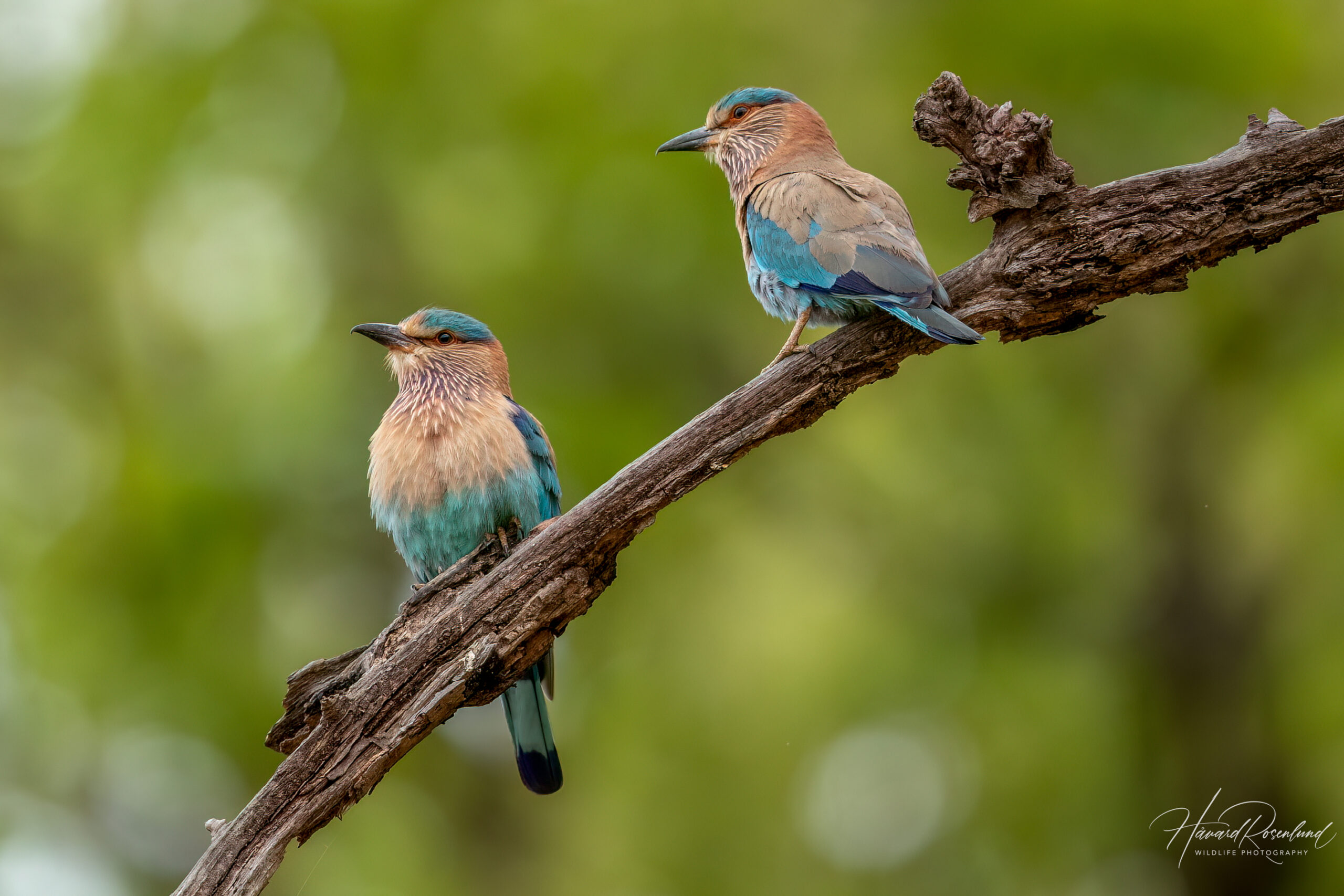
Outside breeding, birds are commonly encountered alone or in pairs and spend long periods conspicuously perched on wires, poles or bare branches. Their harsh calls often accompany short territorial or alarm interactions.
Breeding
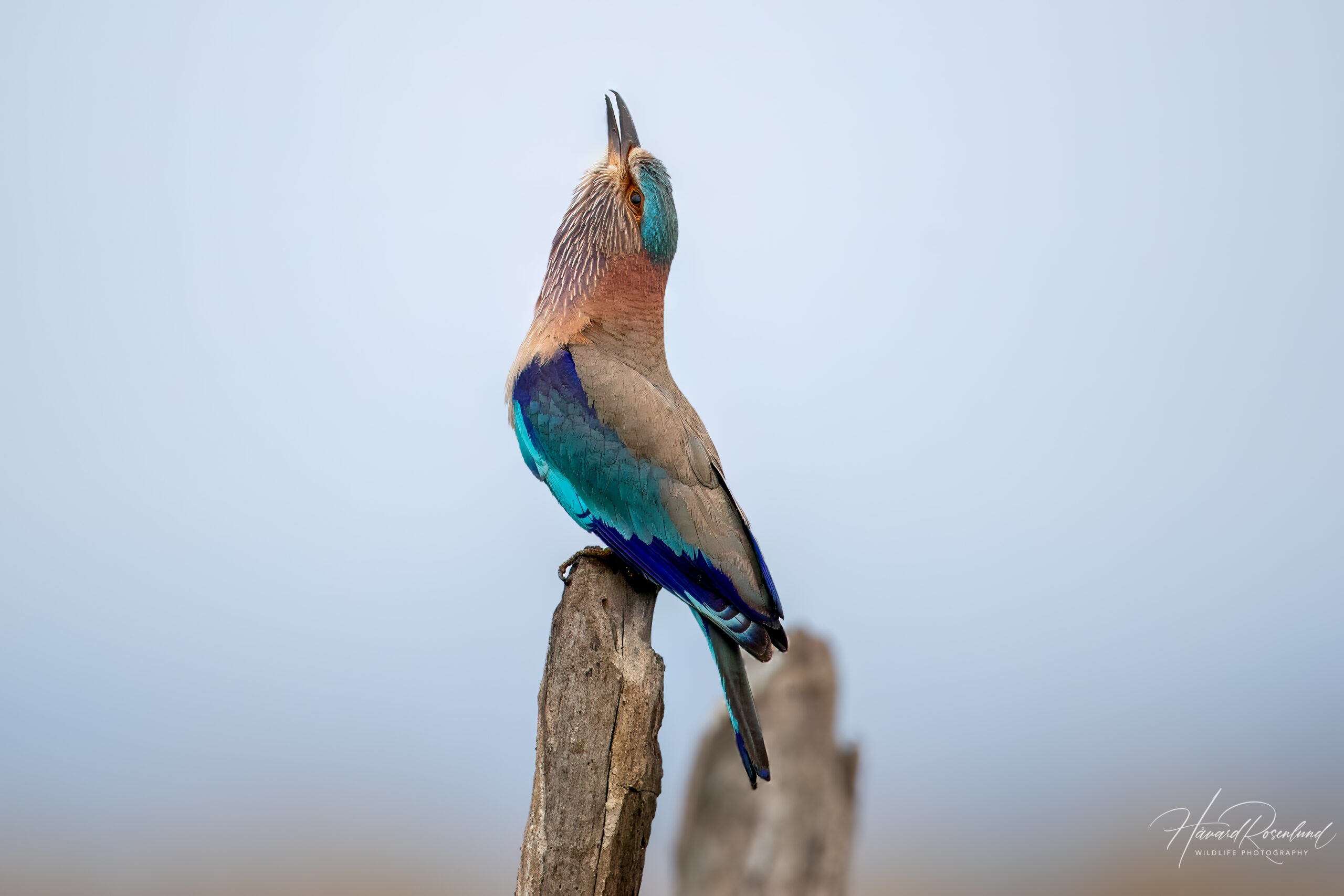
Breeding occurs mainly in spring and early summer, although timing varies across the range. Courtship and territorial advertisement include the spectacular aerial display that gave rollers their English group name: a bird climbs, dives and banks sharply while repeatedly rolling or rocking from side to side, flashing the intense blue flight feathers. The display is often accompanied by loud, harsh calls.
Indian rollers are secondary cavity nesters, using natural holes in trees and palms, old woodpecker cavities and occasionally cavities in buildings. Suitable mature trees are therefore important even in otherwise open agricultural landscapes.
Clutches usually contain three to five white eggs. Incubation lasts roughly 17–20 days, with the female performing most incubation while both parents contribute to chick care. The young remain in the cavity for about a month before fledging.
Cultural significance
In parts of India the Indian roller is known as Neelkanth or related local names and has long been associated with religious symbolism and good fortune. Sightings around the Dussehra or Vijayadashami festival are regarded as auspicious in several regions, reflecting an association with Lord Shiva and other local traditions.
The species also has strong regional symbolic value and is recognised as a state bird in parts of India. This cultural visibility has helped make it one of the most familiar birds of open Indian landscapes, although some traditions connected with the bird have also created conservation problems.
Status
The Indian roller is classified as near threatened on the IUCN Red List. It was moved from Least Concern after new evidence indicated widespread decline across substantial parts of its large range.
Indian monitoring data published in 2025 estimate a national long-term decline of about 42% and a recent annual decline of about 3.8%. The species still occupies an exceptionally large area and remains in the moderate conservation-priority category assigned in India in 2023.
Threats
The precise causes of the decline remain incompletely understood and probably vary between regions. Loss and transformation of open landscapes, changing agricultural practices, pesticide use, reduced insect availability and loss of mature cavity-bearing trees may all contribute.
Cultural exploitation can add a more direct local pressure. In some areas birds have been captured for display or release during festivals because seeing a Neelkanth is considered auspicious. Such capture can cause injury, stress or mortality and is illegal under Indian wildlife law.
Conservation
The Indian roller is protected under Schedule II of India's Wildlife (Protection) Act. Preventing capture and trade is therefore important where festival-related trapping still occurs.
Retaining open natural habitats and old cavity-bearing trees, reducing unnecessary pesticide exposure in agricultural landscapes and improving population monitoring can all benefit the species. Better evidence on the causes of decline is still needed to identify which pressures most strongly limit populations.
Image gallery
Loading map and observations…
Have you seen this species?
Independent species archive
Did you find this species page useful?
Wildlife Vagabond is independently built and maintained. Voluntary support helps cover hosting, maps, data storage and continued improvements to the species archive.
Support Wildlife VagabondSpecies content will remain freely available.
References
Information about the species’ global distribution and status is based primarily on global Red List data. See the references below for details.
- Balasubramanian et al. (n.d.). Population, diurnal activity patterns and feeding ecology of the Indian Roller. https://www.researchgate.net/publication/237236362_Population_diurnal_activity_patterns_and_feeding_ecology_of_the_Indian_Roller_Coracias_benghalensis_Linnaeus_1758
- BirdLife International. (2025). Indian Roller Red List reassessment. https://forums.birdlife.org/2025-2-indian-roller-coracias-benghalensis/
- eBird. (n.d.). eBird Status and Trends – Indian Roller. https://science.ebird.org/en/status-and-trends/species/indrol2/
- International Union for Conservation of Nature. (n.d.). Indian Roller. The IUCN Red List of Threatened Species. https://www.iucnredlist.org/species/22725914/0
- Narayana, B. L., Rao, V. V., & Pandiyan, J. (2016). Four insectivorous birds in search of foraging niche in and around an agricultural ecosystem of Nalgonda District of Telangana, India. Ambient Science, 3(1), 7–15. https://doi.org/10.21276/ambi.2016.03.1.ra01
- Nithiyanandam, G. T., & Asokan, S. (2015). Some breeding aspects of the Indian Roller Coracias benghalensis, Common Myna Acridotheres tristis and Black Drongo Dicrurus macrocercus in Southern India. Scientific Journal of Environmental Sciences, 1–6. https://europub.co.uk/articles/some-breeding-aspects-of-the-indian-roller-coracias-benghalensis-common-myna-acridotheres-tristis-and-black-drongo-dicrurus-macrocercus-in-southern-india-A-1312
- State of India's Birds. (2025). State of India’s Birds 2025 – Indian Roller. https://stateofindiasbirds.in/species/indrol2/
- Tobias, J. A., Sheard, C., Pigot, A. L., Devenish, A. J. M., Yang, J., Sayol, F., Neate‐Clegg, M. H. C., Alioravainen, N., Weeks, T. L., Barber, R. A., Walkden, P. A., MacGregor, H. E. A., Jones, S. E. I., Vincent, C., Phillips, A. G., Marples, N. M., Montaño‐Centellas, F. A., Leandro‐Silva, V., Claramunt, S., … Schleuning, M. (2022). AVONET: morphological, ecological and geographical data for all birds. Ecology Letters, 25(3), 581-597. https://doi.org/10.1111/ele.13898