
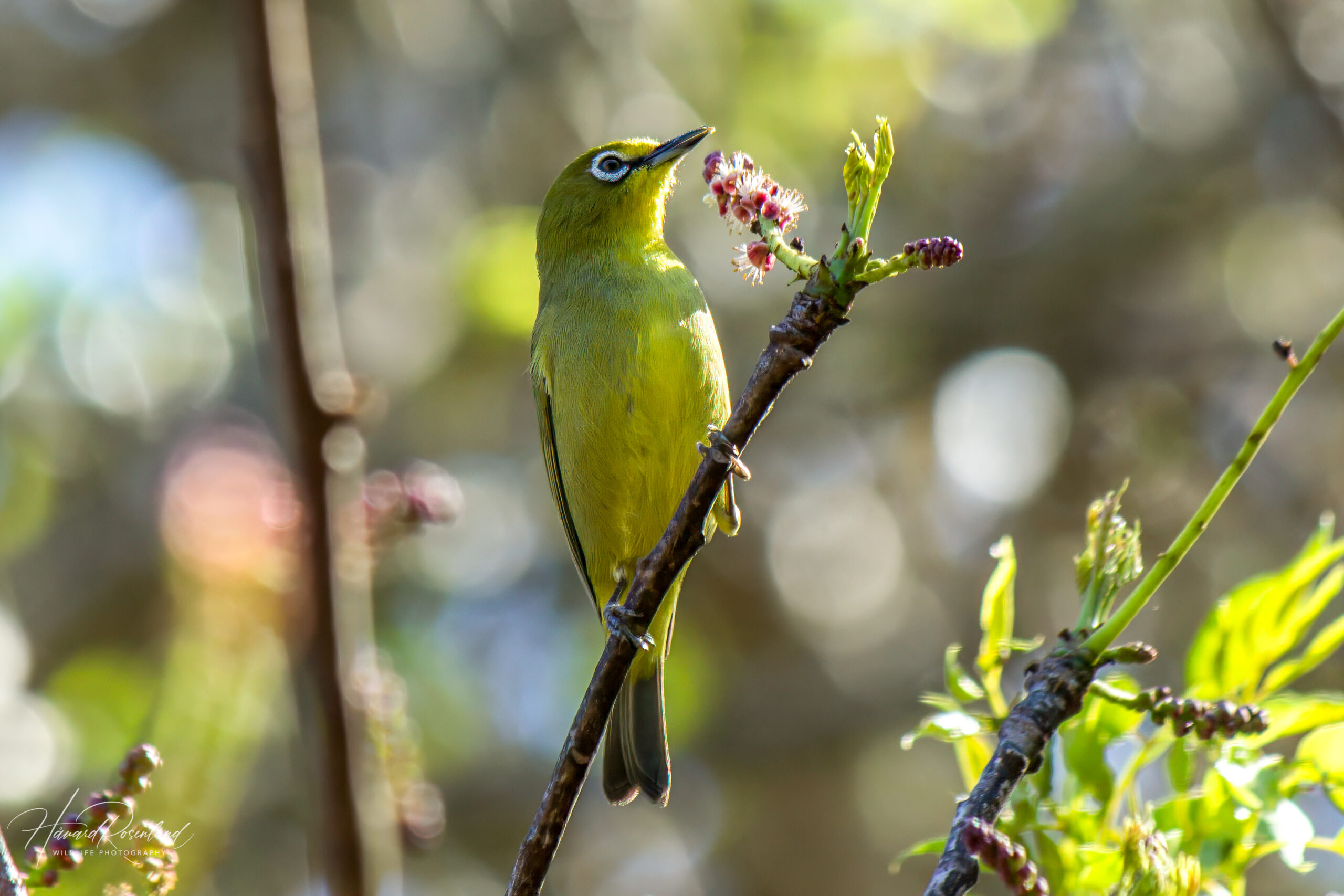
Cape White-eye
Zosterops virens
At a glance
Habitat
- Evergreen forest, fynbos, dune scrub, woodland, plantations, gardens and parks
Diet
- Insects and other invertebrates, fruit and nectar
Activity
- Diurnal
Size
- Length: 12–13 cm Weight: about 10–12 g
Range
- Southern Africa, mainly South Africa, Lesotho, Eswatini, southern Mozambique and southeastern Botswana
Description
The Cape white-eye (Zosterops virens) is a small songbird endemic to southern Africa. It measures about 12–13 cm and normally weighs around 10–12 g. The conspicuous ring of white feathers around the eye is shared with other members of the white-eye family.
Two subspecies are recognised. The nominate Z. v. virens of the east and northeast has greener-yellow underparts, while Z. v. capensis of the south and west has a greyer breast and belly. Both have olive-green upperparts, a yellow throat and undertail coverts and a fine pointed bill.
Taxonomy
The Nama white-eye (Zosterops pallidus) was formerly included within a broader Cape-white-eye complex but is now recognised as a separate species. It resembles the grey-bellied Z. v. capensis but is paler and typically shows peach-coloured flanks.
A genetic study published in 2017 of their contact zone in central South Africa found that the two forms remain clearly distinguishable but do hybridise in a relatively narrow zone. The hybrids identified were later-generation birds rather than first-generation crosses, showing that gene flow occurs without erasing the distinction between the taxa.
Habitat
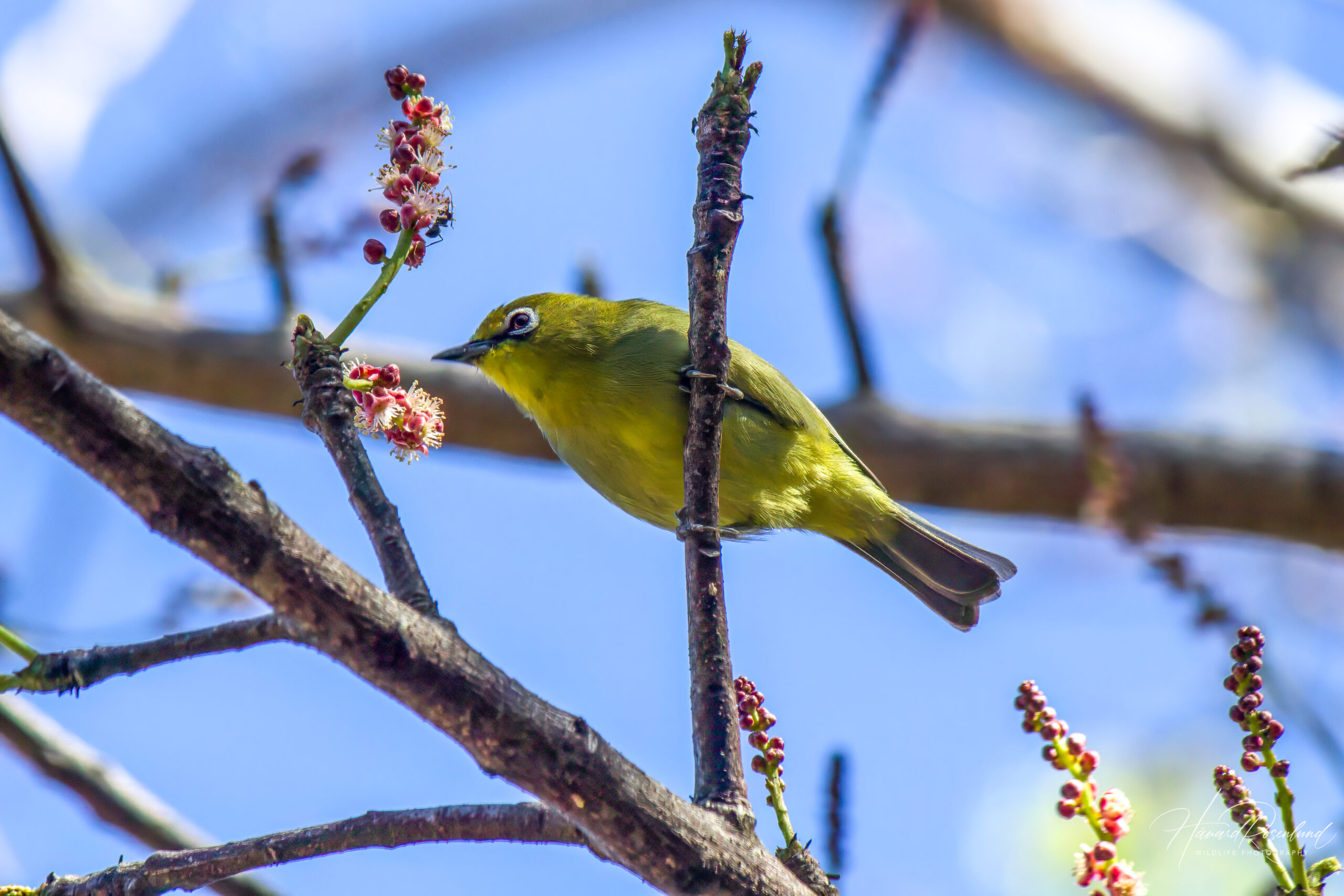
Cape white-eyes use a wide range of well-vegetated habitats, including evergreen and montane forest, fynbos, dune scrub, lightly wooded semi-arid country, plantations, orchards, gardens and city parks. Their adaptability has allowed them to remain common in many settled areas.
Diet
The species is a generalist feeder. Insects and other small invertebrates, fruit and nectar all form important parts of the diet, with their relative importance changing with season and availability.
Foraging
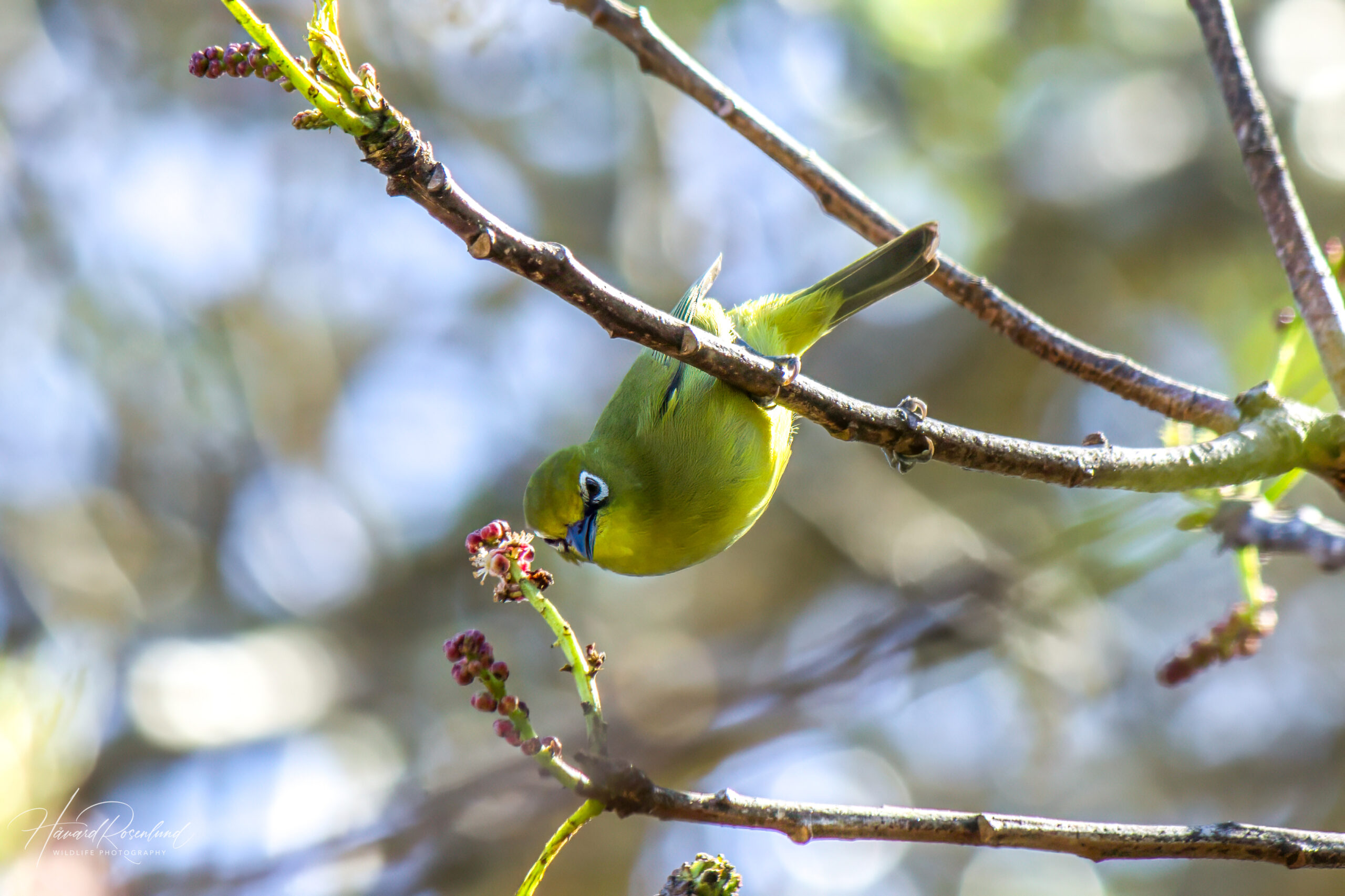
Cape white-eyes actively search leaves and branches for small invertebrates, make short aerial sallies after insects and occasionally pick food from the ground. Fruit is taken directly from shrubs and trees, while the narrow bill is also used to probe flowers for nectar.
A study published in 2003 under the older broad taxonomy showed that the birds can adjust food choice and digestion to the very different energy returns of nectar, insects and fruit.
Social behaviour
The species is social and active, usually feeding in pairs or small groups. Outside the breeding season, larger flocks may move rapidly through trees and shrubs and sometimes join mixed-species feeding groups.
Birds maintain contact with soft calls and become more vocal during territorial and breeding activity. Pairs defend the immediate nesting area, while feeding ranges outside the breeding season can overlap extensively.
Breeding
Breeding occurs mainly from August to April, with a broad peak from October to December, although timing differs between regions. Both adults build a small suspended cup of fine grass, rootlets, tendrils and spider silk, concealed among the leaves of a tree or shrub.
The clutch contains two to four eggs. Both parents incubate for about 10–12 days and feed the chicks. The young leave the nest after roughly 12–13 days but remain close to the parents while they continue to develop and learn to forage.
Status
The Cape white-eye is classified as least concern on the IUCN Red List in the BirdLife assessment published in 2017. It has a large range and remains common in both natural and human-modified habitats.
No current global population estimate is available, and local trends can differ where forest, shrubland or garden vegetation changes, but no major range-wide threat is known.
Image gallery
Loading map and observations…
Have you seen this species?
Independent species archive
Did you find this species page useful?
Wildlife Vagabond is independently built and maintained. Voluntary support helps cover hosting, maps, data storage and continued improvements to the species archive.
Support Wildlife VagabondSpecies content will remain freely available.
References
Information about the species’ global distribution and status is based primarily on global Red List data. See the references below for details.
- Avibase. (n.d.). Zosterops virens and Zosterops pallidus under the current AviList treatment. https://avibase.bsc-eoc.org/species.jsp?avibaseid=19469B669030F0BB
- Biodiversity and Development Institute. (n.d.). Cape White-eye Zosterops virens species account. https://thebdi.org/2022/03/04/cape-white-eye-zosterops-virens/
- BirdLife International. (n.d.). Cape White-eye Zosterops virens species factsheet. https://datazone.birdlife.org/species/factsheet/cape-white-eye-zosterops-virens
- BirdLife Norge. (n.d.). Norske navn på verdens fugler: kappbrillefugl og namabrillefugl. https://www.birdlife.no/fuglekunnskap/navn/
- Brown, K. J., & Downs, C. T. (2003). Digestive efficiency of a generalist avian feeder, the Cape White-eye (Zosterops pallidus). Comparative Biochemistry and Physiology Part A: Molecular & Integrative Physiology, 134(4), 739-748. https://doi.org/10.1016/S1095-6433(03)00005-9
- International Union for Conservation of Nature. (2017). Zosterops virens. The IUCN Red List of Threatened Species. https://www.iucnredlist.org/species/103889606/111177432
- Oatley, G., De Swardt, D. H., Nuttall, R. J., Crowe, T. M., & Bowie, R. C. K. (2017). Phenotypic and genotypic variation across a stable white-eye (Zosterops sp.) hybrid zone in central South Africa. Biological Journal of the Linnean Society, 121(3), 670-684. https://doi.org/10.1093/biolinnean/blx012