
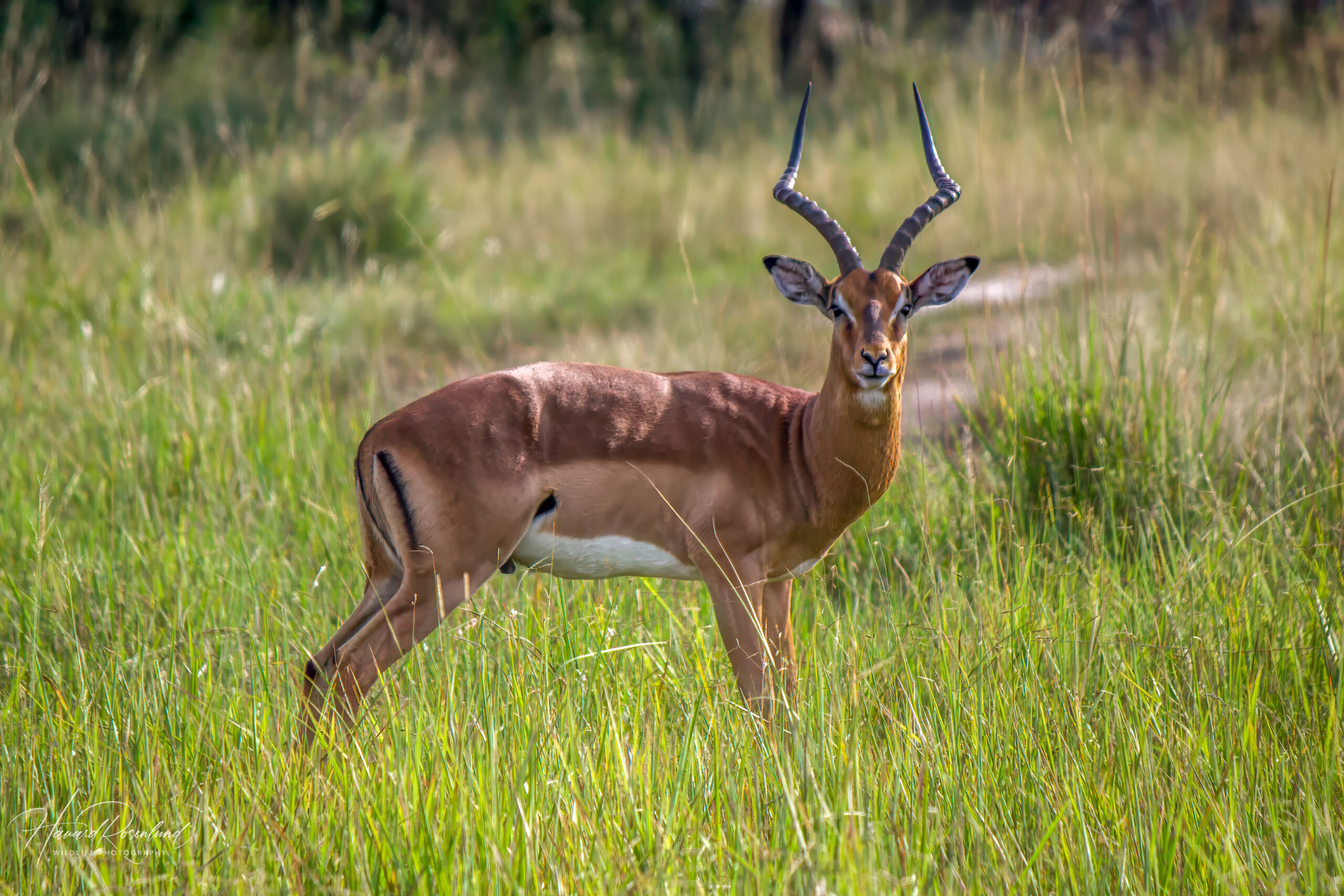
Impala
Aepyceros melampus
At a glance
Habitat
- Woodland–savanna edges, open woodland and grassland near cover
Diet
- Flexible grazer and browser: grasses, leaves, shoots, herbs and seed pods
Activity
- Mostly diurnal, with feeding concentrated in cooler hours
Size
- Length: 125–160 cm (head–body) Weight: 40–76 kg
Range
- Eastern and southern Africa
Description
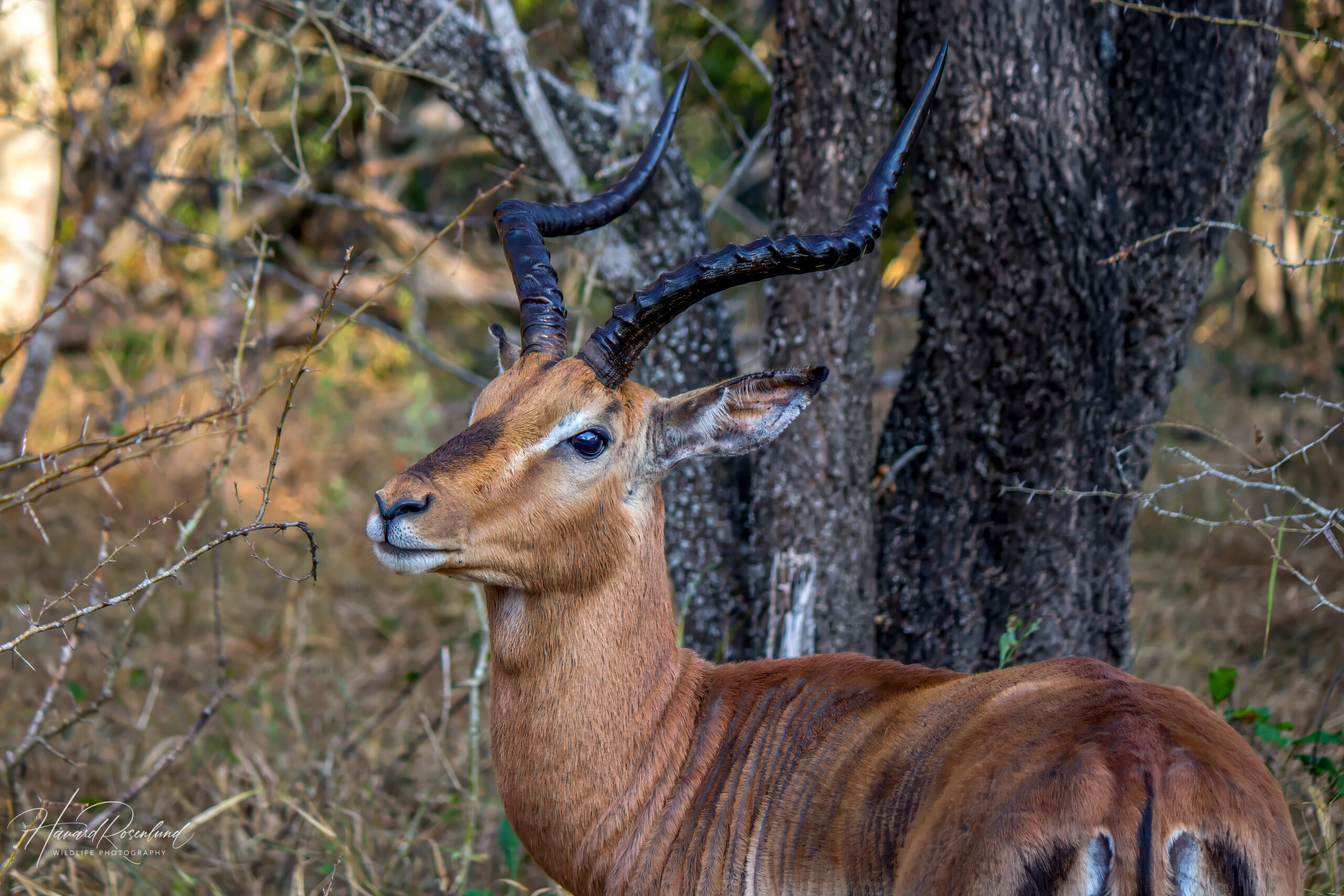
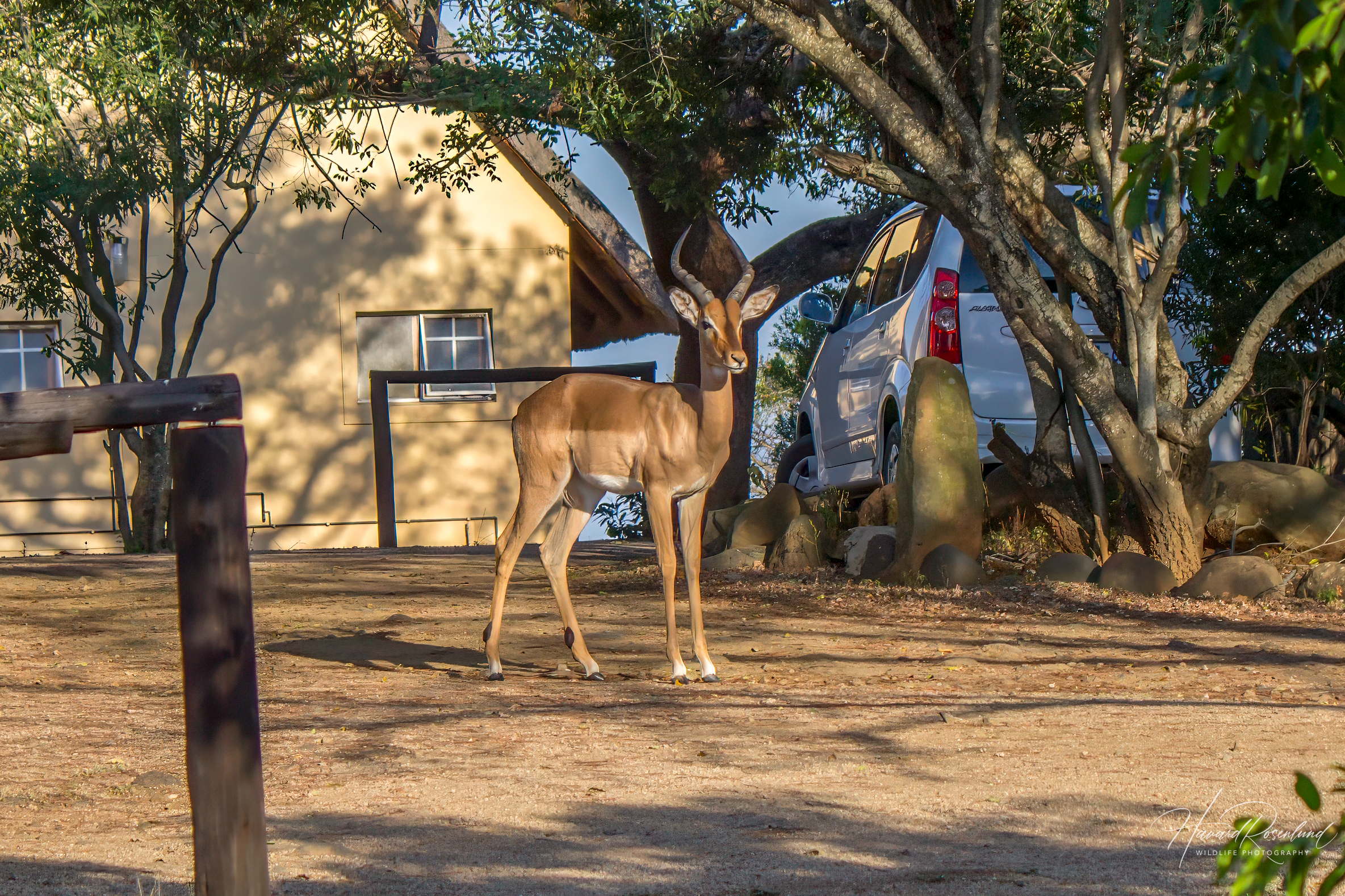
The impala (Aepyceros melampus) is a medium-sized antelope of eastern and southern Africa. Males stand about 75–92 cm at the shoulder and weigh 53–76 kg, while females are roughly 70–85 cm tall and weigh 40–53 kg. Only males carry the long, lyre-shaped horns, which can reach about 45–92 cm.
The coat is reddish brown above and pale below, with black markings on the rump, tail and hind legs. Seen from behind, the rump markings form a dark M-shaped pattern. The light build and long limbs are well suited to the rapid acceleration and abrupt changes of direction that characterise the species.
Taxonomy
Current mammal taxonomy recognises one species, Aepyceros melampus, with two living subspecies. The widespread common impala is A. m. melampus, while the black-faced impala of northwestern Namibia and southwestern Angola is A. m. petersi. Groves & Grubb (2011) proposed treating the black-faced form as a separate species, but Mammal Diversity Database v2.5 retains it within A. melampus.
Genetic research published in 2024 found clear differences between populations across the range. Black-faced impala are strongly distinct from common impala, and common impala in eastern and southern Africa also show noticeable genetic differences. The two named forms are still treated as subspecies, but these differences should be considered when animals are moved between managed populations.
Habitat
Impala favour woodland–savanna edges, open woodland and grassland where productive feeding areas lie close to trees or shrubs. They avoid both extensive treeless plains and very dense forest, and are especially common in transition zones where grazing and browsing can be combined within a relatively small area.
Access to surface water is important across much of the range and helps shape where impala concentrate. Severe drought simultaneously reduces forage quality and water availability and can therefore have major effects on local populations.
Diet
Impala are flexible mixed feeders that switch between grazing and browsing according to season and food quality. Fresh grass can dominate after rain, while leaves, shoots, herbs, fruit and seed pods become increasingly important as the dry season progresses.
The scale of this seasonal shift is well illustrated at Sengwa in Zimbabwe, where grass rose to about 75% of the diet after the first major rains but fell below 10% in the middle of the dry season. In the Serengeti, browse likewise becomes increasingly important as the dry season advances. This flexibility is an important reason impala can remain abundant in very different savanna systems.
Behaviour
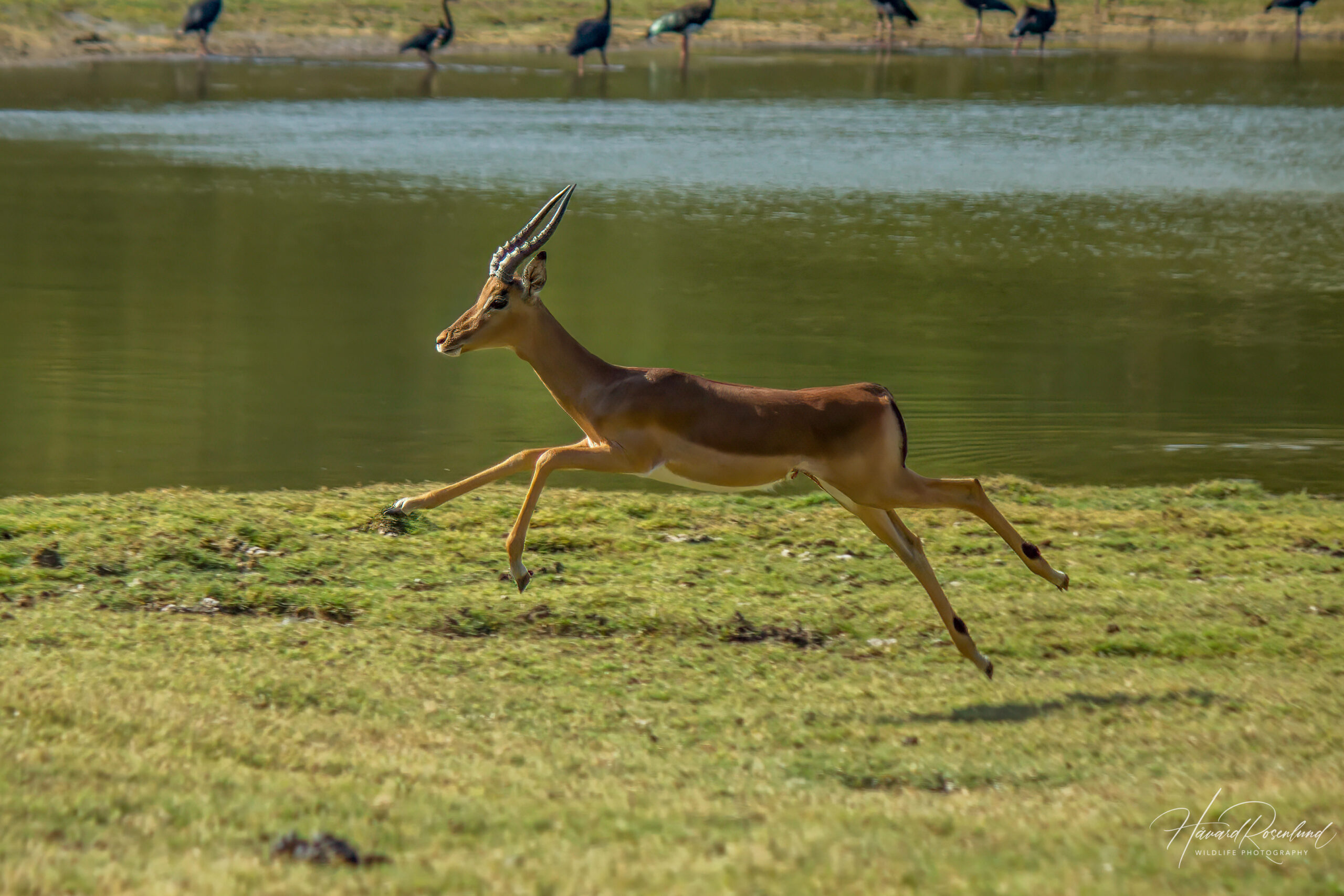
Impala are mainly active during daylight, with feeding concentrated in the cooler hours and more resting and ruminating around midday. Their most familiar antipredator response combines vigilance, explosive acceleration, sharp turns and long bounding leaps. They can clear obstacles around 3 m high and cover roughly 10 m in a single leap. Direct GPS–IMU measurements of free-ranging impala in Botswana recorded maximum speeds of about 64 km/h and showed how strongly escape performance also depends on acceleration, deceleration and rapid turning. During characteristic bounding sequences, the hind legs may also be kicked almost vertically upwards as the animal lands on its forelegs, a movement especially typical of impala.
Grooming is unusually well developed in the species. Impala groom themselves using a comb-like row of narrow lower incisors and canines, but they also groom one another, especially around the head and neck. These areas are difficult to reach alone, and mutual grooming helps remove ticks and other external parasites.
Social behaviour
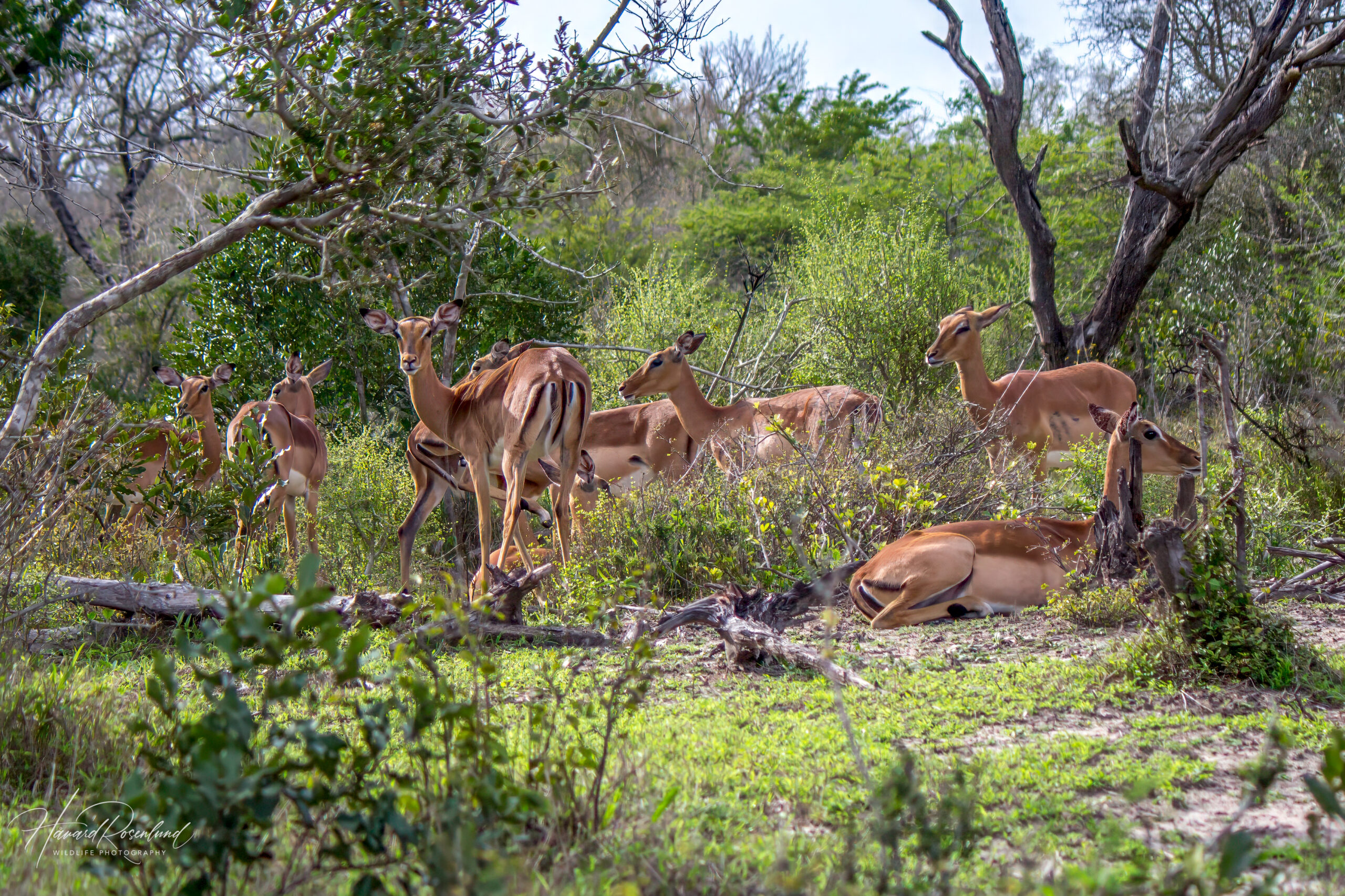
Impala social organisation changes with season and reproductive condition. Females and young form herds that often contain around 15–20 animals but can number well over 100 when conditions concentrate them. Herd composition can change from day to day as larger groups split and individuals temporarily join neighbouring groups. Young males eventually leave female groups, while non-territorial males of different ages gather in bachelor herds.
Adult males can become territorial during the breeding season. Territory size varies with habitat, population density and resources. In a Waterberg study in South Africa, territories averaged 21 ha and males retained them for an average of 67 days, with a range of 23–99 days. A territorial male uses roaring, posture, active herding and scent marking to advertise ownership and keep receptive females nearby.
Adult males also develop markedly thickened skin over parts of the neck and head, forming a protective dermal shield over areas exposed during horn fights. During the rut, the forehead glands are especially active and dominant males may rub their strongly scented secretion onto vegetation. Outside the rut, many males again associate with bachelor groups.
The video below shows two males engaged in light sparring.
Predation
Impala are among the most important medium-sized prey animals in African savannas. Lions (Panthera leo), leopards (Panthera pardus), cheetahs (Acinonyx jubatus), African wild dogs (Lycaon pictus) and spotted hyenas (Crocuta crocuta) all take them. In several southern African studies, impala have been the most frequently killed prey of cheetahs, wild dogs and leopards, and an important prey item for lions as well. Smaller calves are also vulnerable to jackals, caracals, pythons and large eagles.
When a herd flees, individuals scatter, turn and leap in different directions, making it harder for a pursuing predator to isolate one target. Alarm snorts quickly spread the response through nearby animals, while the concentration of newborn calves into a short seasonal period in strongly seasonal environments creates a predictable pulse of vulnerable prey.
Reproduction
In southern Africa, the annual rut is short and intense and normally falls in the cool dry season, with the most intense mating activity concentrated into a few weeks. Near the Equator, reproduction is less tightly seasonal. Territorial males roar frequently, feed less and devote much of their energy to herding females and competing with rivals. Studies show that territorial males have much higher testosterone levels than bachelors, while the forehead scent glands are most active during the rut.
A male investigates scent and urine to locate females in oestrus and may follow and mate with a receptive female several times at short intervals. After a successful copulation, he generally loses interest in that particular female even if she remains receptive and redirects his attention towards other females and rivals. Gestation lasts about 27–28 weeks, or roughly 190 days.
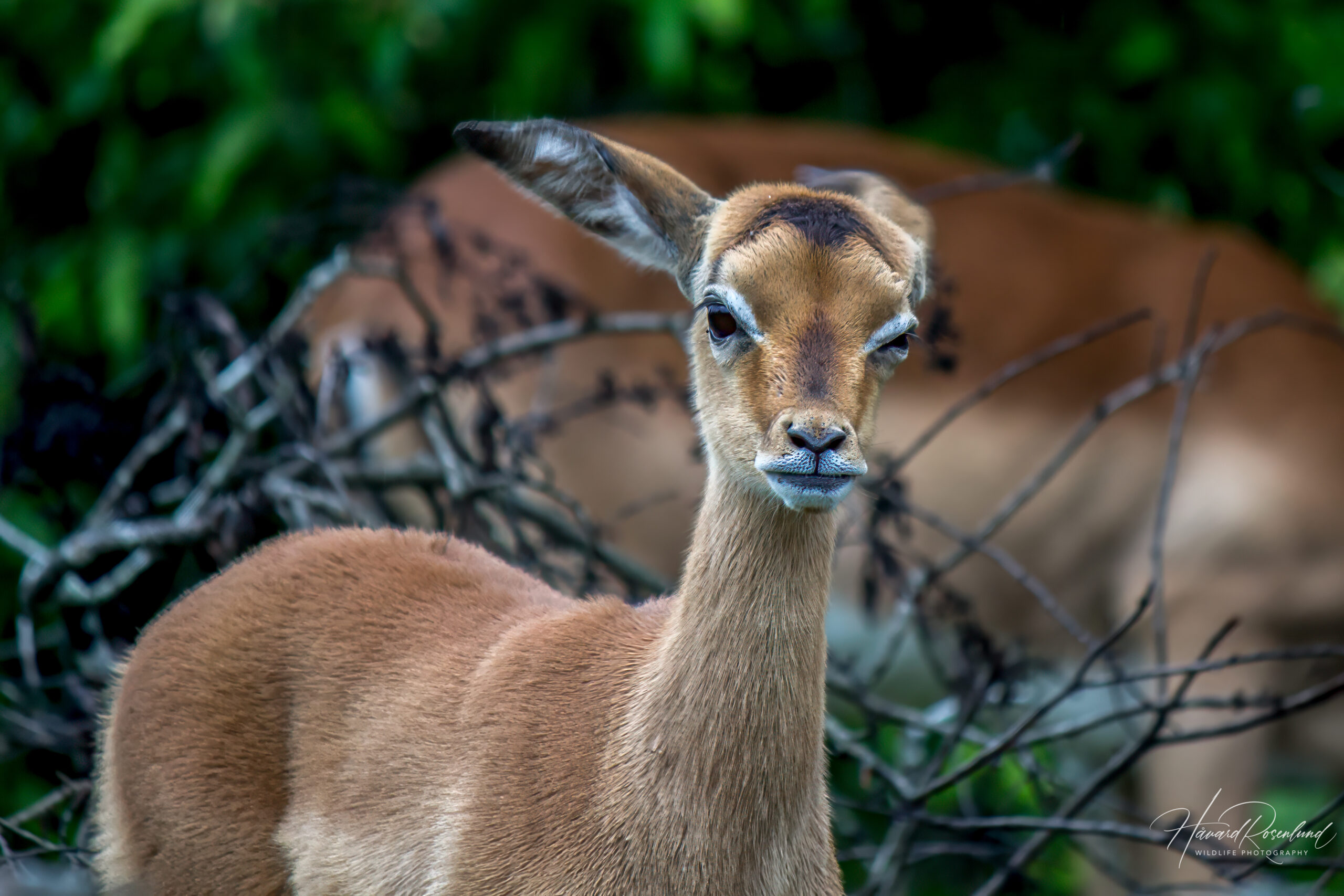
The female normally gives birth to one calf weighing around 5 kg. Shortly before birth she separates from the herd and conceals herself in tall vegetation. The calf spends much of its first day or two hidden, then begins following the mother back to the herd during the day. After about a week, young start forming small nursery groups, and by four to six months they show a strong preference for associating with age-mates. Females reach sexual maturity at around 18 months. Males are fertile earlier, but generally do not gain mating access until they become territorial at around four years of age.
In southern Africa, most calves arrive early in the wet season, often from November to January. Synchrony can be very strong: in one population in Chobe National Park, 90% of calves were born within two weeks. In parts of East Africa, births are spread much more broadly through the year.
Relationship with humans
Impala are among the most familiar mammals in African protected areas and are important to wildlife tourism, private game management and the venison industry. Their abundance and ability to thrive in managed savanna have also made them common animals on game ranches, where populations may be moved between properties.
The black M-shaped rump markings have inspired an informal safari-guide joke that impala are the “fast food” of the bush: they are quick, abundant and form an important prey base for many large carnivores. The joke has become part of modern safari folklore and reflects how strongly the species is associated with everyday predator–prey interactions in the African bush.
Status
The impala is listed as Least Concern on the IUCN Red List. The global assessment published in 2016 estimated close to two million animals, and the species remains abundant in many protected areas and privately managed wildlife landscapes.
The black-faced impala (A. m. petersi) has a much smaller natural range and is assessed separately as Vulnerable. Its restricted distribution and clear genetic difference from common impala make it a substantially greater conservation priority than the widespread common impala.
Threats
Common impala remain secure across much of their range, although local populations can decline through habitat conversion, drought, unregulated harvest and fencing that limits movement. The black-faced subspecies is more vulnerable because its natural population is confined to northwestern Namibia and southwestern Angola.
For black-faced impala, small and isolated populations increase the risks associated with drought, disease and loss of genetic diversity. Hybridisation with common impala following poorly planned translocations is also a concern. Genetic studies show clear differences between the forms, so translocations should take the animals’ geographic origin into account.
Conservation
Protected areas and private wildlife lands maintain very large numbers of common impala. Management therefore focuses mainly on retaining connected savanna habitat, avoiding excessive local densities and preserving the genetic differences between regional populations.
The black-faced impala requires more direct intervention. Translocations established an important protected population in Etosha National Park after severe historical decline, and subsequent genetic monitoring found no evidence of widespread hybridisation with common impala in the samples studied. Maintaining several secure populations while avoiding unnecessary mixing remains central to its long-term conservation.
Image gallery
Loading map and observations…
Have you seen this species?
Independent species archive
Did you find this species page useful?
Wildlife Vagabond is independently built and maintained. Voluntary support helps cover hosting, maps, data storage and continued improvements to the species archive.
Support Wildlife VagabondSpecies content will remain freely available.
References
Information about the species’ global distribution and status is based primarily on global Red List data. See the references below for details.
- Brown, J. L., Wildt, D. E., Raath, J. R., de Vos, V., Janssen, D. L., Citino, S. B., Howard, J. G., & Bush, M. (1991). Seasonal variation in pituitary–gonadal function in free-ranging impala (<i>Aepyceros melampus</i>). Journal of Reproduction and Fertility, 93(2), 497–505. https://doi.org/10.1530/jrf.0.0930497
- Fritz & Bourgarel. (2013). Aepyceros melampus – Impala. In: Mammals of Africa, Volume VI. https://www.researchgate.net/publication/285769520_Aepyceros_melampus_impala
- Garcia‐Erill, G., Wang, X., Rasmussen, M. S., Quinn, L., Khan, A., Bertola, L. D., Santander, C. G., Balboa, R. F., Ogutu, J. O., Pečnerová, P., Hanghøj, K., Kuja, J., Nursyifa, C., Masembe, C., Muwanika, V., Bibi, F., Moltke, I., Siegismund, H. R., Albrechtsen, A., & Heller, R. (2024). Extensive Population Structure Highlights an Apparent Paradox of Stasis in the Impala (Aepyceros melampus). Molecular Ecology, 33(22), e17539. https://doi.org/10.1111/mec.17539
- Hanks, J., Cumming, D. H. M., Orpen, J. L., Parry, D. F., & Warren, H. B. (1976). Growth, condition and reproduction in the Impala ram (Aepyceros melampus). Journal of Zoology, 179(3), 421-435. https://doi.org/10.1111/j.1469-7998.1976.tb02305.x
- Hart, B. L., & Hart, L. A. (1992). Reciprocal allogrooming in impala, Aepyceros melampus. Animal Behaviour, 44(6), 1073-1083. https://doi.org/10.1016/S0003-3472(05)80319-7
- International Union for Conservation of Nature. (2016). Aepyceros melampus. The IUCN Red List of Threatened Species. https://www.iucnredlist.org/species/550/50180828
- Jarman, P. J. (1972). The development of a dermal shield in impala. Journal of Zoology, 166(3), 349-356. https://doi.org/10.1111/j.1469-7998.1972.tb03104.x
- Lorenzen, E. D., & Siegismund, H. R. (2004). No suggestion of hybridization between the vulnerable black‐faced impala (Aepyceros melampus petersi) and the common impala (A. m. melampus) in Etosha National Park, Namibia. Molecular Ecology, 13(10), 3007-3019. https://doi.org/10.1111/j.1365-294X.2004.02308.x
- Mammal Diversity Database. (2026). Aepyceros melampus: current taxonomy and distribution. American Society of Mammalogists. https://www.mammaldiversity.org/taxon/1006130/
- Oliver, C. M., Skinner, J. D., & Van der Merwe, D. (2007). Territorial behaviour in southern impala rams (Aepyceros melampus Lichtenstein). African Journal of Ecology, 45(2), 142-148. https://doi.org/10.1111/j.1365-2028.2006.00687.x
- Selier, S. A. J., Hoffman, L., & Castley, G. (2016). A conservation assessment of <i>Aepyceros melampus melampus</i>. South African National Biodiversity Institute and Endangered Wildlife Trust. https://ewt.org/wp-content/uploads/2022/11/1.-Impala-Aepyceros-melampus-melampus_LC.pdf
- South African National Biodiversity Institute. (n.d.). Aepyceros melampus regional assessment and bibliography. https://speciesstatus.sanbi.org/assessment/last-assessment/1933/
- Welsch, U., van Dyk, G., Moss, D., & Feuerhake, F. (1998). Cutaneous glands of male and female impalas (Aepyceros melampus): seasonal activity changes and secretory mechanisms. Cell and Tissue Research, 292(2), 377-394. https://doi.org/10.1007/s004410051068
- Wilson, A. M., Hubel, T. Y., Wilshin, S. D., Lowe, J. C., Lorenc, M., Dewhirst, O. P., Bartlam-Brooks, H. L. A., Diack, R., Bennitt, E., Golabek, K. A., Woledge, R. C., McNutt, J. W., Curtin, N. A., & West, T. G. (2018). Biomechanics of predator–prey arms race in lion, zebra, cheetah and impala. Nature, 554(7691), 183-188. https://doi.org/10.1038/nature25479