
House Sparrow
Passer domesticus
At a glance
Habitat
- Cities, villages, farms and other human settlements; scarce far from people in most of its range
Diet
- Mostly seeds and grains; insects are particularly important for growing chicks
Activity
- Diurnal
Size
- Length: 14–18 cm Weight: 27–30 g
Range
- Native to Eurasia and North Africa; introduced widely across the Americas, southern Africa, Australasia and many islands
Description
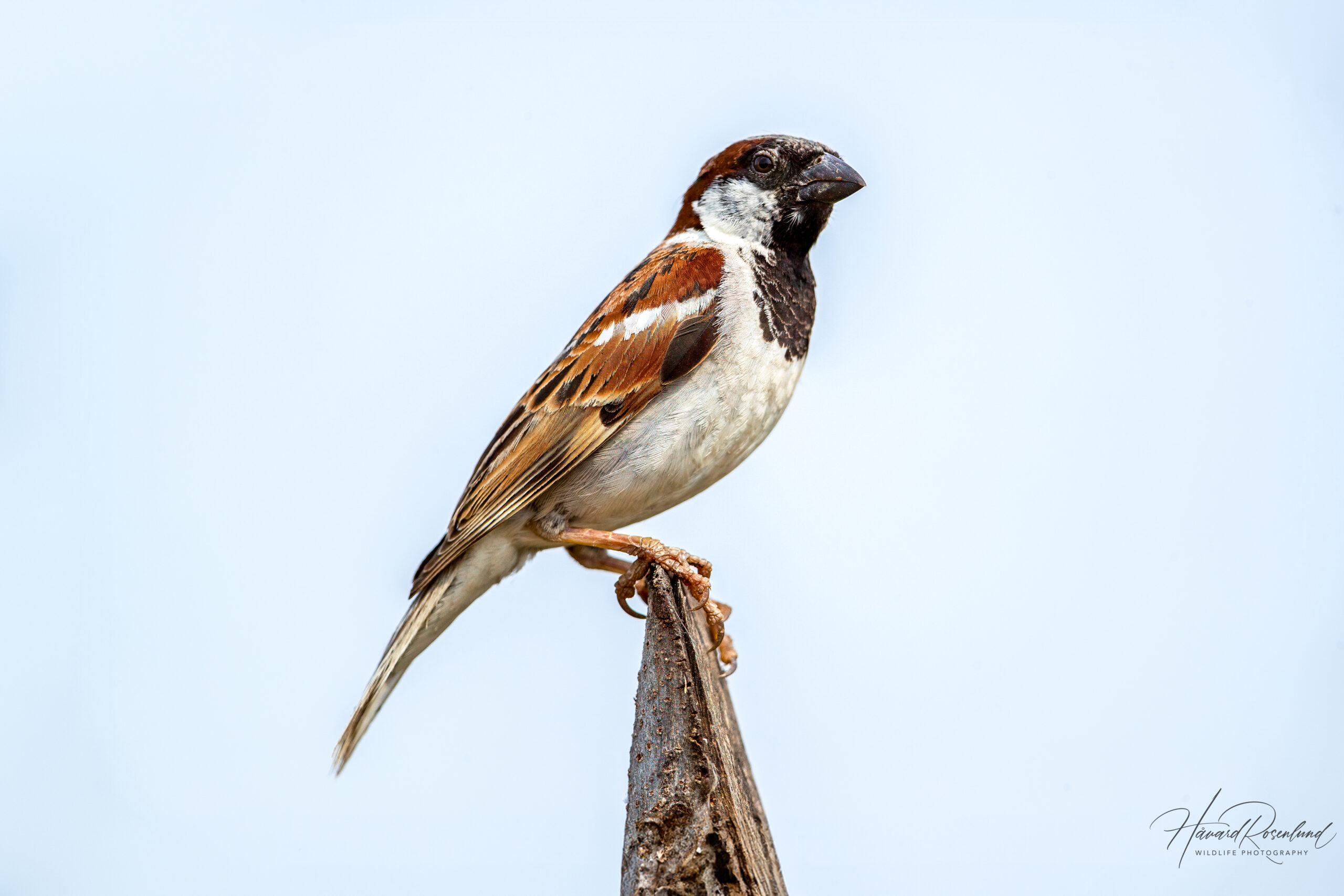
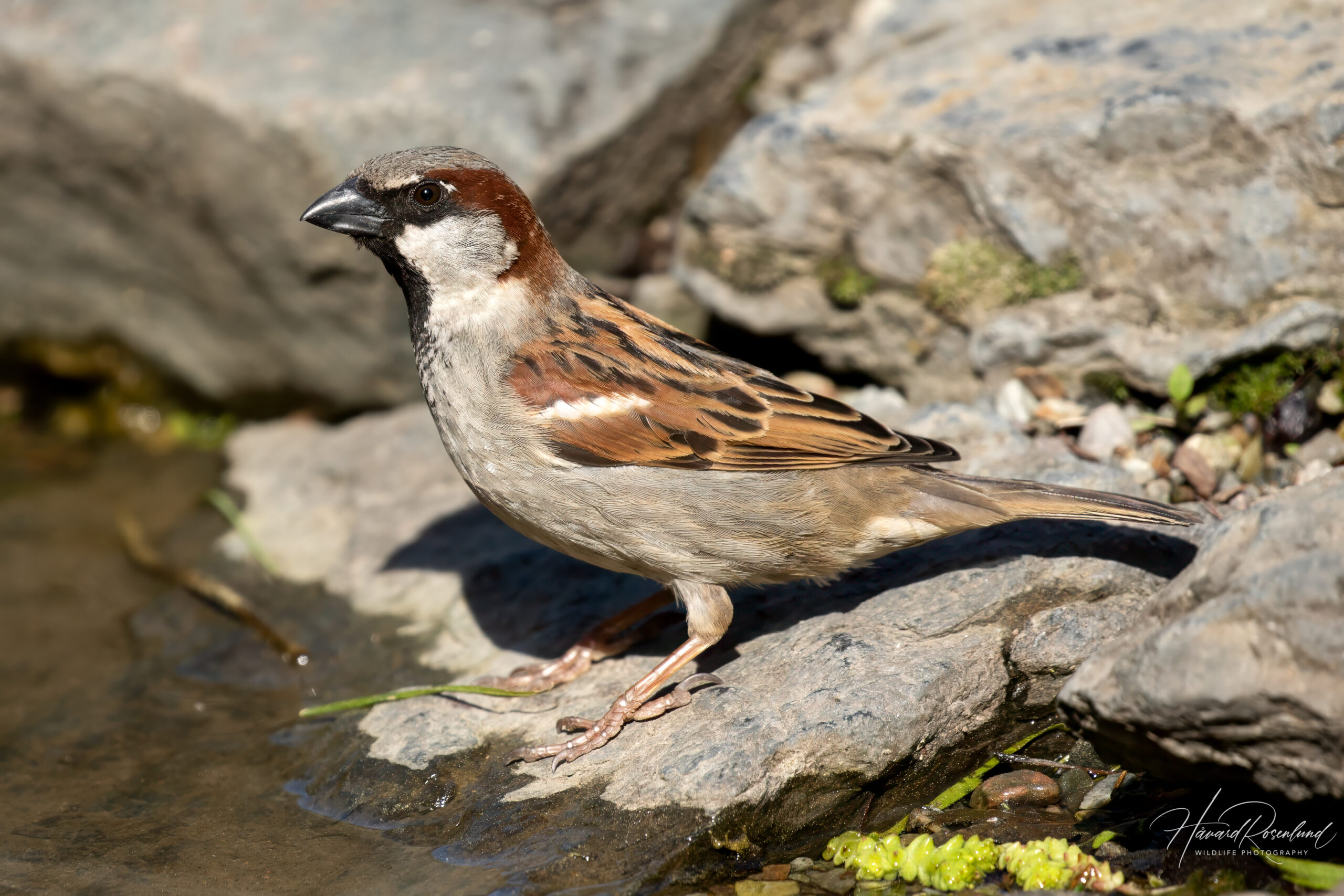
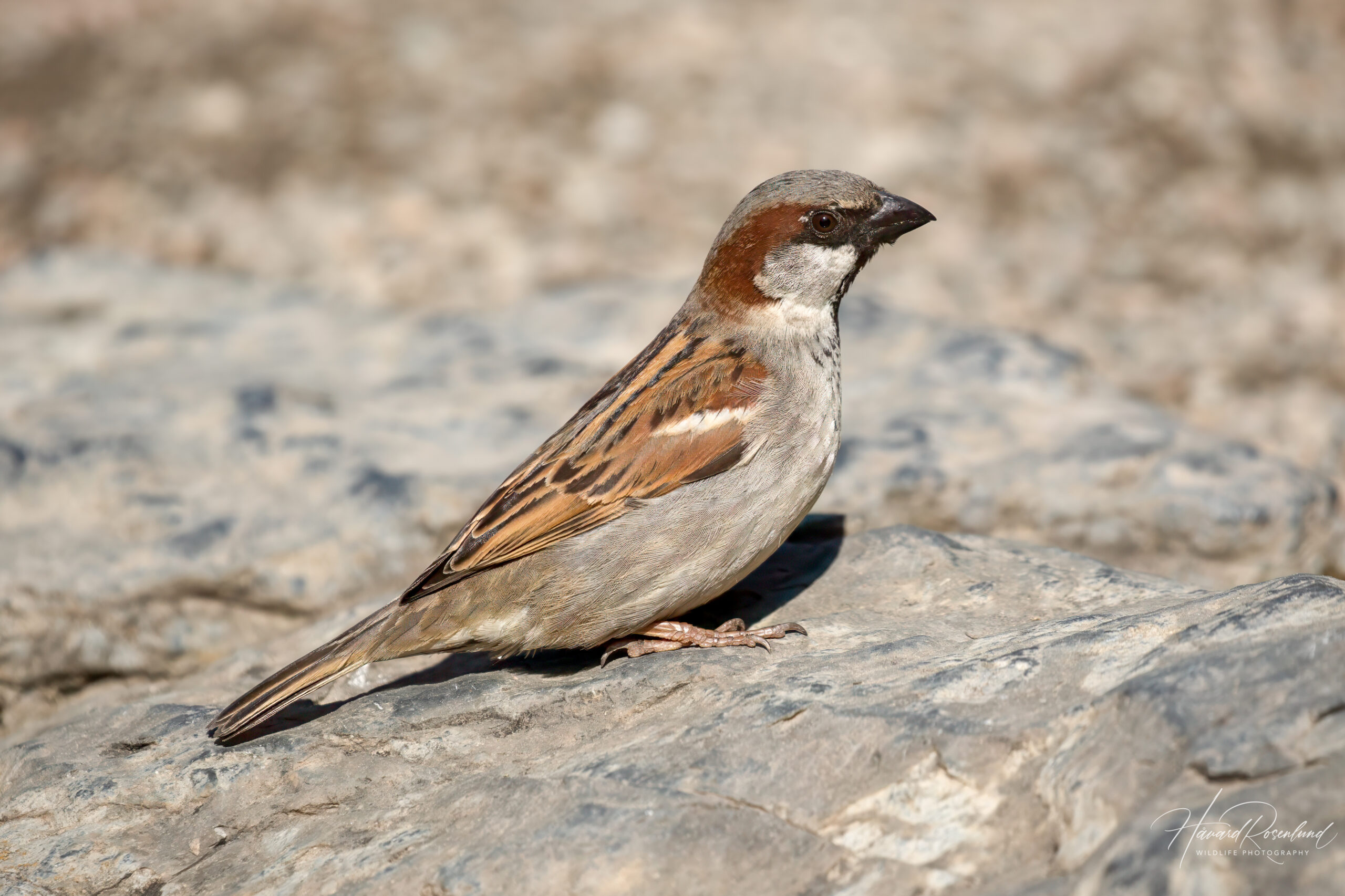
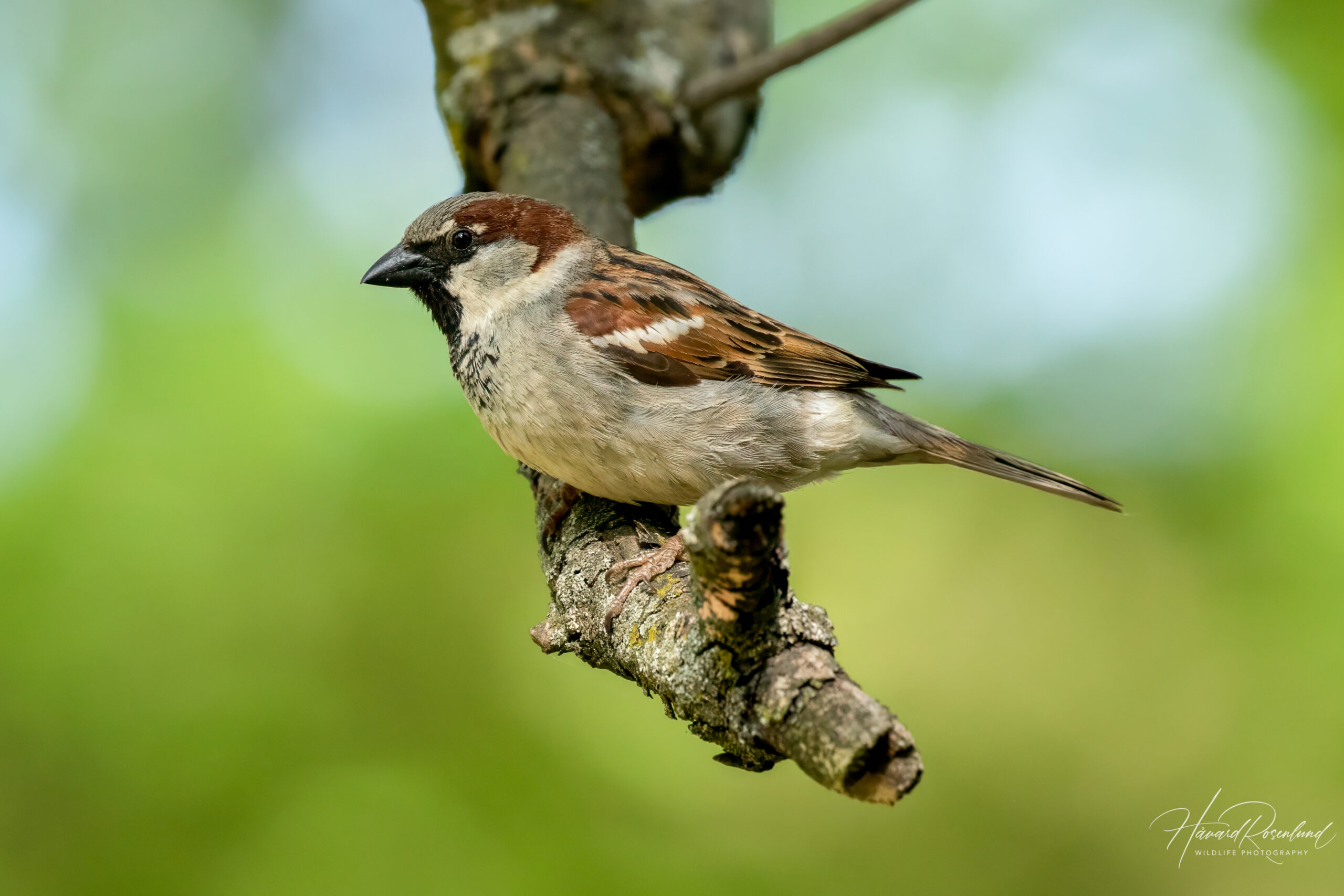
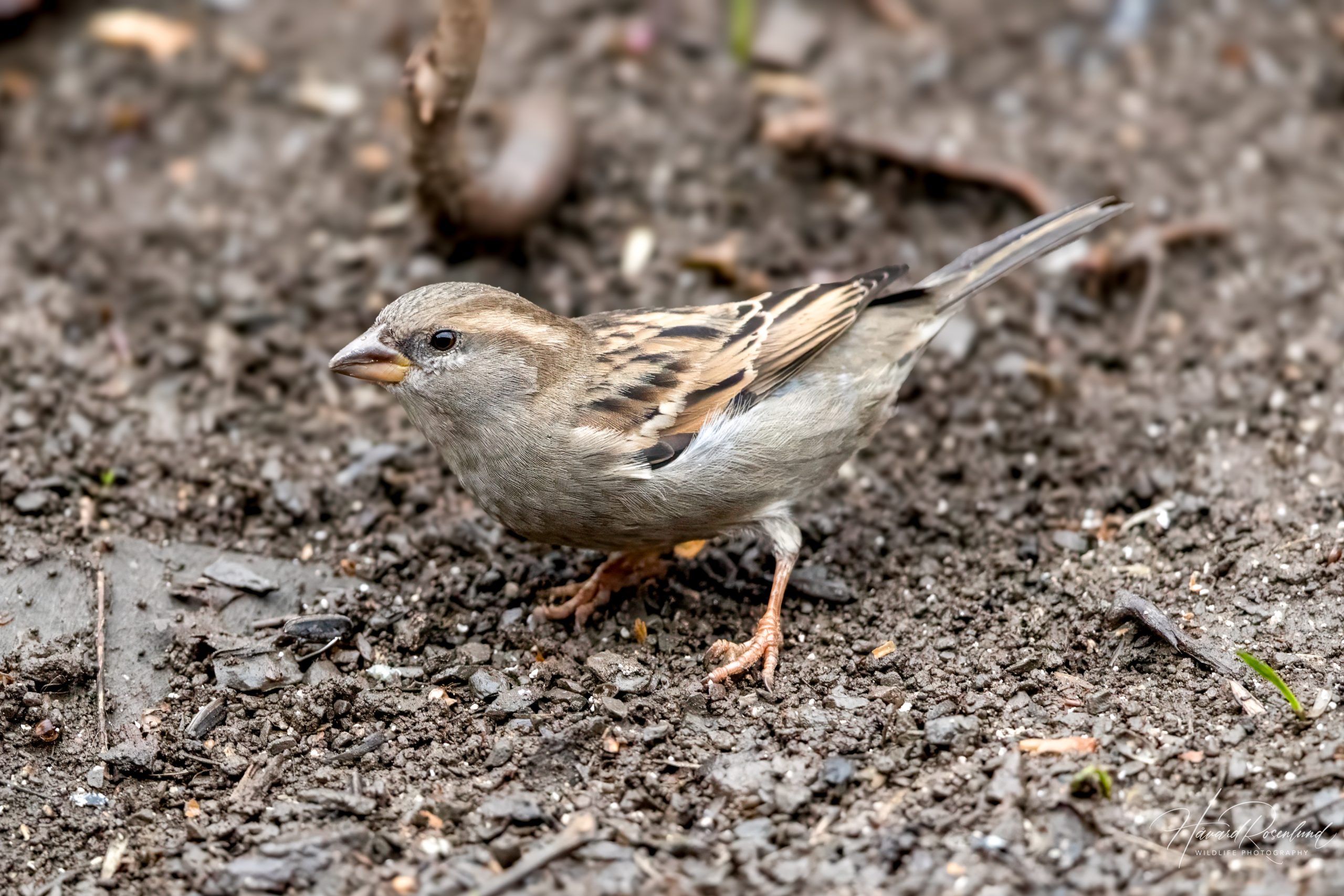
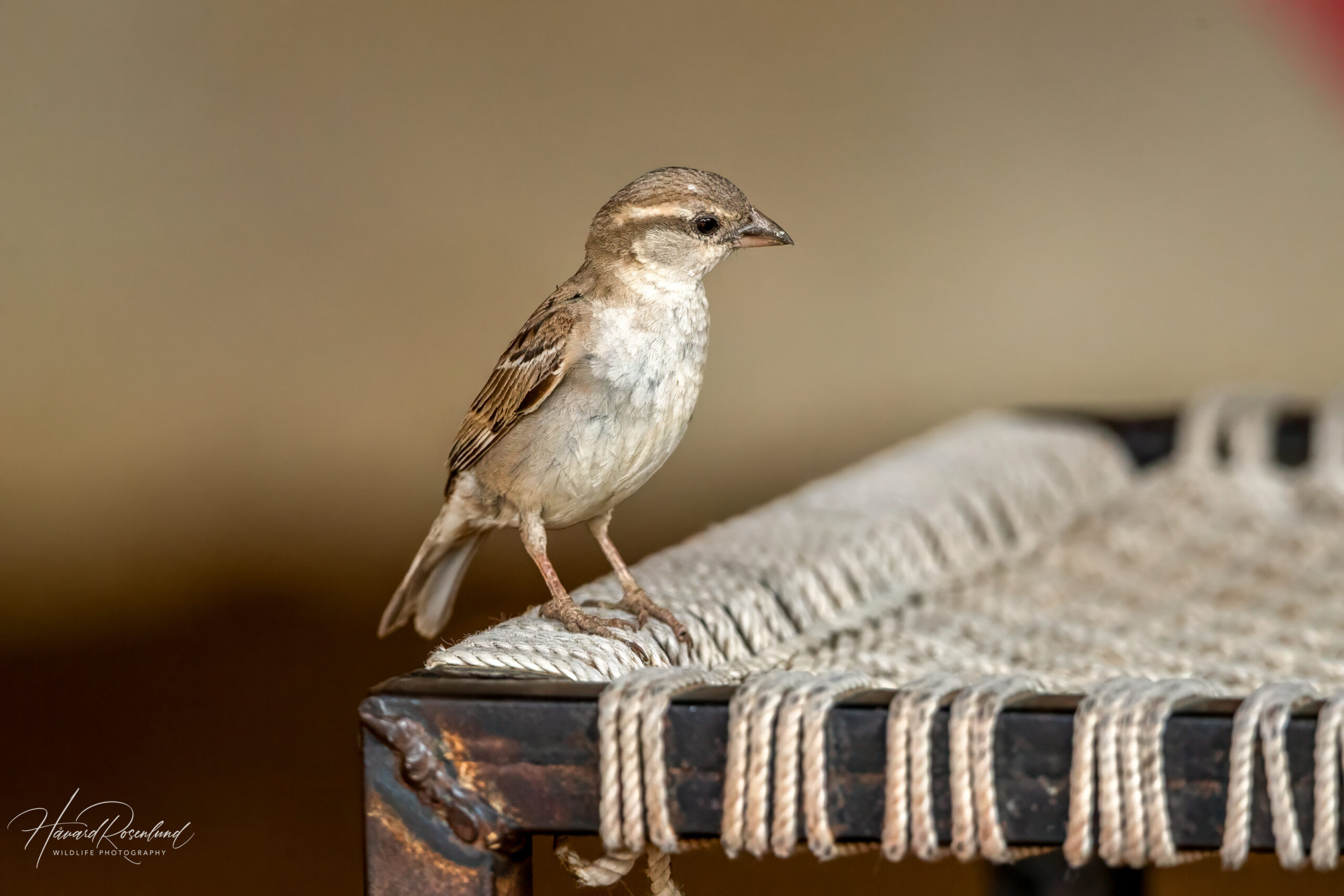
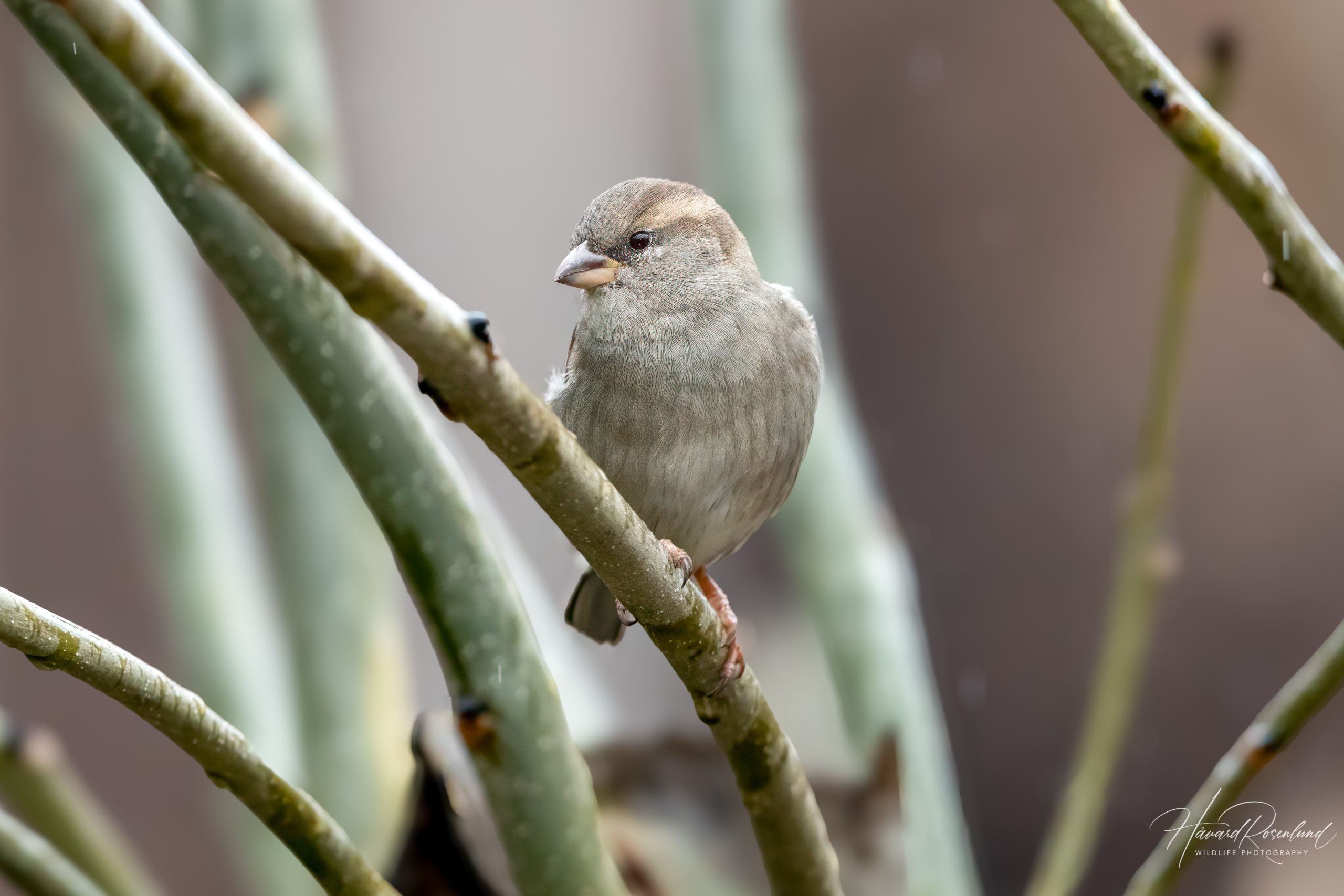
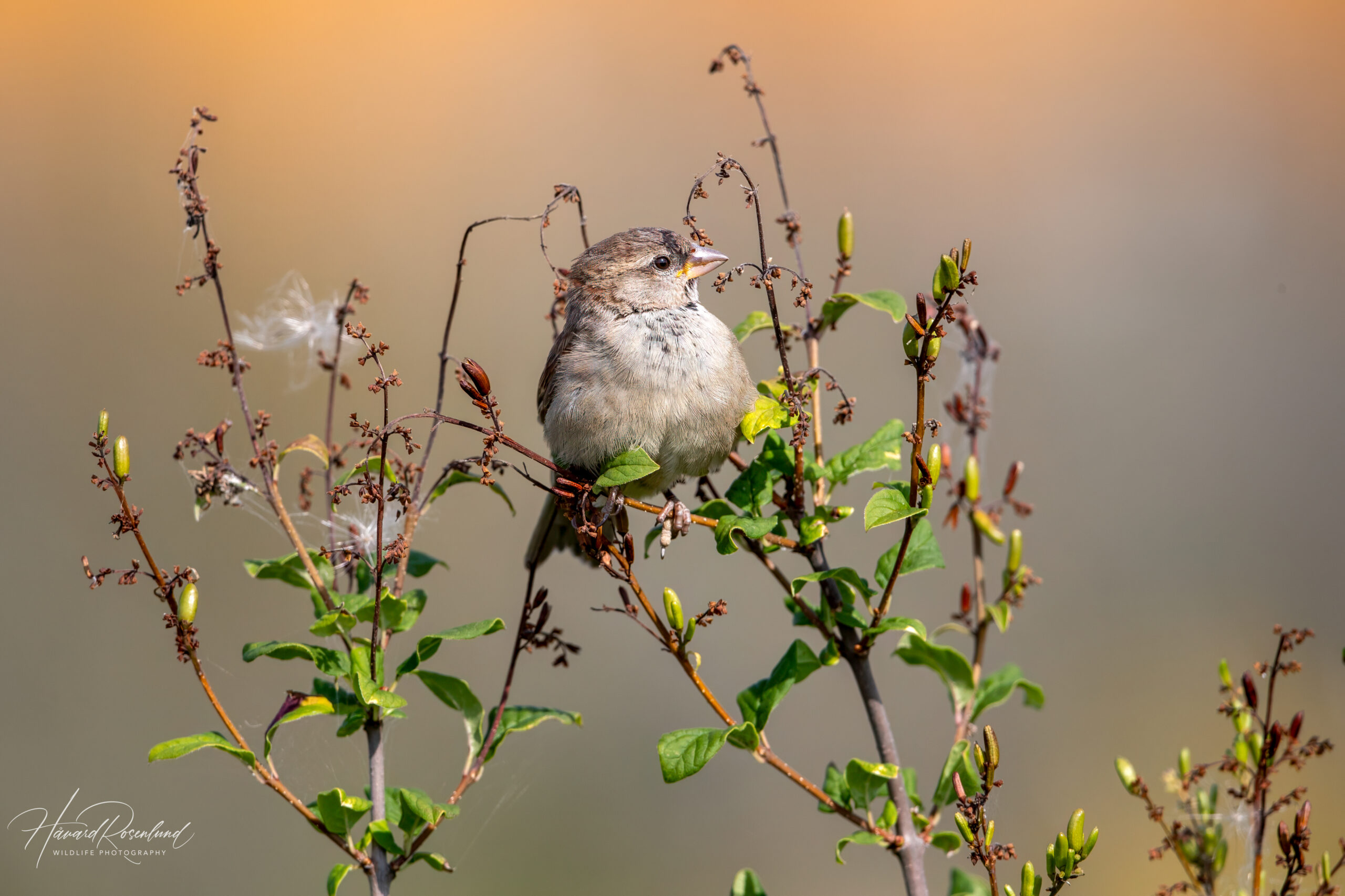
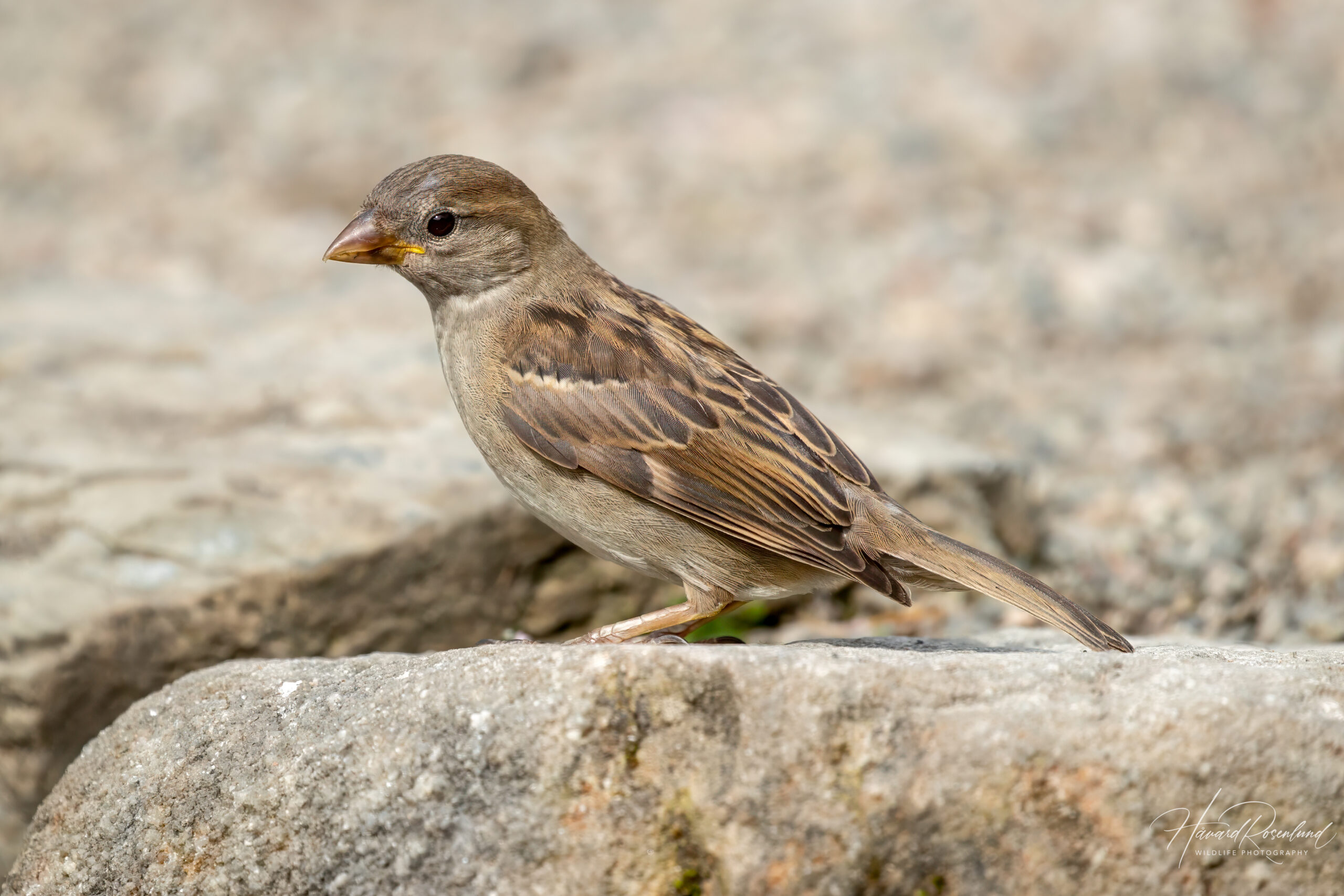
The house sparrow (Passer domesticus) is one of the world’s most familiar human-associated birds. It is a compact, stocky sparrow with a short tail and a sturdy conical bill. Adults are roughly 14–18 cm long and commonly weigh around 27–30 g. Males have a grey crown, chestnut sides to the head and neck, pale cheeks and a black throat and breast bib that becomes more conspicuous in breeding plumage. Females and juveniles are plainer brown and grey, with a pale eyebrow and no black bib.
The similar Eurasian tree sparrow (Passer montanus) is slightly smaller and has a chestnut crown and a distinct black cheek spot in both sexes. House sparrows show considerable geographic variation, but their defining ecological feature is even more striking than their plumage: most populations live extraordinarily close to humans and their buildings.
Habitat
House sparrows live as human commensals through most of their present range, sharing settlements and resources with people. They thrive in towns, villages, suburbs, farms and livestock facilities but are generally scarce in extensive forest, uninhabited grassland and extreme desert away from settlements. Buildings provide nest cavities and shelter, while gardens, livestock, crops and discarded food create concentrated feeding opportunities.
Within settlements, good habitat usually combines nesting cavities with nearby dense vegetation, bare or short ground for feeding and reliable food sources. This helps explain why neighbourhoods that appear superficially suitable can support very different numbers of sparrows depending on building design and the structure of surrounding green space.
Diet
Adults eat mostly seeds and grain, including cereals, weed seeds and livestock feed, and readily exploit bird feeders and food discarded by people. Invertebrates become much more important during breeding.
Young nestlings are fed heavily on insects during their first days, with seeds and other plant foods becoming progressively more important as they develop. This dependence on animal prey during chick growth helps explain why insect availability can influence breeding success even in a species that is mainly seed-eating as an adult.
House sparrows are opportunistic and flexible feeders. Individuals rapidly learn to exploit temporary food sources around people and livestock, and groups can concentrate quickly where grain, scraps, insects or other food becomes available.
Behaviour
House sparrows are highly social. They commonly feed, roost, bathe and dust-bathe in groups, and feeding flocks contain clear dominance relationships. Their repeated chirping calls are used throughout the year to keep contact and interact at close range around feeding sites, roosts and breeding colonies.
Most populations are sedentary rather than regularly migratory; movement is dominated by dispersal of younger birds away from their natal area.
Breeding
House sparrows are socially monogamous and pairs can remain together across repeated breeding attempts, although extra-pair mating occurs. They nest mainly in cavities and crevices in buildings, roofs, street structures, nest boxes and trees. Suitable cavities are defended vigorously, and several pairs often breed close together where nesting sites are abundant.
The bulky nest is built from dry grasses and other vegetation and lined with softer material such as feathers, hair, paper or fibres. Typical clutches contain 4–5 eggs, although larger and smaller clutches occur, and pairs commonly raise two or three broods in a season.
Incubation lasts roughly 12–15 days. Both sexes can incubate, but the female contributes more and develops the larger brood patch. Both parents feed the chicks. Young usually leave the nest after about 14–17 days and continue to receive parental food afterwards.
Relationship with humans
The close relationship between house sparrows and humans is ancient rather than merely a consequence of modern cities. A whole-genome study of 120 sparrows found evidence that the human-associated house sparrow lineage split from the less human-associated Bactrianus lineage of house sparrows around 11,000 years ago, followed by expansion of house sparrows several thousand years later as agriculture spread.
The contrast with the Bactrianus lineage is striking. Bactrianus sparrows are migratory, breed in natural or semi-natural habitats of Central Asia, often far from settlements, and feed mainly on seeds from wild grasses. Their ecology therefore differs sharply from the sedentary, crop-associated lifestyle that characterises most house sparrows living alongside people.
Among the clearest genetic differences between the lineages were DNA-regions containing COL11A, a gene involved in craniofacial development, and the AMY2A gene, part of the amylase gene family involved in starch digestion. These genes may have contributed to adaptation to a human-created environment rich in cultivated grains, but the findings do not mean that one single “starch gene” alone explains how house sparrows became closely associated with humans.
Humans later carried house sparrows far beyond their native Eurasian and North African range. Deliberate and accidental introductions established populations across the Americas, southern Africa, Australia, New Zealand and many islands. The species has therefore become one of the clearest examples of an animal whose global distribution has been reshaped by its relationship with people.
Status
The house sparrow is classified as least concern on the IUCN Red List. Its global population remains enormous, but this masks major regional declines in parts of Europe.
In the United Kingdom, for example, BTO monitoring shows an 18% decline in the breeding population between 1995 and 2024, following much steeper losses beginning in the 1970s. Different processes appear to operate in different landscapes: reduced food around intensive farmland is strongly implicated in rural declines, while urban declines have been linked to combinations of breeding performance, habitat structure, nest-site availability, food, disease and other local pressures.
Image gallery
Loading map and observations…
Have you seen this species?
Independent species archive
Did you find this species page useful?
Wildlife Vagabond is independently built and maintained. Voluntary support helps cover hosting, maps, data storage and continued improvements to the species archive.
Support Wildlife VagabondSpecies content will remain freely available.
References
Information about the species’ global distribution and status is based primarily on global Red List data. See the references below for details.
- BirdLife International. (n.d.). House Sparrow species factsheet. https://datazone.birdlife.org/species/factsheet/house-sparrow-passer-domesticus
- British Trust for Ornithology. (2011). Spatial distribution and habitat preferences of House Sparrow in urbanised landscapes. https://www.bto.org/our-work/science/publications/reports/bto-research-reports/00599-spatial-distribution-habitat-preferences-house-sparrow
- British Trust for Ornithology. (n.d.). House Sparrow BirdFacts. https://www.bto.org/learn/about-birds/birdfacts/house-sparrow
- International Union for Conservation of Nature. (n.d.). House Sparrow. The IUCN Red List of Threatened Species. https://www.iucnredlist.org/species/103818789/155522130
- Moudrá, L., Zasadil, P., Moudrý, V., & Šálek, M. (2018). What makes new housing development unsuitable for house sparrows (Passer domesticus)? Landscape and Urban Planning, 169, 124-130. https://doi.org/10.1016/j.landurbplan.2017.08.017
- Ravinet, M., Elgvin, T. O., Trier, C., Aliabadian, M., Gavrilov, A., & Sætre, G.-P. (2018). Signatures of human-commensalism in the house sparrow genome. Proceedings of the Royal Society B: Biological Sciences, 285(1884), 20181246. https://doi.org/10.1098/rspb.2018.1246
- Riyahi, S., Hammer, Ø., Arbabi, T., Sánchez, A., Roselaar, C. S., Aliabadian, M., & Sætre, G.-P. (2013). Beak and skull shapes of human commensal and non-commensal house sparrows Passer domesticus. BMC Evolutionary Biology, 13(1), 200. https://doi.org/10.1186/1471-2148-13-200