
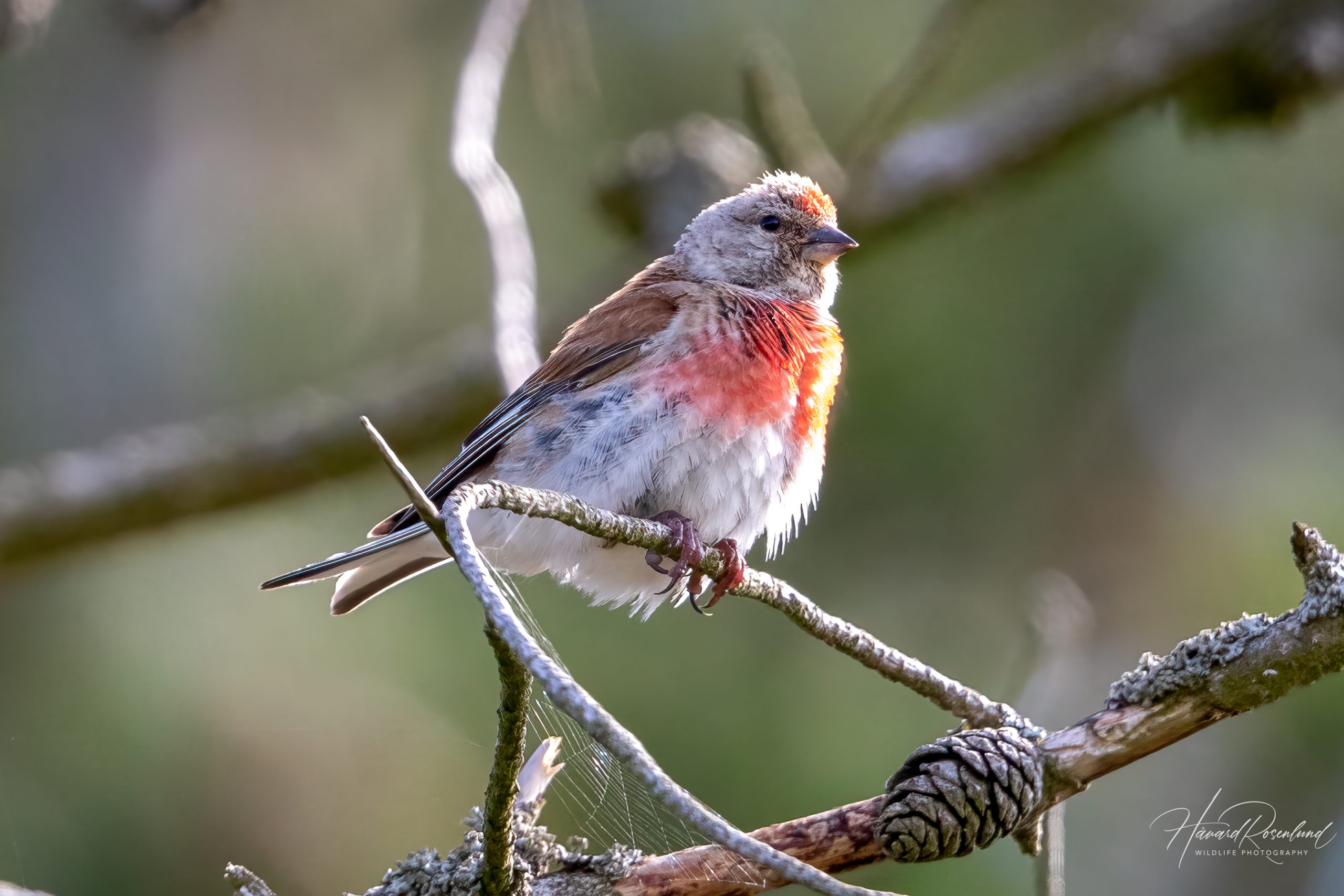
Common Linnet
Linaria cannabina
At a glance
Habitat
- Open farmland, coastal heath, scrub and rough grassland with low bushes or hedges for nesting
Diet
- Strongly seed-based, including weed and grass seeds; even nestlings are fed predominantly seeds
Activity
- Diurnal
Size
- Length: 13–14 cm Weight: 19 g
Range
- Europe and North Africa east through western Asia; northern populations migrate south or southwest in winter
Description
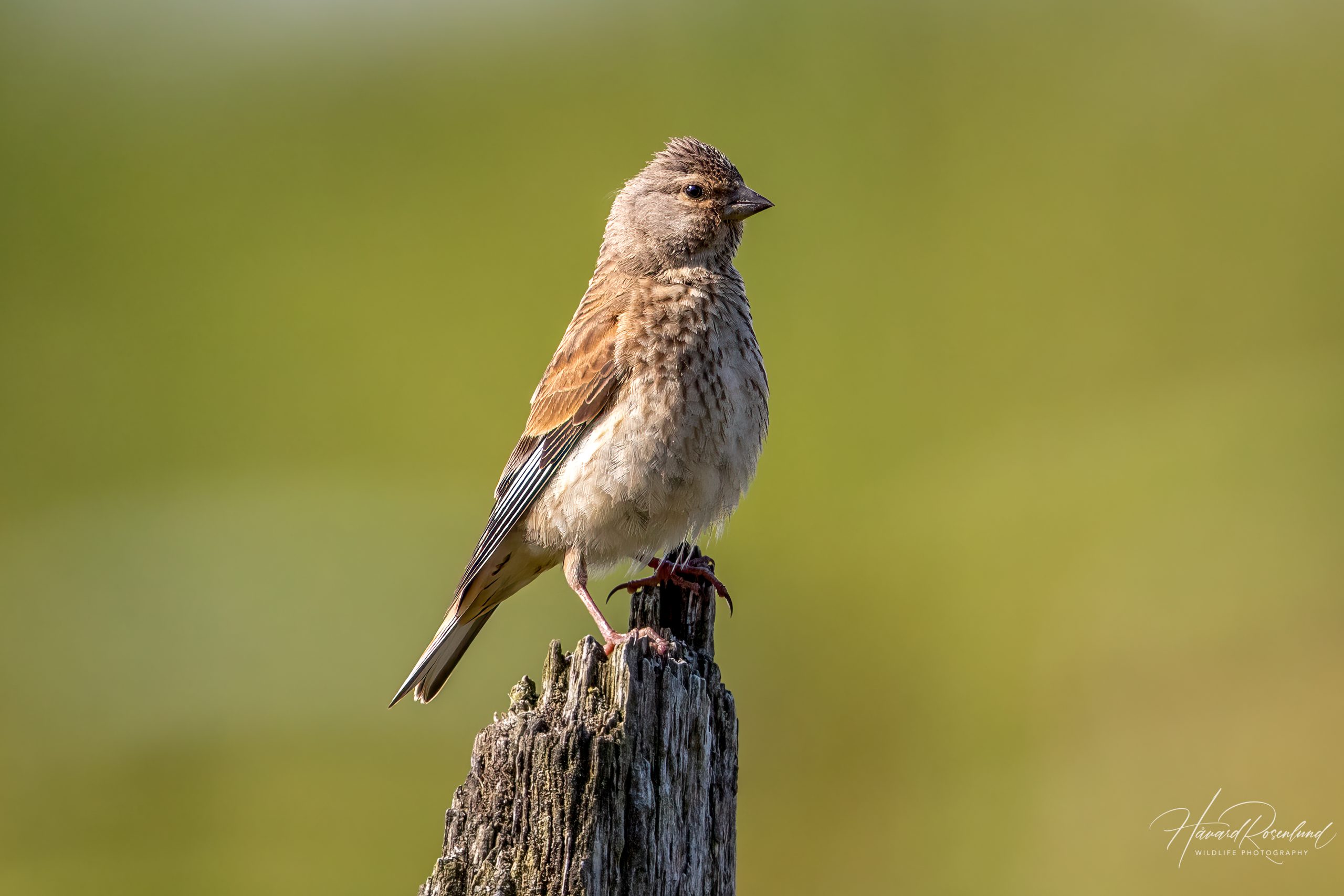
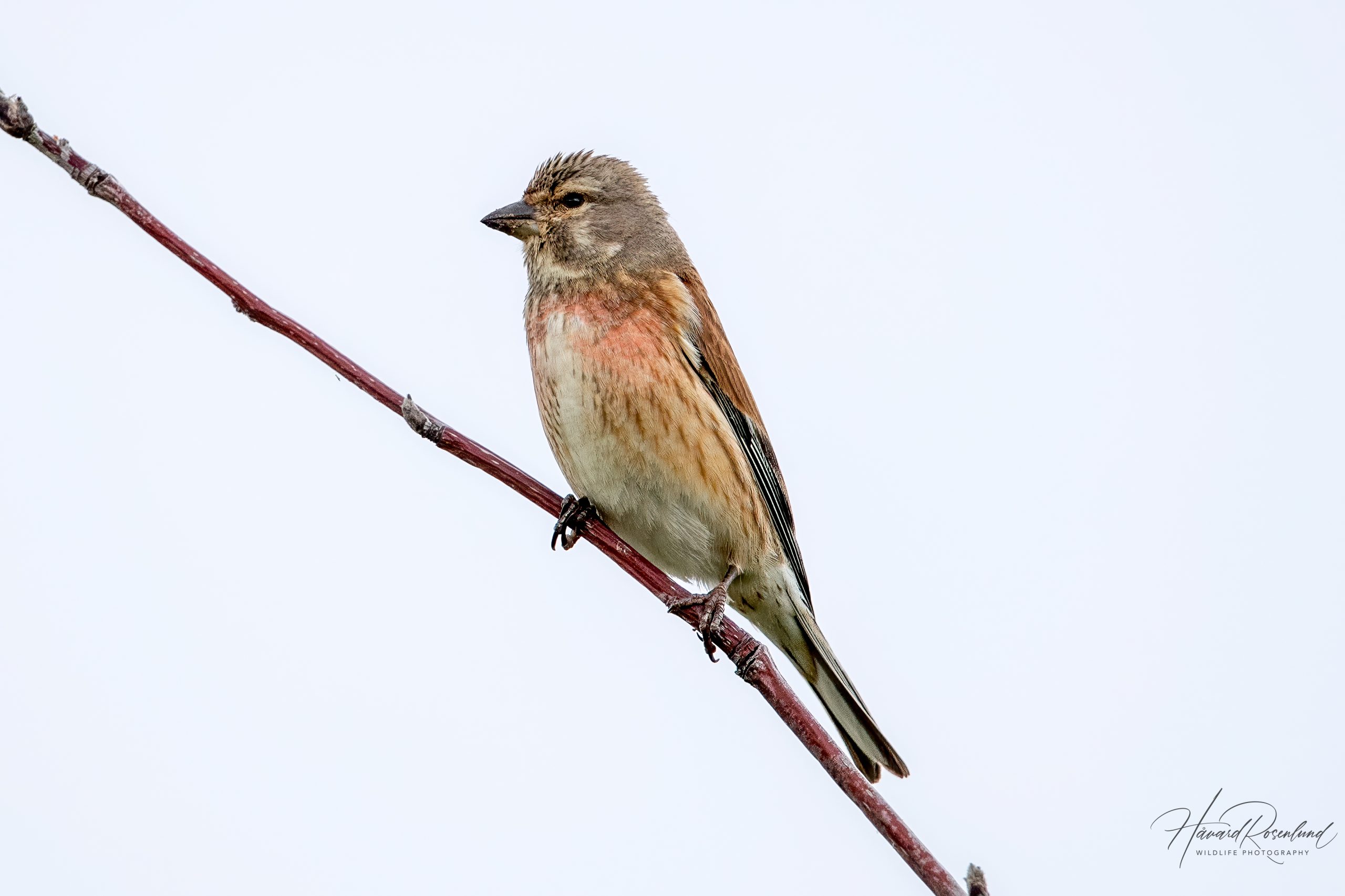
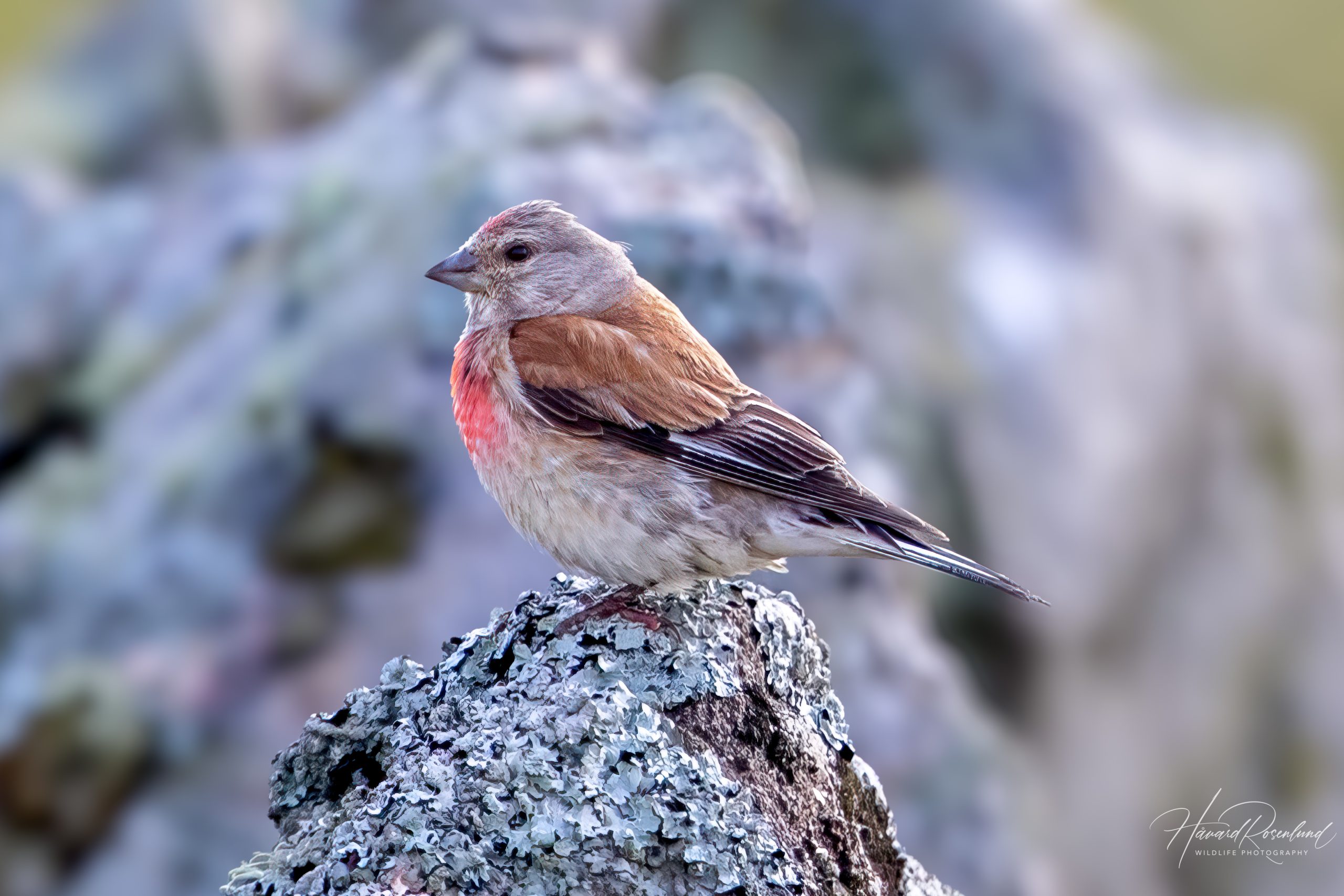
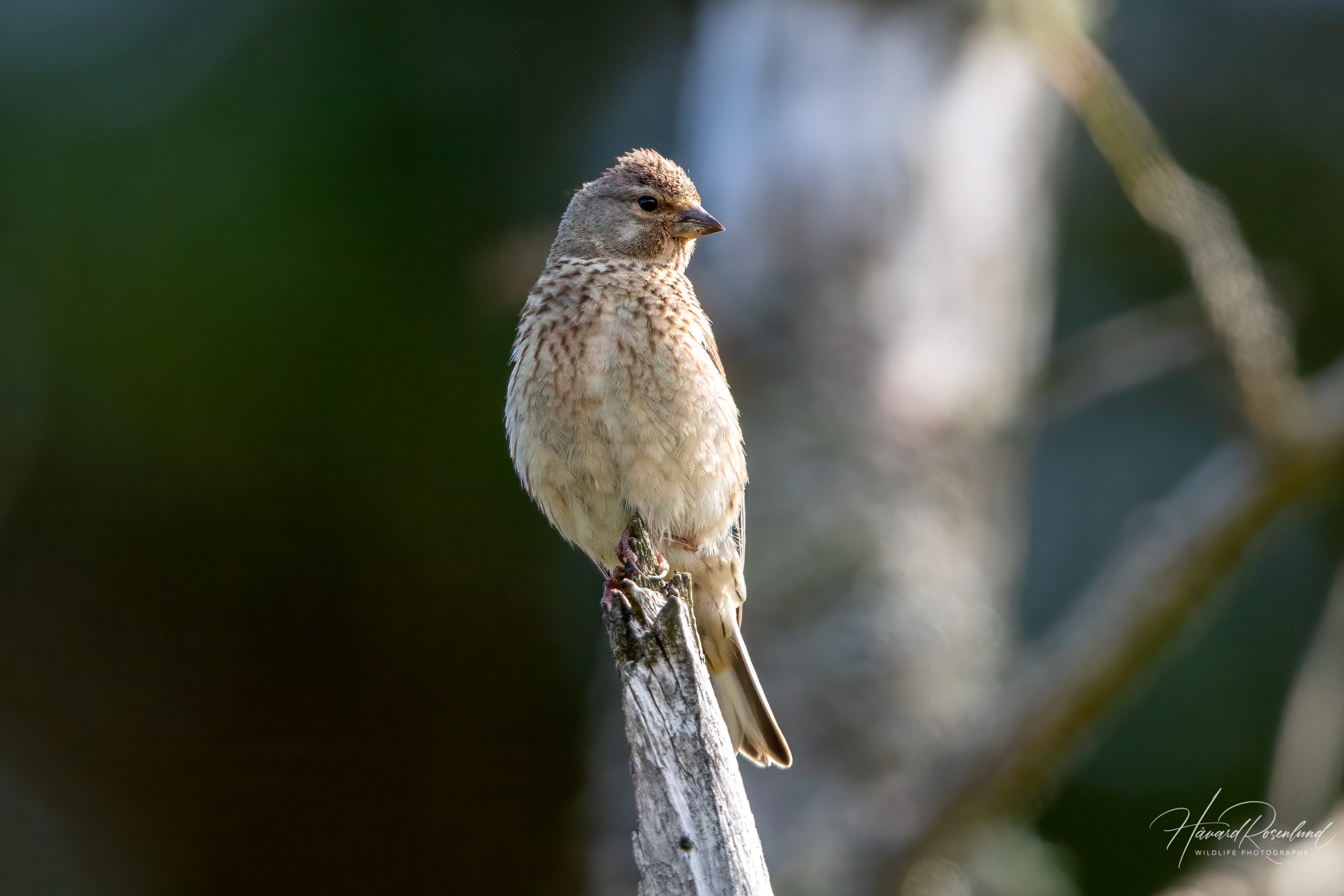
The common linnet (Linaria cannabina) is a small, slim finch of open country across Europe, North Africa and western Asia. Adults are about 13–14 cm long, have a wingspan of roughly 21–25 cm and weigh around 19 g. Males in breeding plumage have a grey head with striking crimson patches on the forehead and breast, while females and non-breeding males are much browner and more heavily streaked. Both sexes show pale edges in the wings and a distinctly forked tail.
The closest European confusion species is the twite (Linaria flavirostris). Linnets generally show more white in the wing, a greyer bill in summer and, in adult males, the characteristic red forehead and breast. The species' old English name is linked to flax, reflecting its long association with seed-rich farmland and weedy ground.
Habitat
Linnets need two different habitat elements close together: dense low vegetation for nesting and open, seed-rich ground for feeding. They occur in farmland with hedges and scrub, rough grassland, heath, coastal slopes, dunes, field margins, young plantations and other open landscapes with scattered bushes.
This combination explains why apparently untidy places can be particularly valuable. Bramble, gorse and thorny scrub provide concealed nest sites, while fallow ground, field margins and patches of weeds provide seed. Intensively managed landscapes can remain unsuitable even when bushes are present if herbicides, repeated cutting or other management remove the seed-producing vegetation nearby.
Diet
The common linnet is one of the more specialised seed-eaters among European farmland birds. It takes small seeds from weeds, grasses and low herbs, including dandelions, chickweed, docks and thistles, and also makes use of cultivated seed crops such as oilseed rape. Birds feed both directly from plants and on fallen seed on the ground.
Even the chicks are fed predominantly on seeds rather than being switched to an insect-rich nestling diet. A study published in 2006 compared nestling food on English farmland in the 1960s and 1990s and found that several traditional weed seeds had become much less important after agricultural intensification; dandelion and oilseed rape had become dominant alternatives. The result directly links the species' breeding ecology to the survival of seed-producing plants in the surrounding landscape.
Behaviour
During the breeding season, males defend a small area around the nest site and advertise with song from exposed perches and in a fluttering display flight. The defended area is relatively limited, so neighbouring pairs can breed fairly close together where suitable scrub is concentrated.
Social behaviour
Outside the breeding season, linnets become strongly social and form mobile flocks. These flocks roam farmland, coasts and rough ground in search of seed and can join other finches. This flocking behaviour allows birds to exploit food sources that are abundant but temporary, such as weedy stubbles or patches where plants have been allowed to set seed.
Migration
The common linnet is a partial migrant. Populations in milder parts of western and southern Europe can remain in the same broad region year-round, while birds breeding farther north move south or southwest in autumn. Winter flocks can therefore contain both local birds and migrants from farther north.
Migration is relatively flexible rather than a single fixed long-distance route. Northern European birds commonly winter in western and southwestern Europe, with some continuing into North Africa. Movements peak in autumn and spring, but weather and food availability can cause large year-to-year differences in where flocks are found.
Breeding
Breeding usually begins in spring and can continue well into summer. Linnets typically raise two broods in a season, with three possible under favourable conditions. The female chooses the nest site and builds a compact cup low in dense scrub, hedges, gorse, bramble or other protective vegetation.
Nest records from Britain give a typical clutch of four to five eggs. The female incubates for about 12–14 days while the male feeds her, and both parents feed the chicks after hatching. Young normally leave the nest after about 13–14 days but remain dependent on the adults for a period. Because linnets often breed in working farmland, the timing of cutting, scrub clearance and other management can directly affect breeding success.
Status
The common linnet is classified as least concern on the IUCN Red List and remains widespread, but it has undergone substantial declines in parts of Europe. Long-term monitoring in the UK shows a 20% decline in the breeding population between 1995 and 2024, following much steeper losses during the late twentieth century.
Intensive land management can reduce both seed-rich weedy ground and dense vegetation that provides secure nest sites.
Image gallery
Loading map and observations…
Have you seen this species?
Independent species archive
Did you find this species page useful?
Wildlife Vagabond is independently built and maintained. Voluntary support helps cover hosting, maps, data storage and continued improvements to the species archive.
Support Wildlife VagabondSpecies content will remain freely available.
References
Information about the species’ global distribution and status is based primarily on global Red List data. See the references below for details.
- BirdLife International. (n.d.). Common Linnet species factsheet. https://datazone.birdlife.org/species/factsheet/common-linnet-linaria-cannabina
- British Trust for Ornithology. (n.d.). BirdFacts – Linnet. https://www.bto.org/learn/about-birds/birdfacts/linnet
- International Union for Conservation of Nature. (n.d.). Common Linnet. The IUCN Red List of Threatened Species. https://www.iucnredlist.org/species/22720441/132139778
- Moorcroft, D., Wilson, J. D., & Bradbury, R. B. (2006). Diet of nestling LinnetsCarduelis cannabinaon lowland farmland before and after agricultural intensification. Bird Study, 53(2), 156-162. https://doi.org/10.1080/00063650609461428