
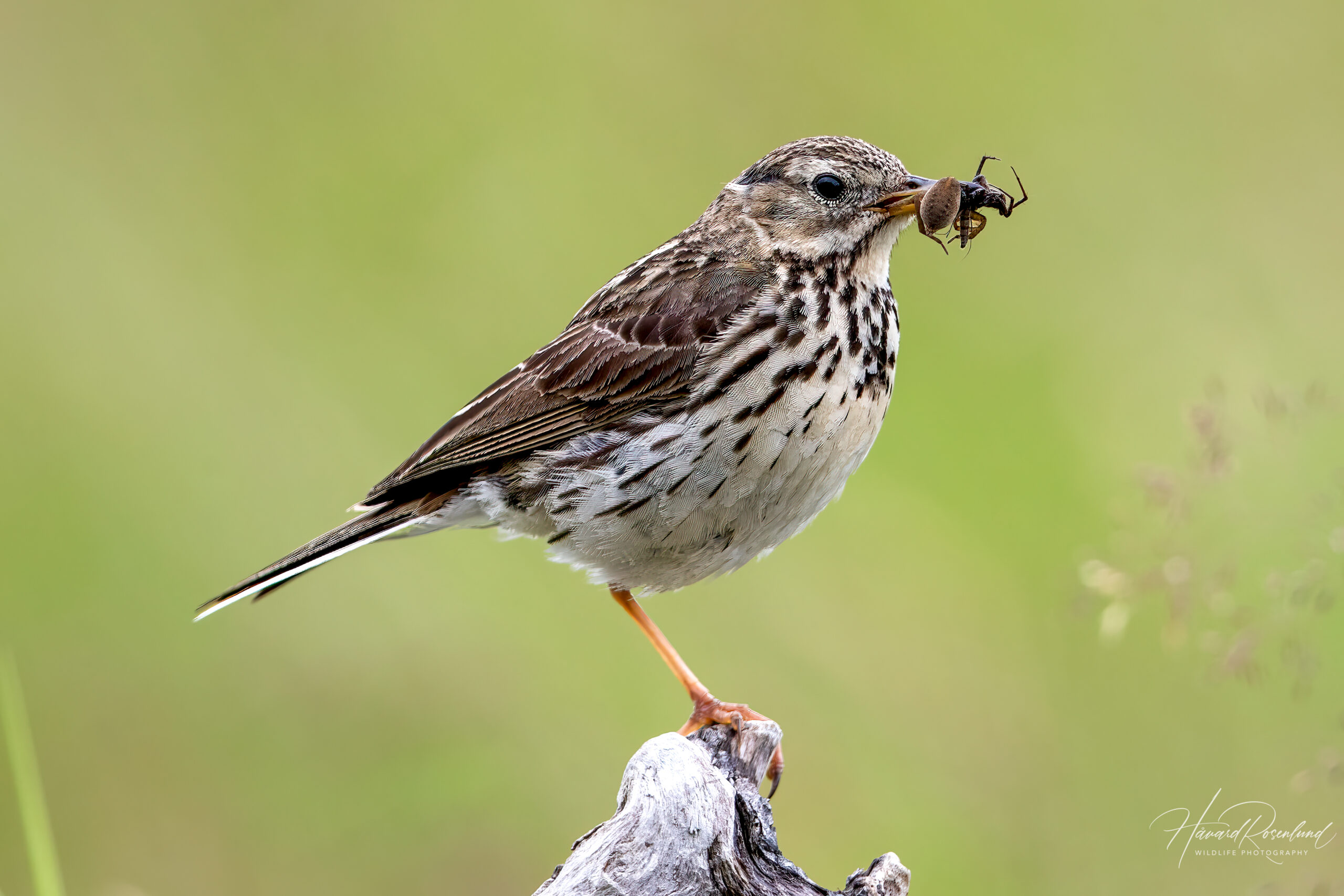
Meadow Pipit
Anthus pratensis
At a glance
Habitat
- Grassland, heath, moorland, bogs, uplands, saltmarsh and other open habitats
Diet
- Mostly insects, spiders and other small invertebrates; more seeds outside breeding
Activity
- Diurnal
Size
- Length: 14.5–15.5 cm Weight: 19 g
Range
- Europe and north-western Asia; winters farther south into the Mediterranean and North Africa
Description
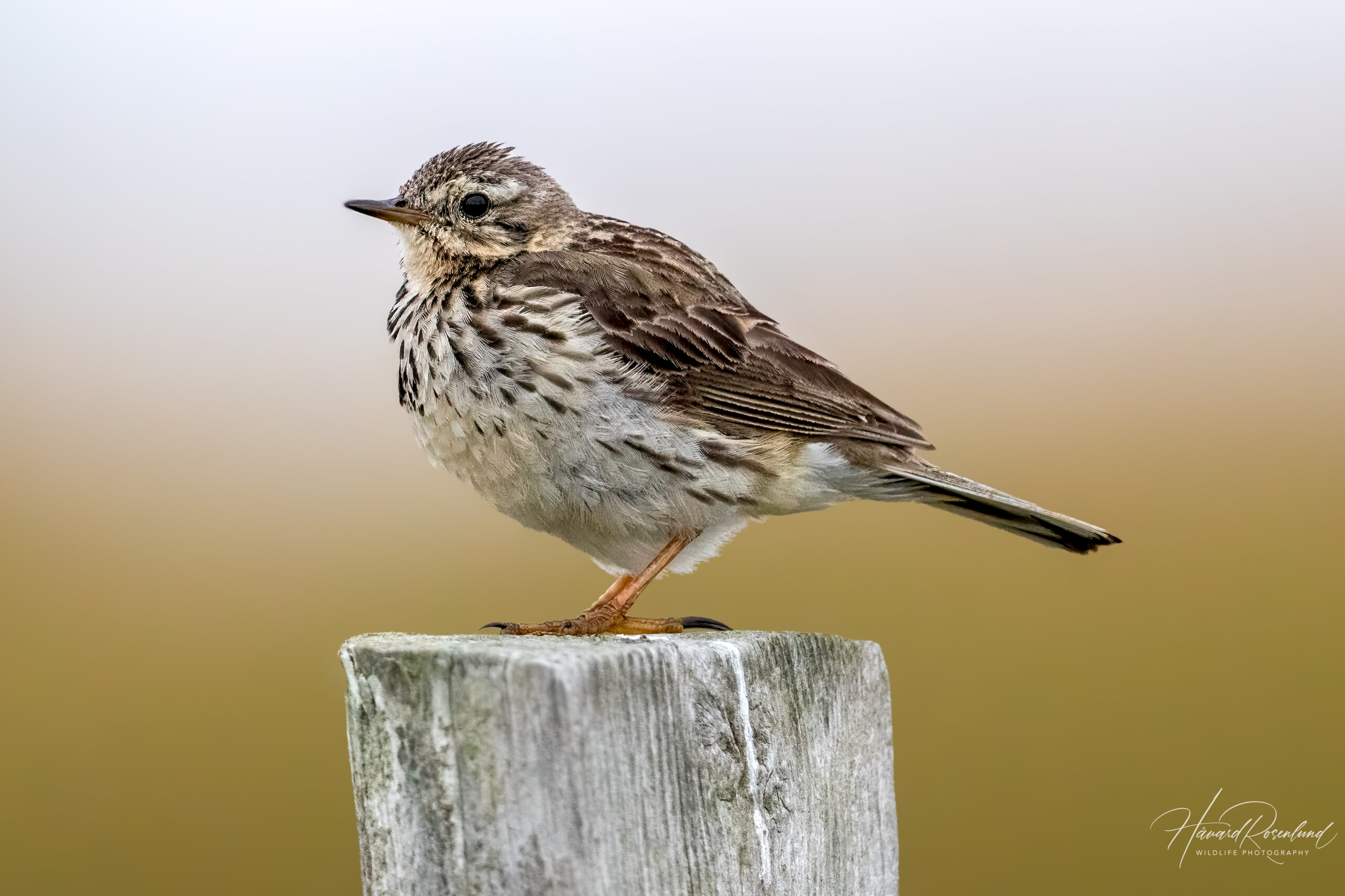
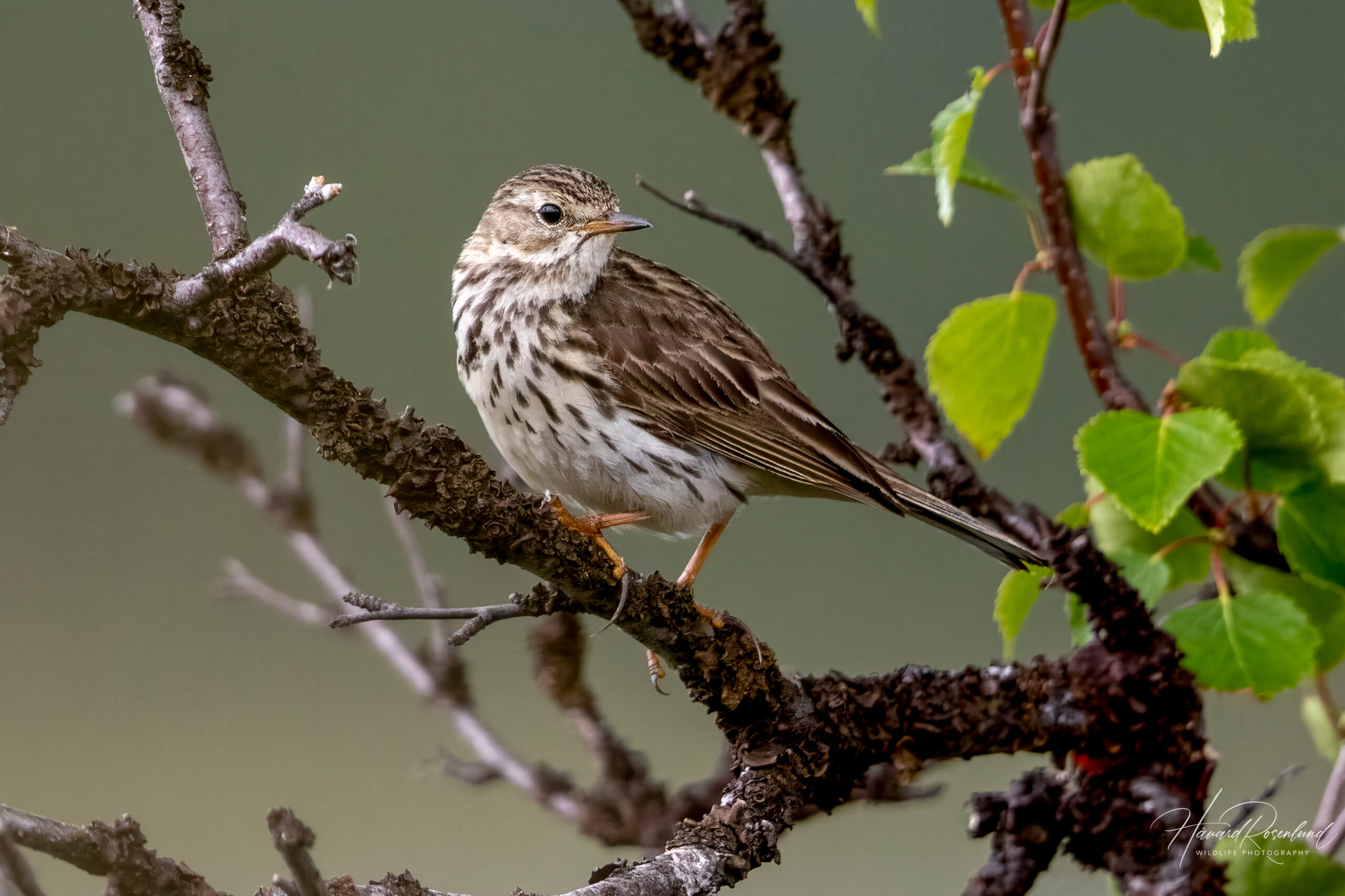
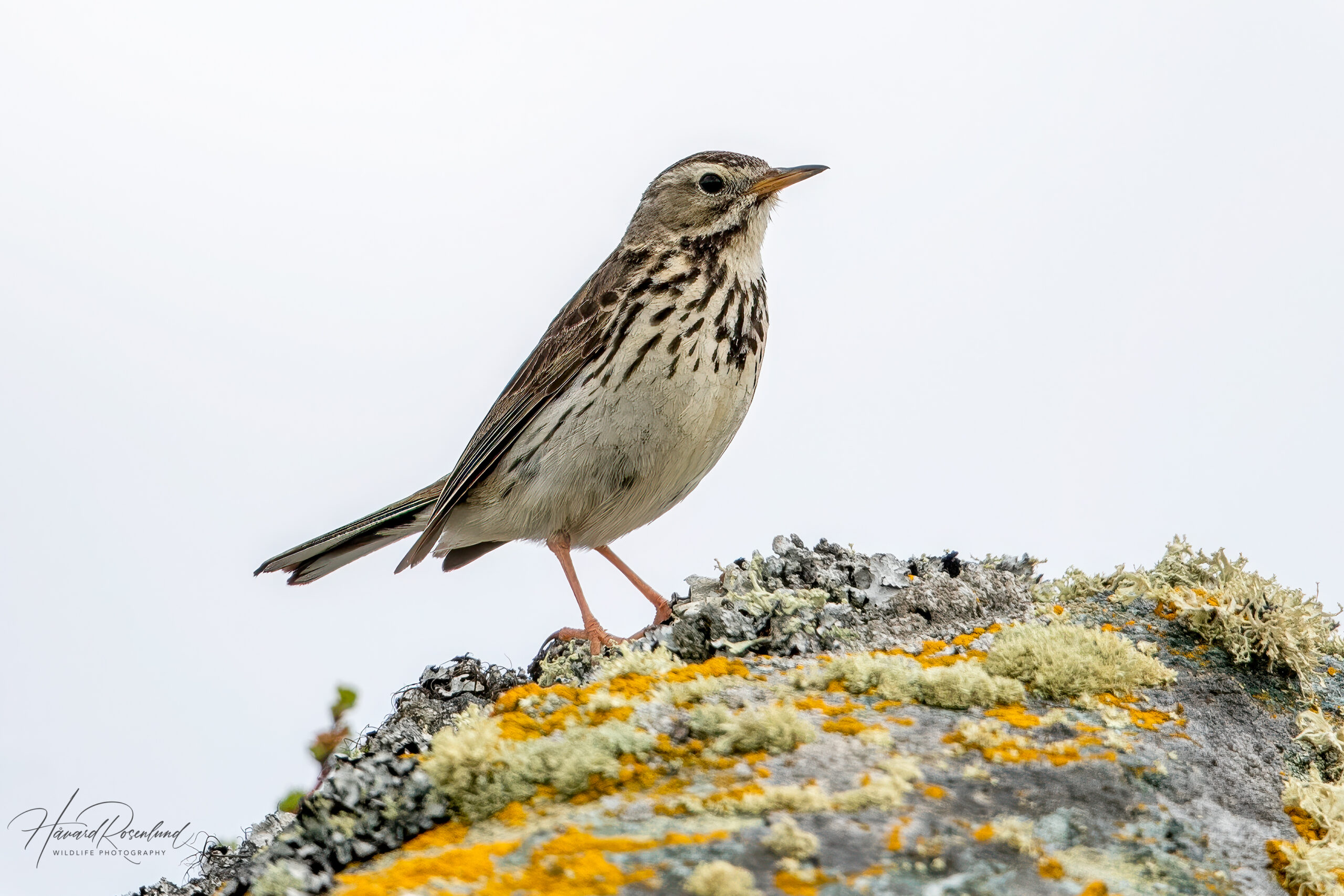
The meadow pipit (Anthus pratensis) is a small, streaked pipit of open landscapes across much of Europe and north-western Asia. Adults are about 14.5–15.5 cm long and weigh around 19 g. The plumage is brown above and pale below with dark streaking across the breast and flanks, while the legs are usually pinkish and the hind claw is notably long. It can be difficult to separate from the tree pipit (Anthus trivialis), but meadow pipits are generally more heavily streaked on the lower flanks, have a finer bill and favour more open, treeless habitats. Voice and breeding display are often more reliable than plumage alone.
Habitat
Meadow pipits inhabit open grassland, heath, moorland, bogs, upland plateaus, saltmarsh and other treeless or sparsely wooded habitats. They are especially associated with cool, open and often moist landscapes with low vegetation, where they can forage on the ground while retaining good visibility around the nest and feeding areas.
Local conditions can matter as much as the broad habitat type. A study of British uplands published in 2020 found that fine-scale microclimate accounted for about a third of the differences in where meadow pipits occurred and had a stronger effect than broad-scale climate at all three spatial scales examined. Birds were more often found in wetter, higher and less sun-exposed sites. Cool, moist slopes may therefore remain suitable as a warming climate makes other parts of the landscape less favourable.
Diet
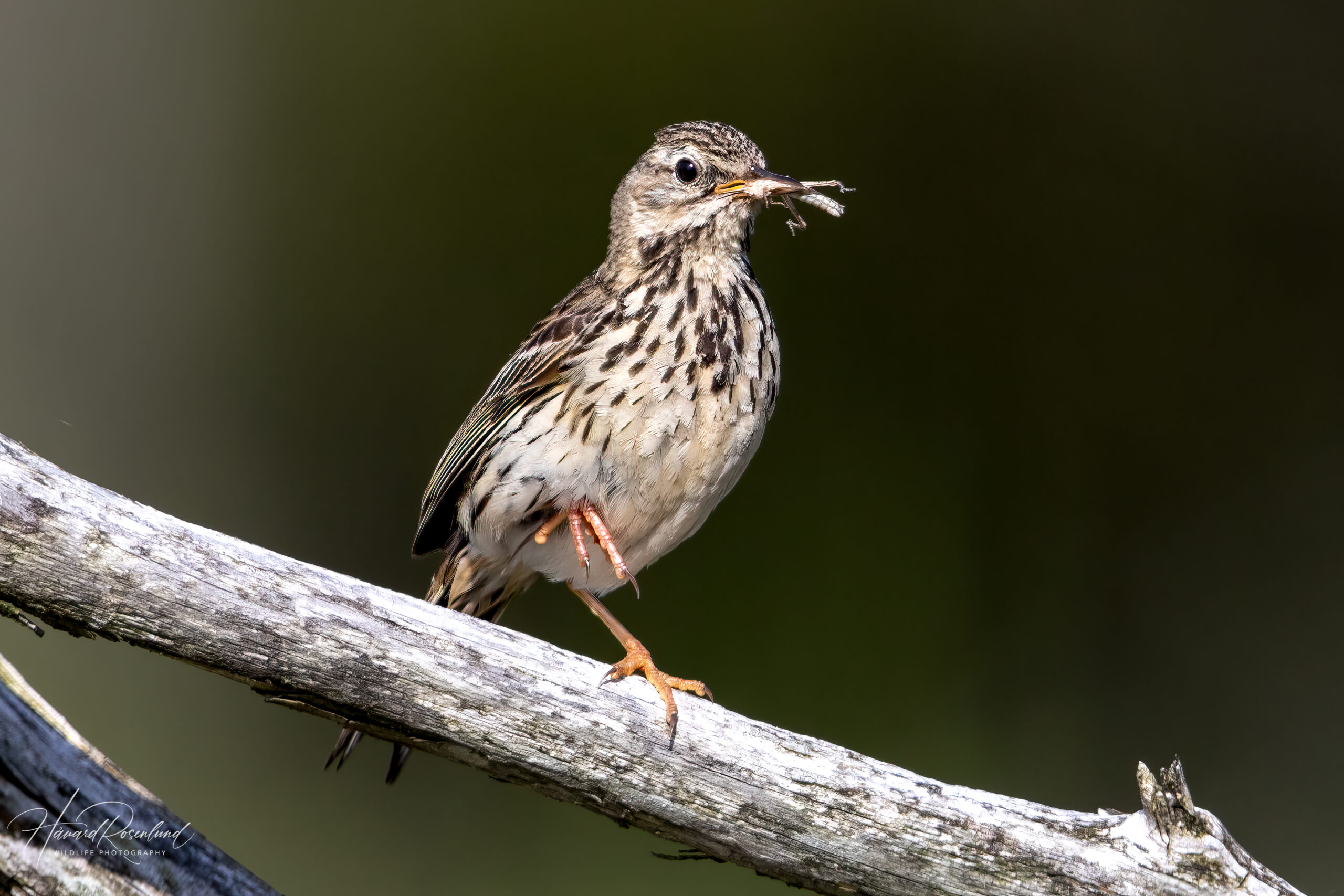
Insects, spiders and other small invertebrates dominate the diet, particularly during the breeding season, when animal prey is also the main food delivered to chicks. Seeds and other plant material become more important outside breeding.
Most food is taken from the ground as the bird walks or runs through short vegetation, picking prey from leaves, stems and the soil surface. Because many important invertebrates depend on moist ground, the species' feeding ecology helps explain its strong association with damp grassland, bogs and cool upland habitats.
Behaviour
Meadow pipits spend most of their time on the ground, walking or running through short vegetation and often pausing upright to scan their surroundings. When disturbed they usually make a short, low flight before settling again, relying heavily on the cryptic plumage to disappear into open grassland and heath.
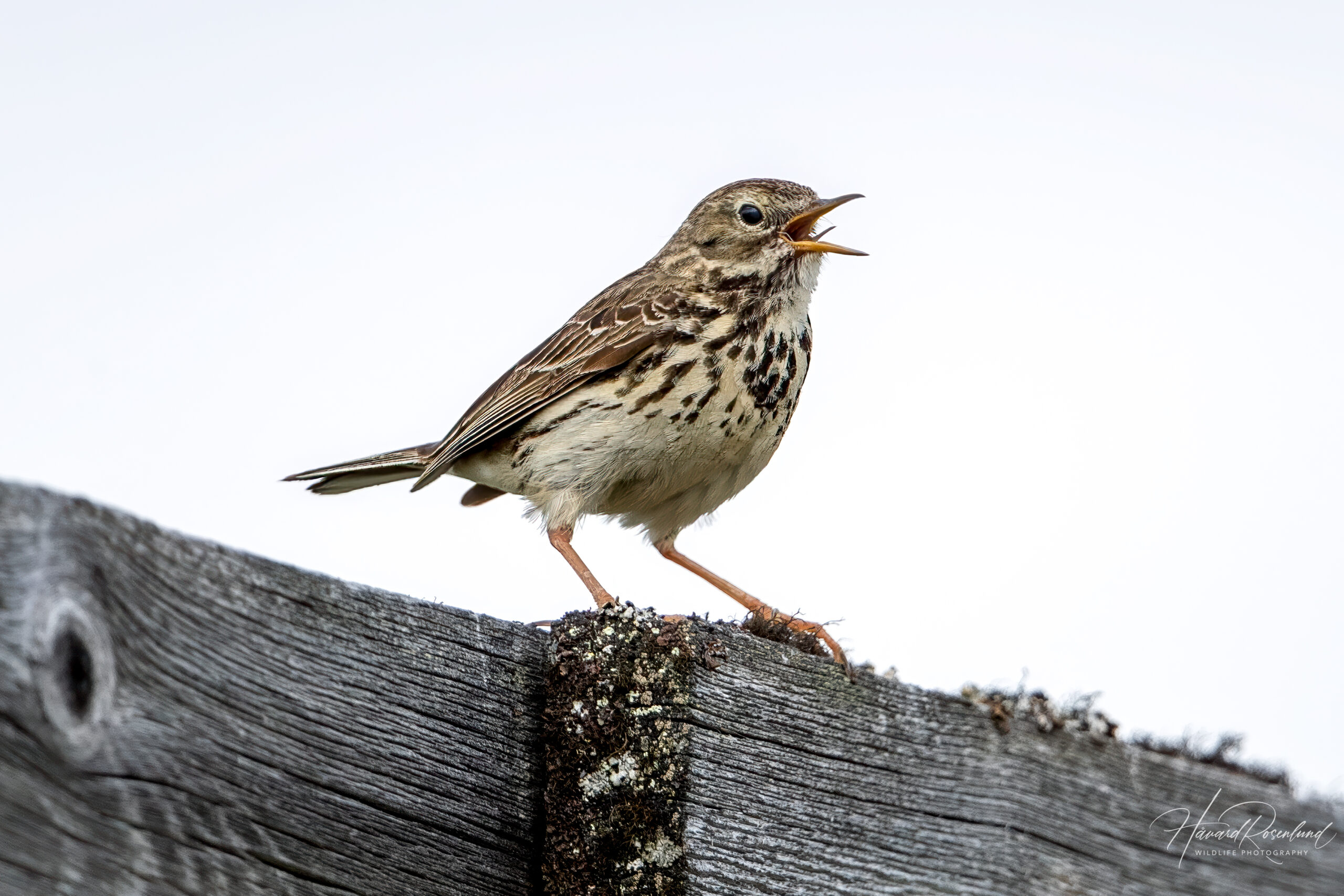
During the breeding season males are territorial and display with a characteristic song flight. A bird rises from the ground or a low perch while singing and then descends in a long, controlled, parachute-like glide with the wings partly spread. The display is used both to defend a territory and attract a mate and is particularly effective in open landscapes where elevated song posts are scarce.
Migration
Migration varies across the range. Birds breeding in northern Europe are largely migratory and move south and west in autumn, while populations in milder western regions are more often resident or make shorter movements. Wintering areas extend through western and southern Europe, the Mediterranean region and into North Africa.
Migration takes place mainly by day and birds can gather in loose flocks, sometimes becoming conspicuous at coastal and other migration watchpoints. Spring return begins early in the milder parts of the range and progresses northwards as conditions improve.
Breeding
The nest is placed on the ground and well concealed among grass, heather or other low vegetation. A typical clutch contains 4–5 eggs. The female incubates for about 13–14 days, and both parents feed the chicks, which leave the nest after roughly another two weeks. Two broods can be raised in favourable conditions.
Meadow pipits are important hosts of the common cuckoo (Cuculus canorus). A Norwegian study from 2001–2014 examined 211 meadow pipit nests in two mountain areas, one in eastern and one in western southern Norway, and found cuckoo parasitism in 6.6% of nests. Rates varied strongly between years and sites, and about 30% of cuckoo eggs were rejected when the pipits abandoned the parasitised nest. There were also signs that climate-driven shifts in breeding dates could change the timing between host and parasite, but the number of parasitised nests was too small for firm conclusions.
Status
The meadow pipit is classified as least concern on the IUCN Red List. It remains widespread and abundant across much of its range, although substantial declines have occurred in parts of Europe.
The 2025 update from the Pan-European Common Bird Monitoring Scheme, based on data through 2024, shows a 35% decline in the European breeding index from 1980 to 2024, but a 6% increase in 2015–2024. The long-term decline has therefore not continued at the same rate in the most recent decade.
Changes in open habitats, grazing and agricultural management, conditions on wintering grounds and climate can all affect local and regional numbers. The global least-concern status therefore coexists with substantial declines in some parts of the range.
Image gallery
Loading map and observations…
Have you seen this species?
Independent species archive
Did you find this species page useful?
Wildlife Vagabond is independently built and maintained. Voluntary support helps cover hosting, maps, data storage and continued improvements to the species archive.
Support Wildlife VagabondSpecies content will remain freely available.
References
Information about the species’ global distribution and status is based primarily on global Red List data. See the references below for details.
- Berstad, J. R., Stokke, B., & Moksnes, A. (2019). Brood parasitism on Meadow Pipits Anthus pratensis by Common Cuckoos Cuculus canorus in two mountain areas in Norway. Ornis Norvegica, 42, 7-14. https://doi.org/10.15845/on.v42i0.2708
- BirdLife International. (n.d.). Meadow Pipit species factsheet. https://datazone.birdlife.org/species/factsheet/meadow-pipit-anthus-pratensis
- British Trust for Ornithology. (n.d.). Meadow Pipit. https://www.bto.org/learn/about-birds/birdfacts/meadow-pipit
- International Union for Conservation of Nature. (n.d.). Meadow Pipit. The IUCN Red List of Threatened Species. https://www.iucnredlist.org/species/22718556/154480081
- Massimino, D., Beale, C. M., Suggitt, A. J., Crick, H. Q. P., Macgregor, N. A., Carroll, M. J., Maclean, I. M. D., & Pearce-Higgins, J. W. (2020). Can microclimate offer refuge to an upland bird species under climate change? Landscape Ecology, 35(9), 1907-1922. https://doi.org/10.1007/s10980-020-01069-7
- Pan-European Common Bird Monitoring Scheme. (n.d.). Species trends, 2025 update. https://pecbms.info/trends-and-indicators/species-trends/