
European Goldfinch
Carduelis carduelis
At a glance
Habitat
- Farmland margins, rough ground, open woodland, parks and gardens rich in seed-producing plants
Diet
- Mostly small seeds, especially thistles and other composite plants; some invertebrates
Activity
- Diurnal
Size
- Length: 12–13 cm Weight: 15.8 g
Range
- Europe, North Africa and western to central Asia
Description
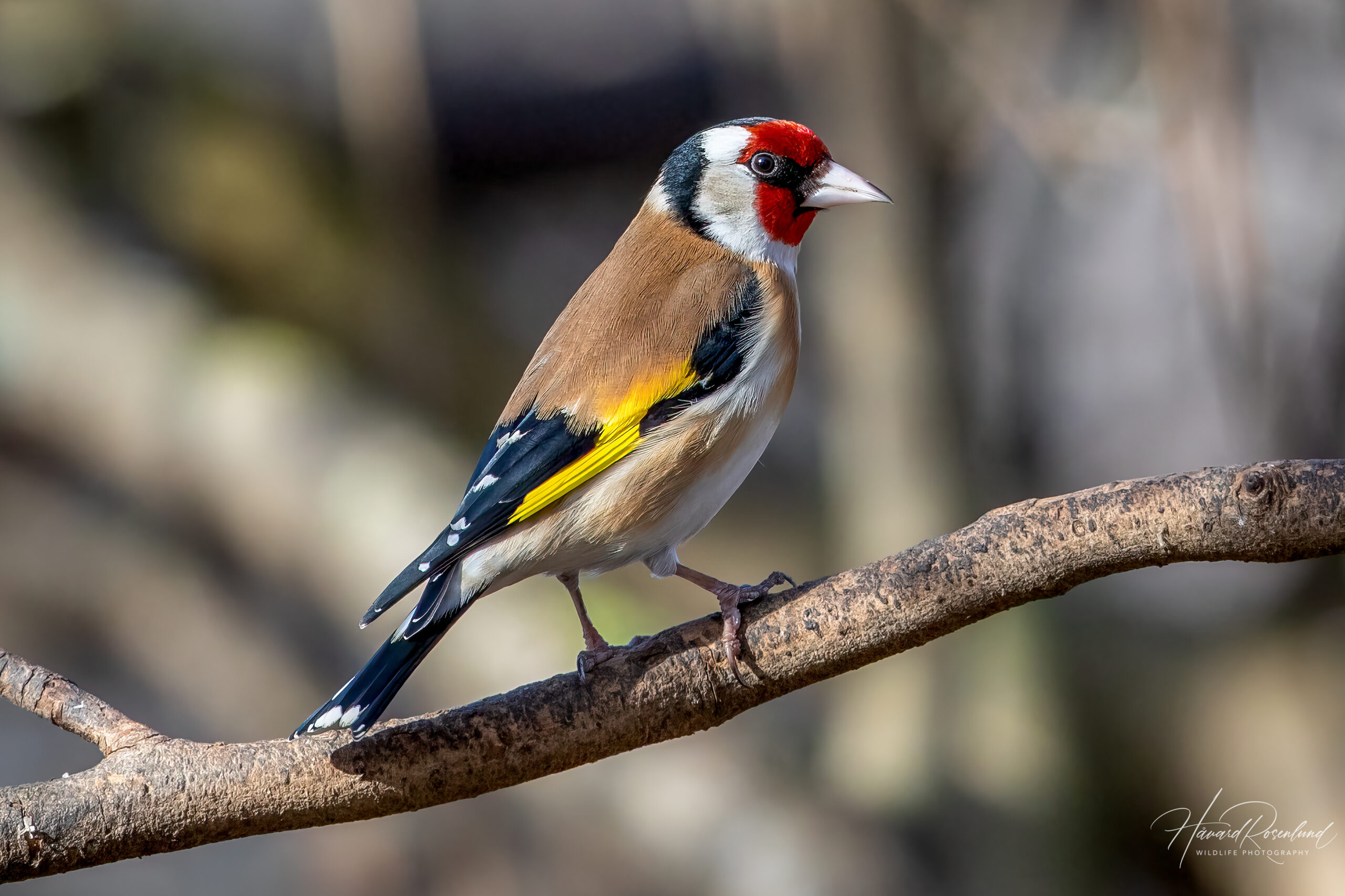
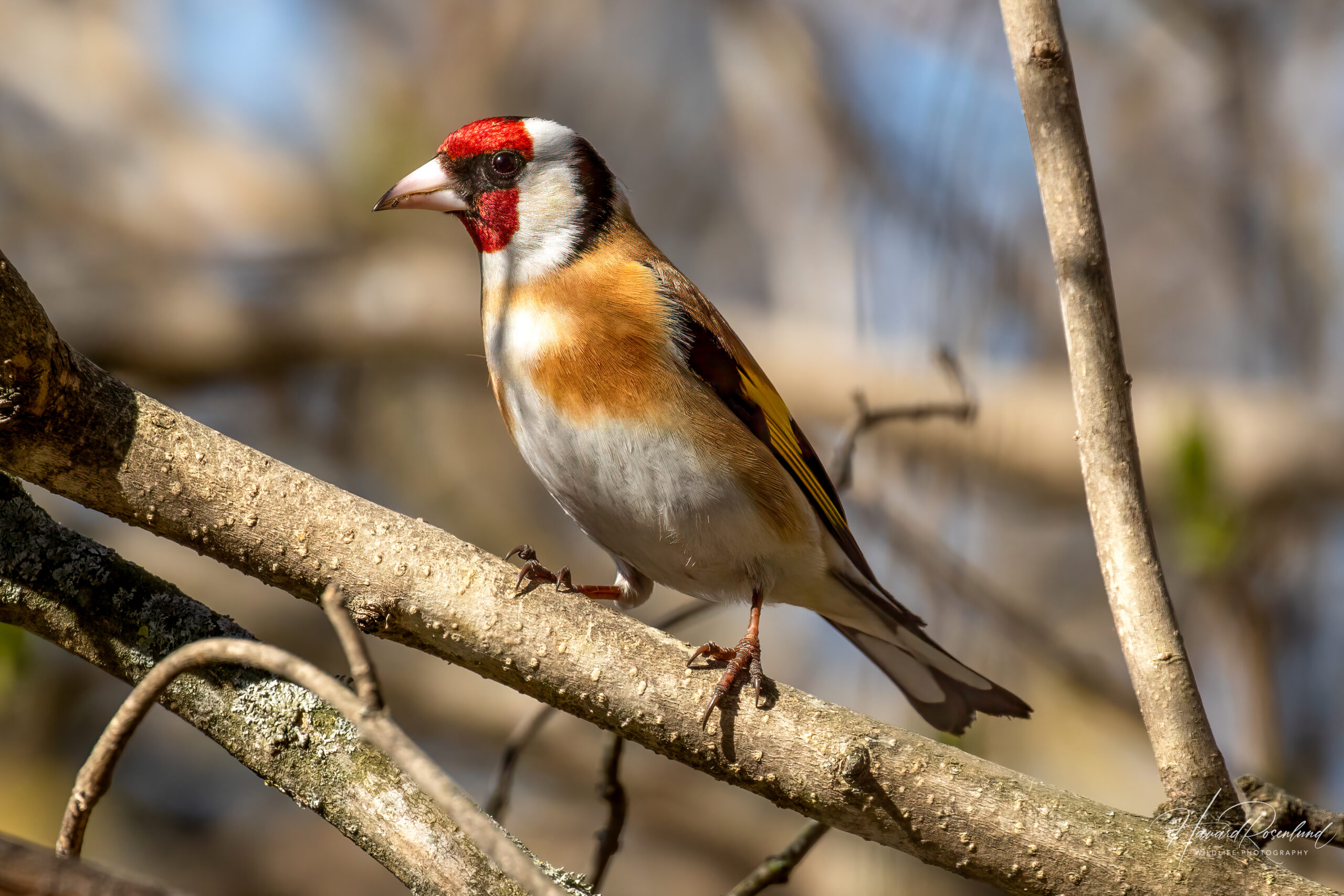
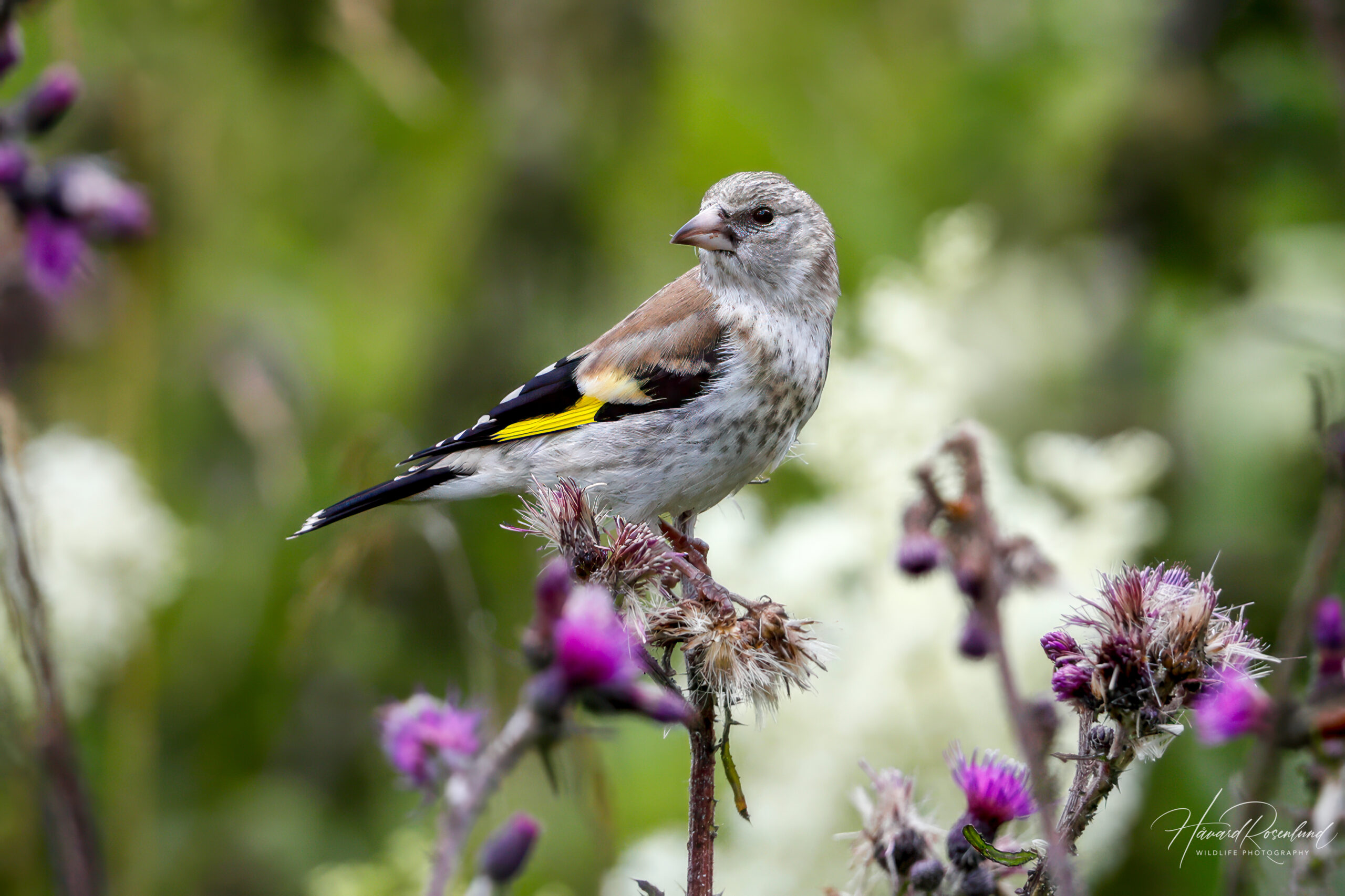
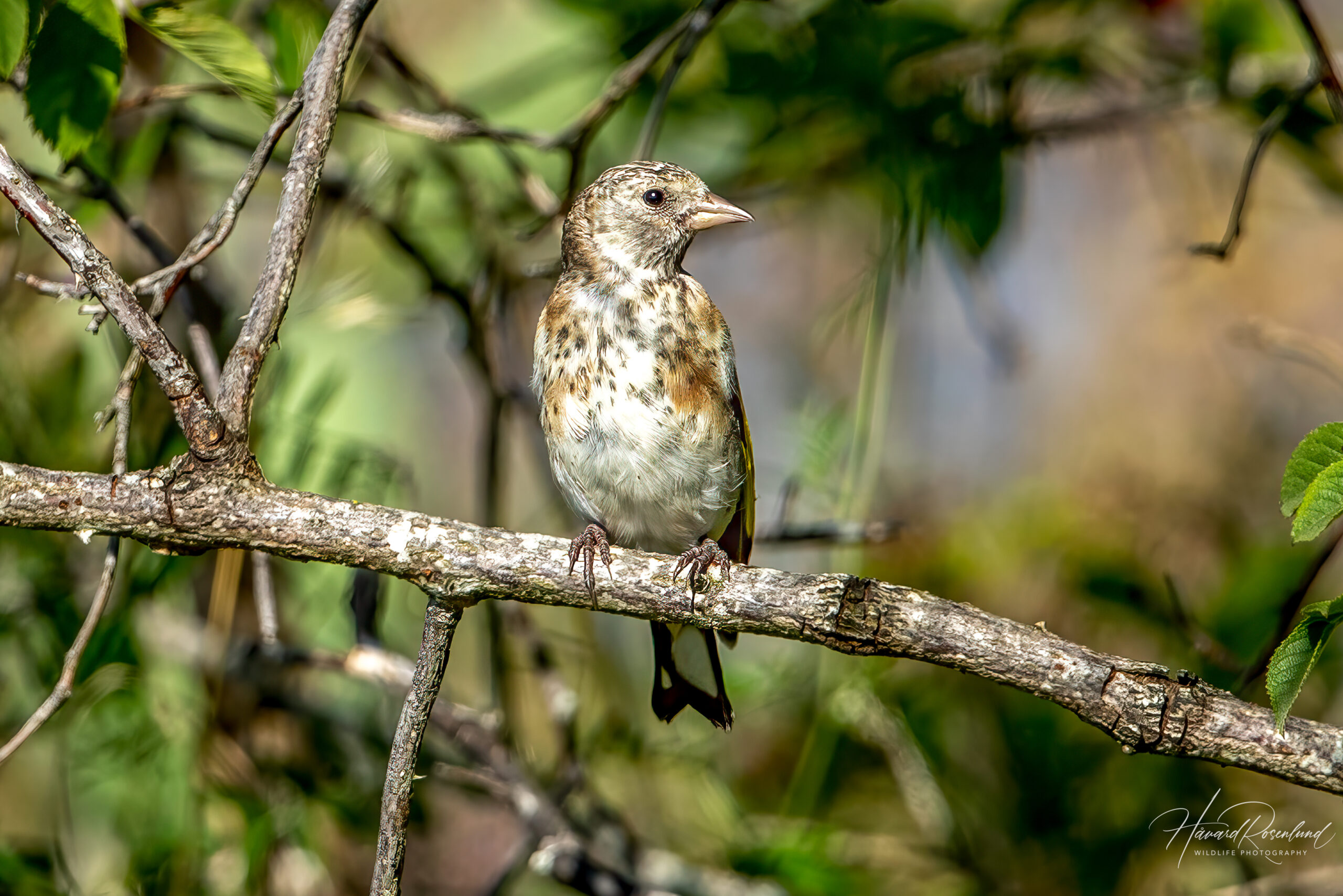
The European goldfinch (Carduelis carduelis) is a small and unmistakable finch native across Europe, North Africa and western to central Asia. Adults are about 12–13 cm long and weigh around 15.8 g. Both sexes have a vivid red face, black-and-white head, warm-brown back and flanks, and black wings crossed by a broad bright-yellow band that is striking in flight. Juveniles lack the red, black and white head pattern until after their first moult.
The bill is relatively long, fine and pointed for a finch, an adaptation that allows the bird to extract small seeds from narrow seedheads. The combination of red face and yellow wing bar separates adults readily from other European finches, while juveniles can be recognised by the same bold yellow-and-black wing pattern despite their plainer head. The voice is equally characteristic, with light, liquid, tinkling contact calls that are also woven into the song.
Habitat
Goldfinches favour open, structurally varied landscapes with scattered trees and abundant seed-producing herbaceous plants. Typical habitats include farmland margins, rough ground, orchards, open woodland, parks and gardens. Areas that retain thistles and other tall seed-bearing plants are particularly valuable outside the breeding season.
A mixture of trees and shrubs for nesting and open, herb-rich ground for feeding suits the species particularly well. This combination allows goldfinches to thrive in both traditional agricultural landscapes and many urban or suburban green spaces.
Diet
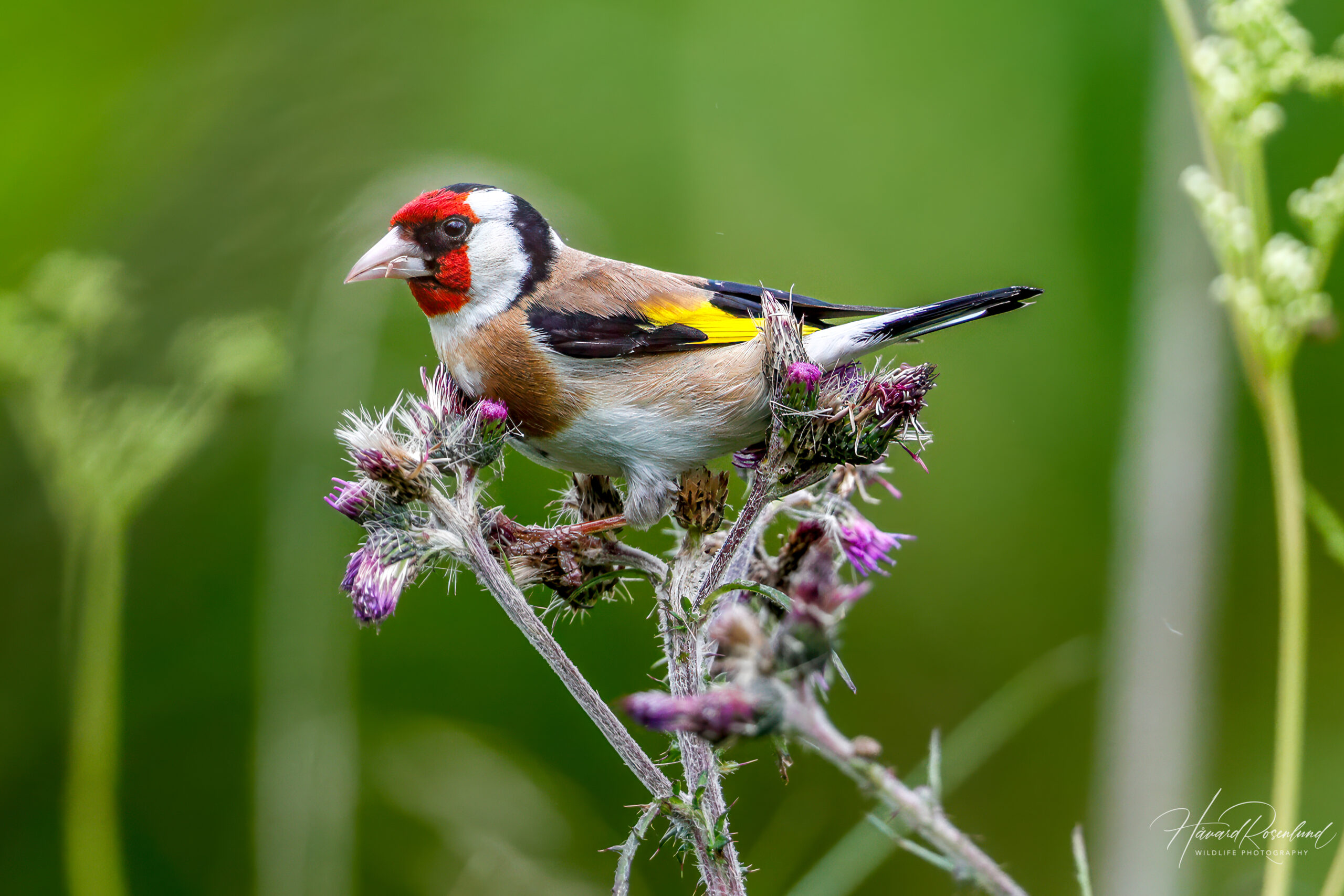
Small seeds dominate the diet, especially those of thistles and other composite plants. Goldfinches cling directly to seedheads and use the narrow bill to extract seeds that are difficult for heavier-billed finches to reach. They also take seeds from grasses and a wide range of other herbaceous plants, while small invertebrates supplement the diet.
A field study of breeding goldfinches in orchards found that the birds tended to choose seeds according to how much energy they gained for the time spent handling them. Some poorer choices were used mainly when better foods were unavailable, showing that a seed’s energy content alone does not determine whether it is worth taking.
Goldfinches often forage socially even during breeding and form larger flocks outside the breeding season. A second field study found that birds in larger flocks spent less time watching for danger and could eat up to 2.3 times as many seed kernels in the same amount of time as solitary birds. Most of this advantage was already reached in flocks of about eight birds; larger flocks added relatively little.
Migration
The species is partially migratory. Many birds in western and southern Europe remain within the same general region throughout the year, while populations from colder northern and eastern areas are more likely to move south and west in autumn.
Movements are flexible and strongly influenced by food availability. Winter flocks can concentrate quickly wherever weed seeds or supplementary food are abundant, and young birds generally disperse more widely than established adults.
Breeding
Breeding begins relatively late for a small finch. The female builds a neat, compact cup nest high in a tree or shrub using fine grasses, moss, plant fibres and spider silk, with softer material lining the interior. A typical clutch contains about five eggs.
The female incubates the eggs for roughly 12 days and is frequently fed by the male. Both parents feed the nestlings, largely by regurgitating softened food. Young normally leave the nest after about 14–16 days. Two broods are common in favourable areas, and a third attempt can occasionally occur.
Cultural significance
The goldfinch has a distinctive place in European art. In Christian painting it was often shown with the Christ Child and became associated with Christ’s later suffering and crucifixion, partly through the bird’s fondness for thistles and a legend linking its red face with the Crown of Thorns.
One of the most famous individual bird paintings is Carel Fabritius’ The Goldfinch from 1654, now in the Mauritshuis in The Hague. The species has continued to inspire art, literature and music; its song, for example, helped inspire Antonio Vivaldi’s concerto Il Gardellino.
Relationship with humans
Goldfinches have been kept as cage birds in Europe for centuries because of their appearance, song and ability to learn simple behaviours. Fabritius’ painting shows a chained bird beside a feeding box, reflecting a period when tame goldfinches could be trained to draw water with a tiny bucket or open their own food container.
In parts of North Africa, this tradition has also placed heavy pressure on wild populations. A study published in 2017 documented a drastic contraction of the species’ range in the western Maghreb associated with widespread trapping and illegal trade. A further study published in 2026 found that strong demand for pet goldfinches remains a major pressure in northern Algeria and linked it to a severe decline there over the previous three decades.
People also moved the species well beyond its native range. About 500 goldfinches were released by acclimatisation societies in New Zealand between 1862 and 1883, and the species is now widely naturalised there. Introduced populations also occur in south-eastern Australia and several other regions. These populations are a lasting consequence of nineteenth-century efforts to establish familiar European birds overseas.
Status
The European goldfinch is classified as least concern on the IUCN Red List. It has a very large range and remains common across much of Europe and western Asia.
The 2025 update from the Pan-European Common Bird Monitoring Scheme, based on data through 2024, shows that the European breeding index increased by 155% from 1980 to 2024. Over the most recent ten-year period, 2015–2024, the change was only 1%. The strong long-term increase has therefore largely levelled off at continental scale.
Image gallery
Loading map and observations…
Have you seen this species?
Independent species archive
Did you find this species page useful?
Wildlife Vagabond is independently built and maintained. Voluntary support helps cover hosting, maps, data storage and continued improvements to the species archive.
Support Wildlife VagabondSpecies content will remain freely available.
References
Information about the species’ global distribution and status is based primarily on global Red List data. See the references below for details.
- BirdLife International. (n.d.). European Goldfinch species factsheet. https://datazone.birdlife.org/species/factsheet/european-goldfinch-carduelis-carduelis
- British Trust for Ornithology. (n.d.). Goldfinch. https://www.bto.org/learn/about-birds/birdfacts/goldfinch
- Conder, P. J. (1948). The breeding biology and behaviour of the continental goldfinch <i>Carduelis carduelis carduelis</i>. Ibis, 90(4), 493-525. https://doi.org/10.1111/j.1474-919X.1948.tb01713.x
- Glück, E. E. (1985). Seed preference and energy intake of Goldfinches Carduelis carduelis in the breeding season. Ibis, 127(4), 421-429. https://doi.org/10.1111/j.1474-919X.1985.tb04838.x
- Glück, E. (1986). Flock size and habitat-dependent food and energy intake of foraging Goldfinches. Oecologia, 71(1), 149-155. https://doi.org/10.1007/BF00377335
- International Union for Conservation of Nature. (n.d.). European Goldfinch. The IUCN Red List of Threatened Species. https://www.iucnredlist.org/species/103764950/152615959
- Khelifa, R., Zebsa, R., Amari, H., Mellal, M. K., Bensouilah, S., Laouar, A., & Mahdjoub, H. (2017). Unravelling the drastic range retraction of an emblematic songbird of North Africa: potential threats to Afro-Palearctic migratory birds. Scientific Reports, 7(1), 1092. https://doi.org/10.1038/s41598-017-01103-w
- Louadj, A., Razkallah, I., Atoussi, S., & Bara, M. (2026). Characterizing pet goldfinch owners in Northern Algeria: a baseline for behavior-change strategies. Journal for Nature Conservation, 92, 127303. https://doi.org/10.1016/j.jnc.2026.127303
- Mauritshuis. (n.d.). Carel Fabritius, The Goldfinch. https://www.mauritshuis.nl/en/our-collection/artworks/605-the-goldfinch
- New Zealand Birds Online. (n.d.). European Goldfinch. https://www.nzbirdsonline.org.nz/species/european-goldfinch
- Pan-European Common Bird Monitoring Scheme. (n.d.). Trends of wild birds in Europe, 2025 update. https://pecbms.info/trends-of-wild-birds-in-europe-2025-update/
- Te Ara – Introduced land birds. (n.d.). Goldfinches. https://teara.govt.nz/en/introduced-land-birds/page-5
- The National Gallery. (n.d.). National Gallery, London – Goldfinches in art. https://www.nationalgallery.org.uk/paintings/glossary/goldfinches