
Eastern Golden Weaver
Ploceus subaureus
At a glance
Habitat
- Reedbeds, floodplains, estuaries, lowland river valleys and adjacent grassland
Diet
- Seeds and insects; also nectar
Activity
- Diurnal; forages on the ground and in vegetation
Size
- Length: 15–16 cm Weight: 26–35 g
Range
- Eastern and southeastern Africa, from Kenya south to eastern South Africa
Description
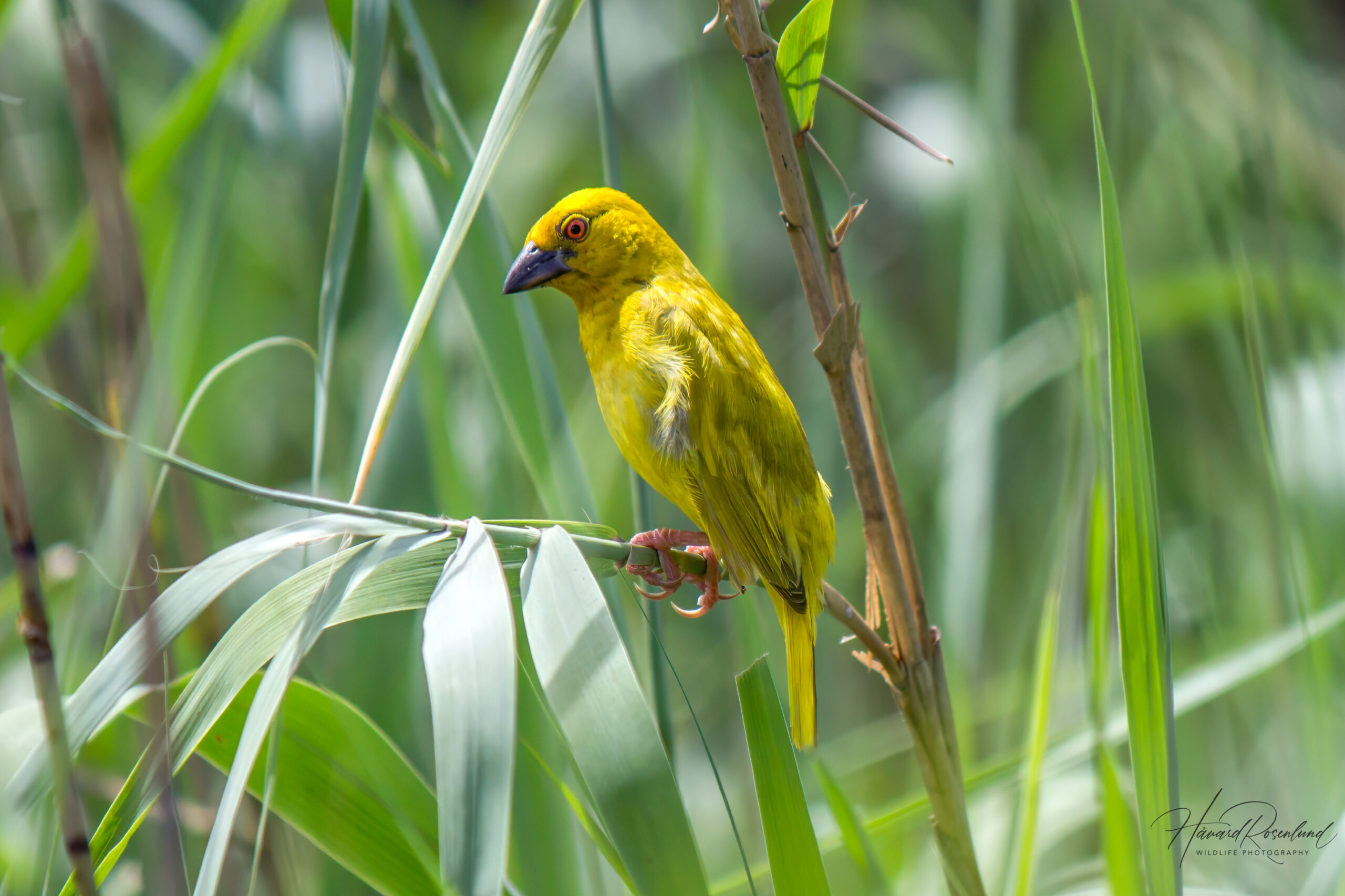
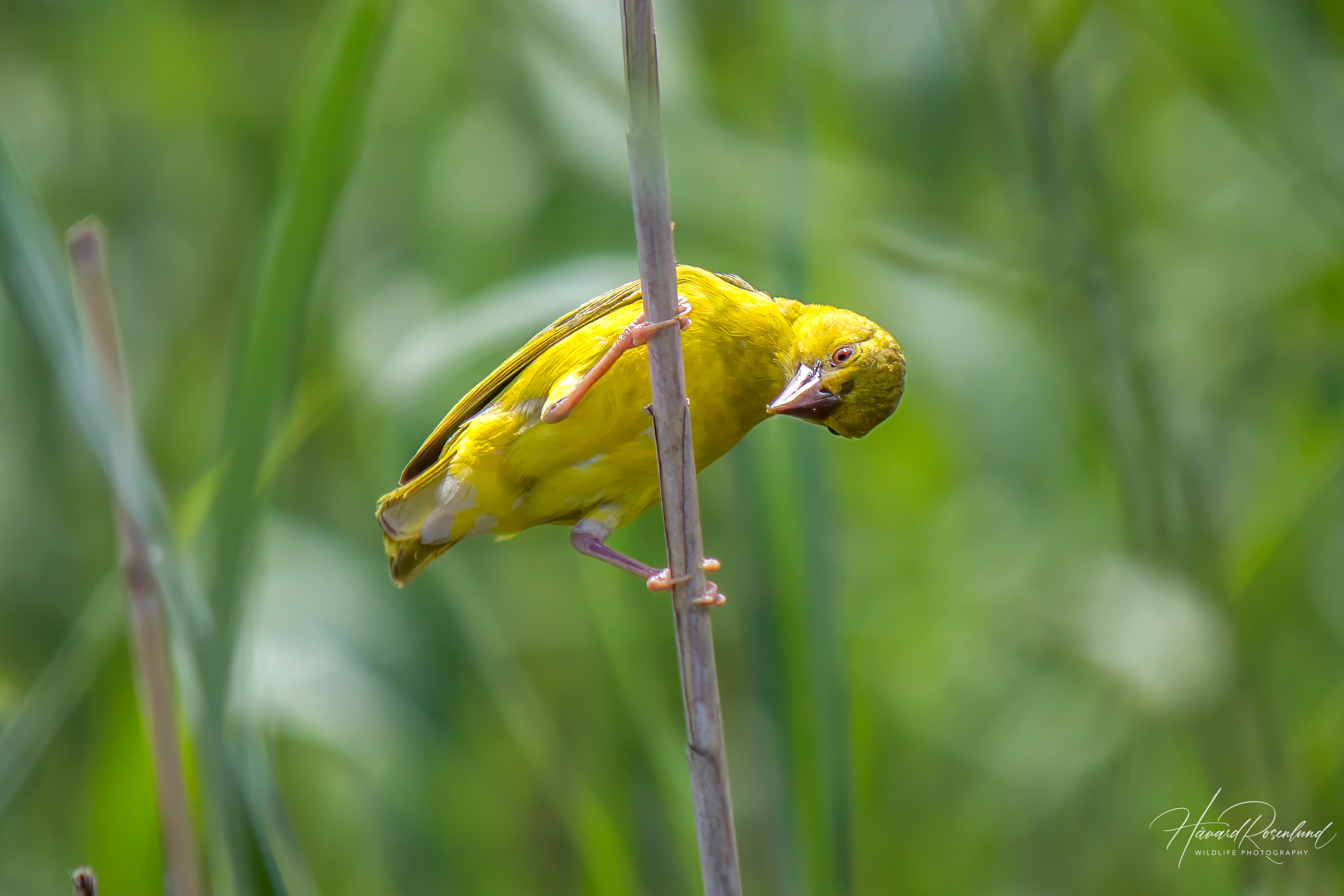
The eastern golden weaver (Ploceus subaureus) is a bright yellow weaver of eastern and southeastern Africa. Adults are about 15–16 cm long; females weigh around 26 g and males around 35 g. Breeding males are rich golden yellow with a reddish iris and dark bill, while females are duller yellowish birds with a brown to reddish-brown iris and a paler bill.
The species can overlap with other yellow weavers, so eye colour, bill colour, habitat and geographic range are useful alongside plumage. Its range extends from southern Somalia through Kenya and Tanzania, and on through Malawi and Mozambique to eastern South Africa.
Habitat
Eastern golden weavers are strongly associated with lowland wetlands and moist open country. Reedbeds, river floodplains, estuaries, marshy grassland and well-vegetated river valleys provide both nesting sites and nearby feeding habitat.
The species also uses gardens, cultivated land and other modified habitats where dense waterside vegetation remains. Breeding colonies are especially dependent on suitable reeds, sedges or hanging vegetation over or close to water.
Diet
The diet includes grass seeds and other small seeds together with insects and other invertebrates. Nectar is also taken. Insects become particularly important while the chicks are growing, even though seeds form an important part of the adult diet.
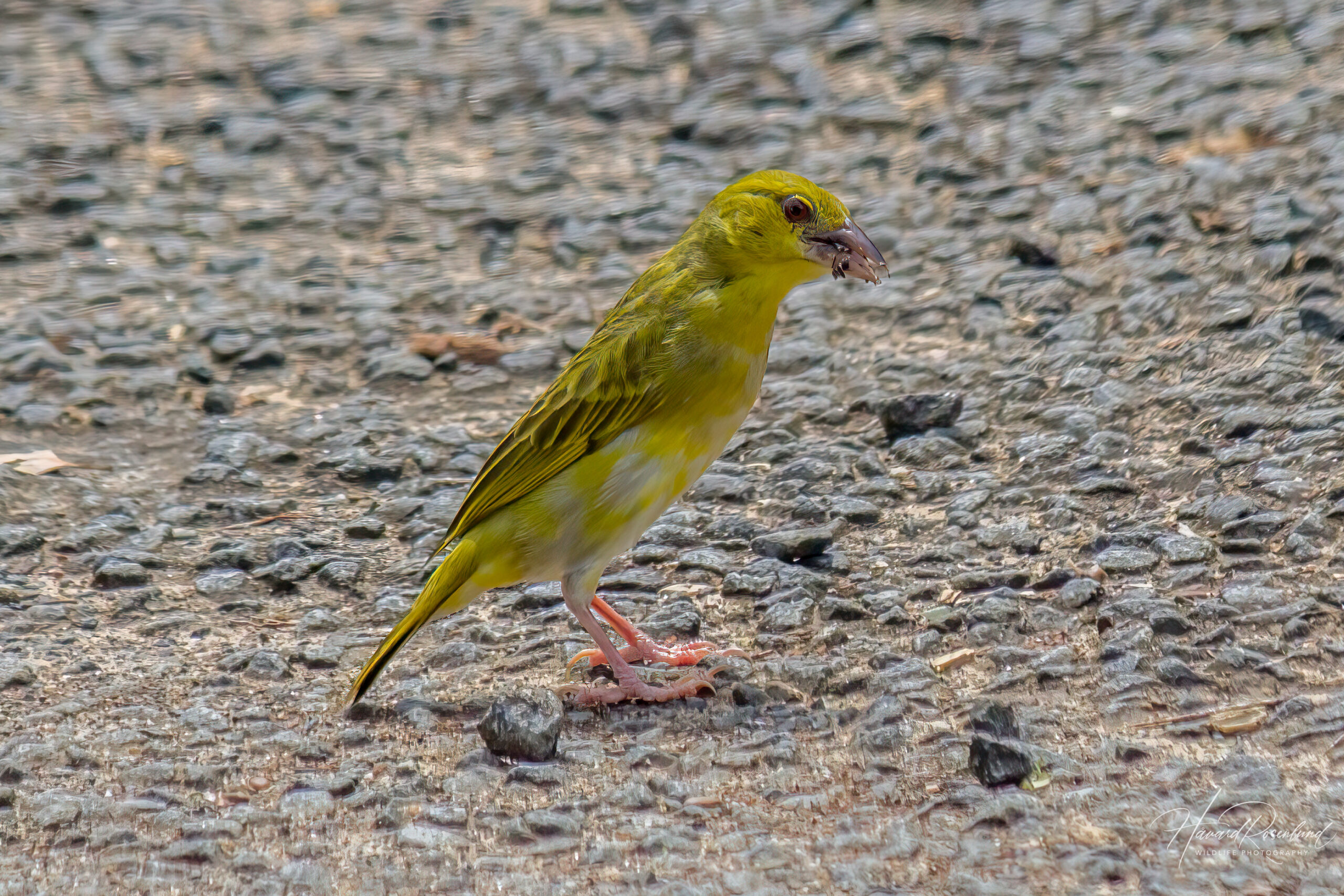
Eastern golden weavers forage on the ground and among grasses and reeds, picking seeds and small invertebrates from the substrate and vegetation. Winged termites and other flying insects are also caught in the air.
Breeding
Eastern golden weavers breed colonially and are generally described as polygynous, with males able to mate with several females. Males may construct several nests. Colonies often contain around 10–20 nests, although larger aggregations can occur where suitable wetland vegetation is concentrated. Breeding timing varies geographically; in southern Africa egg-laying occurs mainly from September to February, with a clear peak from September to December.
The male weaves a rounded nest from strips of grass or other plant material. The entrance faces downward, but unlike the nests of some other weavers it lacks a long entrance tunnel. In wetlands it is commonly attached to one or two reed stems about 1–2 m above water, while trees and other supports are also used. A female that accepts the nest completes the interior with softer lining material.
Clutches contain two to four eggs and the female incubates alone. The young are fed largely on insects and leave the nest after about 19–22 days. The concentration of nests above wet ground or water may reduce access for some predators, although colonies remain exposed to snakes, birds and other nest predators able to reach the vegetation.
Status
The eastern golden weaver is classified as least concern on the IUCN Red List. It remains widespread in suitable lowland habitats along eastern Africa.
Wetland drainage, clearing of reedbeds and changes to riverine or coastal vegetation can remove local colony sites, but the species faces no major range-wide threat. Retaining dense emergent vegetation around wetlands is therefore particularly important at the local scale.
Image gallery
Loading map and observations…
Have you seen this species?
Independent species archive
Did you find this species page useful?
Wildlife Vagabond is independently built and maintained. Voluntary support helps cover hosting, maps, data storage and continued improvements to the species archive.
Support Wildlife VagabondSpecies content will remain freely available.
References
Information about the species’ global distribution and status is based primarily on global Red List data. See the references below for details.
- Biodiversity Explorer – Ploceus subaureus. (n.d.). habitat, diet and breeding, based on Roberts Birds of Southern Africa. https://www.biodiversityexplorer.info/birds/ploceidae/ploceus_subaureus.htm
- BirdLife International. (n.d.). Ploceus subaureus species factsheet. https://datazone.birdlife.org/species/factsheet/african-golden-weaver-ploceus-subaureus
- BirdLife Norge. (n.d.). Eastern Golden Weaver / gullvever. https://www.birdlife.no/fuglekunnskap/navn/
- Birds4Africa – Eastern Golden Weaver. (n.d.). names, nest structure and breeding biology. https://birds4africa.org/weaver-research/weavers/800a/
- International Union for Conservation of Nature. (n.d.). Eastern Golden Weaver (Ploceus subaureus). The IUCN Red List of Threatened Species. https://www.iucnredlist.org/species/22718811/94597875