
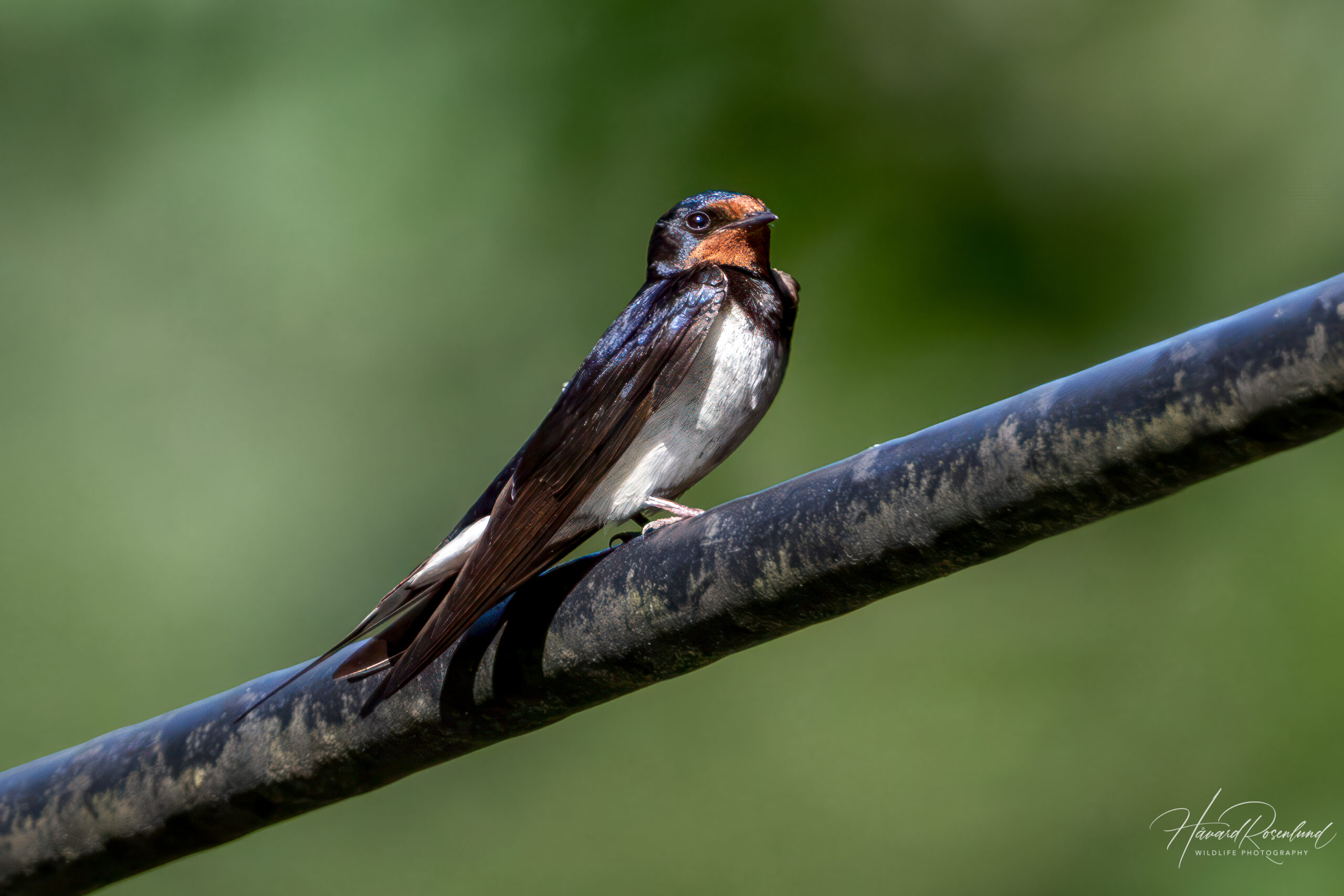
Barn Swallow
Hirundo rustica
At a glance
Habitat
- Open farmland, grassland, wetlands, coasts and other open areas near nesting structures
Diet
- Flying insects, especially flies; also beetles, bees, wasps, ants and moths
Activity
- Diurnal; feeds almost entirely in flight
Size
- Length: 15–19 cm Weight: 17–20 g
Range
- Breeds across much of the Northern Hemisphere; long-distance migrants winter across Africa, southern Asia, Australasia and the Americas depending on population
Description
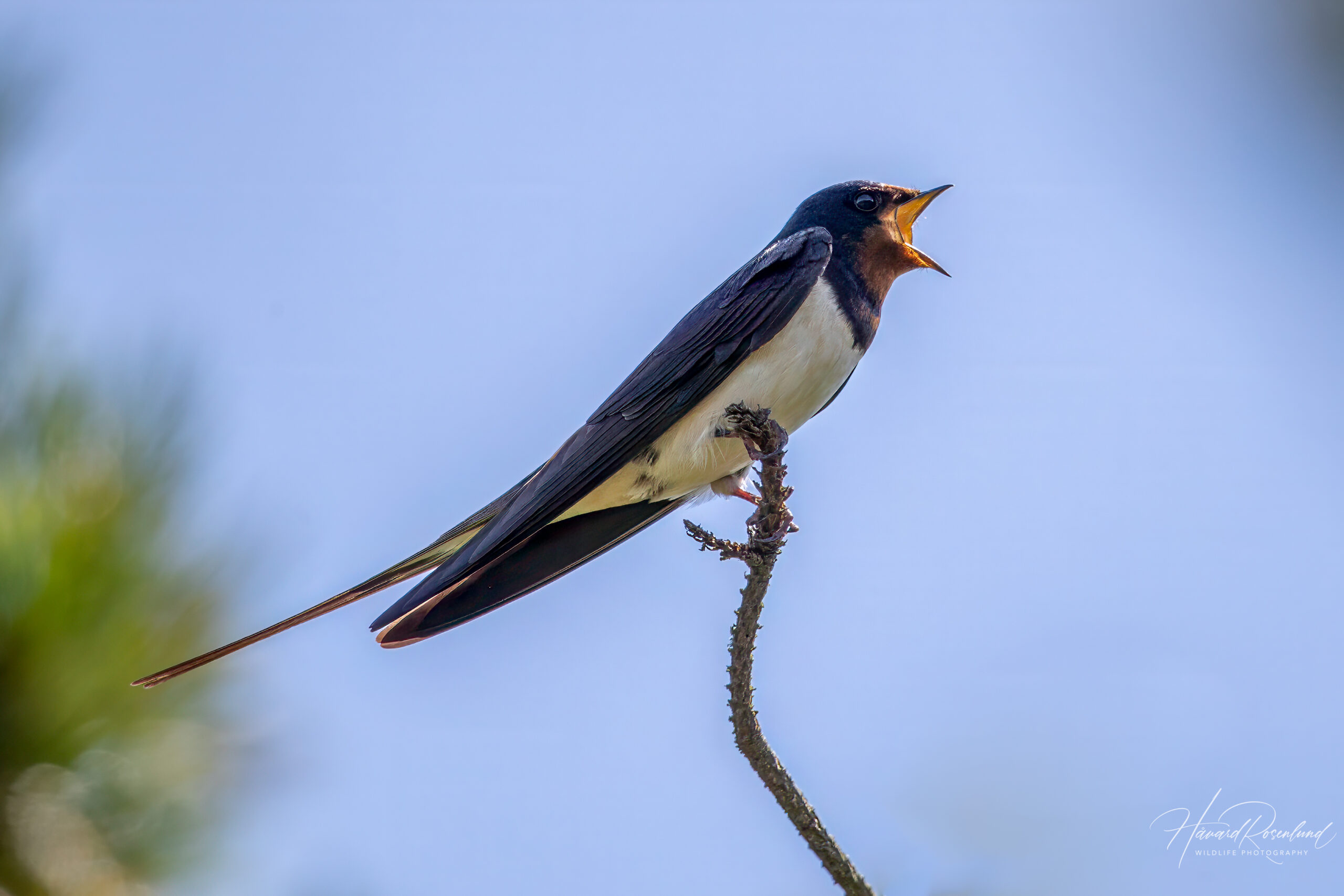
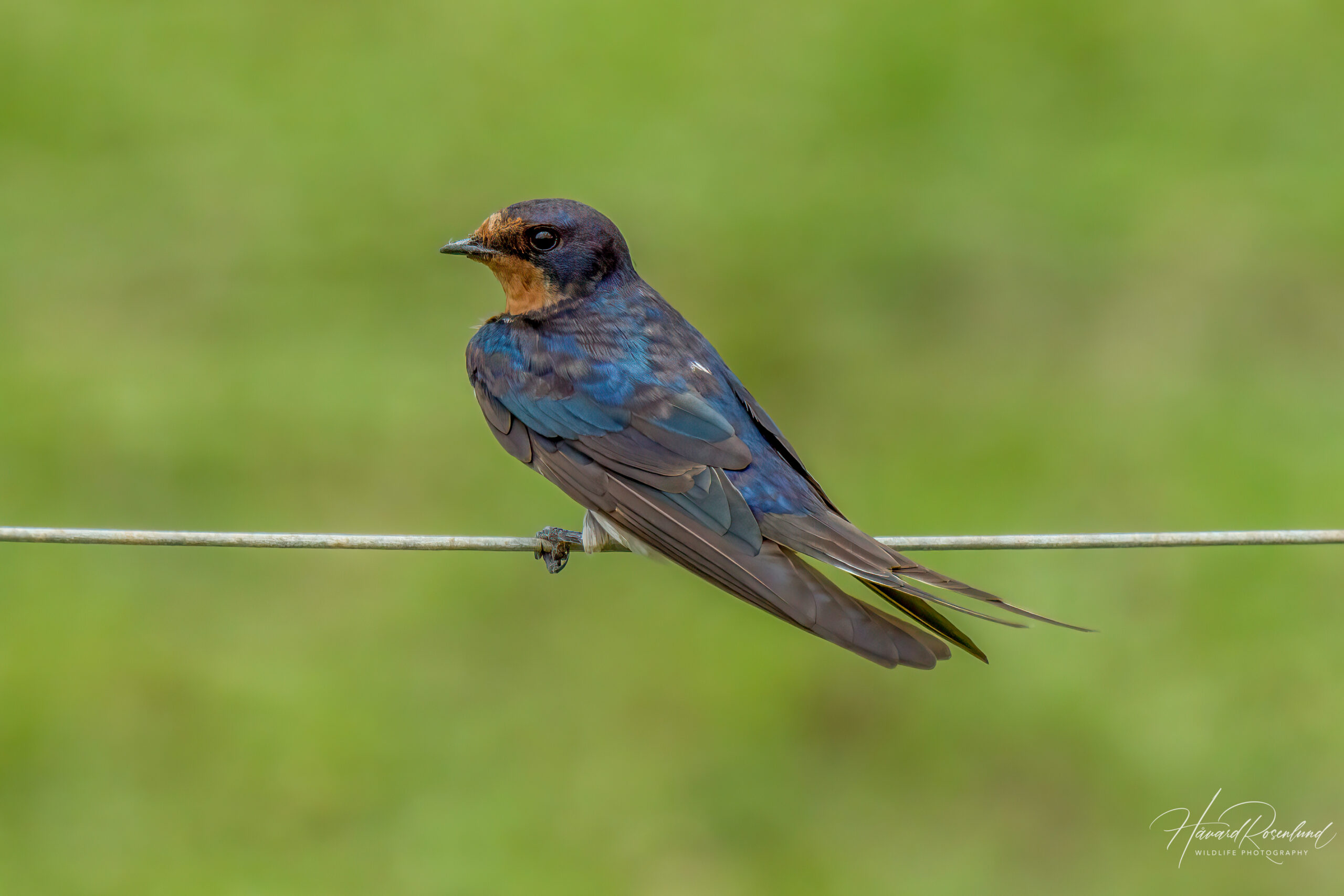
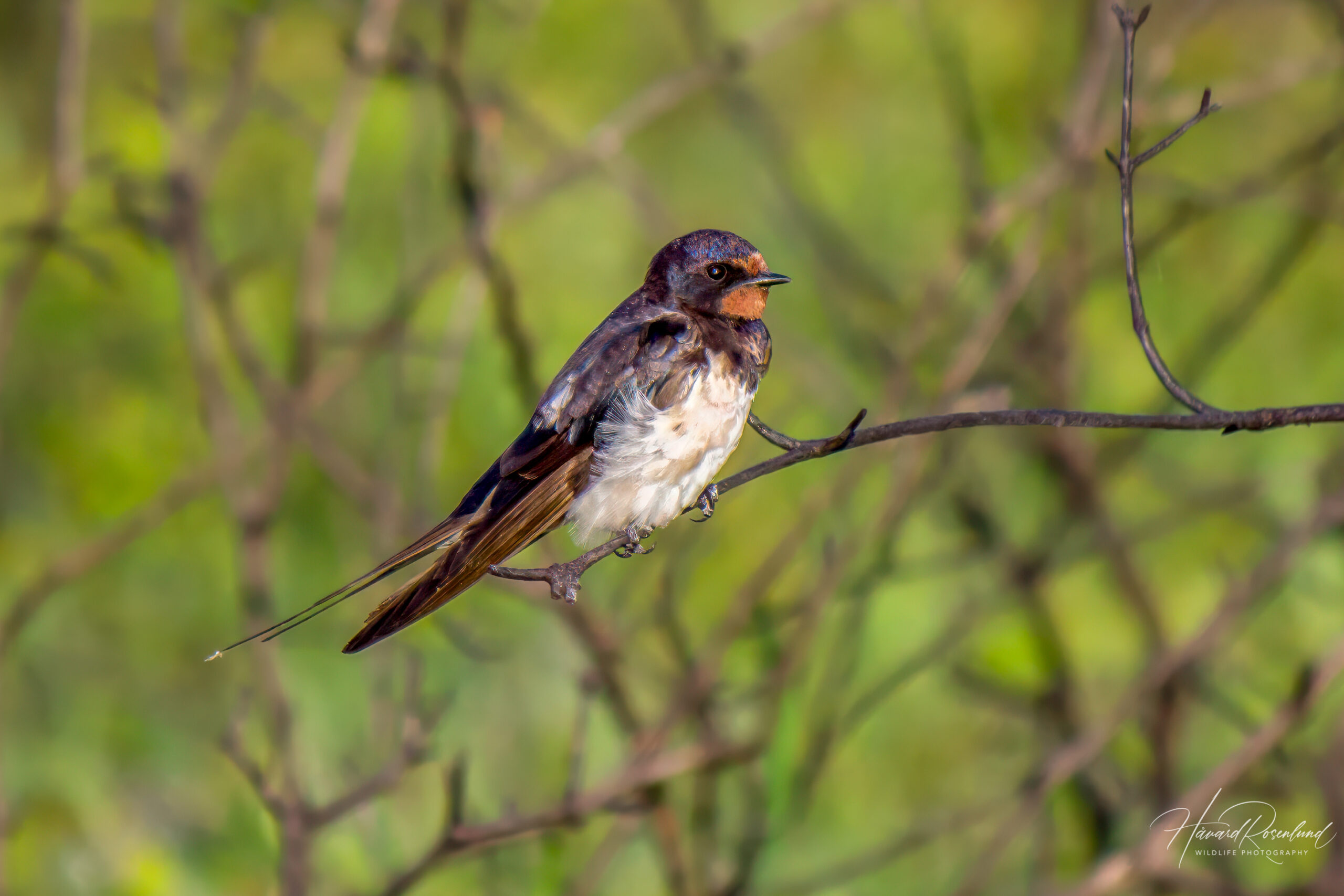
The barn swallow (Hirundo rustica) is one of the world's most widespread and familiar swallows. Adults are about 15–19 cm long and weigh roughly 17–20 g. They have glossy blue upperparts, a reddish forehead and throat and a deeply forked tail with elongated outer feathers. Plumage varies geographically: some subspecies have pale underparts while others are much richer buff or rufous.
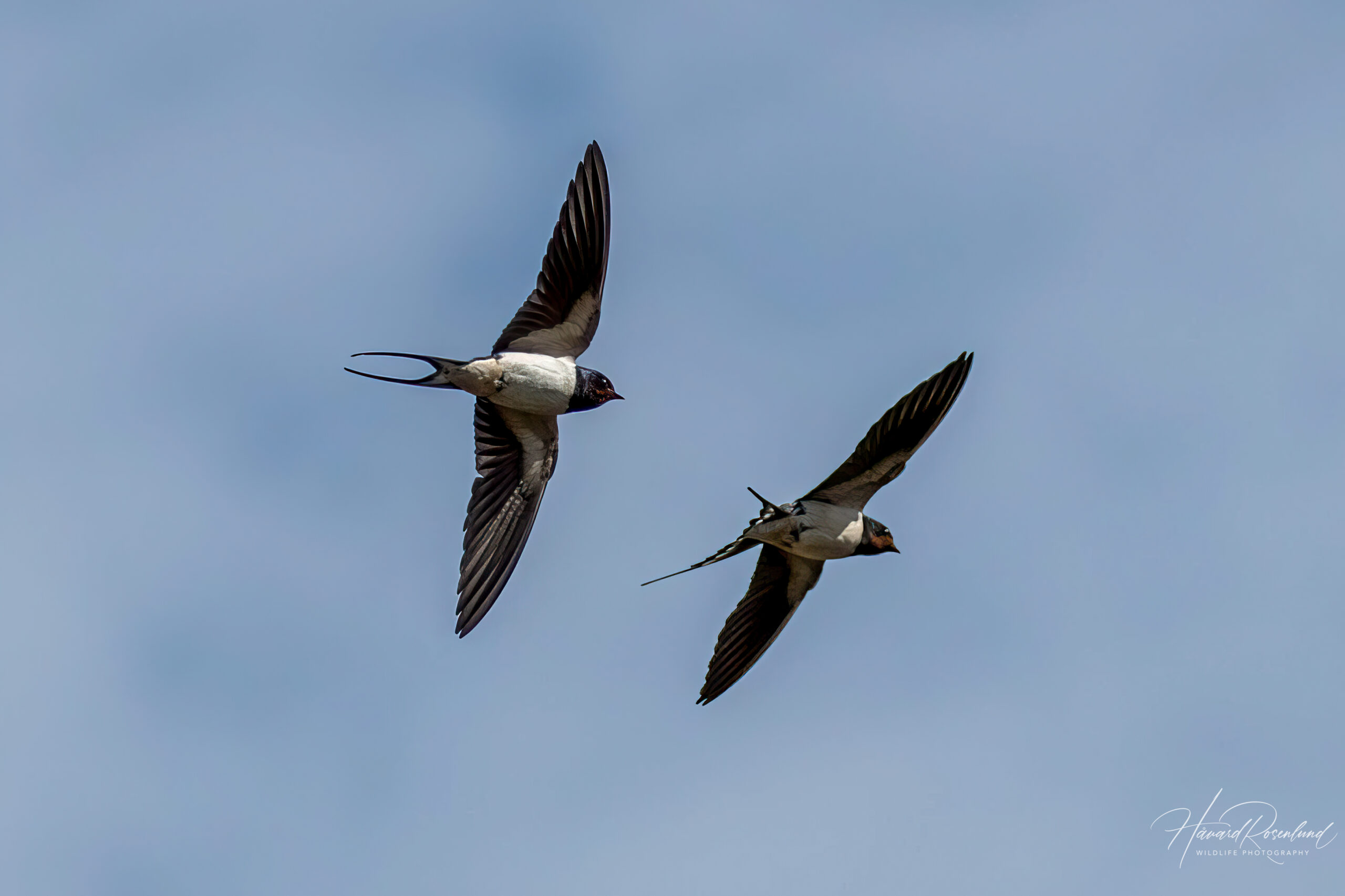
The long, pointed wings and forked tail are adapted for agile flight, and adults spend much of the day on the wing. Males generally have longer outer tail feathers than females, although the degree of difference varies among populations.
Habitat
Barn swallows are birds of open country, especially farmland, meadows, wetlands, roadsides, coastlines and the margins of lakes and rivers. They favour landscapes that combine open airspace rich in flying insects with sheltered structures or natural ledges for nesting.
Diet
Barn swallows are specialised aerial insectivores. Flies are especially important, but beetles, bees, wasps, flying ants, moths and many other small insects are also taken.
Almost all food is caught in flight, often only a few metres above the ground or water. Birds make continuous turns and changes of height as they track flying insects, and may concentrate over water, livestock or other productive patches when weather reduces insect activity elsewhere.
Barn swallows can also drink and bathe without landing by skimming the surface of water, taking water into the bill or briefly dipping the body while maintaining forward flight.
Migration
Many barn swallow populations are long-distance migrants. Birds breeding across Europe travel to sub-Saharan Africa for the non-breeding season, while Asian and North American populations follow other routes to wintering areas in southern Asia, Australasia and Central or South America. Migration therefore links breeding and wintering areas across entire continents and hemispheres.
Before and during migration, barn swallows may gather in very large communal roosts, often in reedbeds. Unlike many small migrants, they can continue catching insects while travelling and do not rely entirely on large fuel reserves accumulated before departure.
Breeding
Barn swallows are socially monogamous and often return to established nesting areas. Both sexes help build the characteristic open cup from pellets of mud mixed with grass and lined with feathers. Nests are attached to ledges or beams inside barns and other buildings, beneath bridges or in comparable sheltered sites.
In migratory populations, males often return to the breeding grounds before females. Early arrival can improve a male's chances of acquiring a mate, and courtship includes both song and distinctive calls.
Clutches usually contain three to seven eggs. Incubation lasts roughly 12–17 days and is mainly performed by the female. Male participation varies geographically: males have been documented incubating in North America, whereas European males contribute little or none. Both parents feed the chicks, which remain in the nest for about 15–27 days. Pairs commonly raise one or two broods in a season where conditions allow.
Relationship with humans
Few passerines are as closely associated with traditional farm buildings as the barn swallow. The species originally nested on cliffs and in caves, but across much of the Northern Hemisphere barns, sheds, bridges and other structures now provide most nesting opportunities. This has made human settlements an important part of its breeding ecology.
Pairs may return to the same buildings year after year. Traditional livestock farms and agricultural landscapes can also provide rich feeding areas because insects concentrate around animals, manure, ponds and pastures.
A study published in 2024 on cattle farms in Trentino, northern Italy, found that pest-fly activity was markedly lower in sheds with barn swallows; around the peak of the breeding season, fly activity was roughly halved. This provides a concrete example of how the swallows' insect hunting can also benefit livestock farming.
Status
The barn swallow is classified as least concern on the IUCN Red List and remains one of the most widespread swallows in the world. The global population trend is considered decreasing, although trajectories vary substantially among regions.
Agricultural intensification, reduced insect abundance, loss of accessible nesting structures and adverse weather during breeding or migration can all affect local and regional populations. Because the species depends on both aerial insects and suitable nest sites, changes to either resource can influence numbers even in otherwise open landscapes.
Image gallery
Loading map and observations…
Have you seen this species?
Independent species archive
Did you find this species page useful?
Wildlife Vagabond is independently built and maintained. Voluntary support helps cover hosting, maps, data storage and continued improvements to the species archive.
Support Wildlife VagabondSpecies content will remain freely available.
References
Information about the species’ global distribution and status is based primarily on global Red List data. See the references below for details.
- Artsdatabanken. (2021). Låvesvale Hirundo rustica – Norsk rødliste for arter 2021. https://lister.artsdatabanken.no/rodlisteforarter/2021/12466
- BirdLife International. (n.d.). Barn Swallow species factsheet. https://datazone.birdlife.org/species/factsheet/barn-swallow-hirundo-rustica
- British Trust for Ornithology. (n.d.). biology, migration and trends. https://www.bto.org/learn/about-birds/birdfacts/swallow
- Cornell Lab of Ornithology. (n.d.). Barn Swallow life history. https://www.allaboutbirds.org/guide/Barn_Swallow/lifehistory
- International Union for Conservation of Nature. (n.d.). Barn Swallow (Hirundo rustica). The IUCN Red List of Threatened Species. https://www.iucnredlist.org/species/22712252/137668645
- Smith, H. G., & Montgomerie, R. (1992). Male Incubation in Barn Swallows: The Influence of Nest Temperature and Sexual Selection. The Condor, 94(3), 750-759. https://doi.org/10.2307/1369260