

Eurasian Wren
Troglodytes troglodytes
At a glance
Habitat
- Woodland, scrub, hedgerows and gardens with dense low cover, root plates, dead wood and crevices
Diet
- Mostly insects, spiders and other small invertebrates
Activity
- Diurnal
Size
- Length: 9–10.5 cm Weight: about 9.9 g
Range
- Europe, North Africa and much of temperate Asia; northern populations are more migratory
Description
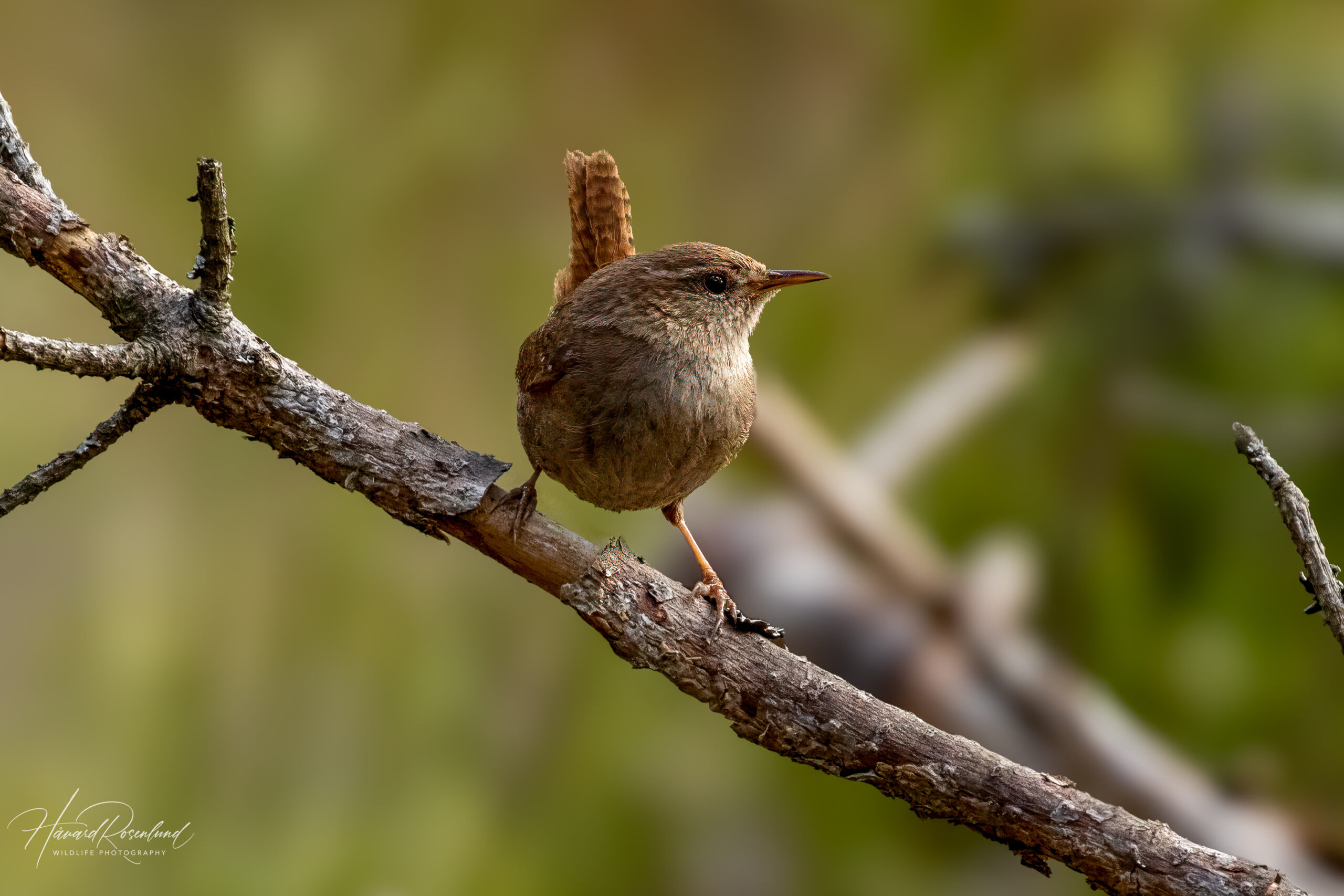
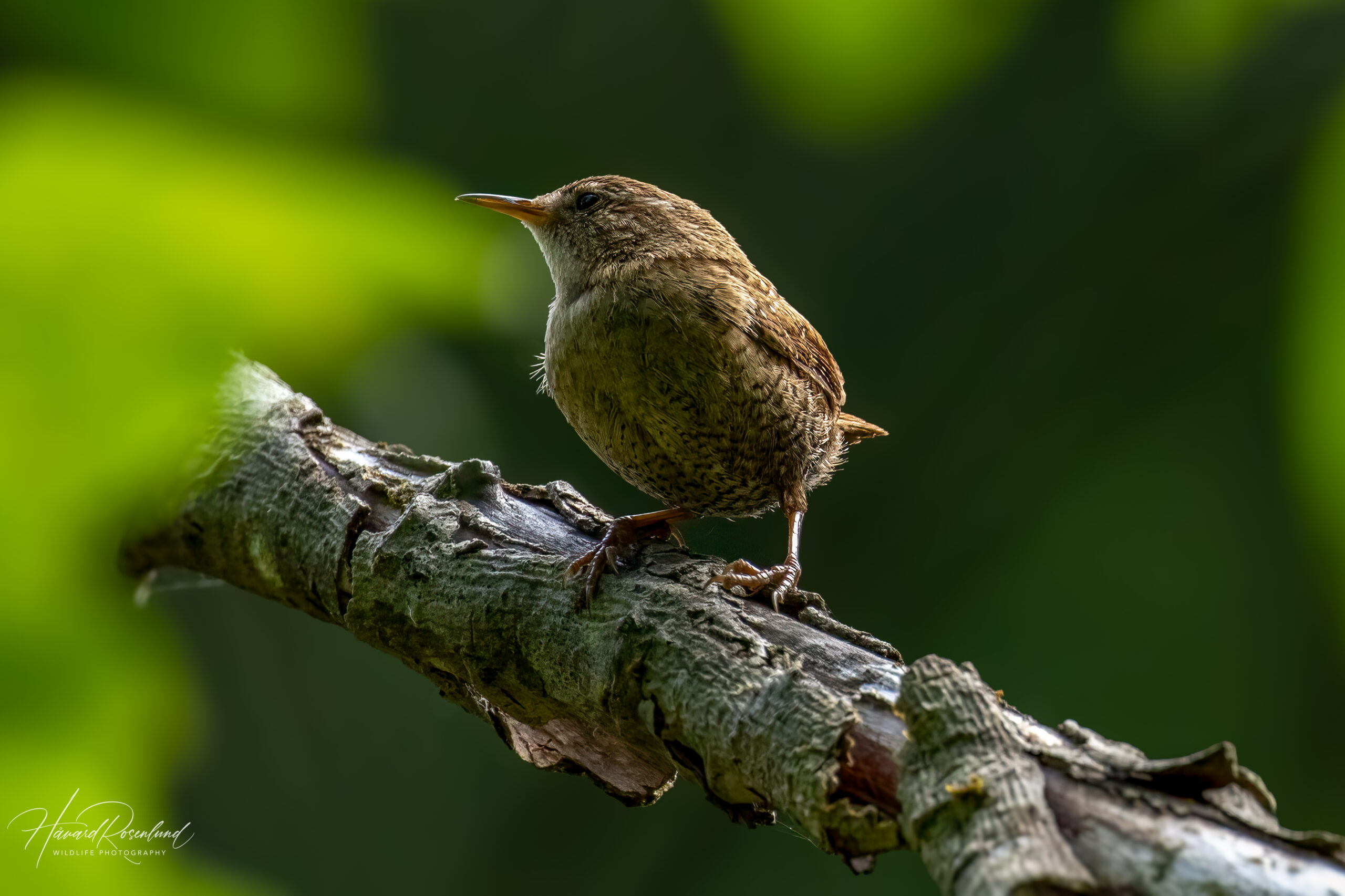
The Eurasian wren (Troglodytes troglodytes) is one of Europe's smallest birds, but its size contrasts sharply with its remarkably loud and complex song. Adults are about 9–10.5 cm long and weigh around 9.9 g on average. The body is compact and warm brown, finely barred across the wings, flanks and tail, with a pale supercilium and a thin, slightly downcurved bill. The very short tail is often held almost vertically.
Males and females look alike. The closely related wren family is overwhelmingly American, making the Eurasian wren unusual as the only member of the family naturally widespread across Europe, North Africa and temperate Asia.
Habitat
Eurasian wrens favour habitats with dense low cover and a complex ground layer. Woodland with fallen branches and root plates, scrub, hedgerows, stream edges, rock piles, gardens and overgrown margins can all provide suitable habitat when they offer both shelter and abundant small prey.
Dense cover is important throughout the year, but especially in winter when cavities, tangled vegetation and sheltered banks provide protection from wind and cold. The species can live close to people where gardens and built structures retain enough low vegetation and crevices.
Diet
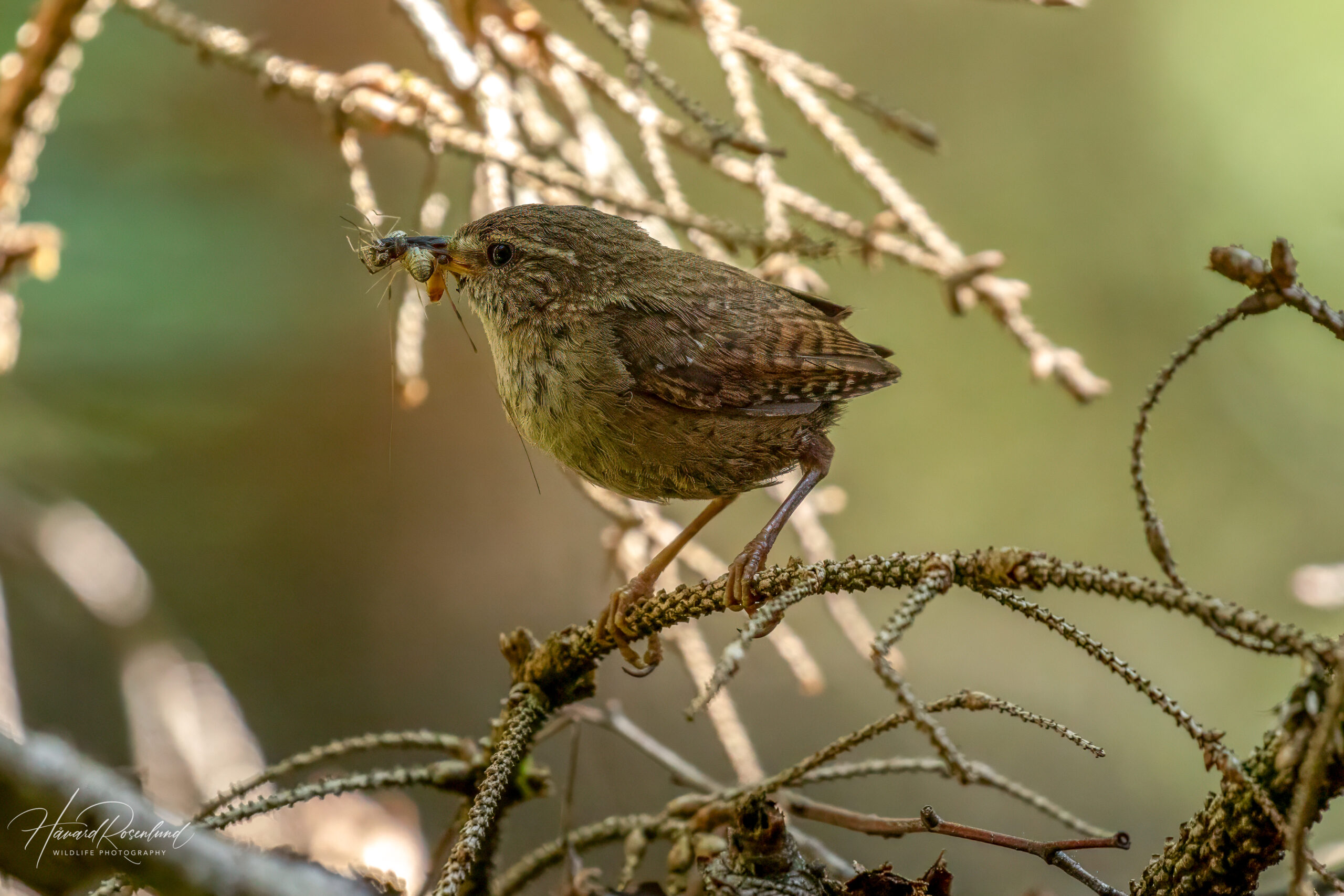
The diet consists mainly of insects, spiders and other small invertebrates. Wrens forage by moving rapidly through vegetation and along the ground, probing bark, leaf litter, moss, cavities and narrow crevices.
Their small size allows them to exploit spaces inaccessible to many larger insectivorous birds. They remain dependent on animal prey through winter, however, so prolonged frost and snow can sharply reduce access to food.
Behaviour
Wrens are energetic, secretive birds that spend much of their time close to the ground, slipping through roots, fallen branches and dense vegetation. Their explosive song and sharp calls often reveal a bird that would otherwise remain hidden, and males use song extensively in territorial advertisement.
Winter social behaviour differs from the strongly territorial breeding season. Wrens may use sheltered cavities and nest-like structures as night roosts, sometimes sharing them communally. Such close roosting can reduce heat loss during cold nights, an important advantage for a bird with very limited energy reserves.
Migration
Movement varies across the range. Many western and southern populations are largely resident, whereas birds breeding farther north and east are more likely to move south or west in autumn. Migration is generally shorter than in most long-distance songbirds.
Even resident birds can shift locally in winter toward sheltered valleys, coasts and other areas where dense cover and unfrozen feeding sites remain available. Because wrens feed on small invertebrates throughout the year, severe frost and snow can affect both movement and survival.
Breeding
Eurasian wrens have an unusually complex breeding system. A territorial male builds several domed display nests at different sites within his territory. Females inspect these structures when choosing where and with whom to breed. Experimental studies show that nest number influences mate choice, while nest-building effort reflects male condition more than age. In studied populations the mating system can be strongly polygynous, with successful males attracting more than one female.
Once a nest is selected, the female completes and lines it with feathers and other soft material. Nest sites are highly varied and include root plates, banks, dense vegetation, tree cavities, rock crevices and openings in walls or buildings. A typical clutch contains five to six eggs. The female incubates for about 16–18 days, and the chicks normally remain in the nest for roughly 15–18 days after hatching. Two broods are typical where conditions allow.
Status
The Eurasian wren is classified as least concern on the IUCN Red List and remains widespread across a very large Palearctic range.
Population size can nevertheless fluctuate sharply after severe winters. Long-term research in Britain found that population growth fell as the number of frost days increased, but birds in historically colder regions tolerated substantially harsher winters before populations fell. Wrens were also heavier in colder regions, indicating that populations from colder climates are better adapted to severe winter conditions than those from milder areas.
Image gallery


Loading map and observations…
Have you seen this species?
Independent species archive
Did you find this species page useful?
Wildlife Vagabond is independently built and maintained. Voluntary support helps cover hosting, maps, data storage and continued improvements to the species archive.
Support Wildlife VagabondSpecies content will remain freely available.
References
Information about the species’ global distribution and status is based primarily on global Red List data. See the references below for details.
- BirdLife International. (n.d.). Eurasian Wren species factsheet. https://datazone.birdlife.org/species/factsheet/eurasian-wren-troglodytes-troglodytes
- British Trust for Ornithology. (n.d.). Wren. https://www.bto.org/learn/about-birds/birdfacts/wren
- Evans, M. R. (1997). Nest building signals male condition rather than age in wrens. Animal Behaviour, 53(4), 749-755. https://doi.org/10.1006/anbe.1996.0311
- Evans, M. R. (1997). The influence of habitat and male morphology on a mate-choice cue: the display nests of wrens. Animal Behaviour, 54(3), 485-491. https://doi.org/10.1006/anbe.1996.0493
- International Union for Conservation of Nature. (n.d.). Eurasian Wren. The IUCN Red List of Threatened Species. https://www.iucnredlist.org/species/103883277/132200296
- Morrison, C. A., Robinson, R. A., & Pearce-Higgins, J. W. (2016). Winter wren populations show adaptation to local climate. Royal Society Open Science, 3(6), 160250. https://doi.org/10.1098/rsos.160250