
Rock Dove
Columba livia
At a glance
Habitat
- Wild birds use sea cliffs, caves and rocky gorges; domestic-derived feral pigeons use buildings, bridges and other artificial ledges
Diet
- Mostly seeds and grain, with fruit and other plant material; feral birds also exploit human food
Activity
- Diurnal
Size
- Length: 30–36 cm Weight: 265–380 g
Range
- Wild populations are native to parts of Europe, North Africa and western and southern Asia; domestic-derived feral pigeons now occur worldwide
Description
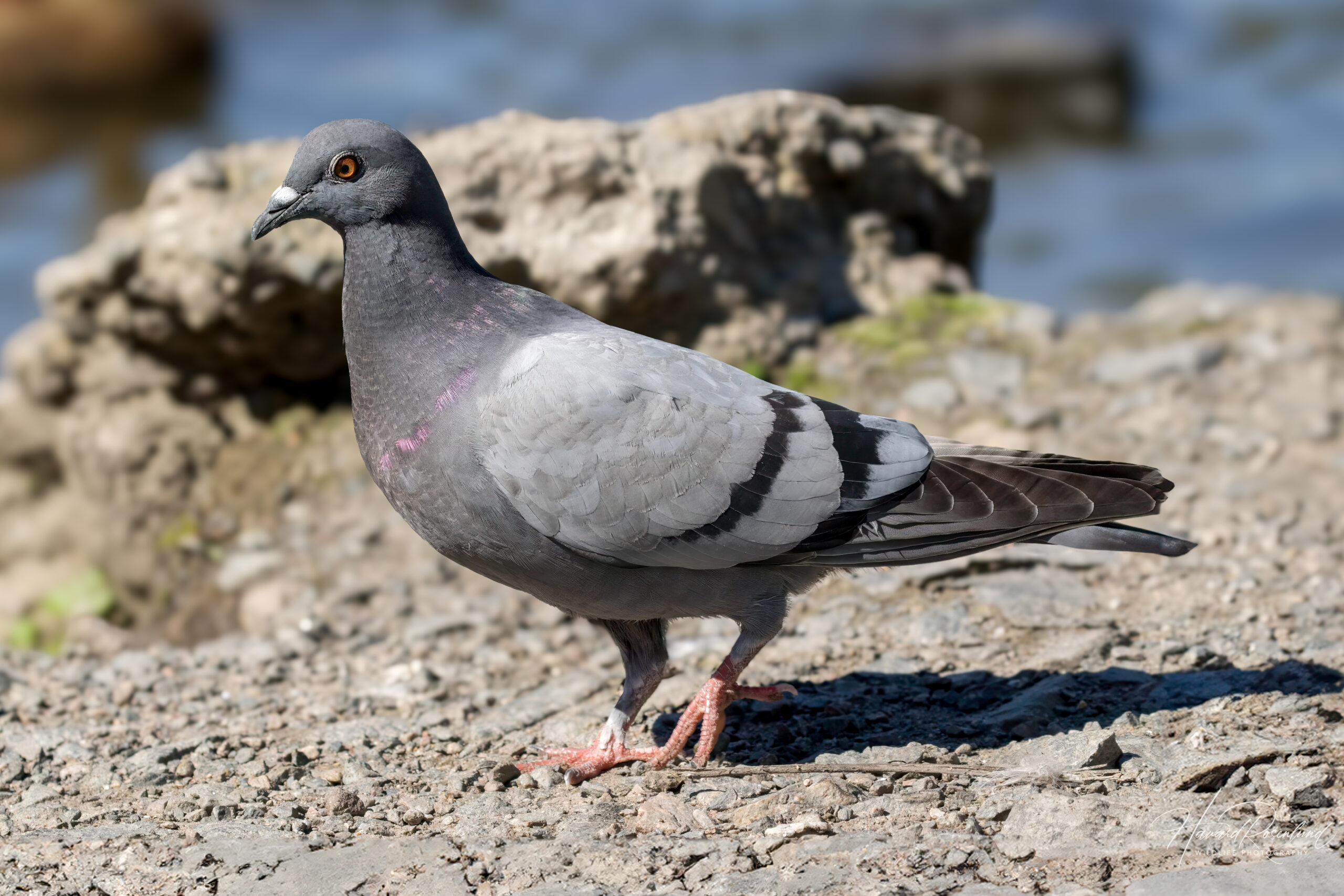
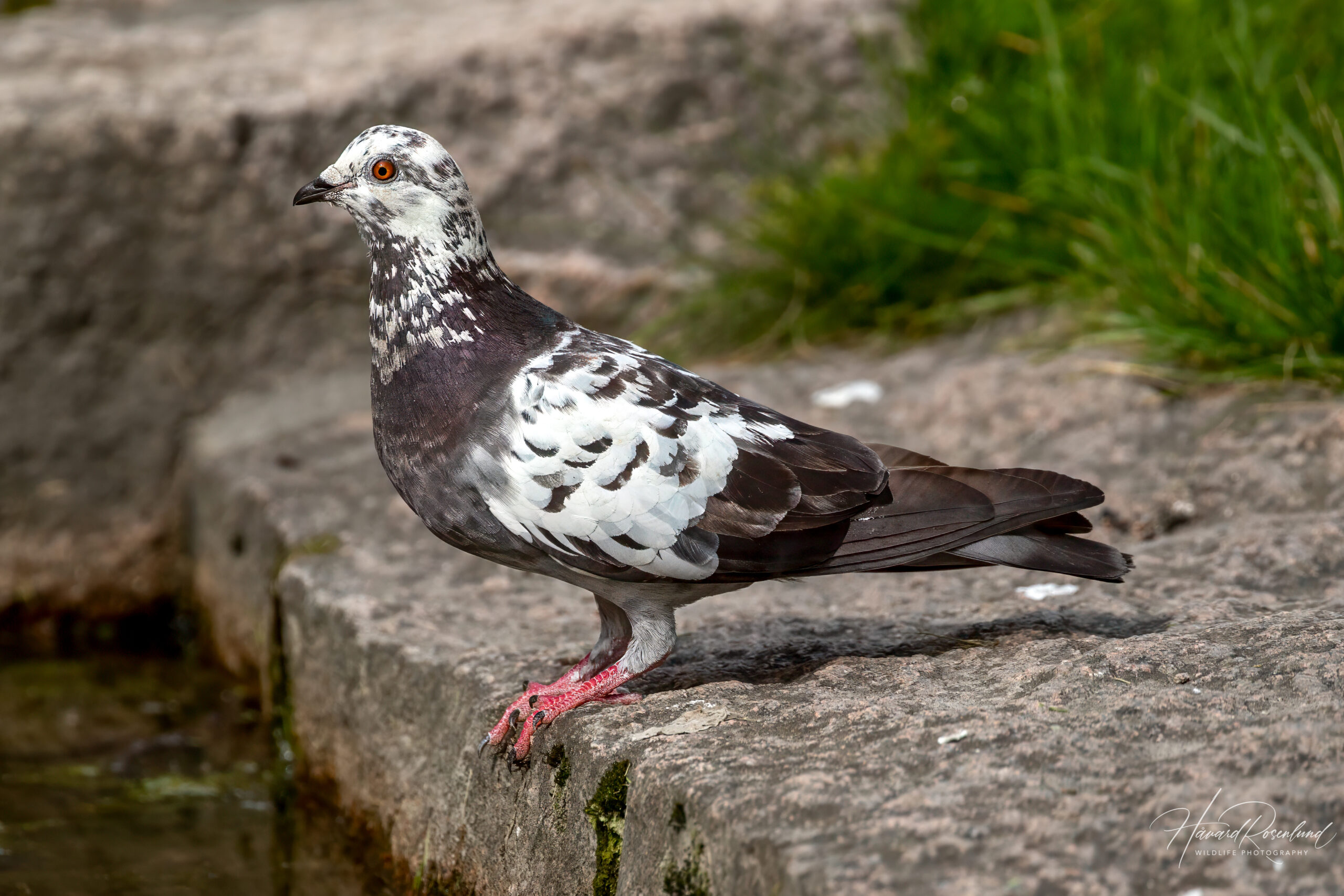
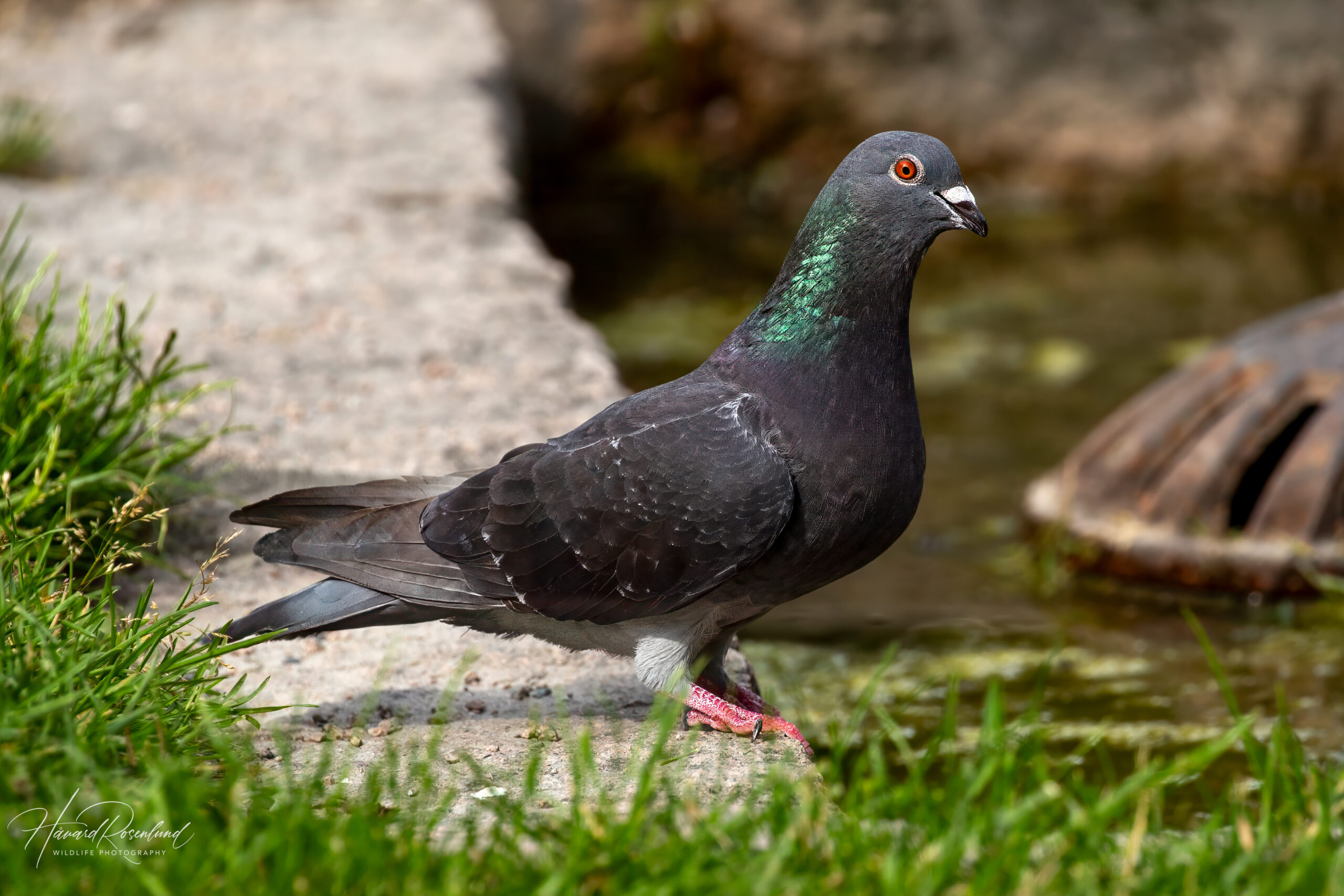
The rock dove (Columba livia) is the wild ancestor of the domestic pigeon and the familiar feral pigeons of cities around the world. Adults are about 30–36 cm long and commonly weigh around 265–380 g. Truly wild birds show a relatively consistent blue-grey plumage with two black wingbars, a dark tail band, pale rump and iridescent green-purple feathers on the neck. Domestic-derived feral populations are far more variable, ranging from wild-type blue-grey birds to black, red, pied and almost completely white individuals.
This distinction matters biologically. A feral pigeon with classic blue-bar plumage is not automatically a wild rock dove: genomic work in Britain and Ireland has shown that undomesticated rock doves form a distinct genetic group even though some feral birds can closely resemble them.
Habitat
Wild rock doves are birds of cliffs, rocky gorges, islands and caves, where sheltered ledges and cavities provide nesting and roosting sites close to open feeding ground. Agricultural land and other open habitats may be used where seed-rich feeding areas lie within reach of these rocky refuges.
Domestic-derived feral pigeons use human structures as artificial equivalents of the ancestral habitat. Building façades, bridges, ledges and roof spaces provide abundant nesting and roosting sites, allowing feral populations to thrive in cities far beyond the natural range of the wild form.
Diet
Seeds and grain dominate the diet, supplemented by smaller amounts of fruit and other plant material and only occasional invertebrates. Feral pigeons retain this basic feeding biology but readily exploit spilled grain, food waste and deliberate feeding around people.
Feeding commonly takes place in flocks, especially where food is concentrated. Pigeons also drink in an unusual way: rather than repeatedly lifting the head to swallow, they can keep the bill immersed and draw water continuously into the mouth.
Navigation
Rock doves became one of the classic model species for studying animal navigation because humans selectively bred domestic pigeons for homing ability. Most experimental knowledge therefore comes from homing pigeons rather than untouched wild populations, but it reveals an unusually flexible navigation system that combines several senses.
Experiments strongly support the use of an olfactory map to determine position after release at unfamiliar sites, together with a sun compass to maintain direction. Once an area becomes familiar, visual landscape cues become increasingly important and individual birds can develop highly stereotyped routes that follow recognisable landmarks. Recent experiments continue to show that distant visual landmarks can support efficient homing when local ground cues are hidden. Pigeons can also detect magnetic information, but its precise role remains less settled than the roles of smell, the sun compass and learned visual landscapes.
Breeding
Rock doves form long-lasting pairs and can breed colonially where suitable nest sites are concentrated. Wild birds nest on sheltered cliff ledges and in caves, while feral pigeons use equivalent sites on buildings, bridges and other structures. The nest is a simple platform of twigs and stems that is often reused and enlarged over successive broods.
Two white eggs are typical. Both parents incubate, normally for about 16–19 days, and both care for the young, which remain in the nest for roughly 35–37 days in BTO records.
Pigeons have one of the most unusual parental feeding systems among birds. Both the male and female produce crop milk, a nutrient-rich secretion formed from proliferating cells in the lining of the crop under the influence of prolactin. Newly hatched squabs initially depend almost entirely on this material. Experimental studies of domestic pigeons show that crop milk is exceptionally rich in protein and fat; as the chicks grow, softened seeds and other adult foods are gradually mixed into the regurgitated diet.
Relationship with humans
Rock doves have lived alongside people for thousands of years and gave rise to domestic pigeons selected for meat, appearance, racing, homing and message carrying. Whole-genome studies indicate at least one major domestication event in the Levant among the ancestors of domestic breeds analysed so far, although the deeper history is complex and includes later movement and mixing across regions.
Escaped and deliberately released domestic pigeons repeatedly established free-living feral populations, producing the familiar city pigeons now found across most of the world. Feralisation did not simply recreate the ancestral wild bird: domestic breeding introduced enormous variation in colour, body form and genetics. Where feral pigeons meet surviving wild rock doves they interbreed freely, and genomic work shows that domestic ancestry can progressively replace the genetic identity of the wild lineage. Relatively little domestic introgression persists in some isolated populations, notably parts of the Outer Hebrides, making them especially important for understanding the ancestral form.
Status
The rock dove is classified as least concern on the IUCN Red List. At the species level Columba livia is extraordinarily widespread and abundant once domestic and feral populations are considered.
That broad category masks a different conservation issue. Genetically intact wild rock-dove populations appear to have disappeared from much of their original range through replacement and introgression from domestic-derived feral pigeons. Studies in Britain and Ireland show a gradient from relatively intact wild populations to heavily admixed or completely feral populations. Protecting the wild form is therefore less a question of total pigeon numbers than of preserving the genetic and ecological lineage that existed before domestication.
Image gallery
Loading map and observations…
Have you seen this species?
Independent species archive
Did you find this species page useful?
Wildlife Vagabond is independently built and maintained. Voluntary support helps cover hosting, maps, data storage and continued improvements to the species archive.
Support Wildlife VagabondSpecies content will remain freely available.
References
Information about the species’ global distribution and status is based primarily on global Red List data. See the references below for details.
- BirdLife International. (n.d.). Rock Pigeon species factsheet. https://datazone.birdlife.org/species/factsheet/rock-pigeon-columba-livia
- British Trust for Ornithology. (n.d.). BirdFacts – Rock Dove. https://www.bto.org/learn/about-birds/birdfacts/rock-dove
- Cornell Lab of Ornithology. (n.d.). Cornell Lab – Rock Pigeon life history. https://www.allaboutbirds.org/guide/Rock_Pigeon/lifehistory
- Hernández-Alonso, G., Ramos-Madrigal, J., van Grouw, H., Ciucani, M. M., Cavill, E. L., Sinding, M.-H. S., Gopalakrishnan, S., Pacheco, G., & Gilbert, M. T. P. (2023). Redefining the Evolutionary History of the Rock Dove, Columba livia, Using Whole Genome Sequences. Molecular Biology and Evolution, 40(11), msad243. https://doi.org/10.1093/molbev/msad243
- Horseman, N. D., & Buntin, J. D. (1995). Regulation of pigeon cropmilk secretion and parental behaviors by prolactin. Annual Review of Nutrition, 15, 213–238. https://doi.org/10.1146/annurev.nu.15.070195.001241
- Hu, X.-C., Gao, C.-Q., Wang, X.-H., Yan, H.-C., Chen, Z.-S., & Wang, X.-Q. (2016). Crop milk protein is synthesised following activation of the IRS1/Akt/TOR signalling pathway in the domestic pigeon (Columba livia). British Poultry Science, 57(6), 855–862. https://doi.org/10.1080/00071668.2016.1219694
- International Union for Conservation of Nature. (n.d.). Rock Pigeon. The IUCN Red List of Threatened Species. https://www.iucnredlist.org/species/22690066/155493121
- Morford, J., Gagliardo, A., Pollonara, E., & Guilford, T. (2024). Homing pigeon navigational ontogeny: no evidence that exposure to a novel release site is sufficient for learning. Animal behaviour, 214, 157-164. https://doi.org/10.1016/j.anbehav.2024.06.009
- Smith, W. J., Sendell-Price, A. T., Fayet, A. L., Schweizer, T. M., Jezierski, M. T., van de Kerkhof, C., Sheldon, B. C., Ruegg, K. C., Kelly, S., Turnbull, L. A., & Clegg, S. M. (2022). Limited domestic introgression in a final refuge of the wild pigeon. iScience, 25(7), 104620. https://doi.org/10.1016/j.isci.2022.104620
- Smith, W. J. (2023). Rapid assessment of the extent of feral introgression in British and Irish Rock Dove (Columba livia) populations. Ibis, 165(4), 1432-1439. https://doi.org/10.1111/ibi.13213
- Wikelski, M., Dechmann, D. K. N., Quetting, M., Heine, G., Fiedler, W., Schmid, H., Bohrer, G., & Gagliardo, A. (2026). Distant landmarks used for navigation by homing pigeons. Life, 16(6), 933. https://doi.org/10.3390/life16060933