
Lesser Adjutant
Leptoptilos javanicus
At a glance
Habitat
- Wetlands, river floodplains, marshes, mangroves, dry lowland woodland, grassland and rice-growing landscapes
Diet
- Fish, amphibians, reptiles, large invertebrates and other small animals; carrion is taken occasionally
Activity
- Diurnal
Size
- Length: 110–120 cm tall Weight: 5–6 kg
Range
- South Asia east through mainland and parts of insular Southeast Asia
Description
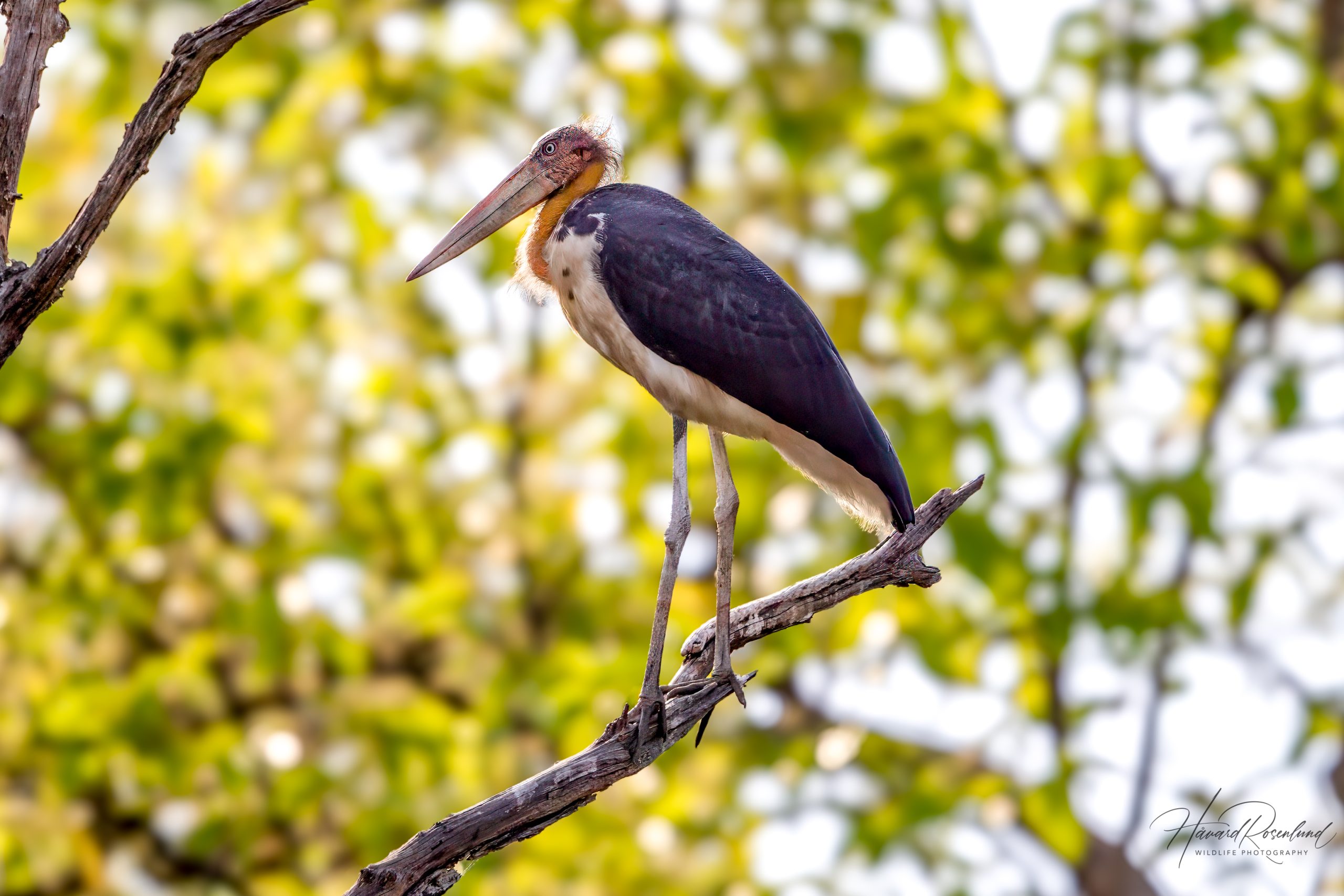
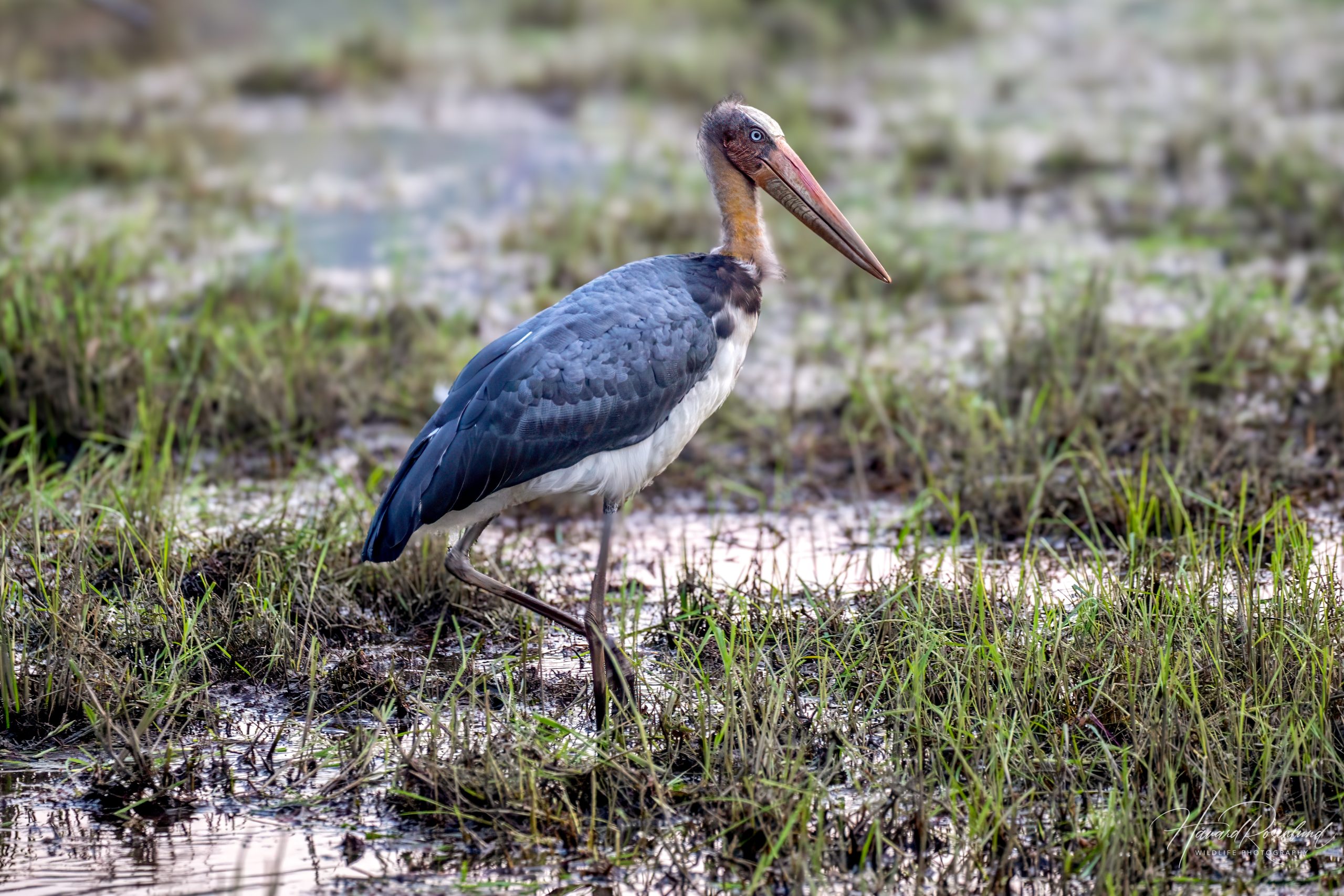
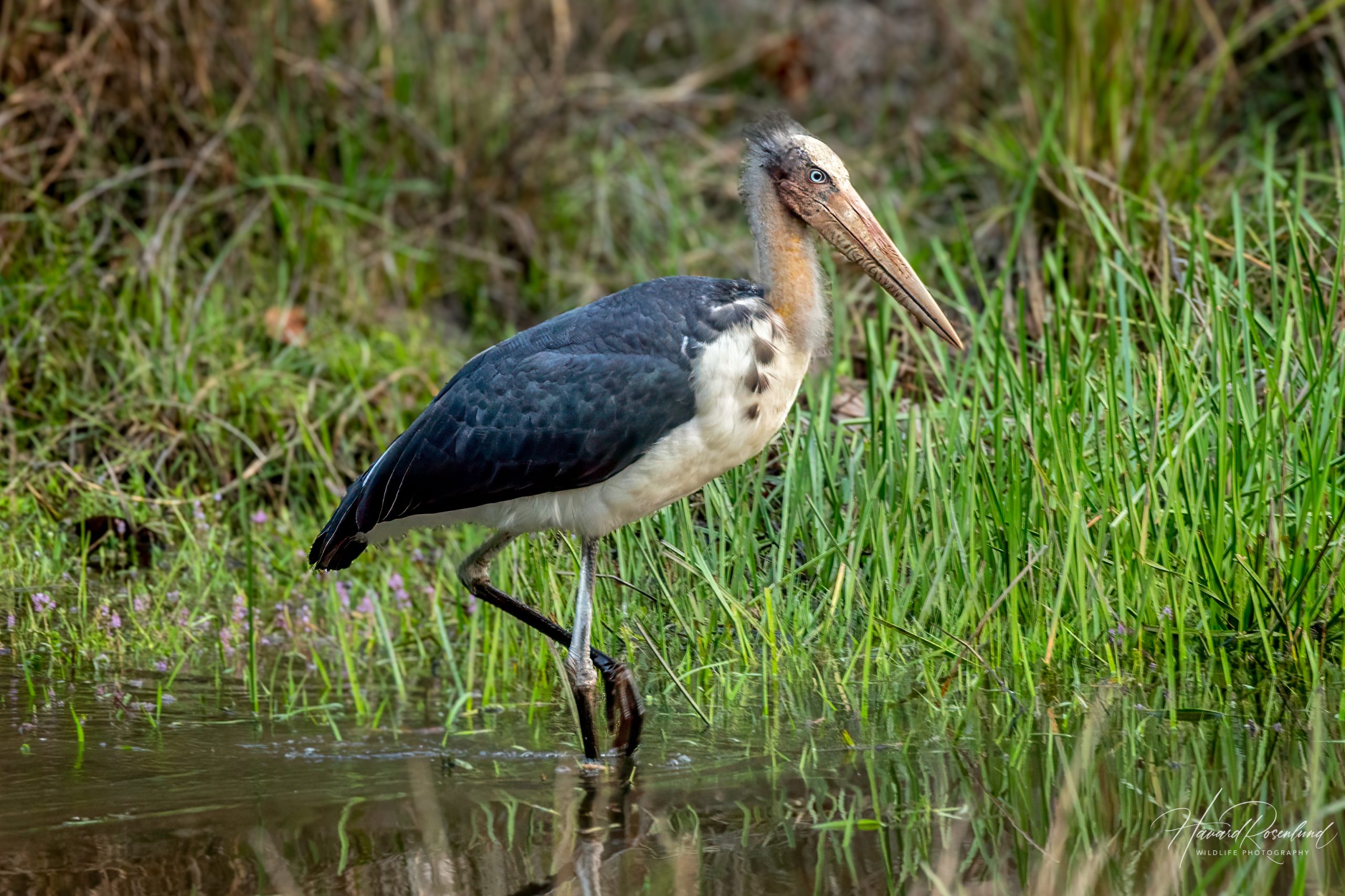
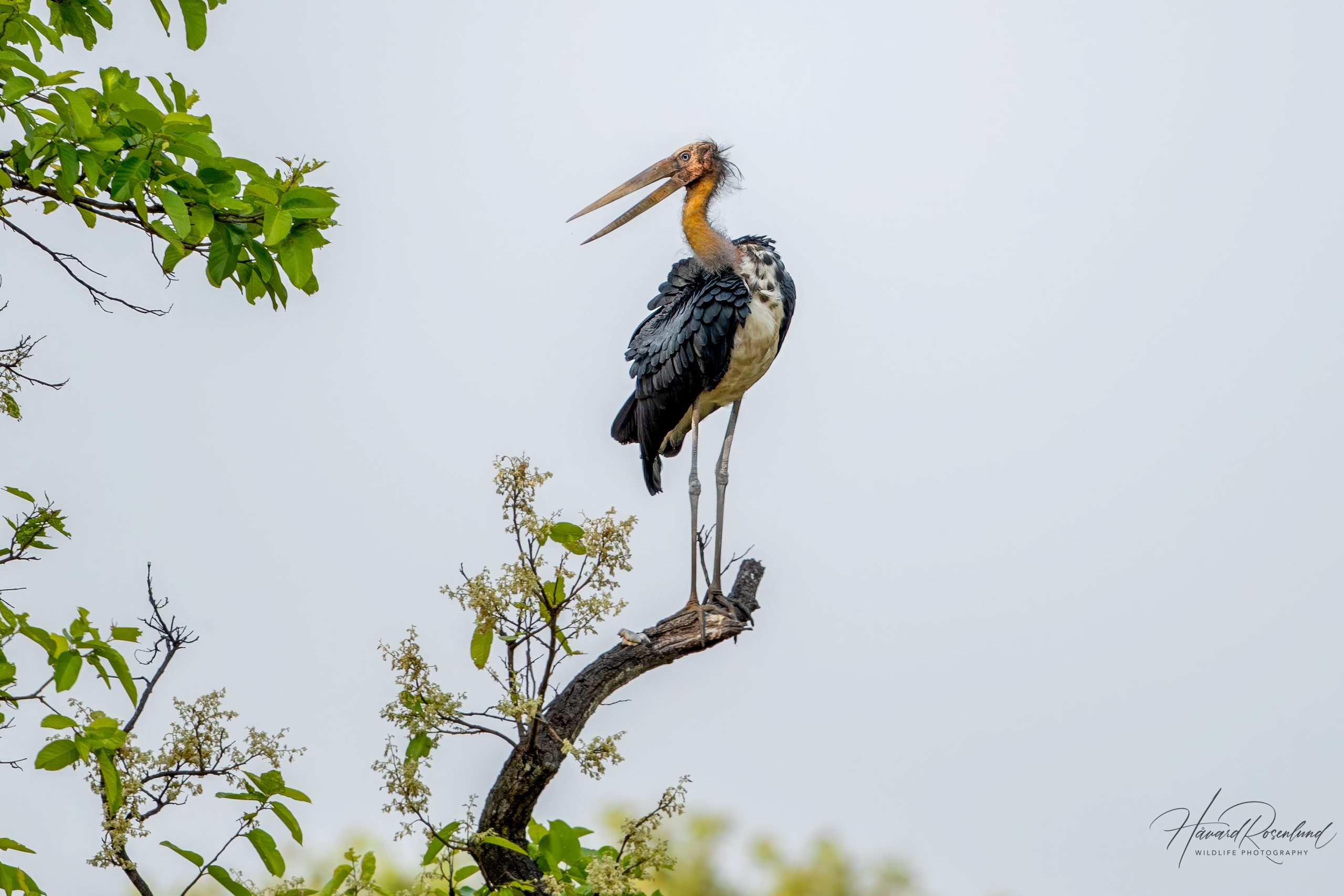
The lesser adjutant (Leptoptilos javanicus) is a very large stork distributed from the Indian subcontinent through Southeast Asia to parts of Indonesia. Adults stand roughly 110–120 cm tall and have a massive wedge-shaped bill, long bare head and neck, dark upperparts and contrasting pale underparts. The bare skin is yellowish to reddish-brown depending on age and condition.
It is smaller and less massively built than the greater adjutant (Leptoptilos dubius). The greater adjutant also has a much more conspicuous hanging throat pouch and generally more exaggerated bare-neck structures. Both are close relatives of the African marabou stork (Leptoptilos crumenifer), but the lesser adjutant is usually a more wetland-associated hunter than the strongly scavenging image often associated with adjutant storks.
Habitat
Lesser adjutants use a broad mosaic of lowland habitats rather than only open marsh. Wetlands, rivers, floodplains, mangroves, shallow lakes and seasonally flooded grasslands are important feeding areas, but the species also occurs in dry mixed forest, savannah-like woodland, cropland and rice-growing landscapes.
A five-year study published in 2015 from Sri Lanka found the species concentrated in dry lowlands below about 300 m and associated particularly with savannah or woody savannah, dry mixed evergreen forest, permanent wetlands and croplands. Productive agricultural landscapes can also remain usable when wetlands and large mature nest trees are retained nearby.
Diet
The lesser adjutant is an opportunistic predator that feeds mainly on animals captured on the ground or in shallow water. Fish, frogs and other amphibians, reptiles, large insects and other invertebrates, rodents and other small vertebrates are taken, while carrion is used more occasionally.
Foraging birds usually walk slowly through shallow water, wet grass, rice fields or open ground and strike quickly with the heavy bill when prey is detected. The species' use of both natural wetlands and flooded agricultural land means that local food supply can depend strongly on water levels, wetland condition and farming practices.
Behaviour
Outside breeding areas, lesser adjutants are commonly encountered alone or in small numbers rather than in the large feeding aggregations typical of some other storks. The five-year Sri Lankan study found birds generally solitary, with larger gatherings becoming more frequent during the driest periods of the year.
The species is diurnal and spends much of the day walking and searching for prey or resting in open trees. It also uses soaring flight to move between feeding and roosting areas.
A study published in 2025 from lowland Nepal found strong seasonal changes in daily activity: birds spent more time vigilant in summer and more time feeding in winter, while human disturbance increased vigilance further. Repeated disturbance can therefore take time away from feeding even where suitable habitat remains.
Breeding
Lesser adjutants build large stick nests high in mature trees. Several nests may occur in the same large tree or in loose groups of neighbouring trees, creating small nesting colonies even though the birds often forage separately. A study published in 2024 around the Kolong River in Assam found nest occurrence positively associated with tree height, trunk diameter and canopy size, while nests were more numerous closer to feeding areas. Bombax ceiba, Terminalia arjuna and Neolamarckia cadamba were among the trees used.
A 2022 study in lowland Nepal monitored 65 active colonies with 206 active nests and found most colonies in agricultural land or human habitation. Taller nest trees were used disproportionately, showing how strongly breeding can depend on a limited supply of mature trees even in productive farmland. Two to four eggs are commonly reported. Both parents attend the nest and feed the young, which remain dependent for an extended period before fledging.
Status
The lesser adjutant is currently classified as near threatened on the IUCN Red List. It was downlisted from Vulnerable to Near Threatened in the 2023 Red List update.
Threats
The recovery is not uniform across the range. Wetland drainage, loss of mature nest trees, agricultural intensification, development and hunting remain important local pressures, and a 2024 analysis from Muar in Malaysia found declines at two long-monitored sites as mangrove habitat was degraded.
Breeding in working agricultural landscapes creates an additional vulnerability because a population can depend on a relatively small number of large trees surrounded by feeding wetlands. Felling or heavy pruning of nest trees, disturbance around active nests and loss of nearby shallow-water feeding areas can therefore affect breeding success even where the wider landscape still appears superficially suitable.
Conservation
Local protection of habitat and reduced persecution have contributed to the recent improvement in status. Wetlands, productive rice-field mosaics and large nesting trees remain central to the species' persistence.
Many breeding colonies occur in farmland and close to settlements, so suitable nesting and feeding habitat is important outside formal protected areas as well. In settled agricultural landscapes, the loss of a few key nest trees or feeding wetlands can therefore have a disproportionate effect on local colonies.
Image gallery
Loading map and observations…
Have you seen this species?
Independent species archive
Did you find this species page useful?
Wildlife Vagabond is independently built and maintained. Voluntary support helps cover hosting, maps, data storage and continued improvements to the species archive.
Support Wildlife VagabondSpecies content will remain freely available.
References
Information about the species’ global distribution and status is based primarily on global Red List data. See the references below for details.
- Athirah Fauzi, N., Munian, K., & Atiqah Norazlimi, N. (2024). Population trend of Lesser Adjutant (Leptoptilos javanicus) in Muar, Johor using eBird data. BIO Web of Conferences, 94, 04001. https://doi.org/10.1051/bioconf/20249404001
- Bajagain, S., Karki, J. B., Timilsina, Y. P., Maharjan, M., Pradhan, A., Pudasaini, N., Rokka, P., & Maharjan, S. (2025). Effect of Human Disturbance on Feeding Behavior and Activity Time Budget of Lesser Adjutant Stork Leptoptilos javanicus (Horsfield, 1821) in Nepal. Ecology and Evolution, 15(7), e71643. https://doi.org/10.1002/ece3.71643
- BirdLife International. (n.d.). Lesser Adjutant species factsheet. https://datazone.birdlife.org/species/factsheet/lesser-adjutant-leptoptilos-javanicus
- BirdLife International. (n.d.). State of the World’s Birds 2024 Annual Update. https://datazone.birdlife.org/articles/state-of-the-worlds-birds-2024-annual-update
- Bordoloi, M., Das, B., & Das, J. (2024). Nesting ecology of the Lesser Adjutant Stork (Leptoptilos Javanicus Horsfield) and prevailing threats on their survival. Rajiv Gandhi University. https://doi.org/10.5281/zenodo.13915188
- De Silva, T. N., Fernando, S., De Silva, H. B., & Tennakoon, P. (2015). Lesser Adjutant Leptoptilos javanicus Horsfield, 1821 (Ciconiiformes: Ciconiidae) in the dry lowlands of Sri Lanka: distribution, ecology, and threats. Journal of Threatened Taxa, 7(14), 8089. https://doi.org/10.11609/jott.2425.7.14.8089-8095
- International Union for Conservation of Nature. (n.d.). Lesser Adjutant. The IUCN Red List of Threatened Species. https://www.iucnredlist.org/species/22697713/232128569
- Katuwal, H. B., Sundar, K. S. G., Zhang, M., Rimal, B., Baral, H. S., Sharma, H. P., Ghimire, P., Hughes, A. C., & Quan, R.-C. (2022). Factors affecting the breeding ecology of the globally threatened Lesser Adjutant (Leptoptilos javanicus) in agricultural landscapes of Nepal. Avian Conservation and Ecology, 17(2), art15. https://doi.org/10.5751/ACE-02235-170215