
Common Swift
Apus apus
At a glance
Habitat
- Breeds in cavities in buildings, cliffs and trees; feeds over a wide range of open and semi-open landscapes
Diet
- Flying insects and airborne spiders caught entirely in flight
Activity
- Aerial by day and night outside breeding; adults roost at the nest while breeding
Size
- Length: 16–17 cm Weight: about 39.5 g
Range
- Breeds across Europe and much of Asia; winters entirely in sub-Saharan Africa
Description
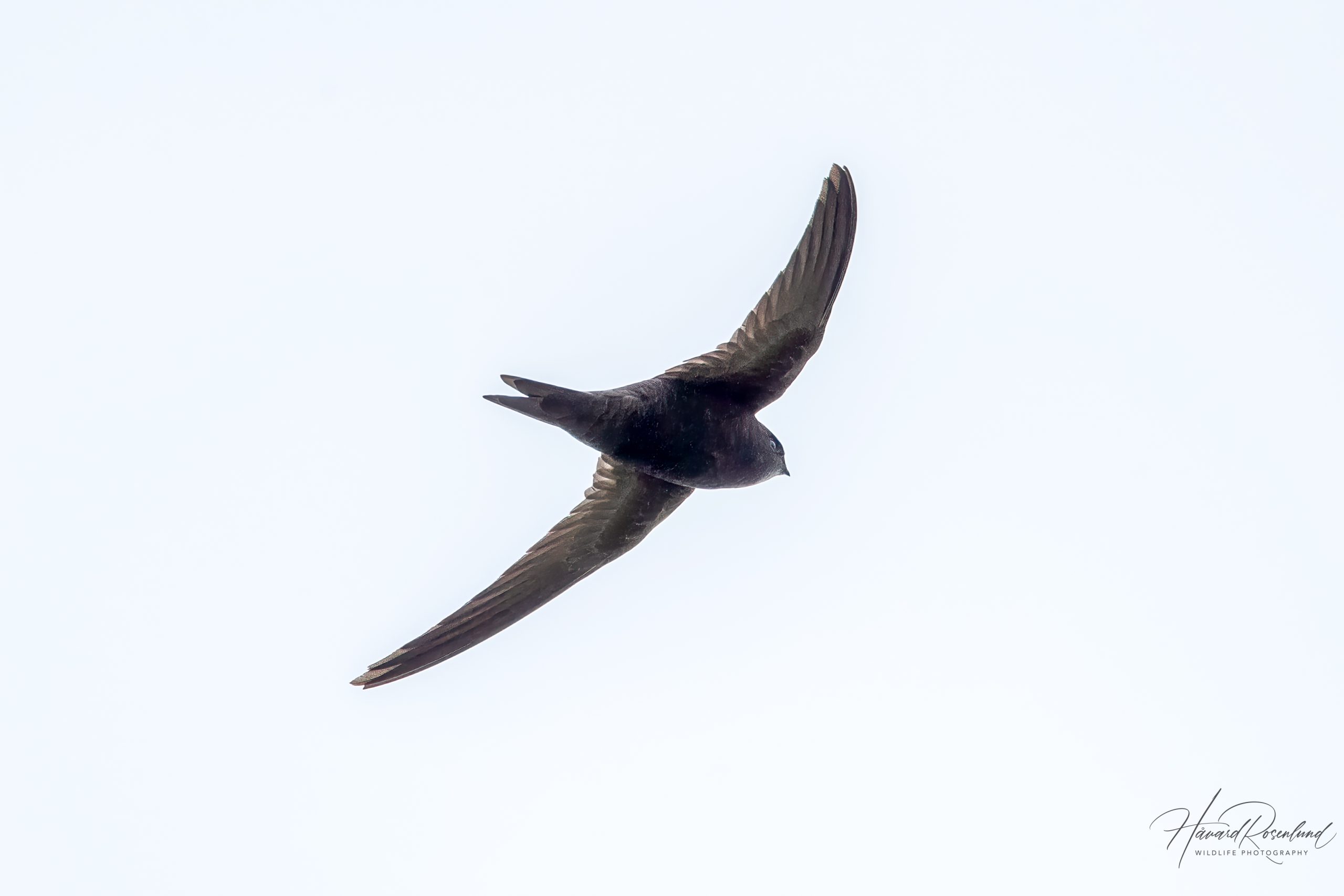
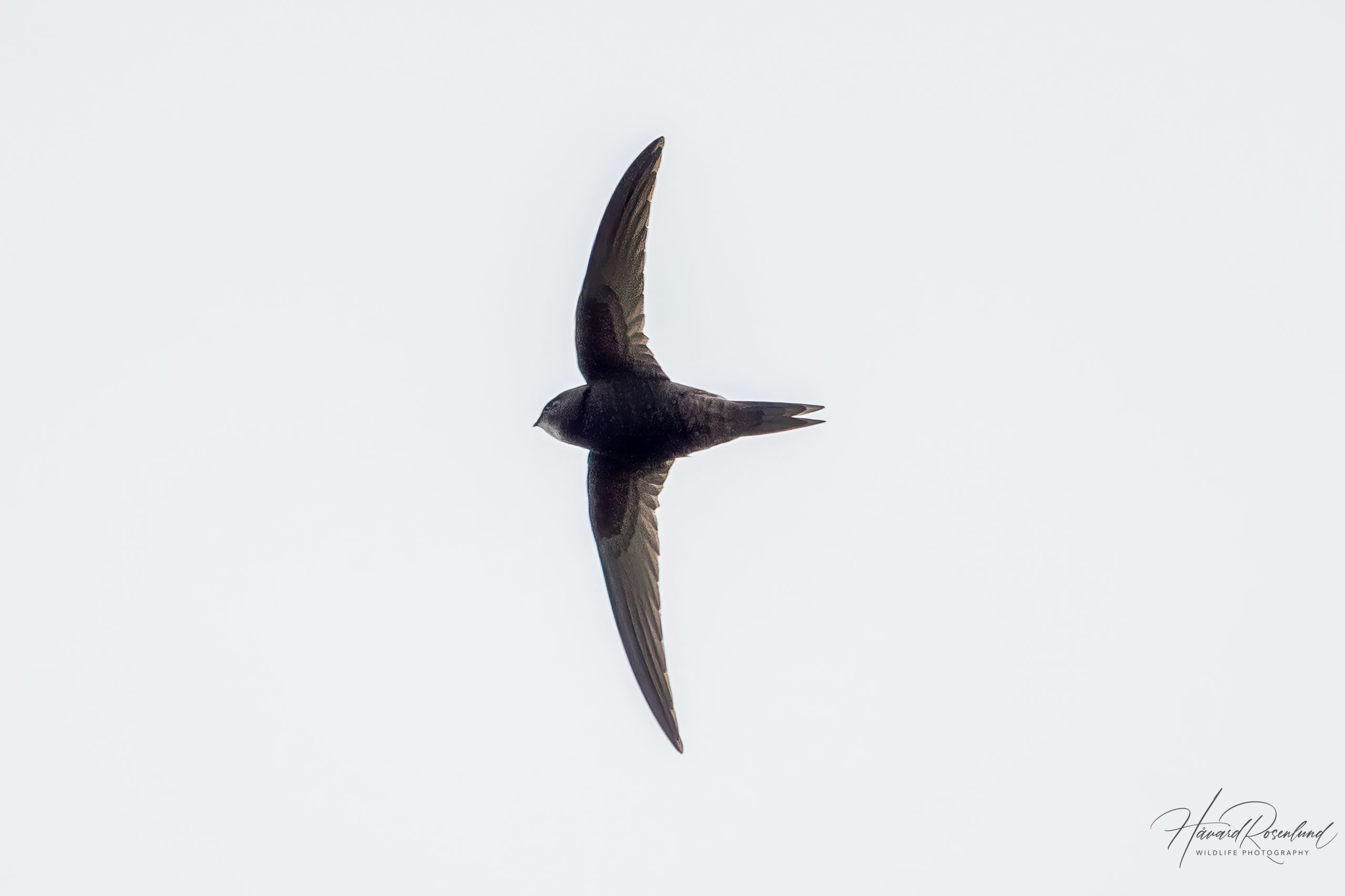
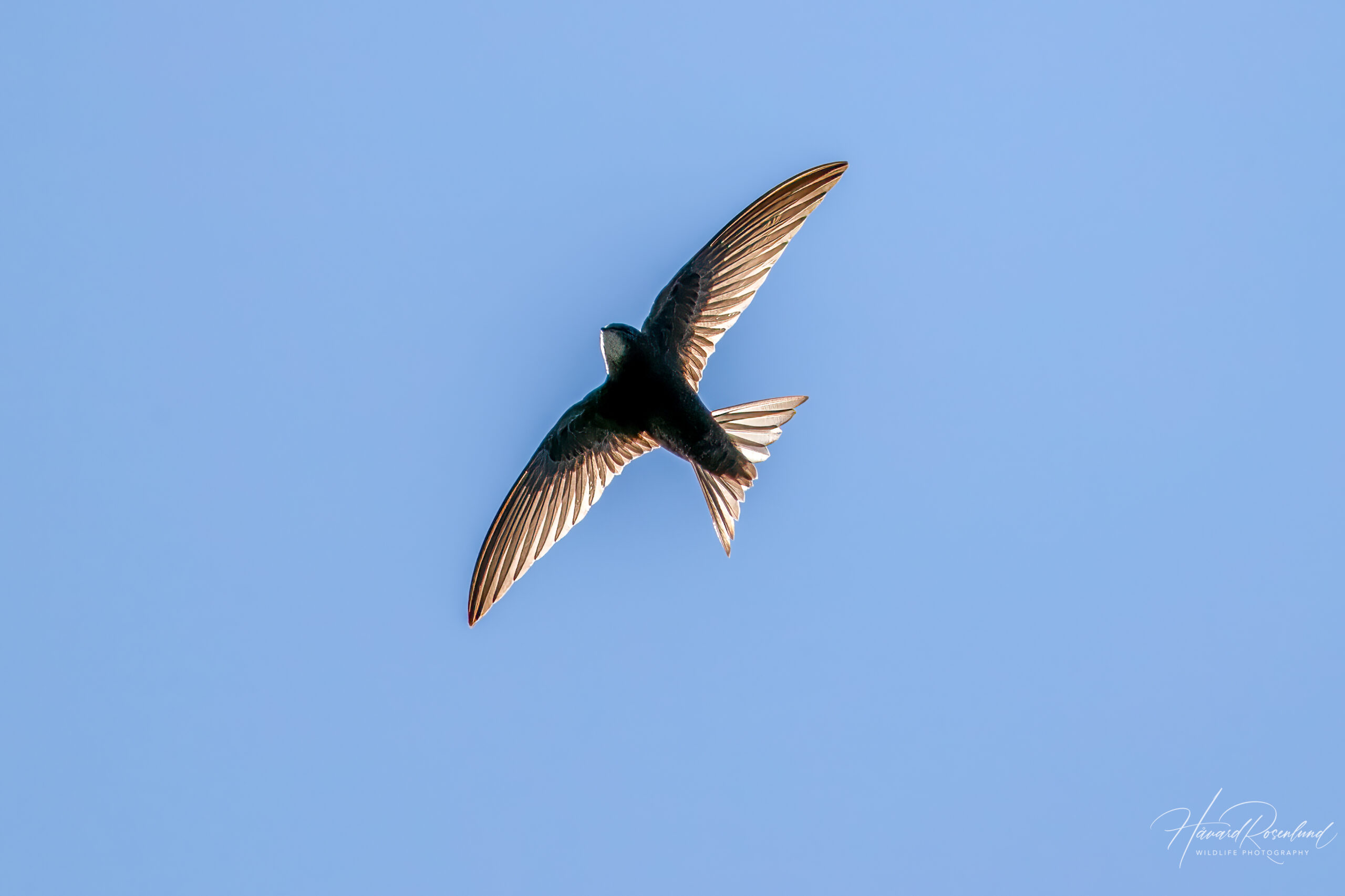
The common swift (Apus apus) is an exceptionally aerial bird that breeds across Europe and much of Asia before migrating to sub-Saharan Africa. Adults are about 16–17 cm long and weigh around 39.5 g. The plumage is almost uniformly dark brown, appearing black at a distance, with only a small pale patch on the throat. The long, narrow, sickle-shaped wings and short forked tail give the bird its distinctive silhouette.
Swifts may superficially resemble swallows, but the similarity reflects convergent adaptation to catching insects in flight rather than close relationship. Swifts are instead close relatives of hummingbirds within the order Apodiformes. The swift's compact body and exceptionally long wings are built for sustained high-speed flight rather than manoeuvring from perches or moving on the ground.
Habitat
Common swifts feed over towns, farmland, wetlands, woodland edges and many other landscapes. They follow concentrations of airborne prey as weather changes where insects are most abundant.
Their breeding requirements are much more specialised. Swifts need sheltered cavities with an unobstructed flight path, historically in cliffs and hollow trees but now very often beneath roof tiles, in eaves and in cracks or holes in buildings. This dependence on small architectural openings makes many urban colonies closely tied to older buildings.
Diet
Common swifts feed almost entirely on small airborne animals. Flying insects dominate, together with spiders carried into the air on silk threads. The exact prey composition changes with weather, season and locality because the birds concentrate where aerial insects are most abundant.
Food is caught in continuous flight. Adults can travel considerable distances from the nest during poor local feeding conditions, returning with compact food balls of captured arthropods for the chicks.
Behaviour
Few birds are as completely adapted to life in the air. Activity loggers showed that common swifts remained airborne for more than 99% of their ten-month non-breeding period; some tracked individuals never landed at all, while most others showed only occasional short periods without flight. They feed and drink in flight and collect light nesting material from the air. During breeding, nesting adults return to the cavity to incubate, feed young and roost.
Because swifts remain airborne for so long, they are often said to sleep in flight. Tracking shows that they remain airborne through almost all nights, strongly suggesting that at least some sleep occurs in flight. The studies did not measure brain activity, however, and therefore do not demonstrate that swifts sleep with one brain hemisphere at a time. A different energy-saving response has been measured directly: free-living adults and chicks resting in nests can use short bouts of nocturnal torpor during cold breeding-season nights, lowering body temperature and metabolic rate.
Swifts are highly social around breeding colonies. Their fast, vocal “screaming parties” sweep around rooftops and nest sites, especially on summer evenings. A 2010 high-speed-camera study measured a maximum horizontal speed of 31.1 m/s, about 112 km/h, during these flights. Outside breeding they spend almost all their time in the air rather than using conventional roosts on the ground or in trees.
Migration
Common swifts are long-distance migrants and spend the northern winter in sub-Saharan Africa. Tracking of Swedish birds showed autumn movements south through Europe and North Africa toward stopover areas in West Africa and later wintering areas farther east and south. Spring migration was faster and strongly assisted by favourable winds.
Tracking across Europe has also revealed chain migration. Northern breeding populations, including birds from Fennoscandia, tend to winter farther north in western and central Africa, while birds breeding farther south in Europe continue to more southerly parts of Africa. The populations therefore retain much of their north–south ordering rather than leapfrogging one another.
Breeding
Common swifts are highly faithful to breeding sites and often return to the same cavity year after year. Pairs are socially monogamous. Natural nest sites include tree holes and rock crevices, but across much of Europe the species now nests predominantly in buildings. The simple nest is built from feathers, plant fragments and other light material collected in flight and bound together with saliva.
A typical clutch contains two to three eggs. Both parents incubate for about 18–24 days. The chicks remain in the nest for an unusually long and flexible period, normally around 37–56 days, because development depends strongly on weather and the availability of airborne insects. Both adults feed the young until fledging.
Status
The common swift is classified as least concern on the IUCN Red List. This global category does not reflect the severe declines recorded in parts of Europe.
British monitoring shows a 70% decrease between 1995 and 2024. Loss of nesting cavities during renovation and redevelopment is a well-documented pressure on building-nesting populations, while changes in the abundance of flying insects and conditions elsewhere in the annual cycle may also contribute.
Image gallery
Loading map and observations…
Have you seen this species?
Independent species archive
Did you find this species page useful?
Wildlife Vagabond is independently built and maintained. Voluntary support helps cover hosting, maps, data storage and continued improvements to the species archive.
Support Wildlife VagabondSpecies content will remain freely available.
References
Information about the species’ global distribution and status is based primarily on global Red List data. See the references below for details.
- BirdLife International. (n.d.). Common Swift species factsheet. https://datazone.birdlife.org/species/factsheet/common-swift-apus-apus
- British Trust for Ornithology. (n.d.). Swift. https://www.bto.org/learn/about-birds/birdfacts/swift
- Hedenström, A., Norevik, G., Warfvinge, K., Andersson, A., Bäckman, J., & Åkesson, S. (2016). Annual 10-Month Aerial Life Phase in the Common Swift Apus apus. Current Biology, 26(22), 3066-3070. https://doi.org/10.1016/j.cub.2016.09.014
- International Union for Conservation of Nature. (n.d.). Common Swift. The IUCN Red List of Threatened Species. https://www.iucnredlist.org/species/22686800/86111691
- Schaub, T., Meffert, P. J., & Kerth, G. (2016). Nest-boxes for Common Swifts Apus apus as compensatory measures in the context of building renovation: efficacy and predictors of occupancy. Bird Conservation International, 26(2), 164-176. https://doi.org/10.1017/S0959270914000525
- Wellbrock, A. H. J., Eckhardt, L. R. H., Kelsey, N. A., Heldmaier, G., Rozman, J., & Witte, K. (2022). Cool birds: first evidence of energy-saving nocturnal torpor in free-living common swifts Apus apus resting in their nests. Biology Letters, 18(4), 20210675. https://doi.org/10.1098/rsbl.2021.0675
- Åkesson, S., Atkinson, P. W., Bermejo, A., Puente, J., Ferri, M., Hewson, C. M., Holmgren, J., Kaiser, E., Kearsley, L., Klaassen, R. H. G., Kolunen, H., Matsson, G., Minelli, F., Norevik, G., Pietiäinen, H., Singh, N. J., Spina, F., Viktora, L., & Hedenström, A. (2020). Evolution of chain migration in an aerial insectivorous bird, the common swift Apus apus. Evolution, 74(10), 2377-2391. https://doi.org/10.1111/evo.14093
- Åkesson, S., Klaassen, R., Holmgren, J., Fox, J. W., & Hedenström, A. (2012). Migration Routes and Strategies in a Highly Aerial Migrant, the Common Swift Apus apus, Revealed by Light-Level Geolocators. PLoS ONE, 7(7), e41195. https://doi.org/10.1371/journal.pone.0041195