
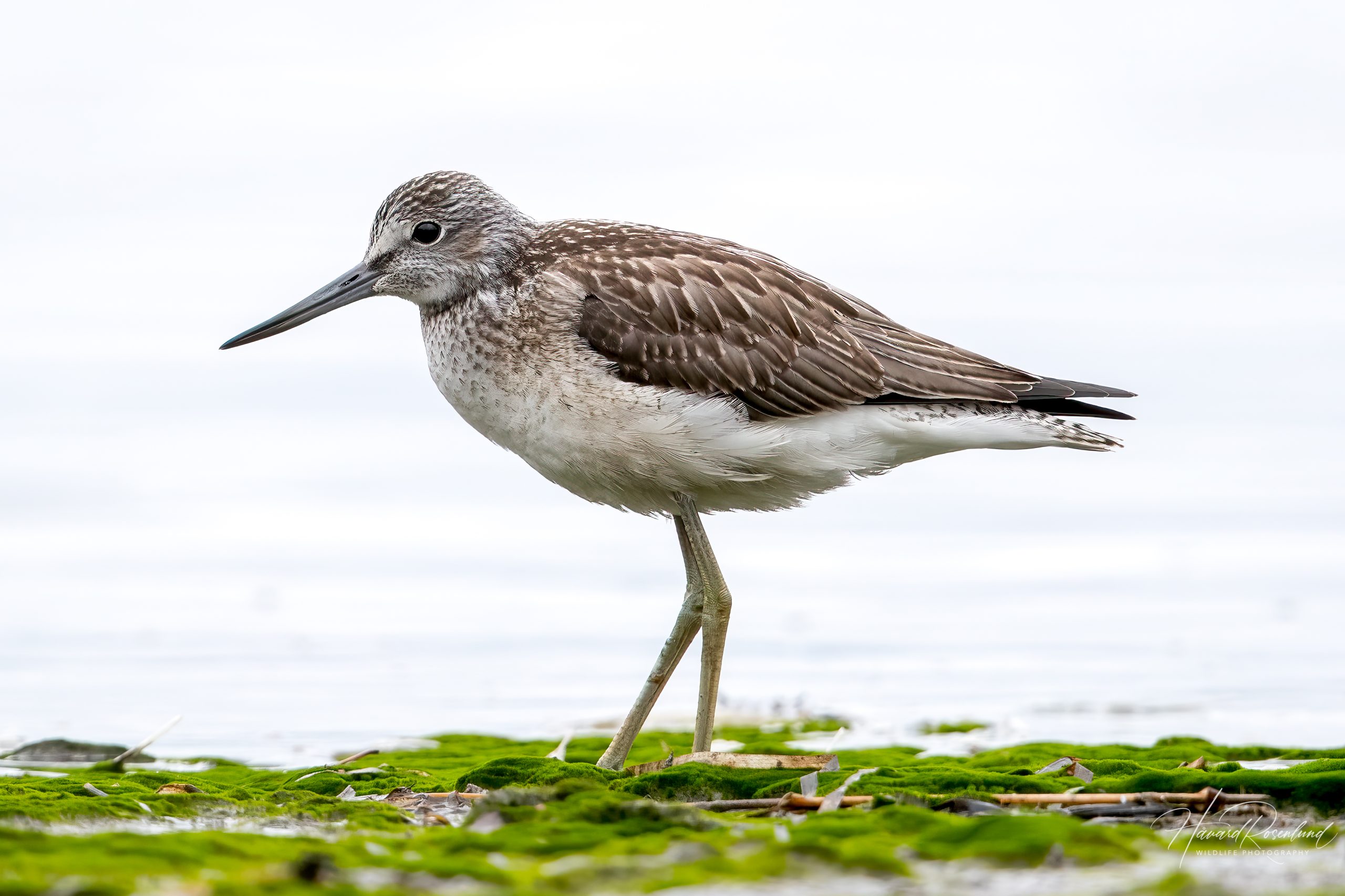
Common Greenshank
Tringa nebularia
At a glance
Habitat
- Breeds in open boreal woodland, bogs and moorland near wetlands; uses estuaries, mudflats, lagoons, lakes and river margins outside breeding
Diet
- Aquatic insects, crustaceans, molluscs, worms, small fish and amphibians
Activity
- Mostly diurnal, but can feed by moonlight or at night on migration and wintering grounds
Size
- Length: 30–35 cm Weight: about 200 g average
Range
- Breeds across northern Eurasia; non-breeding range extends from western Europe and Africa through southern Asia to Australasia
Description
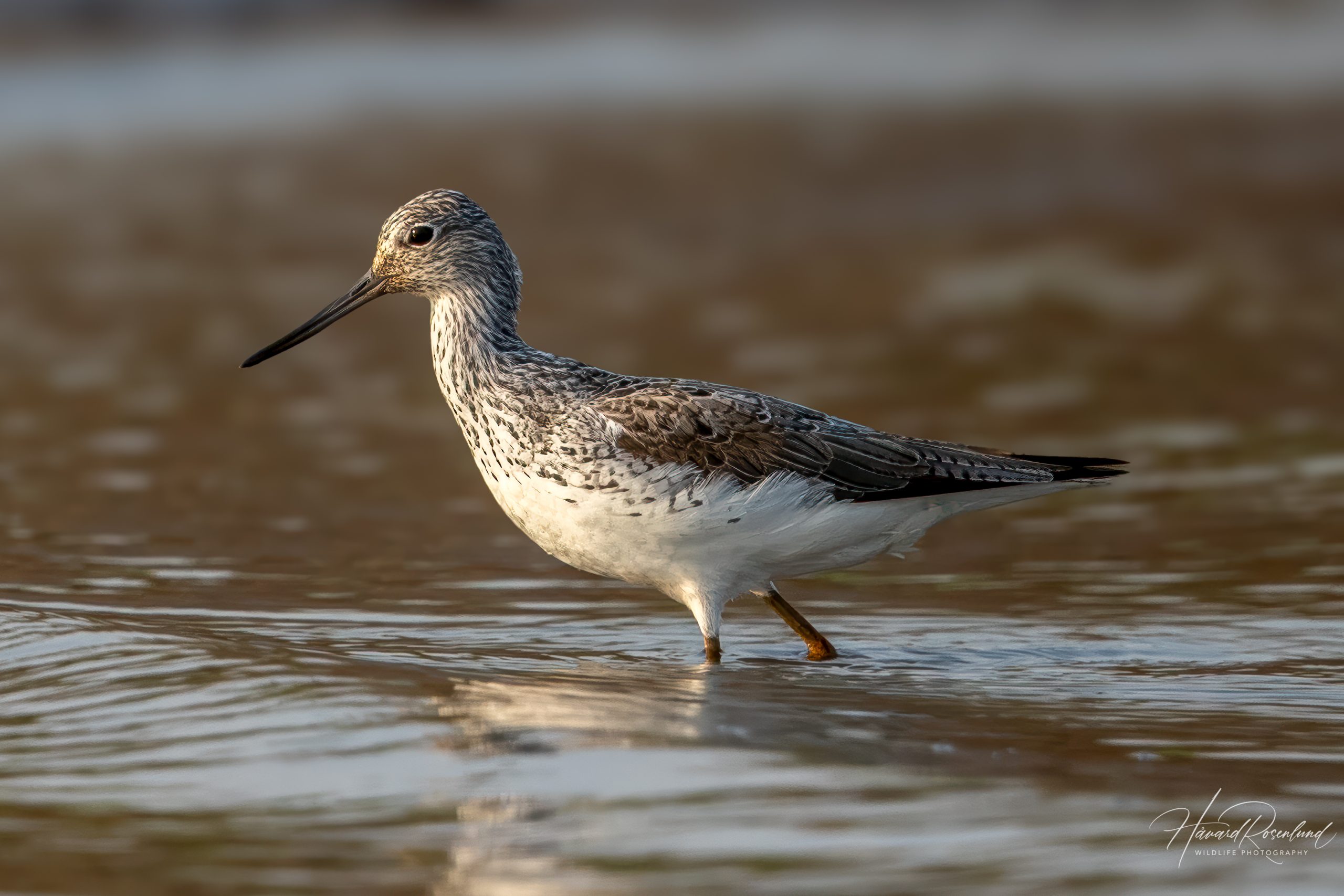
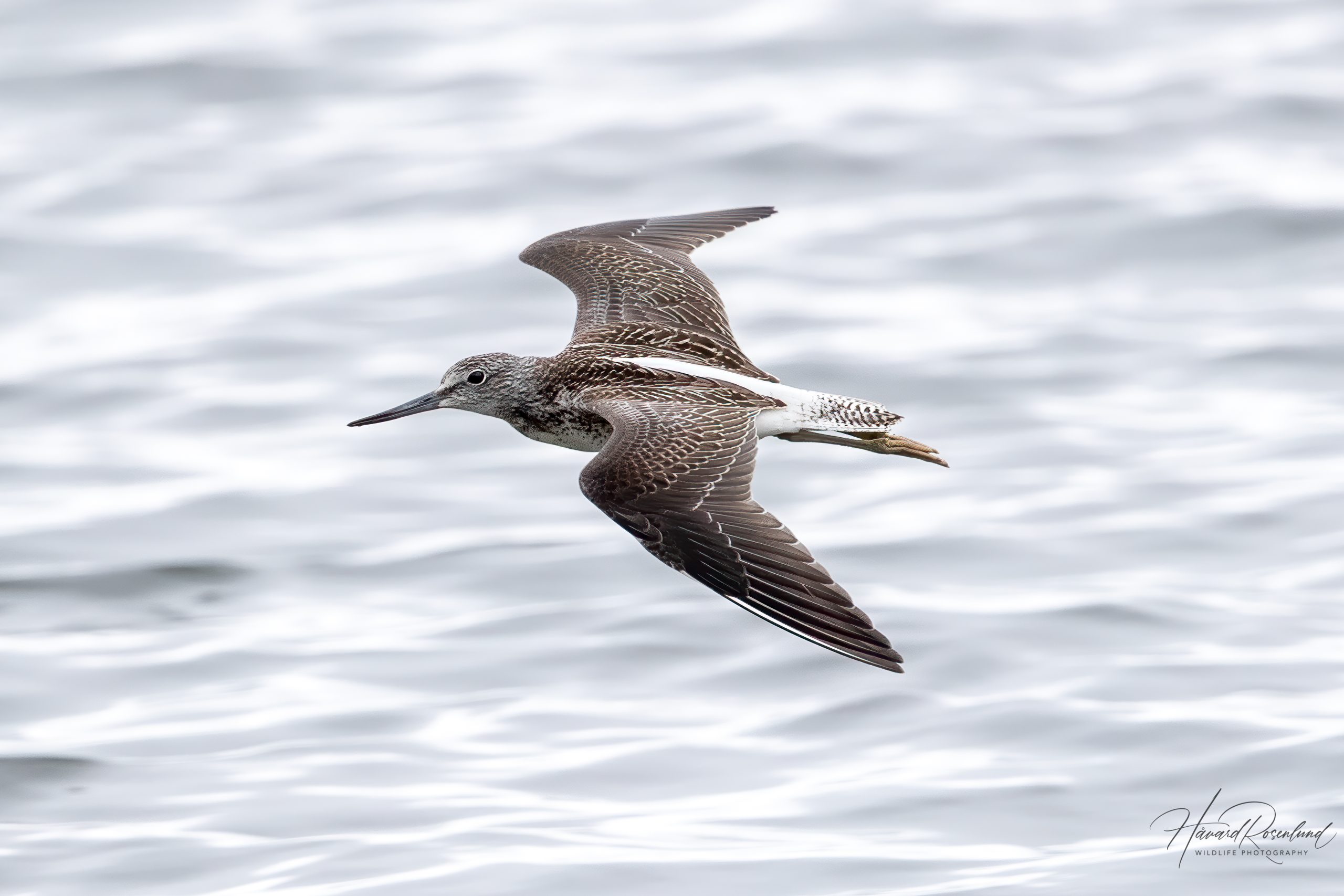
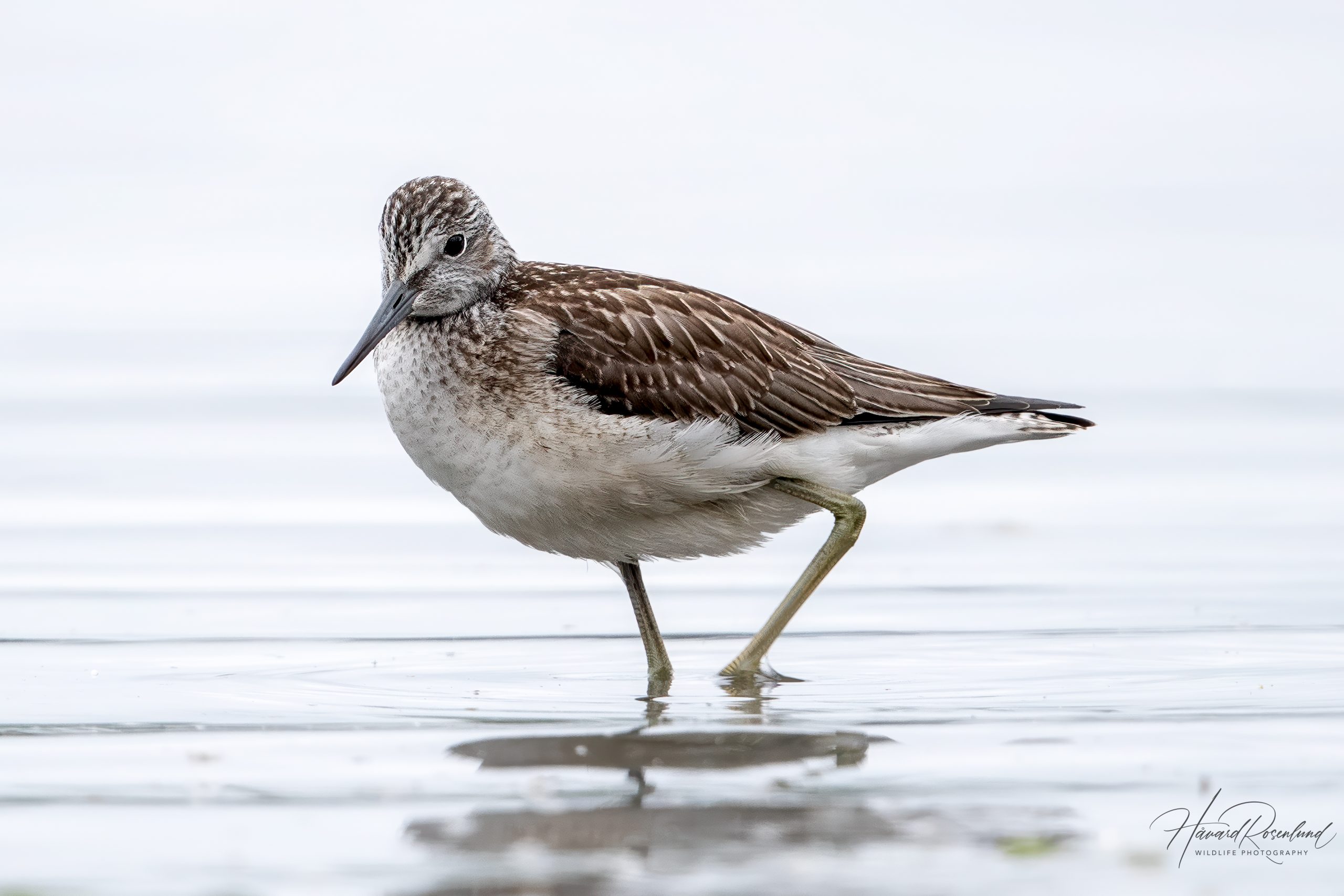
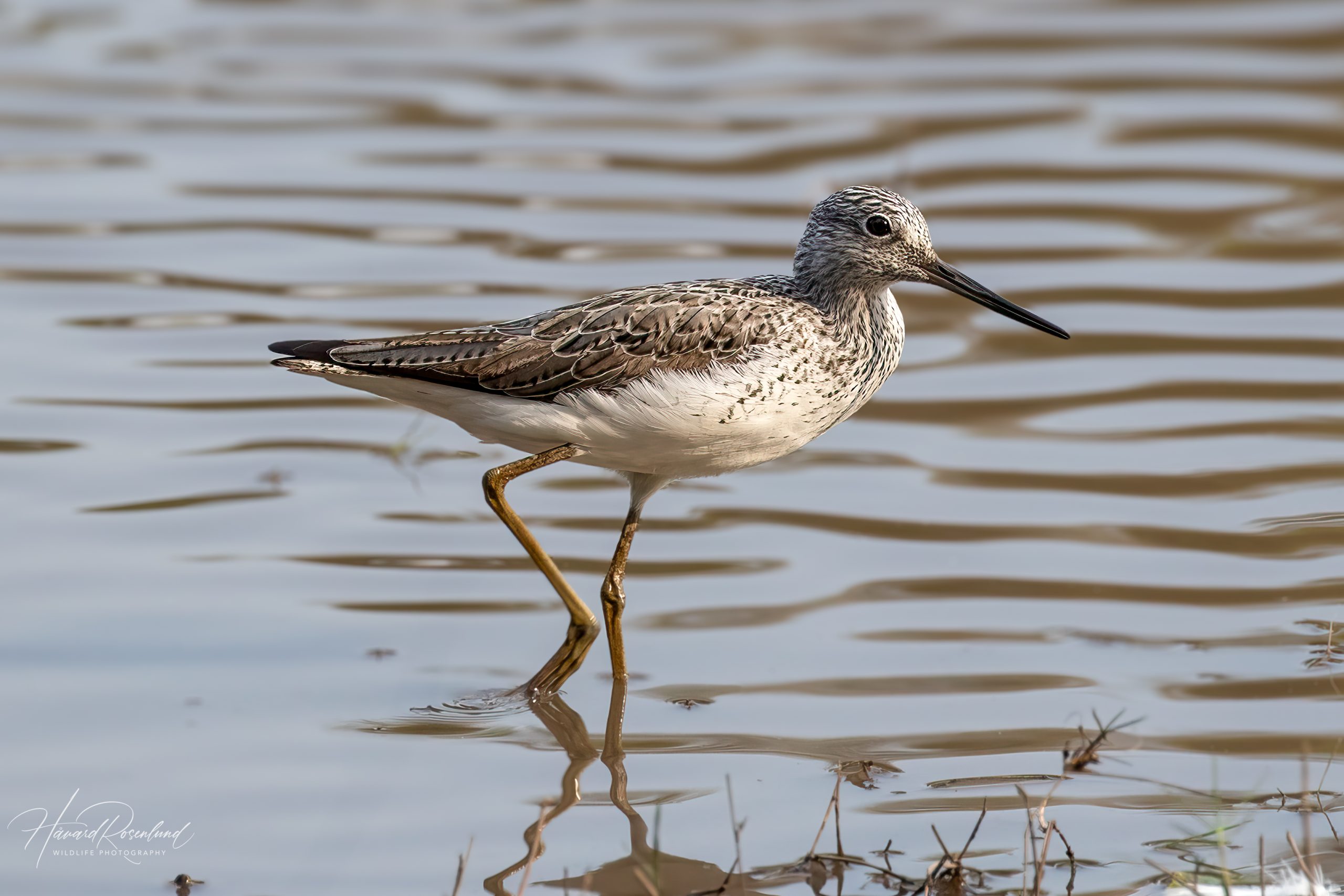
The common greenshank (Tringa nebularia) is one of the larger Tringa sandpipers, about 30–35 cm long with long grey-green legs and a long bill that is slightly upturned toward the tip. Breeding adults are heavily streaked and spotted grey-brown above and on the breast, while winter birds are cleaner grey and white. In flight, the long white wedge running from the back up the rump is a particularly useful identification feature.
It is larger, paler and longer-legged than the common redshank (Tringa totanus) and lacks that species' red legs. Spotted redshank (Tringa erythropus) can overlap in size, but normally has a straighter or slightly downcurved bill and different seasonal plumages. The greenshank's loud ringing three-note call is often heard before the bird is seen.
Habitat
Breeding habitat differs markedly from the tidal flats on which many people encounter the species during migration. Across northern Europe and Russia, greenshanks typically nest in open boreal woodland, boggy moorland and forest–wetland mosaics near pools, lakes, rivers or other shallow water. Trees or taller shrubs are often present around breeding territories even when the immediate nest site is open.
Outside the breeding season the species becomes much more broadly aquatic. Estuaries, tidal mudflats, saltmarshes, lagoons, reservoirs, shallow lakes, river margins and flooded fields are all used. Birds favour shallow water and exposed edges where mobile prey can be detected and pursued.
Diet
Greenshanks eat a broad range of aquatic prey, including insects and their larvae, crustaceans, molluscs, worms, small fish and amphibians. The relative importance of each group changes with habitat: fish can be prominent in shallow pools and lagoons, while invertebrates dominate many mudflat and freshwater sites.
Behaviour
Greenshanks forage very actively. They walk rapidly through shallow water, probe and peck, sweep the bill sideways and sometimes run after fish. They may also stir the substrate with the feet to flush hidden prey. The species is primarily active by day but can extend feeding into darkness when tides, disturbance or prey availability make this advantageous.
Breeding birds are strongly territorial and conspicuous in the air, using loud calls and territorial flights over bogs and open woodland. A 27-year study published in 1991 from north-west Scotland found that some territories were occupied almost every year for decades, while territories with the greatest disturbance from off-road vehicles were used less consistently. Outside breeding, aggression decreases and birds are usually seen alone or in small loose groups, although larger concentrations can occur at rich feeding sites or high-tide roosts.
Migration
Migration strategy varies greatly between populations. Much of the northern Eurasian population travels thousands of kilometres to non-breeding areas extending from Africa and the Middle East through southern Asia to Australasia. Important stopover wetlands therefore connect breeding territories in taiga and moorland with a very broad non-breeding range. Many longer migratory flights take place at night.
A tracking study published in 2020 of greenshanks breeding in northern Scotland found that most wintered in Ireland, with some birds elsewhere in Britain and in France. Recorded wintering areas lay 530–1,560 km from the breeding grounds, with a median distance of 665 km, and individuals showed strong fidelity to the same winter areas between years. Some breeding populations therefore migrate far shorter distances than others.
Breeding
The nest is a shallow scrape on the ground, usually concealed among heather, grass or other low vegetation in open woodland, bog or moorland near feeding wetlands. Three or four eggs are typical. Both parents participate in incubation, which lasts about 24–26 days.
The chicks are precocial, meaning they leave the nest soon after hatching and feed for themselves while guarded by the adults. They typically become capable of sustained flight after about 28–29 days. Predation is an important cause of nest failure, and adults become highly vocal and defensive when eggs or chicks are threatened.
Status
The common greenshank is classified as least concern on the IUCN Red List and has a very large range and substantial total population. Population trends are not identical across regions, and the species depends on a chain of breeding, stopover and non-breeding wetlands that can be affected independently.
Drainage and degradation of wetlands, disturbance and loss of intertidal feeding areas can reduce habitat locally. Birds from widely separated breeding populations may concentrate at particular estuaries or shallow wetlands during migration and winter, so local site quality can matter greatly even though the species is not globally threatened.
Image gallery
Loading map and observations…
Have you seen this species?
Independent species archive
Did you find this species page useful?
Wildlife Vagabond is independently built and maintained. Voluntary support helps cover hosting, maps, data storage and continued improvements to the species archive.
Support Wildlife VagabondSpecies content will remain freely available.
References
Information about the species’ global distribution and status is based primarily on global Red List data. See the references below for details.
- BirdLife International. (n.d.). Common Greenshank species factsheet. https://datazone.birdlife.org/species/factsheet/common-greenshank-tringa-nebularia
- British Trust for Ornithology. (n.d.). Greenshank BirdFacts. https://www.bto.org/learn/about-birds/birdfacts/greenshank
- International Union for Conservation of Nature. (n.d.). Common Greenshank. The IUCN Red List of Threatened Species. https://www.iucnredlist.org/species/22693220/86684205
- Summers, R., Christian, N., Etheridge, B., Rae, S., Cleasby, I., & Pálsson, S. (2020). Scottish-breeding Greenshanks Tringa nebularia do not migrate far. Bird Study, 67(1), 1-7. https://doi.org/10.1080/00063657.2020.1733488
- Thompson, P. S., & Thompson, D. B. A. (1991). Greenshanks Tringa nebularia and long‐term studies of breeding waders. Ibis, 133(s1), 99-112. https://doi.org/10.1111/j.1474-919X.1991.tb07673.x