
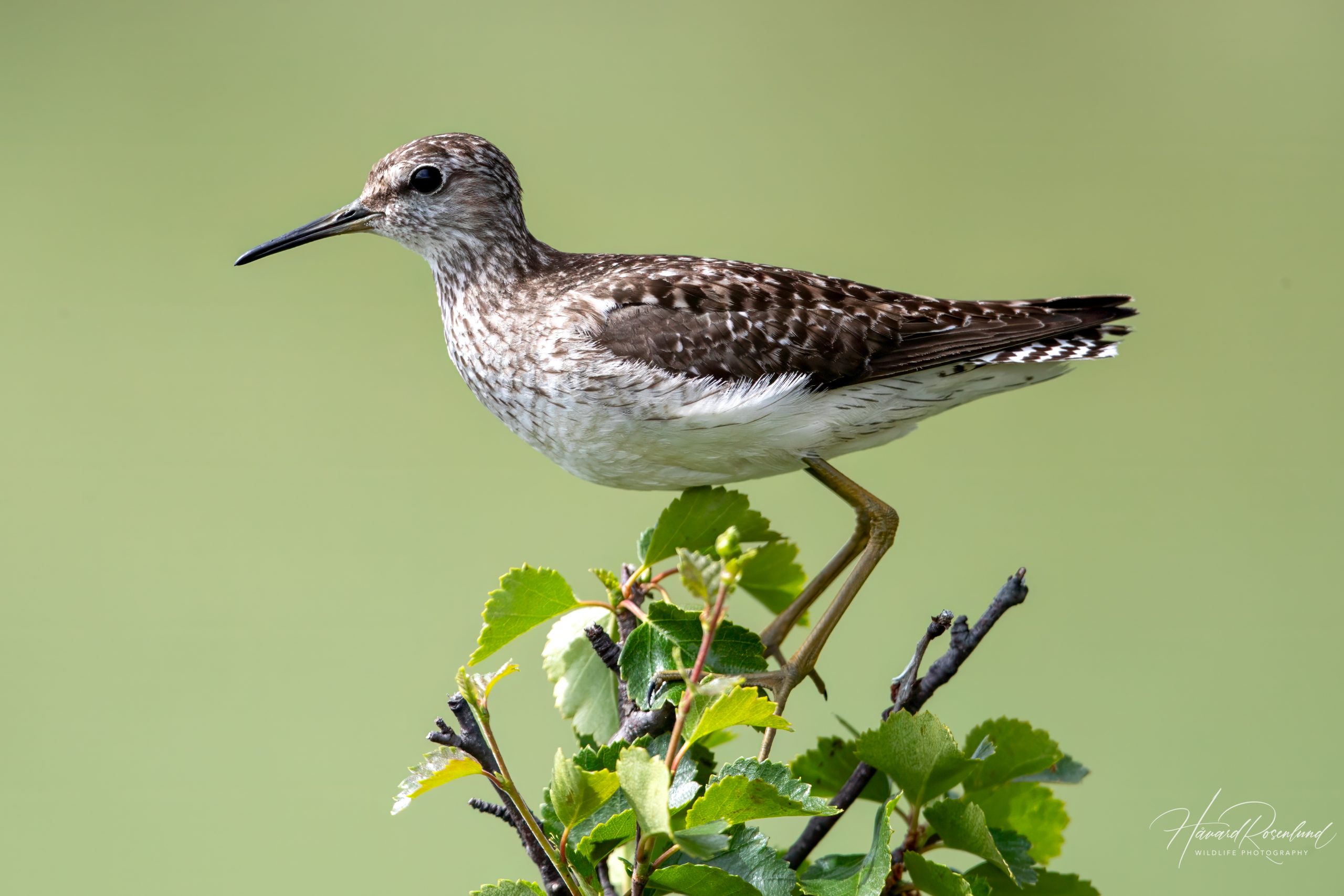
Wood Sandpiper
Tringa glareola
At a glance
Habitat
- Breeds around bogs, marshes and small pools in boreal forest and forest tundra; uses shallow freshwater wetlands during migration and winter
Diet
- Mainly insects and other small invertebrates picked from shallow water, mud and wet vegetation
Activity
- Diurnal
Size
- Length: ~19–23 cm Weight: ~50–90 g
Range
- Breeds across northern Europe and Asia; winters mainly in sub-Saharan Africa, South Asia and Southeast Asia, with some reaching Australia
Description
The wood sandpiper (Tringa glareola) is a small, elegant wader that breeds across the boreal and subarctic regions of Europe and Asia. Adults are about 19–23 cm long, have a wingspan of roughly 54–57 cm and typically weigh around 50–90 g. The upperparts are brown with many pale spots, the underparts are white with fine streaking on the breast, and a strong pale eyebrow gives the face a distinctive pattern.
The similar green sandpiper (Tringa ochropus) is stockier and more strongly contrasted, with darker upperparts and a brighter white rump. Wood sandpipers usually look slimmer, stand on longer yellow-green legs and show a more prominent eyebrow.
Habitat
Wood sandpipers breed around bogs, marshes, wet heaths and small pools within taiga and forest-tundra landscapes. They favour open, waterlogged ground broken by low shrubs and scattered trees rather than broad coastal mudflats.
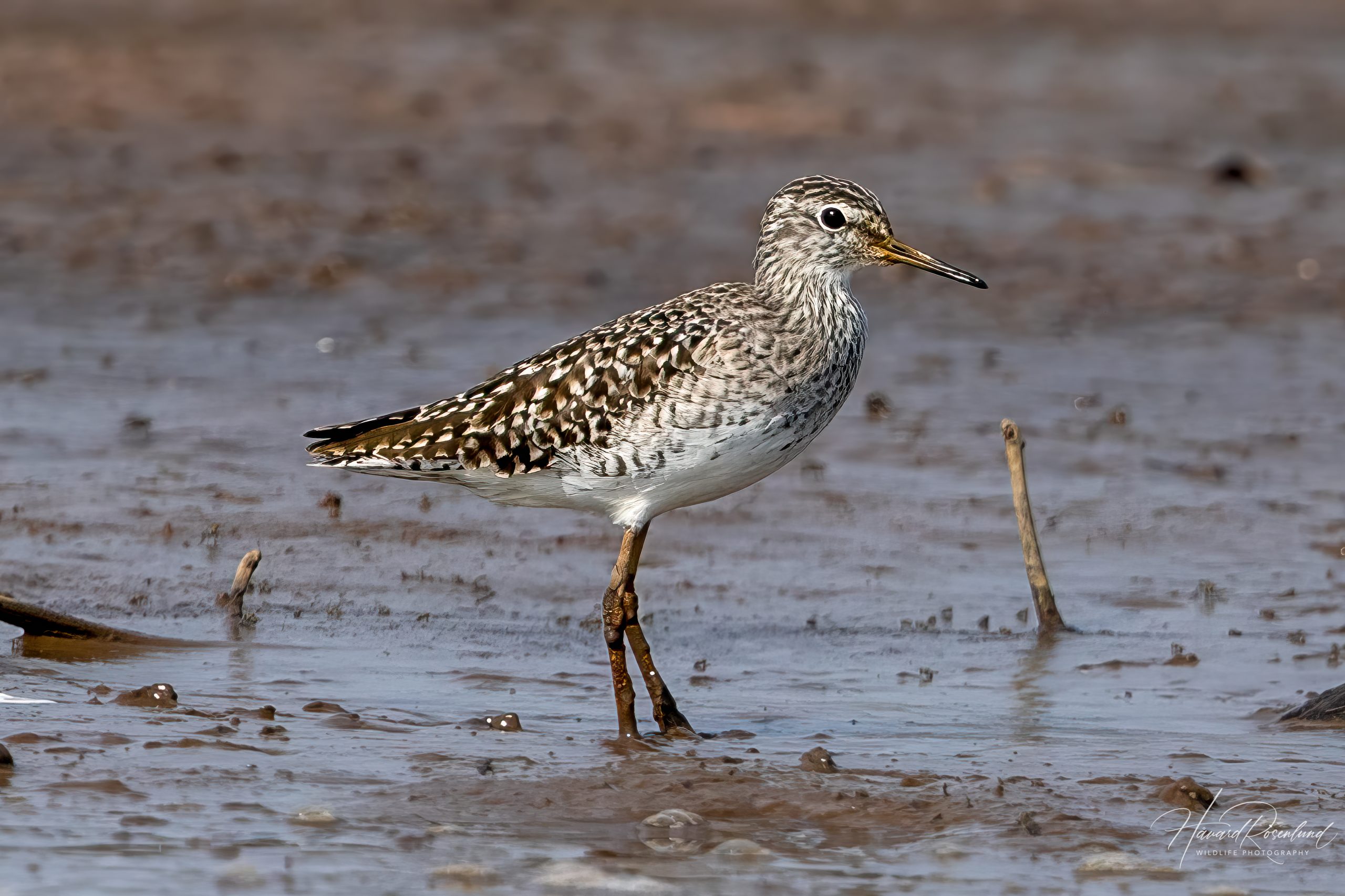
During migration and winter they use a much wider range of shallow freshwater habitats, including marshes, flooded grassland, rice fields, sewage ponds and the muddy margins of lakes and reservoirs. Small wetlands with emergent vegetation can be particularly valuable stopover sites because they provide both cover and dense concentrations of invertebrate prey.
Diet
The diet consists mainly of insects and other small invertebrates. Beetles, flies and their larvae, water bugs, spiders, small crustaceans, molluscs and worms are taken from shallow water, wet mud and low vegetation. On northern breeding grounds, small aquatic insects are especially important.
Wood sandpipers feed actively, walking through shallow water and soft mud while picking prey from the surface or probing lightly with the bill. Their quick movements allow them to exploit small prey scattered across wetland edges.
Behaviour
Outside the breeding season, wood sandpipers are often encountered alone or in small, loose groups, although larger concentrations can form at especially rich stopover sites. They tend to remain active and mobile around shallow freshwater margins rather than standing for long periods in one place.
Migration
The wood sandpiper is a long-distance migrant. Birds breeding in northern Europe and Asia leave their nesting areas early, often while summer is still well underway, and depend on a chain of freshwater wetlands where they can rest and rebuild energy reserves before continuing south.
A tracking study published in 2021 followed three wood sandpipers breeding in the Scottish Highlands across five southward migrations in total. The birds left the breeding grounds around late June, spent about 15 days in total at stopover sites from Britain and western Europe to Mauritania, and reached Senegal and The Gambia around mid-July. The study illustrates how several well-placed wetlands can link a northern breeding site with a wintering area thousands of kilometres away.
Breeding
Breeding takes place in wet boreal landscapes, with the nest usually placed on the ground among grass, moss or other low vegetation. A shallow cup is lined with plant material. Four eggs are typical, with three to four recorded. Both sexes may incubate, with the female doing most of it; incubation lasts about 22–23 days.
The chicks leave the nest soon after hatching and can find much of their own food while the adults guard and guide them. They usually fledge after about 29–31 days and until then depend on wet ground with abundant small prey and enough vegetation for shelter. Wood sandpipers occasionally use an old nest of another bird above the ground, but ground nesting is the normal pattern.
Status
The wood sandpiper is classified as least concern on the IUCN Red List. It remains widespread across northern Eurasia, but the species depends on wetlands during every stage of its annual cycle: northern bogs for breeding and a long chain of freshwater sites for migration and wintering.
Drainage, agricultural conversion and degradation of small wetlands can affect birds far beyond the place where habitat is lost, because migrants may depend on several separate stopover sites during a single journey.
Image gallery
Loading map and observations…
Have you seen this species?
Independent species archive
Did you find this species page useful?
Wildlife Vagabond is independently built and maintained. Voluntary support helps cover hosting, maps, data storage and continued improvements to the species archive.
Support Wildlife VagabondSpecies content will remain freely available.
References
Information about the species’ global distribution and status is based primarily on global Red List data. See the references below for details.
- BirdLife Australia. (n.d.). Wood Sandpiper species profile. https://birdlife.org.au/bird-profiles/wood-sandpiper/
- BirdLife International. (n.d.). Wood Sandpiper species factsheet. https://datazone.birdlife.org/species/factsheet/wood-sandpiper-tringa-glareola
- British Trust for Ornithology. (n.d.). Wood Sandpiper BirdFacts. https://www.bto.org/learn/about-birds/birdfacts/wood-sandpiper
- International Union for Conservation of Nature. (n.d.). Wood Sandpiper. The IUCN Red List of Threatened Species. https://www.iucnredlist.org/species/22693247/86689640
- Ron W. Summers, R. W., Etheridge, B., Christian, N., Elkins, N., & Cleasby, I. R. (2021). Timing, staging, speed and destination of migrant Wood Sandpipers Tringa glareola breeding in Scotland. Wader Study, 128(2). https://doi.org/10.18194/ws.00234