
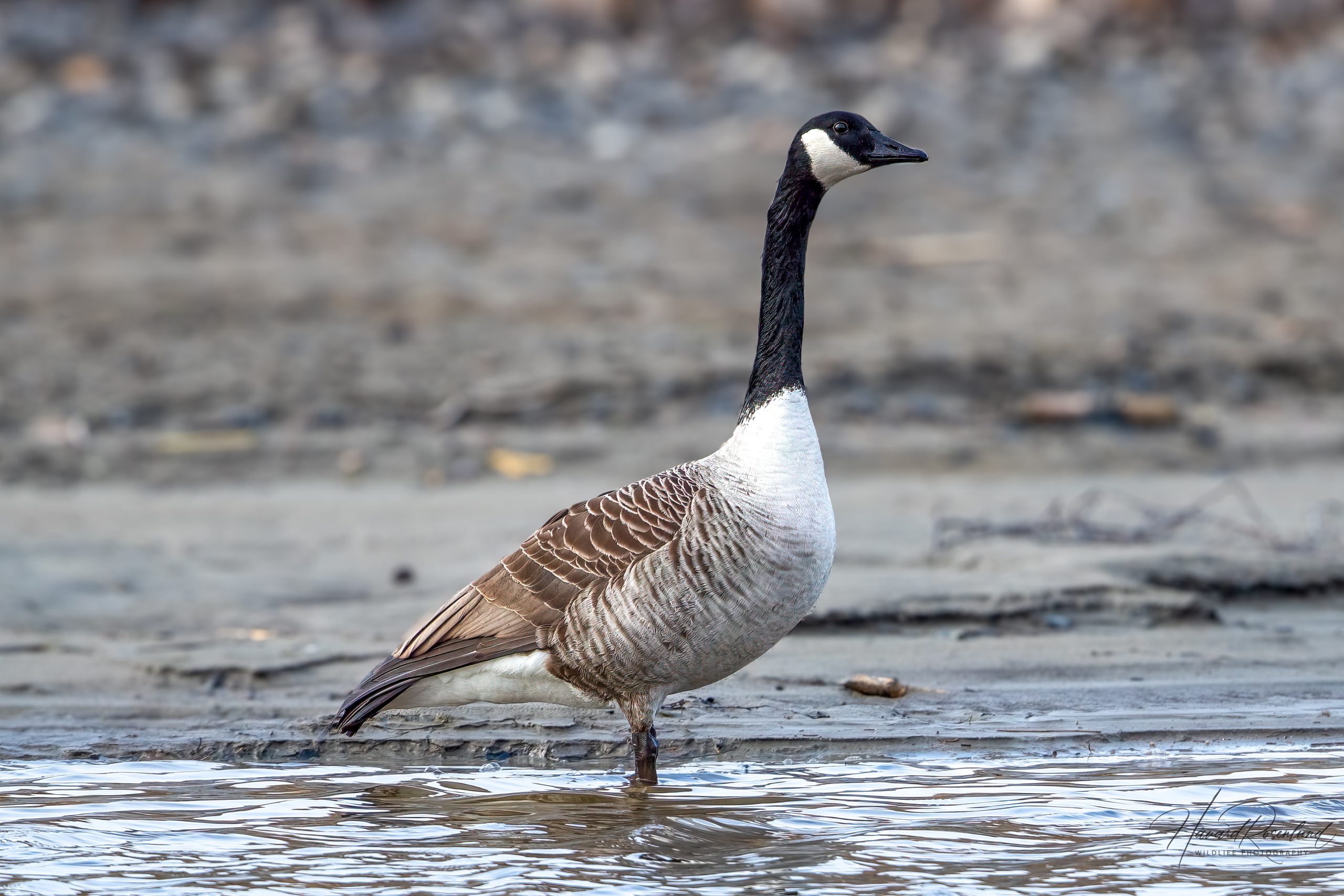
Canada Goose
Branta canadensis
At a glance
Habitat
- Lakes, ponds, rivers, wetlands, coasts and open grassland or farmland close to water
Diet
- Mainly grasses, leaves, aquatic plants, seeds and grain; small amounts of animal food are taken opportunistically
Activity
- Diurnal
Size
- Length: 90–115 cm Weight: 3.2–4.9 kg
Range
- Native to North America and Greenland; widely introduced and established in Europe and New Zealand
Description
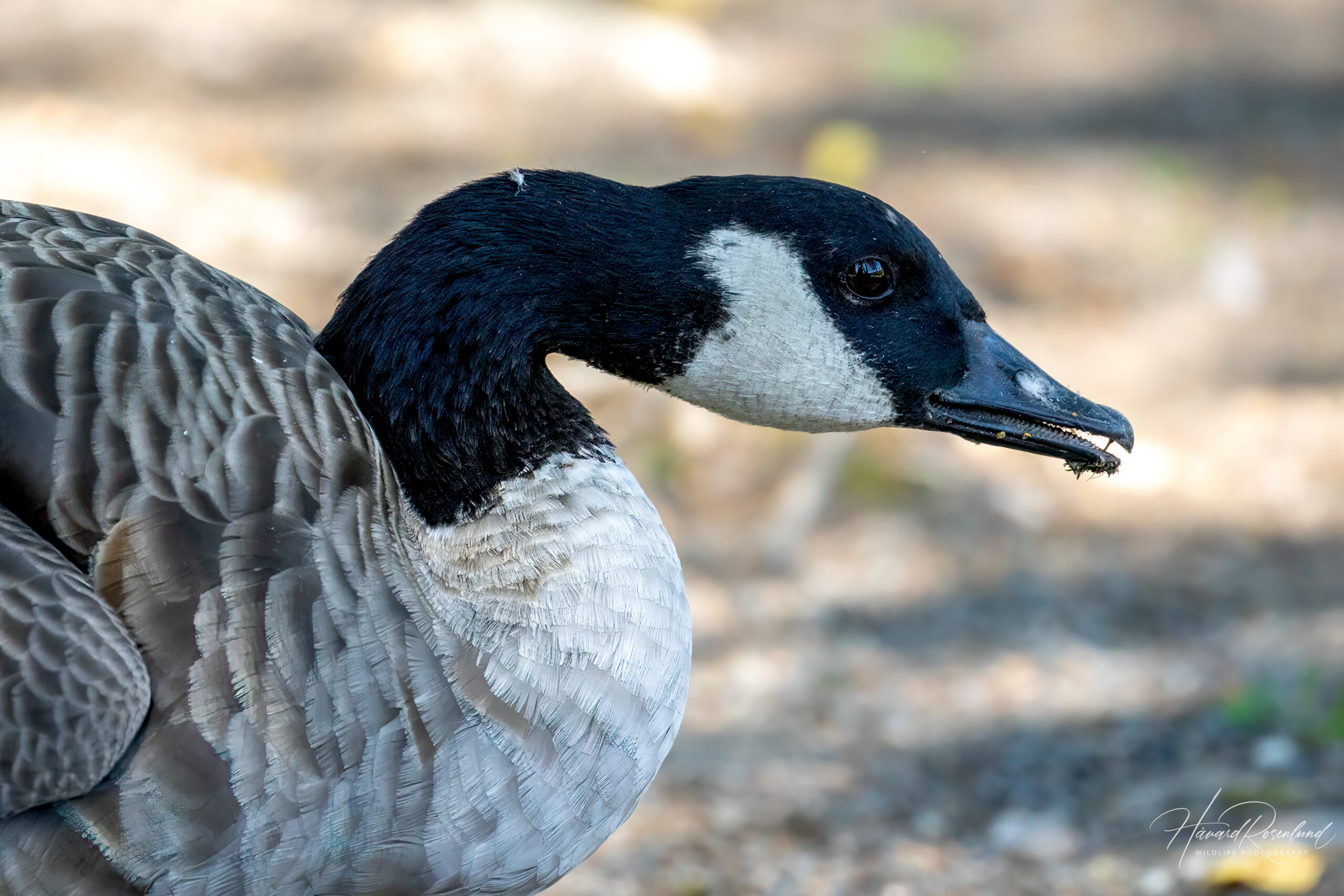
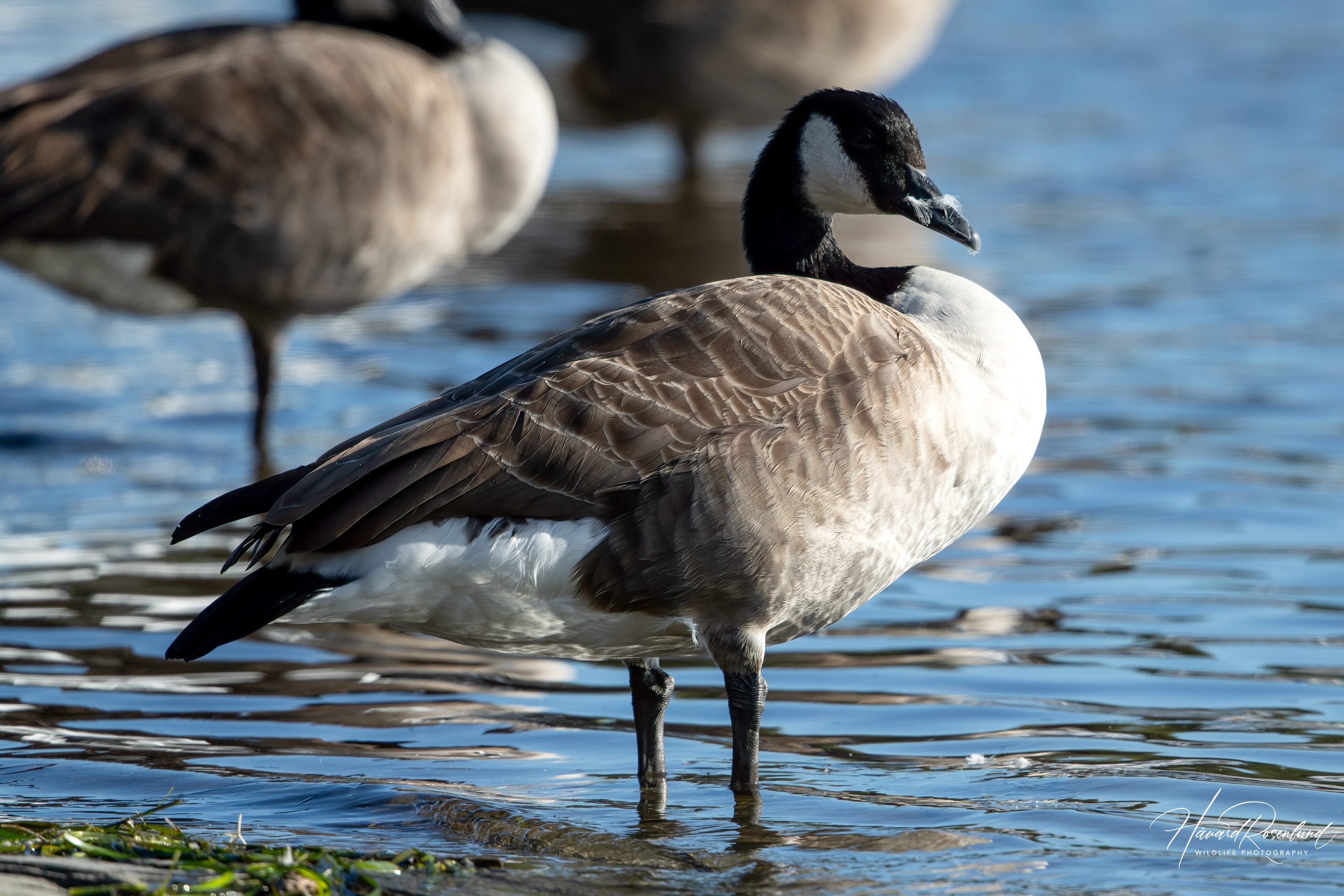
The Canada goose (Branta canadensis) is a large goose native to North America and Greenland and now familiar in many introduced populations elsewhere. Adults typically measure about 90–115 cm in length. Body size varies strongly among subspecies and between sexes; European birds average around 4 kg, with males generally heavier than females. The black head and neck, broad white cheek patch, brown body and pale breast make the species distinctive.
The closely related cackling goose (Branta hutchinsii) was formerly included within the Canada goose complex and is generally smaller and more compact, with a shorter neck and smaller bill.
Habitat
Canada geese use an exceptionally wide variety of waters and open landscapes, including lakes, ponds, rivers, reservoirs, wetlands, estuaries, sheltered coasts, farmland, parks and lawns. Water provides safe resting and breeding habitat, while short grass and agricultural fields can offer abundant food nearby.
This combination of open grazing areas and nearby water is particularly favourable in human-modified landscapes, helping both native and introduced populations persist around towns, parks and intensively managed farmland.
Diet
The species is predominantly herbivorous. Birds graze on grasses and other terrestrial plants, take seeds and grain in fields and feed on aquatic vegetation by dabbling or reaching below the surface. Small amounts of insects and other animal material may be eaten opportunistically, especially by growing young.
The ability to exploit fertilised lawns, crops and other concentrated human-created food sources is one reason introduced populations can reach high densities.
Migration
Native Canada goose populations range from long-distance migrants to almost completely resident birds. Many northern breeders move south behind advancing winter conditions and return as snow and ice retreat, while populations living in milder climates or food-rich urban landscapes may remain year-round. The familiar V-shaped formations reduce the energetic cost of long flights and help flocks maintain visual contact.
Introduced European populations are generally less migratory than high-Arctic North American birds. Some remain close to their breeding areas throughout the year, while others undertake seasonal movements between inland breeding sites, moulting areas and wintering grounds.
Breeding
Canada geese form long-term pair bonds and both parents defend the breeding territory. The female selects the nest site and builds a large ground nest from surrounding vegetation, lining it with down as laying progresses. Nests are usually close to water and may be placed on islands, banks, small elevations or artificial structures that provide a good view of approaching threats.
British nest records give a typical clutch of 5–7 eggs. The female incubates for about 28–30 days while the male remains nearby as a guard. Both parents can defend the nest and brood aggressively, and in urban areas this behaviour sometimes brings the birds into conflict with people who approach too closely. The downy goslings are precocial, meaning they hatch well developed, and leave the nest soon afterwards to feed for themselves under close parental protection. They normally become capable of sustained flight after about 40–48 days, but family groups can remain together well beyond fledging and through much of the first winter.
Introduced populations
Canada geese have been deliberately introduced far beyond their native range. Britain received birds in the 17th century, and later translocations helped create a large self-sustaining population that is now widespread across much of the country. Further introductions and subsequent natural spread established populations in Scandinavia, continental Europe and New Zealand.
British monitoring illustrates the scale of this success: the breeding population increased by 128% between 1995 and 2024, while the most recent national population estimate is about 55,000 pairs for 2013–2017. Ecological and social impacts are strongly density-dependent. Large concentrations can damage crops and amenity grassland, foul recreational areas and compete with other waterbirds for space or food, and hybridisation with other geese also occurs. How serious these effects become depends strongly on local population density and conditions at individual wetlands.
Status
The Canada goose is classified as least concern on the IUCN Red List. Across its native range it remains abundant and widespread, while introduced populations have expanded dramatically in several parts of Europe.
In much of the introduced range, the main concern is therefore not conservation of the species itself but local ecological and social effects where populations become unusually dense.
Image gallery
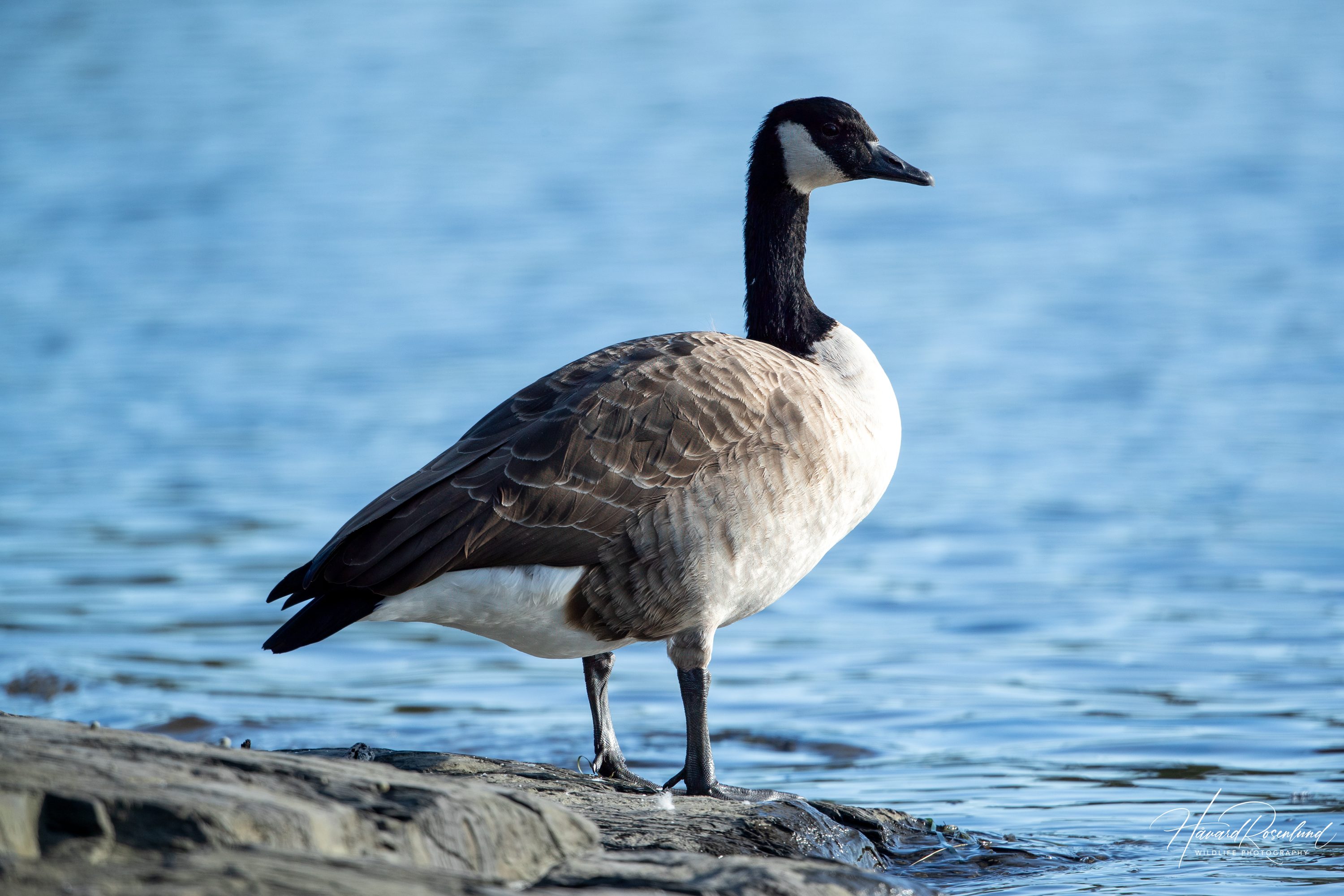
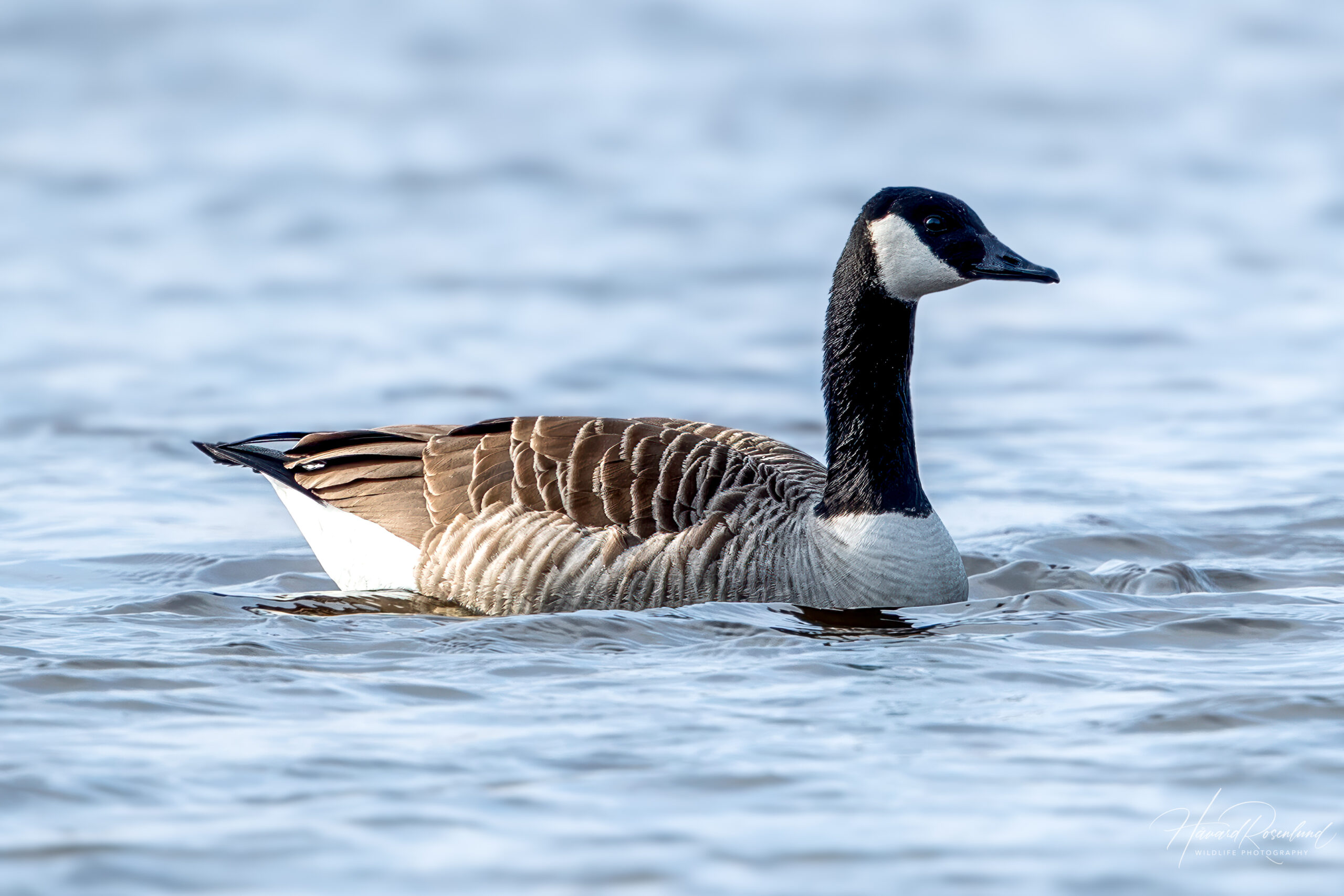
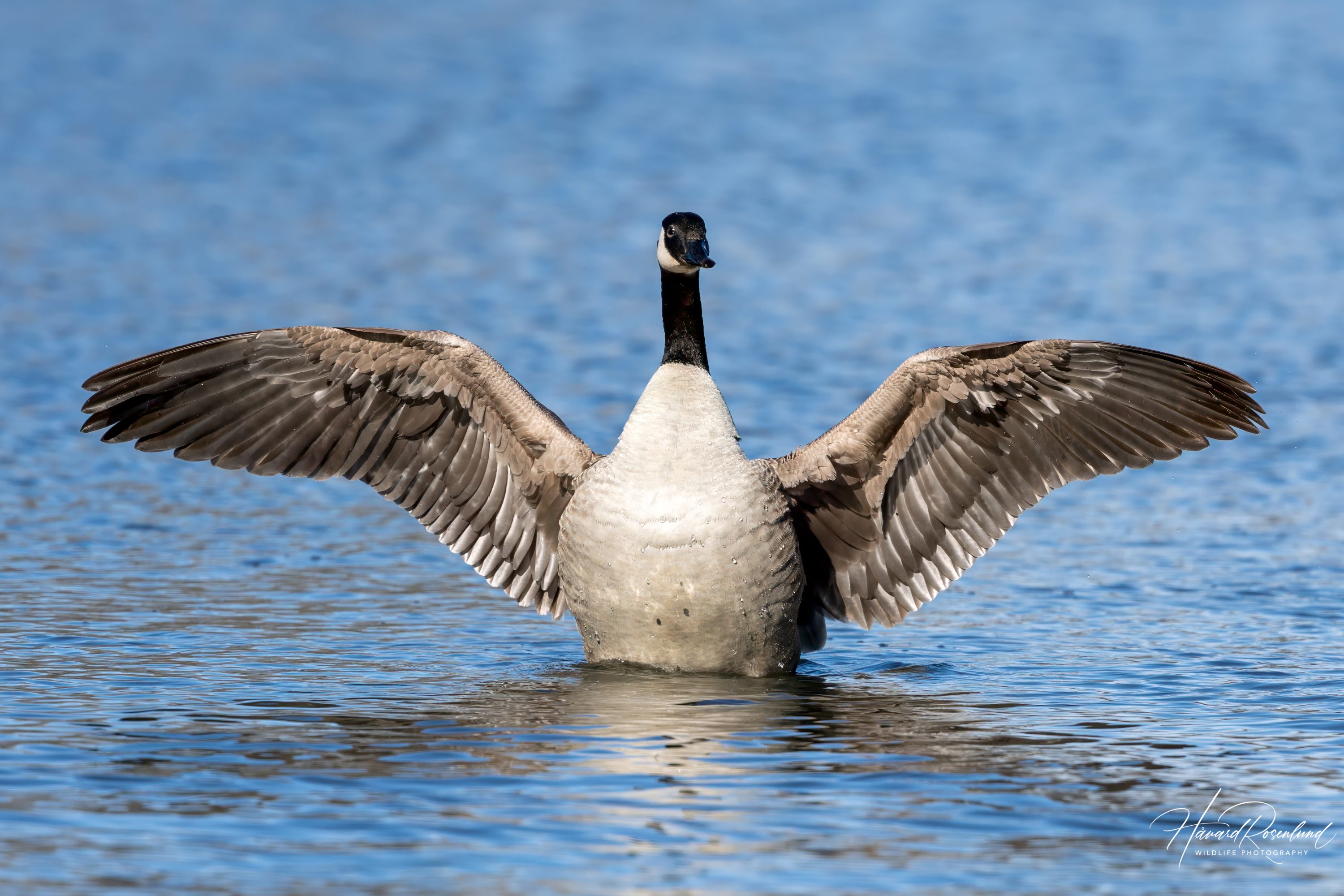
Loading map and observations…
Have you seen this species?
Independent species archive
Did you find this species page useful?
Wildlife Vagabond is independently built and maintained. Voluntary support helps cover hosting, maps, data storage and continued improvements to the species archive.
Support Wildlife VagabondSpecies content will remain freely available.
References
Information about the species’ global distribution and status is based primarily on global Red List data. See the references below for details.
- Artsdatabanken. (n.d.). Kanadagås, Fremmedartslista 2023. https://lister.artsdatabanken.no/fremmedartslista/2023/2529
- BirdLife International. (n.d.). Canada Goose species factsheet. https://datazone.birdlife.org/species/factsheet/canada-goose-branta-canadensis
- British Trust for Ornithology. (n.d.). BirdFacts – Canada Goose. https://www.bto.org/learn/about-birds/birdfacts/canada-goose
- Cornell Lab of Ornithology. (n.d.). Cornell Lab – Canada Goose life history. https://www.allaboutbirds.org/guide/Canada_Goose/lifehistory
- International Union for Conservation of Nature. (n.d.). Canada Goose. The IUCN Red List of Threatened Species. https://www.iucnredlist.org/species/22679935/131909406