
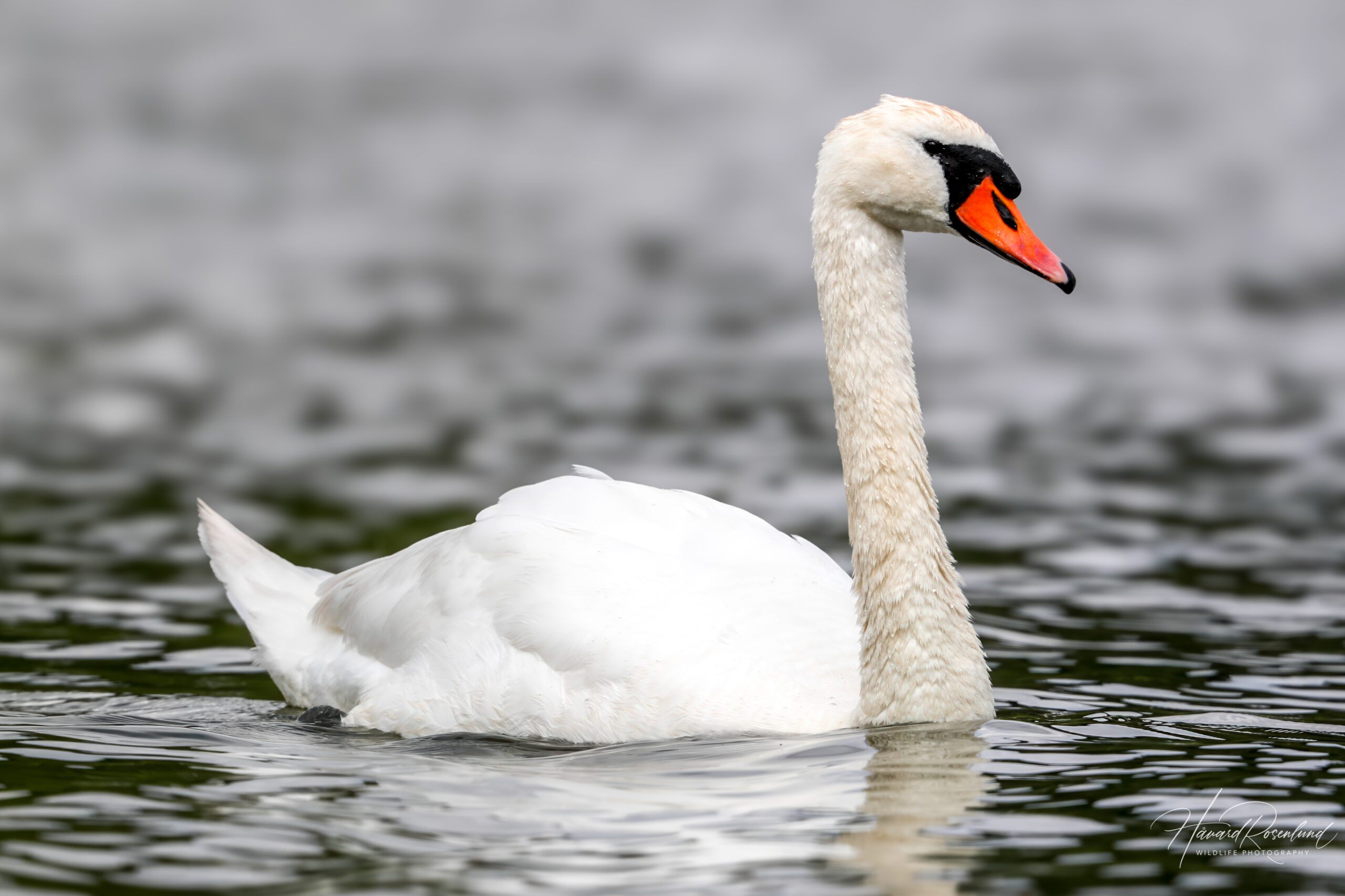
Mute Swan
Cygnus olor
At a glance
Habitat
- Shallow lakes, slow rivers, sheltered bays, estuaries and coastal lagoons
Diet
- Mostly aquatic plants and algae; some small aquatic animals
Activity
- Diurnal
Size
- Length: 127–152 cm Weight: 5.5–14.3 kg
Range
- Native across much of Europe and western Asia; introduced populations occur elsewhere
Description
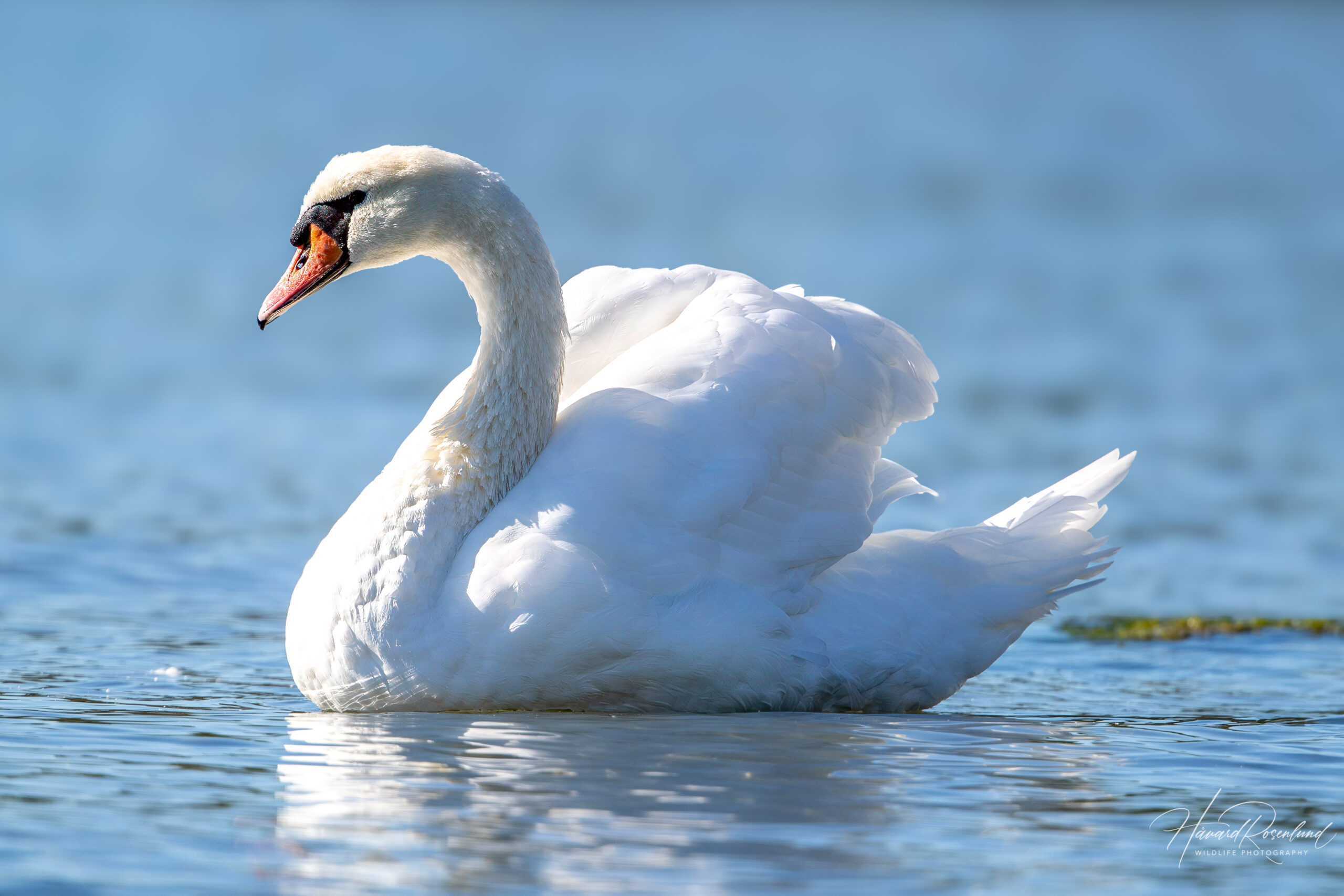
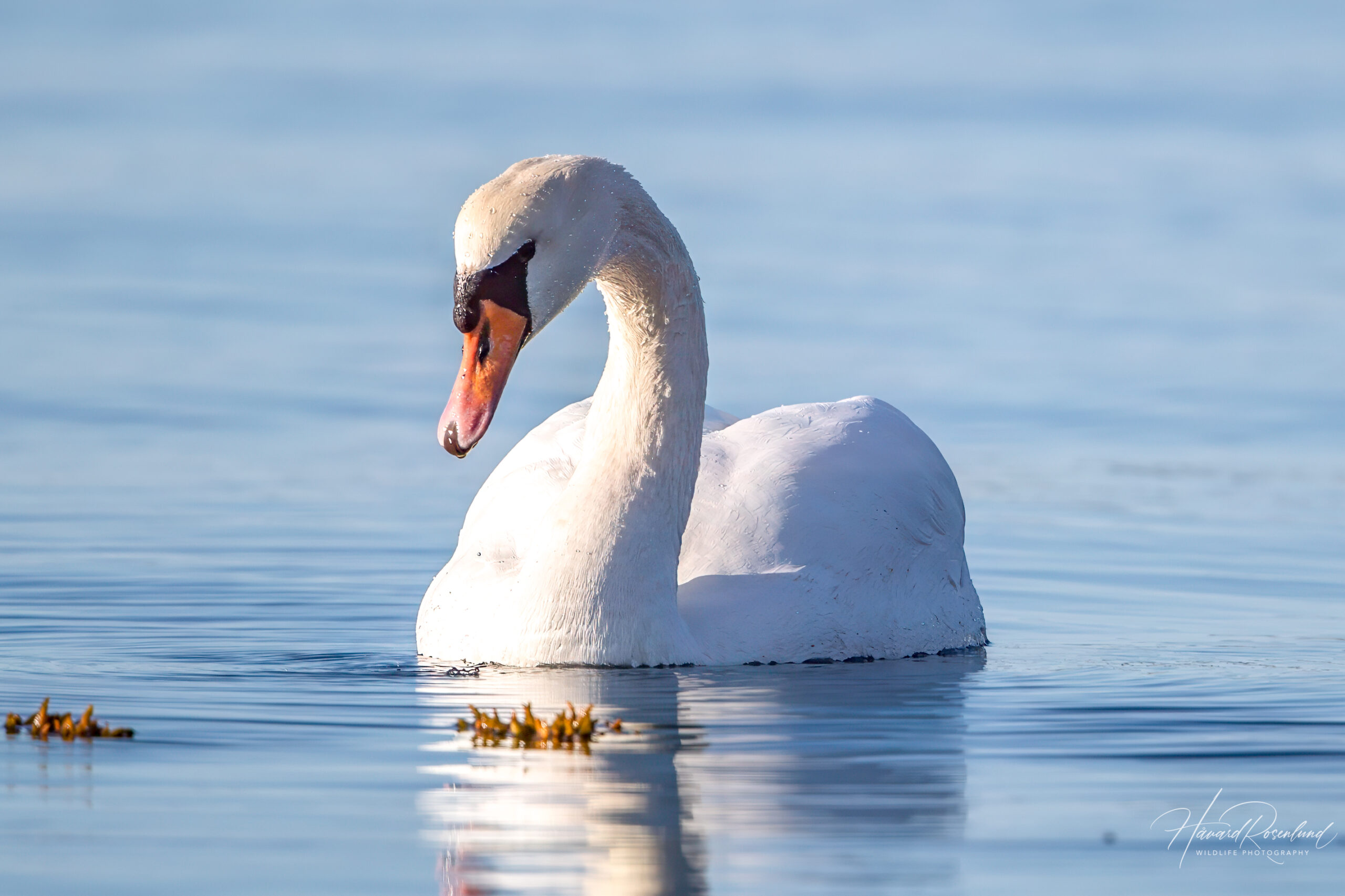
The mute swan (Cygnus olor) is one of the world's heaviest flying birds and a familiar inhabitant of lakes, rivers and sheltered coasts across much of Europe and western Asia. Adults are about 127–152 cm long and typically weigh 5.5–14.3 kg, with males substantially heavier than females. The plumage is entirely white, the bill is orange with a black base and adults have a prominent black knob above the bill, especially developed in males. The long neck is often held in a graceful S-curve while swimming.
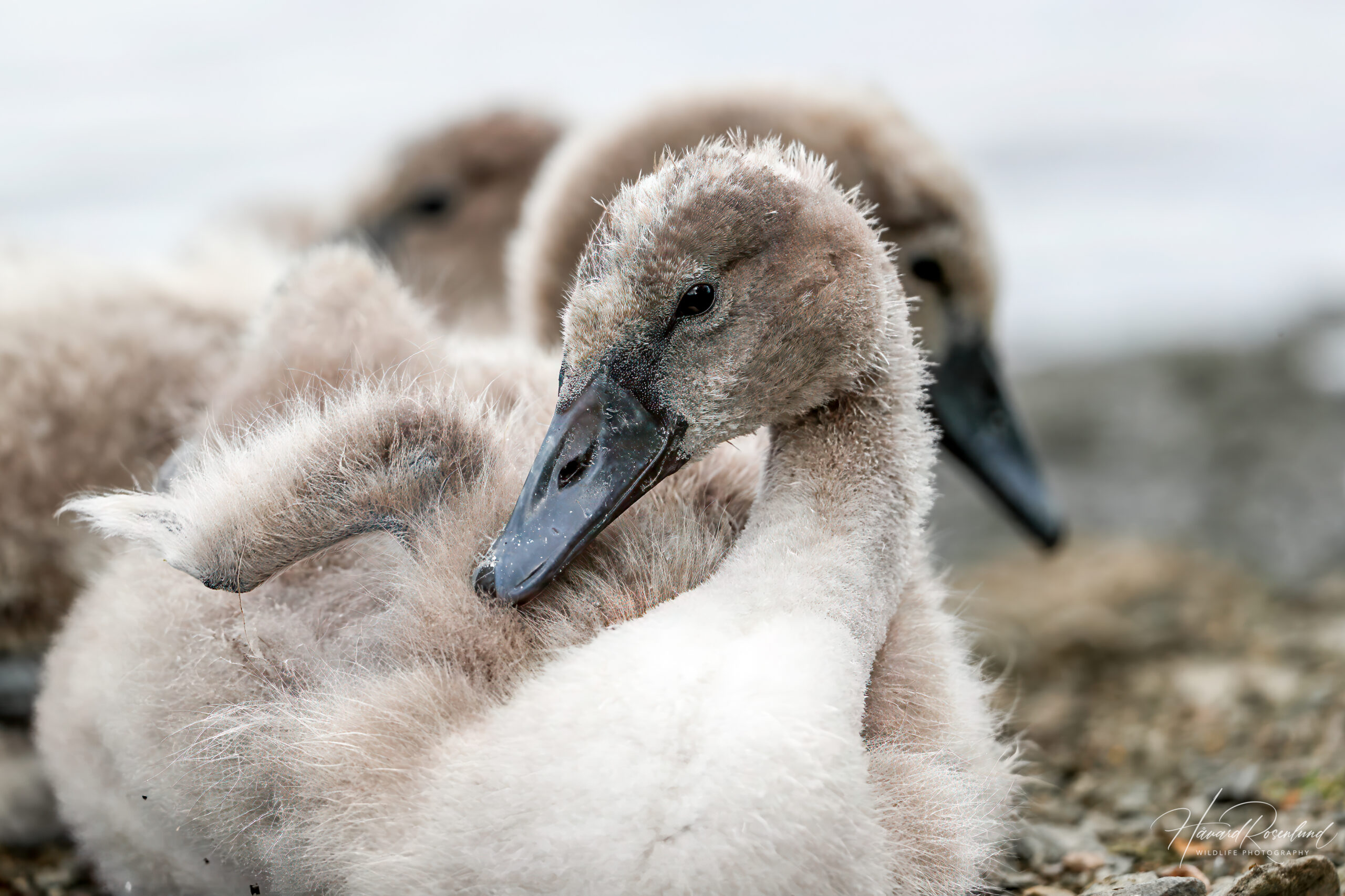
Despite the name, mute swans are not silent. They hiss and give low, hoarse calls, while the wings produce a powerful rhythmic whistling sound in flight. Juveniles are generally grey-brown before gradually acquiring the white adult plumage.
Habitat
Mute swans favour shallow, productive waters with abundant submerged vegetation, including lakes, slow rivers, sheltered bays, estuaries and coastal lagoons. Breeding territories usually combine sheltered water with dense emergent vegetation, islands or quiet banks suitable for nesting.
Outside breeding, birds may gather on larger lakes, estuaries and coastal waters. Ice conditions are important in colder parts of the range, and wintering birds often shift towards open rivers, coasts or other waters that remain ice-free.
Diet
Mute swans are predominantly herbivorous and feed heavily on submerged aquatic plants and algae, reaching below the surface by dipping the head and neck or upending. Small aquatic animals may be swallowed incidentally or taken opportunistically.
Swans also graze on land, particularly in winter or where aquatic vegetation is limited. Their large body size allows them to exploit vegetation beyond the reach of many smaller waterfowl, but it also means that rich, accessible feeding areas are important during energetically demanding periods.
Behaviour
Pairs form strong, often long-lasting bonds and defend breeding territories vigorously. Courtship includes synchronised head and neck movements, while threatening birds raise the wings, arch the neck and may charge across the water. The aggression is directed mainly at other swans and large waterbirds entering the territory and is strongest during breeding.
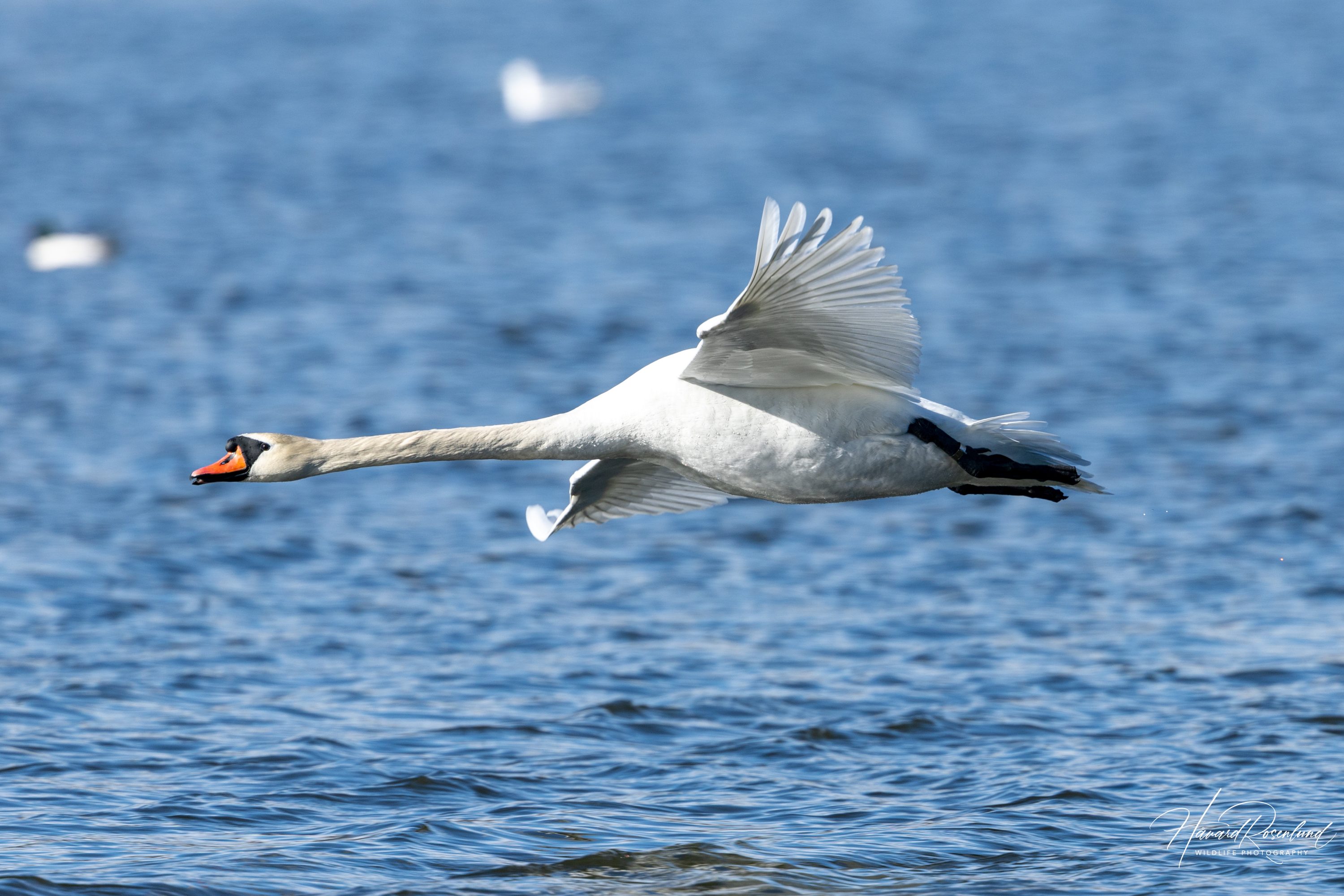
Outside the breeding season territorial behaviour relaxes and non-breeding and wintering birds can gather in sizeable flocks. Adults are powerful swimmers and flyers but need a relatively long run across the water to become airborne because of their size.
Migration
The species is partially migratory. Many birds in western Europe are resident, while populations farther north and east move toward ice-free rivers, lakes and coasts when inland waters freeze. Movements may be relatively short rather than true long-distance migrations and depend strongly on weather, ice conditions and food availability.
Breeding
Mute swans build a large mound nest of reeds and other vegetation close to water, commonly in dense emergent vegetation, on islands or along sheltered banks. The pair may reuse the same site in successive years. A typical clutch contains 4–7 eggs. The female does most of the incubation for about 34–44 days, although males occasionally incubate, and the male normally takes the leading role in territorial defence.
The cygnets are downy and mobile soon after hatching and follow their parents onto the water. Both adults guard the brood. Young remain with their parents for several months and normally become capable of sustained flight at around 4–5 months of age.
Cultural significance
Across European culture, the mute swan is the archetypal white swan and one of the most recognisable avian symbols. Its white plumage, sweeping S-shaped neck and conspicuous pair movements have linked the swan for centuries with beauty, grace, purity, love and fidelity. The familiar image of two swans facing one another with their curved necks forming a heart has made the link with romantic love especially strong.
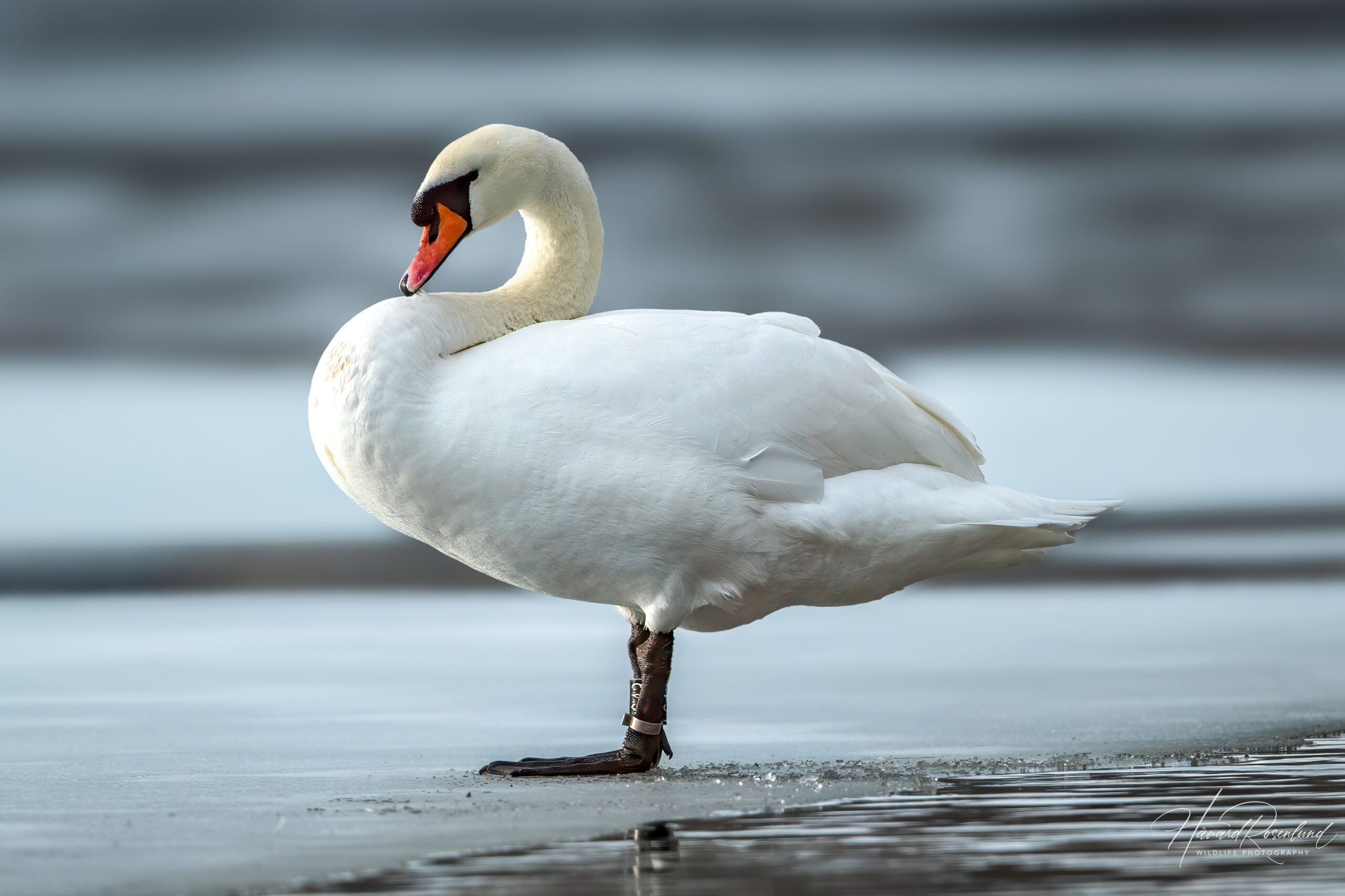
Swans recur throughout fairy tales, literature, visual art, ballet and popular culture. In The Ugly Duckling, the swan becomes a symbol of transformation and discovering one's true identity, while Swan Lake made the white swan one of ballet's most iconic images. Britain's Swan Upping tradition adds a different cultural layer. The Crown's right to unmarked mute swans in open waters dates back to the twelfth century, when swans were valuable food. Today Swan Upping is an annual census on part of the River Thames in which cygnets are weighed, measured, ringed and checked for injuries, combining the old ceremony with conservation and education.
Introduced populations
People have moved mute swans well beyond parts of their natural range, initially as ornamental birds for parks and estates. Established introduced populations occur notably in North America and elsewhere. Where numbers become high, heavy grazing can reduce submerged aquatic vegetation, while territorial birds can displace native waterbirds from feeding or breeding sites.
A study at 18 sites in Chesapeake Bay in 2003–2004 compared underwater vegetation exposed to swan grazing with fenced areas from which swans were excluded. By the end of the study, vegetation cover in areas accessible to swans was 79% lower than inside areas that had been protected for two years, and shoot density was also greatly reduced. The strongest losses occurred at sites used by flocks rather than pairs. Such effects can therefore be severe at high local densities, but they vary strongly among sites and should not be treated as a universal effect of the species.
Status
The mute swan is classified as least concern on the IUCN Red List. It remains widespread and abundant across much of its native and introduced range.
The 2025 update from the Pan-European Common Bird Monitoring Scheme, based on data through 2024, shows a 52% increase in the European breeding index from 1980 to 2024 and a further 13% increase in 2015–2024.
Collisions with power lines and other structures, entanglement in fishing tackle and lead poisoning remain important causes of injury and mortality locally. A study published in 2019 followed the British population over 39 years. Numbers more than doubled after lead fishing weights were regulated in 1987, while the proportion of examined swans that had died from lead poisoning fell from 34% before the restrictions to 6% afterwards. The population increase was much more closely associated with the lead restrictions than with changes in food supply, habitat quality or winter temperature.
Image gallery
Loading map and observations…
Have you seen this species?
Independent species archive
Did you find this species page useful?
Wildlife Vagabond is independently built and maintained. Voluntary support helps cover hosting, maps, data storage and continued improvements to the species archive.
Support Wildlife VagabondSpecies content will remain freely available.
References
Information about the species’ global distribution and status is based primarily on global Red List data. See the references below for details.
- BirdLife International. (n.d.). Mute Swan species factsheet. https://datazone.birdlife.org/species/factsheet/mute-swan-cygnus-olor
- British Trust for Ornithology. (n.d.). Mute Swan. https://www.bto.org/learn/about-birds/birdfacts/mute-swan
- Cornell Lab of Ornithology. (n.d.). Mute Swan. https://www.allaboutbirds.org/guide/Mute_Swan/overview
- International Union for Conservation of Nature. (n.d.). Mute Swan. The IUCN Red List of Threatened Species. https://www.iucnredlist.org/species/22679839/85946855
- Pan-European Common Bird Monitoring Scheme. (n.d.). Species trends, 2025 update. https://pecbms.info/trends-and-indicators/species-trends/
- Perrins, C., Cousquer, G., & Waine, J. (2003). A survey of blood lead levels in Mute Swans Cygnus olor. Avian Pathology, 32(2), 205-212. https://doi.org/10.1080/0307946021000071597
- Tatu, K. S., Anderson, J. T., Hindman, L. J., & Seidel, G. (2007). Mute Swans’ Impact on Submerged Aquatic Vegetation in Chesapeake Bay. The Journal of Wildlife Management, 71(5), 1431-1439. https://doi.org/10.2193/2006-130
- The Royal Family. (n.d.). Swan Upping. https://www.royal.uk/swans
- U.S. Geological Survey. (2002). The exotic mute swan (Cygnus olor) in Chesapeake Bay, USA. USGS. https://www.usgs.gov/publications/exotic-mute-swan-cygnus-olor-chesapeake-bay-usa
- Wood, K. A., Brown, M. J., Cromie, R. L., Hilton, G. M., Mackenzie, C., Newth, J. L., Pain, D. J., Perrins, C. M., & Rees, E. C. (2019). Regulation of lead fishing weights results in mute swan population recovery. Biological Conservation, 230, 67-74. https://doi.org/10.1016/j.biocon.2018.12.010