
Spotted Hyena
Crocuta crocuta
At a glance
Habitat
- Savanna, semi-desert, open woodland, montane country and some human-modified landscapes
Diet
- Medium and large ungulates, smaller vertebrates, invertebrates and carrion
Activity
- Mostly nocturnal and crepuscular, but flexible
Size
- Length: about 120–150 cm (head–body) Weight: roughly 40–86 kg
Range
- Patchily distributed across sub-Saharan Africa
Description
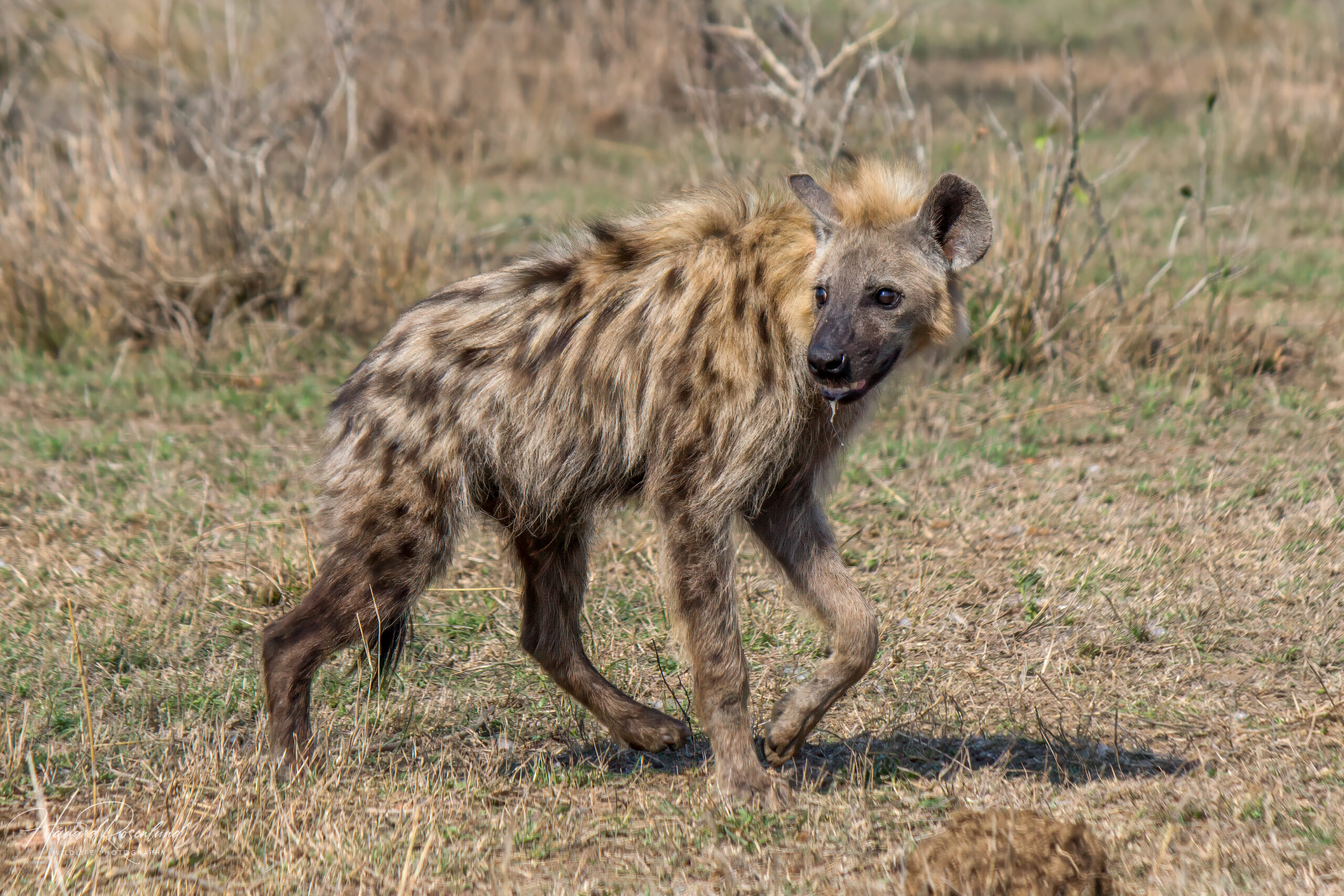
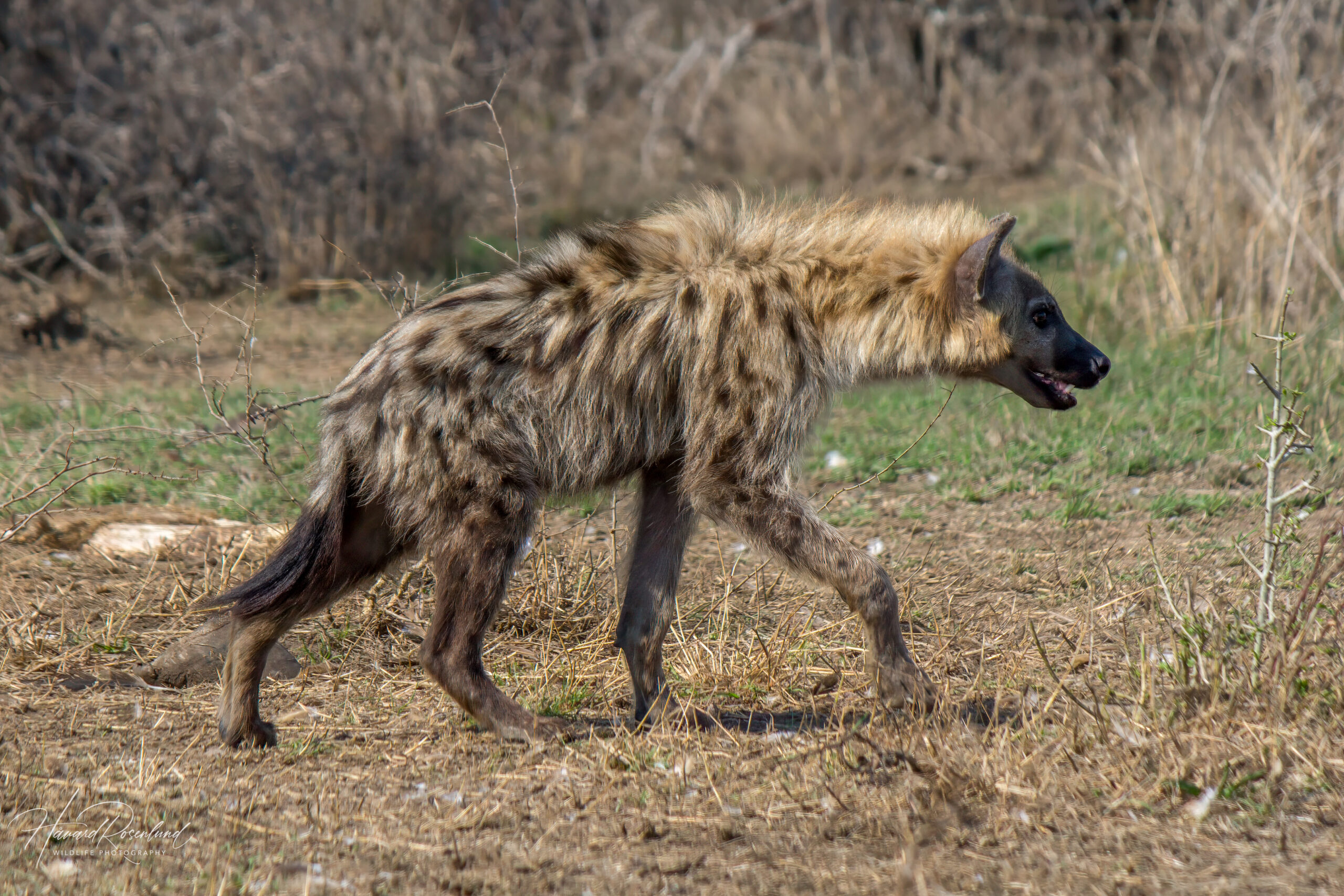
The spotted hyena (Crocuta crocuta) is the largest living hyena. Its sloping back, powerful forequarters, rounded ears and irregular dark spots give it a distinctive appearance. Although dog-like at first glance, hyenas belong to the cat-like branch of the carnivores.
Adults generally measure about 120–150 cm from head to body and weigh roughly 40–86 kg, with substantial regional variation. Females are usually larger than males. The female’s external genitalia form an elongated clitoris, or pseudopenis, through which she urinates, mates and gives birth. This unusual anatomy makes the sexes difficult to distinguish in the field and has important consequences for reproduction.
Habitat
Spotted hyenas occupy a broad range of open and semi-open habitats, including savanna, grassland, open woodland, scrub, semi-desert and montane country. They occur from hot lowlands to high elevations and can persist in relatively dry environments as long as enough food and water are available. Dense tropical rainforest and the driest true deserts are generally less suitable.
Prey abundance is often more important than vegetation type alone. A recent camera-trap study in southern Tanzania found substantially higher hyena densities in open woodland savanna with abundant prey than in miombo woodland, where prey was less abundant. This shows that spotted hyenas tend to concentrate in areas where food is more readily available. The species can also use heavily modified landscapes and even the edges of cities where refuse, livestock carcasses and other food are available.
Diet
Spotted hyenas are opportunistic carnivores that feed mainly on medium-sized and large ungulates, but the exact diet varies with local prey availability. Blue wildebeest (Connochaetes taurinus), plains zebra (Equus quagga), antelopes and other hoofed mammals are important in many ecosystems, while smaller vertebrates, eggs, invertebrates and carrion are also eaten.
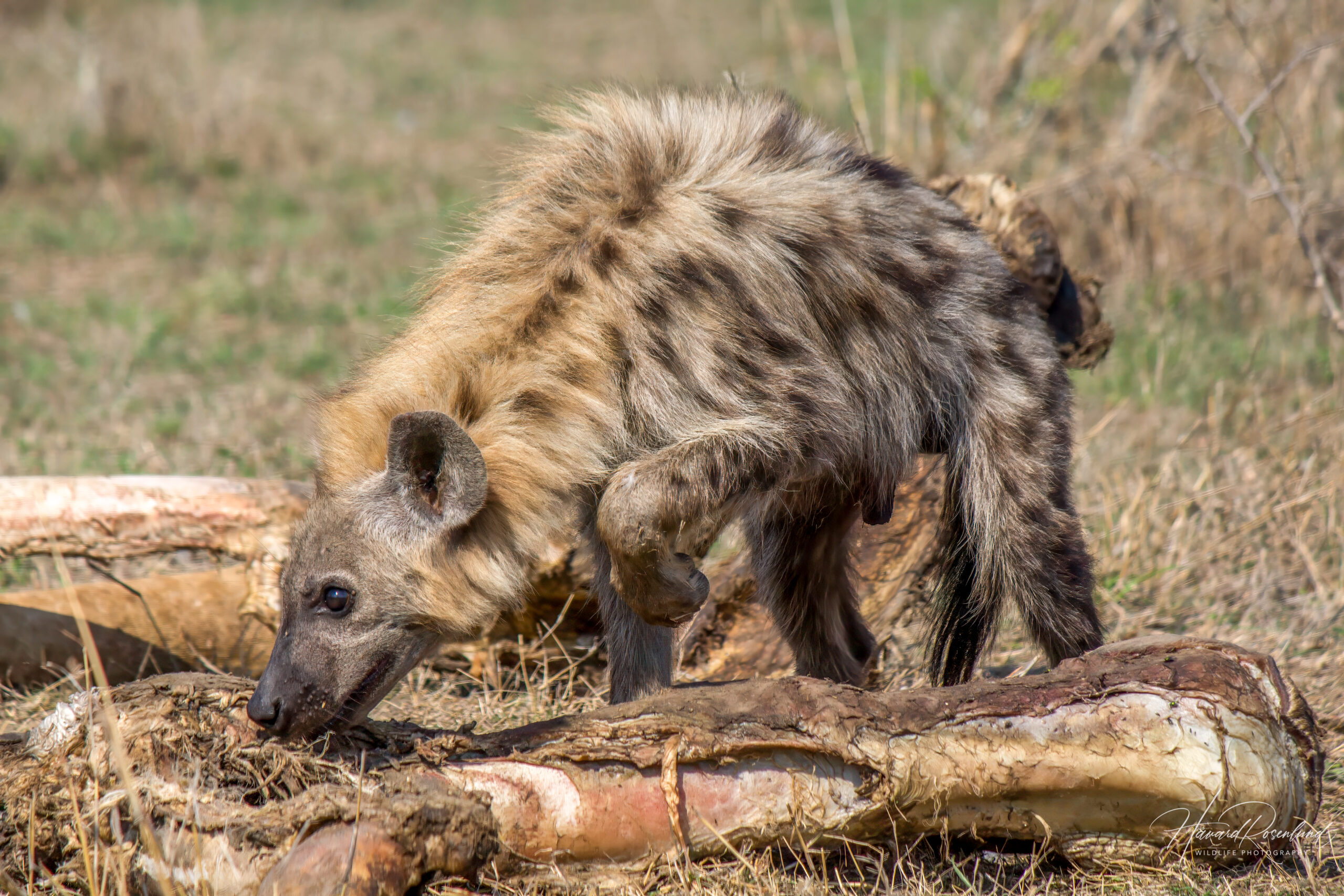
Their powerful jaws and robust premolars can break large bones, and their digestive system extracts nutrients from skin, tendons and bone that many other predators leave behind. Very little of a carcass may remain after a group has fed, although hair, hooves and some other indigestible material are later regurgitated.
Hunting
Despite their reputation as scavengers, spotted hyenas are highly capable hunters and obtain a large share of their food by killing prey themselves in many ecosystems. They are pursuit hunters, using endurance to run down prey rather than relying on a short ambush. Individuals often target young, injured or otherwise vulnerable animals, but healthy adults are also taken.
Many hunts are carried out by a single hyena, especially against smaller prey, while cooperation becomes increasingly valuable with large or difficult animals. Long-term work in Kenya found that hunting success increased when additional hyenas joined a chase. Group hunting therefore allows hyenas to tackle prey that would be difficult for one animal to subdue, even though large hunting parties are not needed for every kill.
Behaviour
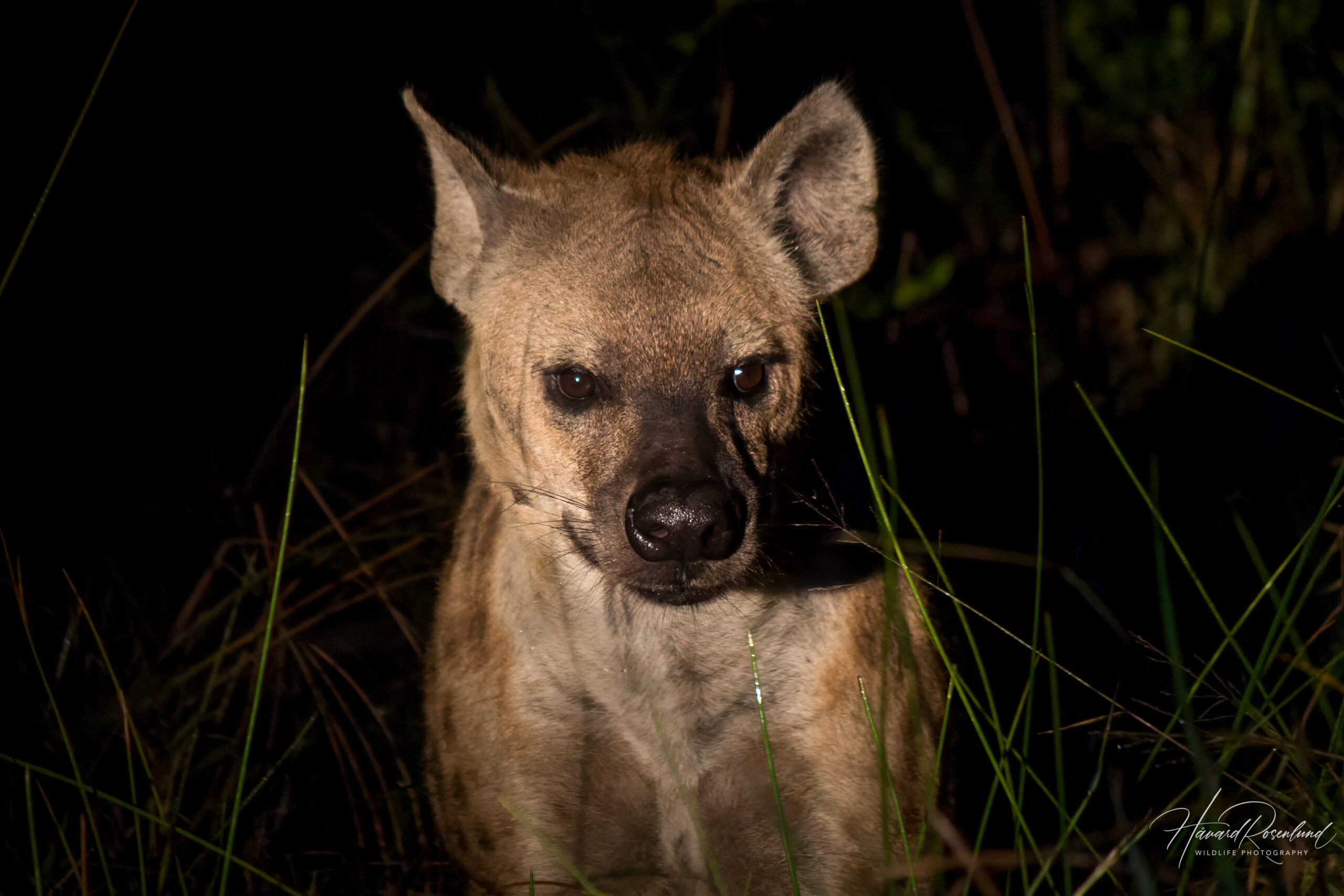
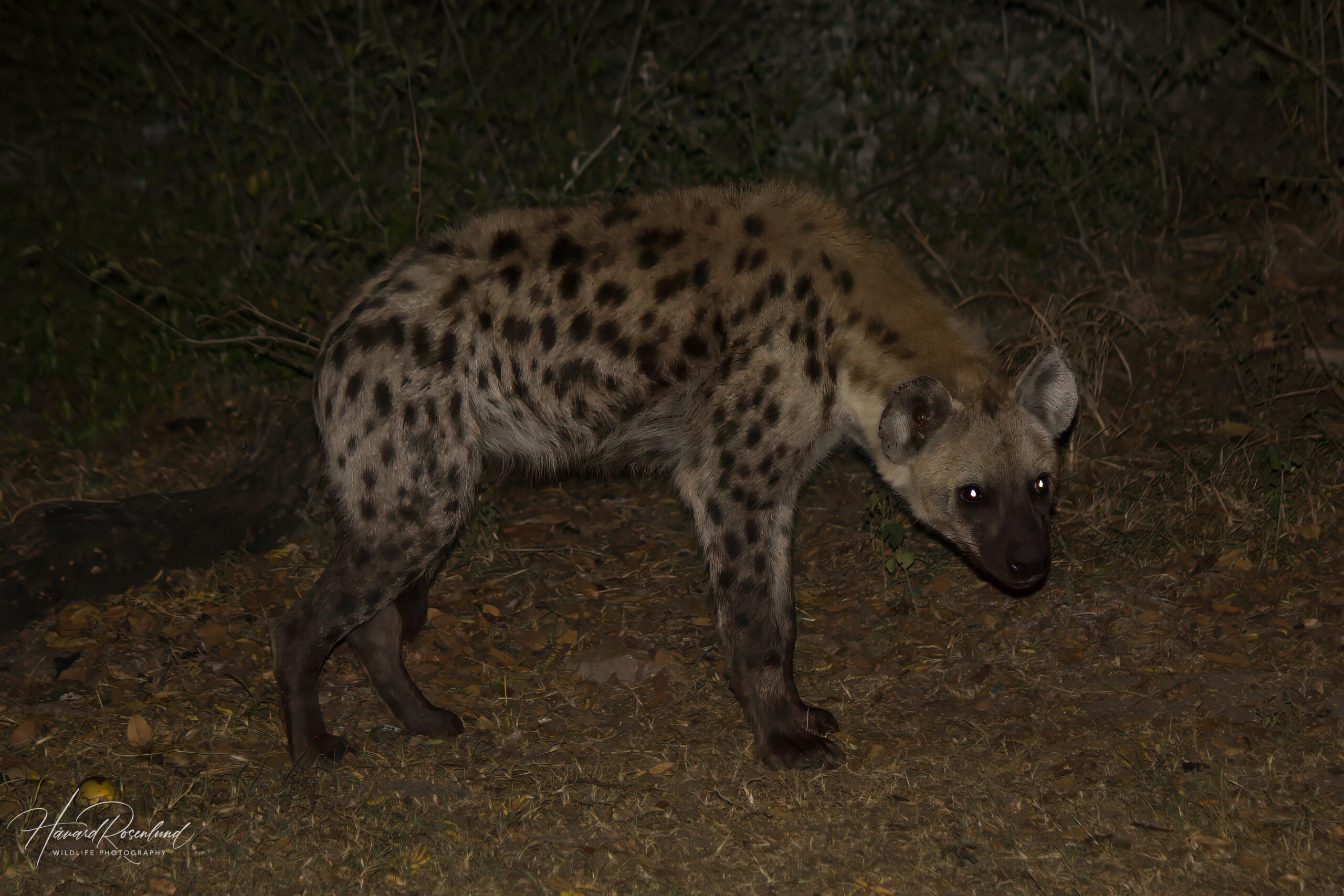
Spotted hyenas are most active from dusk through the night, but their activity is flexible. They may be seen moving and hunting in daylight where disturbance is low, while animals living around people often become more strongly nocturnal. Clan members can cover long distances in a night, either alone or in small parties.
Communication combines sound, scent and body language. The long-distance whoop can carry for several kilometres and helps widely separated clan members locate one another, recruit allies and signal their presence. Whoops also contain individual signatures. At close range hyenas use growls, yells, screams, quieter contact calls and the famous giggle, which is commonly associated with excitement or social tension rather than amusement.
Scent marking is equally important. Hyenas deposit a strong-smelling paste from anal glands on grass stems and use communal latrines, allowing them to mark areas they use and communicate identity without frequent direct encounters.
The video below shows a solitary animal moving at night, when clan members often split into smaller foraging parties.
Social behaviour
Spotted hyenas live in fission–fusion societies called clans. A clan is a stable social unit, but all its members are rarely together at once: individuals repeatedly split into smaller parties and reunite at kills, dens, resting sites or territorial encounters. Clan size varies with food and habitat and can range from fewer than ten animals to several dozen.
Clans are organised around related females. Females and their young dominate immigrant males, and rank is largely inherited through the maternal line. Daughters usually remain in their natal clan, while young males disperse and join another clan. Newly immigrated males enter near the bottom of the male hierarchy and can spend years building social relationships before gaining good mating opportunities.
Home ranges
Clan territories vary enormously with resource abundance. In the Ngorongoro Crater, where densities of large herbivores are exceptionally high, long-term studies measured territories of only about 9–40 km². In the much drier and more resource-poor Kalahari, territories around or above 1,000 km² have been documented. The contrast shows how strongly food availability can influence the area a clan must defend and use.
Territoriality does not prevent long-distance feeding movements. In migratory systems such as the Serengeti, hyenas may commute far beyond their clan territory to exploit temporary concentrations of blue wildebeest (Connochaetes taurinus) and other migrants, then return to their denning area and defended territory. This ability to separate a defended social territory from much larger temporary foraging excursions makes spotted-hyena space use unusually flexible.
Intelligence
The social cognition of spotted hyenas is among the best studied outside primates. Clan members recognise one another as individuals, remember previous interactions and understand the rank and kin relationships of other hyenas. They can therefore respond differently to the same animal depending on who is present and which allies are likely to intervene.
Experiments and long-term observations show that hyenas recognise third-party relationships — for example, that two other clan members are related or that one outranks another — and use this information when deciding whether to approach, challenge or support another animal. This primate-like social knowledge is especially useful in a clan where access to food, allies and reproduction depends heavily on a complex dominance network.
Interspecific competition
Lions (Panthera leo) are the spotted hyena’s most important competitors. The two predators overlap heavily in prey and routinely take carcasses from one another. Which side dominates depends strongly on numbers and on the presence of adult male lions: a large group of hyenas can displace lionesses, while even one or two adult male lions can make approaching a carcass extremely dangerous for hyenas.
The relationship is not simply one of hyenas stealing from lions. Lions also appropriate hyena kills, and both species may alter movement and activity to reduce costly encounters. Spotted hyenas can in turn dominate smaller carnivores and may steal from or displace cheetahs (Acinonyx jubatus), African wild dogs (Lycaon pictus) and leopards (Panthera pardus).
In 2013 I watched six spotted hyenas confront a lioness over an African buffalo (Syncerus caffer) carcass in Hluhluwe-iMfolozi Park. The first lioness was attacked hard enough that her tail was nearly lost before a second lioness arrived, but the hyenas ultimately took the carcass. The video below shows the encounter.
Reproduction
Male spotted hyenas approach females cautiously and often show conspicuously submissive behaviour during courtship. Female choice is important: females can reject males and may maintain long-term associations with preferred partners. Mating is mechanically difficult because the male must copulate through the female’s elongated clitoris.
Gestation lasts about 110 days and litters most often contain one or two cubs. Birth also takes place through the elongated clitoris and can be particularly difficult for a first-time mother. Cubs are unusually well developed for carnivores, with open eyes, erupted teeth and enough coordination to interact aggressively soon after birth.
Cubs begin life with a dark coat and are moved to a communal den where several mothers keep their young. Each female normally nurses only her own cubs, and milk remains important for many months. Sibling aggression can be severe and occasionally lethal, especially when food is limited or two same-sex cubs compete strongly, but siblicide does not occur in every litter.
Young gradually begin accompanying adults away from the den and learn the social and hunting skills needed for independent life. Females normally remain in the natal clan, whereas males disperse as young adults. Spotted hyenas can live unusually long for a large carnivore; wild individuals up to 19 years old have been documented.
Cultural significance
Spotted hyenas have a distinctive cultural role in and around Harar in eastern Ethiopia. Harari traditions do not treat them only as dangerous scavengers. Hyenas are woven into local stories and spiritual beliefs, and their night-time calls can be interpreted as evidence that they are consuming harmful jinn and thereby protecting people.
Long-standing feeding practices have reinforced this relationship. Wild hyenas enter the city at night and some are deliberately fed by people, a tradition that has also become a well-known attraction for visitors. The relationship illustrates how cultural beliefs can turn a large predator that is feared or persecuted elsewhere into an accepted part of an urban community.
Relationship with humans
Spotted hyenas are unusually adaptable around people. In several Ethiopian cities they enter urban areas at night to consume refuse and animal remains, and in some landscapes they persist at high density even where natural prey is scarce. This scavenging can provide a useful waste-removal service while giving hyenas a reliable food source.
The same flexibility can also create conflict. Hyenas may kill livestock, raid waste sites and occasionally threaten people, and attitudes vary greatly between communities. Studies in Ethiopia show that local beliefs, previous experience and the behaviour of the hyenas themselves can all shape whether people tolerate hyenas or come into conflict with them.
Status
The spotted hyena is listed as Least Concern on the IUCN Red List. The current global assessment was published in 2015 and estimated roughly 27,000–47,000 animals, while describing the overall population trend as decreasing. Because this is an older continental estimate rather than a current census, it should be treated as an indication of scale rather than a precise present-day total.
Large populations remain in several protected landscapes in East and southern Africa, but the species has disappeared from parts of its historical range and many populations outside well-managed reserves are poorly monitored. Recent density studies continue to show large differences between landscapes, from high densities in protected savannas with abundant prey to much lower densities in areas with less food or heavier human impact.
Local declines are driven mainly by persecution after livestock losses, poisoning, snaring, habitat fragmentation and depletion of wild prey. The species is still not globally threatened, but these pressures can remove hyenas quickly from human-dominated landscapes. Better livestock protection and improved monitoring can therefore be important even for a species that remains widespread overall.
Image gallery
Loading map and observations…
Have you seen this species?
Independent species archive
Did you find this species page useful?
Wildlife Vagabond is independently built and maintained. Voluntary support helps cover hosting, maps, data storage and continued improvements to the species archive.
Support Wildlife VagabondSpecies content will remain freely available.
References
Information about the species’ global distribution and status is based primarily on global Red List data. See the references below for details.
- Barker, N. A., Joubert, F. G., Kasaona, M., Shatumbu, G., Stowbunenko, V., Alexander, K. A., Slotow, R., & Getz, W. M. (2023). Coursing hyenas and stalking lions: The potential for inter- and intraspecific interactions. PLOS ONE, 18(2), e0265054. https://doi.org/10.1371/journal.pone.0265054
- Baynes-Rock, M. (2016). The ontogeny of hyena representations among the Harari people of Ethiopia. Africa, 86(2), 288-304. https://doi.org/10.1017/S000197201600005X
- Boydston, E. E., Kapheim, K. M., Watts, H. E., Szykman, M., & Holekamp, K. E. (2003). Altered behaviour in spotted hyenas associated with increased human activity. Animal Conservation, 6(3), 207-219. https://doi.org/10.1017/S1367943003003263
- Holekamp, K. E., Sakai, S. T., & Lundrigan, B. L. (2007). Social intelligence in the spotted hyena (Crocuta crocuta). Philosophical transactions of the Royal Society of London. Series B, Biological sciences, 362(1480), 523-38. https://doi.org/10.1098/rstb.2006.1993
- Holekamp, K. E., Smale, L., Berg, R., & Cooper, S. M. (1997). Hunting rates and hunting success in the spotted hyena (Crocuta crocuta). Journal of Zoology, 242(1), 1-15. https://doi.org/10.1111/j.1469-7998.1997.tb02925.x
- Höner, O. P., Wachter, B., East, M. L., Runyoro, V. A., & Hofer, H. (2005). The effect of prey abundance and foraging tactics on the population dynamics of a social, territorial carnivore, the spotted hyena. Oikos, 108(3), 544-554. https://doi.org/10.1111/j.0030-1299.2005.13533.x
- International Union for Conservation of Nature. (2015). Crocuta crocuta. The IUCN Red List of Threatened Species. https://www.iucnredlist.org/species/5674/45194782
- Lehmann, K. D. S., Jensen, F. H., Gersick, A. S., Strandburg-Peshkin, A., & Holekamp, K. E. (2022). Long-distance vocalizations of spotted hyenas contain individual, but not group, signatures. Proceedings. Biological sciences, 289(1979), 20220548. https://doi.org/10.1098/rspb.2022.0548
- Mammal Diversity Database. (n.d.). Crocuta crocuta (Spotted Hyena), taxonomy and distribution. American Society of Mammalogists. https://www.mammaldiversity.org/taxon/1006071/
- Searle, C. E., Strampelli, P., Smit, J. B., Mkuburo, L., Mathews, F., Kiwango, H., Macdonald, D. W., Loveridge, A. J., & Dickman, A. J. (2024). Spotted hyaena population density across habitat and land use types in southern Tanzania. Journal of Zoology, 322(1), 89-100. https://doi.org/10.1111/jzo.13119
- Trinkel, M. (2010). Prey selection and prey preferences of spotted hyenas Crocuta crocuta in the Etosha National Park, Namibia. Ecological Research, 25(2), 413-417. https://doi.org/10.1007/s11284-009-0669-3
- Vullioud, C., Benhaiem, S., Meneghini, D., Szyf, M., Shao, Y., Hofer, H., East, M. L., Fickel, J., & Weyrich, A. (2024). Epigenetic signatures of social status in wild female spotted hyenas (<i>Crocuta crocuta</i>). Communications Biology, 7(1), 313. https://doi.org/10.1038/s42003-024-05926-y
- Young, J. K., Coppock, D. L., Baggio, J. A., Rood, K. A., & Yirga, G. (2020). Linking human perceptions and spotted hyena behavior in urban areas of Ethiopia. Animals, 10(12), 2400. https://doi.org/10.3390/ani10122400