
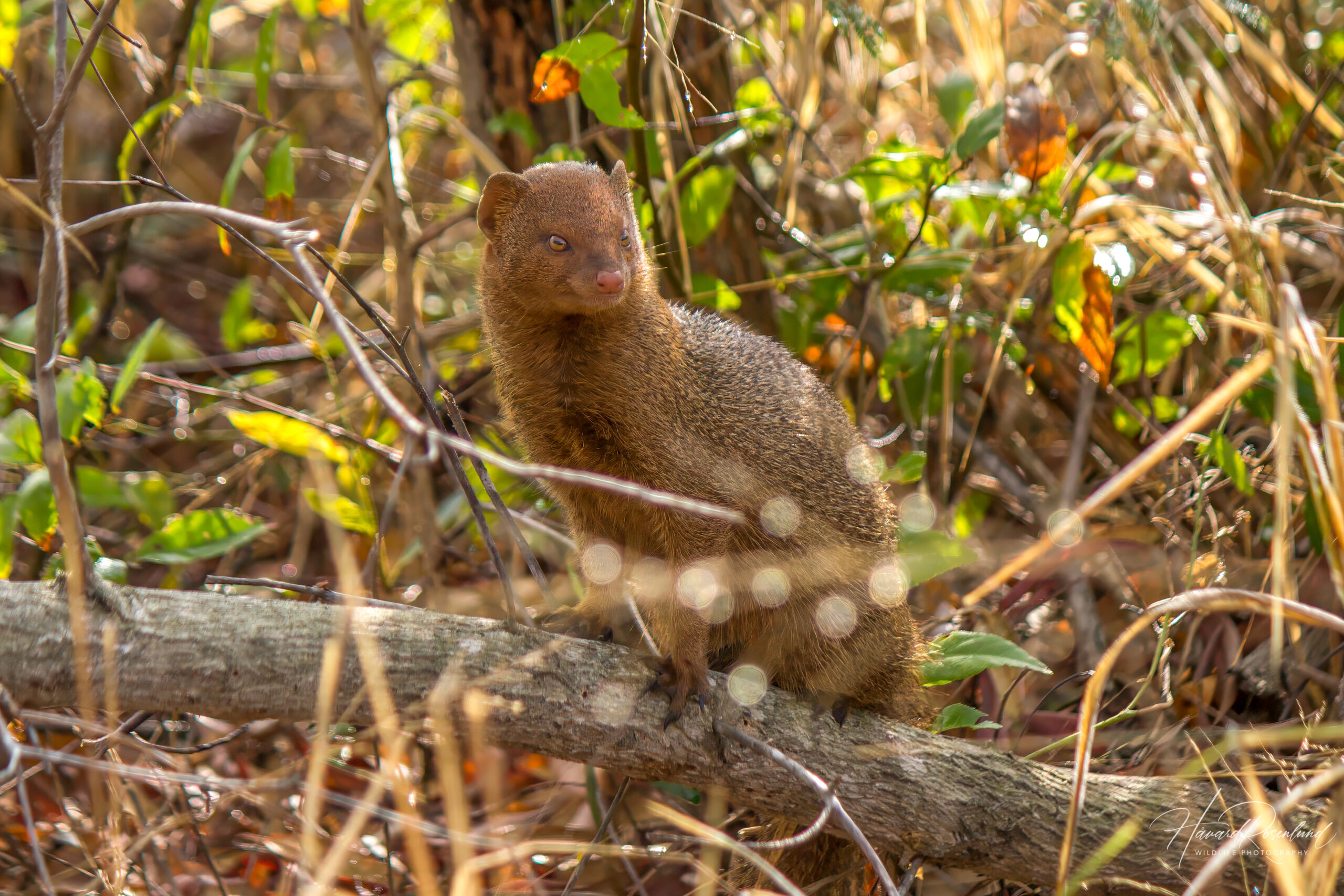
Slender Mongoose
Herpestes sanguineus
At a glance
Habitat
- Savanna, open woodland, semi-arid grassland, rocky ground and forest edges
Diet
- Insects, rodents, reptiles, amphibians, birds, eggs, carrion and fruit
Activity
- Primarily diurnal
Size
- Length: 27.5–40 cm body; 23–33 cm tail Weight: 450–715 g
Range
- Widespread across much of sub-Saharan Africa
Description
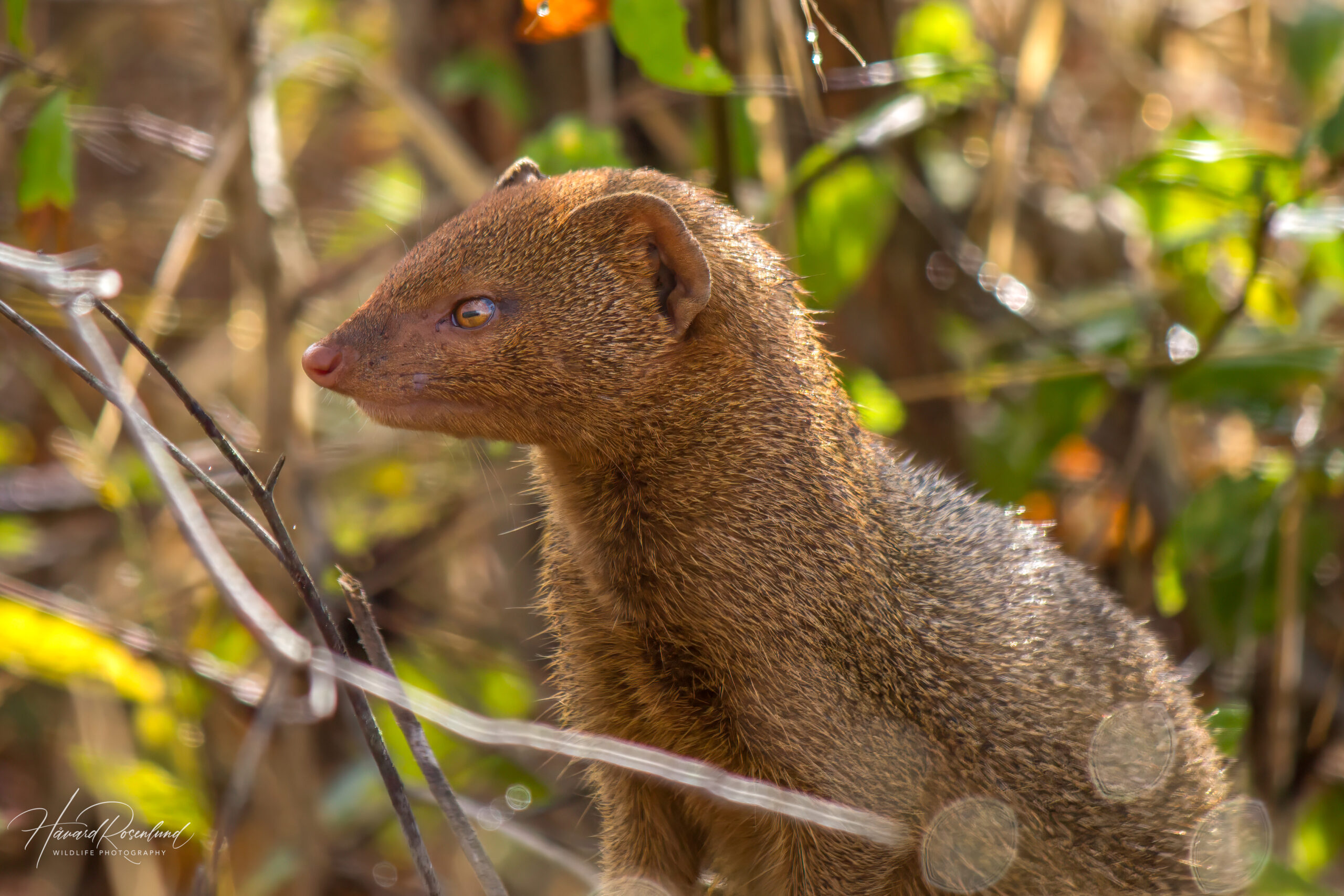
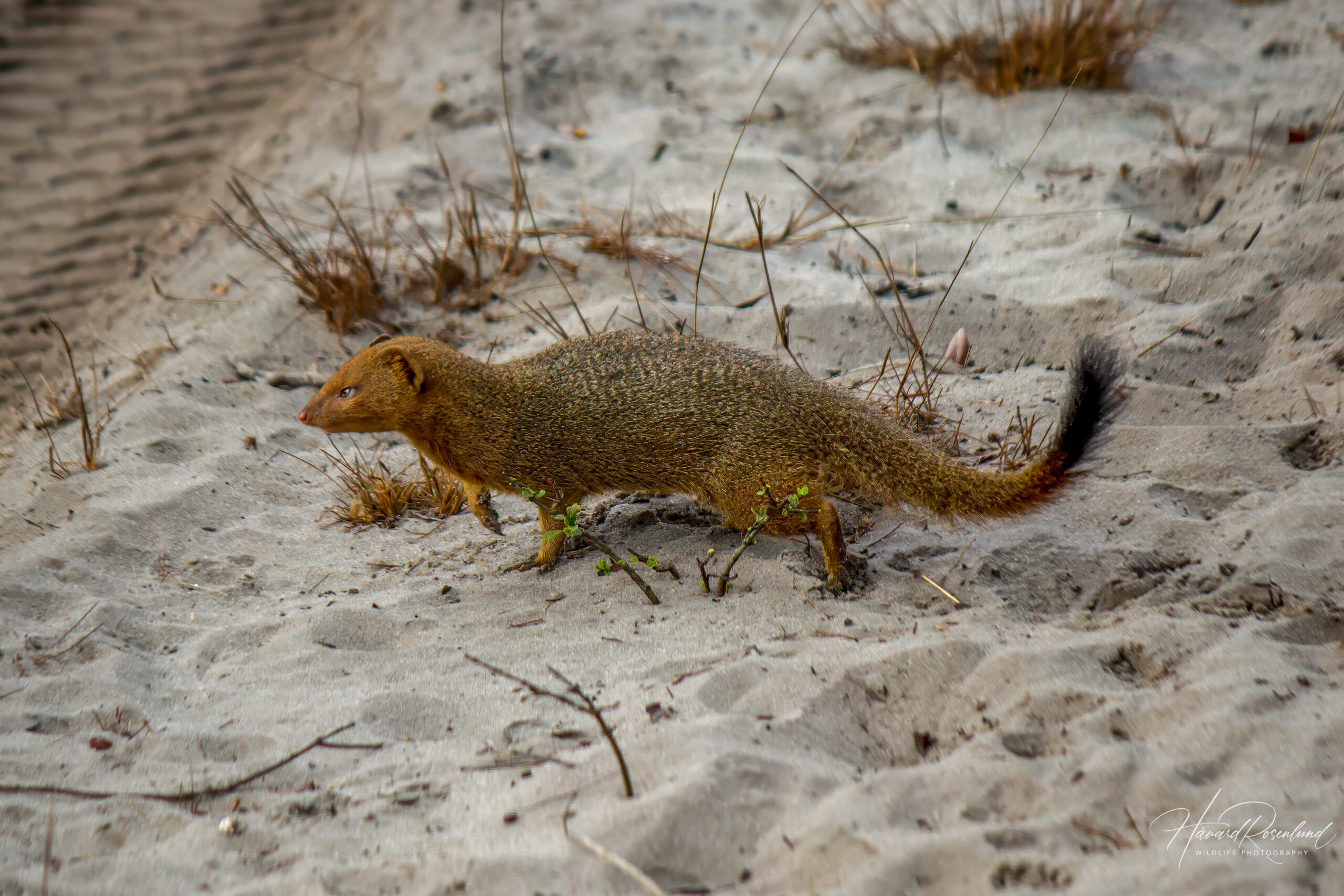
The slender mongoose (Herpestes sanguineus) is a small, lightly built mongoose with a long body, short legs and a tail nearly as long as the head and body combined. Head-and-body length is about 27.5–40 cm and the tail 23–33 cm. Males weigh about 640–715 g and females 450–575 g.
Coat colour varies greatly, from grey and yellowish brown to rich reddish brown. Many individuals have a dark or reddish tail tip. When running, the long tail is often carried high above the ground. The narrow head and slender build separate it from more robust mongoose species.
Taxonomy
The accepted scientific name is Herpestes sanguineus. Older sources often use Galerella sanguinea, but Mammal Diversity Database v2.5 places the former Galerella species within Herpestes.
The Angolan slender mongoose (H. flavescens) and Somalian slender mongoose (H. ochraceus) are treated as separate species. Older classifications recognised far more subspecies within H. sanguineus than current treatments.
Habitat
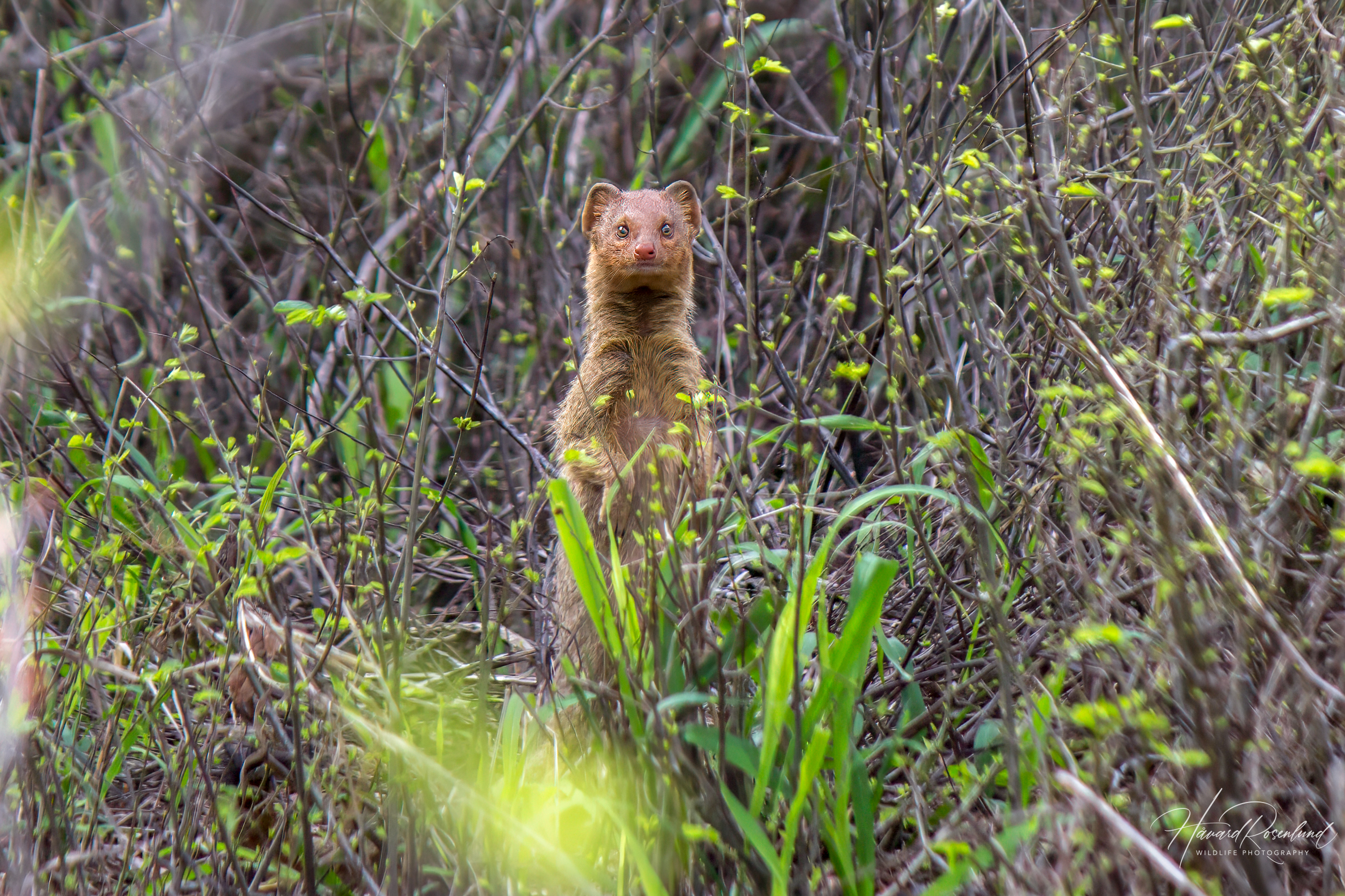
The species is widespread across much of sub-Saharan Africa from sea level to about 2,700 m, especially in savanna, open woodland, semi-arid grassland and rocky country. True desert and continuous closed forest are less typical.
In northern KwaZulu-Natal I have repeatedly encountered it in sand forest and adjoining woodland, particularly around Tembe Elephant Park. Such forest mosaics can therefore also be used locally, even though open savanna dominates descriptions of the species’ habitat.
Diet
Slender mongooses eat insects, rodents, lizards, snakes, amphibians, birds, eggs, carrion and occasional fruit. They forage mainly on the ground but climb well and may search trees and shrubs for birds and nests.
They are capable of taking venomous snakes, but snakes are only one part of a broad diet rather than a specialisation.
Behaviour
Slender mongooses are primarily diurnal. A long-term Kalahari study found them strictly active by day and usually hunting alone. They rest in rock crevices, hollow trees, abandoned burrows and other sheltered cavities.
Their light build and climbing ability make them agile both on the ground and in vegetation.
Social behaviour
Although slender mongooses usually forage alone, their social organisation is more complex than this suggests. In the southern Kalahari, individuals using the same area formed groups of one to three adult males and up to four females. Related males had strongly overlapping ranges, while female ranges were smaller and more exclusive.
Animals in the same group shared dens on about 16% of monitored nights and on roughly one third of winter nights, probably helping them conserve heat. Related males also appeared to gain reproductive advantages by sharing space and helping defend access to females.
In the same population all sampled females dispersed from their natal area, while most males remained near relatives.
Reproduction
Gestation lasts about 60–70 days and litters usually contain one to three young. The female raises them in a sheltered den.
Kalahari research found that young remain with their mother for a relatively long period compared with more social mongoose species, giving them time to learn to forage independently.
Relationship with humans
Slender mongooses can come into conflict with people when they take domestic poultry, and they have also been used in traditional medicine in parts of southern Africa.
Rabies has influenced attitudes towards mongooses as well. In parts of southern Africa, particularly Zimbabwe, slender mongooses can help maintain rabies viruses circulating among mongooses, and mongooses have historically been included in disease-control campaigns.
Status
The slender mongoose is listed as Least Concern on the IUCN Red List. It remains widespread, adaptable and common in many protected areas and can also use human-modified landscapes.
Persecution, road mortality, habitat change and disease-control measures can affect local populations, but no major range-wide decline has been identified.
Image gallery
Loading map and observations…
Have you seen this species?
Independent species archive
Did you find this species page useful?
Wildlife Vagabond is independently built and maintained. Voluntary support helps cover hosting, maps, data storage and continued improvements to the species archive.
Support Wildlife VagabondSpecies content will remain freely available.
References
Information about the species’ global distribution and status is based primarily on global Red List data. See the references below for details.
- Graw, B., & Manser, M. (2016). Life history patterns and biology of the slender mongoose (Galerella sanguinea) in the Kalahari Desert. Journal of Mammalogy, gyw178. https://doi.org/10.1093/jmammal/gyw178
- Graw, B., Kranstauber, B., & Manser, M. B. (2019). Social organization of a solitary carnivore: spatial behaviour, interactions and relatedness in the slender mongoose. Royal Society Open Science, 6(5), 182160. https://doi.org/10.1098/rsos.182160
- Graw, B., Lindholm, A., & Manser, M. (2016). Female-biased dispersal in the solitarily foraging slender mongoose, Galerella sanguinea, in the Kalahari. Animal Behaviour, 111, 69-78. https://doi.org/10.1016/j.anbehav.2015.09.026
- International Union for Conservation of Nature. (n.d.). Herpestes sanguineus. The IUCN Red List of Threatened Species. https://www.iucnredlist.org/species/41606/45206143
- Mammal Diversity Database. (n.d.). v2.5. Herpestes sanguineus. American Society of Mammalogists. https://www.mammaldiversity.org/taxon/1006046/
- Nel, L. H., Sabeta, C. T., von Teichman, B., Jaftha, J. B., Rupprecht, C. E., & Bingham, J. (2005). Mongoose rabies in southern Africa: a re-evaluation based on molecular epidemiology. Virus research, 109(2), 165-73. https://doi.org/10.1016/j.virusres.2004.12.003
- South African National Biodiversity Institute. (n.d.). Slender mongoose assessment. https://speciesstatus.sanbi.org/assessment/last-assessment/2297/
- Taylor, M. E. (1975). Herpestes sanguineus. Mammalian Species(65), 1. https://doi.org/10.2307/3503845