
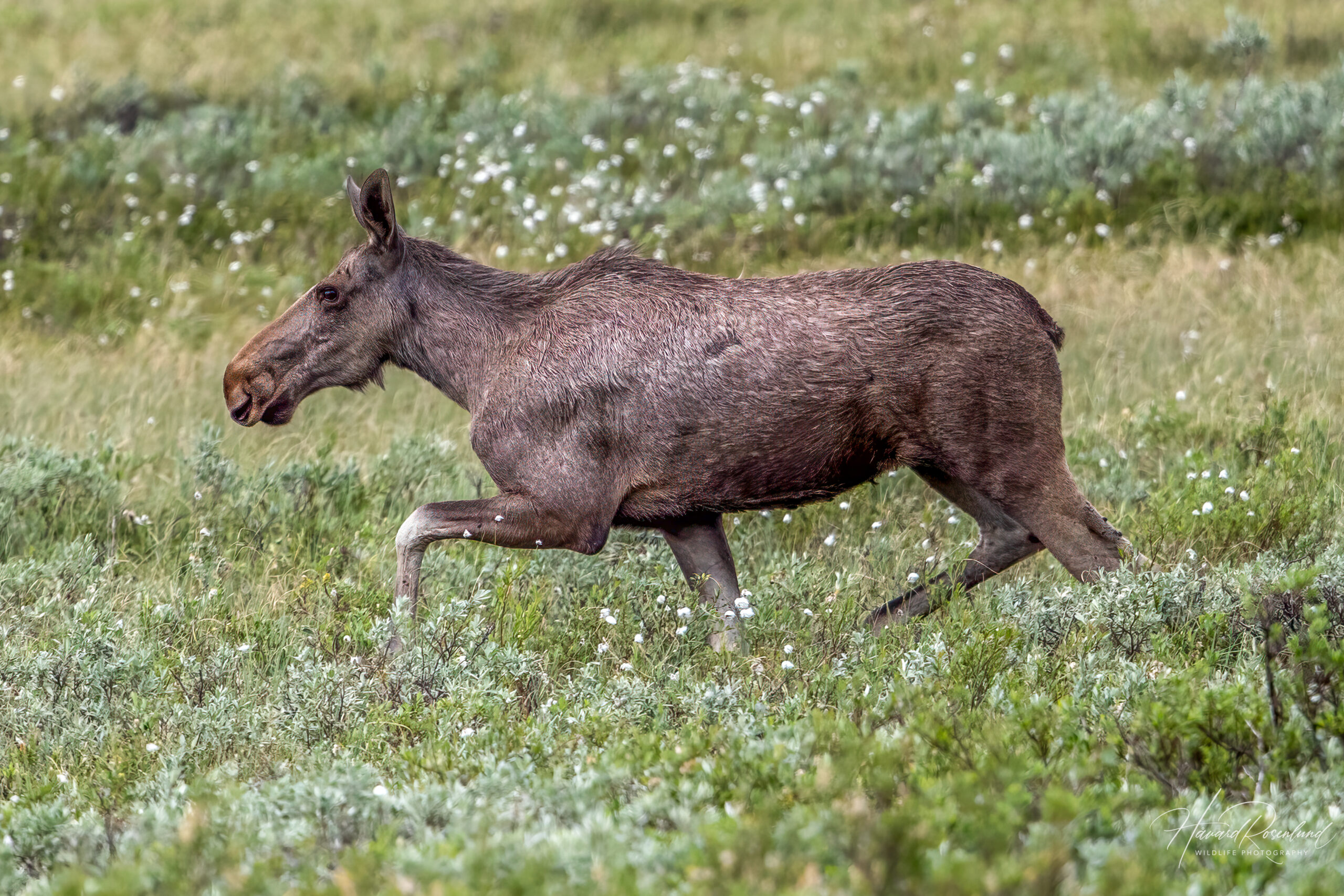
Moose
Alces alces
At a glance
Habitat
- Boreal and mixed forests, wetlands and riparian areas with abundant browse
Diet
- Leaves, shoots, twigs, bark and aquatic plants
Activity
- Mostly crepuscular; active day and night
Size
- Length: 230–310 cm Weight: 200–700 kg
Range
- Northern Europe and Asia, and North America
Description
The moose (Alces alces) is the largest living member of the deer family. It occurs across the boreal and subarctic regions of northern Europe, Asia and North America. Adults are roughly 2.3–3.1 m long, stand about 1.4–2.1 m at the shoulder and weigh roughly 200–700 kg, with bulls generally much larger than cows. Moose have very long legs, a deep body, high and strongly marked shoulders, a short neck and a large flexible muzzle with a mobile upper lip. Bulls grow a new set of antlers each year and shed them after the rut; in large adults the antlers can become broad and strongly palmate.
In European English the species is often called elk, whereas in North American English it is called moose. This can cause confusion because “elk” in North America normally refers to the wapiti (Cervus canadensis).
Taxonomy
The genus Alces is currently treated as containing a single living species, Alces alces. The North American form americanus is therefore included within the same species. Some alternative classifications have separated the North American and eastern Siberian populations as Alces americanus.
Moose show substantial geographic genetic and morphological structure, including two major genetic lineages, but current taxonomy retains them within one circumpolar species.
Adaptations
Much of the moose’s anatomy reflects life in cold, seasonally snowy landscapes. Long legs help it move through deep snow, marshes and dense vegetation, while broad hooves spread its weight on soft ground. The long muzzle and flexible upper lip allow leaves and shoots to be stripped efficiently from shrubs and young trees.
Moose are also strong swimmers and readily wade into lakes and wetlands to reach aquatic vegetation. Their large body and heavily insulating winter coat conserve heat extremely well, but this cold adaptation comes with a cost: warm conditions can force moose to reduce activity or seek cooler, shaded habitats. A study in southern Norway found that these behavioural responses to rising temperature were associated with lower seasonal mass gain, showing how warming can affect the species even before outright heat mortality occurs.
Habitat
Moose are closely associated with boreal and mixed forest landscapes containing a mosaic of young woodland, wetlands, lakes, rivers and other productive feeding areas. Recently disturbed or regenerating forest can be particularly valuable because it produces abundant shrubs and young deciduous trees within browsing height.
Habitat use changes with season, weather and local conditions. Dense forest can provide shelter from heat and deep snow, while wetlands, riparian zones and young forest often provide richer summer forage. This flexibility allows moose to occupy landscapes ranging from lowland forest to mountain birch woodland and open northern scrub.
Diet
Moose are selective browsers rather than grazers. Leaves, shoots and twigs from woody plants such as willow, birch and aspen form much of the diet, while bark and more fibrous woody material become increasingly important during winter.
Aquatic plants can be an important summer resource. Moose readily wade or swim into shallow water and may submerge the head and much of the body to reach vegetation below the surface. Their great height gives access to browse unavailable to smaller deer, but it also makes feeding directly from very short vegetation awkward.
Behaviour
Moose are mostly solitary outside the breeding season. Cows remain with their calves, and temporary aggregations can form where food is concentrated, but stable herds are unusual. Activity is often greatest around dawn and dusk, although animals may feed and travel at any hour depending on season, temperature and disturbance.
Movement strategies vary greatly. Tracking studies across Scandinavia have found resident, migratory and more irregular movement patterns within the same species. Snow, food, reproductive status and local landscape all influence how far an animal moves. Some populations travel between distinct summer and winter ranges, while others remain within much smaller areas throughout the year.
Moose usually avoid close encounters with people, but cows defending calves and bulls during the rut can react aggressively if approached too closely. Their behaviour also changes in response to hunting, roads, predators and heat, making them far more behaviourally flexible than their slow, heavy appearance might suggest.
Predation
Wolves (Canis lupus) are the most important large predator of moose across much of the boreal range. A Scandinavian study found that moose can make up most of the prey biomass taken by wolves. Calves and young animals are especially vulnerable. The effect varies strongly with wolf density, moose density and alternative prey, but in established wolf territories predation can have a substantial effect on local moose numbers.
Brown bears (Ursus arctos) are also important predators of newborn calves in parts of Eurasia and North America. Healthy adult moose are formidable prey and can defend themselves with powerful kicks; cows may aggressively defend calves. Predation therefore falls disproportionately on calves, young animals and adults in poorer condition rather than affecting all age classes equally.
Reproduction
The rut takes place mainly in September and October. Bulls search widely for receptive cows, advertise with scent and vocalisations and may fight rivals with their antlers. Large antlers function primarily in competition between males and are shed after the rut.
Gestation lasts about 230 days, with most calves born in May or June. Cows usually produce one or two calves, and twins are more frequent when females are large and in good condition. Newborn calves grow rapidly during the short northern summer.
Calves remain with their mother through their first year and are normally driven away shortly before she gives birth again. The reproductive success of a cow therefore depends strongly on her body condition and access to high-quality forage through the preceding seasons.
Cultural significance
Moose have been important to people across the northern forest zone for thousands of years, as prey, material resource and cultural symbol. In Scandinavia, moose appear frequently in prehistoric rock art and other archaeological evidence associated with hunting cultures.
The animal remains a powerful symbol of northern forests today and is deeply embedded in hunting traditions across Fennoscandia and North America. Its cultural visibility is unusual for a species that is normally solitary and often hidden in dense woodland.
Relationship with humans
Moose are major game animals across much of their range. Hunting can shape population density, age structure and sex ratio, while forestry strongly influences the amount and distribution of browse. High moose densities may in turn cause substantial browsing damage to young commercial forest and agricultural crops.
Road and railway collisions are another major source of conflict. Large body size makes collisions dangerous for both animals and people, and seasonal movements can concentrate moose along transport corridors. Hunting, forestry, migration routes and traffic are therefore closely linked in landscapes shared by moose and people.
Status
The moose is classified as least concern on the IUCN Red List. It retains a very large circumpolar range and is not globally threatened.
Population trends nevertheless differ markedly among regions. Local populations can be affected by hunting pressure, food limitation, parasites, road mortality and warming temperatures.
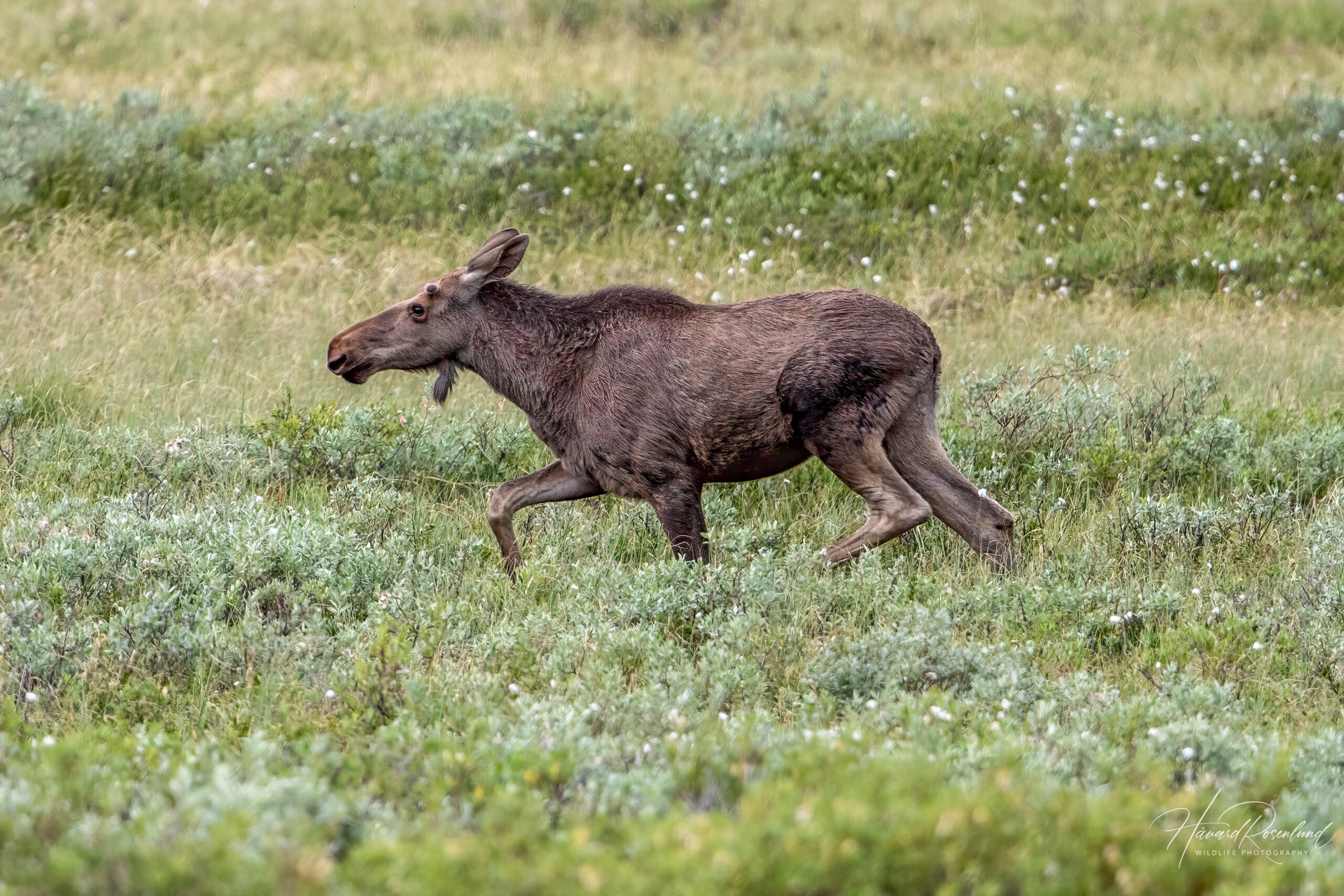
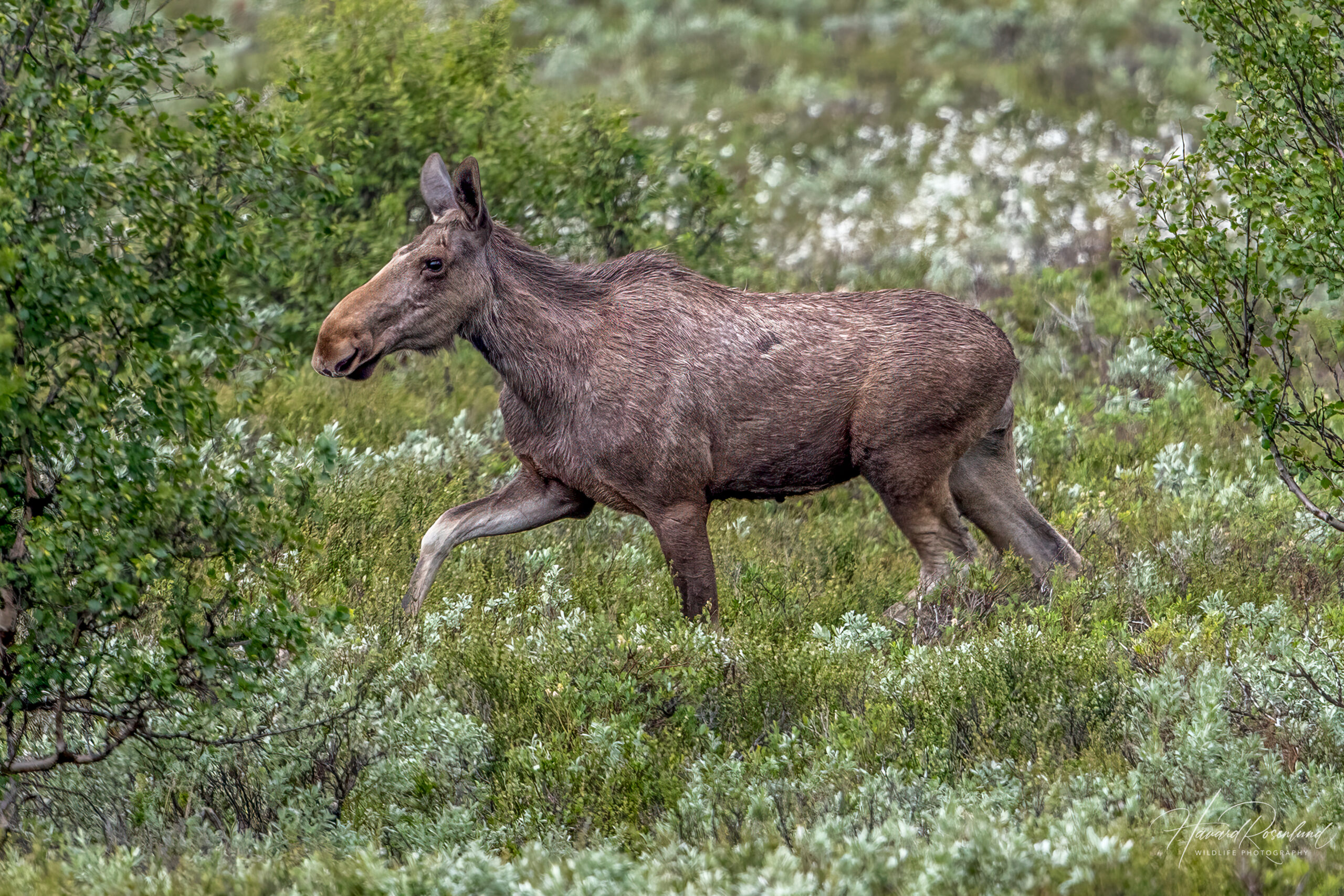
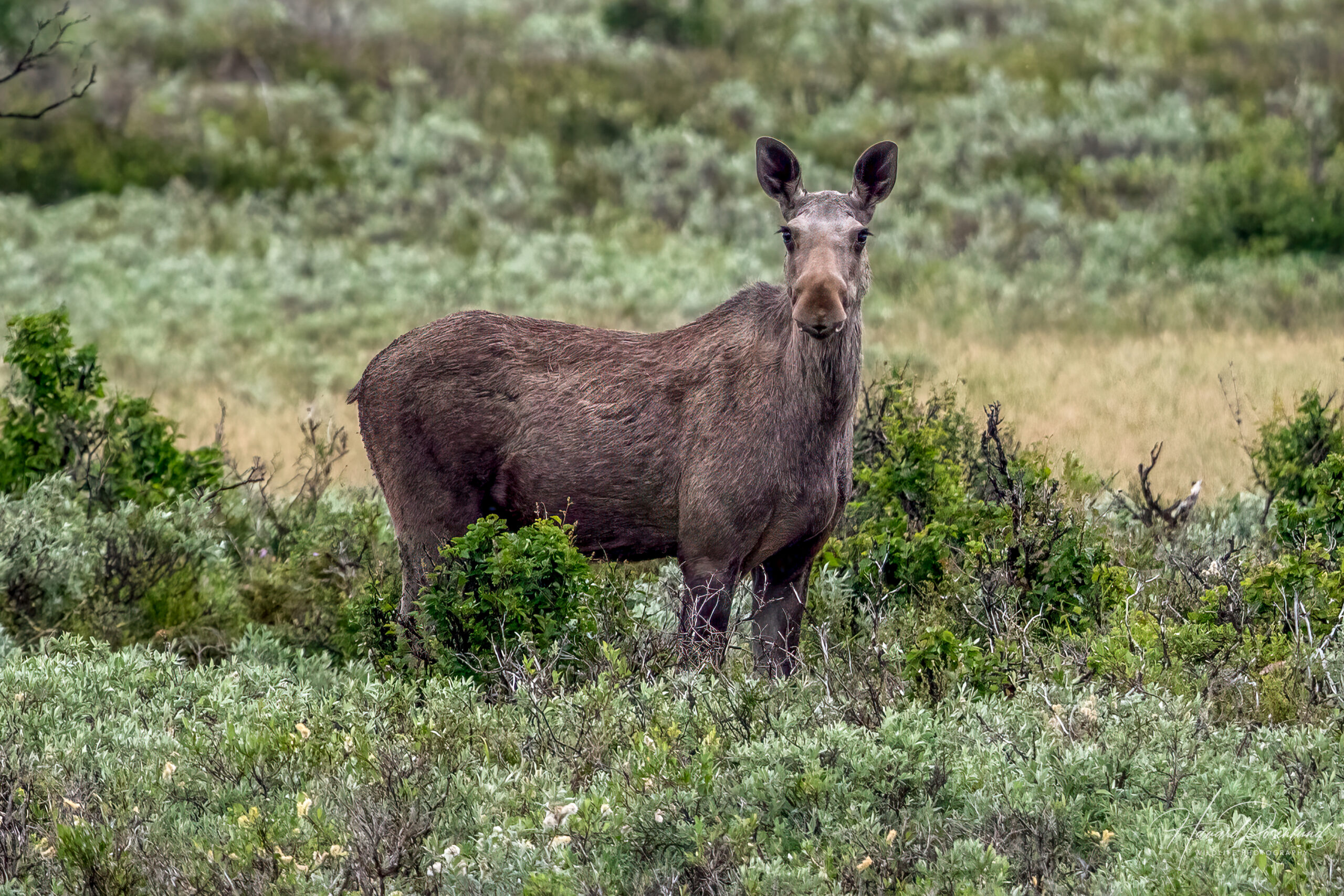
Image gallery
Loading map and observations…
Have you seen this species?
Independent species archive
Did you find this species page useful?
Wildlife Vagabond is independently built and maintained. Voluntary support helps cover hosting, maps, data storage and continued improvements to the species archive.
Support Wildlife VagabondSpecies content will remain freely available.
References
Information about the species’ global distribution and status is based primarily on global Red List data. See the references below for details.
- International Union for Conservation of Nature. (n.d.). Moose. The IUCN Red List of Threatened Species. https://www.iucnredlist.org/species/56003281/22157381
- Mammal Diversity Database. (n.d.). Alces alces. American Society of Mammalogists. https://www.mammaldiversity.org/taxon/1006285/
- Singh, N. J., & Ericsson, G. (2014). Changing motivations during migration: linking movement speed to reproductive status in a migratory large mammal. Biology Letters, 10(6), 20140379. https://doi.org/10.1098/rsbl.2014.0379
- Singh, N. J., Börger, L., Dettki, H., Bunnefeld, N., & Ericsson, G. (2012). From migration to nomadism: movement variability in a northern ungulate across its latitudinal range. Ecological Applications, 22(7), 2007-2020. https://doi.org/10.1890/12-0245.1
- Store norske leksikon. (n.d.). elg. https://snl.no/elg
- van Beest, F. M., & Milner, J. M. (2013). Behavioural Responses to Thermal Conditions Affect Seasonal Mass Change in a Heat-Sensitive Northern Ungulate. PLoS ONE, 8(6), e65972. https://doi.org/10.1371/journal.pone.0065972
- Zimmermann, B., Sand, H., Wabakken, P., Liberg, O., & Andreassen, H. P. (2015). Predator‐dependent functional response in wolves: from food limitation to surplus killing. Journal of Animal Ecology, 84(1), 102-112. https://doi.org/10.1111/1365-2656.12280