
Medium Egret
Ardea intermedia
At a glance
Habitat
- Shallow freshwater wetlands, marshes, flooded grassland, rice fields, estuaries and other open wet habitats
Diet
- Fish, frogs, aquatic insects, crustaceans and other small animals caught in shallow water and wet grassland
Activity
- Diurnal
Size
- Length: 56–72 cm Weight: about 400–500 g
Range
- South and East Asia, from the Indian subcontinent through Southeast Asia to China and Japan
Description
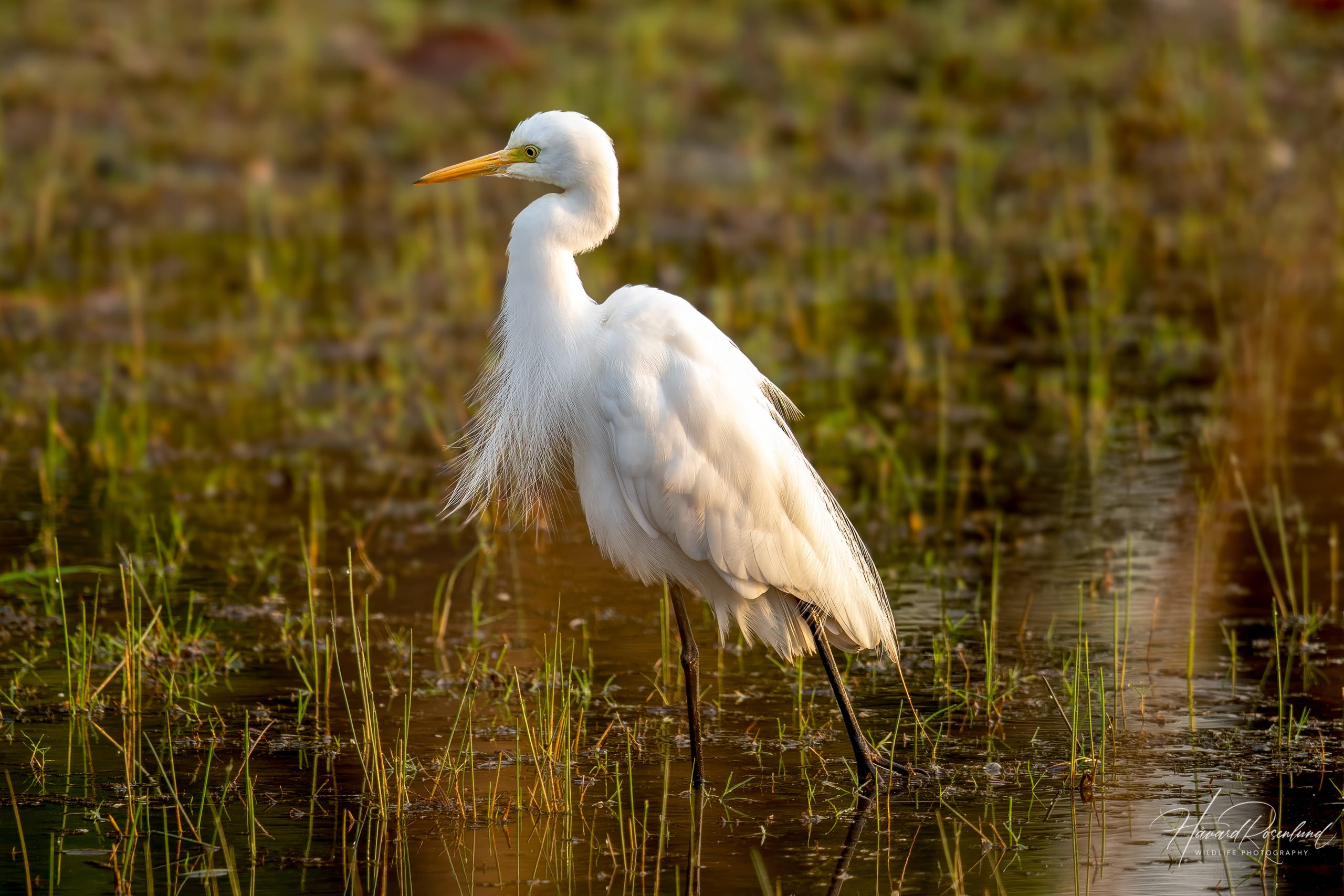
The medium egret (Ardea intermedia) is a medium-sized white heron found across warm parts of Asia. Adults are about 56–72 cm long, have a wingspan of roughly 105–115 cm and weigh around 400–500 g. It stands between the great egret (Ardea alba) and little egret (Egretta garzetta) in both size and build, with a relatively compact body, moderately long neck and sturdy bill.
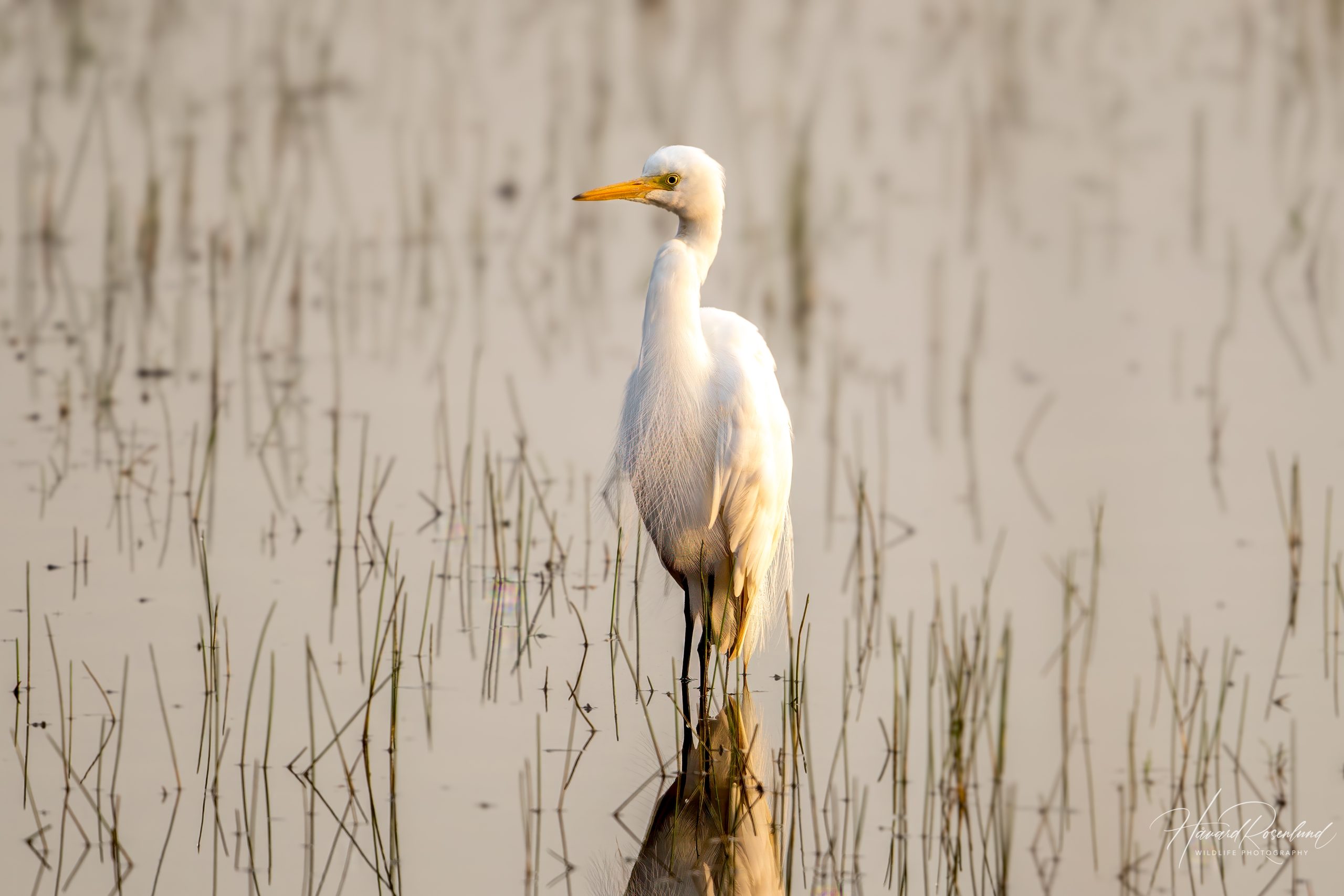
Outside the breeding season the bill is usually yellow, often with a darker tip, while the legs and feet are black. During breeding the bill becomes dark or black and long ornamental plumes develop on the back and breast. Identification can be difficult when size is hard to judge. Compared with the great egret, the gape line stops around the eye rather than extending clearly behind it. The little egret is smaller and more slender, normally with a black bill and contrasting yellow feet.
Taxonomy
The name “Intermediate Egret” was formerly used for a broader species that included three geographically separated forms. In 2023 the complex was split into the Asian Medium Egret (Ardea intermedia), the African Yellow-billed Egret (Ardea brachyrhyncha) and the Australasian Plumed Egret (Ardea plumifera).
The three are very similar in ordinary white plumage, but show consistent differences in breeding plumage and the colours of the bill and other bare parts. The Asian species typically develops a black bill when breeding, while the African and Australasian species show different breeding colours. They are now treated as three separate species.
Habitat
Medium egrets are wetland specialists. They use shallow freshwater marshes, flooded grassland, ponds, lake edges, rice fields, irrigation areas and slow-flowing rivers, but also occur in estuaries, mangroves and other brackish wetlands. Open shallow water mixed with low vegetation provides especially good feeding habitat.
The species can use artificial wetlands and cultivated areas such as rice fields, but remains dependent on water conditions that keep shallow feeding areas available.
Diet
The diet includes fish, frogs and tadpoles, aquatic insects, crustaceans, molluscs, small reptiles and other animals found in shallow water or wet vegetation. The species also feeds in damp grassland and flooded fields where insects and small vertebrates are abundant.
A study published in 2023, based on fieldwork at Sheikha Lake near Aligarh from 2000 to 2004, compared medium, great, little and eastern cattle egrets (Ardea coromanda). The four species differed in the microhabitats they used, when they were most active and which foods they took. Such differences reduce direct competition and help several similar white herons share the same wetland.
Behaviour
Medium egrets often feed alone or loosely spaced from one another, but several birds may gather where prey is concentrated. Their hunting is generally deliberate: the bird watches a small area carefully, stands still or walks a few steps and then makes a rapid strike with the bill. At productive wetlands they commonly feed alongside other herons, ibises and storks.
Outside breeding colonies the species is usually quieter and less strongly social than some smaller egrets.
Breeding
Breeding timing varies across the range and often follows periods of high rainfall and abundant food. Medium egrets usually nest in mixed heronries with other waterbirds. During breeding they become much more conspicuous, with ornamental plumes, changes in bill and facial colour and frequent interactions around crowded nesting sites.
The nest is a platform of sticks placed in a tree or large shrub, often close to water and sometimes in heavily human-influenced landscapes. A clutch generally contains two to five eggs. Both parents incubate, usually for about 24–27 days, and later feed the chicks. The young become capable of flight after roughly five to six weeks and may remain near the colony to be fed by the parents for some time afterwards.
A study published in 2017 from Kannur and neighbouring parts of Kasaragod in northern Kerala documented mixed heronries in both urban areas and nearby wetlands. In the urban part of the survey, 1,928 nests were recorded in 174 trees of 22 species. Medium egrets were among the birds sharing these colonies, showing how large concentrations of colonial waterbirds can depend on a limited number of mature nesting trees even inside towns.
Status
The medium egret is classified as least concern on the IUCN Red List. It remains widespread through South, Southeast and East Asia and is common in many suitable wetlands.
Indian monitoring updated in 2025 suggests that the population has been roughly stable over the long term but has declined by about 2% per year in recent years. Wetland drainage, conversion, pollution and changes in water conditions can reduce local populations. Because the species depends on shallow water for feeding and on trees or shrubs for colonial nesting, both the wetland itself and nearby nesting vegetation matter.
Image gallery
Loading map and observations…
Have you seen this species?
Independent species archive
Did you find this species page useful?
Wildlife Vagabond is independently built and maintained. Voluntary support helps cover hosting, maps, data storage and continued improvements to the species archive.
Support Wildlife VagabondSpecies content will remain freely available.
References
Information about the species’ global distribution and status is based primarily on global Red List data. See the references below for details.
- Abbasi, F., & Khan, M. S. (2023). Spatial, temporal and trophic resource partitioning among the four egret species (Aves: Pelecaniformes: Ardeidae) in a tropical wetland ecosystem, India. Journal of Threatened Taxa, 15(11), 24201-24211. https://doi.org/10.11609/jott.8429.15.11.24201-24211
- Avibase. (n.d.). AviList 2025 / Avibase – Medium Egret. https://avibase.bsc-eoc.org/species.jsp?avibaseid=30785911C6334086&lang=EN
- BirdLife International. (n.d.). Intermediate/Medium Egret species factsheet. https://datazone.birdlife.org/species/factsheet/intermediate-egret-ardea-intermedia
- HeronConservation. (n.d.). Heron Conservation – Intermediate Egret. https://heronconservation.org/herons-of-the-world/list/intermediate-egret/
- International Union for Conservation of Nature. (n.d.). Medium Egret. The IUCN Red List of Threatened Species. https://www.iucnredlist.org/species/22727668/181757896
- Oiseaux.net. (n.d.). Medium Egret. https://www.oiseaux.net/birds/medium.egret.html
- Roshnath, R., & Sinu, P. A. (2017). Nesting tree characteristics of heronry birds of urban ecosystems in peninsular India: implications for habitat management. Current Zoology, 63(6), 599-605. https://doi.org/10.1093/cz/zox006
- State of India's Birds. (n.d.). State of India’s Birds – Intermediate Egret. https://stateofindiasbirds.in/species/up-integr/
- Wildlife Institute of India. (2010). Nesting ecology of colonial waterbirds at Bhitarkanika mangroves, Orissa. https://digitalrepository.wii.gov.in/items/48f2a8a5-876c-47b2-8572-e4c814dba2bb