
Chital
Axis axis
At a glance
Habitat
- Tropical deciduous forest and grassland mosaics, usually with permanent water and nearby cover
Diet
- Mixed feeder: mainly grasses when nutritious, with increasing browse, leaves and fruit in the dry season
Activity
- Mostly diurnal, with strong activity around dawn and dusk
Size
- Length: ♂ 150–155 cm; ♀ 140–145 cm Weight: ♂ 70–85 kg; ♀ 45–60 kg
Range
- Native to the Indian subcontinent; introduced populations occur widely in several other regions
Description
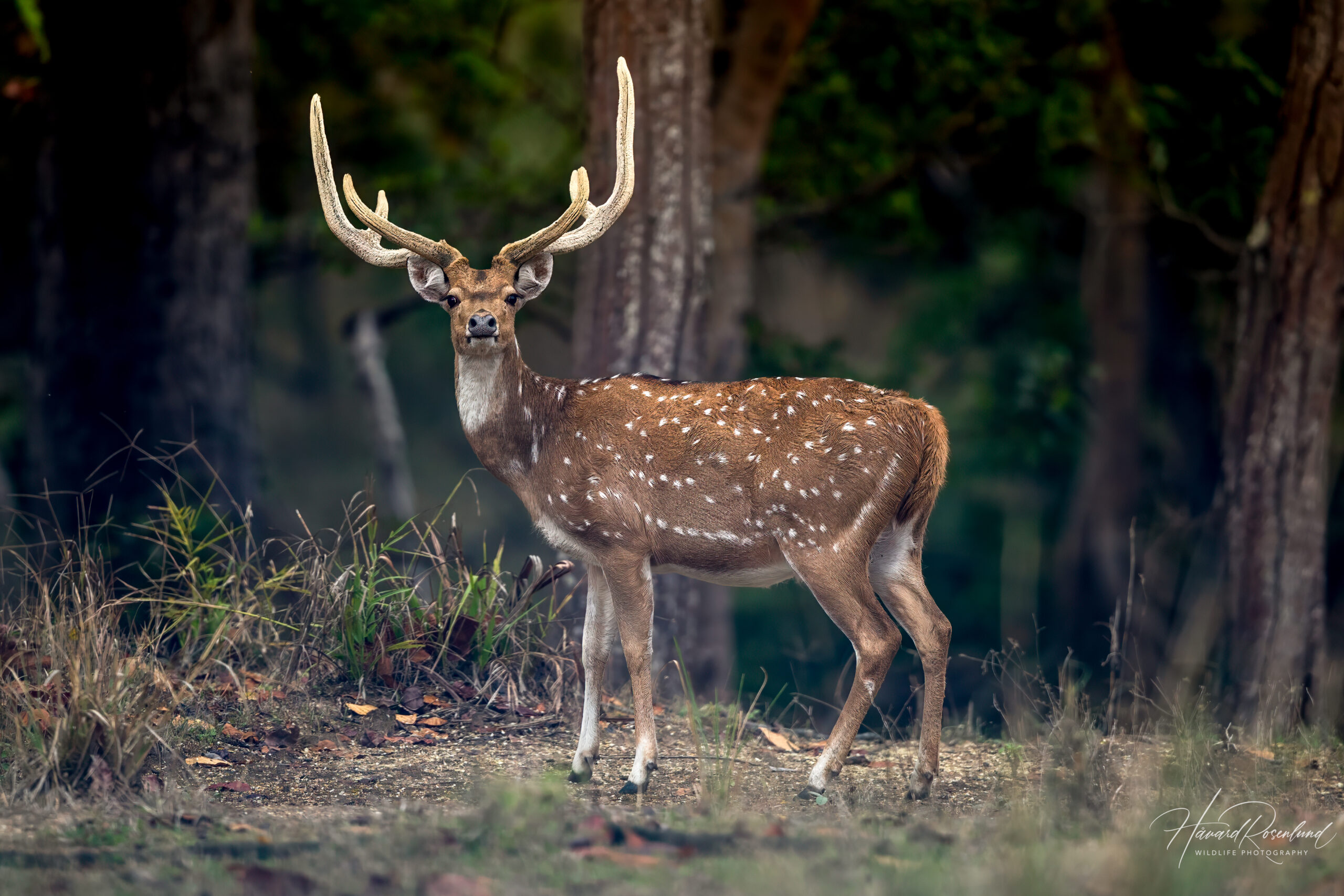
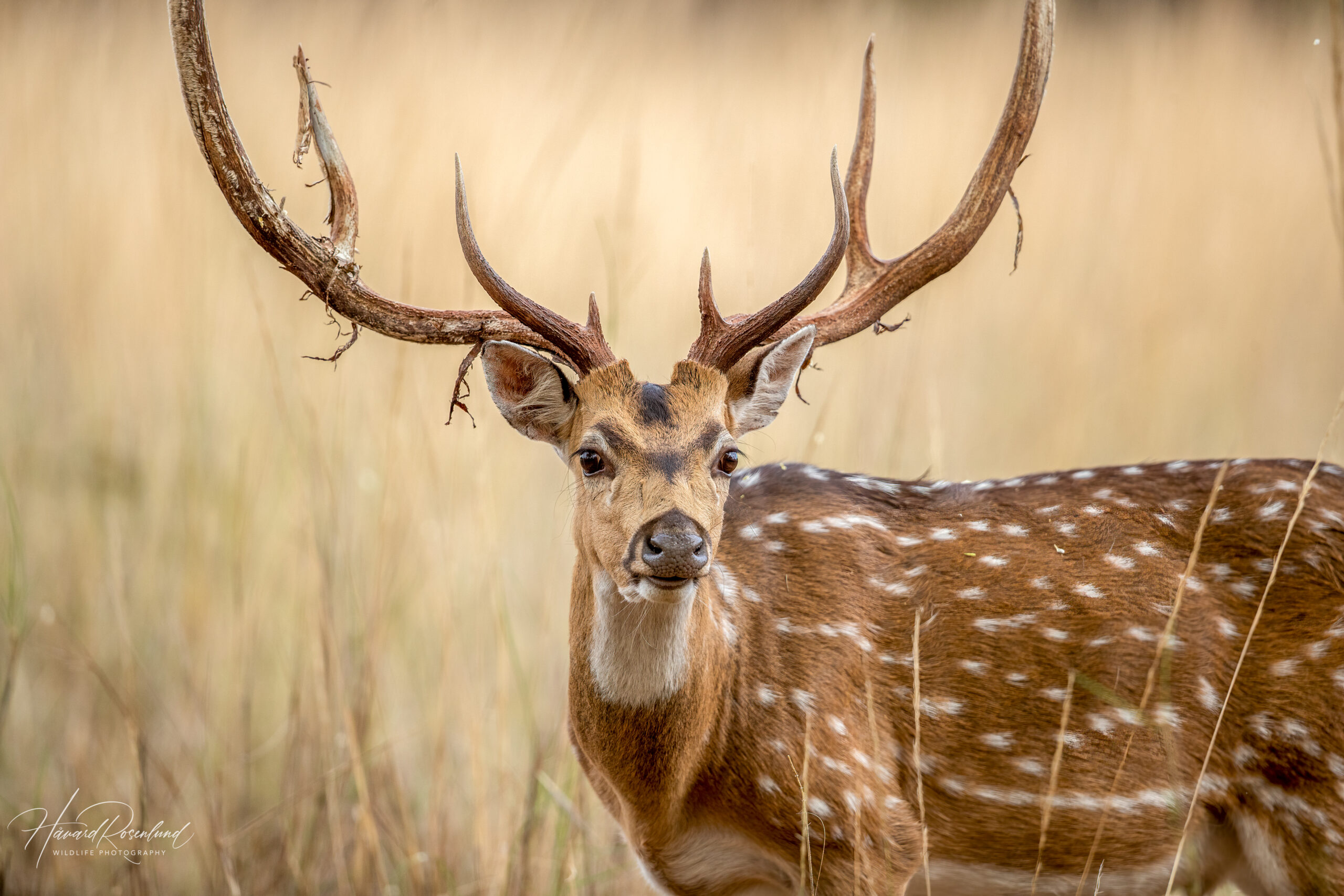
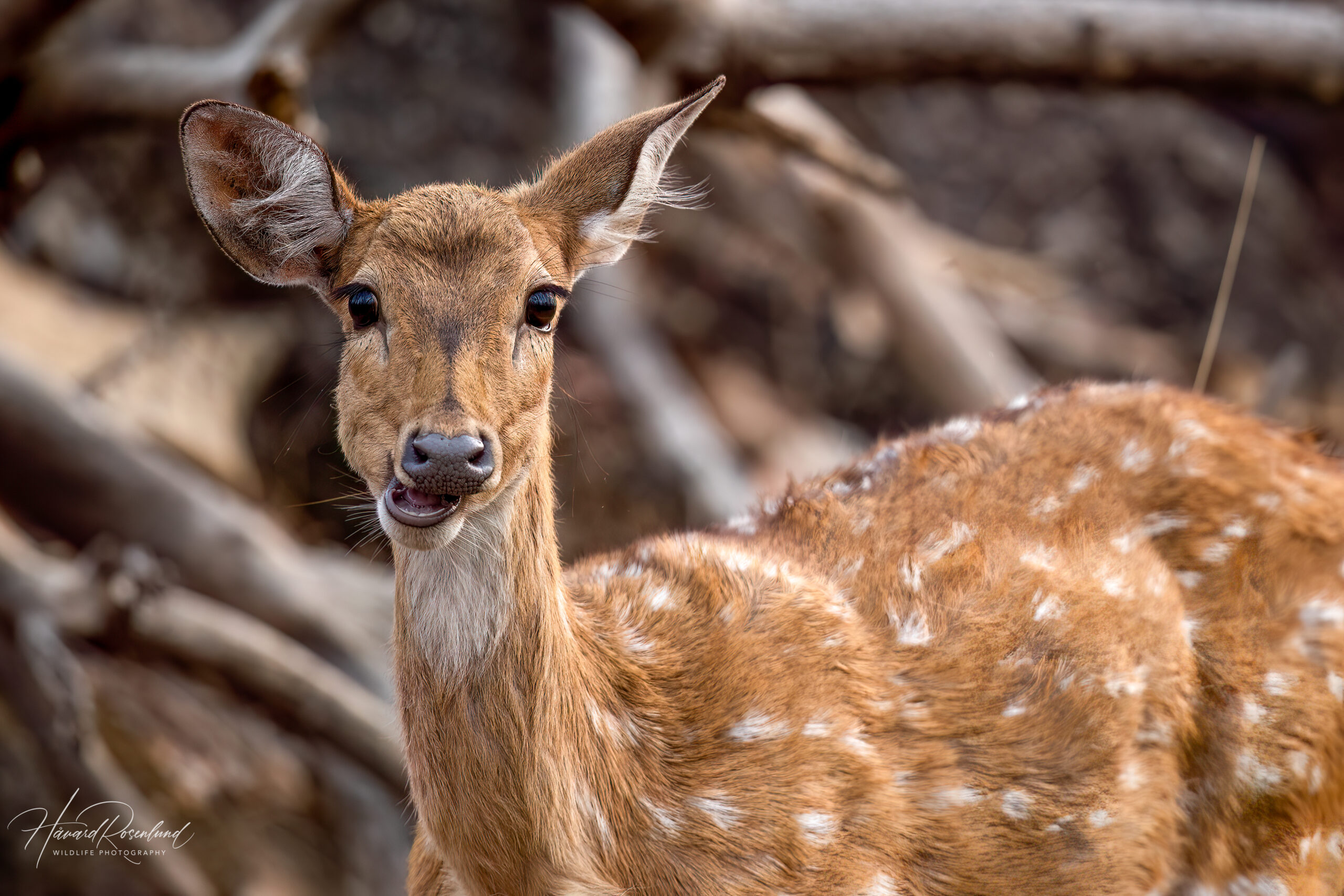
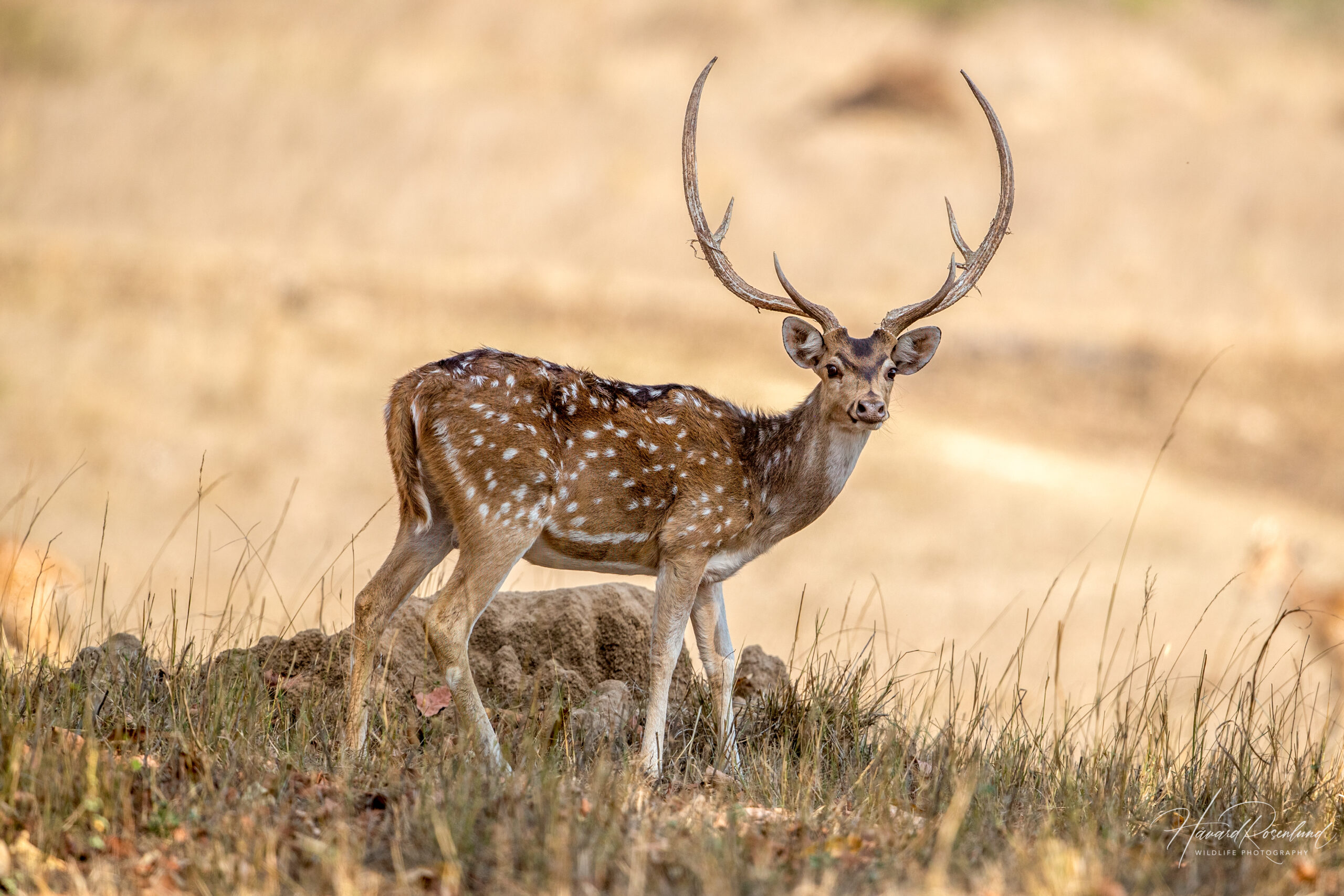
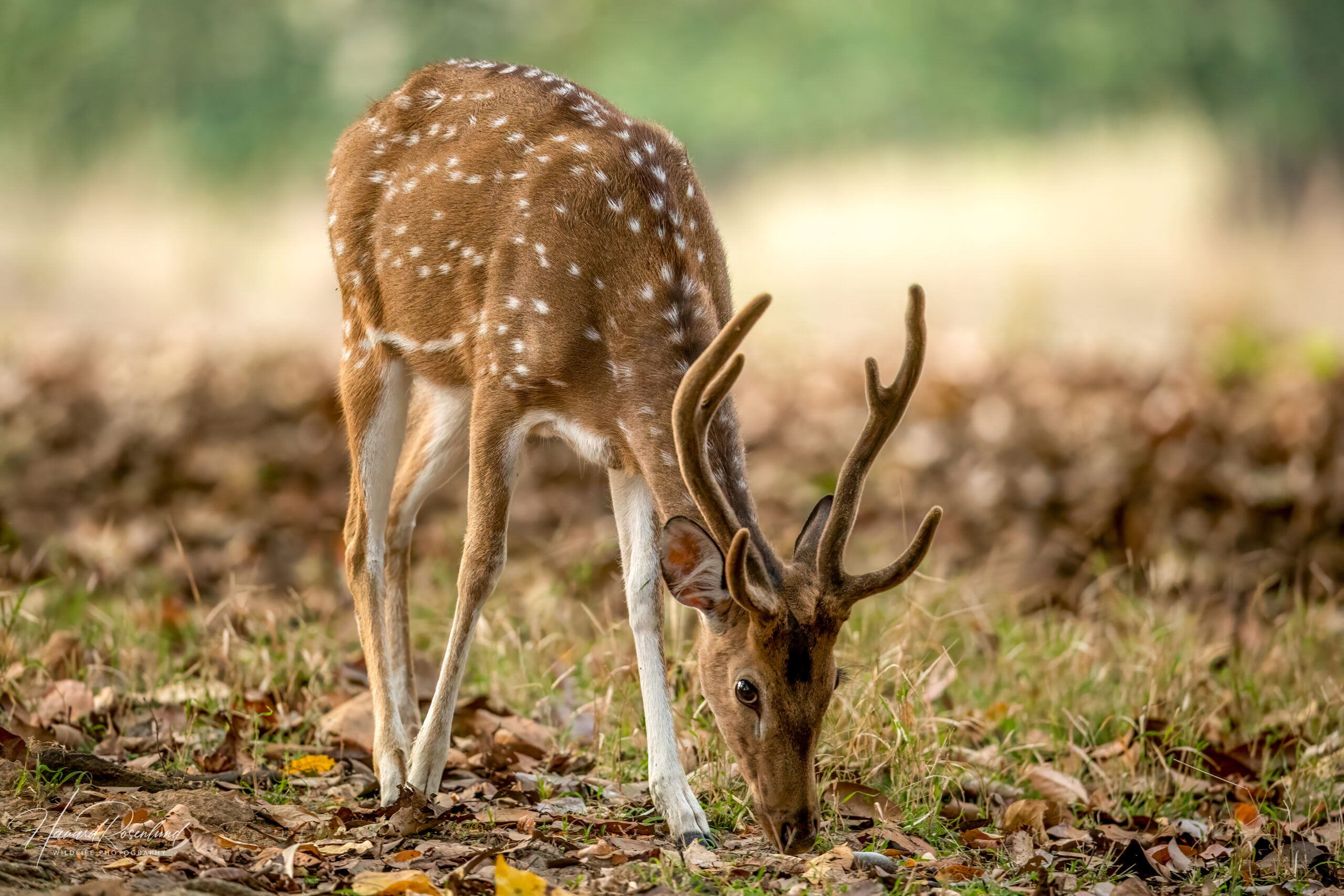
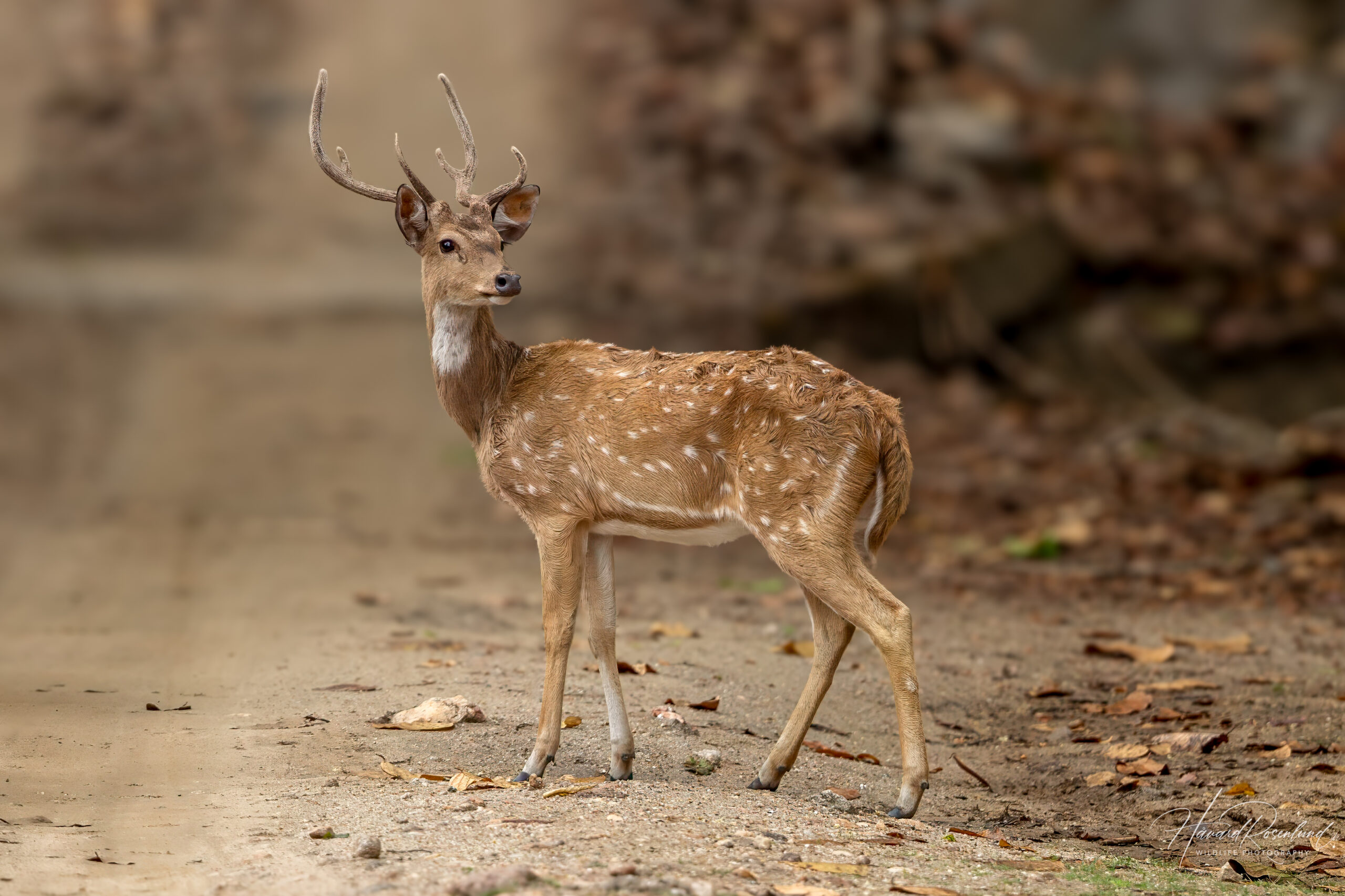
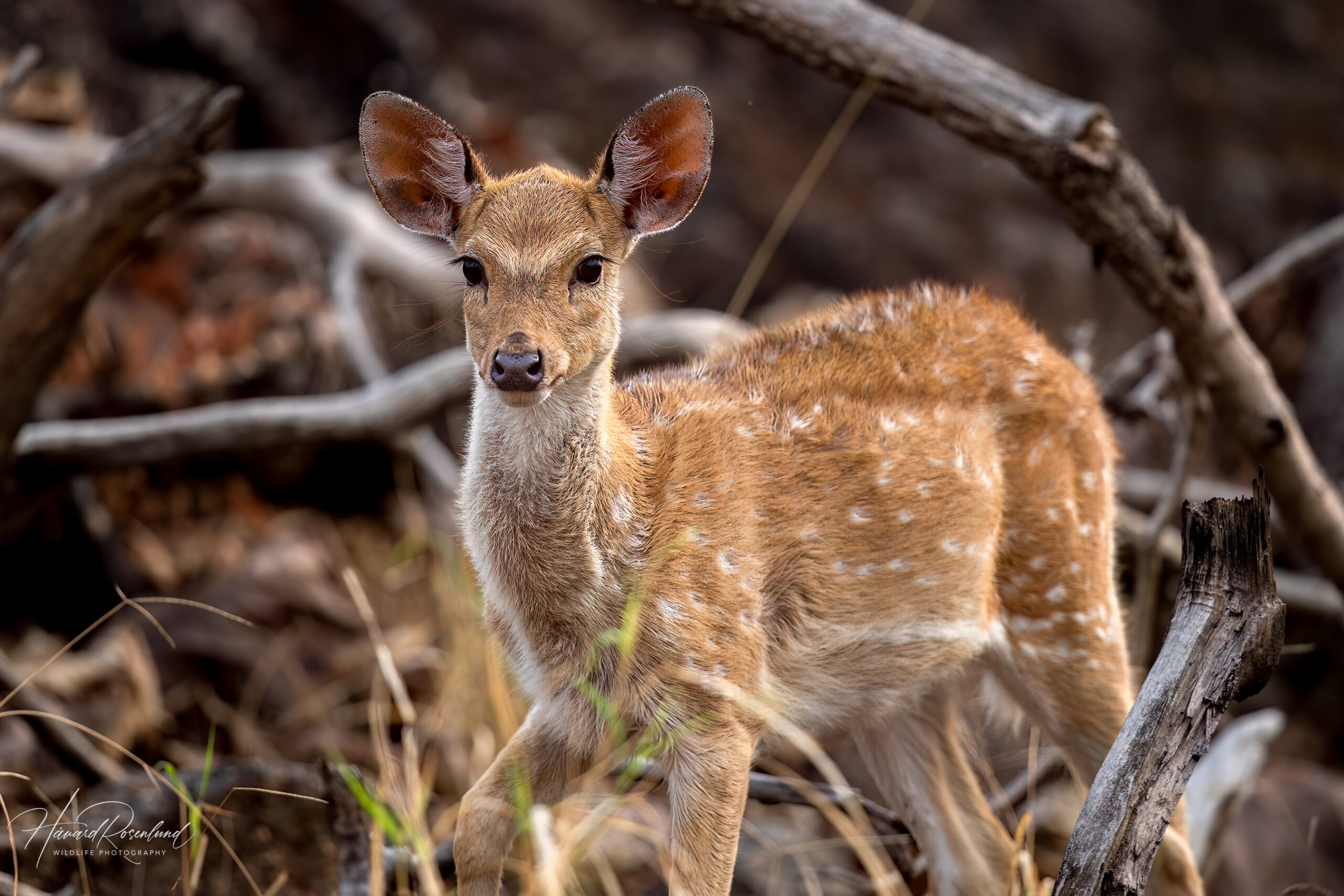
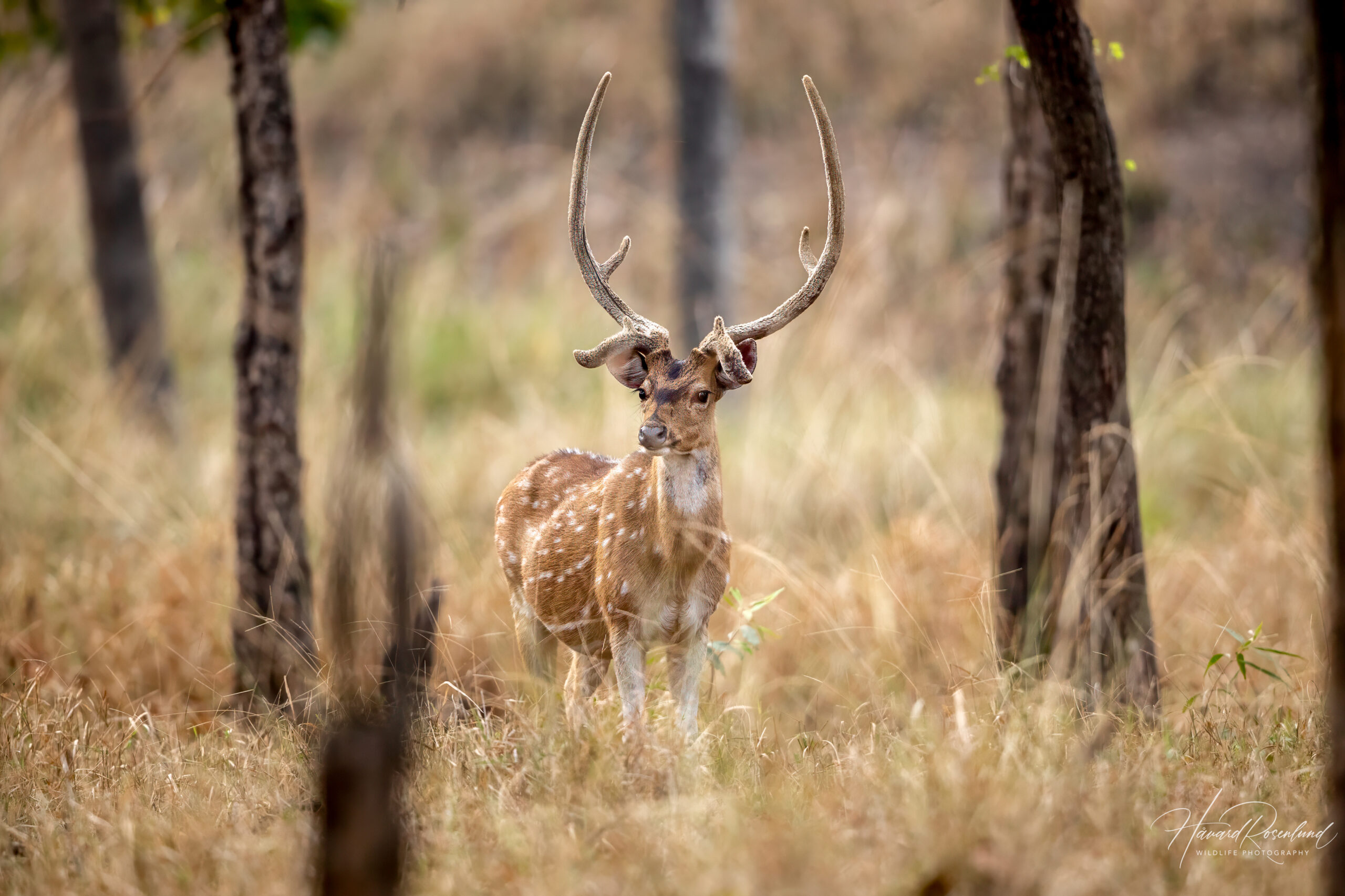
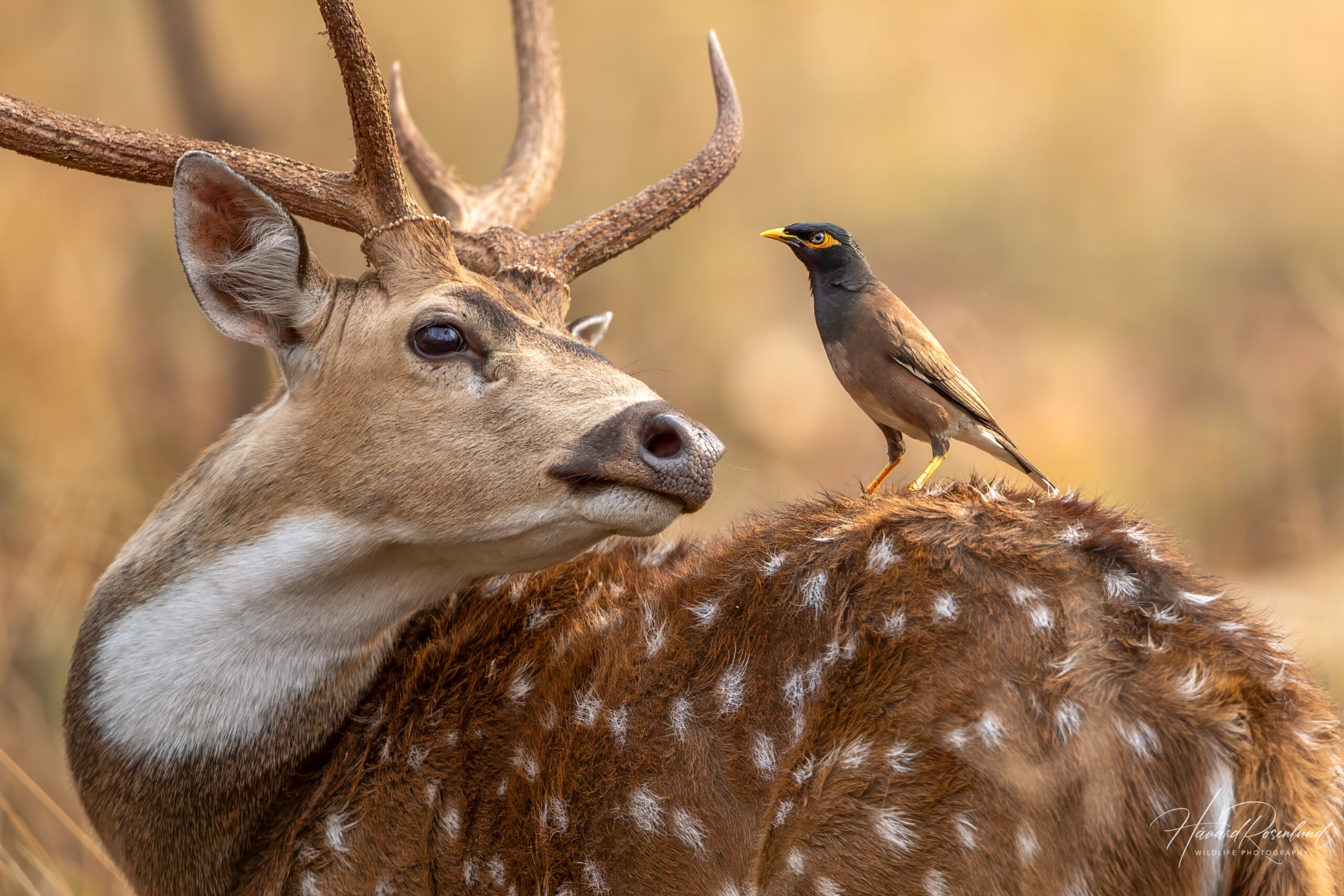
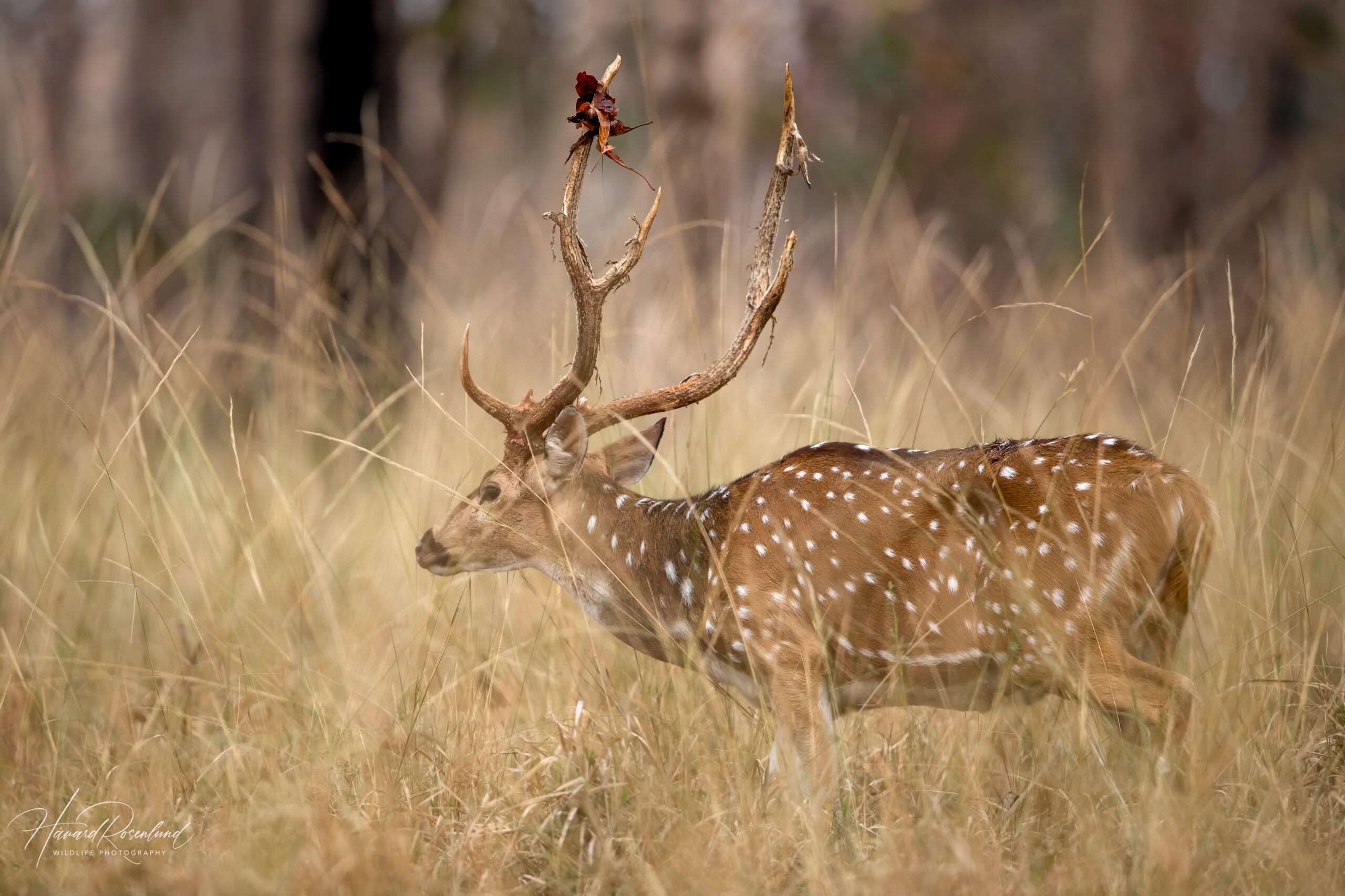
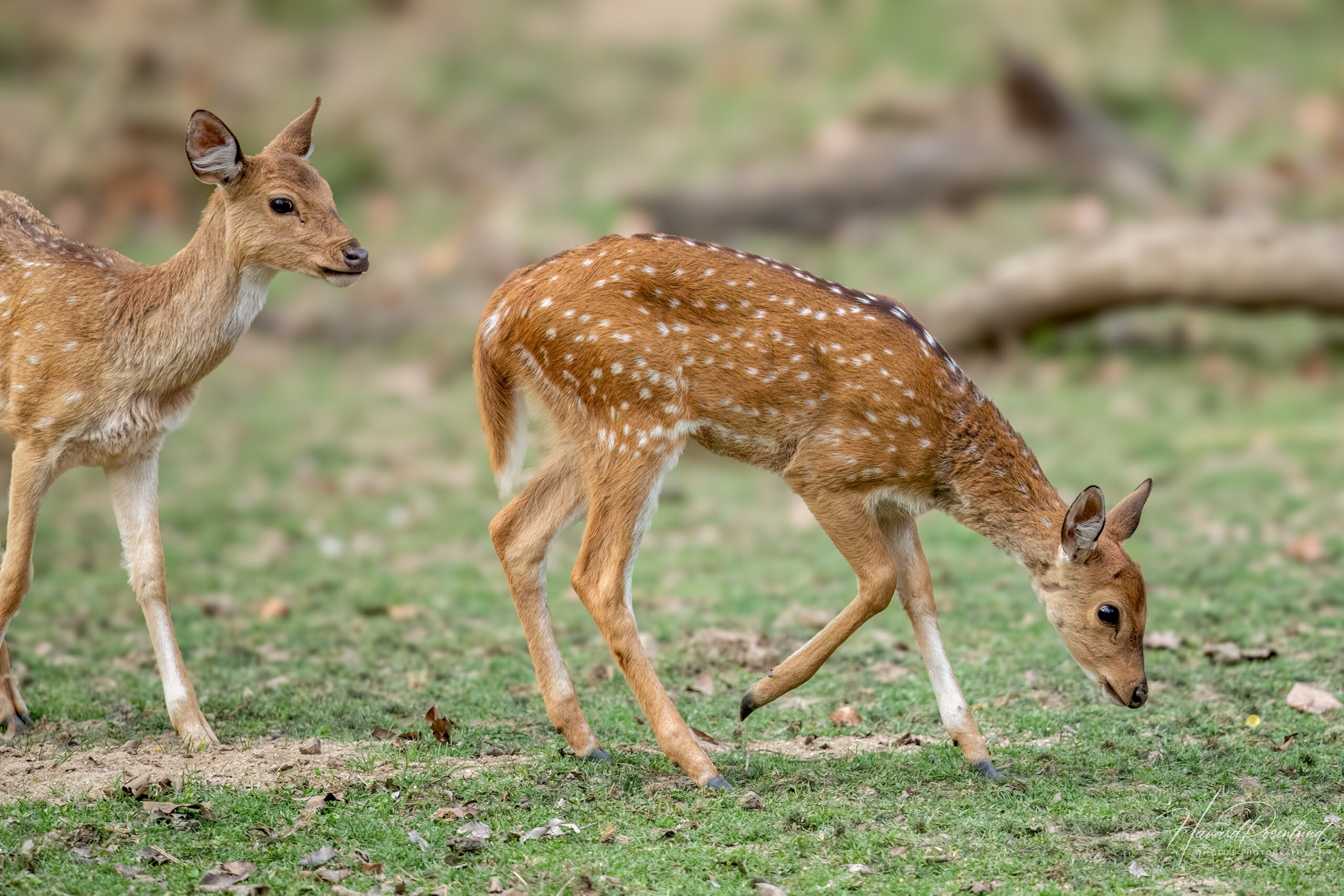
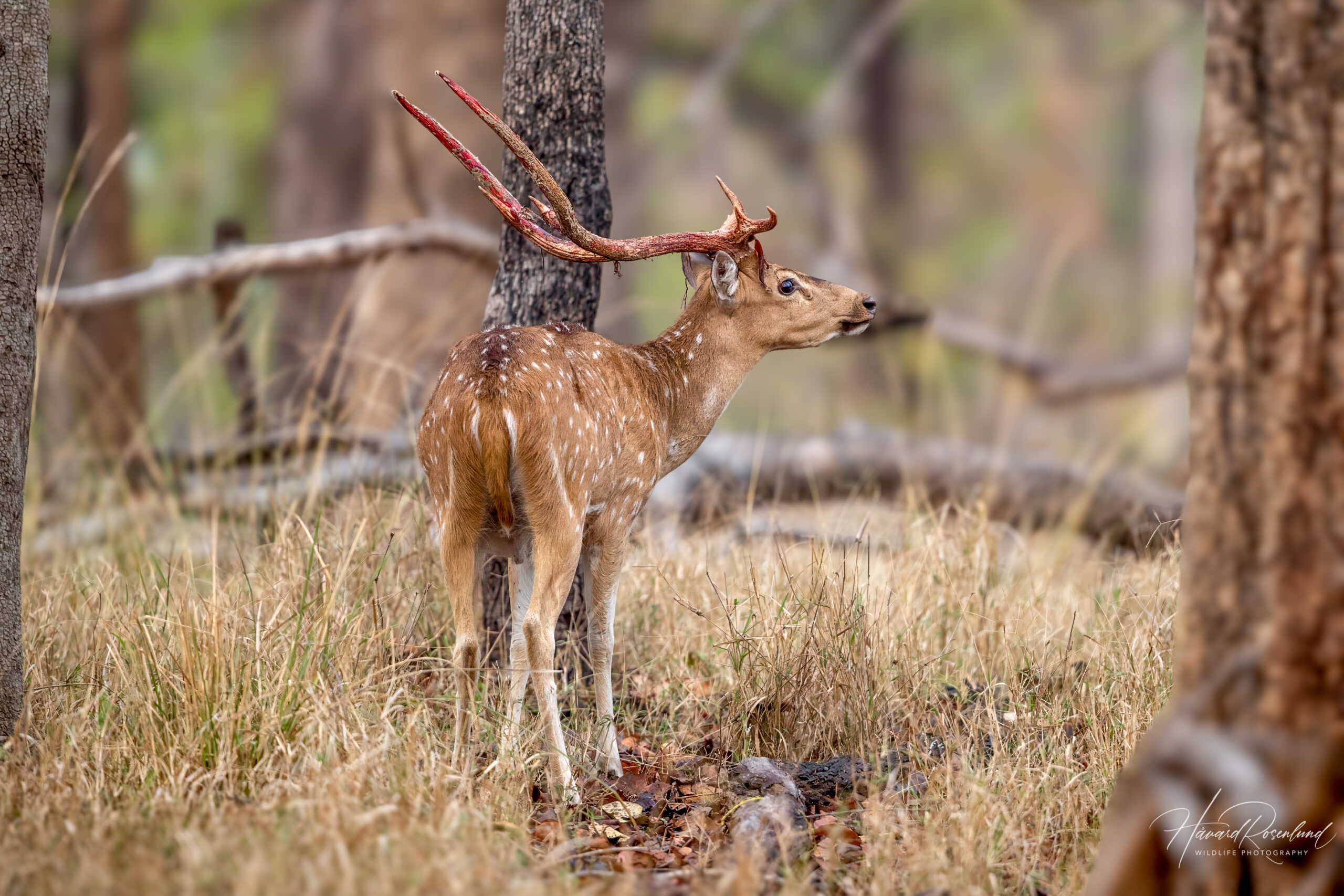
The chital (Axis axis), also known as the axis deer or spotted deer, is a medium-sized deer native to the Indian subcontinent. The reddish to golden-brown coat remains covered with white spots throughout adult life, with a dark dorsal stripe and white underparts. Males are substantially larger than females and carry three-tined antlers that can become very long relative to body size.
Adult males are typically about 150–155 cm in head-and-body length and weigh around 70–85 kg, while females are about 140–145 cm long and weigh around 45–60 kg. The permanent white spotting makes adults unusually distinctive among the larger deer of the Indian subcontinent, most of which lose juvenile spotting as they mature.
Habitat
Chital thrive in mosaics of tropical deciduous forest and open grassland, especially where good feeding areas lie close to shade, cover and permanent water. They also use scrub, woodland and more open savanna-like habitats, but generally favour landscapes that allow easy movement between grazing areas and forest shelter.
In many protected areas of central and southern India, the combination of grasslands, forest edges and seasonal new plant growth supports very high densities.
Diet
Chital are mixed feeders rather than strict grazers. Fresh grasses can dominate when they are nutritious, while leaves, shoots, fallen flowers and fruit become increasingly important as grasses dry and lose quality.
Seasonal studies in southern India found that chital grazed more strongly during the wet season but increased browsing in the dry season. In central Indian forests, fresh grass growth after burning and during the monsoon can create short periods of particularly high-quality forage, allowing deer to shift their diet as plant quality changes through the year.
Social behaviour
Chital live in fluid fission–fusion societies, with herds repeatedly splitting and merging rather than forming stable harems. Herd size and composition change with habitat, food availability, predation risk and reproductive condition. Female–young groups, bachelor groups and mixed herds all occur, while temporary aggregations can become large where food is concentrated.
They are active mainly during the day, with feeding and general activity often peaking around dawn and dusk and more resting during the middle of the day.
Predation
Chital form an important part of the prey base for tiger (Panthera tigris), leopard (Panthera pardus) and dhole (Cuon alpinus) in many protected areas of India.
In areas with large predators, chital rely heavily on vigilance and alarm communication. They give loud alarm calls when danger is detected and also respond to alarm behaviour from other species. Their association with the Northern Plains Grey Langur (Semnopithecus entellus) is especially well studied. Deer obtain leaves and fruit dropped from the canopy and gain additional information from langur alarm calls, while the langurs can also respond to warnings from deer. This is an asymmetrical mutualism: both species benefit, but not necessarily to the same degree.
Reproduction
Chital differ from many temperate deer because reproduction is not restricted to one short annual rut. Males shed and regrow their antlers, but the cycle is poorly synchronised across the population, so males in different stages can occur at the same time. Mating and births are possible throughout the year. Hard antlers coincide with the highest reproductive activity, but local peaks vary with climate and food availability.
A 2025 study in Kanha National Park, India, recorded lactating females in every month, with the proportion peaking in March and April. Most adult males carried hard antlers from late summer into the monsoon, and rutting peaked when forage quality was high. Chital can therefore breed year-round while still showing strong local seasonal peaks linked to fresh, nutrient-rich vegetation.
Gestation lasts roughly 228–239 days and a single fawn is usual. Newborn fawns remain concealed for much of their earliest period of life before increasingly accompanying their mothers and joining other deer.
Introduced populations
People have introduced chital far beyond the native South Asian range, principally for hunting and as ornamental animals. Established populations now occur in Australia, Hawaii, parts of the continental United States and several other regions. Some have expanded rapidly because the deer are adaptable and can reproduce throughout much of the year.
The ecological consequences vary among regions. A 2025 study of 149 invasive chital in the tropical savannas of northern Australia found a broad, browse-dominated diet throughout the year, differing from earlier work that had suggested stronger wet-season grazing. In Hawaii, only nine deer founded the Maui population in 1959, yet later estimates exceeded 10,000 animals despite more than 11,000 removals through hunting and population control. Such rapid growth can make active control necessary in introduced populations even though the species is not globally threatened.
Status
The chital is classified as least concern on the IUCN Red List. Its native range extends across India, Nepal, Bhutan, Bangladesh and Sri Lanka.
Chital remains widespread and is often abundant in well-protected landscapes, but local populations can decline through habitat conversion, hunting and competition with livestock.
Image gallery
Loading map and observations…
Have you seen this species?
Independent species archive
Did you find this species page useful?
Wildlife Vagabond is independently built and maintained. Voluntary support helps cover hosting, maps, data storage and continued improvements to the species archive.
Support Wildlife VagabondSpecies content will remain freely available.
References
Information about the species’ global distribution and status is based primarily on global Red List data. See the references below for details.
- Ahrestani, F. S., Heitkönig, I. M. A., & Prins, H. H. T. (2012). Diet and habitat-niche relationships within an assemblage of large herbivores in a seasonal tropical forest. Journal of Tropical Ecology, 28(4), 385–394. https://doi.org/10.1017/S0266467412000302
- Bagchi, S., Prakash Goyal, S., & Shankar, K. (2008). Social organisation and population structure of ungulates in a dry tropical forest in western India (Mammalia, Artiodactyla). mammalia, 72(1). https://doi.org/10.1515/MAMM.2008.008
- Goswami, S., Kumar, U., Qureshi, Q., & Jhala, Y. (2025). Ecological correlates of chital (Axis axis) reproductive seasonality in Kanha Tiger Reserve. Scientific Reports, 15(1), 22976. https://doi.org/10.1038/s41598-025-08093-0
- International Union for Conservation of Nature. (n.d.). Chital. The IUCN Red List of Threatened Species. https://www.iucnredlist.org/species/41783/22158006
- Loudon, A. S. I., & Curlewis, J. D. (1988). Cycles of antler and testicular growth in an aseasonal tropical deer (Axis axis). Reproduction, 83(2), 729-738. https://doi.org/10.1530/jrf.0.0830729
- Mammal Diversity Database. (n.d.). Axis axis. American Society of Mammalogists. https://www.mammaldiversity.org/taxon/1006307/
- Newton, P. N. (1989). Associations between Langur Monkeys (Presbytis entellus) and Chital Deer (Axis axis): Chance Encounters or a Mutualism? Ethology, 83(2), 89-120. https://doi.org/10.1111/j.1439-0310.1989.tb00522.x
- Quin, M. J., Hirsch, B. T., Schwarzkopf, L., Watter, K., Pople, A., & Strugnell, J. M. (2025). DNA metabarcoding provides new insight into the diet of invasive chital deer (Axis axis) in a tropical savanna landscape. Ecosphere, 16(6), e70288. https://doi.org/10.1002/ecs2.70288
- Randel, C. J., & Tomeček, J. M. (2021). Axis axis (Artiodactyla: Cervidae). Mammalian Species, 53(1004), 51-64. https://doi.org/10.1093/mspecies/seab006
- U.S. Geological Survey. (n.d.). USGS – Modeling scenarios for the management of axis deer in Hawai‘i. https://pubs.usgs.gov/publication/70226891