
Sambar
Rusa unicolor
At a glance
Habitat
- Forests and forest–grassland mosaics from lowlands to mountains, usually with dense cover and water nearby
Diet
- Leaves, shoots, grasses, herbs, fruit and other plant material; highly seasonal and flexible
Activity
- Mostly crepuscular and nocturnal, with activity varying with season and disturbance
Size
- Length: ~162–246 cm body length Weight: Strongly variable; large males can exceed 250 kg
Range
- India and Sri Lanka through southern China and mainland Southeast Asia to parts of Sundaland
Description
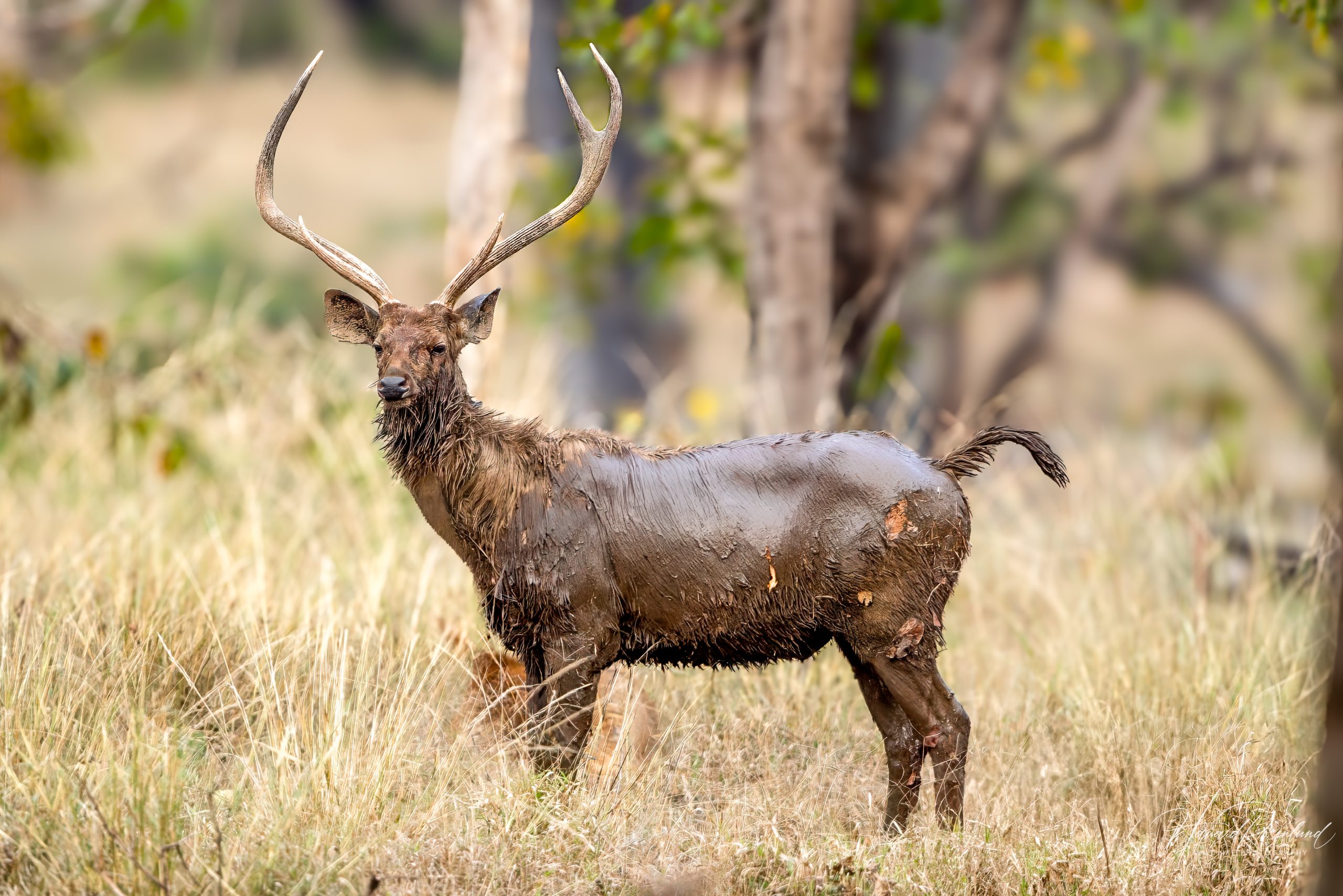
The sambar (Rusa unicolor) is one of the largest deer native to Asia. Its range extends from India and Sri Lanka through southern China and Taiwan, mainland Southeast Asia and into parts of Sundaland, including Sumatra and Borneo. Size varies considerably across this enormous range. Head-and-body length is roughly 162–246 cm and shoulder height about 102–160 cm. Large mainland males can exceed 250 kg, while island populations are generally smaller.
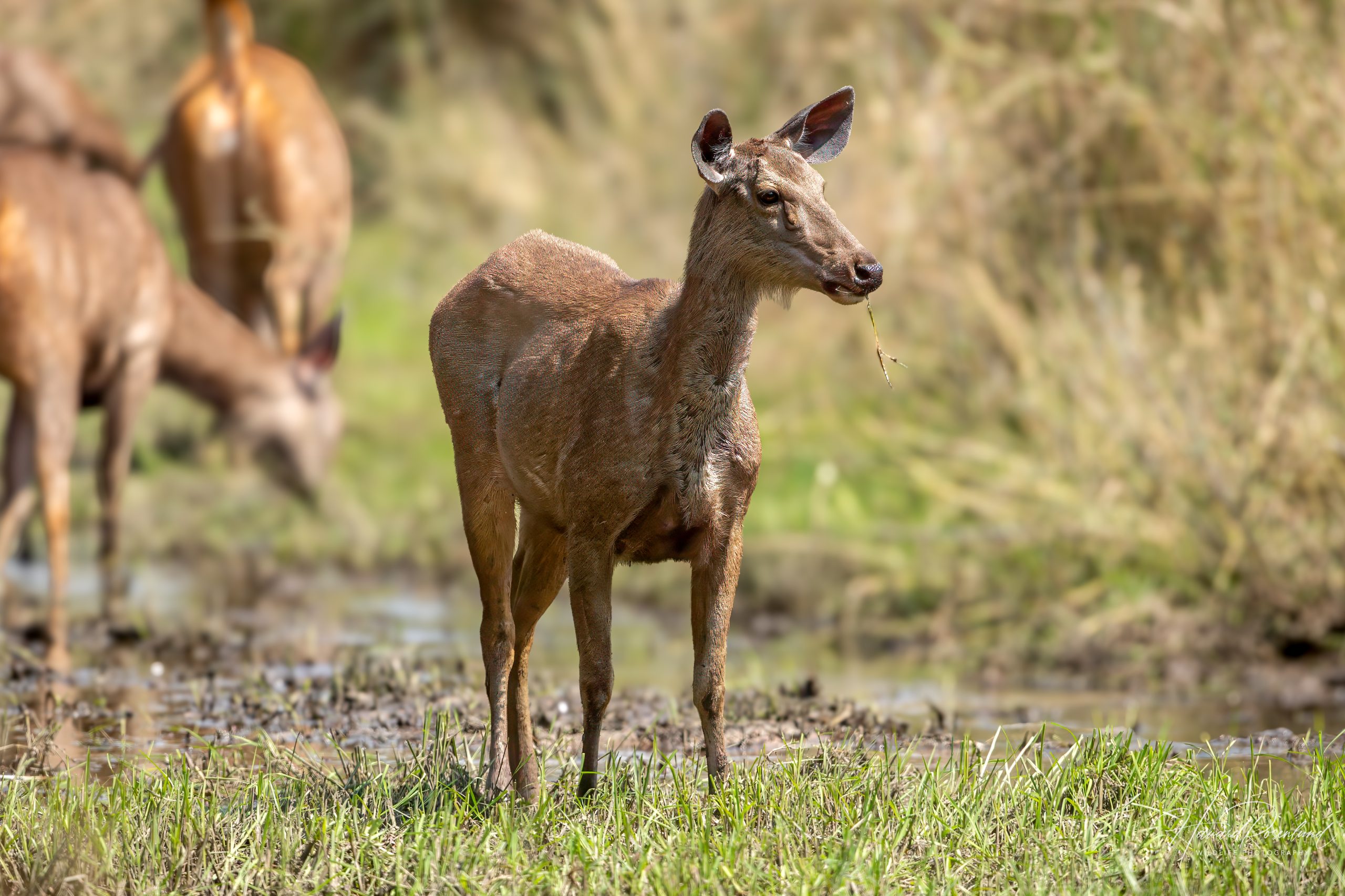
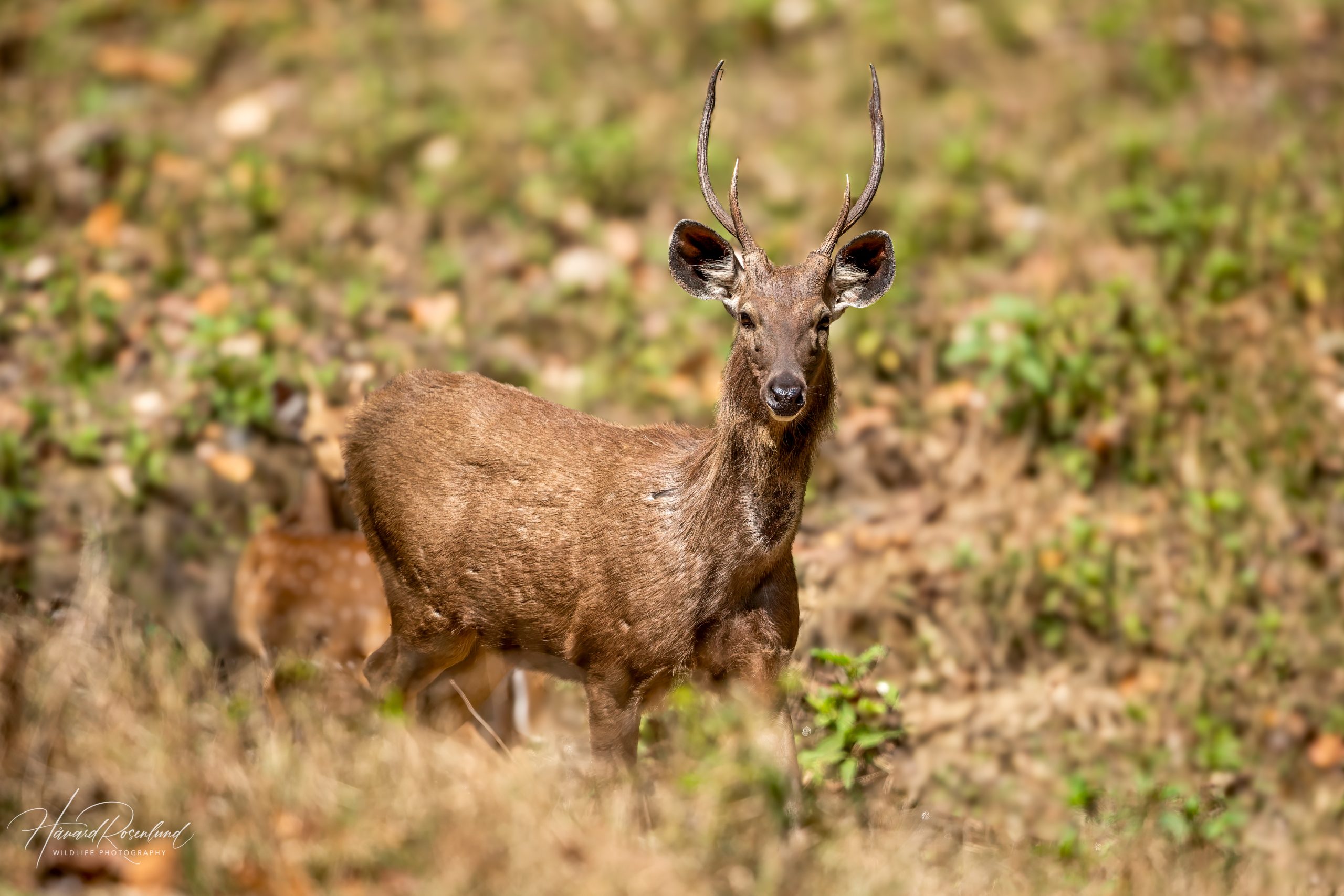
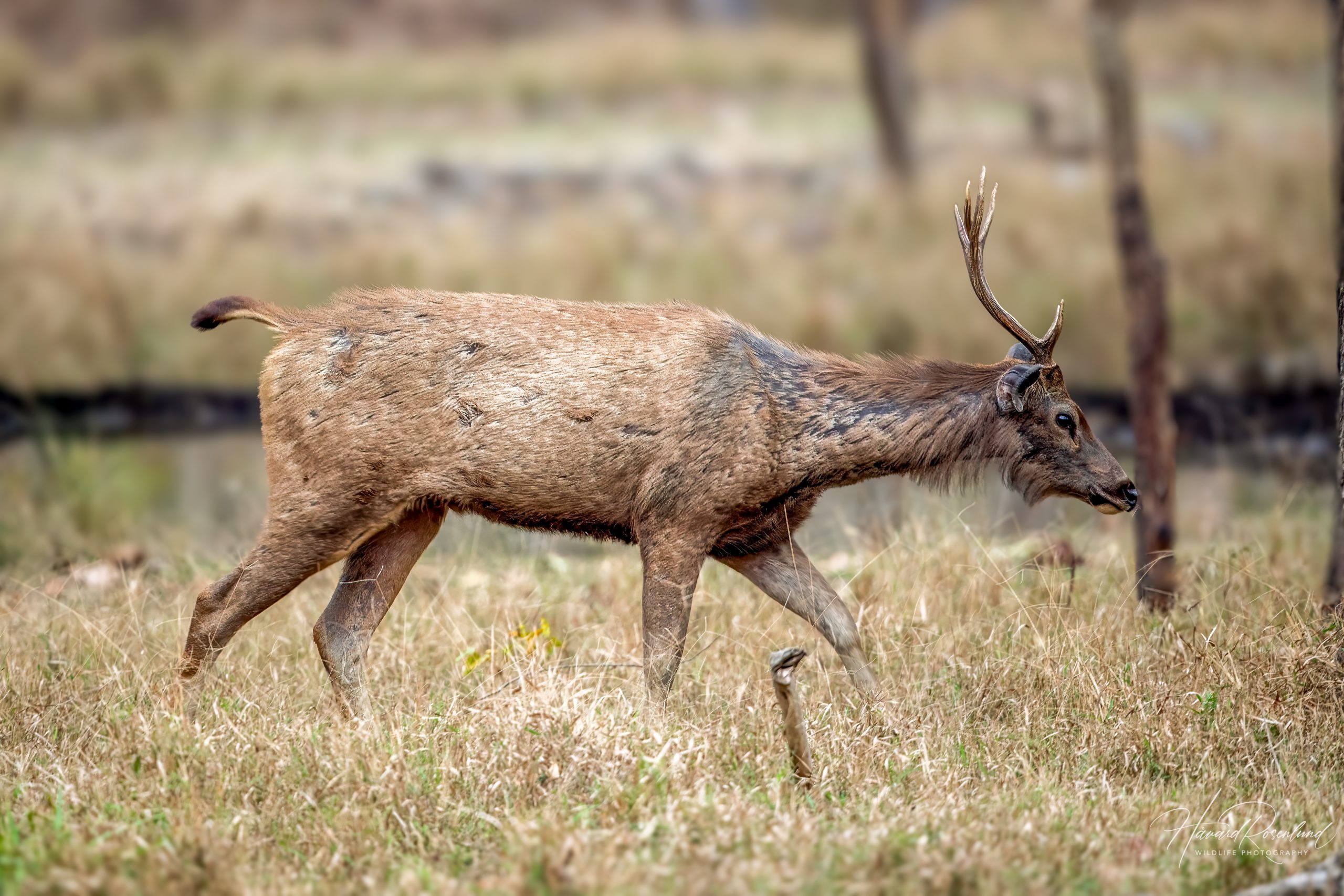
The coat is coarse and usually dark brown to grey-brown. Adult males are heavier and develop a shaggy mane around the neck as well as robust antlers with a characteristic three-tined structure. Antlers can reach around 110 cm in large males and are shed and regrown, although antler size also varies geographically. Females lack antlers. The tail is relatively long for a deer and has a pale underside that can become conspicuous when raised in alarm.
Habitat
Sambar occupy an unusually broad range of wooded habitats, including tropical evergreen forest, moist and dry deciduous forest, bamboo, secondary woodland and forest–grassland mosaics from lowlands into mountains. Dense cover is important for resting, while openings, forest edges and watercourses provide feeding opportunities.
A study published in 2023 from Pench National Park in central India found that habitat use changed with season. Teak, mixed teak and bamboo forests became particularly important at different times of year, showing how sambar follow changing food, shade and water conditions within a dry deciduous landscape.
Diet
Sambar are mixed feeders: they browse on leaves, shoots and twigs from shrubs and trees, but also graze on grasses and herbs. Fruit, fallen plant material and other vegetation are eaten according to local and seasonal availability, and aquatic plants may also be taken where shallow water is accessible. Unusually for deer, sambar can rear onto their hind legs to browse foliage several metres above the ground.
A study published in 2020 from the Qionglai Mountains of China used DNA analysis of winter faeces and detected plants from 50 families and 94 genera. A 2022 study in central India also documented marked seasonal shifts in feeding as vegetation changed. This broad and flexible diet helps the species persist across very different forest types and climates.
Behaviour
Sambar are often solitary or occur in small, loose groups rather than large herds. Adult males are commonly alone, while females may associate with calves and occasionally other females. Activity is frequently concentrated around dusk, night and early morning, but timing varies with season, predators and human disturbance.
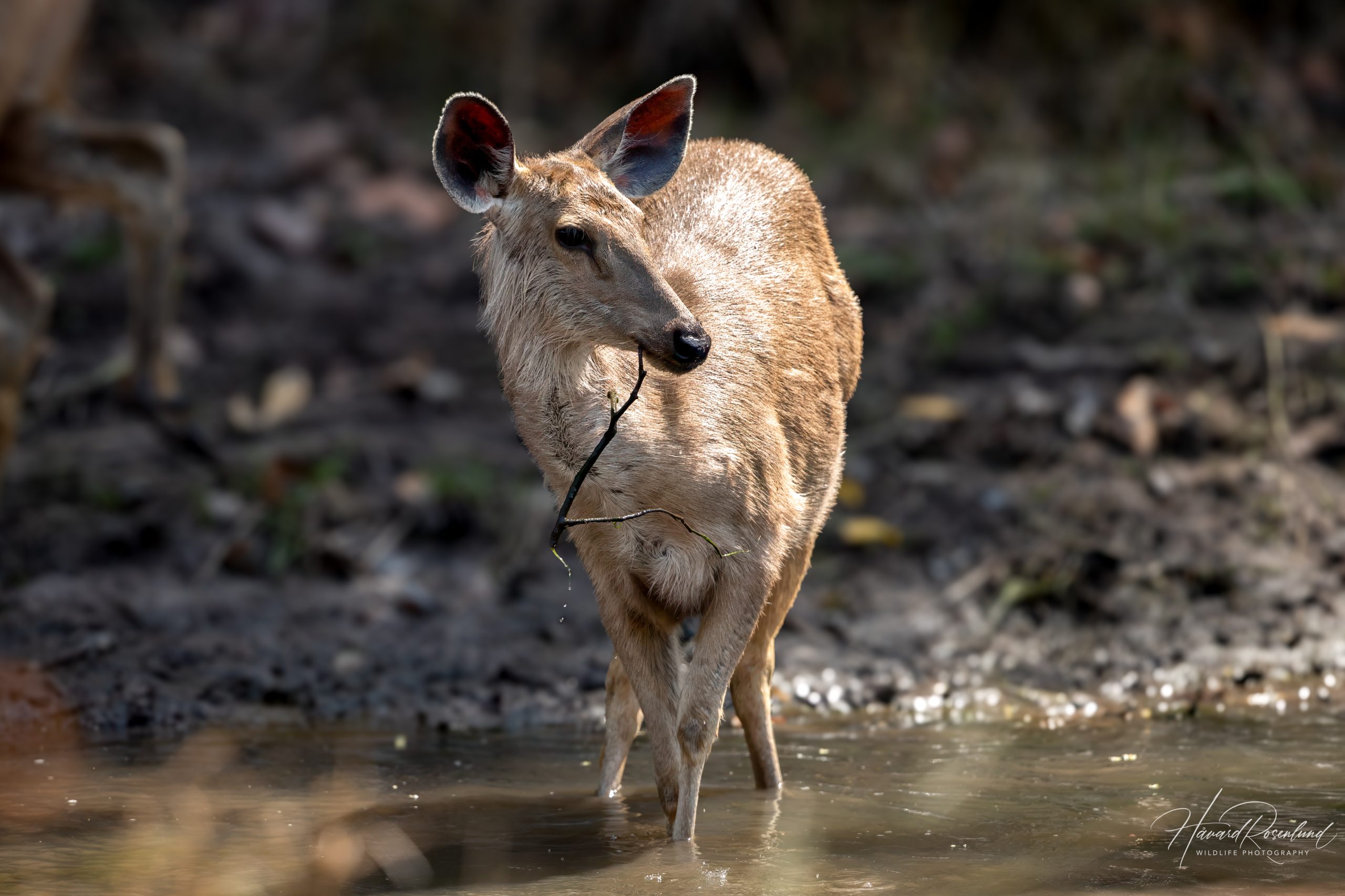
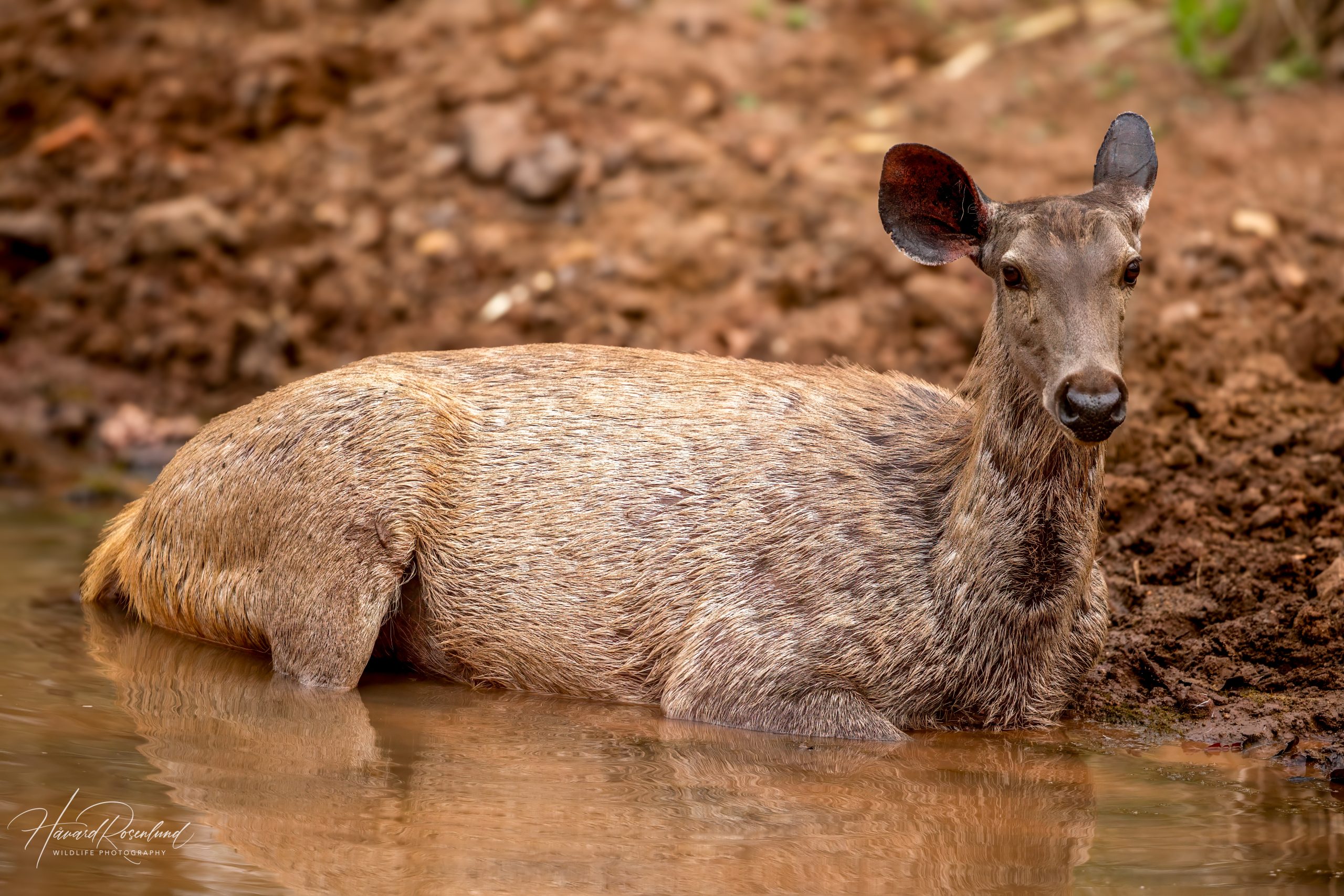
The species is strongly associated with water and is an excellent swimmer. Adult males also use conspicuous scent-marking behaviour, including wallowing, trampling or scraping patches of ground and rubbing against vegetation or tree trunks, especially during periods of heightened reproductive activity.
Predation
Sambar are a major prey species for several of Asia’s large carnivores. They are important prey for tigers (Panthera tigris) in many forest landscapes, while dholes (Cuon alpinus) and leopards (Panthera pardus) also take them. A study published in 2022 across the Central Indian Landscape found that sambar contributed about 61% of the prey biomass consumed by dholes, making it their principal prey in the study.
When a predator is detected, sambar may give a loud, resonant alarm bark. Females protecting calves do not always flee: they may face predators defensively, barking, stamping and striking with the forelegs. Dense cover, vigilance and access to water all contribute to survival, but calves and isolated individuals are especially vulnerable. In Indian forests the alarm calls are also closely watched by other animals and by people searching for tigers or leopards.
Reproduction
Breeding can occur throughout the year, although local populations often show seasonal peaks. Mature males compete for access to females using their large antlers and displays during the rut. Because females are usually more widely scattered through forest habitat than in deer that gather in large herds, mating is less concentrated around large gathering places.
Gestation lasts about eight to nine months and a single calf is usual. Newborn calves may show faint spotting that disappears with age. The female provides the parental care, keeping the young close or concealed during its early life until it becomes increasingly mobile and independent.
Relationship with humans
Sambar have long been hunted for meat and antlers throughout their native range. Where deer enter agricultural edges they may also feed on crops, creating local conflict with farmers.
People introduced sambar for hunting to several areas outside Asia, most notably Australia, New Zealand and parts of the United States. In south-eastern Australia the species has expanded substantially and can alter native vegetation through browsing, trampling and seed dispersal. Introduced populations are therefore often controlled, in sharp contrast to much of Asia, where native populations have declined and need protection from continued hunting and habitat loss.
Status
The sambar is classified as vulnerable on the IUCN Red List. The category reflects widespread and substantial declines across its large Asian range, driven primarily by hunting and habitat degradation rather than a naturally restricted distribution.
Threats
Hunting and habitat loss are the major threats across the native range. Large-bodied deer are vulnerable to continued heavy hunting because their populations recover more slowly than those of many smaller mammals, and hunting can empty apparently intact forest even where suitable vegetation remains.
Forest conversion, fragmentation and disturbance can further reduce populations, while roads and expanding settlement make remote habitat easier for hunters to access. The result is an uneven modern distribution: sambar remain common in some well-protected landscapes but are scarce or absent from many areas that still appear suitable.
Conservation
Where hunting remains intense, suitable habitat alone does not prevent decline. Sambar populations can persist in large, connected forests when hunting pressure is low and reliable water, cover and feeding habitat remain available. In tiger landscapes this also has wider ecological importance because healthy sambar populations provide a major prey base for large carnivores.
Image gallery
Loading map and observations…
Have you seen this species?
Independent species archive
Did you find this species page useful?
Wildlife Vagabond is independently built and maintained. Voluntary support helps cover hosting, maps, data storage and continued improvements to the species archive.
Support Wildlife VagabondSpecies content will remain freely available.
References
Information about the species’ global distribution and status is based primarily on global Red List data. See the references below for details.
- Ghaskadbi, P., Bathla, N., Bhandari, A., Modi, S., Nigam, P., & Habib, B. (2022). Feeding ecology of the endangered Asiatic wild dogs (Cuon alpinus) across tropical forests of the Central Indian Landscape. Scientific Reports, 12(1), 14029. https://doi.org/10.1038/s41598-022-17906-5
- Haleem, A., & Ilyas, O. (2022). Status, abundance, and food habit of Sambar deer (Rusa unicolor) in tropical deciduous forest of Central India. Mammalia, 86(5), 422-433. https://doi.org/10.1515/mammalia-2021-0109
- Haleem, A., & Ilyas, O. (2023). Status distribution and factors affecting the habitat selection by Sambar Deer Rusa unicolor in Pench Tiger Reserve, Madhya Pradesh, India. Journal of Threatened Taxa, 15(1), 22371-22380. https://doi.org/10.11609/jott.7597.15.1.22371-22380
- International Union for Conservation of Nature. (n.d.). Sambar. The IUCN Red List of Threatened Species. https://www.iucnredlist.org/species/41790/85628124
- Leslie, D. M. (2011). Rusa unicolor (Artiodactyla: Cervidae). Mammalian Species, 43, 1-30. https://doi.org/10.1644/871.1
- Mammal Diversity Database. (n.d.). Rusa unicolor. American Society of Mammalogists. https://www.mammaldiversity.org/taxon/1006325/
- Quin, M. J., Morgan, J. W., & Murphy, N. P. (2023). Assessing the diet and seed dispersal ability of non‐native sambar deer (Rusa unicolor) in native ecosystems of south‐eastern Australia. Ecology and Evolution, 13(11), e10711. https://doi.org/10.1002/ece3.10711
- Zhang, Q., Yang, B., Fu, Q., Wang, L., Gong, X., & Zhang, Y. (2020). The winter diet of sambar (Rusa unicolor) in the Qionglai Mountains. Biodiversity Science, 28(10), 1192–1201. https://doi.org/10.17520/biods.2020063