
Egyptian Goose
Alopochen aegyptiaca
At a glance
Habitat
- Open and semi-open habitats near freshwater, including grassland, wetlands, farmland and urban parks
Diet
- Mostly grasses, leaves, seeds and other plant material; also small invertebrates
Activity
- Diurnal
Size
- Length: 63–73 cm Weight: 1.5–2.3 kg
Range
- Native to much of sub-Saharan Africa and the Nile region; introduced populations occur in western Europe and elsewhere
Description
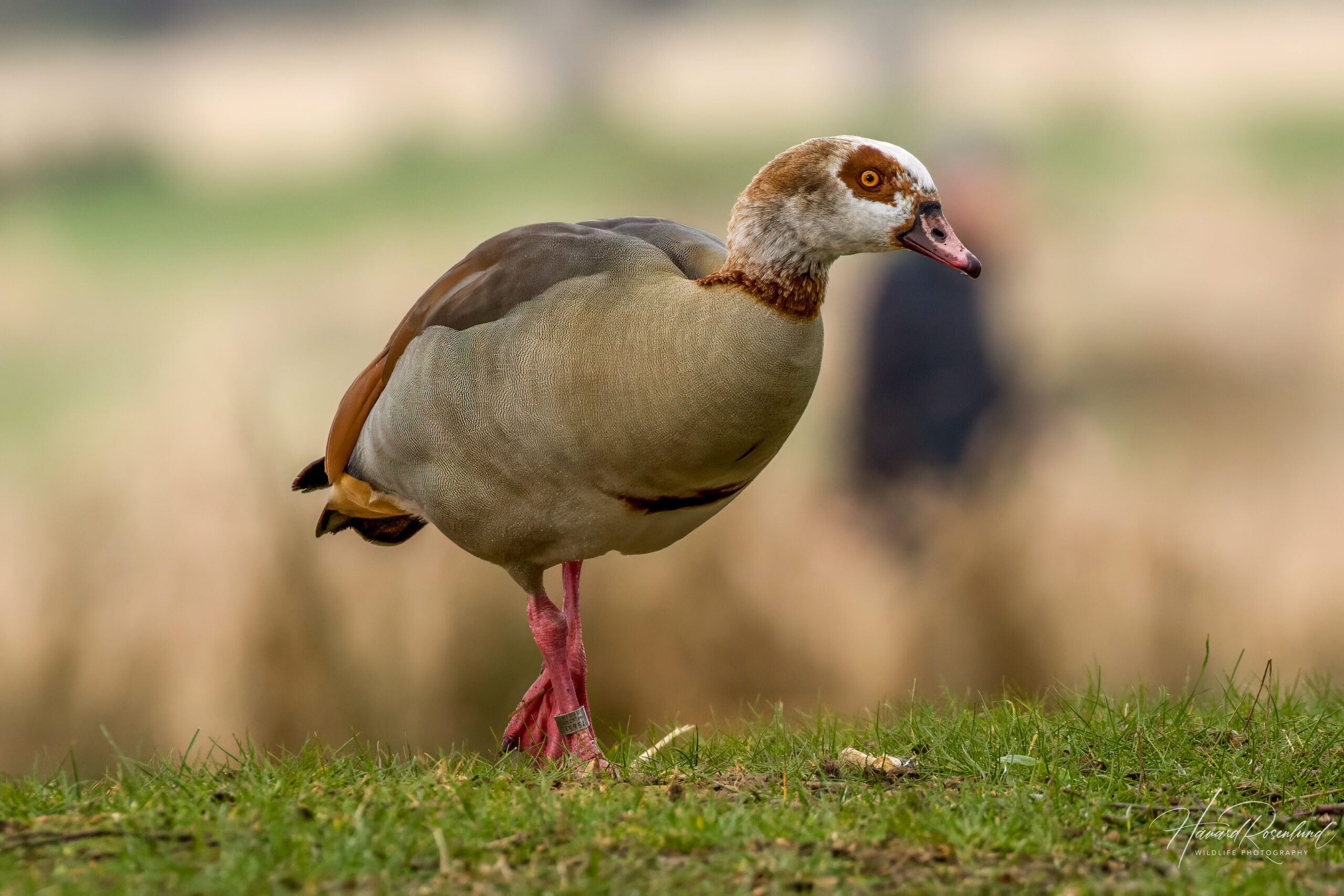
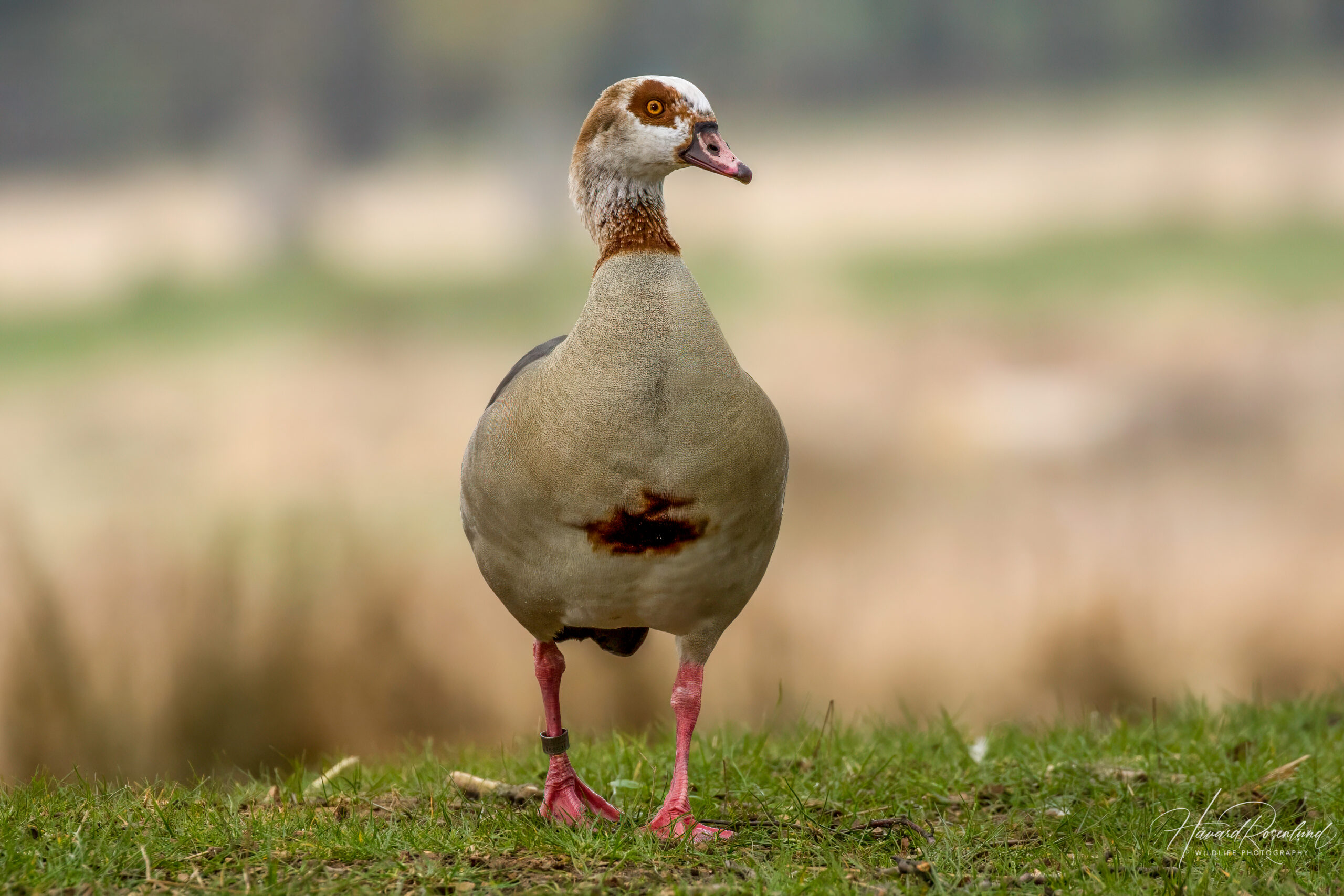
The Egyptian goose (Alopochen aegyptiaca) is a large, distinctive African waterfowl species, about 63–73 cm long and weighing roughly 1.5–2.3 kg. Both sexes have a pale head with a conspicuous dark eye patch, a brownish breast patch and a mainly grey-brown body. Large white wing panels become especially obvious in flight, contrasting with dark flight feathers and iridescent green secondaries.
Males and females look similar, although males average slightly larger and the sexes have different voices. Despite the English name, the species belongs to the shelduck group and is more closely related to shelducks than to true geese.
Habitat
Egyptian geese use open and semi-open landscapes near freshwater, including lakes, rivers, reservoirs, wetlands, floodplains, grassland, farmland, golf courses and urban parks. The species ranges from lowlands to high mountain areas and has been recorded up to about 4,000 m in the Ethiopian Highlands.
They are not restricted to the water's edge and regularly use surrounding lawns, pasture and other short vegetation. A combination of open feeding ground, nearby freshwater and secure resting or nesting sites suits the species particularly well.
Diet
The diet is mainly plant material, especially grasses, leaves, shoots, seeds and agricultural crops. Small invertebrates and other animal food are taken in smaller amounts.
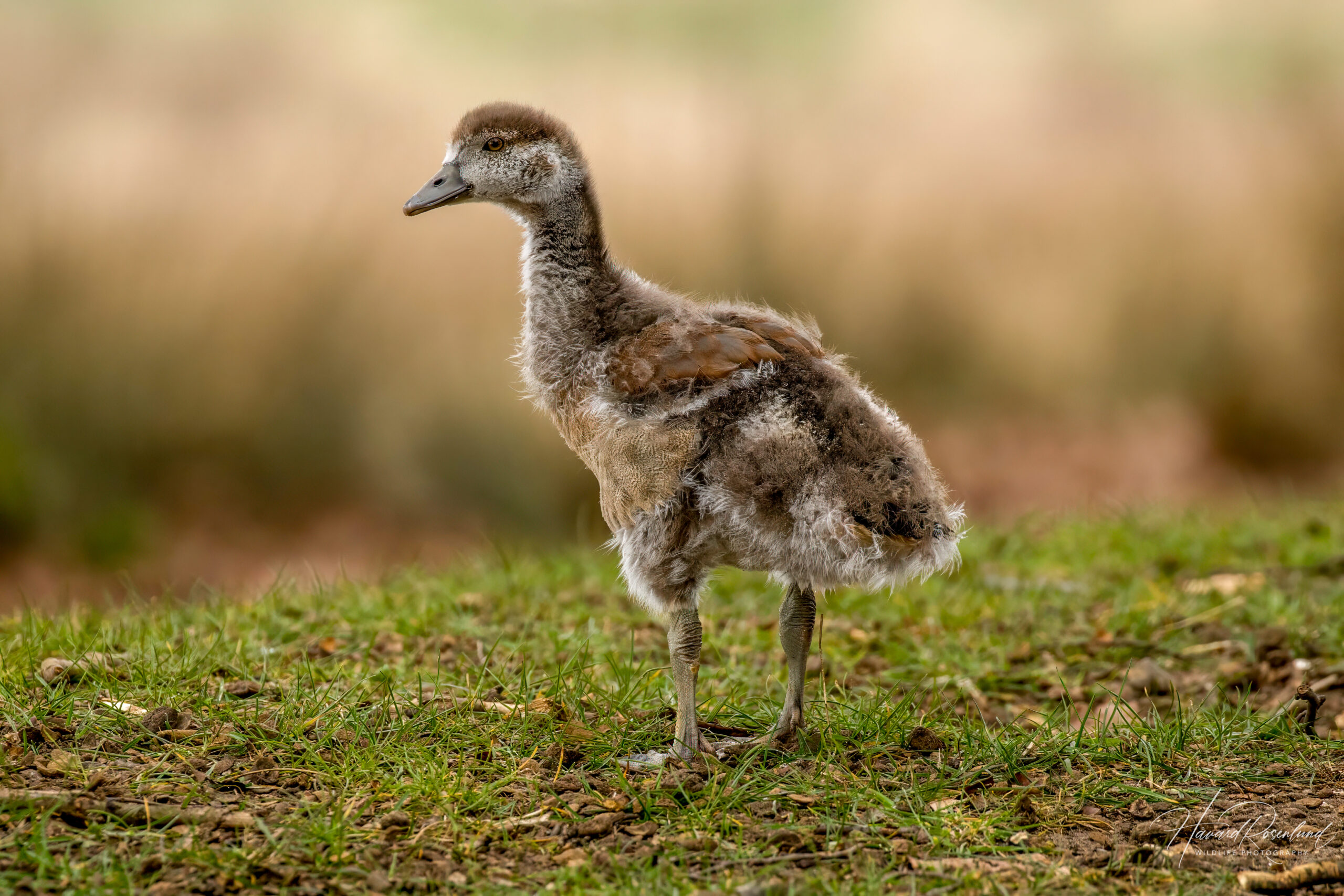
Chicks consume a higher proportion of aquatic invertebrates early in life before the diet becomes increasingly plant-based as they grow.
Foraging
Egyptian geese forage mainly by grazing and pecking on land, especially in short grass, pasture, lawns and farmland. They also feed on mudflats and in shallow water, where they can pick or dabble for food without the sustained diving used by many other waterfowl.
A field study published in 2021 at Boyo wetland in Ethiopia found that grassland was the main feeding habitat in both wet and dry seasons, with foraging activity highest in the early morning and late afternoon. This flexible use of both terrestrial and wetland feeding sites helps the species thrive in natural as well as human-modified landscapes.
Behaviour
Egyptian geese are diurnal and are often seen as pairs or family groups, while larger gatherings can form at good feeding or resting sites outside the breeding period.
Pairs become strongly territorial around nesting areas and use loud calls, threat postures and chases against intruders. An urban study published in 2021 in southern Germany found aggression to be directed especially toward other Egyptian geese, while aggression toward other bird species was not unusually frequent. Only 2.4% of recorded aggressive encounters ended in a physical fight.
Breeding
Breeding can occur in many months of the year depending on local conditions. Egyptian geese use an unusually wide variety of nest sites, including ground sites, islands, tree cavities, ledges, buildings and abandoned nests of other large birds.
Clutches usually contain five to eleven eggs, although clutches from one to 22 eggs have been recorded. The female incubates for about 28–30 days while the male remains nearby and helps defend the territory. The chicks leave the nest soon after hatching and feed for themselves, but both parents guard and lead the brood. They become capable of flight after about 55–75 days.
Relationship with humans
Egyptian geese have been kept as ornamental birds in Europe for centuries, and escaped or released birds have established breeding populations. Britain now has a large and rapidly expanding naturalised population, particularly in East Anglia and around Greater London. Between 1995 and 2024, the UK breeding population increased by 1,964%.
The species is also established in several continental European countries and remains on the European Union list of invasive alien species of Union concern. Concerns include continued spread, possible competition with native birds and crop damage. The scale of ecological and economic effects varies among regions.
Status
Across its native African range, the Egyptian goose is classified as least concern on the IUCN Red List. It remains widespread and abundant in many natural and human-modified landscapes.
The global population trend appears to be declining, but the total population remains very large and the range extremely wide. Local conflict can occur where large numbers graze crops or congregate around managed water bodies. Despite the decline, the species is not considered globally threatened.
Image gallery
Loading map and observations…
Have you seen this species?
Independent species archive
Did you find this species page useful?
Wildlife Vagabond is independently built and maintained. Voluntary support helps cover hosting, maps, data storage and continued improvements to the species archive.
Support Wildlife VagabondSpecies content will remain freely available.
References
Information about the species’ global distribution and status is based primarily on global Red List data. See the references below for details.
- Artsdatabanken. (n.d.). Niland (Alopochen aegyptiaca) – description and biology. https://artsdatabanken.no/Pages/340893/?Key=70
- BirdLife International. (n.d.). Egyptian Goose (Alopochen aegyptiaca) species factsheet. https://datazone.birdlife.org/species/factsheet/egyptian-goose-alopochen-aegyptiaca
- British Ornithologists’ Union. (2018). Egyptian Goose added to Category C5 of the British List. https://bou.org.uk/british-list/changes-to-the-british-list-6-aug-2018/
- British Trust for Ornithology. (n.d.). Egyptian Goose – BirdFacts, population and distribution trends. https://www.bto.org/learn/about-birds/birdfacts/egyptian-goose
- Cornell Lab of Ornithology. (n.d.). Egyptian Goose – Life History, Birds of the World / All About Birds. https://www.allaboutbirds.org/guide/Egyptian_Goose/lifehistory
- European Commission. (2017). Regulation (EU) 2017/1263 updating the Union list of invasive alien species of Union concern. https://eur-lex.europa.eu/eli/reg_impl/2017/1263/oj/eng
- Hohmann & Woog. (2021). How aggressive are Egyptian Geese? Interactions with Greylag Geese and other birds in an urban environment. Wildfowl, 71, 234–243. https://tidsskrift.dk/Wildfowl/article/view/153429
- International Union for Conservation of Nature. (n.d.). Egyptian Goose (Alopochen aegyptiaca). The IUCN Red List of Threatened Species. https://www.iucnredlist.org/species/22679993/131910647
- Kassa, Balakrishnan & Afework. (2021). Diurnal activity patterns, habitat use and foraging habits of Egyptian goose in the Boyo wetland, southern Ethiopia. SINET: Ethiopian Journal of Science 44. https://ejol.aau.edu.et/index.php/SINET/article/view/6891
- U.S. Fish & Wildlife Service. (2026). Ecological Risk Screening Summary – Egyptian Goose (Alopochen aegyptiaca). https://www.fws.gov/sites/default/files/documents/Ecological-Risk-Screening-Summary-Egyptian-Goose.pdf